Is Ketaki Chitale's Brahmanical patriarchy getting her in trouble? 3
Commenting on Sharad Pawar is not the only controversy that Ketaki Chitale struck but in 2020, she was booked for a social media post seen as being insulting towards Dalits. Prior to that, she has made comments on other religions and even Chhatrapati Shivaji Maharaj that have not gone down well. A staunch Godse worshiper and typical Brahmanical conditioning that has landed her in controversies.
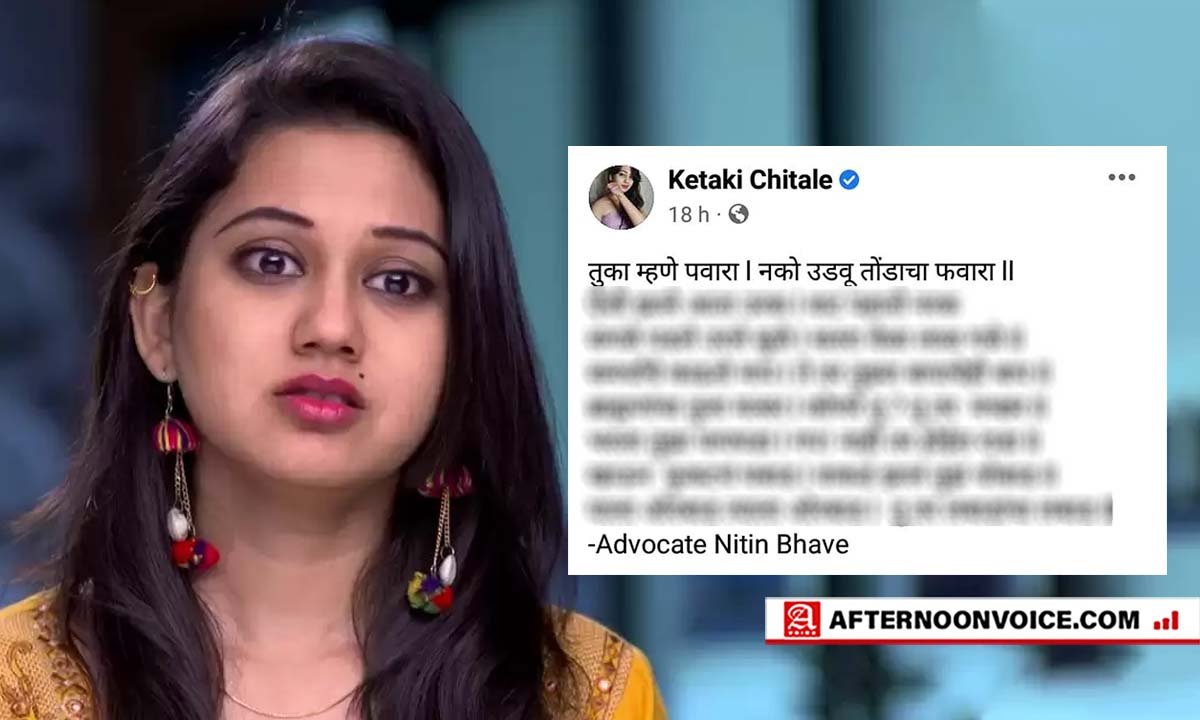
The post in Marathi, shared by her on Friday, was supposedly written by someone else. It only mentioned the surname Pawar and the age of 80. The NCP supremo is 81 years old. The post contained phrases like “hell is waiting” and “you hate Brahmins”, allegedly referring to Pawar whose party shares power in Maharashtra with the Shiv Sena and Congress.
“The offence against Chitale was registered at Kalwa police station in Thane on Saturday based on a complaint lodged by Swapnil Netke,” a police official had said. When she was taken to the police station, black ink and eggs were thrown at Chitale outside Kalamboli police station in Navi Mumbai by workers of NCP’s women wing. Earlier, the case was registered against her under Indian Penal Code (IPC) sections 500 (defamation), 501 (printing or engraving matter known to be defamatory), 505 (2) (making, publishing or circulating any statement, rumour or report promoting enmity, hatred or ill will between classes), 153 A (spreading disharmony among people) at the Kalwa police station in Thane, he said. In Pune too, a case was registered against her based on a complaint filed by an NCP worker.
The cyber wing of the police registered a case against Chitale under IPC sections 153 (A), 500, and 505 (2). In Dhule also, a case was registered against Chitale and Nitin Bhave, the purported author of the controversial post shared by the actress, under similar sections of the IPC, including section 34 (common intention), on a complaint lodged by an NCP leader.
Meanwhile, when asked by reporters in Nanded about the episode, Pawar said he didn’t know Chitale and had no idea about what she has allegedly posted about him on social media. “I don’t know the person and also have no idea about what you are saying (about the actress’s post),” he said responding to a query.
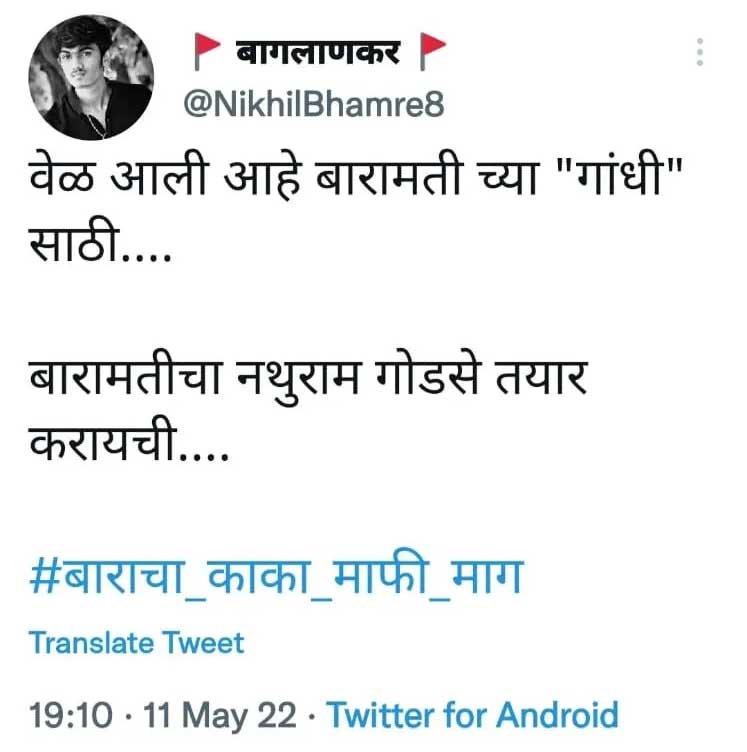
The 21-year-old student, Nikhil Bhamre, is a resident of Nashik district and a former Rashtriya Swayamsevak Sangh worker, did not directly name Pawar, tweeting in Marathi: “Time has come for Baramati’s Gandhi… to create Nathuram Godse of Baramati.”
Is Ketaki Chitale's Brahmanical patriarchy getting her in trouble? 4
Her post referring to “Pawar” says he is a liar, jealous of Brahmins, suffering (from cancer) because of corruption and headed to hell. The post, put up on Friday evening, received 7,400 likes and was shared by 585 people in 24 hours. It is attributed to an advocate named Nitin Bhave.
Meanwhile, Bhamre, who comes from a farmer’s family in Nashik’s Dindori, was arrested in Nashik city where he is pursuing his graduation. Bhamre does not have a prior criminal record and, in the past, was an RSS worker, said police. Police said he has made several such comments in the past as well.
An FIR was registered against Bhamre under IPC Sections 153A, 500, 501, 504 (intentional insult to provoke breach of peace) and 506 (criminal intimidation). He will be produced before a magistrate court on Sunday. All major political parties in Maharashtra condemned the post against Pawar.
Maharashtra Housing Development Minister Jitendra Awhad said the youths attached to the NCP will register offences in “at least 100-200” police stations in Maharashtra in connection with Chitale’s post. He had also reported Bhamre’s May 11 tweet to the police, leading to the latter’s arrest.
“We need to keep in mind what kind of language we use while speaking about senior leaders,” said Devendra Fadnavis, Opposition leader and former CM.
Maharashtra Navnirman Sena (MNS) President Raj Thackeray on Saturday said: “We have differences with them [Pawar] and those will be there. But it is quite wrong to come to such a hideous level.”
At a rally in Mumbai, Chief Minister Uddhav Thackeray castigated the actor: “Who are you to criticise the NCP chief? … Why are you commenting? She seems to be someone from the fake Hindutva camp.”
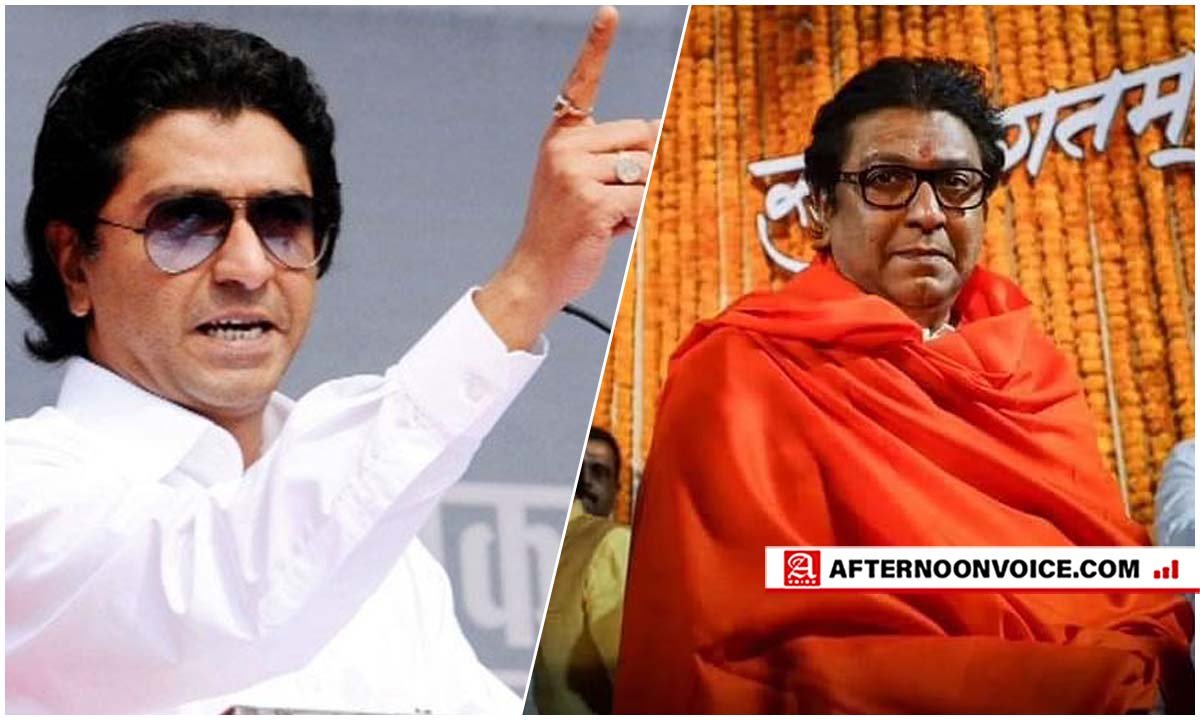
Raj Thackeray lost his individuality in the new Saffron robe? 6
Raj Thackeray might be trying to look like Balasaheb by wearing a saffron robe and sporting a red tika on his forehead but he doesn’t share Babasaheb’s vision, in fact, he is busy selling his own ethics for power. Similarly, Congress’s Priyanka Gandhi looks like her grandmother, Indira Gandhi but people hardly vote for congress. Just looks are not enough to garner people’s mandate. Raj Thackeray was once loved for his individuality and uniqueness but his hate-mongering politics has not gone well with the common public.
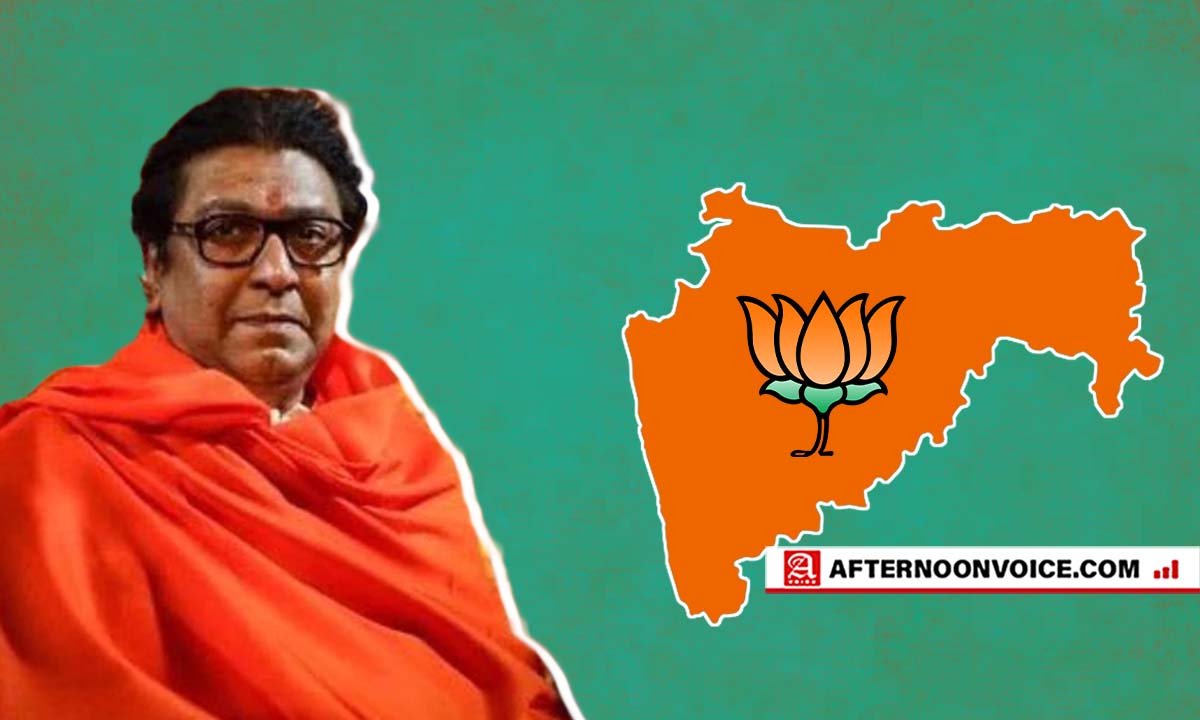
The problem with Raj is he began preparing for the BMC elections wearing BJP’s sleeves. He has merely become a loudspeaker of the BJP to contest elections. With this approach of Raj, his party MNS is certainly not going to take any share but they may somewhat add to BJP’s marketing. BJP making him say all that they cannot say in public. BJP is still pretending to keep its agenda of Sabka Saath Sabka Vikas and using Raj Thackrey like failed politicians to invoke hate politics on their behalf.
He himself is responsible for his downfall because one fine morning he turns anti-Modi and next time anti others. Balasaheb would not have done such unwise things. He shares the same vote bank with Shiv Sena but his inconsistency costs him severely as he remains absent and does not have a voice in pan India. Raj Thackeray should engage with the people of Maharashtra and learn to be steady on his grounds. Shifting goalposts can damage his political fate irreparably.
People loved Raj Thackeray when fought with the government on key issues like overpopulation by immigrants, toll plaza loots, the Marathi language under threat, etc. but his agitation fizzled out without any conclusions. North Indians indeed have a humble attitude towards Marathi people and their culture. Raj Thackeray went venomous against them and now he changed his stand by getting into a religious scuffle. Muslim MNS members left Maharashtra Navnirman Sena, they were the fundraisers for his party. Raj not only lost the goodwill of people but also his credibility.
These days Raj Thackeray increasingly holds the country’s commercial and film capital to ransom in the name of either loudspeaker or Hindu pride. The most recent case was the way in which they threatened Muslims barging in mosques. As the nation wondered whether the MNS’ aggressive demonstrations to gag free speech and curb civil liberties were really about patriotism?
Speaking as a Marathi, born, living and voting every time in Maharashtra and knowing the mindset of the people around, I know that people support Uddhav more than Raj because of Balasaheb’s legacy, he is trustable and wouldn’t change his ideology or his stand for the people. To our surprise, Uddhav proved to be a good chief minister of the state. He never lost his calm or gave any hateful speeches, harmony and peace were his prime agenda and that is what common people want. Uddhav has the ability to give a sense of belongingness to the people of the state. Raj is a confused and tricky person with harsh speeches and hollow claims.
Shiv Sena was in alliance with BJP for almost three decades but they never lost their own uniqueness. Whereas Raj seemed egotistical and without any particular ideology. He changes his shades like a chameleon, you can never predict his political inclinations. Perhaps this is the reason people don’t take Raj Thackeray seriously. These days he is mastering the politics of hate.
In 2008-09, he targeted North Indians (people from UP and Bihar). It paid off for him and he won 13 seats in the Maharashtra Assembly election including 3 urban seats in Nashik. His party also won Nashik civic elections. But his party failed to give even minimum governance. There was such a fear among North Indian workers that thousands of workers reached Nashik railway station to leave the city. It was a very bad situation then. Now he is hell-bent on praising Yogi and taking a stand for BJP but has yet to apologize to North Indians.
After the north Indians, Raj’s hate target was the Gujarati community. Gujarati communities in cities of Western & Northern Maharashtra are very successful. Even PM Modi is a Gujarati. Raj Thackeray thought his hate-mongering against Gujarati speaking community can fetch him some votes in the 2019 elections. But the Gujarati speaking community which has a significant presence in Mumbai did not allow fortune for MNS. It is quite natural for such parties to target such communities for electoral benefits but we all know what kind of humiliation Raj and his party faced. MNS has no patriotic objective at all but still, Raj was regarded for his stand for the people. Unfortunately, in the recent past, he has become a tool in the hands of central powers by shedding his independence. Let’s see what unfolds for MNS in BMC elections.
Raj Thackeray may dent BJP's UP votes in the state 8
Mumbai and parts of the neighbouring Palghar, Thane and Raigad districts of the coastal Konkan belt are home to over 40 lakh North Indians, mainly from Uttar Pradesh and Bihar. Most of the migrants to Mumbai are from UP, Bihar, Jharkhand and Bangladesh. North Indians play a major role in the economy of Mumbai and its suburbs and they have a say in politics,” said Mumbai-based political analyst, journalist and poet Omprakash Tiwari. “Political parties cannot take North Indians casually.”
Of the total 17 lakh population in the Mumbai North-West constituency, more than 3.62 lakh residents are north Indians. Besides, the constituency is home to 6.06 lakh Maharashtrians, 3.34 lakh Muslims, 1.9 lakh Gujaratis and Rajasthan, 1.2 lakh south Indians and 85,000 from other communities. Uttar Pradesh tops the list of migrants to Maharashtra and Mumbai.
D P Singh, professor and associate dean of the School of Research Methodology, Tata Institute of Social Sciences said, “huge populations from Uttar Pradesh are up because of the prospects available in the state. Again, migration from Madhya Pradesh and Karnataka has seen an increase, but one observes more women than men, mostly moving because of marital reasons.”
Till today Raj Thackrey was talking against Yogi Adityanath calling him a criminal and inefficient leader, he also ran a campaign against BJP but flopped for a lifetime. Now Raj Thackeray praised the Yogi Adityanath government for removing loudspeakers from mosques and other places of worship and announced that he would visit Ayodhya in June, but people here are not taking him seriously.
The BJP is also stepping up its outreach to the broader north Indian community in Mumbai, starting with a corner meeting in Goregaon on May 15. This is the first BMC election the BJP is contesting after the Shiv Sena parted ways with it as an ally and the saffron party is no more restrained by its former ally’s Marathi Manoos or son-of-the-soil agenda. Though the two developments are not directly linked, the BJP sees them as part of a bigger political arc. A BJP leader said the UP-government office could help limit the damage done by its MP Brij Bhushan Sharan Singh with his comments on Thackeray and also help the party consolidate UP migrant votes in Mumbai. Civic polls in the city are scheduled to be held in the coming months.
Comprising around 40 lakhs of Mumbai’s estimated 1.5 crore population, north Indians play a decisive role in its politics. They are employed across the board in the financial Capital, from service sectors to jobs requiring manual labour. Of the 227 wards in the Brihanmumbai Municipal Corporation (BMC), north Indians are believed to be in a majority in 50 and have a significant presence in 40-45 wards more. For the BJP, Raj Thackeray is key to unseating the Sena from the BMC. In recent months, BJP leaders in Maharashtra have been spotted with the MNS chief on various occasions, but the party has refused to comment on the possibility of an alliance.
Raj Thackery’s failed Political career is on the verge of closure of sorts. Ever since MNS came into existence his flip flop love for Mr Modi (not BJP) has hit headlines time and again. There are several such ‘baseless’ leaders who try to hit a ‘No Ball for a six’. Interestingly Raj’s current Anti-Muslim agenda has harmed more Hindus in turn. His cry to bring Loudspeakers down from a few hundred Mosques has led to bringing ‘the same’ down from thousands of Temples including Mathura, and Ayodhya. Largely BJP grassroots worker is annoyed by this new political tangent which is not the Sangh style and is bound to harm the BJP vote gaining ability. The top BJP brass may not show their annoyance with Raj, as these short-term disturbances help the Modi govt to hide the government’s ever-continuing failures, for a short duration, however, in the long run, they shall bin the hard stand adopted by the separated Thackeray who is desperately searching Political foothold only ‘by crook and no hook’,” said Nishant Verma, political analyst.
NAI president Vipin Gaur said, “Thackeray is known for his hostility towards North Indians, especially those living in Mumbai, and spreading fear among them. Maharashtra Navnirman Sena (MNS) chief Raj Thackeray said several times that the North Indians do not have any self-respect. He said North Indians should ask their ministers why employment wasn’t being generated in their own states. All of sudden holding the flag of Hindutva will not fetch him anything but BJP votes may get a dent.”
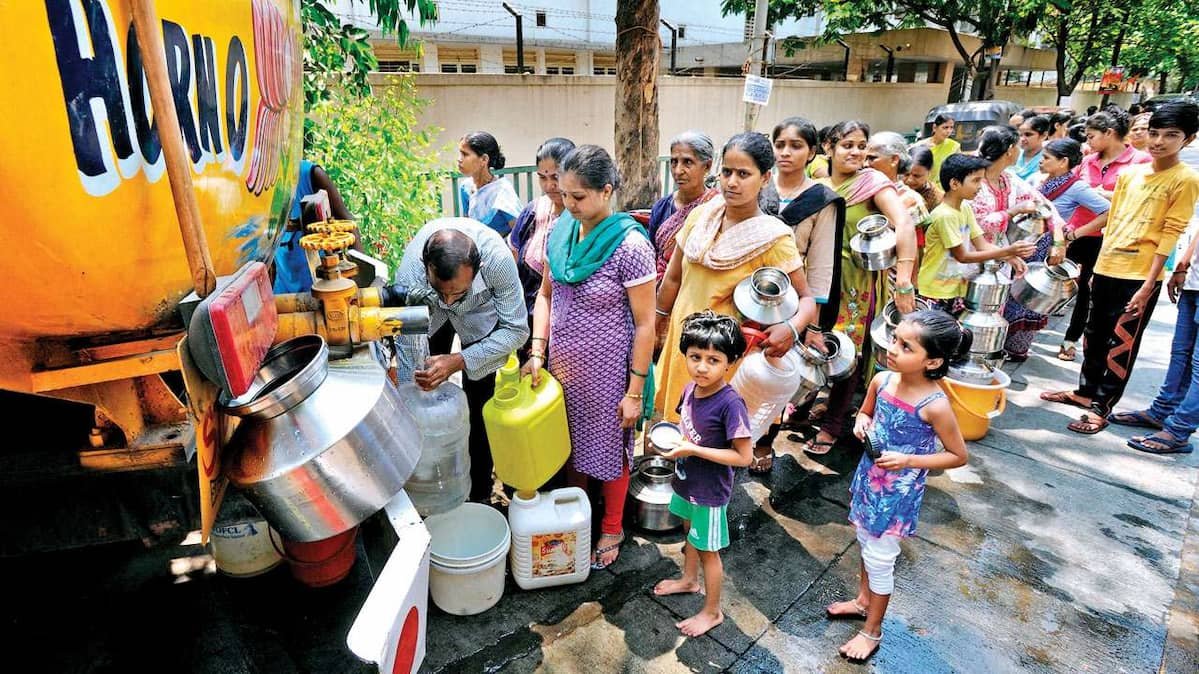
The BMC has requested citizens to keep the required stock of water on the day before the cut and to sparingly use water during the cut.
Amid micro-tunnelling work, there can be water scarcity in the city. The areas where water supply is expected to be affected include, Kurla, Chembur, Ghatkopar, Sion, King Circle, Matunga, and Parel. A 24-hour water cut is to be planned next week due to Phase-I of the diversion of waterways by the micro-tunnelling method by the BMC at Municipal Colony, Vidyavihar. The water cut will be from Wednesday (May 18) at 10 am to Thursday (May 19) at 10 am.
During this period, they will shut down the water supply in some parts of the eastern suburbs and there will also be a low-pressure supply in some other parts. Low-pressure supply on all four days will be available in Santa Cruz (East), Bandra-Kurla Complex, Bandra, Khar and Santacruz (West). On May 18 and May 20 there will be no water supply to Kalbadevi, C P Tank Girgaum, Girgaum, Thakurdwar, Mumbai Central, Khetwadi, Tardeo and Babulnath.
Meanwhile, the present 100% water cut was partially lifted on Thursday itself in Kalbadevi, CP Tank, Girgaum, Thakurdwar, Mumbai Central, Khetwadi, Tardeo and Babulnath. Other areas like Bandra, Khar and Santacruz(west), Santacruz(east) and Bandra-Kurla Complex with low pressures with a 25%
water cut in the entire G-North ward in Dadar and G-South ward in Lower Parel was restored on Thursday, as work on the tunnel to fit 2,400-mm butterfly valve and 2,450-mm diameter T branch on 2,450-mm Vaitarna main as part of the 3,000-mm Maroshi Vakola-Mahim-Ruparel tunnel work was completed on Thursday morning.
The BMC’s hydraulic department conducted a ‘Stop Leakage Save Water’ campaign on April 25. A report submitted by the hydraulic department on Thursday said the K-East ward in Andheri (East) had maximum water leakages while A-ward in Fort had the least leakages.
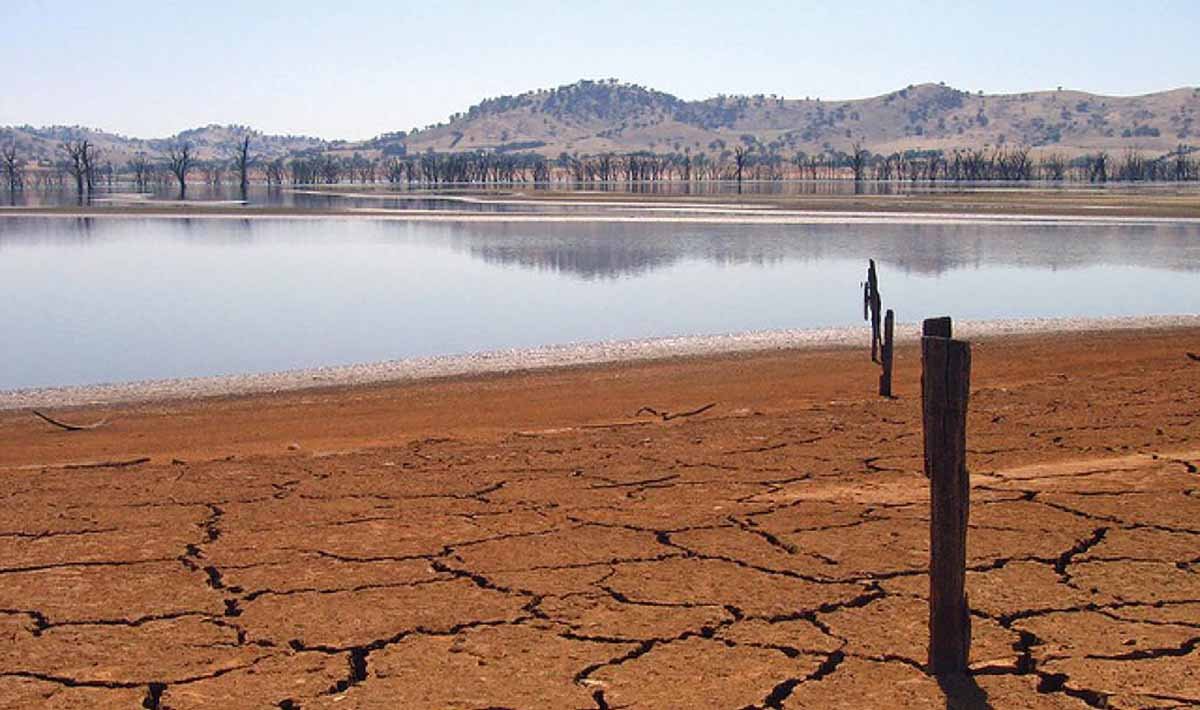
India suffers from two extreme conditions; one is heavy and another is drought. At least 330m people are likely to be affected by acute shortages of water. As the subcontinent awaits the imminent arrival of the monsoon rains, bringing relief to those who have suffered the long, dry and exceptionally warm summer, the crisis affecting India’s water resources is high on the public agenda.
Mumbai has approached heavy summer; the Brihanmumbai Municipal Corporation (BMC) took stock of the current drinking situation and concluded that water can be supplied for around 160 days or five months from the seven lakes. As per the data, as of March 20, the lakes were about 43% full, which supplied water for the next 160 days. Last year the water stock was 40%. The livestock of water is 50% in Tulsi Lake and 40% in Vihar Lake.
In 2021, between July 16 and July 23, the catchment areas of the lakes received a maximum of their stock. Before that, the BMC was on the verge of announcing a water cut as the overall water level in seven lakes was just 17%. However, by July 22, the water level had crossed 50%, followed by 60% on July 24 and 70% on July 28. Every year; Mumbai gets sufficient rainfall between July and August, which provides relief from any water shortage. Previously, BMC had to announce water cuts during the low rainfall season.
Also, in August 2022, water supplies in the city’s western and eastern suburbs were affected when BMC carried out repair work on one of its seven water reservoirs, which affected areas like Kurla, Andheri, Ghatkopar, Ram Mandir and Goregaon. The BMC supplies 3,850 million litres of water daily against the city’s demand for 4,200 million litres.
Bhatsa dam in Thane, which supplies 55% of the total annual water requirement of the city, has 45% water stock, which was at 42% last year. For Upper Vaitarna, the water level is 40% as of Monday. Last year at this time, the level stood at 53%. Middle Vaitarna has 41% of water stock as opposed to 23% last year.
The civic body supplies 3,850 million litres of water daily against the city’s demand for 4,200 million litres. In order to meet the shortfall, BMC has been exploring several ways to increase water supply. Meanwhile, in June 2021, the civic body had signed a memorandum of understanding (MoU) with an Israel-based firm for the city’s first desalination project at Manori in Malad, which is expected to be ready by 2025.
There is a need for an integrated approach, which addresses source sustainability, land use management, agricultural strategies, demand management and the distribution and pricing of water. With growing pressures because of climate change, migration and population growth, creativity and imagination, they needed governance to manage this precious resource.
India’s monsoon season lasts from June to September. It sees heavy rains, which refill the country’s water reservoirs and are vital for agriculture but cause immense destruction and loss of life. Dozens died in floods in India every year, particularly in the eastern states of Bihar and Assam, last month, with the inundation causing heavy losses to farms, homes and infrastructure. All because of rising deforestation, poor urban planning and increased urbanization reason behind the rise in the intensity of the floods.
Unprecedented drought demands unconventional responses, and there have been some fairly unusual attempts to address this year’s shortage. The need to shift water on this scale sheds light on the key issue that makes water planning in the Indian subcontinent so challenging. While the region gets considerable precipitation most years from the annual monsoon, the rain falls in particular places – and for only a short period (about three months). This water needs to be stored and made to last for the entire year.
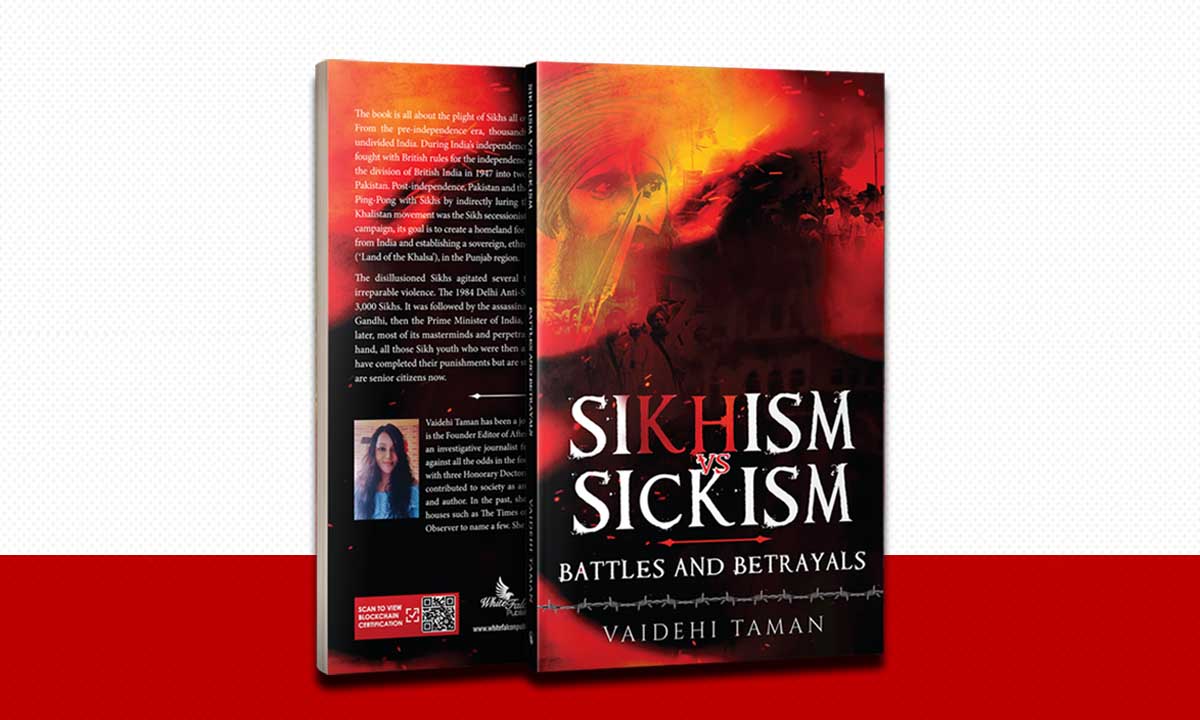
Book Review: 'Sikhism vs Sickism' by Vaidehi Taman 12
I felt those covering religion seem to go with a slant, but Sikhism vs.Sickism by Vaidehi Taman is a notable exception. Sikhism is much too misunderstood and understudied, and this slender volume makes a riveting attempt to address the problems that has been haunting the Sikh community for decades.
Starting with the preamble, “Sikhs had to deal with battles and betrayals”, the author presents the compelling story of the Sikhs – their origins, traditions and beliefs, and more recent history. Vaidehi shows how a movement based on tenets of compassion and humanness transformed itself, of necessity, into a community that values bravery and military courage as well as spirituality.
The author chronicles the years following Indian independence, marked by the demand for a discrete Sikh state, and presents the events leading up to and following “Operation Blue Star”, when the Indian Army entered the Golden Temple. The narrative about Partap Singh Kairon, the man behind Punjab’s growth, how Sikh nationalism always received with contempt, Bhindranwale’s demand for an autonomous state … are all informative.
The reader also gets to know in fair depth about Sikh leaders including Master Tara Singh, Saint Jarnail Singh, Giani Zail Singh, Sant Longowal…. The Sikh feeling of betrayals at the hands of the British, and later by the Congress is conveyed in good measure.
While the chapter on Congress-engineered 1984-riots relives the public memory, the author’s logical surprise that “ever since 1984, Punjab has been electing the Congress party time and again…” instantly synchronises with the reader. Vaidehi rightly poses: “How is anger against Congress translated into votes?”. Similar analysis and interpretations help sustain the engaging read.
The author’s anguish about the Sikh political prisoners and their prolonged detention, the demand to release those who have completed their life sentences, the plight of imprisoned senior Sikh citizens, why Punjab often bleed – all have been addressed in perspective.
The legitimate anger against a section of the media is aptly echoed. “Hindu supremacy is the prime agenda of mainstream media channels… creating disturbing narratives about them is routine assignment for some sold-out media houses”.
While relating to the Sikhs’ contribution to the state’s economy and welfare, Vaidehi examines how, through the centuries, Sikh soldier became a model of discipline and courage, and explains how Sikhs – now numbering more than 20m worldwide have come to be known for their commitment to education, business acumen and enterprising spirit.
The author also draws out the increasing military image of Sikhism which was largely absent in the earlier Gurus but emerges with the later Gurus.
The well-documented and researched work delves into emotions that binds the Sikh community with the national mainstream. The easy prose enables to leaf it through in one-go. If you are, however, a purist reader, your expectation of terse editing is in order. A few cartoons would have further enhanced the appeal.
The 99-page script is likely to have strong appeal both to an academic market including students of politics, and to a more general English-speaking Sikh readership.
Overall, a good reference book about the contemporary political history of the Sikh community, a good reminder of the past events, and a good collection for the history buffs. As the title has covered right up to Aam Aadmi Party (in Punjab saddle), for future updates, a Part-2 may be desired.
Great initiative, Vaidehi Taman!
Insightful shots
“We are a small newspaper, but our morality is way too big”.
“In India, being good and doing everything right doesn’t guarantee electoral success”.
“What they (Sikhs) faced is Hindu colonialism (post-independence), which threatened their survival”. (p.7)
“Sikhs were the first to fight for the country. Relatively more Sikhs died defending the Indian honour in the wars of 1962, 1965, 1971”.
“…if the anti-Sikh riots did not spread to Mumbai in 1987, it was largely because of the Shiv Sena”. (p. 87)
“They (Sikhs) reached all those places where humans were calling God for help”. (p.78)
“Though being a fighting clan, they were not called Kshatriyas, because Sikhism does not believe in the caste system”. (p.78)
“Khalistan is nothing but just a fancy idea… India is not ready for another partition and Pakistan would not lose Lahore”. (p.59, p. 97)
Despite being only around 2 pc of the total Indian population, Sikhs comprise 20 pc of the total Indian Armed Forces. (p.79)
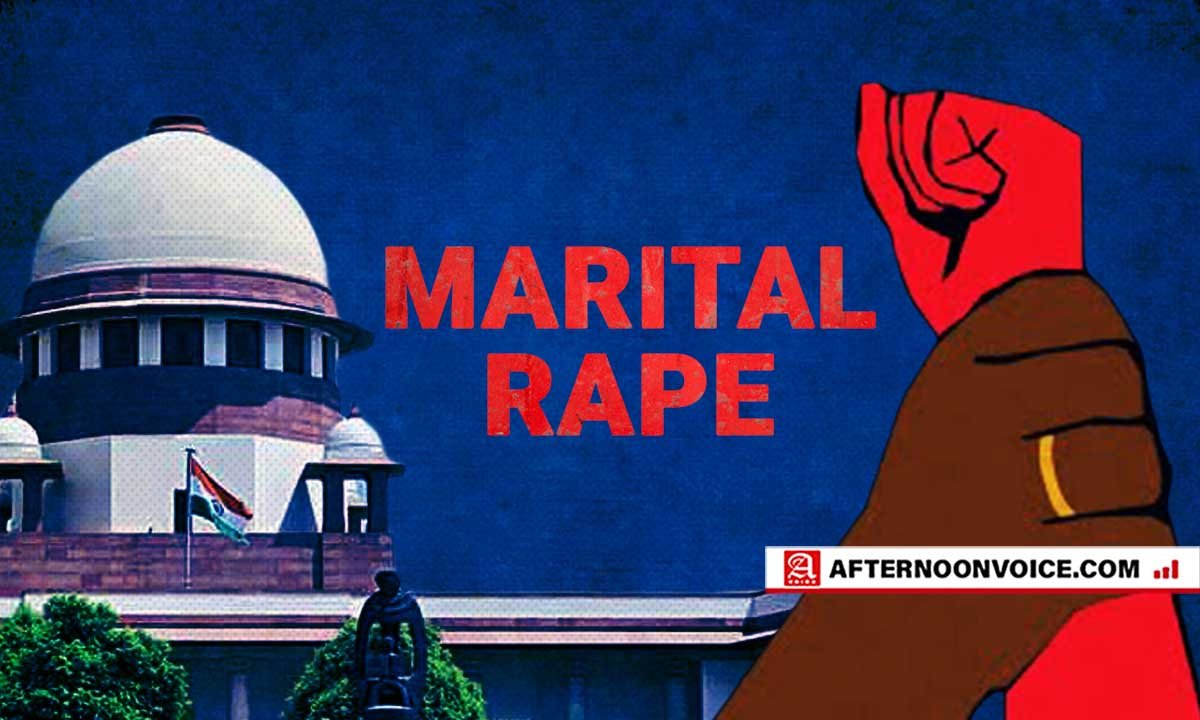
In cases of marital rape, proving intercourse brutal is irrelevant 14
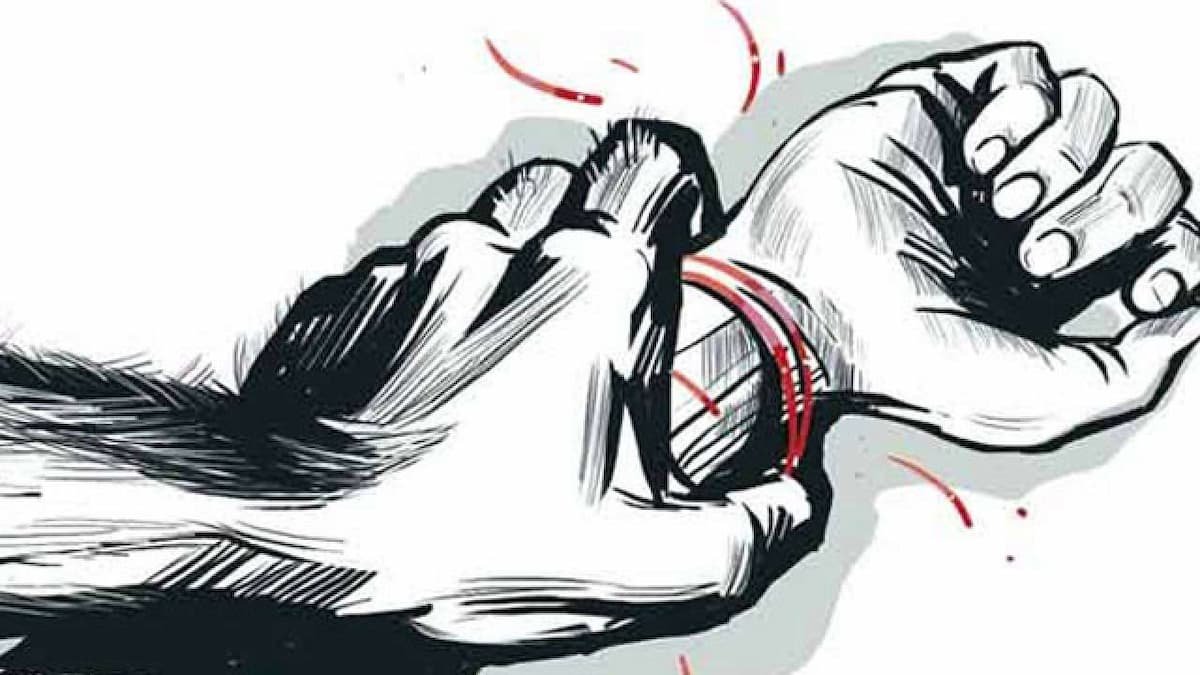
On the widely debated question of criminalising marital rape, the Delhi High Court today delivered a split verdict. The case will now go to the Supreme Court. Two judges, Justice Rajiv Shakdher and Justice Hari Shankar, failed to agree on their verdict on a batch of petitions seeking to make marital rape a crime. The petitions, filed in 2015, challenge an exception under rape laws that protect men who have non-consensual sex with their wives from criminal prosecution if the woman is not a minor, or above 18. Justice Shakdher said the exception violated Articles 14, 19 and 21 of the Constitution dealing with the Right to Equality, Freedom of Speech and Expression and Protection of Life and Personal Liberty. The judges had reserved a judgement on February 21 after lengthy hearings on the rape law and the exemption for marital rape.
People rarely report marital rapes in rural areas. There is absolutely no way a man can fight marital rape charges. What evidence and defence is he supposed to present if falsely accused? Court already specified that the sexual intercourse by a man with his own wife, the wife not being under fifteen years of age, is not rape. As per this exemption, even if it is proven (say, by a video clip), that a husband has raped his wife, he cannot be charged with rape. But even if this exemption is removed, the victim would have to prove beyond reasonable doubt that it was rape. By the very nature of the crime, happening in the personal space and with forensic evidence being unreliable, it is inevitably very difficult to prove marital rape. So, the obvious proof is only available in the most heinous and obvious cases. However, as per the blank exemption, even these cases will not qualify as rape.
Right now, all she can do is file cases under the domestic violence law. There is a clear-cut difference between marital rape and other kinds of violence and the punishment for the two should be different. The primary reason marital rape is not a crime in India is because they considered marriage a tacit lifelong agreement of being available for sex. This kind of thinking comes from deep-rooted patriarchal standards.
India is a couple of decades behind the curve as the discussions on those topics have not permeated the society beyond just a thin layer at the top. A discussion on a variety of other social topics – ranging from dowry to widow burning to untouchability – was a priority for our reformers, mostly. Since the discussions did not take place and social understanding not yet developed, even the courts have been slow to ensure progress.
Although it is a fact that marital rape is an extremely difficult crime to prove, but that is hardly a justification for not calling a crime out for what it is. Currently, the Indian legal system does not recognize marital rape to be a crime. There is no legal penalty for any individual undermining the consent of their spouses and forcing sexual acts on them. And it is challenging, if not impossible, to put an end to a crime if they cannot prosecute it.
There is no louder sanction to a crime than when the law refrains from declaring it a crime. If there is no fear of punishment and penalty, what stops an individual committing a crime from doing so with impunity? Simultaneously, we need to focus on educating and empowering our women, freeing them of the shackles of financial dependence. The more educated and empowered the women, the lesser their dependence on men and the less likely they would be to put up with violence of any type within a marriage.
This is perhaps the most challenging, would be widespread social change, open conversations and education regarding positive consent, sex education and lifting social taboo. If a woman consistently refuses to have sex, a man does not have the right to enforce said marital contract by forcing himself upon his wife. The law cannot order his wife to have sex, either. The redress for this situation, as provided by the law, is a dissolution of the marriage, an option available to either spouse.
Also, the way to decide whether the benefits of a law prosecuting marital rape it is a complex problem. Yes, there are women who undergo extreme mental trauma in abusive marriages and yes, there are women taking advantage of this. Is the suffering of a raped wife greater than that of a falsely accused woman and is there a statistic showing both cases?
Marital rape can often occur as part of domestic violence and abuse say thinktanks 16
The Delhi High Court is scheduled to pronounce on Wednesday its verdict on a batch of pleas seeking the criminalization of marital rape. A bench of Justices Rajiv Shakdher and C Hari Shankar had reserved its judgement on February 21 on the petitions seeking to strike down the omission granted to husbands under the Indian rape law after conducting NSE -5.52% hearings on the issue.
The petitioners had said that marital rape was the biggest form of sexual violence against women and the Delhi government had said that this act was already covered as a “crime of cruelty” under IPC. NGO, Men Welfare Trust (MWT), which is opposing the batch of petitions seeking criminalization of marital rape, had argued that sexual intercourse between a husband and wife cannot be treated at par with that in non-marital relationships as the issue of consent cannot be divorced from the context of a marriage. It had submitted that the Domestic Violence Act was specifically promulgated for recognizing spouse sexual violence.
However, the Centre told the court in January that it was “re-looking” at its earlier stand on the petitions as that was brought on record in the affidavit filed several years ago. The petitioners have challenged the constitutionality of the marital rape exception under Section 375 IPC (rape) on the ground that it discriminated against married women who are sexually assaulted by their husbands. Under the exception given in Section 375 of the IPC, sexual intercourse or sexual acts by a man with his wife, the wife not being minor, is not rape.
When we asked the civil society members, they all believe that Marital rape can often occur as part of domestic violence and abuse.
Senior Adv Rohini Salian said, “The main ingredients of Rape as an offence consist of ‘against the Will of woman and without her consent’. When a woman is married to a man, she consents to live with him and takes the wows prescribed. She is treated with dignity as a ‘better half’. She retains her identity as a person. Marriage does not take physical and legal rights. If the law protects the right of a woman, it should be available to her as a single woman or married. If that is so, sexual intercourse against her consent and will would amount to using force and assault on the body and dignity of the woman hence she needs to be protected by Law. This is subject to proper evidence and proof in the Court of Law.”
Adv Mrinalini Deshmukh said, “Any forcible sex by the husband on the refusal or inability to give consent by wife amounts to marital rape one of instance should not be construed as marital rape Even today it’s a marital wrong amounting to mental cruelty and emotional violence and if proven results in compensation.”
Sanjay Bhide, Founder, TransAsian Chamber of Commerce & Industry said, “There must be punishment for marital rape. But, how can one gather evidence against it? If it is clubbed with domestic violence, one may be able to gather some evidence. It is a very tricky situation! With advanced education and misconception about equality, there is a growing number of false cases against men in urban areas! In rural areas, there is huge evidence of marital rape, clubbed with domestic violence. There are many known incidents of father-in-law and even brother-in-law raping a woman.”
Adv Abbas Kazmi said, “There is no such thing as marital rape. what if a wife pesters a husband for sex even if he is tired and not willing? she seduces him and coerced him into intercourse, will it amount to marital rape? Marriage is a social contract between two consenting adults. so, what is this consent? it is the consent for consummating the marriage. It is very easy for a wife to make allegations that marital rape has been committed if there is a strained relationship between the couple. If a punishment is imposed on such absurd allegations, then it will definitely result in divorce. I’m totally against marital rape.”
Adv Prashant Mali said, “In some cultures where the custom of bride price is common, the payment is seen as earning the man the right to control his wife sexually. Till the 20th century, under American and English law, the legal doctrine was one of coverture, which meant that upon marriage, a women’s legal rights were subsumed by those of her husband. But as of 2019, marital rape has been criminalised in 150 countries, I think now since IPC is getting amended shortly there is a need to have a section, that deals with Marital Rape but with safeguards for abuse.”
“Penetration with male genital”, forced “oral sex” without consent of wife and “age of wife” are taken into consideration to establish marital rape. While physical, emotional and sexual violence if genuine deserves punishment. The lingering process of prolonged court decisions and dates kills the scope of real justice and is a constant reminder to the victim till time heals and she learns to overcome the injury. There should be some law to punish family members who force such marriages and the woman should be allowed to make all these people parties who induced her marriage with such rapist,” said Adv Pratibha Bangera.
Journalist SushmitSinha said, “Marital rape does not just mean forced sex with a woman. Sometimes men are also its victims. Although we can say that women are more victims than men in sexual relations between husband and wife without desire. As far as calling it a crime, I believe that this issue can be legally removed with more social awareness. Both husband and wife have to understand that having sex without a partner’s will is wrong and it can affect their relationship in the long run.”
Padma Shri Dr Mukesh Batra, founder of Dr Batra chains said, “A marriage is more than a legal contract. It is based upon emotional trust and mutual respect. Marital rape is a violation of that bond. sex without mutual consent constitutes rape. Marriage does not sanctify it. It should be punished. A marriage is more than a legal contract. It is based upon emotional trust and mutual respect. Marital rape is a violation of that bond. sex without mutual consent constitutes rape. Marriage does not sanctify it. It should be punished.”
“Indeed, marital rape should be criminalized and punishable offence exactly like there is punishment for any other rape case. But the challenge in this is, that it is very difficult for a wife to prove marital rape, and therefore it is not only about passing a law, it is sensitizing the whole system and law to be more sympathetic toward the victim and understand that she is a victim of abuse. That change of mentality and attitude will actually make the law work for the women,” said Preeti Sharma Menon, AAP – National Executive Member.
Gaurav Kaul said, “Rape means having a physical relation against the wish and will of the partner which is heinous. The feeling of Marital rape by any of the partners is even more heinous as it would indicate that the partners don’t have any faith left in each other which means the relationship is just a hoax and any such act should be dealt with even more severe punishment.”
“Marital rape is not an Indian idea. The civilized society of spiritual India cannot do such a thing. Such types can only exist in a hedonistic nation. The petition was filed by a non-governmental organization affiliated with the Communist Party. The agenda of the communists is to establish an atheist state in India by corrupting Hindu culture. Assuming there is marital rape, there is domestic violence law for it. So, we don’t think there should be a separate punishment for marital rape. Our role is to ensure that no woman, whether married or virgin, is treated unfairly, but we sincerely hope that the Communists will not take advantage of her,” said Chetan Rajhans of Sanatan Sanstha.
Actress Vani Vasishta said, “A woman is forced to have sex when she is not willing to, during her menstruation, after a week of delivery, after a day of abortion; if denies then either get a divorce or tortured emotionally, physically and verbally. There should be punishment for such acts because husbands are being quoted as demi-God however there should be a term for such hypocrites Demi Semi Devil.”
Navvya Singh said, “The word “Marital Rape” doesn’t exist. It simply happens, when there is no love left in marriage. Sex without love or mutual willingness is called Marital rape. Nowadays, people even fall in love outside marriage after marriage. So, in such cases when his/her spouse tries to have sex; it’s simply considered as Marital rape.”
Actress Pooja Bedi said, “Non-consensual forced sex is marital rape. A marriage contract doesn’t give either partner the right to be sexually aggressive or forceful. No means no. Whether you’re single, dating or married.”
Choreographer Sandip Soparrkar, “Marriage is sacred, it is based on mutual love and respect for one another… it’s a promise to take care of each other… if sex is forced by either a man or a woman it means breaking that holy and divine promise. sex should always be consensual… if the act is done forcefully, it surely needs to be punished… does not matter the relationship one share. Marital rape is even worst kind of rape as the faith, the trust one has in a person is totally smashed and broken into pieces… it surely should be punished.”
Savio Rodrigues, BJP leader said, “No man has a right to force a woman to have sex even if the woman is a wife and the man is a husband. A ‘no’ means ‘no’. Being married does not give anyone the right to violate the personal space of another if at that point of time the person is not comfortable at doing any sexual act for whatever reason.”
Author Keval Domadia said, “The lack of respect and understanding results in marital rape. When one of the partners is not ‘in the mood’, that is probably because something is bothering them, it can always be worked out. However, our patriarchal culture dictates that a man can do whatever he likes with his wife but doesn’t teach that his wife is a human too, unless this fundamental cultural flaw is not corrected, this will, unfortunately, continue to rise. There should be a punishment of anything that makes a person do anything ‘against their will’ but, the challenge will be in proving that the plaintiff is a victim.”
Dr Deepak Chaturvedi, MD (Medicine) said, “One fact which needs no logic or explanation is that “for any sexual activity the will and (conscious) consent of other partner is of the utmost importance”. As very well explained in the movie “Pink”, “No means No”. This should apply to the sexual activity with the spouse too. Hence exception 2 in Section 375 needs to be evaluated. Very importantly, in this era when men and women are seen as equal in terms of position, power and decision making then there needs to be some modification in the definition of rape and it should not be restricted to only “Man to woman”. In reality and in many situations, it can be another way “Woman to Man” too.”
Actor Bharat Dabholkar said, “In law rape is rape. It’s forced Intercourse without the consent of the woman. Marital or otherwise.”
Music director Mahima Bharadwaj said, “It’s difficult to implement the law. How can one prove that it was rape or a false accusation when it happens in the privacy of someone’s bedroom? Where will you draw line between wooing your wife to have sex and raping her? What if one partner uses this as a false accusation during a fight or a divorce.”
Zenobia Khodaiji said, “The patriarchal “Pati Parmeshwar” culture. Most of the women themselves in India don’t want to walk out of marriages. Either they are not financially independent or because of social stigma around divorce. They were just taught to put up with the abuse and to keep their husbands happy no matter what. (Female-on-male rape is not even talked about).
In a heart-wrenching, shocking crime in Mumbai, a helpless father and frustrated husband, pandered to double murder. Purshottam Singh Gandhok was living with his bedridden wife and unmarried down-syndrome daughter at Sher-e-Punjab, while his elder daughter stayed with her husband and son near the Mahakali Caves. Gandhok was bearing the burden of these two females for twenty long years single-handedly. He was ageing and there was no rest in his body. More than the present situation, he was worried about the future of his wife and daughter.
Purshottam Singh Gandhok was 89 his age, fed his bedridden wife and mentally ill daughter, and gave them medicines. He was tired of helping them and that his body was not supporting him because of old age and he couldn’t do this anymore. That night, he prepared food and served it to both his wife and daughter and also gave them their regular medicines. He told them that he can’t do this anymore, and was worried about who will take care of them if he dies. He apologised to both of them and put them to sleep.
Gandhok’s wife, Jasbir Kaur, had undergone angiography and suffered from knee problems. Kaur, who was bedridden for ten long years, and their daughter Kamaljeet Kaur entirely depended on Gandhok. Both, turn by turn, needed the attention of Gandhok. One fine day he could not take the stress and slashed their necks with a knife, killing them instantly.
At 8.30 am the next morning, Gandhok called his elder daughter and informed her about the murder. His daughter, Anand, rushed to her parents’ house, but Gandhok refused to open the door until the police arrived. Anand then dialled number 100 and informed the police about the incident. He spent around 12 hours with the bodies before calling his other daughter, Gurvinder Kaur Rajbans Anand, 58, in the morning.
Police broke open the door to find the bodies of the two women lying on blood-soaked beds with their necks slashed. When Anand asked her father why he had killed the two, Gandhok told her that he was worried about who would take care of them after he died. The accused told the police that he waited for both to fall asleep and later picked up a kitchen knife and slashed their throat. Doing that was difficult. He went through a lot of emotional trauma, but his health was signalling his end. He knew he would spend the rest of his life in jail. But he preferred that jail, then the one he was living in.
Gandhok told the police that he wanted to end his life but could not do it. Police arrested Gandhok for the double murder and presented him before the court. When his daughter asked Gandhok why he did this, he replied, “I killed them as I could not see them in pain and I could not take care of them anymore.” His daughter was mentally ill since childhood and depended on her parents. Gandhok has a son and three daughters. The son had not kept in touch, and one of his daughters stayed in another state. Gandhok had retired from the mechanical transport supply department of the Indian Army. Just a week ago, they had shifted from Virar to be close to the third daughter who stays in the Sher-e-Punjab locality.
Gandhok was in the Army in 1976 when he sustained a bullet injury to his leg. He later started driving a car in Mumbai and then started a small shop. However, he had to shut the shop and had been taking care of his wife and daughter ever since.
Purshottam Singh Gandhok is now free from his painful routine. He was mentally prepared for the consequences, rather now he feels much relieved. Despite having so many children, no one felt the need to support their mother and sister. They took their old father for granted, forgetting the fact that he has aged and he too needs care. An 89-year-old retired soldier killed his ailing wife and young daughter by slitting their throats. He did not regret the same, the accused said – I did not make any mistake in killing them, I did what was right. As a society and as a family, what are we doing to our loved ones? I wish the daughters and son could have shared some responsibilities by offering some relief to the old man. Today’s scenario would have been much better.
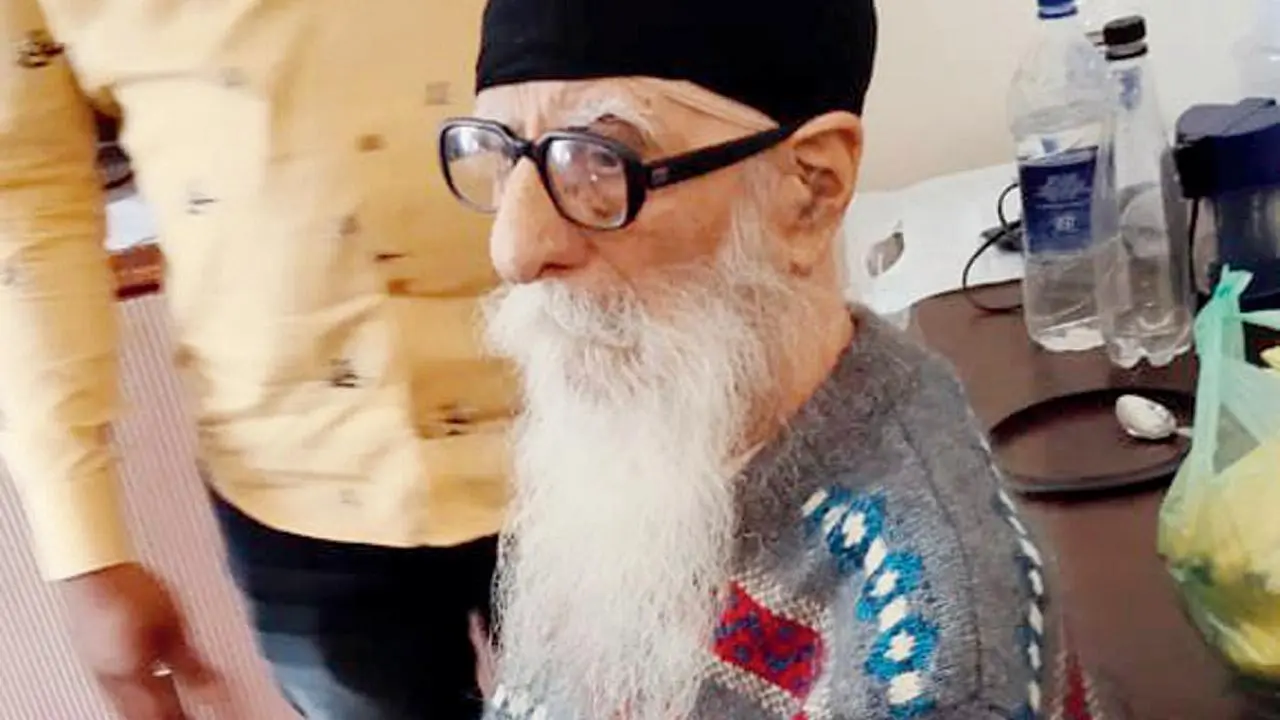
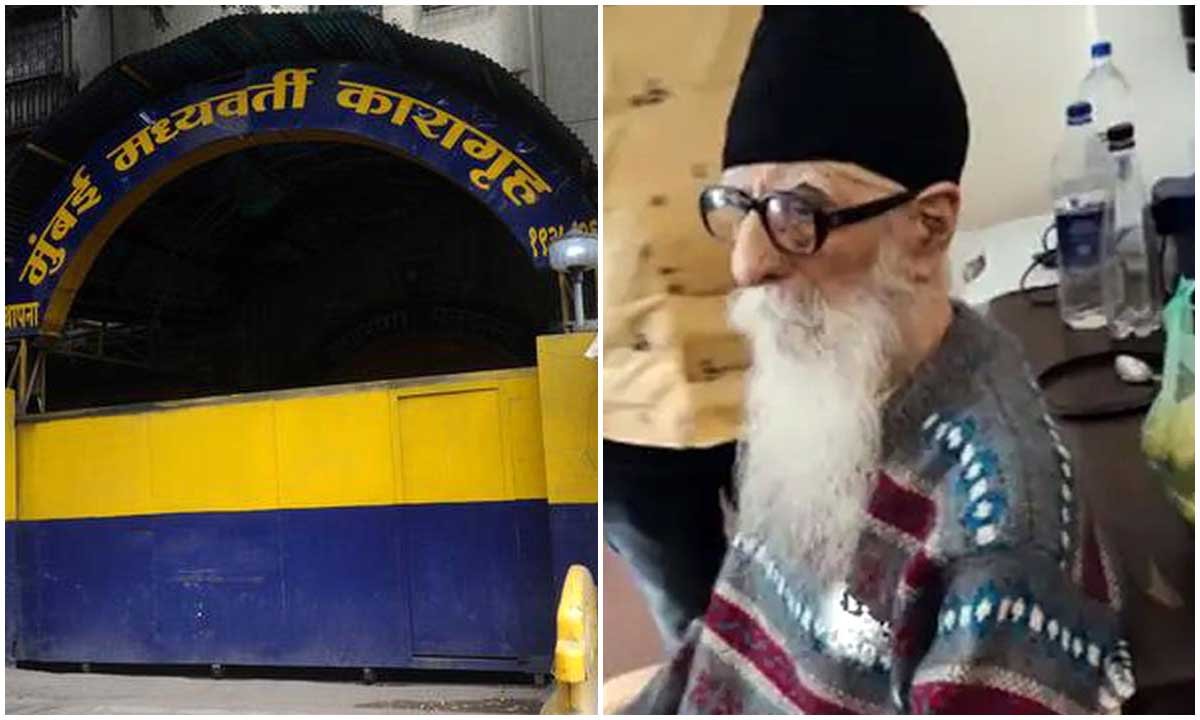
A 90-year-old murderer getting better in Arthur Road jail 19
Purshottam Singh Gandhok killed his ailing wife and down-syndrome daughter on February 6 out of irritation as he had to take care of them. After the murder, he landed in Arthur Road jail. After spending some time there, his health is improving. Meghwadi police on Friday submitted the 155-page charge sheet before the Andheri Magistrate court, which revealed that Gandhok had been doing all house chores and also taking care of the two victims alone for 20 long years. Gandhok also wanted to end his life on the same day but failed.
When Gandhok was arrested, he could not walk properly and was very weak, but now he can walk properly and even talk with his inmates. Police gave him food on time and cared for him. They also interrogated him in custody but didn’t find any other reason behind the murders. After his police custody ended, they sent him to Arthur Road Jail, where his health improved further.
Gandhok was frustrated with his bedridden wife and mentally challenged daughter. He took care of them for 20 long years all alone, but at this age, his body was giving it up. He could not stand on his own and worried about their future. Circumstantial challenges forced him to kill both of them. Police also recovered a knife which he used to kill his wife and daughter from his residence. The bloodstains on the knife matched the deceased’s blood.
The charge sheet added, “In the investigation, police also found out that Gandhok didn’t want to trouble his other daughter. After killing his wife and daughter, he called his older daughter at home but didn’t open the door and called the police.