Home Blog Page 677

Prime Minister’s flyover fiasco: BJP calls it a death threat and Congress calls it a flop show

prime minister, narendra modi, modi, pm modi, punjab, modi in punjab, security breach, breach, channi, pm channi, punjab
Prime Minister's flyover fiasco: BJP calls it a death threat and Congress calls it a flop show 2

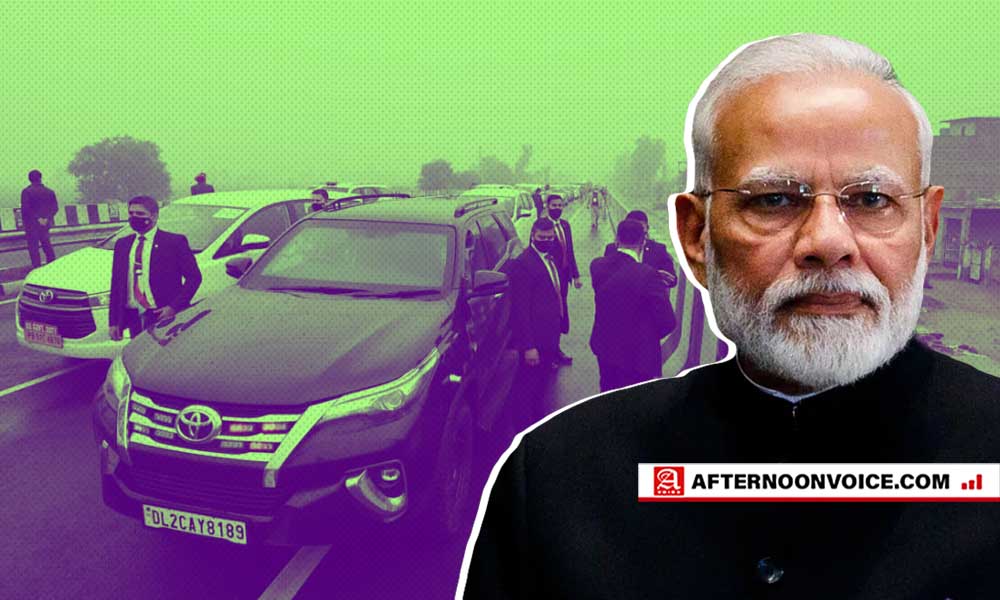
Prime Minister Narendra Modi’s visit to Punjab summed up with humiliation on Wednesday, 5 January, and this has spiralled into a war of words between the BJP-led Union government and the Congress-led Punjab government, also on social media. Each political party and their supporters are backing their agenda but none of them points towards those agencies and the Home Minister Amit Shah for these security lapses.

The blame actually lies with a number of agencies. Neither the Punjab Police nor the Special Protection Group responsible for PM’s security can escape blame on this. The shortest route from Bathinda airport to Hussainiwala is 106 km, passing through Kotkapura, Faridkot, and Ferozepur. On a normal day, this would take two to two and a half hours. Why did the Punjab Police give clearance for the PM’s convoy to take this route at such short notice? Why didn’t the SPG red-flag it?

The entire route passes through districts like Bathinda, Faridkot, and Ferozepur, which are in rural Malwa – the epicentre of the farmers’ protest. So surely, central agencies, like the Intelligence Bureau, should have anticipated protests? Ideally, when it was known that it wouldn’t be possible for the PM to travel by chopper from Bathinda to Hussainiwala, his visit should have been cancelled, instead of trying to take him there by road. Above all when briefed to the PM, why did he give his nod?

It isn’t clear whose call it was. The MHA claimed that the Punjab Police gave the clearance. Chief Minister of Punjab Charanjit Singh Channi claimed that the Punjab Police had limited say in the matter and that they had cleared the roads by convincing the protesters. But he also said that the problem occurred due to a last-minute change of plans.

PM landed at Bathinda airport, and from there, he was supposed to go to the national martyr’s memorial at Hussainiwala by helicopter. This is the plan that had been decided upon by the Center and the Punjab government in advance. However, it became clear after landing that going by chopper would not be possible due to bad weather. Therefore, it was decided to take the PM by road to Hussainiwala.

About 25 km before Hussainiwala, and just before Firozpur city, the PM’s cavalcade was stranded allegedly due to protesting farmers blocking the road. The PM’s convoy turned back and went to Bathinda, and all his events were cancelled.

At the airport, ANI quoted the PM as having told the Punjab government officials to “thank your CM that I reached Bathinda airport alive” – in what is being seen as a sarcastic dig at the state government. The Ministry of Home Affairs issued a statement accusing the Punjab government of a lapse in the PM’s security.

CM Channi held a press conference and expressed regret for what happened. But he also claimed that there was no threat to the PM’s life and that the protesters shouldn’t be seen from a security point of view. Now, the entire row is stuck in between the security aspect and the political aspect.

BJP leader Smriti Irani gave very melodramatic statements to the media, BJP president JP Nadda and several others BJP leaders also attacked the Punjab government for the alleged “security lapse.”

 CT Ravi, BJP general secretary went to the extent of tweeting “Desh ke gaddaro ko goli maro (shoot the traitors)”. Pro-BJP channels are running, “Modi managed to escape danger.”

Later on, Wednesday night, the BJP released a video alleging that there was a conspiracy to unleash violence by “Pakistanis, Khalistanis and the Congress” and claimed that it was foiled by PM Modi. The narrative is basically to highlight the alleged “security threat in Punjab” from “anti-nationals” and how the PM is the “only one fighting it”.

The political spin is also evident from the fact that this is not the first time that the PM’s convoy got stranded. But the allegation that his “life was under threat” is being made for the first time in such a situation.

World No. 1 Novak Djokovic denied entry to Australia, has visa cancelled

australia open, novak djokovic, djokovic, covid-19 vaccination, vaccination, tennis player, world no. 1
World No. 1 Novak Djokovic denied entry to Australia, has visa cancelled 4

Novak Djokovic’s chance to play for a 10th Australian Open title was thrown into limbo on Thursday when the country denied him entry and cancelled his visa because he failed to meet the requirements for an exemption to COVID-19 vaccination rules.

The top-ranked Djokovic announced on social media Tuesday that he had “exemption permission” and landed in Australia late Wednesday after receiving a medical exemption from the Victoria state government that would shield him from the strict vaccination regulations in place for this year’s first major tennis tournament.

But border authorities did not accept the exemption. The Australian Border Force issued a statement saying Djokovic failed to meet entry requirements.

“The rule is very clear,” Prime Minister Scott Morrison told a news conference Thursday. “You need to have a medical exemption. He didn’t have a valid medical exemption. We make the call at the border, and that’s where it’s enforced.” Health Minister Greg Hunt said the visa cancellation followed a review of Djokovic’s medical exemption by border officials who looked “at the integrity and the evidence behind it.” He said Djokovic was free to appeal the decision, “but if a visa is cancelled, somebody will have to leave the country.” The president of Djokovic’s native Serbia’s blasted the “harassment” of the star, who was detained overnight at Melbourne Tullamarine Airport. The 20-time major winner had to wait more than eight hours at the airport to find out if he would be allowed into the country. He was later moved to a hotel, pending arrangements for a flight or legal action.

Morrison confirmed the cancellation in a Twitter post: ”Rules are rules, especially when it comes to our borders. No one is above these rules. Our strong border policies have been critical to Australia having one of the lowest death rates in the world from COVID, we are continuing to be vigilant.” Responding later to questions about confusion between the different requirements of federal and state governments, Morrison said it was ultimately up to individual travellers to have correct documentation when they arrive.

The prime minister also rejected the suggestion that Djokovic was being singled out, but he acknowledged that other players may be in Australia on the same type of medical exemption and visa.

“One of the things the Border Force does is they act on intelligence to direct their attention to potential arrivals,” he said. “When you get people making public statements about what they say they have, and they’re going to do, they draw significant attention to themselves.” Anyone who does that “whether they’re a celebrity, a politician, a tennis player…they can expect to be asked questions more than others before you come.” The medical exemptions, vetted by two independent panels of experts and based on information supplied anonymously by players, had been designed to allow Djokovic to play in the Australian Open, regardless of his vaccination status for COVID-19.

He has spoken out against vaccines in the past and has steadfastly refused to acknowledge whether he received any shots against the coronavirus.

His father, Srdjan Djokovic, told the B92 internet portal that his son was held at the airport “in a room which no one can enter” and guarded by two police officers.

Serbian President Aleksandar Vucic said on Instagram that he spoke to Djokovic while he was being held at the airport. He said Serbian authorities were taking measures “so the harassment of the best tennis player in the world be stopped in the shortest possible time”.

Djokovic’s revelation on social media that he was heading to Australia seeking a record 21st major title instantly became a hot political topic, with many Australians furious that he was granted an exemption to enter the country. Critics questioned what grounds he could have for the exemption, and backers argued that he has a right to privacy and freedom of choice.

Australian Open tournament director Craig Tiley defended the “completely legitimate application and process” and insisted there was no special treatment for Djokovic.

The Victoria state government has mandated that only fully vaccinated players, staff members, fans and officials can enter Melbourne Park when the tournament begins Jan 17.

Only 26 people connected with the tournament applied for a medical exemption and, Tiley said, only a “handful” were granted.

Among the acceptable reasons for an exemption are acute major medical conditions, serious adverse reaction to a previous dose of COVID-19 vaccine or evidence of a COVID-19 infection within the previous six months.

Djokovic tested positive for the coronavirus in June 2020 after he played in a series of exhibition matches that he organized in Serbia and Croatia without social distancing amid the pandemic.

Concerns about Djokovic’s visa status started building Wednesday.

Morrison initially said the medical exemption decision was a matter for the government of Victoria, where Melbourne is the state capital.

But Home Affairs Minister Karen Andrews then clarified the border process.

“While the Victorian government and Tennis Australia may permit a non-vaccinated player to compete in the Australian Open, it is the Commonwealth government that will enforce our requirements at the Australian border,” Andrews said.

“If an arriving individual is not vaccinated, they must provide acceptable proof that they cannot be vaccinated for medical reasons to be able to access the same travel arrangement as fully vaccinated travellers.” When asked again about Djokovic’s case later Wednesday, Morrison added: “If that evidence is insufficient, then he won’t be treated any different to anyone else, and he’ll be on the next plane home.”


Dr Sindhutai Sapkal was an inspirational epic of bravery, devotion and charity

dr sindhutai sapkal, sapkal, sindhutai, social worker, social activist
Dr Sindhutai Sapkal was an inspirational epic of bravery, devotion and charity 6

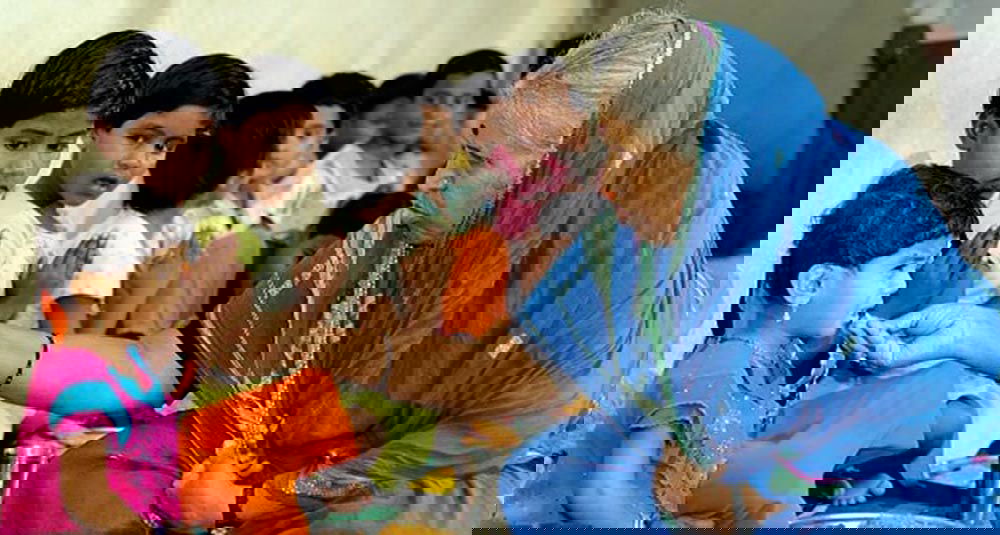
The proverb ‘simple living high thinking’ aptly suits Sindhutai Sapkal. Her simplicity of life and high thoughts in morale and in conduct is rare. She never displayed her possessions everywhere and to everyone; it just got noticed by the people and her moral highness and purity of thoughts spread across the globe. Sindhutai Sapkal became a social activist after a traumatic life.

Born in a poor, cattle-grazing family in Wardha as Chindi (Ragamuffin), Sindhutai was first married off at the age of 10 to a man who was 20 years elder to her and then abandoned by her husband on charges of infidelity.

Travelling through the backwaters of Maharashtra, the Braveheart never abandoned hope and courage and ended up in San Jose on a fund-raising mission for her orphanage which still provides shelter to homeless kids.

Sindhutai was born in the Wardha district of Maharashtra on November 14, 1948. She studied only up to class 4. After her marriage, she settled in the Navargaon forest area of Wardha. During her pregnancy, a local landlord spread rumours about her, following which her husband abandoned her, her own family slammed the door on her and the community boycotted her. Sindhutai then gave birth to her child in a cowshed.

She made her living by singing and begging on trains. During this period of struggle, she realized that there were hundreds of children who needed a mother. It then changed the course of her life as she started adopting orphaned and abandoned children. Sindhutai ran an orphanage called Sanmati Bal Niketan Sanstha – in the Hadapsar area of Pune.

In this constant tussle to survive, she found herself in Chikhaldara, situated in the Amravati district of Maharashtra. Here, due to a tiger preservation project, 84 tribal villages were evacuated. Amidst the confusion, a project officer impounded 132 cows of Adivasi villagers and one of the cows died. Sapkal decided to fight for the proper rehabilitation of the helpless tribal villagers. Her efforts were acknowledged by the Minister of Forests and he made appropriate arrangements for alternative relocation.

Sapkal fought for the rehabilitation of eighty-four villages. In the course of her agitation, she met Chhedilal Gupta, the then Minister of Forests. He agreed that the villagers should not be displaced before the government had made appropriate arrangements at alternative sites. When Prime Minister Indira Gandhi arrived to inaugurate the tiger project, Sapkal showed her photographs of an Adivasi who had lost his eyes to a wild bear. She is quoted as saying, “I told her that the forest department paid compensation if a cow or a hen was killed by a wild animal, so why not a human being? She immediately ordered compensation.

After being informed of the plight of orphaned and abandoned Adivasi children, Sapkal took care of the children in return for meagre amounts of food. Shortly thereafter, it became the mission of her life. She had received more than 750 awards for her social work. She was awarded the Padma Shri in 2021, and the Ahilyabai Holkar Award in 2010 from the Maharashtra government. She had adopted more than 1,000 orphan children.

Sapkal devoted herself to orphans. As a result, she was fondly called “Mai”, which means “mother”. She nurtured over 1,500 orphaned children and through them had a grand family of 382 sons-in-law and 49 daughters-in-law.

We Indians are really proud of this legend, social activist. One ordinary young woman victim of domestic violence, forced to beg and sing in trains for a living, while begging also the abandoned children were her priority, she was homeless but fought off the shelters of many, she had to grill and grind herself in odd situations to make some lives worth living. Such courageous women make a lot of difference to society and the nation at large.

She reached the highest of the stages with her accomplishments, but she never flaunted that in her conduct, always draped in a 9-yard pink or red saree, head covered, one black Bindi of the forehead and simple chappal in feet. She used to look like Aai, a simple mother who carries the universe in her arms for her children.

May her soul rest in peace.


Watch Makarand Deshpande’s “Ram” to perceive Ram within you

makarand deshpande, makrand deshpande, ram, prithvi theater, prithvi, ram play, makrand, theatre artist, ram ke naam, lord ram
Watch Makarand Deshpande's "Ram" to perceive Ram within you 8

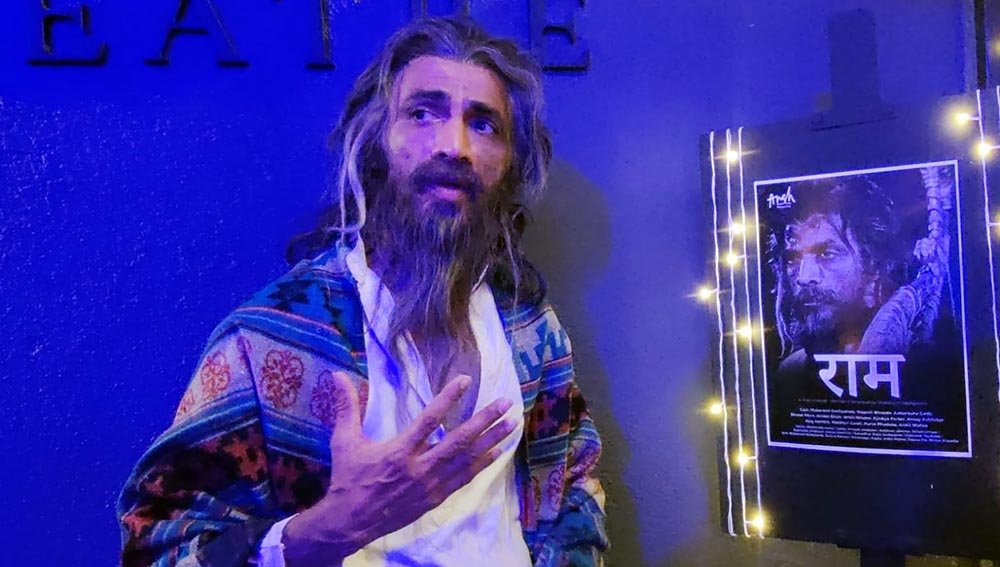
In the era of hatred, where Ram has become a tool to violence and political possession, Makarand Deshpande’s play “Ram” is an eye-opener. Their Play is about an Impotent and helpless law enforcement agency, violent self-declared custodians of Rama and a mad man who forces Ram to come out of the temple with his utmost madness called devotion.

These days ‘Jai Shree Ram’ is said by those unethical morons and hypocrites who lynch fellow humans for their lifestyle, eating habits, caste and religion. Gang Rapes inside a temple, and they proudly say “Jai Shree Ram”? (Will Ram approve this act (or) is this Rama Rajiyam is all about?) Those who bluff people by building Ram Temple at Ayodhya, keeping the issue and heat as it is to polarize Hindu. This insult to Ram by a particular sect is portrayed beautifully in this play. Words once used by pure Bhakts these days are used by Brainwashed Extremists & Gandhi Killers that look like “Devils preaching Sermons”.

The simple message is that “Do not turn off your brain. Faith can be reasonable and rational. Faith is not superstition. As a seeker, you will be looking for reasons for your faith, for the truth about spiritual matters, and for seeing your own evidence of a divine being. Be open-minded about the supernatural, without being gullible. One needs to see within to witness Ram, unless you don’t go crazy with yourself you won’t find him here and there” says writer-director Makarand Deshpande, whose new play Ram opened during the Prithvi Festival yesterday. Theatre was houseful, in spite of it being a working day.

Fearless and honest dialogues, very neat script, it makes you laugh, it tickles your ribs and also sends ripples, makes you sad looking at the irony that we are witnessing in the name of Ram, religion and cast. The drama is a power-packed emotional trip. There is a dialogue in this play “Once people used to humbly greet others saying “Jai Ram Ji ki, but now it scares us”. In many parts of the country, it is a common greeting to relatives and known in the form of sometimes ‘Ram-Ram’ or ‘Jai Siya Ram’ as well. The narrative of greeting has changed to sloganeering for violent attacks.

The play centres on a mad man (Makarand Deshpande) seeking shelter in a Ram temple only to be kicked out by Ram-bhakts because they think he doesn’t look the part of a devotee. It’s an obvious mention to self-proclaimed janitors of religion who frequently create chaos in the country. The mad man and so-called devotees clash prompting a police constable (Nagesh Bhosle) to intervene. The constable and the hobo strike up a conversation and what follows is a two-hour-long commentary on the country’s political, religious and social state of affairs.

What unfurls next is a series of events as the beggar is questioned by people from various walks of life about his claims. We can relate to various scenes in the play since it questions how we as a society have changed. From religious violence to mob lynching. Nagesh Bhosle was hilarious and outstanding on his part, in many scenes, he just stole the show. Nagesh’s versatile act keeps you glued.

The play also features Ajay Kamble, Ninad Limaye and Madhuri Gawli; they all were best in their roles, each actor in the play knew their craft well. The play is Written and Directed by Makarand Deshpande. He felt the need to write the play, mainly due to the “misconception” of Ram. “There have been instances where people who aren’t followers of Ram have been forced to chant ‘Jai Shri Ram’ but I didn’t want to make the play a case study,” he says.

“What charmed me most about the story was that Ram is more human than superhuman as a character. That’s something I wanted to bring out in the play. The simplicity of the character, and the fact that he was a son, a husband and a brother first and God after, is fascinating and this is my version of Ram,” says Makarand.

Markard is known for his roles in movies such as Swadesh, Makdee, and Mahesh Bhatt’s Sadak 2. He is one of the actors and directors who are hugely contributing to Indian theatre. He is an individual who can beautifully balance between films and theatre. “I don’t know why people fail to notice my work on a national level, never mind I will keep doing my best”, he said. His work demands national acclaim. But he is not the one who can be a doormat in political corridors.

“I don’t have to convince anybody of what I am capable of delivering, whereas films are a different ball game altogether. Theatre is always going to be my forte and I have a lot of freedom to express myself here, that’s why I write beyond the frame and that gives scope of improvisation for all my characters,” says Makarand.

In a discourse that seems to spring from a heartfelt need in Deshpande to make people examine received beliefs and check their own majoritarian impulses, the tramp advises the constable to write his own mythological epic. The same custodians of religion campaigner of a single version of the epics, one of which they approve, when there are in fact many. He goes on to demonstrate how the two great Indian epics, Ramayana and Mahabharata, can be married and, in the process, suggests that over time, the world has only gotten more violent and bigoted.

While watching the play and efforts of Makarand to seed that poise belief in people, a few lines of Ramcharitmanas stroke my mind “तुलसी मेरे राम को, रीझ भजो या खीज। भौम पड़ा जामे सभी, उल्टा सीधा बीज॥”. In this quadrant, Tulsidas says that when the seeds are sown in the ground, it is not seen whether the seeds are inverted or straight, but in time all the seeds germinate and all the seeds are inverted. He has done his job, it’s the viewers who have to decide how they want to see their Ram.


Labour Pravin Darekar of BJP caught in con?

mumbai bank, mumbai district bank, pravin darekar, darekar case, pravin darekar case, nawab malik, malik
Labour Pravin Darekar of BJP caught in con? 10

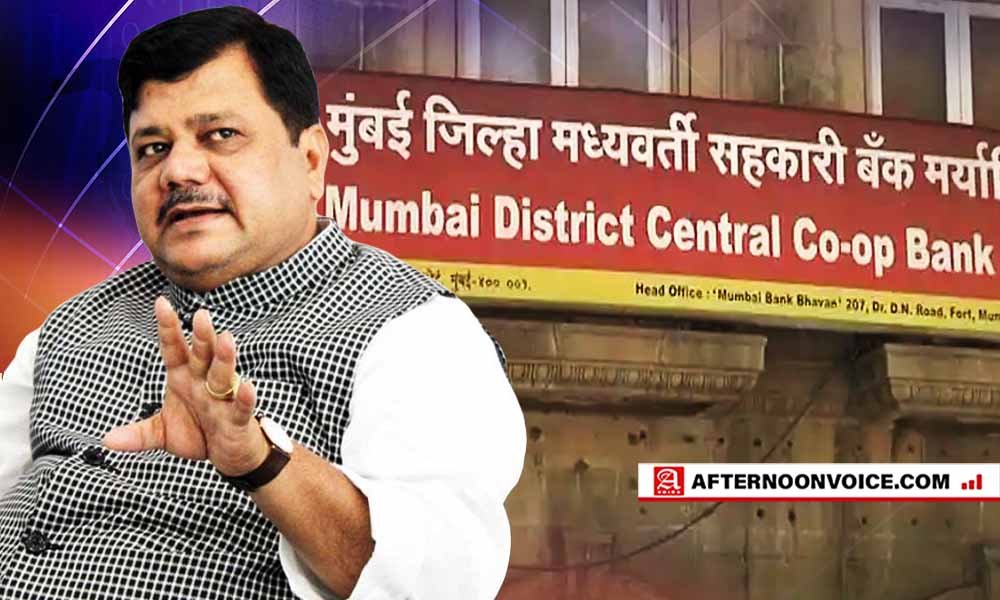
Pravin Darekar declared himself as unqualified as a labourer on January 3, 2022, by the Divisional Joint Registrar of Co-operative Societies in its order. Darekar is not a qualified labourer, but he has been working for the Mumbai District Central Co-operative Bank as a Director and Chairman for the last several years.

Darekar obtained the membership by submitting false information, the order said that he is not eligible to be elected as the director from any category for the next year as per section 78A of the Maharashtra Co-operative Societies Act, 1960. BJP leader and Leader of Opposition Pravin Darekar is under the scanner of the Maharashtra Government in connection with his election to the bank from the labourer category.  

Veteran Congress leader said, “Labour Darekar is as true as Modi a chaiwala or chowkidar, BJP leaders are living high profile life but trying to portray themselves as a common man but the public knows that they are con men.”

NCP Chief Spokesman and Minority Affair Minister Nawab Malik had urged Chief Minister Uddhav Thackeray to take appropriate action against him under sections 199, 200, 420 and 37 of the Indian Criminal Code as well as other appropriate laws as for falsely claiming himself a labourer. “Therefore, an appropriate action should be taken against him under sections 199, 200, 420 and 37 of the Indian Criminal Code as well as other appropriate laws,” said Malik.

According to Malik, Darekar had won the Mumbai Bank election by showing himself as a labourer but he is the leader of opposition in the state legislative council. Further, Darekar’s earnings are very high and he is paying significant income tax. Interestingly, the Divisional Joint Registrar of Co-operative Societies in its order, said the affidavit submitted by Darekar to the Election Commission as a legislator does not include the assets of crores of rupees as well as the entries made as a professional. A person earning Rs 2.5 lakh as legislator-Leader of Opposition cannot be a labourer.

Darekar may have to struggle to continue as the Leader of Opposition in the state legislative council in the wake of yesterday’s order. However, Darekar claimed that he has been selectively targeted on this issue. “Action against me is with vengeance. The cooperation department annually conducts an audit but it seems it was sleeping during that time. I will approach the Bombay High Court against the government action,” he said.

RIP Anathanchi Maye Sindhutai

Sindhutai Sapkal, social worker, sindhutai, mother of orphans, orphanage homes, passes away
RIP Anathanchi Maye Sindhutai 12

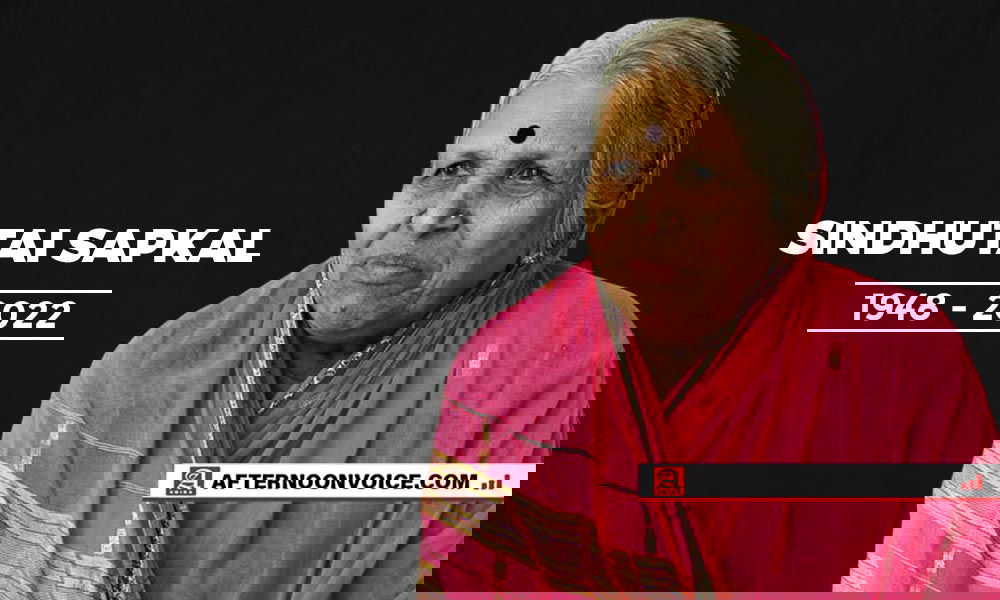
Sindhutai Sapkal, better known as ‘Mother of orphans’, passed away following a heart attack at a private hospital in Pune on Tuesday. She was 74. She was known for her work in raising hundreds of orphans, abandoned and destitute children, as well as towards the rehabilitation of women.

She had undergone surgery on November 24 last year for a large diaphragmatic hernia. She had recovered well, but about a week ago, she developed a lung infection. She suffered a massive cardiac arrest on Tuesday and passed away, said Dr Shailesh Puntambekar, medical director of Galaxy Care Hospital.

Chief Minister Uddhav Thackeray said, “The news of Sindhutai’s death is shocking. She gave motherly care to thousands of orphan children. In her sudden death, an inspirational personality has been taken away from the field of social work.” 

NCP chief Sharad Pawar said, “The kind of social work that Sindhutai has done will inspire generations to come.” Former CM Ashok Chavan said, “Sindhutai herself faced a difficult life but she worked relentlessly to uplift the lives of orphan and abandoned children. Her life is a source of inspiration for millions.”


One can be out of all the troubles if the person imbibes Hanuman in his mind, actions and speech

lord hanuman, hanuman paiting, chalisa, hanuman chalisa, lord shiva, hanuman cartoon, mantra, hindu deity, hindu religion
One can be out of all the troubles if the person imbibes Hanuman in his mind, actions and speech 14

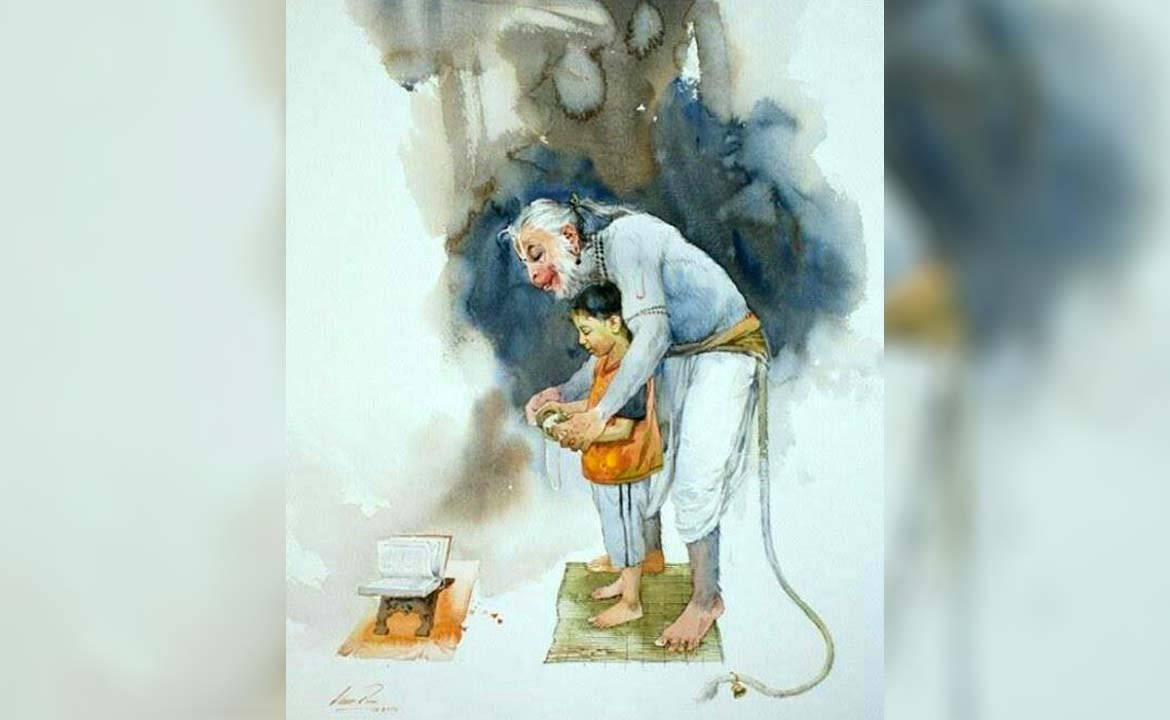
One of the verses from Hanuman Chalisa reads as “Bhoot Pichash Nikat nahi aaven, Mahavir jab naam sunave” which can be translated to – no evil spirit can affect a person who takes the name of Lord Hanuman and recites Hanuman Chalisa at the top of their voice. It removes all sorts of negativity from the mind and soul of the family members and brings peace and harmony within the family.

Let me tell you the story that my grandmother used to tell me; Hanuman Chalisa is one of the great poetic works of Goswami Tulsidas. Once Tulsidas went to meet Aurangzeb. The emperor mocked Tulsidas and challenged him to show the lord to him. The poet ingeniously replied that seeing Rama was not possible without true devotion. As a result, he was imprisoned by Aurangzeb. Even in prison, he maintained his calm because he had the utmost trust in Hanumana, the God of strength.

Tulsi Das then wrote the magnificent verses of the Hanuman Chalisa in that prison. It is said that an army of Vaanar jeopardized Delhi as soon as Tulsidas finished his verse and recited the same. Since then, Hanuman Chalisa holds a special place in the Hindu religion. It is said that by reciting Hanuman Chalisa, one can appease Lord Hanuman and seek His blessings. Reciting Hanuman Chalisa also helps in overcoming the bad effects of Saturn. Some even say Lord Rama gets pleased to hear praises for Hanumana who is his close aid.

Beliefs are that Tuesday is considered as the day of Lord Hanuman, it is the best way to devote the time and thoughts to impress Him and win His heart. Each verse of the Hanuman Chalisa has its own importance. It is said that the recitation of the Hanuman Chalisa at night has some miraculous effect on the person. However, there are many people especially men who take bath early in the morning on Tuesdays and Saturdays and then recite the Hanuman Chalisa.

It is believed that reciting Hanuman Chalisa is very powerful as it helps reduce the effects of Sade Sati, and also bring good health and prosperity. As per Hindu mythology, Hanuman is believed to be the 11th incarnation of Lord Shiva. Ravana died only because he could not handle the 11th incarnation of Lord Shiva as he did with the previous 10 incarnations. So worshipping him not only nullifies all negative planetary effects but also help you achieve whatever you wish and want from him.

The best time to recite Hanuman Chalisa is in the morning and at night. Those under the evil influences of Saturn should chant the Hanuman Chalisa at night 8 times on Saturdays for better results. Lord Hanuman is considered as a God who helps get rid of evils and spirits that can be harmful. The hymn will also help get rid of scary and fearful thoughts. That is why kids and young children worship Lord Hanuman and recite Hanuman Chalisa every day. worshipping Lord Hanuman is one of the best ways to impress Shani Dev and reduce the effects of Sade Sati. According to the stories, Lord Hanuman saved the life of Shani Dev and this when Shani Dev said that He will not harm a true devotee of Hanuman.

We all commit sins knowingly and unknowingly. You can ask for forgiveness by reciting the Hanuman Chalisa. Reciting the opening verses of the Hanuman Chalisa at night at least 8 times helps to remove the sins you may have committed. If one recites Hanuman Chalisa at night, he/she is able to get the divine protection of Lord Hanuman and all his/her obstacles are removed.

High pitched recital of Hanuman Chalisa creates so much positive energy around you that you feel extremely lively throughout the day. It kills laziness and procrastination and makes one more efficient. It also cures small lifestyle ailments such as headache, sleeplessness, anxiety, depression etc.

Reading something is never the way to learn or improve. You read and you forget just as quickly. Nothing sticks in the mind. However, if you chant something over and over again, it becomes the very nature of your subconscious.

Jo shat vaar paath kare koi,

chhutahi bandi, mahasukh hoyi.

The one who chants it a hundred times (for a hundred days), is liberated from all bondages and attains great happiness.

Hanuman Chalisa begins with beautiful lines…

Shri gurucharan saroj raj, nij man mukur sudhari;

Barnau raghubar bimal jasu, jo dayaku phal chari;

Buddhi heen tanu jaani ke,sumirau pavan kumar;

Bal buddhi vidya dehu mohi, harahu kalesh bikar.

Remembering the lotus feet of my guru in my heart,

I’m describing the great glory of Lord Ram which grants the four fruits;

I’m remembering Lord hanuman, acknowledging my utter ignorance and lack of wisdom;

I ask him for strength, wisdom, and knowledge and I beg him to cure me of my limitations;

It means is that you must accept the fact that you’re incapable. Only when you are aware of your flaws can you correct them. And reciting the opening Doha would make you understand this. Each time you recite the Hanuman Chalisa, you’re accepting your ignorance and prayerful for direction. shattering all your ego and pride to be a true learner.


Owaisi slams BJP, Congress over ‘dharma sansad’ hate speech cases

asaduddin owaisi, owaisi, dharma sansad, dharma
Owaisi slams BJP, Congress over 'dharma sansad' hate speech cases 16

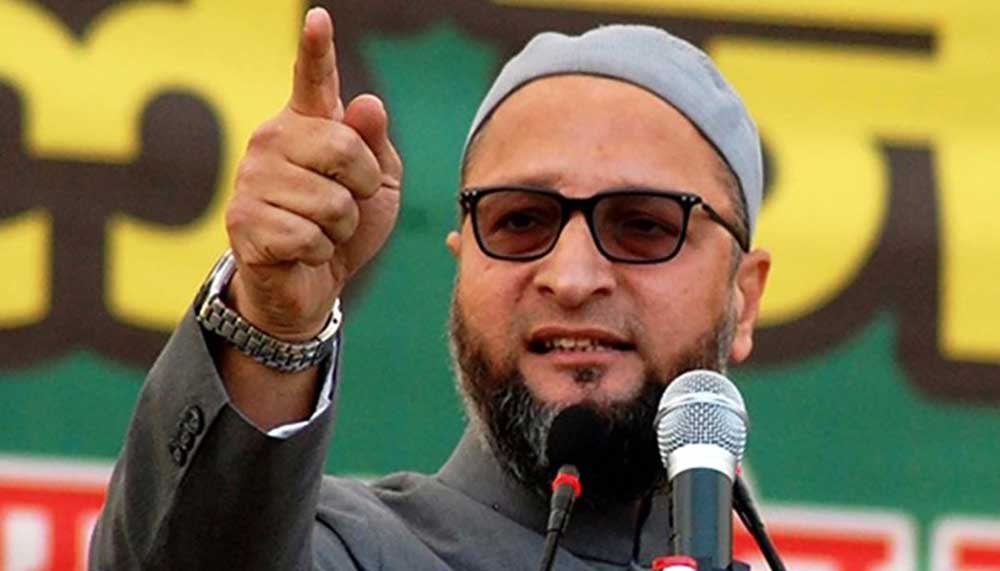
All India Majlis-e-Ittehadul Muslimeen (AIMIM) chief Asaduddin Owaisi slammed both Bharatiya Janata Party and Congress over the issue of alleged hate speeches delivered in ‘Dharma Sansad (religious council) in the states ruled by the two parties. “Dharma Sansad held Uttarakhand discussed eliminating Muslims.

Similarly, Dharma Sansad held in Raipur also talked about eliminating Muslims. In Uttarakhand, BJP is in power and Congress in Chhattisgarh, but no action is being taken by the two governments against anyone,” said Owaisi.

“People say I give provocative speeches, I do not give provocative speeches, I just provide the proof of being alive. If saving the Constitution falls under inflammatory speech, so we will keep talking like this,” he added. Owaisi made the comments on Tuesday while addressing a rally in poll-bound Uttar Pradesh’s Moradabad.

This comes days after Chhattisgarh Police have arrested Hindu religious leader Kalicharan Maharaj for his alleged derogatory remarks against Mahatma Gandhi and provocative statements against minorities at ‘Dharam Sansad’ held in Raipur on December 26. Meanwhile, a five-member Special Investigation Team (SIT) has been constituted to probe the case of alleged hate speech delivered during ‘Dharma Sansad’ held in Haridwar.

Haridwar police have registered an FIR against Yeti Narasimhanand, Sagar Sindhuraj, Dharm Das, Annapurna and Wasim Rizvi aka Jitendra Tyagi in connection with the case.


Varanasi: A small ancient city became the epicentre of politics; it is a major change

kashi, varanasi, demolition, kashi vishwanath, kashi dham, hindu, hindu temples, varanasi temple, hindu, yogi adityanath
Varanasi: A small ancient city became the epicentre of politics; it is a major change 18

The government should be praised where credit is due. While on one hand, they are playing the Hindutva card in order to attract the votes of people who consider their religion more important than public welfare but at the same time, what the BJP government is doing in Varanasi, even just for the sake of getting votes in the UP election is still a commendable job. Not the entire Varanasi is modified and changed. Still, it’s the same, garbage piles, clogged streets, encroachments and above all too much commercialization. Temple complexes are still unclean. You will find stray dogs and cows roaming within the temple complexes, dirt accumulating here and there, water running down from an unknown source. While Modi hasn’t turned Varanasi into Kyoto or even Gujarat yet, there is no denying that things have changed here, though not by the magnitude the outsiders may expect.

Varanasi (Kashi) is the most ancient city in the world and one of the Holy places for Hindus because of the Kashi Vishwanath temple and the Holy River Ganga, according to the Hindu Mythological beliefs if you take bath in Ganga then you will be pure. People take the water of Ganga to their homes for the purification of the place where they live.

Today after so many development activities completed & so many in its last stage of completion & many new projects also launched & on the ground lots of changes can be noticed, still, Ganges is much cleaner than before. Modi Launched the program Namami Ganga for the purification of the Ganga water. In fact, he made one separate Ministry for Ganga and then the in charge of that ministry was Uma Bharti but after the three years when Modi realized that the work is not up to the mark then he transferred that department to Nitin Gadkari, and some progress could be seen.

The National Waterway developed under the Jal Marg Vikas Project (JMVP) will generate around 1.55 lakh direct and indirect employment opportunities, thereby impacting the rural economy positively. As part of the NW-1 project, the Multi-Modal Terminal (MMT) has been constructed on River Ganga in Varanasi. The project is expected to create 55,000 employment opportunities in UP and 50,000 each in Bihar and Jharkhand, he added. Also, it will benefit local communities and farmers along the banks of the Ganga.

Modalities of ferry services, small jetties and vessels are being worked out to facilitate the movement of smaller cargo like agricultural products like bananas, marigold flowers, betel leaf, and vegetables. Inland Waterways Authority of India (IWAI) is working with State Livelihood Missions for imparting skill training to youth, boatmen and other community members so that they could benefit from the employment opportunities.

From the ghats to railway stations, public places are becoming more bearable and cleaner now. Thanks to the Swachh Bharat Abhiyan, certain places of Varanasi like BHU and Assi Ghat are being paid attention, and are much cleaner. Though this needs to spread over the whole town, and this is the responsibility of the municipality.

Upcoming elections forced to pull the socks; BJP is trying its level best to deliver something so that they can talk about hardcore development. Old rulers of the state, BSP and SP keeping no stone unturned, Congress trying its hand and Priyanka Gandhi successfully revived Congress’s fate in Uttar Pradesh. AAP is not very active this time, thousands of Volunteers of BJP and Congress working for their respective leaders in the state, online promotions, social network campaigns, news, word publicity, everything is random for both the ministers. Without a strong performance in this belt, the BJP will not be able to come anywhere near the 272-seat target it has set, and it feels that Modi attending some rallies induce some kind of a swing. BJP policymakers feel that with the western UP already polarized, they need one more boost for eastern UP, so as to bag the entire state. For Yogi people have mixed reactions, e is most hated by some and loved by few.

Uttar Pradesh is a very important state for BJP, BSP and SP. But since there is a division of votes it is possible for an individual to get elected to the Parliament (or to the Legislative assembly) with just about 22 to 30 per cent of the total votes cast. This is a regular but unwelcome aspect of elections in caste-ridden states, particularly in Uttar Pradesh. Earlier the Congress was benefiting from the division of votes. Now BJP may be a beneficiary. But there is still uncertainty.

Meanwhile, good roads,24 hrs. electricity, many new road projects like ring road, airport to junction railway station road etc., all roads in the city have lights now, underground wiring, incinerator and ghat cleaning, many trains from Varanasi to different places of India, trade facilitation centre, many colonies now got interlocking brick roads, sewer connection to every house. These are the things that can fetch a fortune for BJP. But demolished temples and traditional houses of people may dent Yogi’s votes. Above all Brahmin, Voters are not happy with BJP and whichever side they go, that party wins. 

BJP has done some development in Kashi but otherwise, irresponsible leaders of the party never established any communication with people. They never visited their constituency, Yogi failed at various levels. Let’s see how BJP regains power in 2022.


Varanasi demolitions hurt localities; old temples lost in the rubble

kashi, varanasi, demolition, kashi vishwanath, kashi dham, hindu, hindu temples, varanasi temple, hindu, yogi adityanath
Varanasi demolitions hurt localities; old temples lost in the rubble 20

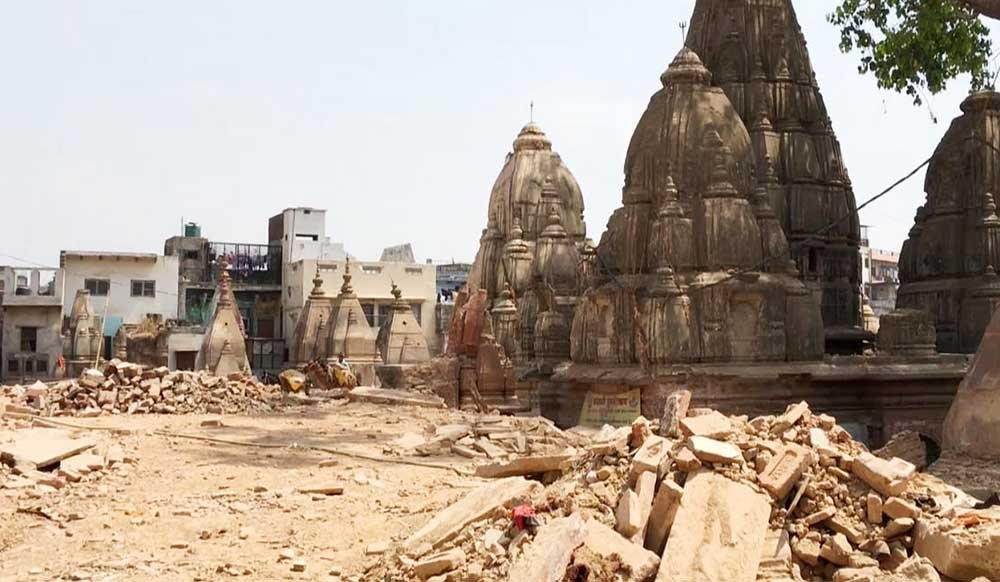
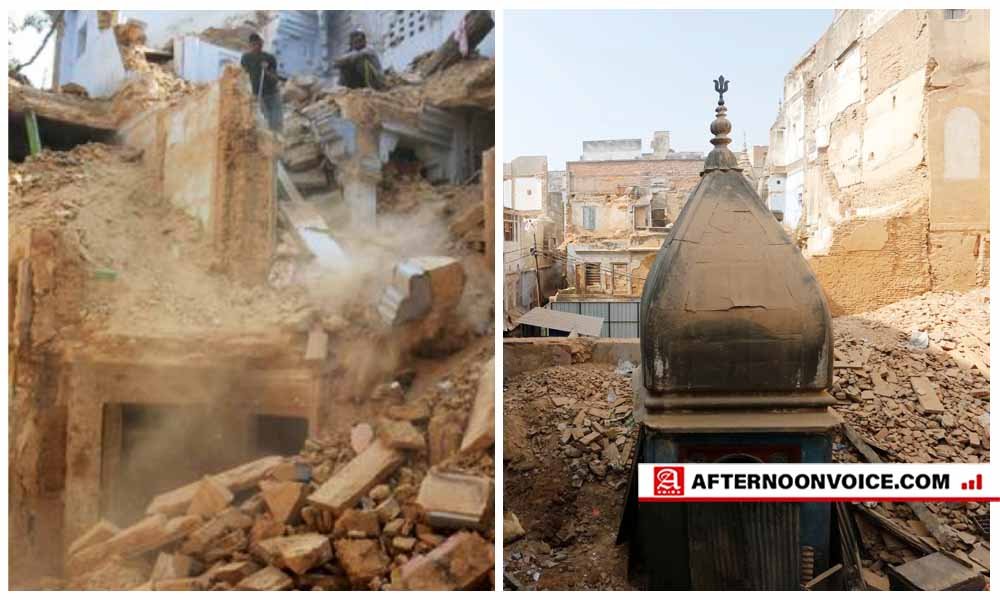
Manikarnika crematorium in Kashi and there was once Jalasen Ghat and Bhikhari Mahal, which is being demolished to make “Gangadwar”. Prime Minister Narendra Modi’s pet project in his constituency to alter the topography of the ancient city has not gone well with his voters. Local Varanasi people complain that dozens of small and medium-sized old temples, most built-in residential complexes, were destroyed along with the scores of shops and ‘Bhavan’s’ to clear the way for the project. 

They see the demolitions as a loss to the Hindu cultural heritage of the city. At least 296 structures have been identified by the government for demolition to provide direct access to the temple from the Ganga.

The mood can be gauged outside Gate No. 3 of the Mughal-era Gyanvapi Mosque, which shares a boundary with the Kashi Vishwanath Temple. 

Entire Varanasi is dug and demolished and the modern structures make it look like a concrete jungle. The most common voice among the critics is that demolition is ruining the mainstay of Varanasi, its heritage structures and narrow lanes. Many are irked by the demolition of temples and historic structures of Kashi. Various taxes were imposed and unnecessary modernization of the city.

Suresh Pratap Singh, a senior journalist from Varanasi wrote a book “Udtaa Banaras” dedicated to the warriors of the Save the Heritage and Temples movement, who fought to protect the Pakkappa culture and civilisation of the Harappan brothers, in Ganga Valley. “Whenever I see temples getting demolished and gods getting dumped in debris, why heart stops breathing its pain.”

Kashi resident Ram Ayodhya Singh said, “By destroying the originality of Kashi, Brahmarakshas has proved that Brahma, Vishnu and Mahesh are also man-made. Those who destroy and distort should know what is called creation and beauty?”

Ganesh Shankar Upadhyay, head priest of the Kashi Karvat Mandir says, “The modus operandi of the project disregards the heritage of Varanasi and feels consent was not acquired before the demolition drive. “I am not against development. But since it is a religious site and development is taking place in the name of religion, development must also be based on it,” he added.

Kanhaiya Tripathi, Save Ganga activist, regrets that despite the scale of demolition, pro-Hindu groups have not come out in protest like they should. “After an initial protest by several groups and some religious heads, the campaign against the corridor seems to have fizzled out, with locals giving in to the pressure of better compensation. He also hit out at the alleged hypocrisy of the BJP leaders.”

Sharad Shukla said, “Modi has become modern Aurangzeb, Baba Vishwanath has been branded, religious goods have become tourism, we are hurt.”

Varanasi residents in the holy city, who were displaced by the ambitious projects, were not so enthused when the old structure was demolished for modern constructions. Many families are displaced by Modi’s ambitious project. 

“We were a joint family and lived together happily till our property was taken up for the corridor. Now, we live separately at different places in Banaras. Not only did our century-old family property get dismantled but our joint family, too, got broken,” said Varanasi resident Prabhat Singh.

Lalji Yadav, a city resident, who lives in a lane near the project site, also alleged that several heritage buildings were bulldozed in the name of development. “Many of these structures had ornate carvings and should have been preserved. “Vikas ke liye Virasat ki aahuti di gayi hai” (Heritage has been sacrificed at the altar of development),” he said.

Pradeep Kumar Bhalla of Varanasi said, “As per information available no heritage buildings have been destroyed. Maybe some local buildings have been uprooted for better planning. Even to carry out changes in Heritage buildings, the national government has to take permission from the UNESCO world heritage committee. They will not allow any nation to destroy any heritage site.”

Khanday Imtiyaz, the Editor at Alternate Kashmir stated that “Recently Indian politics seems to be religiously centred. With the inception of BJP, the developmental progress has come to halt and the govt is after only two things either their Hindutva agenda or Pakistan as an enemy. Unfortunately, all other parties seem to have got influenced and instead of development on an economic, technological and social level, their politics have mainly reduced to who is better Hindu or anti-Hindu.”

Chander Sharma works at the Bank of India, says, “I have seen Varanasi pre and post-Modi. Earlier it was like any other congested overcrowded old City. Roads were narrow, plagued by encroachments, electric wires hanging overhead, potholed roads, dirty Ganga, ghats in a state of total neglect-dirty and uneven. I went to Varanasi again after attending Kumbh in Prayag. Ghats are now more beautiful than any other ghats in India, Ganga Aarti was the most wonderful and spiritual experience, all-electric wires have gone underground, roads are well paved and broader and above all, we could perform the most peaceful Abhishek in Vishwanath Temple.”