


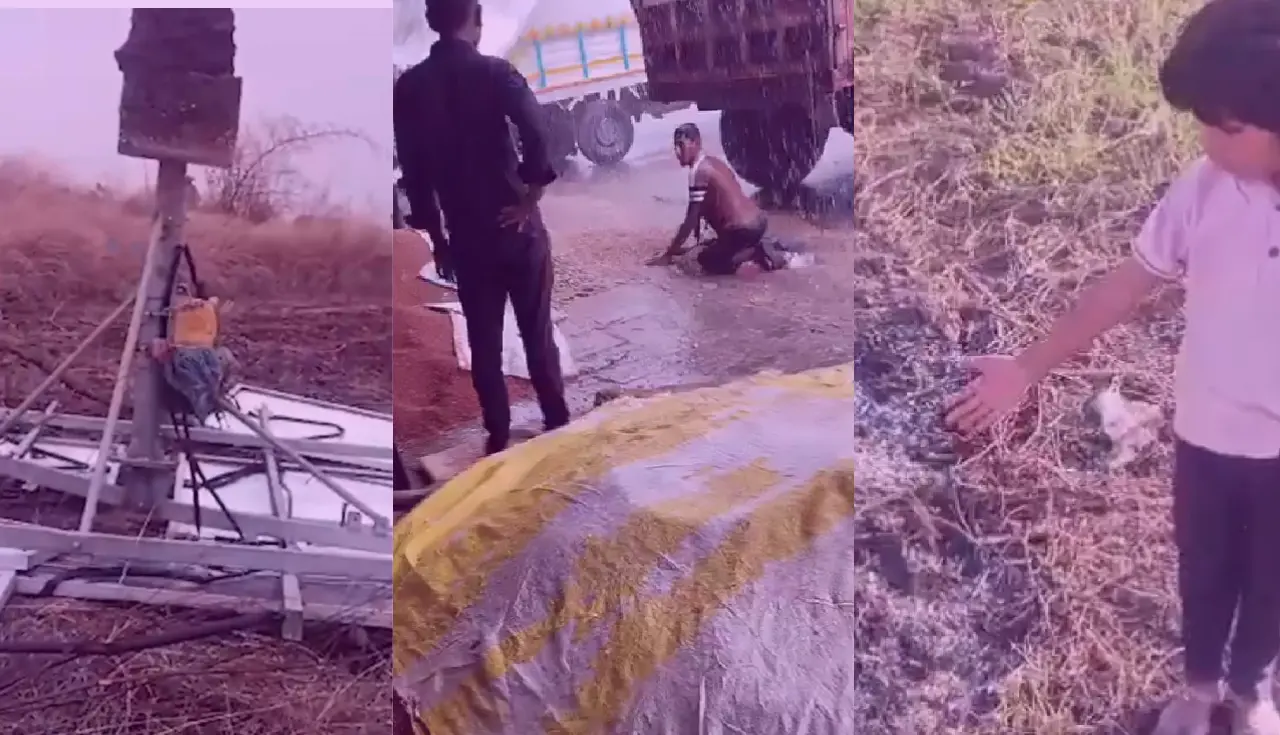
Another year, another flood of promises. As unseasonal rains once again devastate Maharashtra’s farmlands, one cannot help but feel a familiar ache — the grief of the farmers and the apathy of the state machinery. From Marathwada to Vidarbha, from Udgir to Washim, the skies weep, and with them, so do the forgotten sons of the soil.
In the recent spell of early monsoon rains, harvested crops worth lakhs have been reduced to waste. Farmers, who toiled under the scorching sun for months, watched helplessly as their hard-earned produce drowned in muddy water. Videos went viral — like that of Gaurav Panwar in Washim, frantically trying to save his peanuts from the downpour with his bare hands. The clip struck a chord with the nation, but did it jolt the government into action? Barely.
Yes, Chief Minister Devendra Fadnavis has once again assured compensation. And CM Eknath Shinde too did a symbolic tour of affected farms in Latur, promising that the rigid NDRF norms would be “kept aside” and “maximum help” would be extended. But isn’t that what we hear every single year? Promises in the rain, drowned in delay and paperwork.
The government has clarified that the compensation will be based on norms framed in March 2023 and notified in January 2024. In other words, the system remains the same — sluggish, insensitive, and disconnected from ground reality. A token ₹49 crore was disbursed for temporary relief — barely enough to bandage the wounds of lakhs of farmers across multiple districts. The truth is: the magnitude of loss far outweighs the empathy on display.
Even fishermen were not spared. Their dried fish stock got soaked and destroyed. CM Fadnavis has instructed officials to submit a proposal for compensation. Another file, another delay.
While farmers wait for panchnamas and dangle in hope, they are also expected to fill out complicated online forms under the E-crop system. As Aaditya Thackeray rightly remarked, “Farmers will soon need coaching classes to claim what is rightfully theirs.” It’s a bitter irony — the hands that grow food for millions are expected to navigate digital portals with poor connectivity and even poorer literacy support. No wonder, many farmers feel more victimized by bureaucracy than by nature.
And as if this wasn’t enough, politics continues to muddy the waters. While the present government pats its own back for announcing compensation, questions are being raised: what about timely crop insurance payouts? What about irrigation planning? What about weather-based forecasting and ground-level preparedness? The Opposition accuses the Mahayuti of grandstanding, pointing out that real help was seen more during Uddhav Thackeray’s tenure than now — and perhaps not without reason.
Every year, rains wash away the crops, and with them, a piece of the farmer’s soul. What’s tragic is not just the monsoon, but the monotony of apathy — the same announcements, the same helicopter visits, the same photo ops, and then… silence.
The fate of the farmer in Maharashtra is not just unfortunate — it is a reflection of a governance model that wakes up only after tragedy strikes. Instead of proactive disaster management, we get reactive sympathy. Instead of real-time relief, we get hollow assurances.
Maharashtra’s farmers don’t need another press conference. They need action. They don’t need grand speeches. They need dignity, protection, and timely support. If agriculture is truly the backbone of India, then it’s time we stop watching it break, year after year.
Until then, the farmer stands in his field — drenched not just in rain, but in betrayal.
