


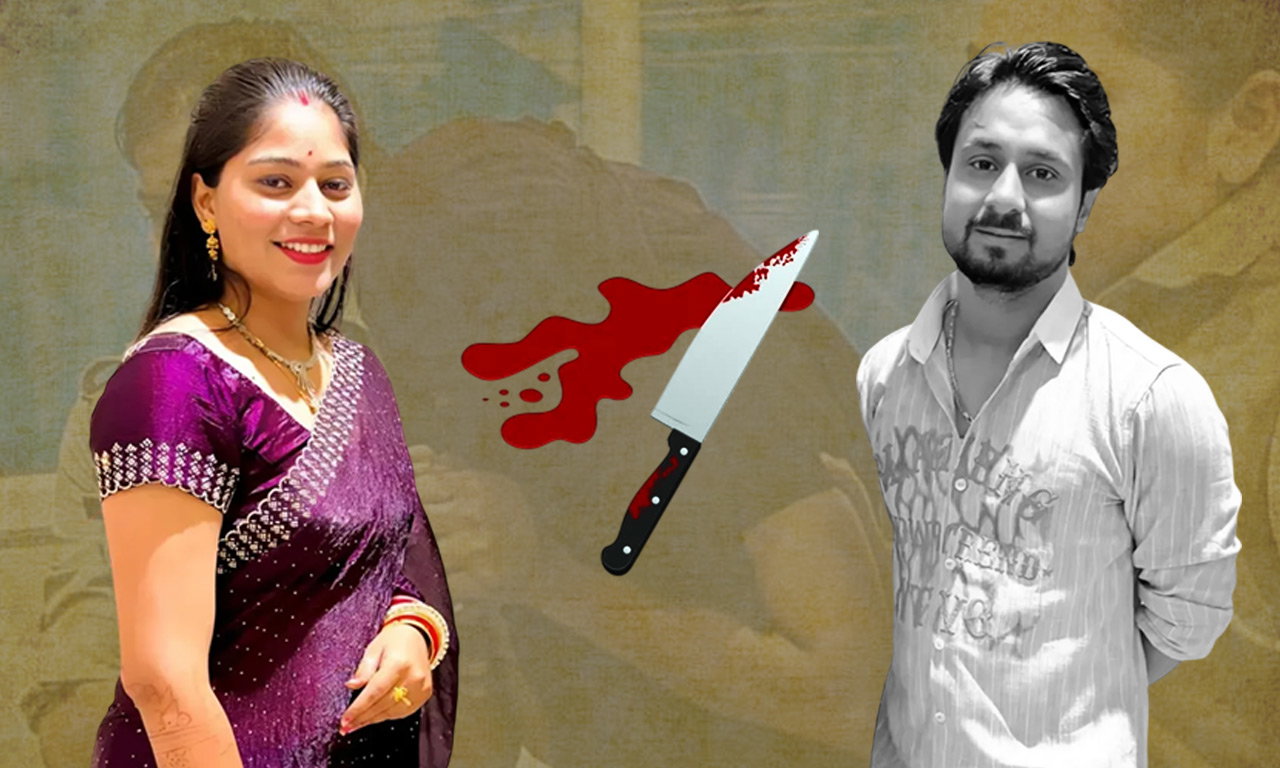
The gruesome murder of Indore-based businessman Raja Raghuvanshi—allegedly masterminded by his wife, Sonam Raghuvanshi—has sent shockwaves through the nation. But beyond the headlines and arrests lies a disturbing pattern that India refuses to confront. In 2025, we’ve witnessed a spine-chilling rise in husband murders, with wives and lovers at the center of these crimes. These are not mere aberrations—they reflect a societal sickness festering under the guise of tradition, silence, and skewed morality.
Let’s pause and ask: how did we get here?
How does a girl who didn’t have the courage to say no to marriage find the audacity to plot a murder? It screams of psychological collapse under the burden of societal expectations. When marriage is forced, when voices are silenced, and when girls are trained to obey rather than choose, the consequences can be catastrophic—not just for them, but for others too. And yet, we dare not question the parenting that raises submissive daughters and emotionally stifled sons.
Wrong parenting isn’t just about strictness—it’s about silence, about failing to build trust, about never allowing children to say “I don’t want this.” If Sonam had the confidence that her parents would stand by her refusal, Raja might still be alive today. Instead, she chose a path of irreversible violence.
But let us not make this about one woman. This is part of a broader, terrifying trend.
- In Bijnor, a man was strangled by his wife for refusing to relocate.
- In Auraiya, a woman and her lover murdered her husband just two weeks into marriage.
- In Meerut, a husband was chopped up and hidden in a cement drum.
- In Jaipur, a man was set ablaze after discovering his wife’s affair.
- In Haridwar, a sevadar was killed and dumped in a canal.
- In Korba, a woman confessed to killing her husband after years of abuse—yet even this cries out for intervention and mental health support, not murder.
Where is the outrage? Where are the candle marches and prime-time debates?
Let’s be brutally honest: if these victims were women, the nation would burn in fury. But since it’s a man in the morgue, the world shrugs and moves on.
This is not about turning women into villains—it’s about turning our gaze to what we refuse to see. Men suffer too. They are silenced by ridicule, mocked for speaking out, and abandoned by laws that presume only one kind of victim. Domestic abuse, emotional torture, blackmail, and betrayal—when these happen to men, they’re dismissed as weakness. And when these men die, their deaths become footnotes.
We are raising a generation that is crumbling under the pressure of performative marriages, unrealistic gender roles, and the absence of open dialogue in families. We teach girls to look beautiful, be obedient, and marry well. We teach boys to suppress emotions, tolerate pain, and provide endlessly. But we teach neither how to speak up, walk away, or heal.
The murder of Raja Raghuvanshi should not be remembered as another crime story. It should be a national reckoning.
It’s high time we asked uncomfortable questions:
- Why do we force marriage like a moral deadline?
- Why don’t girls feel safe saying “no”?
- Why don’t boys feel safe asking for help?
- Why do parents care more about shaadi cards than emotional consent?
- And why does society still fail to understand that abuse has no gender?
Behind every murdered husband is a story that was never heard. It’s time to stop this deafening silence. Speak. Listen. Intervene.
Before the next man is killed. Before the next woman turns into a criminal. Before another family becomes a headline.
