


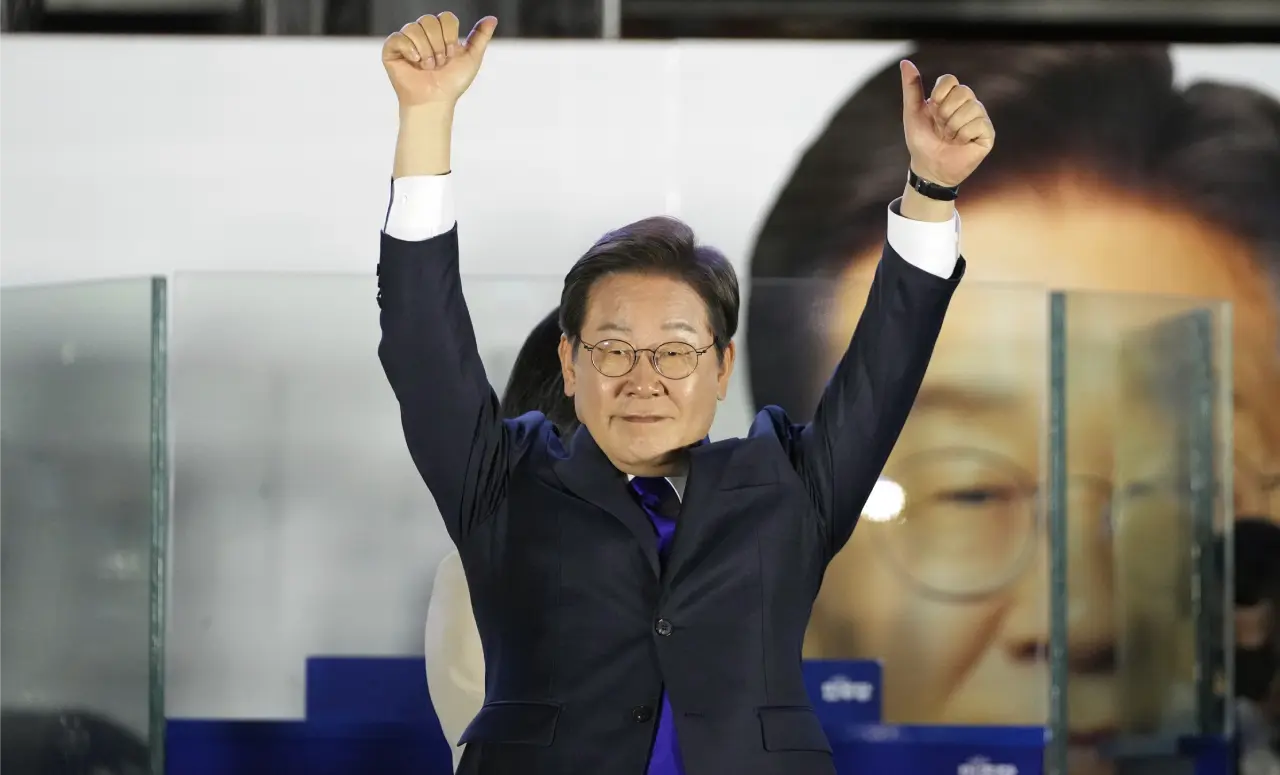
In a stunning political comeback, Democratic Party candidate Lee Jae-myung has been elected President of South Korea, defeating conservative rival Kim Moon-soo just months after former President Yoon Suk Yeol was ousted over his failed attempt to impose martial law.
Lee’s victory marks a decisive shift in South Korean politics, especially after his narrow loss to Yoon in 2022. This time, he secured 49.42% of the vote—17.3 million ballots—triumphing over Kim’s 41.15% and setting a new record for the highest number of votes in a South Korean presidential election. The controversial backdrop of Yoon’s impeachment and the martial law debacle, which triggered political unrest and economic uncertainty, significantly shaped the electorate’s mood.
Addressing a jubilant crowd at Seoul’s Yeouido, Lee vowed to end authoritarian tendencies, calling Yoon’s actions an “insurrection.” He promised to restore democratic values, revive the economy, and prioritize the people’s welfare. “I will create a world where democracy is respected, and the sovereign people live with dignity,” Lee declared.
Kim Moon-soo conceded gracefully, stating, “I humbly accept the people’s choice,” while acknowledging the public’s desire for change. The People Power Party, however, expressed shock at the margin of defeat, with Rep. Na Kyung-won calling the results “a disappointment and a shock.”
The election, held six months after Yoon’s martial law move, witnessed a robust turnout of 79.4%—the highest since 1997—demonstrating heightened civic engagement. Early voting also saw a strong showing with 34.74% of registered voters casting ballots ahead of election day.
Due to the snap nature of the election, Lee assumed office immediately without a transition period. His inauguration is expected to be held later in the day at the National Assembly.
A total of five candidates contested the presidency, though only Lee and Kim dominated the race. Pre-election polls had consistently put Lee ahead by roughly 10 percentage points, with Kim trailing despite highlighting Lee’s legal troubles and combative political style.
Both major contenders emphasized economic growth, particularly through artificial intelligence. Lee promised pragmatic diplomacy in an increasingly volatile global landscape, while Kim focused on countering North Korea’s nuclear threat. Interestingly, both supported constitutional reform to move away from the single five-year presidential term, although they differed on timelines and implementation.
Lee Jae-myung’s win is being hailed by supporters as a democratic reset, following months of national tension under Yoon’s crisis-laden rule. As the country attempts to turn the page on its most turbulent political chapter in recent memory, all eyes are now on how Lee will navigate the fractured landscape he inherits.
