


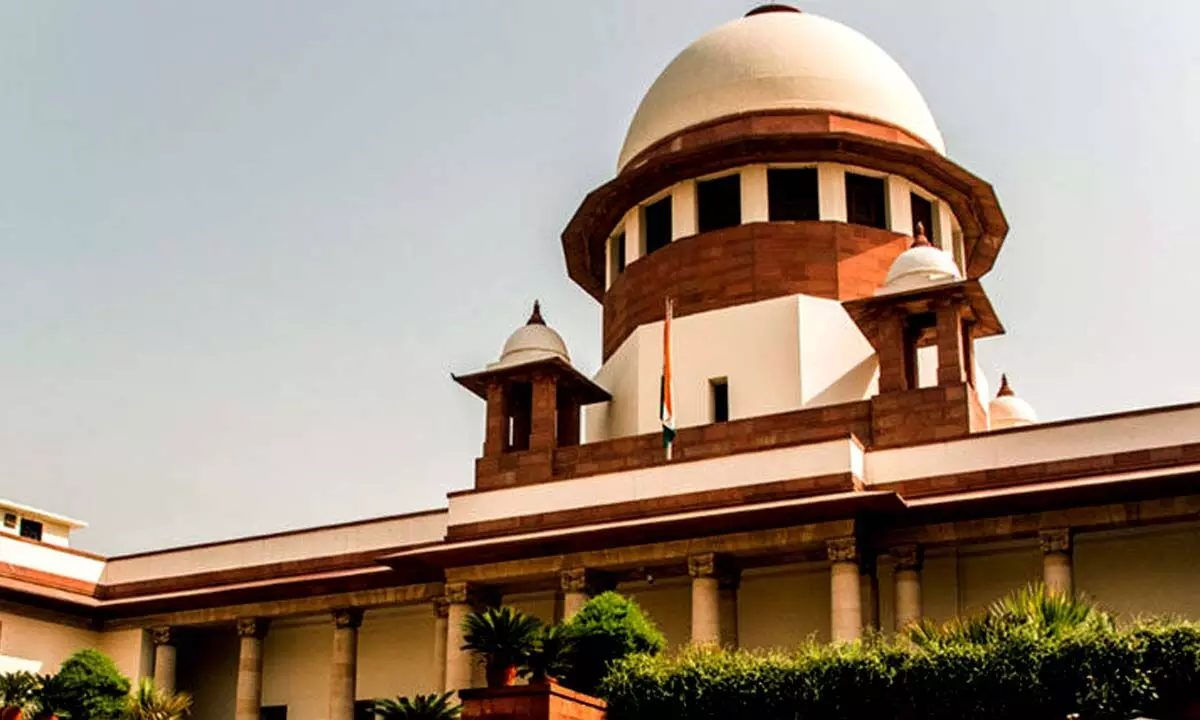
The Supreme Court on Friday declined to entertain a public interest litigation seeking a nationwide policy mandating menstrual leave for women students and employees, observing that such a move could inadvertently harm women’s employment prospects and reinforce gender stereotypes.
A bench comprising Chief Justice Surya Kant and Justice Joymalya Bagchi said making menstrual leave mandatory through legislation might discourage employers from hiring women.
“Nobody will hire them if such provisions are made compulsory. These pleas can unintentionally create fear and reinforce stereotypes that menstruation makes women inferior,” the bench observed during the hearing.
However, the court said the competent authorities could consider the representation submitted by the petitioner and examine the possibility of framing an appropriate policy on menstrual leave after consulting all stakeholders.
The petition, filed by Shailendra Mani Tripathi, sought the formulation of a uniform national policy granting menstrual leave to women across workplaces and educational institutions.
During the proceedings, Chief Justice Surya Kant raised concerns over the broader social consequences of mandating menstrual leave through law, cautioning that such measures might negatively affect women’s participation in the workforce.
Senior advocate M R Shamshad, appearing for the petitioner, argued that certain states and institutions have already introduced measures addressing menstrual leave. He cited Kerala as an example where relaxations have been introduced in educational institutions and noted that several private companies have voluntarily implemented such policies.
Responding to this, the Chief Justice said voluntary policies by organisations were welcome but warned against making them mandatory through legislation.
“Voluntarily granted leave is excellent, but the moment it becomes compulsory under law, employers may avoid hiring women in many sectors, including government and judiciary,” the bench said.
The court also noted that the petitioner had already submitted a representation to the concerned authorities. It observed that repeatedly approaching the court for directions was unnecessary and disposed of the petition with a direction to authorities to examine the representation and take an appropriate decision.
