Fifty-year-old Sajid Akram, who was killed after being identified as one of the attackers in the recent mass shooting at Bondi Beach in Australia, was an Indian citizen originally from Hyderabad, the Telangana Police confirmed on Tuesday.
In an official statement, the office of the Director General of Police said Akram had migrated to Australia nearly 27 years ago, in November 1998, in search of employment and continued to hold an Indian passport. He had completed a Bachelor of Commerce degree in Hyderabad before leaving the country.
According to police, Akram had limited contact with his family in India after settling in Australia. He married a woman of European origin and the couple had two children—a son, Naveed, and a daughter—both born in Australia and citizens of that country. Naveed, aged 24, is also suspected to be involved in the attack and is currently undergoing treatment at a hospital, Australian authorities said.
The mass shooting occurred during a Hanukkah celebration at Sydney’s Bondi Beach, killing 15 people. Australia’s federal police commissioner, Krissy Barrett, described the incident as a “terrorist attack inspired by Islamic State,” adding that the suspects were a father-son duo aged 50 and 24. Akram was shot dead at the scene.
Telangana Police said Akram had visited India on six occasions after migrating, mainly for family-related reasons such as property matters and to meet his elderly parents. It was also noted that he did not return to India even at the time of his father’s death.
Family members have told investigators they were unaware of any radical beliefs or activities linked to Akram or his son and said they had no knowledge of the circumstances that may have led to their radicalisation. Police stated that preliminary findings suggest the factors behind their radicalisation have no connection to India or any local influence in Telangana.
The state police further clarified that there was no adverse record against Sajid Akram during his stay in India prior to his departure in 1998. Telangana Police said they remain committed to cooperating with central agencies and international counterparts as required and urged the public and media to refrain from speculation or unverified claims.
Sena (UBT)-MNS Alliance Nears as Mahayuti Sets 150-Seat Target in High-Stakes BMC Polls 4
As Maharashtra gears up for the January 15 civic body elections, political activity intensified on Tuesday with rival camps holding parallel meetings to firm up alliances and seat-sharing strategies, especially for the high-stakes Brihanmumbai Municipal Corporation (BMC) polls.
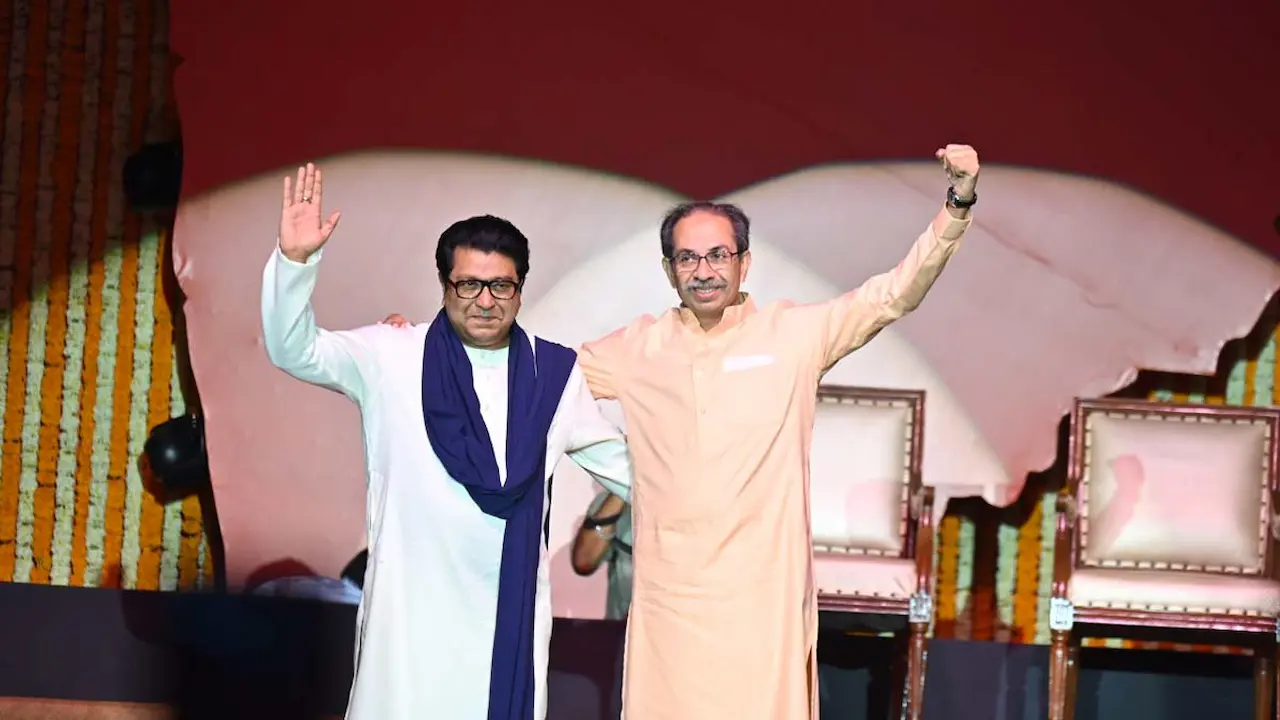
The focus remained firmly on Mumbai, where Shiv Sena (UBT) leader Sanjay Raut met Maharashtra Navnirman Sena (MNS) president Raj Thackeray, signalling that a tie-up between the two parties is all but final. Raut later told reporters that Shiv Sena (UBT) and MNS would contest the civic polls together not just in Mumbai but also in Mira-Bhayander, Kalyan-Dombivli, Thane, Pune and Nashik, with a formal announcement expected next week.
“There is no problem in announcing the alliance in the coming week. Both brothers, Uddhav Thackeray and Raj Thackeray, will be seen together on stage for the announcement,” Raut said.
On a possible understanding with the Congress, Raut said he had spoken to the party’s top leadership, urging it to contest the civic polls as part of the Opposition Maha Vikas Aghadi (MVA), which he believes should also include the MNS. However, he added that the Congress leadership has left the decision to local units.
Both the Opposition and the ruling Mahayuti have asserted that Mumbai will have a Marathi mayor after the elections. Addressing reporters after a meeting between the BJP and Shiv Sena, Mumbai BJP president Ameet Satam said the ruling alliance was working with a clear aim of crossing the 150-seat mark in the 227-member BMC.
“Our discussions are focused on ensuring Mahayuti candidates win across all 227 wards, with a clear objective of securing 150-plus seats in the BMC,” Satam said.
Meanwhile, BJP leader and minister Ashish Shelar ruled out any alliance with the NCP for the Mumbai civic polls, even as the Ajit Pawar-led party remains a key constituent of the Mahayuti at the state level. Congress leader Vijay Wadettiwar alleged that the ruling alliance was deliberately keeping the NCP out of civic tie-ups to split secular votes.
An NCP leader countered the claim, saying the party has been preparing for the civic polls for months and holding weekly meetings to strengthen its organisation in Mumbai. “After consultations with Ajit Pawar, we will decide the exact number of seats to contest. In multi-cornered local elections, individual candidates matter,” the leader said.
Chief Minister Devendra Fadnavis had earlier stated that the BJP and Shiv Sena would contest the civic polls together in most places, while Pune and Pimpri-Chinchwad could see friendly contests between the BJP and NCP.
On the Opposition front, Congress Mumbai president Varsha Gaikwad said her party would fight the BMC polls on local civic issues and accused the BJP of pushing a “religious agenda” to divert attention from governance failures.
AIMIM MP Imtiaz Jaleel said his party would contest seats in 27 of the 29 municipal corporations going to polls in January, including Mumbai, and was open to alliances with like-minded parties and the Opposition MVA. He said candidate lists would be announced by December 22 or 23.
Adding to the political sparring, Shiv Sena (UBT) leader Aaditya Thackeray targeted the BJP for taking credit for civic work done by his party, urging workers to highlight the achievements of the undivided Shiv Sena during its BMC rule from 1997 to 2022.
With more than 1.03 crore voters across 227 wards eligible to cast their ballots, the BMC elections are seen as a prestige battle for Maharashtra’s major political formations. The final electoral rolls have been published, and votes will be counted on January 16 as 29 municipal corporations, including cash-rich Mumbai, head into a fierce contest for urban political supremacy.
Lok Sabha Introduces Bill to Allow 100% FDI in Insurance Sector Amid Opposition Uproar 6
The government on Tuesday introduced a bill in the Lok Sabha to raise foreign direct investment (FDI) in the insurance sector to 100 per cent, triggering strong protests from Opposition parties. The proposed Sabka Bima Sabki Raksha (Amendment of Insurance Laws) Act, 2025 seeks to amend the Insurance Act, 1938, the Life Insurance Corporation Act, 1956, and the Insurance Regulatory and Development Authority Act, 1999.
Tabling the bill, Union Finance Minister Nirmala Sitharaman said expanding insurance coverage for the common people has been a priority of Prime Minister Narendra Modi and that the government ensured protection for marginalised sections even during the Covid-19 pandemic. She said the concerns raised by Opposition members would be addressed during the debate on the legislation.
Opposing the introduction, RSP MP N K Premachandran questioned the nomenclature of the bill, saying it did not reflect its contents, and objected to allowing 100 per cent FDI in the sector. DMK member T Sumathy also strongly opposed the proposal, while Trinamool Congress MP Saugata Roy criticised the bill’s title, calling it slogan-like and warning that full foreign ownership would be a setback for the insurance industry.
According to the draft legislation, the FDI cap in the insurance sector will be raised from the existing 74 per cent to 100 per cent. However, it mandates that at least one top executive—such as the chairperson, managing director or CEO—must be an Indian citizen. The bill also allows the merger of a non-insurance company with an insurance firm.
Cleared by the Union Cabinet last week, the bill aims to accelerate the growth of the insurance sector, enhance policyholder protection and improve the ease of doing business. It proposes the creation of a Policyholders’ Education and Protection Fund and seeks to strengthen regulatory oversight while bringing greater transparency to rule-making.
The legislation also revises tenure norms for the Insurance Regulatory and Development Authority of India, providing a five-year term or up to the age of 65 years for its chairperson and whole-time members. Currently, the upper age limit for whole-time members is 62 years.
In her Budget speech earlier this year, Sitharaman announced the plan to raise the FDI limit to 100 per cent as part of new-generation financial sector reforms. The insurance sector has so far attracted around Rs 82,000 crore in foreign investment. The amendments to the LIC Act are aimed at empowering its board to take operational decisions such as branch expansion and recruitment, while facilitating greater competition, economic growth and job creation.
13 Killed, 35 Injured as Fog Triggers Fiery Pile-Up on Yamuna Expressway in Mathura 8
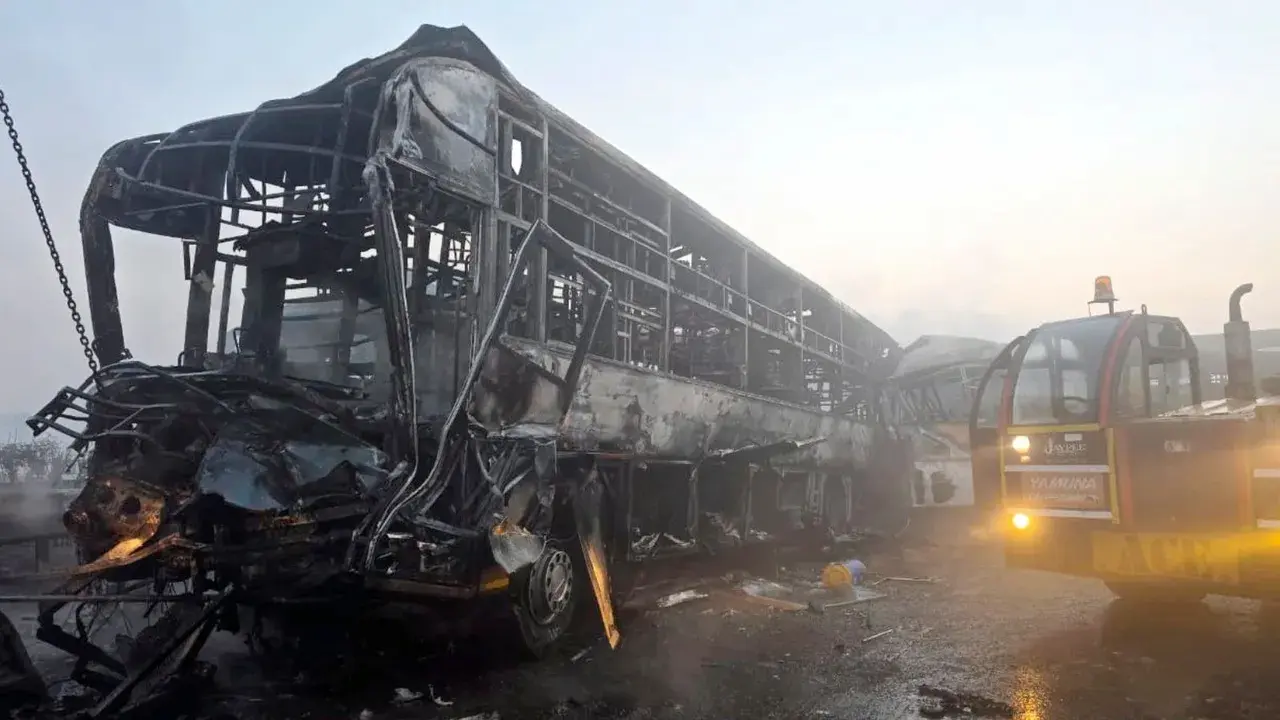
Thirteen people were killed and 35 others injured after a massive vehicle pile-up on the Yamuna Expressway in Mathura early Tuesday led to several buses catching fire, police said. The accident occurred around 4.30 am amid dense fog on the Agra-to-Noida stretch under the jurisdiction of Baldev police station.
According to police, at least seven buses and three smaller vehicles collided due to extremely low visibility, triggering a blaze that engulfed multiple vehicles. “The vehicles collided because of fog on the Agra-to-Noida side of the Yamuna Expressway. Some vehicles caught fire. All the injured have been shifted to hospitals,” Mathura Senior Superintendent of Police Shlok Kumar said.
Baldev Police Station SHO Ranjana Sachan said all 13 victims died of burn injuries. Two of the deceased were identified as Akhilendra Pratap Yadav (44) from Prayagraj and Rampal (75) from Maharajganj. Of the injured, 15 were admitted to the district hospital, nine each to a community health centre and a private hospital in Baldev, and two to SN Medical College in Agra. Police said none of the injured are in critical condition.
Visuals from the scene showed charred remains of buses reduced to shells. Cranes were deployed to clear the wreckage from the expressway. Authorities arranged government vehicles to transport stranded passengers to their destinations, while traffic diversions were put in place due to the road blockage.
Uttar Pradesh Chief Minister Yogi Adityanath expressed grief over the tragedy and announced ex-gratia relief of Rs 2 lakh each for the families of the deceased and Rs 50,000 each for the injured. He also directed officials to ensure proper medical care for those hurt in the accident.
The incident comes amid a spate of fog-related road accidents across north India. On Monday, three people, including two police personnel, were killed in separate multi-vehicle crashes in Haryana’s Sonipat and Nuh districts, highlighting the growing risk posed by poor visibility during winter mornings.
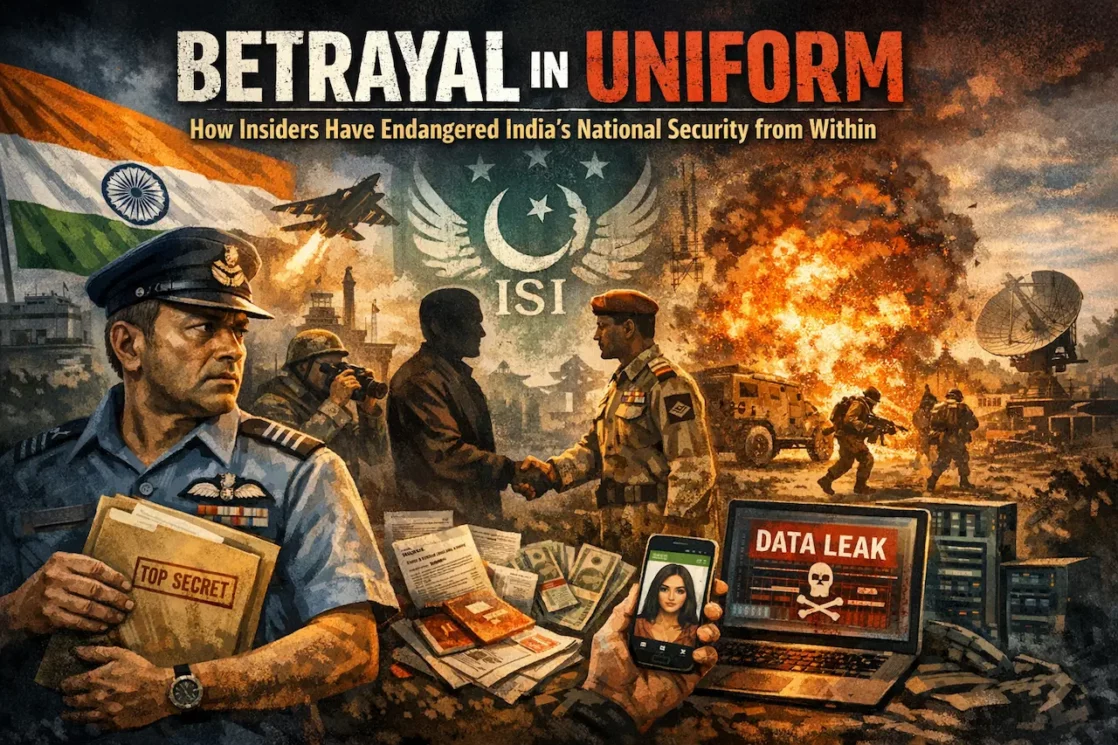
Betrayal in Uniform: How Insider Have Endangered India's National Security from Within 10
Nationalism in India is often reduced to speeches, flags, and slogans, but real betrayal happens quietly—between files, inside encrypted chats, and across secret meetings. The arrest of retired Air Force officer Kulendra Sharma from Tezpur, Assam, is not an isolated incident. It is another link in a long and disturbing chain where individuals in uniform, or once in uniform, loudly project themselves as patriots while silently punching holes in India’s national security. History is clear on one uncomfortable truth: India has suffered more damage from “insiders” than from enemies standing across the border.
It is a harsh reality that many individuals who have served in India’s defence establishments continue to carry sensitive institutional knowledge long after retirement. Their memory, networks, and experience do not retire with them. Enemy intelligence agencies understand this well and exploit it ruthlessly. Greed, ego, resentment, financial stress, or ideological confusion—each becomes a lever. When such people break, the loss is not limited to leaked documents; it costs soldiers’ lives, strategic advantage, and national confidence.
A look back shows how old and recurring this pattern is. As early as the 1970s, India learned that rank and uniform are not guarantees of loyalty. In 1975, a senior Indian Navy commander was arrested for spying for a foreign intelligence agency. A man entrusted with maritime security was feeding sensitive information to hostile powers. At the time, the issue was quietly buried to protect “institutional image”—placing optics above accountability, a mistake India continues to repeat.
In the 1990s, as Kashmir burned and Pakistan intensified its proxy war, multiple cases emerged where information was leaking from within India’s own security apparatus. Some officers were found in direct contact with ISI handlers; others claimed they had shared details “unknowingly.” This excuse deserves no sympathy—espionage is rarely accidental. Information that enables terror attacks does not travel by mistake.
One of the most alarming episodes surfaced in the early 2000s involving espionage networks linked to DRDO and the Ministry of Defence. Scientists, clerks, and officers were caught leaking classified data on missile programs, radar systems, and defence procurement. These were not fringe elements; they were trained professionals who often wrapped themselves in nationalist rhetoric. Their loyalty became clear not through speeches but through bank transactions and call records.
After 2010, espionage evolved into an even more dangerous form. Intelligence agencies no longer needed trench coats or embassies. Facebook friend requests, fake female profiles, LinkedIn connections, and conversations disguised as “academic research” became the new tools. Several serving and retired officers fell into these traps. Many believed they were merely offering “analysis,” not realizing—or pretending not to realize—that strategic analysis itself is a weapon.
Cases from Rajasthan and Haryana exposed how Indian Army personnel were honey-trapped using fake Pakistani profiles. Some exchanged information for money, others for attention and validation. All lofty claims of nationalism collapsed the moment a video call or a few dollars entered the picture.
In 2018, leaks related to the BrahMos missile system—one of India’s most critical strategic assets—sent shockwaves through the security establishment. Those involved were not outsiders but insiders with legitimate access. The real question was not whether arrests were made, but how such individuals gained prolonged access and why detection took so long.
The role of retired officers is particularly worrying. After retirement, many struggle with a loss of status and relevance. Enemy agencies exploit this psychological vacuum expertly. A simple line—“We value your experience”—is often enough to start the slide. Conversations turn into disclosures, disclosures into documents, and documents into outright betrayal.
The greatest deceit occurs when such individuals publicly posture as nationalists while privately undermining national security. They appear on television debates praising the armed forces, wave the tricolour on social media, and simultaneously feed adversaries with insights into vulnerabilities. This dual character is far more dangerous than open hostility because it corrodes trust from within.
The consequences are not abstract. When adversaries gain accurate intelligence on troop deployment, preparedness, or weaknesses, attacks become more precise and deadlier. After incidents like Uri and Pulwama, questions were raised about how terrorists obtained such detailed information. The blame was conveniently pushed outward, while serious introspection about internal leaks remained limited.
India also suffers from a chronic lack of institutional transparency in espionage cases. Matters are labeled “sensitive,” names are withheld, facts are diluted, and the public is kept in the dark. As a result, society never fully understands the nature of the threat. Without visible consequences, deterrence remains weak.
It must be stated clearly: the vast majority of retired defence personnel live with honour and dignity, continuing to serve the nation in various capacities. But in matters of national security, even a handful of compromised individuals can endanger the entire system.
India must now move beyond emotional nationalism to practical national security. Clear post-retirement conduct rules, regular counter-intelligence briefings, lifetime restrictions on sensitive access, and strict monitoring of suspicious activity are not signs of mistrust—they are necessities.
The Kulendra Sharma case is a reminder that threats do not always stand across borders. Sometimes they sit in living rooms, hide in call logs, and lie buried in old files. When those who claim to be the loudest nationalists begin to weaken the nation from within, it is not just a crime—it is a failure of collective vigilance. And India has paid the price of that failure too many times already.
9 Dead, 23 Injured After Bus Plunges Off Ghat Road in Andhra Pradesh’s Alluri Sitaramaraju District 12
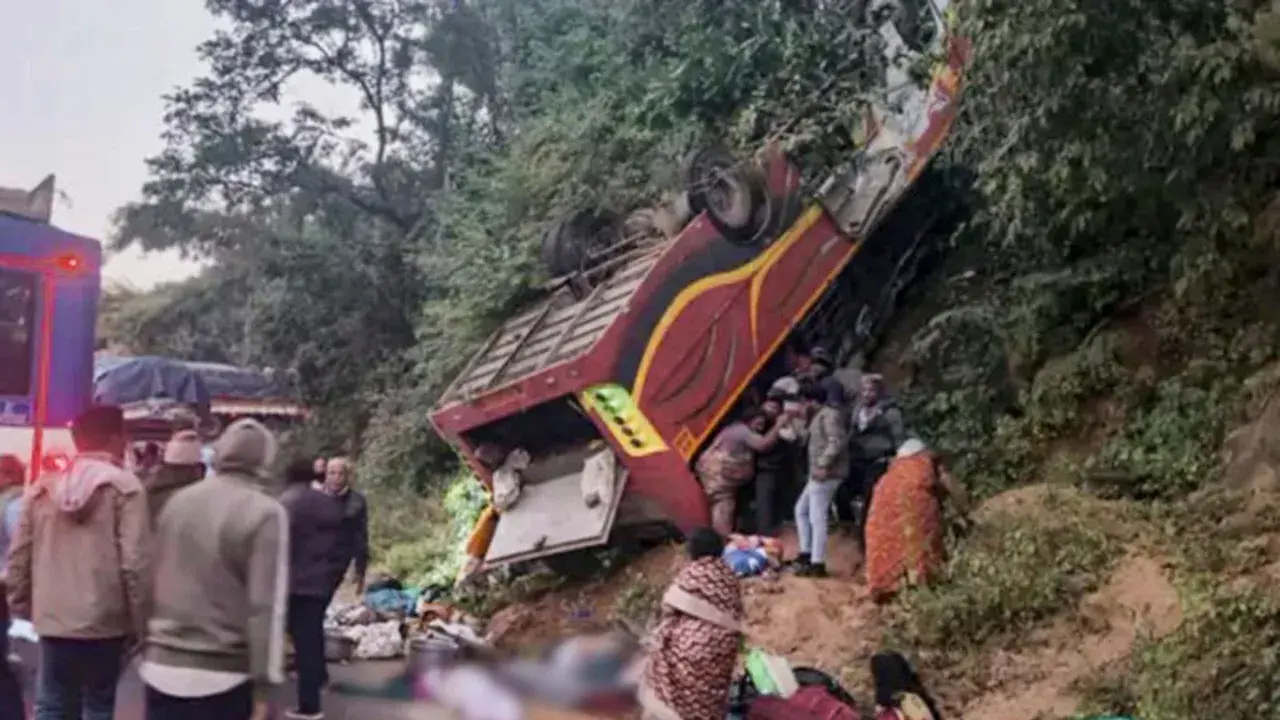
Nine people were killed and 23 others injured when a bus fell off a ghat road and overturned in Andhra Pradesh’s Alluri Sitaramaraju district early Friday, police said. The bus, carrying 37 passengers including the driver and cleaner, was en route to Telangana. Six passengers escaped without injuries.
Superintendent of Police Amit Bardar said the accident occurred around 4:30 am on the Chintoor–Maredumilli ghat road near a Durga temple. “At least nine people were killed, and 23 were injured as the bus fell off the ghat road and turned turtle. Four of the injured are critical,” Bardar told PTI.
Preliminary reports suggest the driver may have missed a curve due to heavy fog. The bus plunged from an upper stretch of the ghat road and landed upside down on a lower road near the China Wall, a structure built to prevent such falls.
Police said they do not expect the death toll to rise, noting that the four critically injured are “doing okay”. The passengers were from the Chittoor region and had completed a trip to Araku. They were on their way to the Sri Rama temple in Bhadrachalam, Telangana.
A case has been registered at Mothugudem police station under Section 106 of the Bharatiya Nyaya Sanhita for rash and negligent driving.
Andhra Pradesh Chief Minister N Chandrababu Naidu expressed deep anguish over the tragedy and spoke with officials to review the medical care being provided. Injured passengers have been shifted to Chinturu and other nearby hospitals for treatment.
The Democracy News Honoured with NAI Award for Best Digital News Platform 14
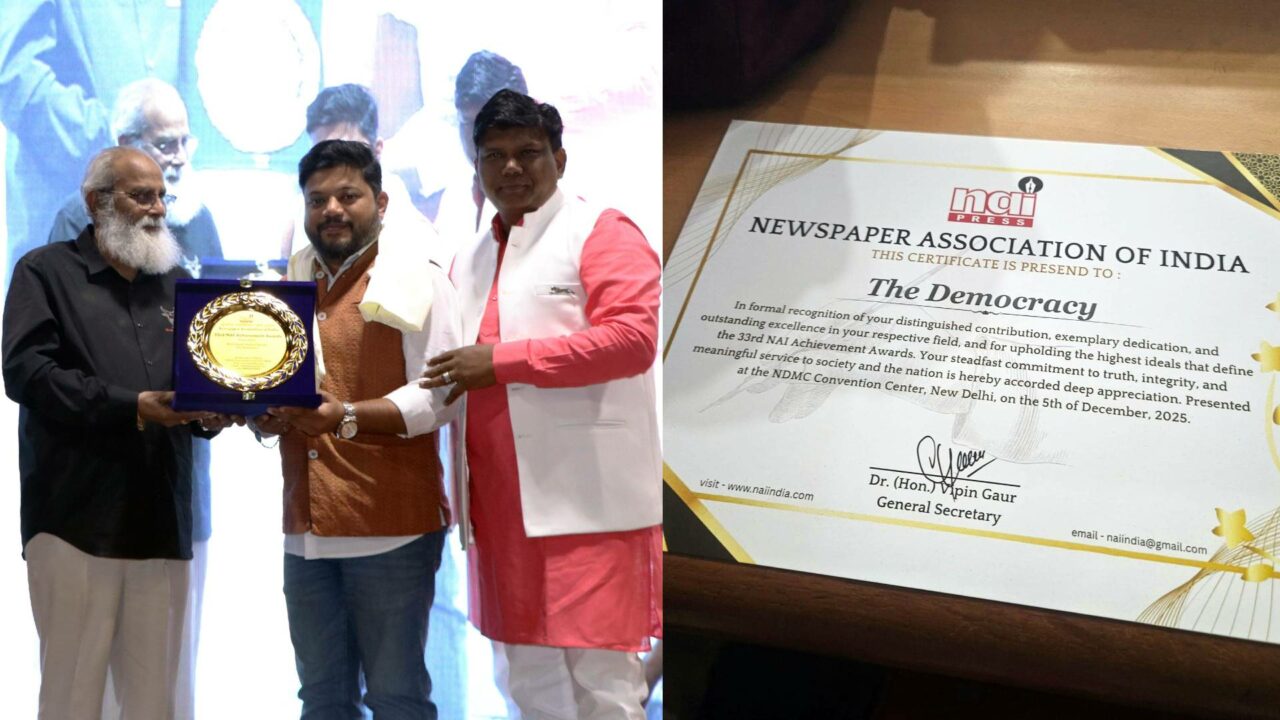
The Democracy News, a proud sister platform of Afternoon Voice, has been awarded the Newspaper Association of India (NAI) Award for Best Digital News Platform at the 33rd NAI Achievement Awards held at the NDMC Convention Centre, New Delhi.
The award was presented by renowned screenwriter and Rajya Sabha MP V. Vijayendra Prasad, Gajender Yadav, MLA from Delhi, and Dr. Vipin Gaur, General Secretary of NAI. The association recognized The Democracy News for its distinguished contribution, exemplary dedication, and outstanding excellence in digital journalism. The NAI certificate also commended the platform’s unwavering commitment to truth, integrity, and meaningful service to society and the nation.
As part of the Brandbuzz Multimedia Group, The Democracy News was envisioned by Founding Editor Vaidehi Taman, who has been a strong advocate of fearless journalism and democratic dialogue. Her vision for the platform has always been rooted in empowering citizens with credible, independent, and thought-provoking news content. She has consistently emphasized that digital journalism must uphold the highest ethical standards while embracing innovation and accountability.
Under her leadership, The Democracy News has grown into a dynamic digital ecosystem known for its sharp political interviews, grassroots reportage, and unbiased storytelling. The platform reflects Vaidehi Taman’s belief that journalism must remain a pillar of democracy—transparent, responsible, and accessible to every citizen.
The recognition from NAI marks a significant milestone in the platform’s journey and further strengthens its commitment to delivering honest, impactful, and people-centric journalism. As The Democracy News continues to expand its reach, it remains firmly aligned with the vision of its founding editor: to create a news space that informs, inspires, and upholds the true spirit of democracy.
Follow The Democracy News on social media for updates and exclusive content: Facebook: facebook.com/@thedemocracymedia | Instagram: instagram.com/thedemocracymedia | X: x.com/@thedemocracy_ | YouTube: youtube.com/@thedemocracynews
Veteran Congress Leader and Former Union Minister Shivraj Patil Passes Away at 90 16
Senior Congress leader and former Union Home Minister Shivraj Patil passed away at the age of 90 in his hometown Latur on Friday morning, family sources confirmed. Patil died at his residence, ‘Devghar’, following a brief illness. His funeral is expected to take place on Saturday.
He is survived by his son Shailesh Patil, daughter-in-law Archana—who contested the last assembly election on a BJP ticket against Congress MLA Amit Deshmukh—and two granddaughters.
Born on October 12, 1935, Patil began his political career as president of the Latur municipality (1966–1970) before being elected MLA for two terms. Between 1977 and 1979, he served as both Deputy Speaker and Speaker of the Maharashtra Legislative Assembly.
Patil later represented the Latur Lok Sabha constituency seven times and held the post of Lok Sabha Speaker from 1991 to 1996. Although he lost the 2004 Lok Sabha election to BJP’s Rupatai Patil Nilangekar, he continued to serve the party as a Rajya Sabha member.
During his long career in national politics, Patil held key Union portfolios, including Defence, Commerce, and Science & Technology. He served as Union Home Minister from 2004 to 2008, stepping down after the 26/11 Mumbai terror attacks. He was appointed Governor of Punjab and Administrator of Chandigarh from 2010 to 2015.
Patil was widely respected for his dignified conduct and refusal to engage in personal attacks, whether in public or private. Known for his deep reading, meticulous study and command over Marathi, Hindi and English, he was regarded as an articulate and authoritative voice on constitutional matters.
Rajasthan HC Live-In Ruling Raises Safety Fears for Minors, Says BJP Leader Chitra Wagh 18
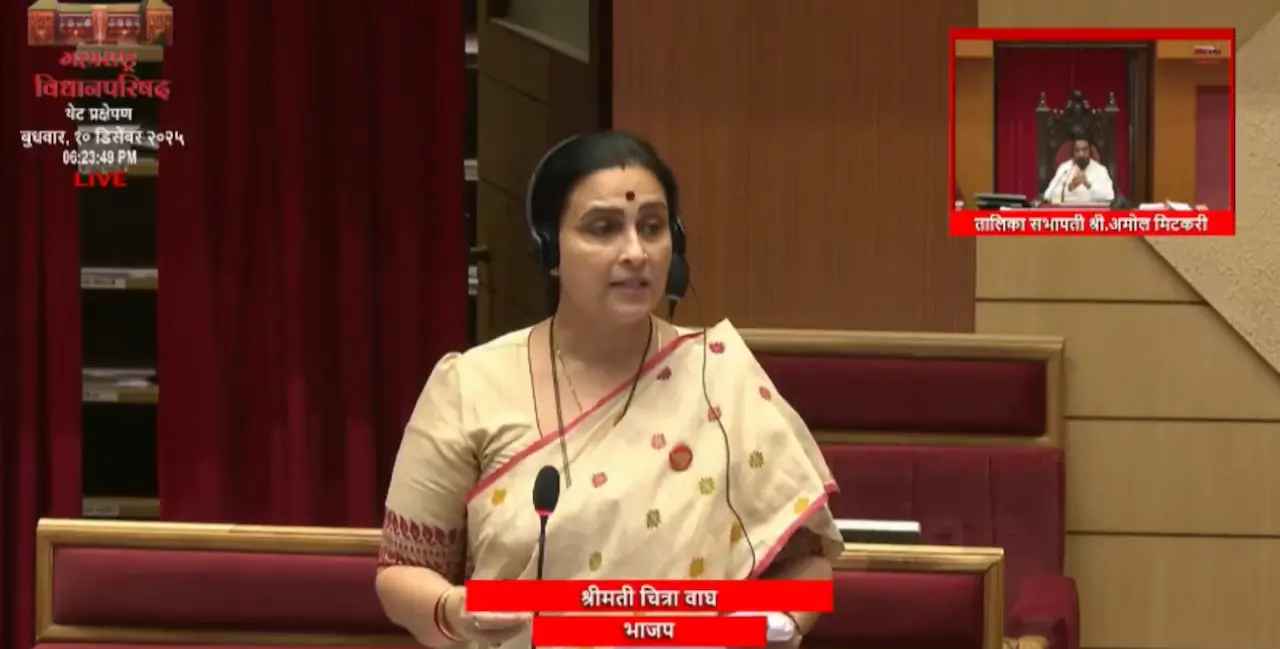
BJP Mahila Morcha state president Chitra Kishor Wagh has strongly criticised the Rajasthan High Court’s recent ruling on live-in relationships, saying it creates a troubling situation where minors appear to receive indirect consent to enter such arrangements. She warned that the judgment poses a serious threat to India’s cultural ethos, family structure and, most importantly, the safety of young girls.
Wagh said that in Indian society, protecting daughters, preserving family values and safeguarding cultural norms are foundational responsibilities, not merely legal concerns. At a time when minor girls are increasingly vulnerable to online grooming, emotional manipulation and exploitation, allowing them to enter live-in relationships could heighten these risks, she cautioned.
Speaking “as a mother, a sister and a responsible Indian woman,” Wagh said the ruling is neither appropriate nor safe for the country’s children. She urged that the long-term social consequences of such decisions be examined with utmost seriousness to prevent harm to minors and preserve societal stability.
Aviation in Freefall: IndiGo’s Collapse Exposes India’s Two-Tier Air System” 20
India loves to boast about being the world’s fastest-growing aviation market, but the recent IndiGo crisis has stripped away the glossy PR and exposed a far more embarrassing reality: our aviation system works smoothly only for the powerful, while the common citizen is treated as an afterthought. As politicians, industrialists and celebrities glide through the skies in private jets without a minute’s delay, ordinary Indians were left stranded in terminals, sleeping on cold floors, staring helplessly at departure boards filled with cancellations. This is not turbulence; this is a systemic failure that both IndiGo and the government helped create through complacency, arrogance and poor planning.
IndiGo controls more than 65% of India’s domestic market—an unhealthy dominance in any functioning democracy. When a single airline gets this big, it is effectively running a parallel aviation system. Any crack within its operations becomes a national crisis. Crew shortages, scheduling gaps, and mounting fatigue warnings did not appear overnight. These were known issues, predicted by aviation analysts, ignored by the airline, and under-enforced by the regulator. When the meltdown finally hit, IndiGo reacted with predictable corporate coldness—vague statements, robotic PR lines, no real accountability and complete indifference to the thousands stuck at airports. Passengers were not seen as customers worth protecting. They were reduced to statistics.
The government did not fare any better. DGCA had announced tougher fatigue rules, digital licensing procedures, ATC upgrades and stricter audits long ago. These reforms were not surprises; they required airlines to hire more staff, modernize their systems and build buffers. IndiGo had enough time to prepare. It did not. The government had enough time to enforce compliance. It did not. In India, rules remain rules only on paper until a crisis erupts and the embarrassment becomes too big to hide.
The contrast between India’s aviation aristocracy and its ordinary travellers is now sharper than ever. While common citizens were battling chaos, VIPs were stepping effortlessly out of private jets that receive quicker clearances than passengers waiting for boarding announcements. This is the real two-tier India. The skies belong to the wealthy, while the rest fight for scraps of information and refunds that rarely arrive on time. The IndiGo crisis did not create this divide; it only exposed it in the harshest possible light.
Behind all this chaos is a quiet, simmering tension between the government and IndiGo—an undeclared tug-of-war over compliance, safety audits, staffing data and monopoly influence. The airline believes the government is tightening controls too quickly. The government believes IndiGo is dragging its feet and hiding behind its market dominance. Yet instead of resolving this friction transparently, both sides let it spill onto passengers, who paid the price for a conflict they had no role in.
The absence of a strong passenger-rights regime is another glaring failure. In any serious aviation market, mass cancellations without clear explanation would trigger lawsuits, penalties and parliamentary scrutiny. In India, we get a meeting, a press note, and a promise that the matter is being “looked into.” Meanwhile, families remain stranded, refunds crawl through the system, and call centres collapse under pressure. The aviation sector keeps growing in numbers but shrinking in credibility.
The truth is brutal but unavoidable: India has built an aviation bubble, not an aviation system. Overdependence on a single airline is a recipe for disaster. Regulators hesitate to act decisively. Airports get upgraded for optics, not capacity. Airlines push staff to the edge in the name of efficiency. And passengers, the very backbone of the system, are treated as expendable.
If India wants to be taken seriously as a global economic power, it cannot have a system where VIP aircraft glide smoothly while taxpayer-funded terminals turn into refugee camps every time a major airline coughs. Real reform requires competition, transparency, hard-edged audits, mandatory compensation for delays and cancellations, and penalties that hurt enough to force behavioural change. It demands a government willing to discipline monopolies instead of tiptoeing around them. And it demands airlines that treat passengers as human beings, not collateral damage.
The IndiGo crisis is not just a bad week for aviation—it is a warning shot. A country that cannot protect the dignity of its own travellers cannot pretend to be an aviation hub for the world. India faces a choice: confront the hard truths and rebuild the system with honesty, or continue letting the skies remain a playground for the privileged and a battlefield of frustration for everyone else.