Delhi CM Sets Up Special Powers Panel, Orders Pothole-Free, Dust-Free Roads to Fight Pollution 2
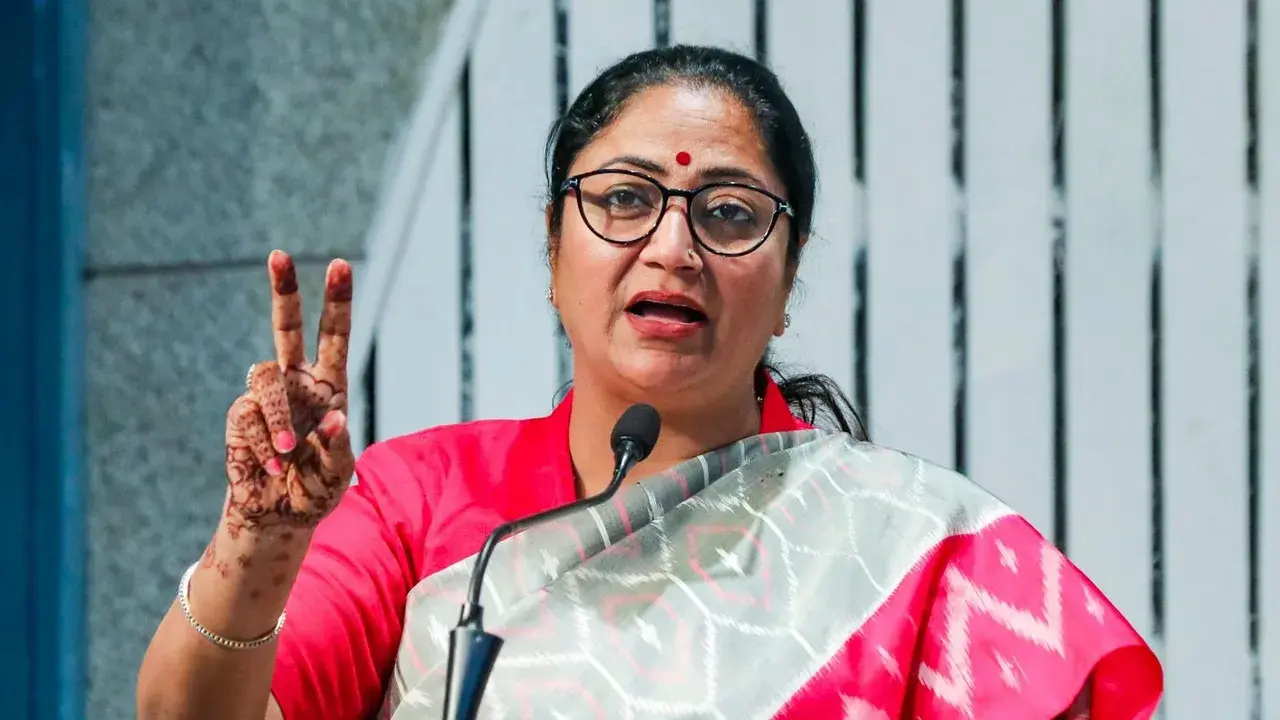
Delhi Chief Minister Rekha Gupta on Wednesday directed all government departments to act on a war footing to combat pollution and announced the formation of a special powers committee to intensify and monitor the capital’s pollution-control efforts.
Chairing an inter-departmental review meeting at the Delhi Secretariat, Gupta said the government was treating pollution as an “emergency mission” and warned that no lapse by agencies responsible for maintaining air quality and cleanliness would be tolerated. Delhi’s AQI stood at 342—“very poor”—according to the Central Pollution Control Board.
The chief minister said a high-level expert committee, comprising senior officials from key departments, IIT experts and environmental scientists, is being set up with enhanced powers to enforce compliance and take corrective action.
She directed the Delhi Pollution Control Committee (DPCC) to issue challans and impose heavy penalties on departments failing to meet dust-control and road-maintenance norms. Gupta expressed strong displeasure over unauthorised road-cutting and poor road restoration by certain agencies and instructed officials to file FIRs against those found violating rules.
“No agency, government or private, will be spared in the fight against pollution,” she said.
All departments have been ordered to identify and repair potholes within 72 hours. The Public Works Department must fix potholes across its 1,400 km network and upload before-and-after photos on a monitoring app. The Delhi Development Authority has been instructed to maintain cleanliness on its roads, clear waste from vacant land and expedite the handover of its markets to the Municipal Corporation of Delhi (MCD).
The Delhi Metro Rail Corporation has been told to repair damaged stretches under elevated corridors and strengthen dust-mitigation measures.
Gupta said clean, green and dust-free roads are central to Delhi’s anti-pollution strategy, stressing that delays in on-ground action will not be accepted.
Environment Minister Manjinder Singh Sirsa, present at the meeting along with senior officials from PWD, MCD, DDA, Delhi Metro, DSIIDC, NBCC and DUSIB, said the 311 Green App is being upgraded as the central platform for monitoring dust hotspots, potholes and brown zones.
A six-month plan is underway to roll out dust-free measures across identified areas. Sirsa added that strict action will be taken against vehicles below BS-IV norms and that e-autos will be prioritised to boost last-mile connectivity and promote Metro usage.
Mist-spray dust mitigation, successful in pilot areas, will now be expanded citywide, he said.
The MCD has been asked to ensure its 8,000-km road network is pothole-free and dust-free, deploying 1,000 vacuum-based litter pickers and 100 mechanical road sweepers within 45 days. Most of the city’s landfill sites are also expected to be cleared in the coming months.
All construction sites must ensure fencing and full compliance with pollution-control norms within 48 hours.
BMC Says No GRAP-4 in Mumbai as Air Quality Improves, Enforcement to Continue 4
The Brihanmumbai Municipal Corporation (BMC) on Monday said Mumbai’s air quality has improved significantly since November 26 due to multiple pollution-control measures undertaken across the city and suburbs. The civic body also clarified that Graded Response Action Plan (GRAP) Stage-4 restrictions are not applicable in the city at present, though intensified monitoring will continue.
Municipal commissioner and BMC administrator Bhushan Gagrani has directed officials to maintain strict action against both private and government construction projects violating the civic body’s 28-point dust and pollution mitigation guidelines.
According to the BMC, the improved AQI readings over the past 48 hours are the result of increased wind speed, which rose from 3–4 kmph before November 28 to 10–18 kmph, aiding pollution dispersion. Enforcement measures such as notices to errant construction sites, misting, water sprinkling, road washing, awareness drives, and the transition of bakeries and crematoria to cleaner fuels have also contributed.
To ensure compliance, the civic body has deployed 94 ward-level flying squads to monitor pollution mitigation efforts. These teams are inspecting private construction areas and metro and road project stretches, issuing stop-work notices where violations are found. They are also checking sensor-based AQI monitoring systems at various sites.
Mumbai’s GRAP-4 rules primarily cover construction activity, small industrial units and pollution-linked operations. AQI categories range from good (0–50) to severe (401–500), with the city currently reporting levels well below the threshold for GRAP-4.
Supreme Court Orders Nationwide CBI Probe Into Digital Arrest Scams, Questions RBI on AI Use 6
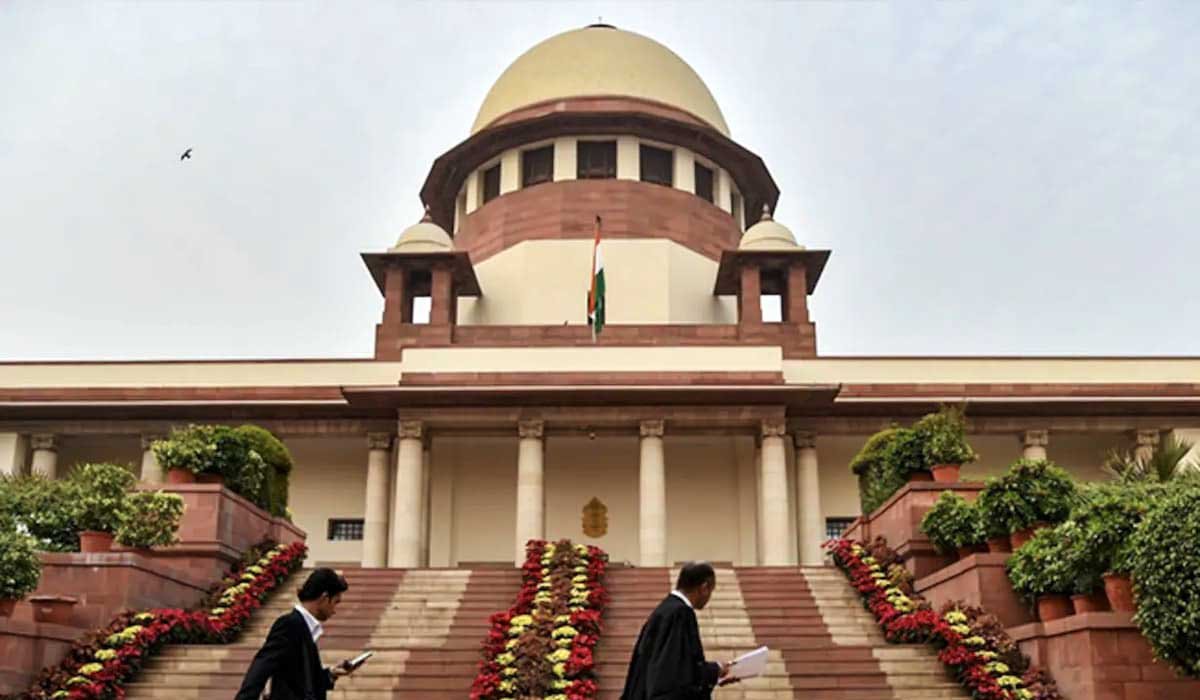
The Supreme Court on Monday directed the CBI to conduct a unified, nationwide investigation into the fast-rising cases of digital arrest scams and questioned the Reserve Bank of India (RBI) on why Artificial Intelligence is not being used to detect and freeze bank accounts operated by cybercriminals.
Digital arrest scams involve fraudsters impersonating police, court officials or government agencies through audio and video calls, coercing victims—often senior citizens—into paying money by threatening them with fabricated charges.
A bench of Chief Justice of India Surya Kant and Justice Joymalya Bagchi asked all states, including West Bengal, Tamil Nadu, Karnataka and Telangana, to grant the CBI consent to investigate such cases within their jurisdictions. The directive came during a suo motu hearing based on a complaint filed by an elderly Haryana couple who lost their savings to cyber fraud.
The court issued a notice to the RBI seeking an explanation for not deploying AI or machine learning tools to proactively track and freeze scam-linked accounts. It also directed IT intermediaries to fully cooperate with CBI investigators and asked the agency to seek assistance from Interpol to reach scammers operating from offshore tax havens.
The bench further instructed the Department of Telecom to ensure telecom providers do not issue multiple SIM cards to a single user or entity—an enabler frequently exploited in cybercrime. States and UTs have been asked to establish regional cybercrime coordination centres to streamline intelligence sharing with the CBI.
The court made it clear that all states, UTs, and police agencies are empowered to freeze accounts used to defraud citizens, and ordered the CBI to investigate bank officials complicit in operating mule accounts that facilitate the laundering of illicit funds.
Earlier, on November 3, the bench had described the surge in digital arrest scams—responsible for over ₹3,000 crore in losses—as alarming, saying such crimes must be dealt with “with an iron hand.”
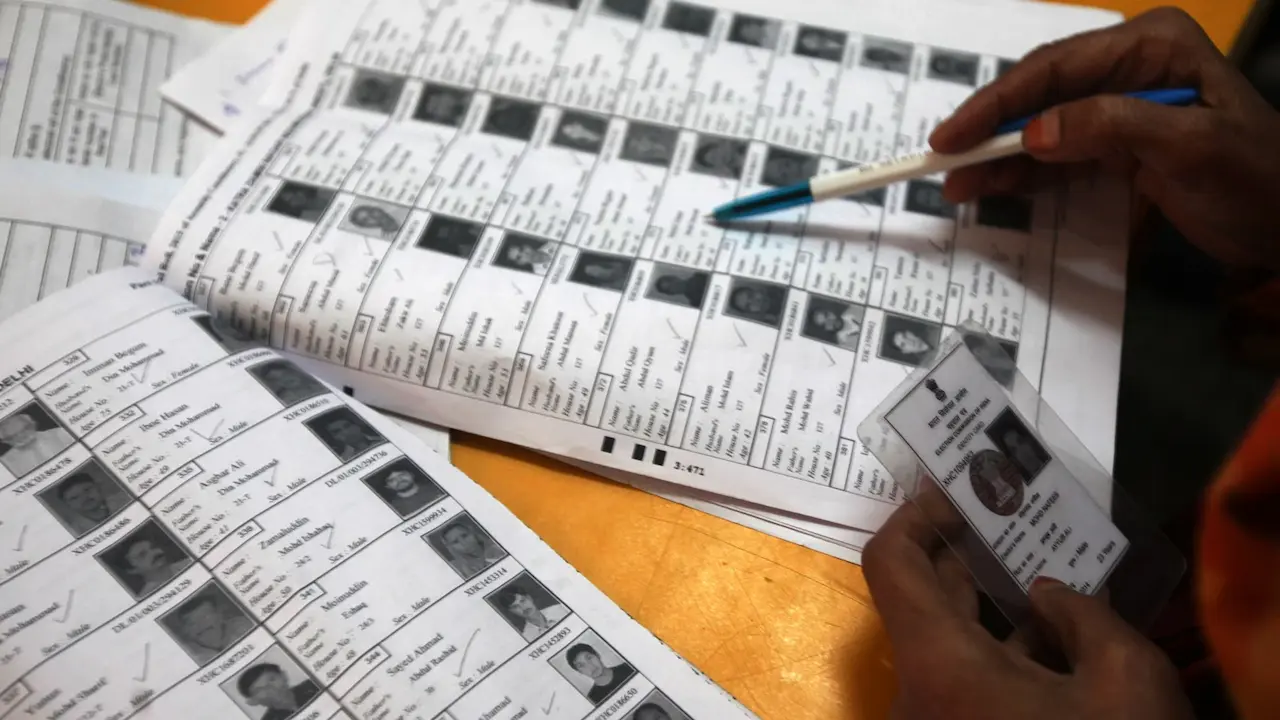
A major error has surfaced in the draft voter list for the BMC General Elections 2025, with RTI activist Anil Galgali exposing that 6,834 voters belonging to Ward 162 have been incorrectly placed in Ward 163.
In a letter to the Assistant Commissioner of L Ward, Galgali highlighted that multiple List Parts—officially and geographically part of Ward 162—were wrongly included under Ward 163 in the newly released rolls. The affected List Parts include 247, 248, 249, 250, 251 and 252, with misclassified voter counts ranging from 796 to 1,454, adding up to 6,834 voters.
Calling the mix-up a serious lapse rather than a clerical mistake, Galgali warned that such large-scale misclassification threatens the integrity and fairness of the upcoming civic elections. He demanded that all affected voters be immediately restored to Ward 162 to maintain the transparency of the delimitation and electoral process.
The complaint has been escalated to the Assistant Commissioner of L Ward, with copies sent to Municipal Commissioner Bhushan Gagrani and Additional Municipal Commissioner Dr Ashwini Joshi, urging swift corrective action.
Galgali said the BMC must act promptly if it intends to uphold public trust and claim credibility in the conduct of the 2025 elections.
'Empty Words, Colourful Balloons': Shiv Sena (UBT) Tears Into MahaYuti Govt Over Tribal Healthcare Neglect 10
Shiv Sena (UBT) on Saturday accused the MahaYuti government led by Chief Minister Devendra Fadnavis of making grand claims on infrastructure while failing to provide even basic healthcare and road facilities in remote tribal regions.
In a strongly worded Saamana editorial, the party said the government’s development narrative amounted to nothing more than “empty words” and “colourful balloons,” pointing out that people living just a few hours from Mumbai still suffer due to broken roads, poor health services and dysfunctional ambulance systems.
The criticism came in the wake of a disturbing incident in Mokhada in Palghar district, where an ambulance driver left a tribal woman and her newborn midway after delivery, forcing them and their relatives to walk two kilometres. The editorial said the episode, revealed only after a citizen posted it on social media, exposed the stark contrast between the government’s lofty development claims and ground reality.
The Thackeray camp said that even after seven decades of independence, areas like Wada-Mokhada and other tribal belts lack basic necessities. It noted that many primary health centres are without doctors, staff or medicines, and pregnant women often have to be carried in slings or palanquins for treatment — risking deaths en route. Even when ambulances are available, they are rendered useless due to the absence of proper roads or drivers.
“In Mumbai, which the Chief Minister claims to be transforming, Mokhada is barely a stone’s throw away. If an ambulance driver can behave so callously with a tribal woman in labour, what use is your development vision?” the editorial asked.
It further accused the MahaYuti partners of boasting about kilometres of roads, bridges and metro lines while failing to address the plight of the most marginalised. “The incident in Mokhada has exposed how baseless these claims and colourful balloons are,” the editorial said.
Concluding its criticism, Shiv Sena (UBT) stressed that true governance is not measured by metro corridors and expressways but by the state’s ability to provide essential services such as healthcare, all-weather roads and reliable emergency systems to its most vulnerable citizens.
11 Naxals, Including Top Cadre With Rs 89 Lakh Bounty, Surrender in Maharashtra’s Gondia 12
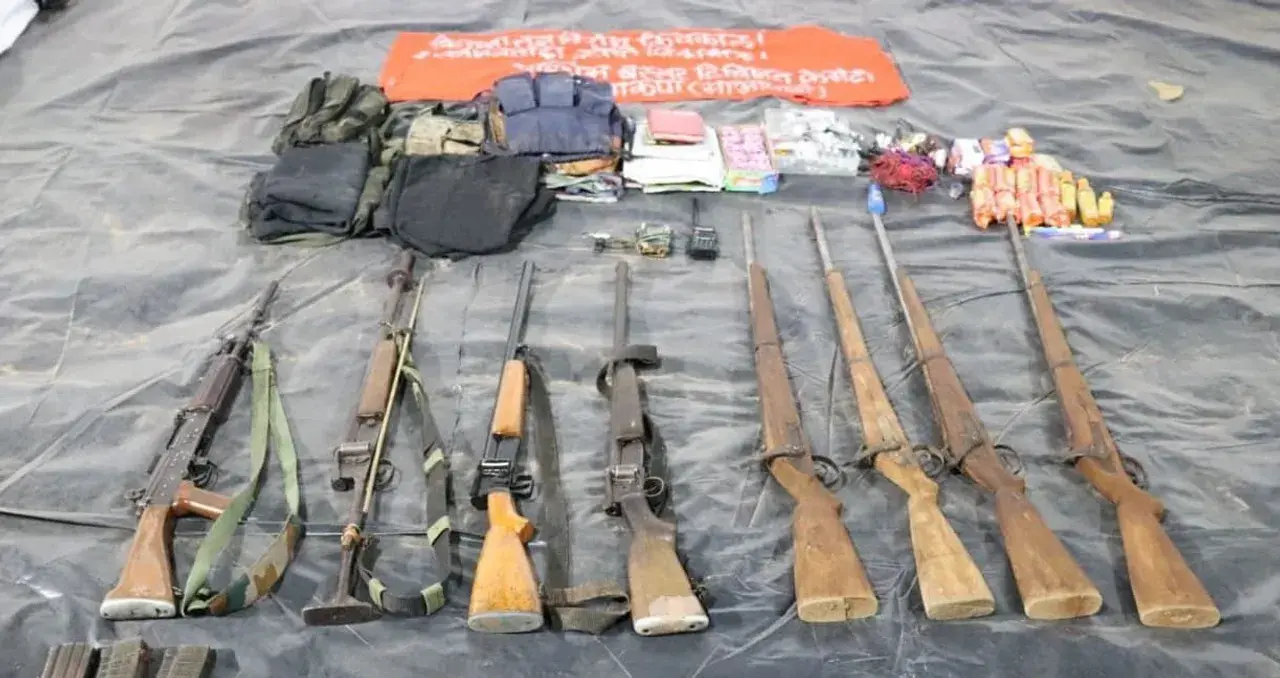
Eleven Naxals, including senior cadre Anant alias Vinod Sayyana, surrendered before police in Maharashtra’s Gondia district on Friday, marking a significant setback for the CPI (Maoist) network in the region. The group carried a combined reward of ₹89 lakh on their heads.
Deputy Inspector General of Police Ankit Goyal (Gadchiroli Range) said the surrendered cadres were part of the Darekasa Dalam, considered the most active Maoist unit in the MMC Zone (Maharashtra–Madhya Pradesh–Chhattisgarh).
“With this surrender, a majority of the outlaws from the Dalam have come forward to join the mainstream,” he said at a press conference.
Those who surrendered included Vinod Sayyana (40) of Telangana’s Karimnagar district — carrying a ₹25 lakh bounty — along with Pandu Pusu Wadde (35), Rani alias Rame Yesu Narote (30), Santu alias Tijauram Dharamsahay Poretti (35), Shevanti Raisingh Pandre (32), Kashiram Rajya Bantula (62), Nakke Suklu Kara (55), Sannu Mudiyam (27), Sadu Pulai Sotti (30), Sheila Chamru Madavi (40) and Ritu Bhima Dodi (20).
Officials said Vinod Sayyana surrendered with an AK-47 rifle, signalling a major boost to the state’s anti-Naxal operations.
Supreme Court Issues Notice to Centre on Plea Seeking Ban on Female Genital Mutilation 14
The Supreme Court on Friday agreed to hear a plea seeking a nationwide ban on female genital mutilation (FGM), a practice reportedly prevalent among sections of the Muslim community, particularly the Dawoodi Bohras.
A bench of Justices B.V. Nagarathna and R. Mahadevan issued notices to the Centre and other respondents on the petition filed by Chetna Welfare Society, an NGO arguing that FGM is not an essential religious practice and violates the rights of children.
The plea states that while India has no specific law banning FGM, the act constitutes offences under several provisions of the Bharatiya Nyaya Sanhita (BNS), including sections 113 and 118, relating to causing hurt.
It adds that under the POCSO Act, any non-medical touching of a minor’s genitalia amounts to an offence. The petition also cites the World Health Organization, which classifies FGM as a grave human rights violation, and highlights global conventions such as the Universal Declaration of Human Rights, which guarantee bodily integrity and protection from harm.
Calling FGM a serious health hazard, the plea notes risks including chronic infections, childbirth complications and long-term physical and psychological trauma.
The matter will next be heard after the Centre files its response.
National Herald Case: Delhi Court Delays Order on ED Chargesheet to December 16 16
A Delhi court on Saturday deferred its order on taking cognisance of the Enforcement Directorate’s (ED) chargesheet in the National Herald case, pushing the pronouncement to December 16.
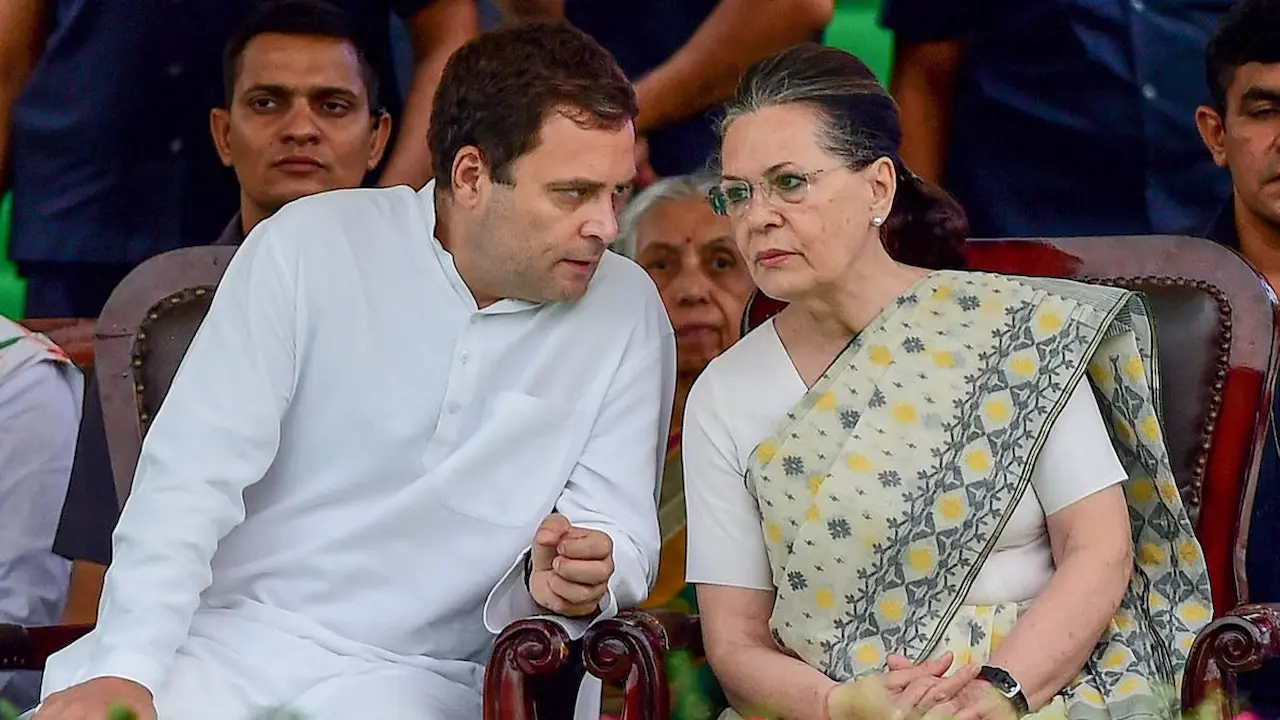
Special Judge Vishal Gogne postponed the decision on the chargesheet, in which the ED has accused Congress leaders Sonia Gandhi and Rahul Gandhi, late leaders Motilal Vora and Oscar Fernandes, journalist Suman Dubey, technocrat Sam Pitroda, and the company Young Indian of conspiracy and money laundering.
According to the ED, the accused allegedly acquired properties worth around ₹2,000 crore belonging to Associated Journals Limited (AJL) — the publisher of the National Herald — through Young Indian. The investigation agency claims the Gandhis held 76% of Young Indian’s shares, enabling them to “fraudulently” take over AJL’s assets in exchange for a ₹90 crore loan.
The chargesheet names Sonia Gandhi, Rahul Gandhi, Sam Pitroda, Suman Dubey, Sunil Bhandari, Young Indian, and Dotex Merchandise Pvt Ltd.
The court’s order on whether it will formally take cognisance of the charges will now be announced on December 16.
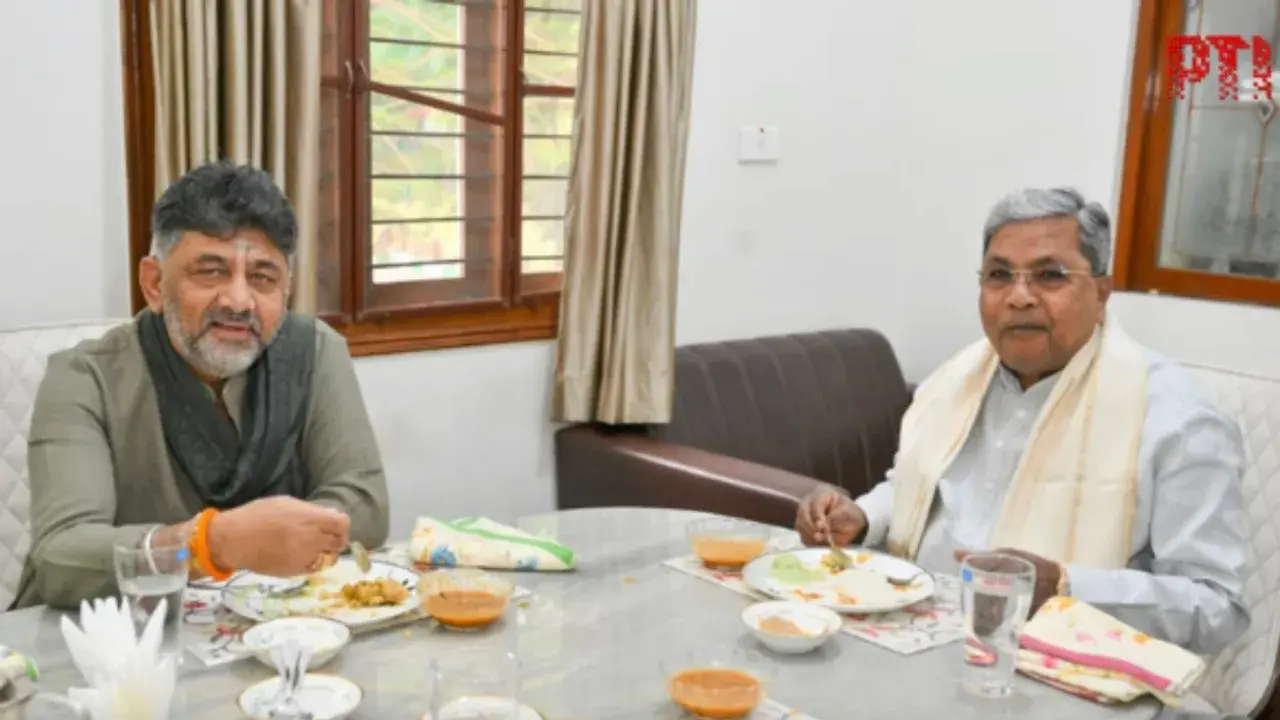
Shivakumar Meets Siddaramaiah Over Breakfast Amid Intensifying Karnataka Power Tussle 18
Karnataka Deputy Chief Minister D.K. Shivakumar arrived at Chief Minister Siddaramaiah’s residence ‘Kaveri’ on Saturday morning for a crucial breakfast meeting aimed at breaking the deadlock over the state’s leadership issue.
The political tension, simmering for nearly two months, escalated after November 20, when the Congress government completed two-and-a-half years in office—reviving Shivakumar’s claim that he was promised the chief ministership on a rotational basis. Siddaramaiah, however, has maintained that he has the mandate to continue as CM for the full five-year term.
Following growing pressure and internal discord, the Congress high command on Friday stepped in and directed both leaders to resolve the matter amicably through dialogue. Siddaramaiah subsequently invited his deputy for the breakfast meeting.
Before leaving for the CM’s residence, Shivakumar avoided questions from the media, saying he would speak only after the meeting concluded.
Sources from the Chief Minister’s Office said the menu included idli, vada, sambar, chutney and uppittu (upma)—a traditional southern spread served as the two leaders attempt to iron out differences that have begun to unsettle the state leadership.
The outcome of the meeting is expected to set the tone for the Congress government’s political stability in Karnataka in the coming months.
Assam Breaks the Silence: A Historic Strike Against Polygamy and the Exploitation of Women 20
Polygamy in Assam is not an overnight phenomenon; it is the outcome of a long, layered history where culture, migration, socio-economic factors, and weak legal enforcement all collided to create a system that silently crushed women generation after generation. When Assam passed the Assam Prohibition of Polygamy Bill 2025, it wasn’t a random political gesture. It was the state finally admitting a long-hidden social wound, turning towards a future where women are not treated as replaceable, divisible assets. The law signals that the era of silent suffering is over and that accountability will finally walk into bedrooms where injustice once hid behind customs and religious freedoms.
Polygamy’s roots in Assam can be traced back centuries. In earlier times, certain tribal communities practiced it within a structured social setup. It served utilitarian purposes—like labour sharing or resource management—and women still retained dignity and decision-making power within their clans. But what might have been a balanced, culturally contextual practice centuries ago slowly mutated into something exploitative. The deeper scars began to appear during the late 19th and early 20th centuries, when waves of migration from Bengal and later East Pakistan (now Bangladesh) altered Assam’s demographic and cultural landscape. With these migrations came practices where polygamy was not cultural cooperation but male-centric expansion, often used to increase family size, establish economic clout, or consolidate land and political influence. Women became the silent casualties in this demographic shift.
Over time, in districts with low literacy, weak awareness, and fragile local administrative structures, polygamy entrenched itself as a kind of twisted social status symbol. A man with multiple wives was perceived as prosperous or powerful. It was a public display of male privilege masquerading as cultural acceptance. But the price of this “status” was paid by women whose voices were buried under layers of obedience, dependency, and social conditioning.
The situation worsened when polygamy found refuge behind religious laws. While over 130 to 140 countries worldwide—Turkey, France, America, Germany, Sweden, England, Australia, Canada, Japan, Spain, Italy among them—have imposed strict restrictions or outright bans on polygamy, India continued a fragmented legal system where personal laws dictated marital rights differently for different communities. This inconsistency created loopholes. It allowed certain groups to continue the practice without fear of consequences, even though the Constitution speaks of gender equality and dignity. In Assam, these loopholes became escape routes for exploitation. A man could marry a second or third time without informing the first wife. He could abandon a woman without formal divorce, leaving her economically stranded. And he could justify everything under the shield of personal law.
When women lack economic independence, social support, and legal literacy, they become easy targets. In Assam, countless women—especially in rural belts—found themselves trapped in marriages where their husbands brought home second wives without warning. The emotional shock is only the beginning. Once a second marriage takes place, the first wife often faces immediate financial cutbacks. Her children receive less attention, fewer resources, and weaker inheritance rights. The man’s income—already limited in many households—now stretches over multiple families. In such scenarios, women silently slide into poverty while the man enjoys the unchallenged privilege of expanding his household at will.
Many first wives are pushed out of the home through psychological harassment or direct intimidation. Some are labelled “burdens,” or blamed for not having sons, or accused of being incapable of maintaining marital harmony—all convenient excuses for a husband seeking a new, younger wife. This is not culture; this is deeply structured injustice presented under the disguise of tradition.
Societally, polygamy does even more damage. It destabilises family structures, creates rivalry among children from different wives, and fuels long-term emotional conflict within households. When two or three families compete for the same breadwinner’s attention and resources, instability becomes a way of life. This has implications for mental health, education, and child welfare—three pillars that decide a society’s long-term progress.
At the community level, polygamy fuels population pressure. In regions where the practice is more common, population growth rates spiked far faster than the state’s average. More wives meant more children, which strained local resources, increased dependency on state welfare schemes, and limited upward mobility. In areas lacking strong education systems and employment opportunities, this demographic pressure contributed to deeper poverty cycles. When women have little say in family planning, population policies cannot function effectively. This is a reality Assam lived with for decades.
Against this background, the Assam Prohibition of Polygamy Bill 2025 emerges as a bold, long-overdue correction. The law imposes up to ten years’ imprisonment for men who enter a second marriage while concealing an existing one, and two years of imprisonment with heavy fines for village heads, kazis, priests, or parents who knowingly facilitate such marriages. This directly targets the ecosystem that enables polygamy—not just the act itself. It breaks the chain of social sanction by holding intermediaries accountable. When a priest, kazi, or village elder fears jail time and a personal fine of one to one-and-a-half lakh rupees, the casual acceptance of polygamy collapses.
The law goes a step further by removing state benefits from offenders. Anyone convicted will lose the right to government jobs, welfare schemes, and even the right to contest elections. This may sound harsh, but let’s face the truth: a person who cannot remain loyal to one family, who deceives and destroys the life of a woman who trusted him, shouldn’t be sitting in public office or enjoying taxpayer-funded benefits. Accountability begins at home. When a man destabilise his own household, society has no reason to trust him with broader responsibilities. What truly shifts the balance is the support promised to victims. Women subjected to polygamy will receive legal assistance, financial support, and protection from further abuse. This empowers them to step out of silence. This is not just prohibition; it is rehabilitation. The state is not punishing and walking away—it is rebuilding the lives of those who were harmed.
Globally, the trend is clear: countries that value women’s freedom, economic independence, and human dignity have rejected polygamy because it is fundamentally unequal. It reduces women to commodities, divides families, and weakens social stability. Even many Islamic countries have introduced strict restrictions, requiring judicial permission or the consent of the first wife—something rarely given. The world has moved on, because societies that treat women as equal partners progress faster in every measurable way: economy, education, health, and innovation.
India cannot claim to be a modern, forward-thinking nation while allowing loopholes that jeopardise women’s basic rights. Equality cannot be selective. If men and women are equal citizens, polygamy cannot survive. Assam has taken the first courageous step, and it will not remain confined to one state. Other states will inevitably follow, because social justice moves slowly but decisively. Once one pillar falls, the old walls cannot stand.
The truth is simple: polygamy is not tradition; it is an outdated power structure. It does not protect culture; it protects male privilege. It does not strengthen families; it fractures them from within. And it does not honour women; it reduces them to silent spectators in their own lives.
Assam’s new law marks a turning point. It restores dignity to women, stabilises families, and sets a national precedent that exploitation cannot be hidden behind the veil of custom. It is a reminder that societies evolve not by preserving everything from the past but by discarding what harms the future. Assam choose courage over convenience, justice over silence, and fairness over fear.
When the pages of history are written, this moment will stand out—not as a legal reform, but as a social awakening. A state finally stood up and said, “Women are not options. They are individuals with rights, dignity, and agency.” And that statement is long overdue, not just for Assam, but for India.