Home Blog Page 25

HAPPYHarda: The Revolution from the Soil – A Blueprint for Bharat’s Agrarian Renaissance

happy harda, happyharda, harda, madhya pradesh
HAPPYHarda: The Revolution from the Soil – A Blueprint for Bharat's Agrarian Renaissance 2

In 2025, a defining moment unfolded in the heart of Madhya Pradesh when Union Minister of Agriculture, Shri Shivraj Singh Chouhan, stood before a gathering of over 50,000 farmers at Harda and made a commitment that may well change the destiny of Indian agriculture. His words were not a routine assurance—they carried the weight of a promise to replicate a living, breathing model of transformation across the nation. The model he referred to was born in Harda, nurtured by the Gram Vikas Trust (GVT), and matured into a vision now known as HAPPYHarda — Healthy Agriculture by Progressive & Prosperous Youth of Harda. It represents not just a district’s dream, but the possibility of reviving the soul of Bharat — the soil, the farmer, and the village that have long formed its backbone.

To understand what makes HAPPYHarda revolutionary, one must look back to 2016, when GVT dared to begin an experiment in some of India’s most neglected rural belts. Rather than chasing superficial development, the Trust aimed to build a proof of concept — to demonstrate what is possible when traditional wisdom is merged with modern management, community participation, and sustainable planning. The results between 2017 and 2024 shattered every assumption about rural stagnation. In 5,000 villages, farmer incomes rose by ten times; 6.5 crore trees were planted; 800 crore litres of water were harvested through community-based watershed structures; and social harmony, once frayed by migration and poverty, was rebuilt through shared success.

This was not charity. It was design. A self-reliant ecosystem where the farmer became the entrepreneur, the soil regained its fertility, and the village rediscovered its purpose. This is what drew the attention of the nation. In 2025, when the Agriculture Minister promised to scale this model nationally, it was an acknowledgment that the future of Bharat depends on learning from its roots.

India’s tragedy lies not in its lack of potential, but in its neglect of the very foundation that sustains it — the farmer. Despite being the largest employer in the country, contributing nearly 18% to the GDP and feeding 1.4 billion people, Indian farmers continue to be treated as a vote bank rather than a national asset. Fragmented landholdings, rising input costs, erratic weather, and the stranglehold of middlemen have crippled rural livelihoods. What India has missed for decades is a cohesive, holistic model — one that connects the farm to the market, the farmer to finance, and agriculture to dignity. HAPPYHarda has stepped into that vacuum with the clarity of science and the soul of service.

Harda’s geography is symbolic of its destiny. Nestled on the banks of the sacred Narmada River, with a lineage rich in farming and education, Harda has always embodied the rhythm of Bharat. The HAPPYHarda initiative was designed not merely to revive the district’s prosperity but to turn it into a demonstration site for national regeneration. Its ethos is built around collaboration — bringing together farmers, scientists, industrial partners, and local governance into a single ecosystem that rewards productivity, responsibility, and innovation.

At the Mumbai University’s “Purv Rang” event in November 2025, HAPPYHarda’s vision reached a new milestone when the Mumbai Chapter, led by AISECT, announced its entry into Maharashtra. The event wasn’t ceremonial—it was a convergence of thought leaders, policymakers, academics, and entrepreneurs. An exclusive strategy meeting with Dr. Santosh Chaubey, Chancellor of AISECT University, defined the roadmap for fund allocation and nationwide implementation. The agenda revolved around social asset creation, soil health revival, water management, and industrial collaboration for value addition in agriculture. With corporate partners like Buldhana Urban Cooperative, Jain Irrigation, Sahyadri Farms, Reliance Retail, and RR Kabel coming on board, HAPPYHarda has become a bridge between India’s rural strength and urban resources.

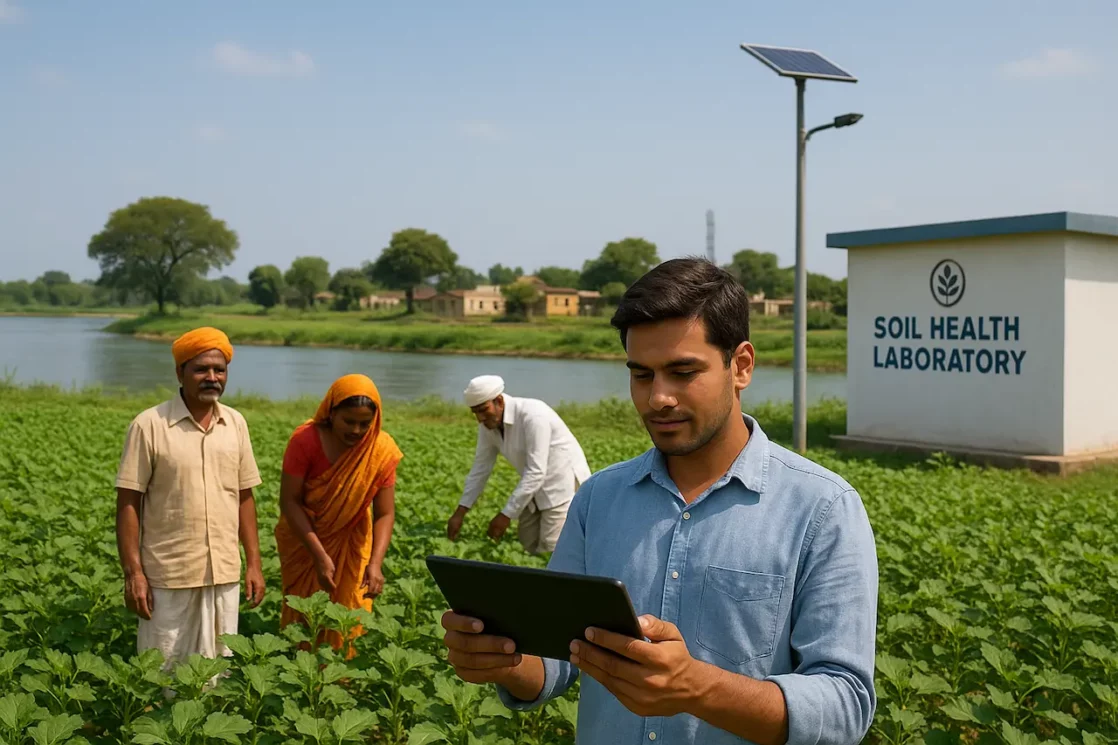
What makes this initiative truly futuristic is its focus on the ecosystem, not isolated reforms. For decades, India has thrown subsidies and schemes at farmers without addressing the systemic rot beneath. The HAPPYHarda model begins with the soil. Years of chemical abuse have stripped Indian farmlands of their vitality. The Trust’s next major investment is in soil health laboratories, designed to analyze, restore, and maintain long-term fertility. It’s a scientific revolution rooted in simplicity: if the soil lives, the nation thrives. Parallel efforts are being made to develop micro-irrigation systems, precision farming, and renewable energy integration, reducing the cost burden while enhancing sustainability.

Yet, technology alone is not enough. The movement also takes aim at one of the darkest realities of Indian agriculture—the agro mafia. Across states, unregulated trader networks, hoarders, and lobbying cartels control prices, dictate supply chains, and exploit farmers who have no access to fair markets. HAPPYHarda is building an alternative ecosystem where farmers are stakeholders, not dependents. Through cooperative ownership, transparent pricing, and blockchain-backed traceability, this model promises to dismantle the exploitative middle layer that has haunted the sector for decades. By connecting farmers directly to industries and consumers, it transforms them into value creators, not raw material suppliers.

The inclusion of local factories for value addition—be it juice, sugar, or food processing units—is not a supplementary idea; it’s central to the model. Every crop must have a second life, and every farmer must earn from every stage of that life cycle. This approach also ensures employment generation in rural areas, slowing down the urban migration that has hollowed out India’s villages.

But the story doesn’t end with economic gain. HAPPYHarda is about restoring dignity. For too long, agriculture has been seen as the profession of those who couldn’t make it elsewhere. The youth of Harda are rewriting that perception. Armed with digital tools, IoT devices, and market intelligence, they are creating an image of the modern Indian farmer—educated, empowered, and enterprising. Through initiatives in horticulture, dairy farming, and eco-tourism, they are diversifying income sources while preserving the cultural soul of Bhuana heritage. “Know your Farmer, Know your Food” is not just a slogan here—it’s a philosophy that reestablishes trust between the producer and the consumer, between Bharat’s heartland and its cities.

If scaled across India, the potential impact of HAPPYHarda is staggering. A tenfold income increase across the farming population could lift nearly 200 million people out of poverty. Improved water conservation could reduce the dependency on erratic monsoons by over 30%. Value-addition industries could create millions of jobs, particularly for women and rural youth. With agriculture accounting for 60% of India’s employment, this model could fundamentally reshape the nation’s economic architecture.

The larger question is: can India afford not to adopt such models? Climate change is tightening its grip, groundwater levels are depleting, and food security risks are mounting. The agrarian crisis is no longer a rural problem—it’s a national emergency. Models like HAPPYHarda offer not just solutions but survival strategies for the decades to come. They embody the Gandhian idea of Gram Swaraj, updated for the 21st century—villages that are self-sufficient yet globally connected, traditional yet technologically advanced.

By 2030, HAPPYHarda envisions a network of Smart Villages — clusters where every farmer has access to soil data, water analytics, renewable power, and a digital marketplace. Education and entrepreneurship will go hand in hand, making rural youth the custodians of a new economic revolution. With support from the Ministry of Agriculture, the roadmap includes soil labs in every district, integrated agro-industrial zones, and partnerships with universities like AISECT and Mumbai University for research and training.

India’s growth cannot be measured by skyscrapers or stock markets alone—it must be reflected in the fertility of its soil and the prosperity of its farmers. The future belongs not to the cities that consume, but to the villages that produce. HAPPYHarda reminds us that progress is not about abandoning the past but about reinterpreting it with purpose. The river Narmada that flows through Harda has always been a symbol of renewal, and now it nourishes not just the fields but a national vision.

Shri Shivraj Singh Chouhan’s endorsement of this model signals more than a policy shift—it marks a philosophical transformation. India’s next revolution will not come from political corridors but from the soil. From the self-respect of the farmer who no longer waits for subsidy but demands value. From the unity of partnerships that see the village not as a relic, but as a powerhouse.

HAPPYHarda stands today as a testimony to what Bharat can become when it believes in its own roots. It is a reminder that in the farmer’s cracked palms lies the map to the nation’s future. A future where prosperity grows with sustainability, where progress walks hand in hand with purity, and where Bharat once again learns to bloom from its soil outward.

As one farmer from Harda said with quiet conviction, “We no longer wait for rain or relief — we have learned to make our own season.” That is the spirit of HAPPYHarda — a spirit that must now flow through the veins of a new, self-reliant, and truly Pragat Bharat.

BJP Names Chandrashekhar Bawankule as In-Charge for Maharashtra Local Body Polls

bawankule, chandrashekhar bawankule, bjp, bharatiya janata party
BJP Names Chandrashekhar Bawankule as In-Charge for Maharashtra Local Body Polls 4

The Bharatiya Janata Party (BJP) on Tuesday appointed senior leader and Maharashtra Minister Chandrashekhar Bawankule as the party’s in-charge for the upcoming local body elections, which are being held in the state after six years.

The announcement was made by State BJP president Ravindra Chavan during a strategy meeting attended by Chief Minister Devendra Fadnavis and senior party leaders.

Speaking at the meeting, Bawankule expressed confidence that the ruling Mahayuti alliance, comprising the BJP, the Eknath Shinde-led Shiv Sena, and Ajit Pawar’s NCP, would secure over 51% of the votes and win a two-thirds majority across Maharashtra.

“We will ensure the Mahayuti wins all elections in Maharashtra — from municipal corporations to zilla parishads, councils, and nagar panchayats — with an overwhelming majority,” Bawankule said.

CM Devendra Fadnavis urged district in-charges to focus on coordination within the Mahayuti and avoid public criticism of partner parties. To strengthen cooperation at the grassroots level, Bawankule announced that a three-member coordination committee—comprising one minister each from the BJP, Shiv Sena, and NCP—will be formed in every district. “We will ensure there are no disputes or differences among Mahayuti partners,” he added.

According to the State Election Commission, polls for 246 municipal councils and 42 nagar panchayats will be held on December 2, with vote counting on December 3. The elections, to be conducted using Electronic Voting Machines (EVMs), will decide 6,859 members and 288 council presidents.

A total of 1.7 crore voters — including 53.8 lakh men, 53.2 lakh women, and 775 others — are eligible to cast their votes across 13,355 polling stations in 3,820 wards. Of the total seats, 3,492 are reserved for women, 895 for Scheduled Castes, 338 for Scheduled Tribes, and 1,821 for OBCs.

The December polls are being closely watched as the first major test of strength for the Mahayuti government after the Assembly elections, with all three alliance partners keen to assert dominance in their respective bastions.

Dharmendra Discharged from Hospital, to Continue Recovery at Home; Family Urges Privacy

dharmendra, actor, discharged, dharmendra deol
Dharmendra Discharged from Hospital, to Continue Recovery at Home; Family Urges Privacy 6

Veteran Bollywood actor Dharmendra was discharged from Breach Candy Hospital in Mumbai on Wednesday morning and will continue his recovery at home, the family confirmed, requesting privacy and restraint from speculation.

The 89-year-old star had been admitted for a few days for medical tests, though neither the family nor hospital officials disclosed details about his condition. In a statement, the family expressed gratitude for the love and prayers pouring in from fans and colleagues while urging the media to avoid unnecessary rumours.

“Mr. Dharmendra has been discharged and will continue his recovery at home. We request the media and public to refrain from speculation and respect his and the family’s privacy. We appreciate everyone’s love, prayers, and good wishes for his continued recovery and good health,” read a statement issued by Sunny Deol’s PR team.

Dr. Pratit Samdani, who was treating Dharmendra, confirmed that the actor was discharged around 7:30 am. “He will be treated at home as the family has opted for home care,” he said.

An ambulance carrying the actor was seen leaving for Sunny Deol’s Juhu residence, where arrangements have been made for his continued medical supervision.

The update comes a day after several media outlets wrongly reported Dharmendra’s death, forcing his family to issue clarifications. “My father is stable and recovering. Please stop spreading false news and give us privacy,” daughter Esha Deol posted on Instagram.

Actor-politician Hema Malini, Dharmendra’s wife, also lashed out at what she called “irresponsible journalism,” writing on X: “How can responsible channels spread false news about a person who is recovering? This is extremely disrespectful and insensitive. Please respect our privacy.”

Meanwhile, several leading Bollywood stars, including Shah Rukh Khan, Aamir Khan, and Salman Khan, visited Dharmendra at the hospital to check on his health.

The legendary actor, known for classics like Sholay, Phool Aur Patthar, and Chupke Chupke, continues to receive widespread support from fans across generations as he recovers at home.

Family of Delhi Blast Suspect Umar Nabi Says “Can’t Believe He Could Be Involved in Terror Activities”

Pulwama, Umar Nabi, Delhi Blast, Delhi
Family of Delhi Blast Suspect Umar Nabi Says "Can't Believe He Could Be Involved in Terror Activities" 8

The family of Dr. Umar Nabi, the man suspected to be behind the Delhi blast near Red Fort Metro Station, said they are in disbelief over allegations linking him to terror activities.

Dr. Nabi, a resident of Koil village in Pulwama, Jammu and Kashmir, was allegedly driving the Hyundai i20 car used in Monday’s blast near the metro station’s parking area, which left at least 12 people dead, officials said.

Speaking to reporters, his sister-in-law Muzamil said Umar had always been a quiet and academically focused person. “He was an introvert since childhood, with few friends. He devoted himself to his studies and work,” she said. “He was working as faculty at a college in Faridabad. Just last Friday, he called to say he was busy with examinations and would return home in three days. We can’t believe this news — it’s shocking.”

Muzamil added that the family struggled for years to ensure Umar received a good education and could support himself. “He was never the kind of person to get involved in such things,” she insisted, recalling that Umar had last visited Kashmir two months ago.

Meanwhile, Delhi Police’s preliminary findings suggest the blast involved ammonium nitrate, fuel oil, and detonators, linking it to a terror module uncovered in Faridabad, where authorities had seized 2,900 kg of explosive material earlier this month. “Final forensic reports are awaited,” a police source said.

An FIR has been registered under the Unlawful Activities (Prevention) Act (UAPA) and the Explosives Act, with sections pertaining to conspiracy and punishment for acts of terrorism.

The Union Home Ministry has handed over the case to the National Investigation Agency (NIA), which will now probe the alleged terror links and possible network behind the Red Fort metro blast, one of the deadliest explosions in the capital in recent years.

The Karna Syndrome: When Brilliance Turns Against Its Own Roots

karna syndrome, indian politics, politics
The Karna Syndrome: When Brilliance Turns Against Its Own Roots 10

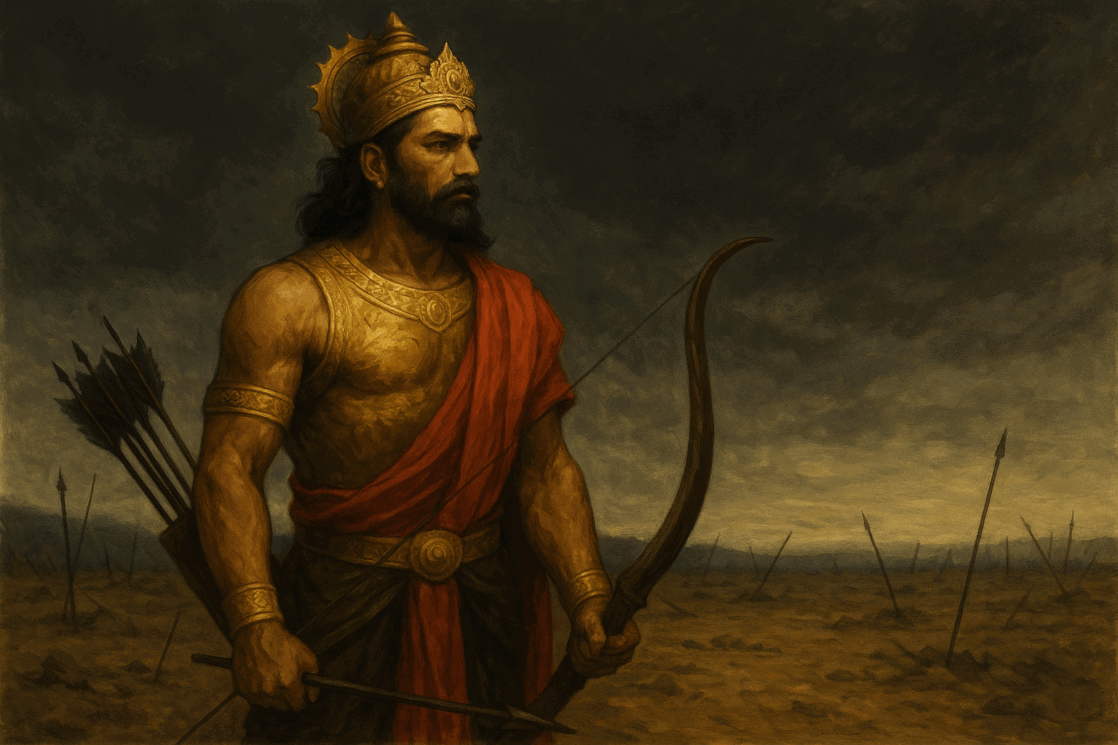
There’s a certain tragic pattern that repeats itself through history — a pattern that might well be called the Karna Syndrome. It is not just a mythological symbol but a living political phenomenon that re-emerges whenever a man, convinced of his own brilliance, begins to believe that he alone defines discipline, truth, and power. Such a person may rise high, shake the system, even appear invincible for a while — but eventually, he ends up isolated, misused by others, and consumed by his own ego. He can disturb, yes — but he can never truly defeat the system that gave him birth.

Look at modern India, and this syndrome shows its face in several forms. You see it in people like Subramanian Swamy, Prashant Kishor, Shatrughan Sinha, Yashwant Sinha — men once celebrated within the Bharatiya Janata Party ecosystem, now adrift, neither here nor there. You see it even in Narendra Modi himself, who at one point appeared to have detached from the very collective discipline that created his rise, leaning instead on the weight of his personal image. And when you begin to detach from your own foundation, when self-belief begins to overshadow collective wisdom, that’s when Karna Syndrome starts to show its cracks.

Let’s start from the roots of the idea. In the Mahabharata, Karna was a warrior of unmatched skill and courage. Born of Kunti but abandoned at birth, he grew up away from his true lineage, denied his rightful place among the Pandavas. Out of loyalty and gratitude, he allied himself with Duryodhana — a man who recognized his talent but also used him as a weapon against his own brothers. Karna’s tragedy was not his lack of ability; it was his misplaced faith and his disconnection from his origin. He believed in his own discipline, in his own code of honor, so fiercely that he ignored where he truly belonged. That self-imposed exile defined his destiny. He could fight the greatest battles, but he could never win the war for himself.

In today’s political arena, the same script unfolds with startling familiarity. Subramanian Swamy — an intellectual powerhouse, an economist, and a fighter — built his reputation alongside the very ideology that shaped modern Hindu politics. Yet, his repeated clashes with his own party leadership reveal a man caught between brilliance and bitterness. He is a classic case of the Karna Syndrome — convinced that his intellect alone is the final truth, dismissing the need for collective discipline. He can wound with his words, expose weaknesses, and create tremors within the system, but he can’t defeat it because he long severed his roots with the very institution that gave him a platform.

Prashant Kishor, on the other hand, carries a different version of the same ailment. He began as a strategist within the BJP camp, a brain behind successful campaigns. Over time, he built his own brand — a one-man political consultancy machine that promised to outsmart every party, ideology, and structure. He started believing that his formula could replace conviction, that data could substitute roots. But politics is not a math problem; it’s a living organism built on trust, loyalty, and belonging. In Bihar, where he now seeks to play his biggest gamble, this syndrome might come to claim its next victim. Because in Bihar’s soil, politics still demands a connection to the heartland — not just clever arithmetic. If you lose touch with the people, if you float too far above the ground, you become just another ambitious outsider, eventually crushed between factions and forgotten when the dust settles.

What’s striking is that even a leader as powerful as Narendra Modi wasn’t immune to shades of this syndrome before the 2024 election. Over the years, his image grew larger than the party, larger than the ideology, larger even than the collective wisdom of his peers. The BJP, once a disciplined cadre-based organisation built on teamwork, slowly began to revolve around one man’s aura. Modi’s discipline became the only discipline. That concentration of power brought him unmatched dominance — but it also created fractures. In believing that his own style was the final word, he unintentionally created dozens of smaller Karnas — ambitious men who thought they too could rise purely on their personal discipline, without loyalty to the collective. They sprouted inside and outside the party, from Shatrughan Sinha to Yashwant Sinha to even Kishor and Swamy, each convinced they could fight their own battles, free of the mother structure that nurtured them.

The irony is sharp: these men drew their strength from the very party or ideology they later rebelled against. Their identity was born in that soil — like Karna born of Kunti — yet they turned their energies against it, often aligning with rivals or critics who were too happy to use their rebellion as ammunition. They became tools in someone else’s fight, believing all the while that they were masters of their destiny. But like Karna, their loyalty to a borrowed cause never brought them peace. You can lend your sword to another side, but if your roots are elsewhere, you will always stand alone in the battlefield.

And this loneliness shows. Swamy, once a giant in intellectual politics, now fights his battles on social media, ignored by the system he helped shape. Shatrughan Sinha, once a fiery voice of rebellion, now echoes clichés in borrowed platforms. Yashwant Sinha, once a respected finance minister, turned critic and faded into irrelevance after switching sides. Each one is an example of how the Karna Syndrome ends — not with defeat by others, but with defeat by disconnection. The tragedy isn’t betrayal; it’s isolation.

Even Prashant Kishor, who now projects himself as Bihar’s independent messiah, seems to be walking into the same trap. He believes he can out-think every party, that his data-driven discipline will triumph over ideology. But Bihar’s political landscape doesn’t reward outsiders — it rewards belonging. He may shake the tree, but he cannot change its roots. When the election dust settles, he might discover that Bihar is not a chessboard; it’s a pulse, a sentiment, a legacy. And those who play against their own origins rarely win the long game.

The Karna Syndrome also explains a subtler danger within Indian politics — the slow erosion of rootedness. When individuals begin to think they alone define the movement, they hollow out the very institutions that made them powerful. They create noise, not continuity. They draw applause, not allegiance. And soon, they find themselves surrounded not by comrades, but by opportunists — people who will cheer them while they rise and vanish when they fall. This cycle is repeating today with eerie precision: too many stars, too little sky.

You mentioned that Modi himself, at one point, seemed to embody the same syndrome that produced his critics. Indeed, his belief in his personal discipline — his unshakeable image, his method of command — became the defining feature of his rule. But leadership divorced from the collective eventually begins to wobble. When the same self-belief that built a leader becomes too absolute, it isolates him from the very base that sustained him. What follows is the rise of internal dissent, the birth of new mini-Karnas, and a sense of drift both within and beyond borders. Once personal pride replaces collective identity, decline begins — not always visible immediately, but inevitable in time.

And when such a decline sets in at the top, it trickles down through the ranks. The leader’s detachment legitimises individual detachment. The system starts producing replicas of himself — people who speak his language but follow their own ambitions. The discipline that once united the movement now fragments into competing egos. The faithful turn cynical, the opportunists take charge, and the movement begins to lose its moral gravity. This isn’t just politics — it’s psychology. When self-belief becomes arrogance, it stops inspiring and starts isolating.

That is why the “Karna Syndrome” is not just about individuals — it’s about a culture. A culture that forgets the sanctity of roots. A culture that mistakes self-confidence for self-sufficiency. A culture that believes one’s personal code is greater than the collective destiny. Such a mindset can shake systems, create temporary storms, even alter narratives — but it cannot build lasting order. Because real power comes not from standing apart, but from standing rooted.

And when this syndrome spreads too deep, it threatens more than just parties or politicians — it threatens the dignity of national discourse itself. When men who were once torchbearers of certain ideals start fighting against their own origins, they weaken not just themselves, but the moral spine of the institutions they once represented. In such moments, even the opposition should not remain silent. Because when internal disintegration begins, when ego starts to eat ideology, the consequences ripple beyond partisan lines. It’s no longer a party problem — it’s a national problem. It’s a question of self-respect and sovereignty. A house divided from within can be invaded from without, and silence becomes complicity.

The lesson of Karna, then, is timeless. Talent, intellect, and strength are never enough without rootedness. You can fight brilliantly, but if you forget where you belong, you will eventually fall — not because you lacked ability, but because you lost alignment. Karna was brave, generous, loyal — yet all that nobility couldn’t save him once he severed his link with his truth. His tragedy wasn’t written by fate; it was written by dislocation.

In today’s politics, we are seeing too many modern Karnas — intelligent, ambitious, capable — but torn away from their origins, wandering in search of validation, often from the very forces they once opposed. They create tremors, yes. They make noise. But in the long run, they fade, one by one. Their fall isn’t dramatic — it’s quiet, lonely, inevitable.

Prashant Kishor’s upcoming Bihar election may well be the next chapter of that story. Like every Karna, he believes his own discipline will rewrite destiny. But history has a way of humbling such men. Karna Syndrome, as we know it, never fails to punish brilliance without belonging.So yes — they may disturb, they may challenge, they may even appear unstoppable for a while. But they cannot defeat the order that gave them birth. Because in the end, roots are stronger than rebellion, and loyalty.

Winter Session of Parliament to Begin on December 1, Conclude on December 19

lok sabha, parliament, monsoon session, adjourned, pahalgam, operation sindoor
Winter Session of Parliament to Begin on December 1, Conclude on December 19 12

The Winter Session of Parliament will begin on December 1 and conclude on December 19, according to an official announcement approved by President Droupadi Murmu on Saturday.

Minister of Parliamentary Affairs Kiren Rijiju confirmed the schedule, stating, “The President of India, Droupadi Murmu, has approved the proposal of the Government to convene the Winter Session of Parliament from December 1, 2025, to December 19, 2025 (subject to exigencies of Parliamentary business).”

Rijiju expressed hope for productive discussions, saying, “Looking forward to a constructive and meaningful session that strengthens our democracy and serves the aspirations of the people.”

The Monsoon Session, which ended on August 21, was marked by heated exchanges between the ruling NDA and the Opposition over several issues, including the Pahalgam terror attack, Operation Sindoor, and the government’s handling of losses suffered by security forces. Despite frequent disruptions, 15 bills were passed during that session.

The session also saw uproar over the revision of electoral rolls in poll-bound Bihar, with Opposition MPs staging protests, tearing copies of bills, and clashing with the Treasury benches.

Adding to the political turmoil, Vice President Jagdeep Dhankhar resigned unexpectedly on the opening day of the monsoon session, citing health reasons. His sudden exit two years before completing his term triggered sharp political reactions and speculation across party lines.

The upcoming winter session is expected to witness intense discussions on key legislative priorities, including economic reforms, national security, and electoral issues, as the government and Opposition gear up for a politically charged debate ahead of the 2026 budget session.

TN Raj Bhavan Refutes Delay Allegations, Says 81% Assembly Bills Cleared by Governor Ravi

mk stalin, stalin, ravi, governor, tamil nadu, tn governor
TN Raj Bhavan Refutes Delay Allegations, Says 81% Assembly Bills Cleared by Governor Ravi 14

Tamil Nadu Governor R N Ravi, TN Raj Bhavan statement, Tamil Nadu Assembly Bills, Governor Bill assent controversy, Raj Bhavan news

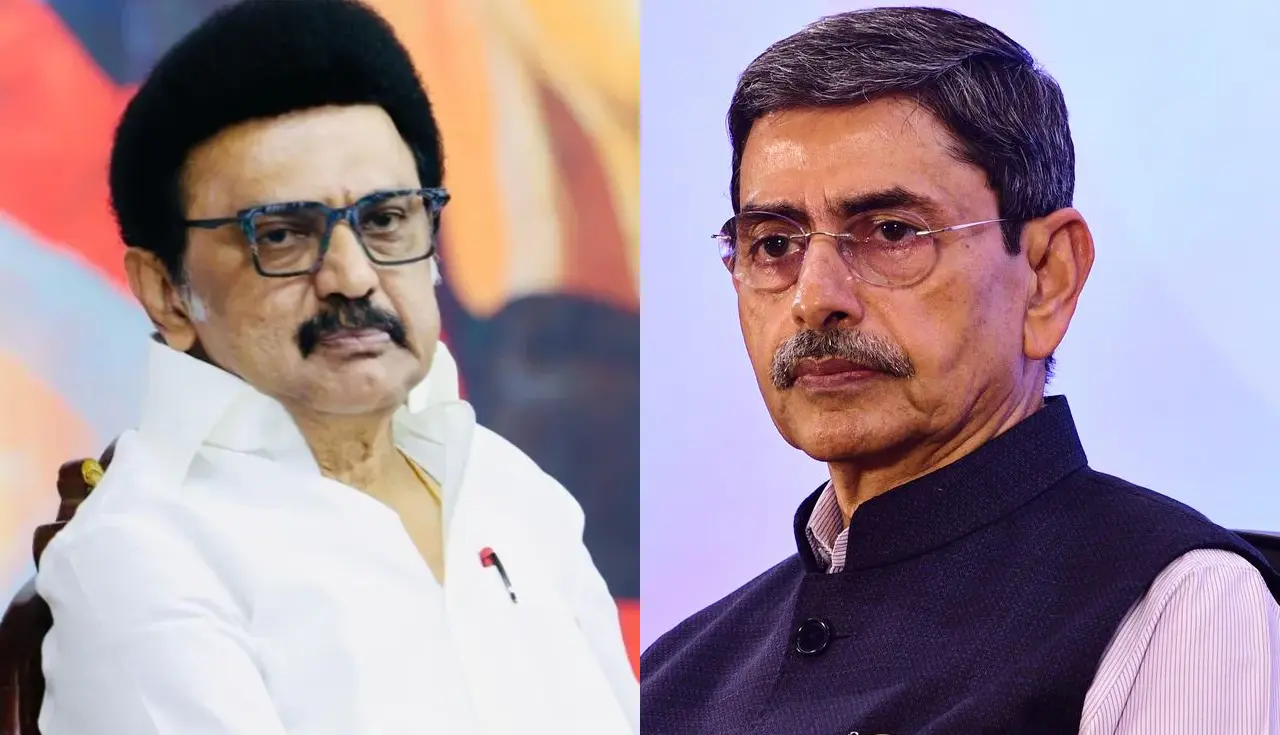
The Tamil Nadu Raj Bhavan on Thursday dismissed allegations that Governor R N Ravi was deliberately delaying his assent to Bills passed by the State Assembly, asserting that 81% of all Bills received had already been approved.

In a detailed statement issued on November 7, the Raj Bhavan termed the claims “unfounded and factually incorrect,” adding that the Governor has been acting “strictly in accordance with the Constitution” and without any political bias.

“As of October 31, 81% of the total Bills received have been assented to by the Governor, and 95 of these were cleared within three months,” the statement said. It further noted that 13% of the Bills were reserved for Presidential consideration, of which 60% were on the recommendation of the State Government itself. The remaining Bills, received only in the last week of October 2025, are still under review.

Rejecting allegations circulating on social media and public forums, the Raj Bhavan clarified that all Bills returned by the Governor and re-passed by the Assembly had since received assent. However, ten Bills were withheld after being found inconsistent with University Grants Commission (UGC) regulations, and were later reserved for the President’s consideration when resubmitted.

The statement emphasised that the Governor examines every Bill “with due diligence” to ensure that all legislation conforms to the Constitution and protects public interest. “The Governor has always acted transparently and fairly, performing his constitutional duties with sincerity and without political considerations,” it said.

Reaffirming the Governor’s respect for Tamil Nadu’s people and culture, the Raj Bhavan said R N Ravi “holds the highest regard for Tamil heritage, art, and literature” and continues to support initiatives that promote the state’s spiritual, cultural, and linguistic identity within the framework of the Constitution of India.

Wadettiwar Alleges Minister Pratap Sarnaik Bought Rs 200-Crore Land for Just Rs 3 Crore; Sarnaik Denies Charge

vijay waddetiwar, bjp, pratap sarnaik, mira bhayandar, land deal
Wadettiwar Alleges Minister Pratap Sarnaik Bought Rs 200-Crore Land for Just Rs 3 Crore; Sarnaik Denies Charge 16

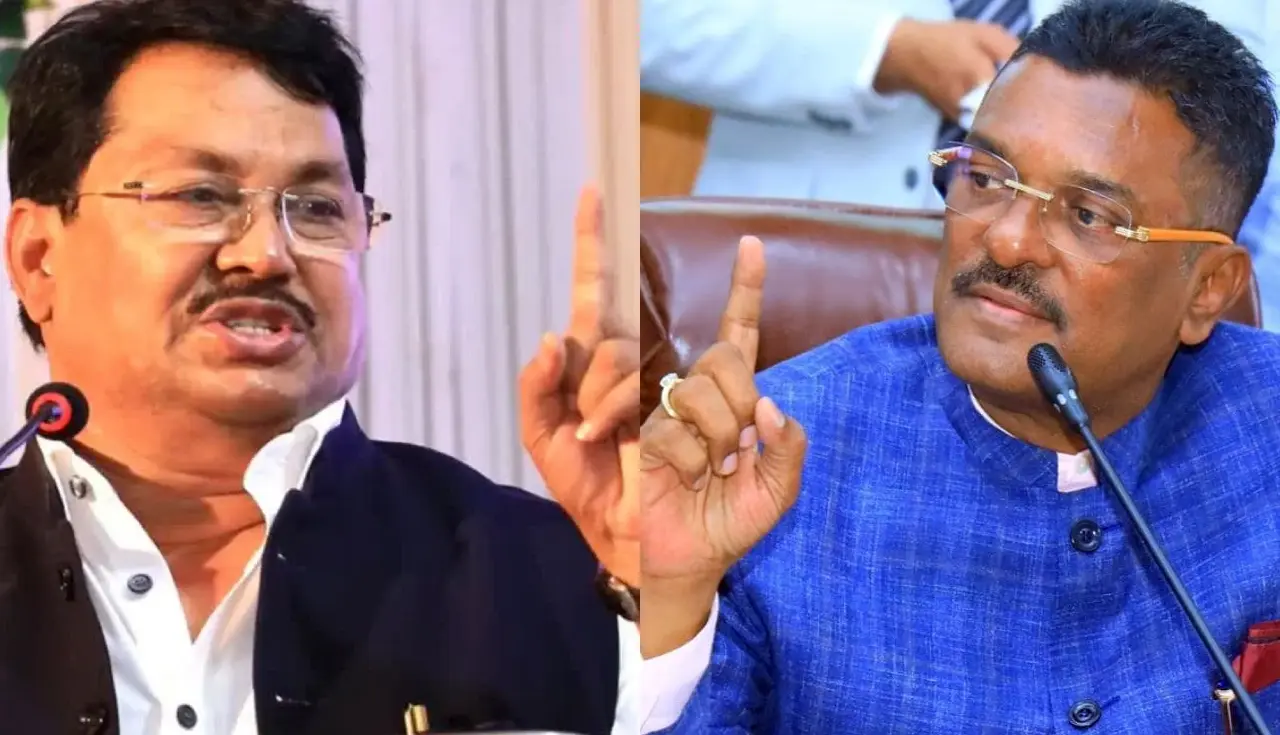
Congress leader Vijay Wadettiwar on Saturday (November 8, 2025) alleged that Maharashtra Minister Pratap Sarnaik purchased a four-acre land parcel worth ₹200 crore in Mira Bhayandar for just ₹3 crore to establish an educational institute — a charge the minister has strongly denied, demanding proof of the claim.

The allegations come amid ongoing controversy surrounding Deputy Chief Minister Ajit Pawar’s son Parth Pawar, whose firm’s ₹300-crore land deal in Pune’s Mundhwa area was recently cancelled after questions were raised over missing clearances.

Addressing the media, Wadettiwar claimed that the State Transport Minister acquired prime land near Mumbai at an “unbelievably low price,” adding that such transactions reflected the current state of governance in Maharashtra.

“Can a minister procure such valuable land for his personal educational institute? If this is permissible, then we might as well accept that this is Maharashtra under their rule,” Wadettiwar said, lashing out at the ruling government.

In response, Pratap Sarnaik dismissed the allegations as baseless and politically motivated. “Wadettiwar is a senior Congress leader, and I expect him to show documents to back his claims. I am unaware of any such land or connection to me. Ministers often face such unfounded accusations,” he said.

Revenue Minister Chandrashekhar Bawankule, reacting to the controversy, said no formal complaint had been received regarding the allegation. “These leaders prefer making accusations through the media rather than submitting proper complaints. If a formal complaint is filed, we will initiate an inquiry. Look at the recent Pune case — once it was officially raised, the state government immediately ordered a probe,” Bawankule stated.

The latest accusation has added to a series of high-profile land controversies in Maharashtra, sparking political tensions as opposition parties intensify their attacks on the Mahayuti government ahead of the upcoming local body polls.

Pune Land Deal Row: Parth Pawar’s Firm to Pay Rs 42 Crore in Double Stamp Duty for Sale Deed Cancellation

parth pawar, pune land deal, ncp, ajit pawar, pawar
Pune Land Deal Row: Parth Pawar's Firm to Pay Rs 42 Crore in Double Stamp Duty for Sale Deed Cancellation 18

The Pune land deal controversy involving Deputy Chief Minister Ajit Pawar’s son Parth Pawar has taken a new turn, with officials confirming that Amadea Enterprises LLP — the firm co-owned by Parth and his cousin Digvijay Amarsinh Patil — will now have to pay double stamp duty amounting to ₹42 crore to cancel the sale deed.

According to the Department of Registration and Stamps, the company must pay the original 7% stamp duty (5% under the Maharashtra Stamp Act, 1% Local Body Tax, and 1% Metro Cess) that was waived earlier, as well as an additional 7% duty to execute the cancellation deed. Officials stated that the exemption was granted after Amadea claimed it was setting up a data centre on the land, but the cancellation deed now clarifies that the plan has been dropped.

The disputed land spans 40 acres in Pune’s upscale Mundhwa area and was purchased for ₹300 crore. Opposition leaders have alleged that the actual market value of the land was ₹1,800 crore, sparking demands for a full probe. The sale deed, executed in May this year, came under scrutiny after it was revealed that the land belonged to the Maharashtra government and that the stamp duty had allegedly been waived in collusion with a sub-registrar.

Following an internal inquiry, the Pimpri Chinchwad Police registered an FIR against Digvijay Patil, Shital Tejwani (who represented 272 landowners via power of attorney), and sub-registrar R. B. Taru for misappropriation and cheating.

Ajit Pawar, addressing the controversy on Friday, stated that his son Parth was unaware the land was government-owned, adding that the ₹300 crore deal had been cancelled. “If any irregularities are found, due process will follow,” he said.

Joint Sub-Registrar A. P. Fulaware confirmed in his order that the deficit stamp duty and penalty must be deposited with the Stamps Collector, Pune City, before the cancellation is processed. “The cancellation deed will only be executed after full payment of the required duties,” the official noted.

Joint Inspector General of Stamps and Registration Rajendra Muthe further explained that the earlier exemption claim under the pretext of establishing a data centre was invalid. “Upon scrutiny, it was found that such exemption cannot be granted. Hence, the firm must pay 7% stamp duty for the sale deed and another 7% for its cancellation,” he said.

The total payable stamp duty now stands at ₹42 crore, marking another major development in what has become one of Maharashtra’s most high-profile land deal controversies in recent months.

Massive Fire Guts 500 Shanties in Delhi’s Rohini; One Dead, Another Injured

rithala, delhi, delhi fire, rohini, shanties
Massive Fire Guts 500 Shanties in Delhi’s Rohini; One Dead, Another Injured 20

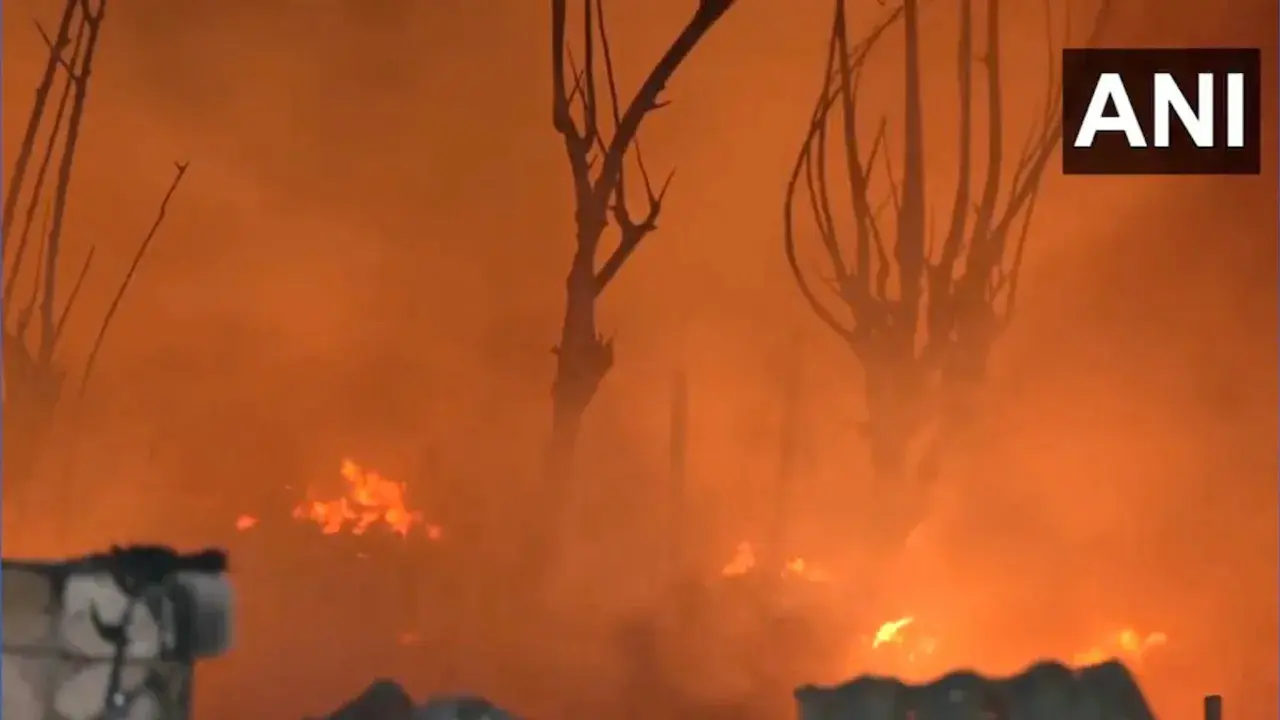
A massive fire broke out late Friday night near Rithala Metro Station in Delhi’s Rohini, engulfing around 500 shanties and leaving one man dead and another injured, officials from the Delhi Fire Services (DFS) confirmed.

According to police, the blaze spread rapidly after multiple LPG cylinders exploded, causing chaos and panic among residents who rushed to save their belongings and escape the flames.

Eyewitnesses reported thick plumes of smoke rising across the night sky as the fire tore through the densely populated slum cluster. Fire officials said preliminary estimates indicate that 400 to 500 huts were completely gutted in the blaze.

The DFS control room received a distress call at 10:56 pm, following which several fire tenders and firefighting robots were dispatched to the site. Police quickly cordoned off the area, while additional fire engines were placed on standby to prevent the flames from spreading further.

The fire was brought under control by early Saturday morning, officials said. The deceased was identified as Munna, while another man, Rajesh, sustained burn injuries and was rushed to a nearby hospital for treatment.

Authorities have launched an investigation to determine the cause of the fire, while teams from the disaster management and local administration are assisting affected families who lost their homes and possessions in the tragedy.