Home Blog Page 31

Epstein Lie: A Manufactured Propaganda Campaign Against the Modi Government

modi government, modi, pm modi, epstein lie, compaign
Epstein Lie: A Manufactured Propaganda Campaign Against the Modi Government 2

The so-called “Epstein files” are not a single neat folder locked in some vault; they are a messy trail of court documents, flight logs, contact books, depositions, sealed testimonies, and names that surfaced during years of investigations into Jeffrey Epstein—a wealthy financier who ran a global sex-trafficking and exploitation network involving underage girls, protected for decades by money, influence, and elite connections. Epstein did not operate like a street criminal. He operated like a concierge for power—politicians, royalty, businessmen, academics, intelligence-linked figures, celebrities—anyone important enough to be useful, vulnerable, or both. His arrest in 2019 and his death in a New York jail—officially ruled a suicide, unofficially one of the most distrusted “conclusions” of recent history—cracked open a system many would prefer stayed sealed.

The controversy erupted because once Epstein was gone, the question became unavoidable: who benefited from his silence? The files that keep resurfacing are primarily linked to civil cases filed by Epstein’s victims, especially the long-running case involving Virginia Giuffre. During these proceedings, judges ordered the unsealing of names and documents that had earlier been redacted—not because those named were proven guilty, but because their identities had been mentioned under oath. This distinction is critical, and conveniently ignored in online hysteria. Being named does not equal being convicted. But being named does mean proximity to a man whose entire operation revolved around leverage, compromise, and access.

Now comes the dangerous part: how conspiracy mutates into political weaponry.

As these documents drip into public view, social media does what it does best—connect dots without checking if they belong to the same page. Suddenly, every global leader becomes “linked” to Epstein through a chain of “sources say,” recycled images, miscaptioned flight logs, or outright fabrications. India’s Prime Minister Narendra Modi has also been dragged into this noise—not through evidence, documents, testimonies, or credible records, but through the familiar ecosystem of agenda-driven propaganda that thrives on chaos. Let’s be blunt: there is zero credible proof, no flight log, no photograph, no deposition, no financial link, no witness statement, nothing in the Epstein material that connects Modi to Epstein in any operational, personal, or indirect manner. None. The claim survives only on WhatsApp forwards, anonymous X threads, and YouTube channels where “trust me bro” counts as evidence.

So why is Modi’s name even being floated? Because power attracts dirt campaigns. Epstein is now a universal smear tool—an all-purpose scandal grenade. If you can’t defeat a leader politically, you attempt moral contamination. The logic is crude: Epstein involved elites; Modi is a global leader; therefore, Modi must be involved. This is not investigation. This is intellectual vandalism.

There is also a deeper geopolitical angle people miss. Epstein was embedded primarily in Western elite circuits—US political donors, European aristocracy, corporate tycoons, Ivy League academia, intelligence-adjacent networks. Modi rose from an entirely different political, cultural, and social ecosystem—rooted in grassroots politics, RSS cadre work, Indian electoral machinery, and a public life scrutinised relentlessly for decades. His personal life has been dissected to a degree few world leaders experience. If there were even a whisper of such connections, it would not be hiding in an American court document from a sex-trafficking case; it would have exploded long ago through India’s hyper-competitive media and opposition politics.

Will this controversy affect the Indian ruling government in any real sense? Institutionally, no. Politically, not unless Indians decide to outsource their thinking to Twitter trends. The Indian state does not function on Western gossip cycles. Elections are won and lost on inflation, welfare delivery, caste arithmetic, governance, leadership perception, national security—not on speculative scandals imported from US courtrooms with no Indian linkage. The Modi government has faced allegations before—Pegasus, Rafale, farm laws narratives, demonetisation outrage, CAA panic. Some had substance, many didn’t. Epstein chatter falls firmly into the “noise without evidence” category.

However, dismissing it entirely would also be naïve. The real danger is not Modi being implicated; it is how easily serious crimes like child trafficking get trivialised into meme warfare. Epstein’s victims are reduced to footnotes while political camps use his name as a blunt instrument. That is the real obscenity here. Epstein should have triggered a global reckoning about elite immunity, intelligence complicity, and how money erases accountability. Instead, it has become a rumour factory.

Here’s the uncomfortable truth: Epstein didn’t thrive because of one party, one country, or one ideology. He thrived because systems protect the powerful everywhere. His case is less about who was named and more about who will never be named. The files we see are fragments, not the full picture. And anyone claiming otherwise is selling certainty where none exists.

So no, this will not shake Modi or the Indian government unless facts emerge—and facts don’t arrive via forwarded screenshots. India has real issues to argue over. Importing scandal fantasies from another continent won’t strengthen democracy; it will only expose how easily outrage can be manufactured.

If Epstein teaches us anything, it’s this: real power rarely collapses from gossip. It collapses when evidence meets courage. Until then, noise remains noise—no matter how loudly it trends.
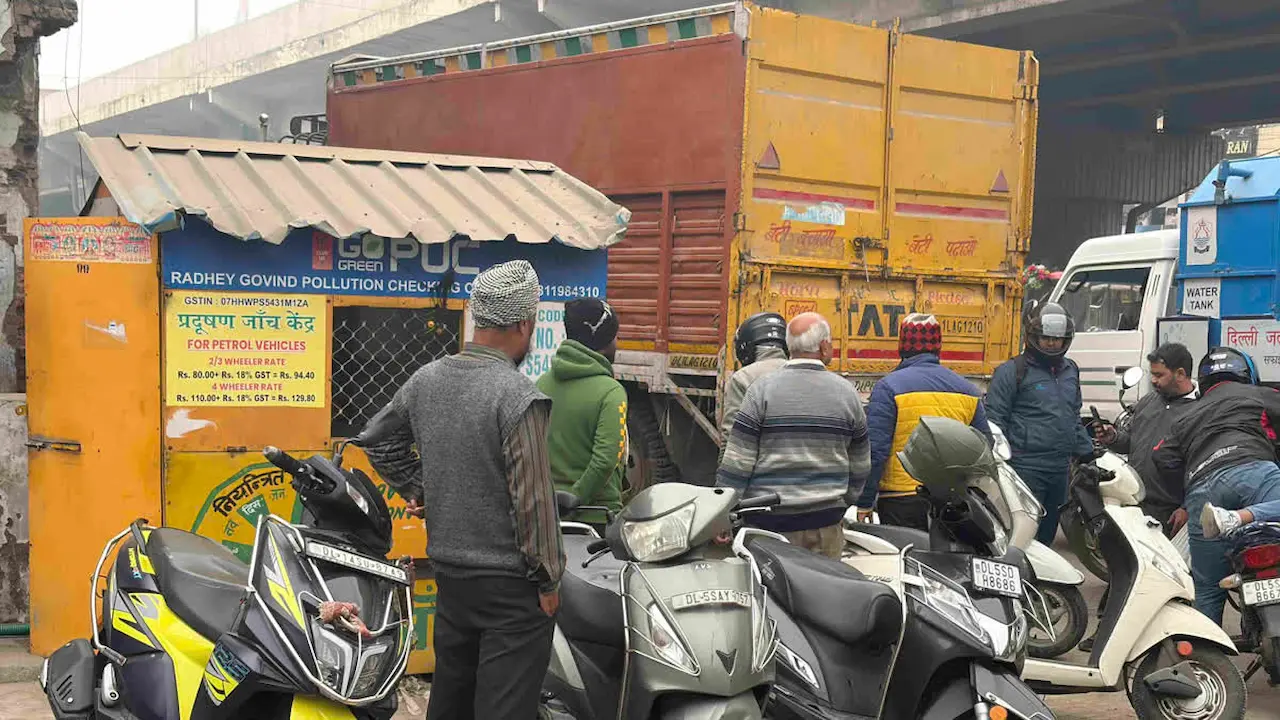
‘No PUC, No Fuel’ Drive Begins: Nearly 2,800 Vehicles Denied Fuel in Delhi on Day One

no puc, no fuel, puc, fuel, delhi, petrol pump
'No PUC, No Fuel' Drive Begins: Nearly 2,800 Vehicles Denied Fuel in Delhi on Day One 4

Nearly 2,800 vehicles were denied fuel in Delhi on the first day of the ‘No PUC, No Fuel’ enforcement drive after they were found without valid Pollution Under Control (PUC) certificates, officials from the Transport Department said on Friday.

According to the department, enforcement teams, working alongside police personnel, conducted checks at petrol pumps across key locations in the national capital to ensure strict compliance with emission norms. Between 6 am on Thursday and 6 am on Friday, around 2,800 vehicles were identified as operating without valid PUC certificates.

Stringent action was taken against violators on the first day of the drive, with a total of 3,746 challans issued to vehicles flouting pollution norms. The Delhi government said monitoring and enforcement would continue in the coming days as part of its effort to curb vehicular emissions and provide immediate relief to public health.

A joint report by the Delhi Transport Department and the Delhi Traffic Police said 210 enforcement teams were deployed for the special drive, including 126 teams from the traffic police and 84 teams from the transport department.

The crackdown follows an announcement earlier this week by Delhi Environment Minister Manjinder Singh Sirsa, who said vehicles without valid PUC certificates would not be allowed to refuel at petrol pumps from Thursday onwards. The announcement led to a sharp surge in demand for PUC certificates across the city.

Official data shows that 31,197 PUC certificates were issued on December 17, compared to 17,732 on December 16, marking an increase of 13,465 certificates, or nearly 76 per cent, within just 24 hours.

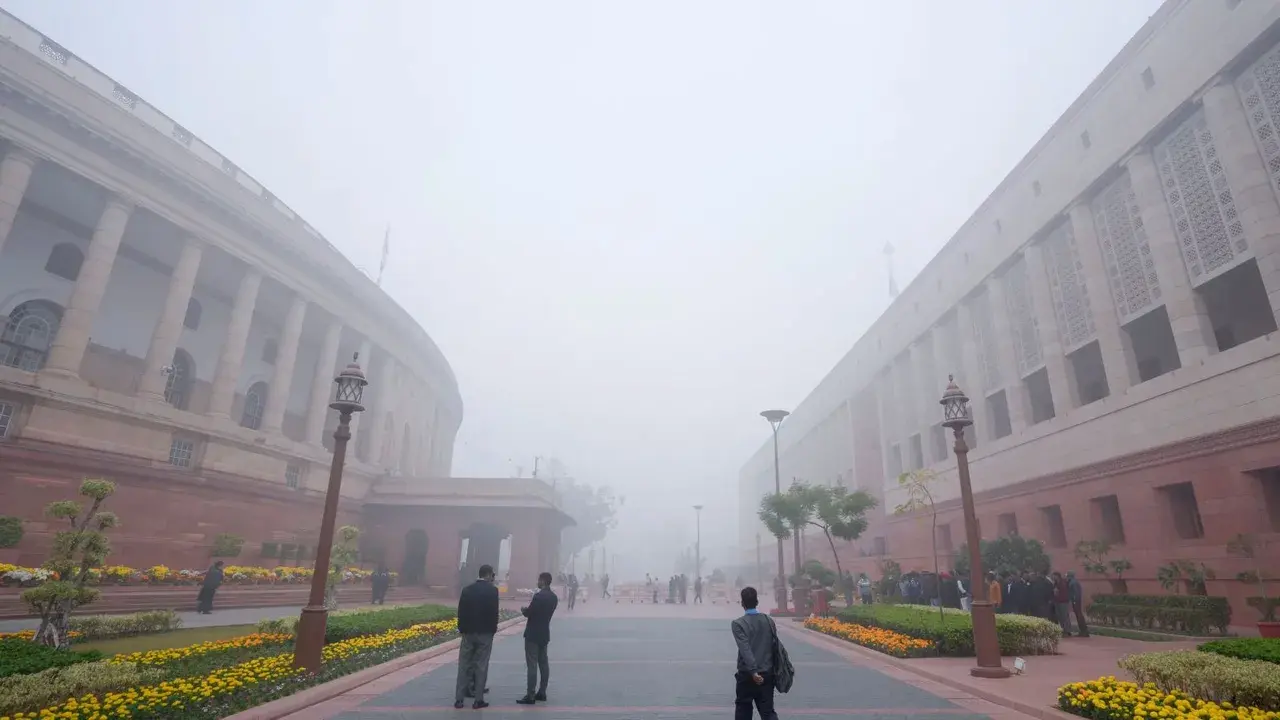
Delhi continues to battle severe winter pollution, with air quality deteriorating every year during this period. The Air Quality Index has remained largely in the ‘poor’ category above 300 and has frequently slipped into the ‘severe’ category, posing health risks even to otherwise healthy individuals.

On Friday, Delhi’s air quality was recorded in the ‘very poor’ category, with the AQI at 377 at 2 pm, higher than the previous day’s 24-hour average of 373 recorded at 4 pm, according to the Central Pollution Control Board. As per CPCB standards, an AQI between 301 and 400 is classified as ‘very poor’, while readings above 400 fall in the ‘severe’ category.

Bombay High Court Grants Bail to NCP Leader Manikrao Kokate, Suspends Sentence in 1995 Cheating Case

manikrao kokate, bail granted, ncp, bombay high court, bombay hc
Bombay High Court Grants Bail to NCP Leader Manikrao Kokate, Suspends Sentence in 1995 Cheating Case 6

The Bombay High Court on Friday granted bail to former Maharashtra minister and NCP leader Manikrao Kokate in a 1995 cheating and forgery case, while suspending his sentence. The court granted him bail on a personal surety of ₹1 lakh, citing the merits of the case and medical grounds, and stayed his arrest. However, it refused to stay his conviction, observing that prima facie evidence pointed to Kokate’s involvement.

Justice R. N. Laddha, while passing the order, noted that Kokate had remained on bail throughout the trial before the magistrate’s court and during the pendency of his appeal before the sessions court. The High Court also remarked that allowing a person convicted of a criminal offence to hold a cabinet position merely because the sentence is suspended would cause “grave and irreparable prejudice to public service.”

The court observed that since Kokate’s sentence was limited to two years, it was inclined to grant bail. Admitting his revision petition challenging the sessions court order that upheld his conviction, the High Court allowed the application for suspension of sentence subject to the deposit of a ₹1 lakh surety.

The order came a day after Kokate resigned from the Maharashtra Cabinet following his conviction in a housing scam by Nashik’s magistrate and district courts. Acting on the recommendation of Chief Minister Devendra Fadnavis, Kokate’s portfolios were withdrawn, and his resignation was accepted and forwarded to Governor Acharya Devvrat for further action.

Kokate’s counsel, senior advocate Ravi Kadam, informed the court that the NCP leader had been admitted to Lilavati Hospital in Bandra, where he underwent angiography and was scheduled for an SOS angioplasty. The bail plea, however, was opposed by public prosecutor Mankunwar Deshmukh.

Earlier this week, the Nashik district and sessions court upheld Kokate’s conviction, prompting Nashik police to reach Bandra late Thursday night to execute the arrest warrant. Kokate had resigned from the cabinet on Thursday night, where he held the sports and youth affairs portfolio.

The case against Kokate dates back to the period between 1989 and 1992 and relates to a government housing scheme meant for economically weaker sections, with an annual income cap of ₹30,000. He was accused of securing a flat under the scheme by submitting false affidavits regarding his income.

The magistrate’s court, relying on evidence including bank loans taken for grape and rabi crop cultivation and records from the Kopargaon Sahakari Sakhar Karkhana, held that Kokate was a prosperous farmer whose income exceeded the eligibility limit, leading to his conviction for cheating and forgery.

Lok Sabha Concludes Winter Session with Key Bills Passed, Records 111% Productivity

bills passed, lok sabha, winter session, parliament
Lok Sabha Concludes Winter Session with Key Bills Passed, Records 111% Productivity 8

The Lok Sabha was adjourned sine die on Friday, bringing the 19-day Winter Session of Parliament to a close after 15 sittings marked by the passage of key Bills, intense debates and repeated opposition protests.

During the session, the House cleared several significant pieces of legislation, including a Bill that opens up India’s civil nuclear sector to private companies. Another contentious Bill replacing the Mahatma Gandhi National Rural Employment Guarantee Act (MNREGA) with the new VB-G RAM G Act, which promises 125 days of guaranteed employment for rural households, was passed on Thursday amid strong protests by opposition members, including the tearing of papers inside the House.

The Lok Sabha also witnessed two major debates—one commemorating 150 years of “Vande Mataram” and another on electoral reforms—both of which unfolded in a politically charged atmosphere.

A Bill proposing the establishment of a higher education regulator was referred to a joint committee of both Houses for further scrutiny, while another Bill concerning the market securities code was introduced and sent to a department-related standing committee for detailed examination.

When the House convened on Friday, Speaker Om Birla announced the adjournment of the Lok Sabha sine die, effectively ending the Winter Session. Addressing members, Birla said the House recorded a productivity of 111 per cent during the session, reflecting extended sittings and additional legislative business.

With the passage of key Bills and pending legislation now under committee review, the Winter Session concluded with the government highlighting legislative output and the Opposition raising concerns over procedure and dissent.

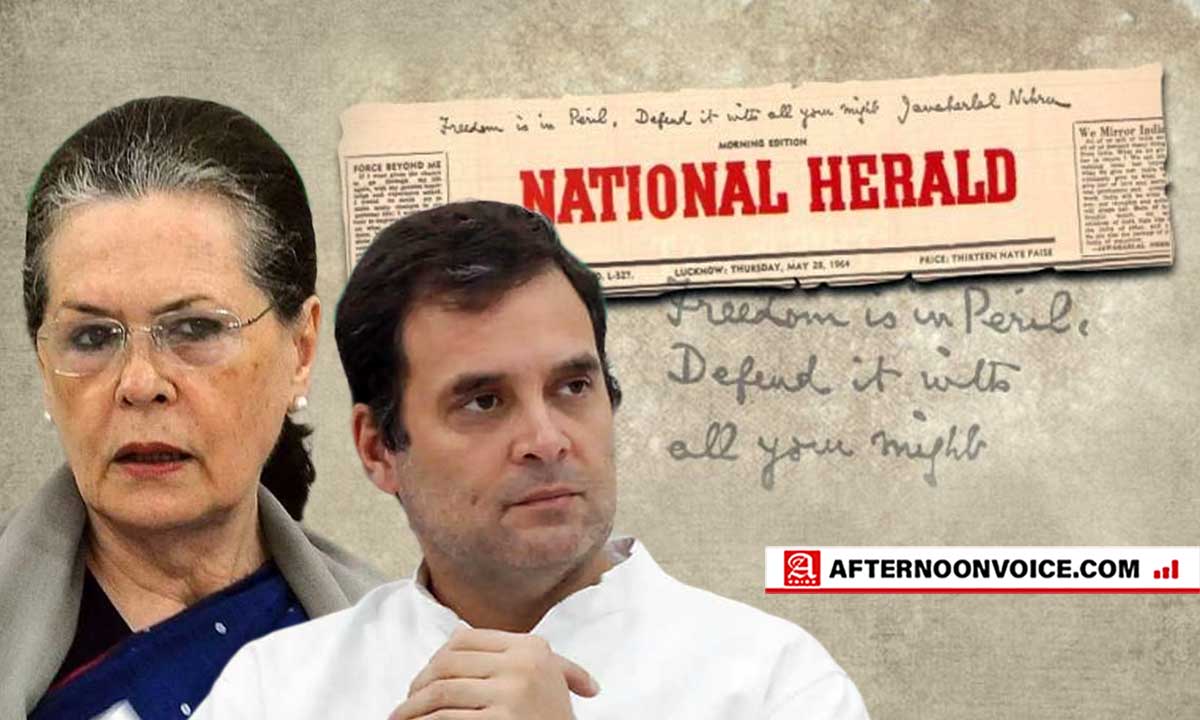
The National Herald Case: When Narrative Collapsed in Court

national herald, delhi court, ed, enforcement directorate, rahul gandhi, sonia gandhi
The National Herald Case: When Narrative Collapsed in Court 10

What the BJP perfected over the last decade was not governance first, but narrative first. Power followed later. Long before Narendra Modi walked into the Prime Minister’s Office, the BJP had already occupied India’s digital bloodstream. The party’s IT Cell did not merely participate in social media—it colonized it. It built an ecosystem of outrage, half-truths, recycled myths, selective history, and relentless repetition, aimed squarely at one political family and one political legacy: the Congress and the Gandhis.

This was not organic dissent. This was industrial-scale propaganda.

The first phase of this operation was emotional preparation. Public anger had to be manufactured before power could be captured. The so-called “anti-corruption movement” was the Trojan horse. Draped in the language of ethics and idealism, it mobilized genuine public frustration against corruption under UPA-II. But what followed exposed the fraud. The movement that claimed to cleanse politics entered politics—and promptly drowned in corruption charges of its own. The saints turned politicians, and the halo fell off almost immediately. The anger, however, had served its purpose. Congress was delegitimized. The BJP walked in through the smoke.

Once in power, the second phase began: delegitimization through demonetization.

Narendra Modi did not merely want electoral dominance; he wanted ideological erasure. “Congress-mukt Bharat” was not a slogan—it was an obsession. And obsessions require enemies. The Gandhi family became that enemy, not because of proven crimes, but because they represented continuity, legacy, and an alternative moral claim to the idea of India.

For twelve years, the attacks never stopped. Jawaharlal Nehru was recast as the original sinner of modern India. Indira Gandhi was reduced to Emergency caricatures. Rajiv Gandhi’s assassination did not earn dignity, only suspicion. Sonia Gandhi was turned into a foreign conspirator. Rahul Gandhi into a national joke. Priyanka Gandhi into a political irrelevance. It was a daily ritual—prime-time mockery, social media abuse, doctored clips, selective quotes, and algorithm-friendly hatred.

Truth was optional. Volume was mandatory.

The BJP IT Cell did not argue—it accused. It did not investigate—it insinuated. It did not wait for courts—it declared verdicts. And a large section of India, exhausted by complexity and addicted to outrage, swallowed it whole. Gullibility was mistaken for patriotism. Skepticism was branded as betrayal.

Central agencies became the next weapon.

The Enforcement Directorate, CBI, and Income Tax Department—institutions meant to be neutral custodians of law—slowly began to resemble political hit squads. Opposition leaders across parties discovered a pattern: fall out with the BJP, and a notice follows. Speak too loudly, and a raid arrives. Resist politically, and your past is excavated with surgical enthusiasm. The message was crude but effective—submit or suffer.

The Gandhis were the ultimate target.

Harassment was not incidental; it was the strategy. Dragging them to court, parading them through investigations, hinting at arrests—this was about optics, not outcomes. The goal was not conviction; it was exhaustion. Not justice; but intimidation. Make resistance so costly that dissent itself appears foolish.

The National Herald case was the slow-cooked dish in this political kitchen.

For years, it was “baked”—kept alive in TV debates, recycled in WhatsApp forwards, and weaponized in speeches—long before any legal closure. The BJP sold it as the smoking gun, the final nail in the Congress coffin. And yet, when the moment of judicial scrutiny arrived, the script collapsed.

A Delhi court refused to take cognisance of the ED’s chargesheet against Sonia Gandhi, Rahul Gandhi, and others. No legal basis. No prosecutable substance. Years of noise, reduced to judicial silence.

That refusal was not a technicality—it was an indictment.

It exposed what critics had been saying all along: central agencies were being misused to pursue political vendettas. Cases were being stretched, twisted, and pushed without legal spine, only political muscle. Courts were expected to rubber-stamp what power had already declared. This time, they didn’t.

And that rattled the system.

The reaction was telling. Congress workers in Haryana protested not in celebration alone, but in anger—anger at years of harassment masquerading as investigation. State Congress president Rao Narendra Singh and Leader of Opposition Bhupinder Singh Hooda called it what it was: political malafide intent. Not governance. Not accountability. Vendetta.

This was not about the National Herald alone. It was about a pattern.

Opposition leaders are arrested before elections and released quietly after. Chargesheets are filed with fanfare and forgotten without conviction. Raids dominate headlines; acquittals barely get a footnote. The process itself becomes the punishment. Democracy bleeds not through coups, but through procedures abused repeatedly.

The BJP’s defenders argue this is law taking its course. But law does not leak selectively. Law does not act with election calendars. Law does not spare defectors who conveniently join the ruling party. The moment you see that switch—opposition leader today, BJP ally tomorrow, charges gone by evening—the moral argument collapses.

This is not zero tolerance for corruption. This is selective tolerance.

The tragedy is not just institutional; it is social. A section of Indians has been trained to cheer arrests without trials, accusations without evidence, and punishment without verdicts—as long as the target fits the approved enemy list. The same people who once feared state power now applaud its excesses, convinced it will never turn on them. History laughs at such confidence.

The BJP’s greatest success has not been electoral—it has been psychological. It has convinced citizens that questioning power is disloyalty, that opposition is obstruction, and that courts are trustworthy only when they agree with the government. The moment a court resists, it is accused of being compromised. This is how institutions are not overthrown but hollowed out.

The refusal to accept the ED chargesheet in the National Herald case is therefore larger than the Gandhis. It is a warning bell for Indian democracy. It reminds us that courts still exist to examine evidence, not hashtags. That legality is not decided in war rooms. That propaganda cannot permanently substitute proof.

The BJP may continue its narrative warfare. It may double down on social media, sharpen its troll machinery, and invent newer villains. That is politics. But the myth that all opposition is criminal and one party alone is virtuous is finally fraying.

Power thrives on fear. Democracies survive without doubt.

And slowly, very slowly, doubt is returning.

Not because the Gandhis are saints. Not because Congress is flawless. But because citizens are beginning to see the machinery behind the noise—the factory that produces outrage, the agencies bent into weapons, and the dangerous comfort of cheering power unchecked.

History has seen this play before. It never ends well for those who confuse dominance with destiny.

The court has spoken—not loudly, not theatrically—but firmly enough to expose the rot. The rest is up to the people: whether they want a republic governed by law or a theater ruled by narratives.

Because today it is the Gandhis.
Tomorrow, it could be anyone.

National Herald Case: ED Inverted PMLA Process, Court Refuses Cognisance Against Gandhis

sonia gandhi, sonia, national herald, rahul gandhi, rahul, manu sanghvi, sanghvi
National Herald Case: ED Inverted PMLA Process, Court Refuses Cognisance Against Gandhis 12

A Delhi court on Tuesday refused to take cognisance of the Enforcement Directorate’s money laundering charges against Congress leaders Sonia Gandhi and Rahul Gandhi in the National Herald case, observing that the agency had “simply inverted the template” prescribed under the Prevention of Money Laundering Act (PMLA).

In a detailed 117-page order, Special Judge Vishal Gogne noted that the Central Bureau of Investigation had chosen not to register an FIR on Subramanian Swamy’s 2014 private complaint and that there appeared to be a “long-lasting consensus” between the CBI and the ED until the latter registered an Enforcement Case Information Report (ECIR) on June 30, 2021.

The court said that before registering the ECIR, the ED was likely aware of the necessity of an FIR by a law enforcement agency such as the CBI as the “jurisdictional foundation” for initiating a probe under the PMLA. “Upon first having shared information with the CBI in the year 2014 and then having waited for seven years for the CBI to act, the ED simply inverted the template of money laundering being consequential to the predicate offence by recording its own ECIR,” the judge observed.

Explaining the legal framework, the court noted that the PMLA envisages the investigation of a scheduled or predicate offence as the first step, followed by a probe into money laundering. “Perhaps, the ED should have stayed as staid as the CBI,” the order remarked. A predicate offence, the judge explained, is the original criminal act that generates proceeds of crime, while money laundering involves disguising the origins of those proceeds.

Judge Gogne said this conventional approach was reaffirmed by a 2022 Supreme Court verdict, which held that an FIR in the scheduled offence was a prerequisite for investigating the proceeds of crime. An FIR, the court said, is not a mere formality but “the progenitor of material steps in investigation,” something that cannot be matched by proceedings initiated solely on a complaint.

The court also rejected the notion that the ED could rely on a private complainant to initiate a PMLA investigation. “Certainly, the ED cannot be training or involving individual complainants like Swamy akin to ‘Nodal Officers’ or law enforcement agencies,” the judge said, pointing to issues of locus, capacity, confidentiality and coordination.

Referring to internal records, the judge said the ED itself appeared reluctant to register an ECIR on Swamy’s complaint since 2014, acknowledging the non-viability of a private complaint as the basis for a PMLA probe. This long-held view, the court said, was abruptly departed from when the ED filed its prosecution complaint without an FIR in the predicate offence.

Drawing a sharp distinction between complaint cases and FIR-based investigations, the court observed that they are “chalk and cheese” in terms of evidence collection and conducting a meaningful trial, particularly in complex economic offences and financial frauds.

On the merits of the allegations, the judge clarified that he was not required to go into them at this stage. He noted that the ED was continuing its investigation and had shared information with the Economic Offences Wing of Delhi Police, which subsequently registered an FIR on October 3, 2025.

The court said ongoing investigations by multiple agencies could still lead to additional evidence or accused persons. “Since cognisance has been declined solely on a question of law related to jurisdiction, this order does not efface the existing allegations or curtail further investigation,” the judge concluded.

Bondi Beach Shooter Sajid Akram Identified as Hyderabad Native, Says Telangana Police

sajid akram, shooter, hyderabad, telangana, bondi beach,
Bondi Beach Shooter Sajid Akram Identified as Hyderabad Native, Says Telangana Police 14

Fifty-year-old Sajid Akram, who was killed after being identified as one of the attackers in the recent mass shooting at Bondi Beach in Australia, was an Indian citizen originally from Hyderabad, the Telangana Police confirmed on Tuesday.

In an official statement, the office of the Director General of Police said Akram had migrated to Australia nearly 27 years ago, in November 1998, in search of employment and continued to hold an Indian passport. He had completed a Bachelor of Commerce degree in Hyderabad before leaving the country.

According to police, Akram had limited contact with his family in India after settling in Australia. He married a woman of European origin and the couple had two children—a son, Naveed, and a daughter—both born in Australia and citizens of that country. Naveed, aged 24, is also suspected to be involved in the attack and is currently undergoing treatment at a hospital, Australian authorities said.

The mass shooting occurred during a Hanukkah celebration at Sydney’s Bondi Beach, killing 15 people. Australia’s federal police commissioner, Krissy Barrett, described the incident as a “terrorist attack inspired by Islamic State,” adding that the suspects were a father-son duo aged 50 and 24. Akram was shot dead at the scene.

Telangana Police said Akram had visited India on six occasions after migrating, mainly for family-related reasons such as property matters and to meet his elderly parents. It was also noted that he did not return to India even at the time of his father’s death.

Family members have told investigators they were unaware of any radical beliefs or activities linked to Akram or his son and said they had no knowledge of the circumstances that may have led to their radicalisation. Police stated that preliminary findings suggest the factors behind their radicalisation have no connection to India or any local influence in Telangana.

The state police further clarified that there was no adverse record against Sajid Akram during his stay in India prior to his departure in 1998. Telangana Police said they remain committed to cooperating with central agencies and international counterparts as required and urged the public and media to refrain from speculation or unverified claims.

Sena (UBT)-MNS Alliance Nears as Mahayuti Sets 150-Seat Target in High-Stakes BMC Polls

uddhav thackeray, raj thackeray, bmc polls, sena (ubt), shiv sena, mns, bmc
Sena (UBT)-MNS Alliance Nears as Mahayuti Sets 150-Seat Target in High-Stakes BMC Polls 16

As Maharashtra gears up for the January 15 civic body elections, political activity intensified on Tuesday with rival camps holding parallel meetings to firm up alliances and seat-sharing strategies, especially for the high-stakes Brihanmumbai Municipal Corporation (BMC) polls.

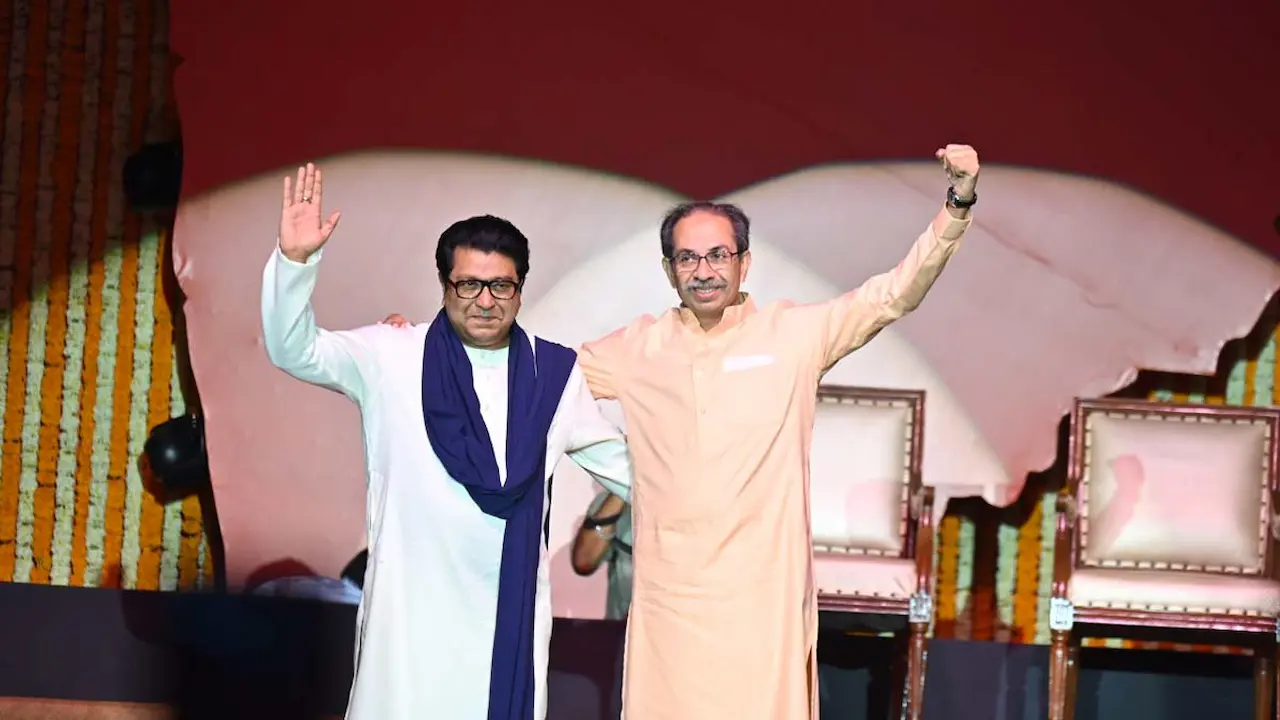
The focus remained firmly on Mumbai, where Shiv Sena (UBT) leader Sanjay Raut met Maharashtra Navnirman Sena (MNS) president Raj Thackeray, signalling that a tie-up between the two parties is all but final. Raut later told reporters that Shiv Sena (UBT) and MNS would contest the civic polls together not just in Mumbai but also in Mira-Bhayander, Kalyan-Dombivli, Thane, Pune and Nashik, with a formal announcement expected next week.

“There is no problem in announcing the alliance in the coming week. Both brothers, Uddhav Thackeray and Raj Thackeray, will be seen together on stage for the announcement,” Raut said.

On a possible understanding with the Congress, Raut said he had spoken to the party’s top leadership, urging it to contest the civic polls as part of the Opposition Maha Vikas Aghadi (MVA), which he believes should also include the MNS. However, he added that the Congress leadership has left the decision to local units.

Both the Opposition and the ruling Mahayuti have asserted that Mumbai will have a Marathi mayor after the elections. Addressing reporters after a meeting between the BJP and Shiv Sena, Mumbai BJP president Ameet Satam said the ruling alliance was working with a clear aim of crossing the 150-seat mark in the 227-member BMC.

“Our discussions are focused on ensuring Mahayuti candidates win across all 227 wards, with a clear objective of securing 150-plus seats in the BMC,” Satam said.

Meanwhile, BJP leader and minister Ashish Shelar ruled out any alliance with the NCP for the Mumbai civic polls, even as the Ajit Pawar-led party remains a key constituent of the Mahayuti at the state level. Congress leader Vijay Wadettiwar alleged that the ruling alliance was deliberately keeping the NCP out of civic tie-ups to split secular votes.

An NCP leader countered the claim, saying the party has been preparing for the civic polls for months and holding weekly meetings to strengthen its organisation in Mumbai. “After consultations with Ajit Pawar, we will decide the exact number of seats to contest. In multi-cornered local elections, individual candidates matter,” the leader said.

Chief Minister Devendra Fadnavis had earlier stated that the BJP and Shiv Sena would contest the civic polls together in most places, while Pune and Pimpri-Chinchwad could see friendly contests between the BJP and NCP.

On the Opposition front, Congress Mumbai president Varsha Gaikwad said her party would fight the BMC polls on local civic issues and accused the BJP of pushing a “religious agenda” to divert attention from governance failures.

AIMIM MP Imtiaz Jaleel said his party would contest seats in 27 of the 29 municipal corporations going to polls in January, including Mumbai, and was open to alliances with like-minded parties and the Opposition MVA. He said candidate lists would be announced by December 22 or 23.

Adding to the political sparring, Shiv Sena (UBT) leader Aaditya Thackeray targeted the BJP for taking credit for civic work done by his party, urging workers to highlight the achievements of the undivided Shiv Sena during its BMC rule from 1997 to 2022.

With more than 1.03 crore voters across 227 wards eligible to cast their ballots, the BMC elections are seen as a prestige battle for Maharashtra’s major political formations. The final electoral rolls have been published, and votes will be counted on January 16 as 29 municipal corporations, including cash-rich Mumbai, head into a fierce contest for urban political supremacy.

Lok Sabha Introduces Bill to Allow 100% FDI in Insurance Sector Amid Opposition Uproar

delhi pollution, aqi, air quality, delhi, bil, lok sabha
Lok Sabha Introduces Bill to Allow 100% FDI in Insurance Sector Amid Opposition Uproar 18

The government on Tuesday introduced a bill in the Lok Sabha to raise foreign direct investment (FDI) in the insurance sector to 100 per cent, triggering strong protests from Opposition parties. The proposed Sabka Bima Sabki Raksha (Amendment of Insurance Laws) Act, 2025 seeks to amend the Insurance Act, 1938, the Life Insurance Corporation Act, 1956, and the Insurance Regulatory and Development Authority Act, 1999.

Tabling the bill, Union Finance Minister Nirmala Sitharaman said expanding insurance coverage for the common people has been a priority of Prime Minister Narendra Modi and that the government ensured protection for marginalised sections even during the Covid-19 pandemic. She said the concerns raised by Opposition members would be addressed during the debate on the legislation.

Opposing the introduction, RSP MP N K Premachandran questioned the nomenclature of the bill, saying it did not reflect its contents, and objected to allowing 100 per cent FDI in the sector. DMK member T Sumathy also strongly opposed the proposal, while Trinamool Congress MP Saugata Roy criticised the bill’s title, calling it slogan-like and warning that full foreign ownership would be a setback for the insurance industry.

According to the draft legislation, the FDI cap in the insurance sector will be raised from the existing 74 per cent to 100 per cent. However, it mandates that at least one top executive—such as the chairperson, managing director or CEO—must be an Indian citizen. The bill also allows the merger of a non-insurance company with an insurance firm.

Cleared by the Union Cabinet last week, the bill aims to accelerate the growth of the insurance sector, enhance policyholder protection and improve the ease of doing business. It proposes the creation of a Policyholders’ Education and Protection Fund and seeks to strengthen regulatory oversight while bringing greater transparency to rule-making.

The legislation also revises tenure norms for the Insurance Regulatory and Development Authority of India, providing a five-year term or up to the age of 65 years for its chairperson and whole-time members. Currently, the upper age limit for whole-time members is 62 years.

In her Budget speech earlier this year, Sitharaman announced the plan to raise the FDI limit to 100 per cent as part of new-generation financial sector reforms. The insurance sector has so far attracted around Rs 82,000 crore in foreign investment. The amendments to the LIC Act are aimed at empowering its board to take operational decisions such as branch expansion and recruitment, while facilitating greater competition, economic growth and job creation.

13 Killed, 35 Injured as Fog Triggers Fiery Pile-Up on Yamuna Expressway in Mathura

Mathura, Yamuna Expressway, Accident, Uttar Pradesh
13 Killed, 35 Injured as Fog Triggers Fiery Pile-Up on Yamuna Expressway in Mathura 20

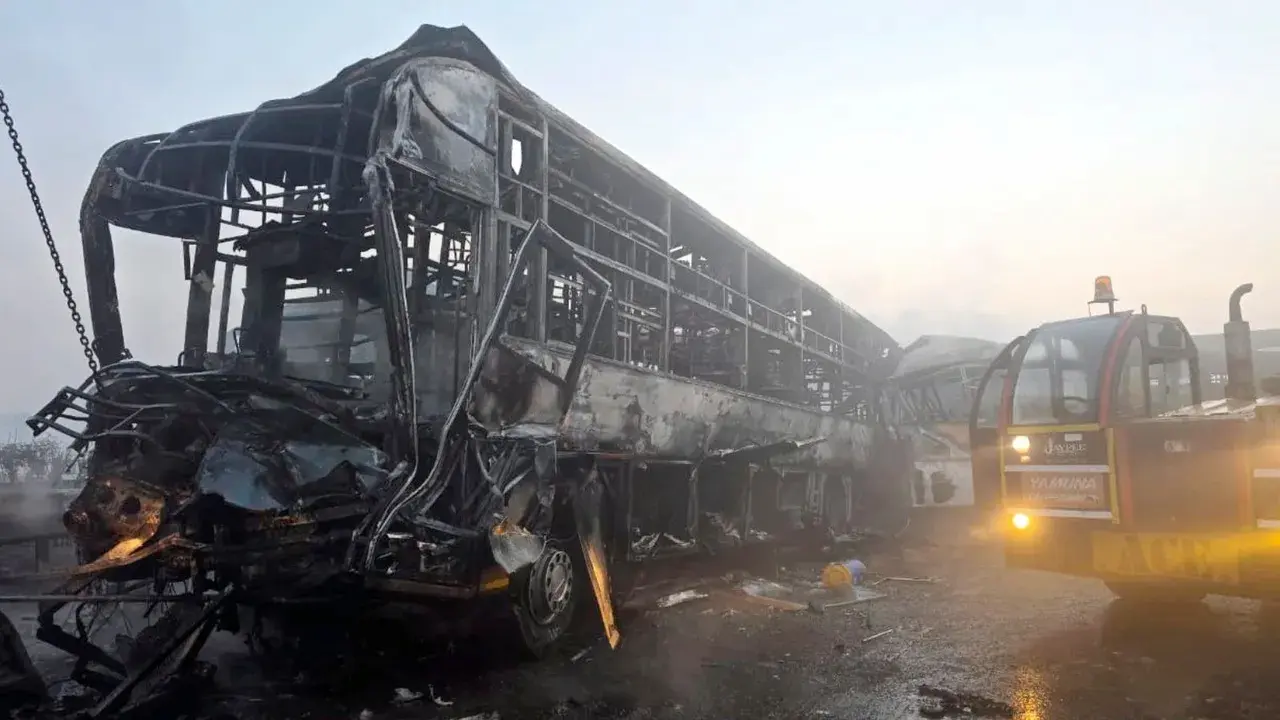
Thirteen people were killed and 35 others injured after a massive vehicle pile-up on the Yamuna Expressway in Mathura early Tuesday led to several buses catching fire, police said. The accident occurred around 4.30 am amid dense fog on the Agra-to-Noida stretch under the jurisdiction of Baldev police station.

According to police, at least seven buses and three smaller vehicles collided due to extremely low visibility, triggering a blaze that engulfed multiple vehicles. “The vehicles collided because of fog on the Agra-to-Noida side of the Yamuna Expressway. Some vehicles caught fire. All the injured have been shifted to hospitals,” Mathura Senior Superintendent of Police Shlok Kumar said.

Baldev Police Station SHO Ranjana Sachan said all 13 victims died of burn injuries. Two of the deceased were identified as Akhilendra Pratap Yadav (44) from Prayagraj and Rampal (75) from Maharajganj. Of the injured, 15 were admitted to the district hospital, nine each to a community health centre and a private hospital in Baldev, and two to SN Medical College in Agra. Police said none of the injured are in critical condition.

Visuals from the scene showed charred remains of buses reduced to shells. Cranes were deployed to clear the wreckage from the expressway. Authorities arranged government vehicles to transport stranded passengers to their destinations, while traffic diversions were put in place due to the road blockage.

Uttar Pradesh Chief Minister Yogi Adityanath expressed grief over the tragedy and announced ex-gratia relief of Rs 2 lakh each for the families of the deceased and Rs 50,000 each for the injured. He also directed officials to ensure proper medical care for those hurt in the accident.

The incident comes amid a spate of fog-related road accidents across north India. On Monday, three people, including two police personnel, were killed in separate multi-vehicle crashes in Haryana’s Sonipat and Nuh districts, highlighting the growing risk posed by poor visibility during winter mornings.