Winter Session of Parliament to Begin on December 1, Conclude on December 19 2
The Winter Session of Parliament will begin on December 1 and conclude on December 19, according to an official announcement approved by President Droupadi Murmu on Saturday.
Minister of Parliamentary Affairs Kiren Rijiju confirmed the schedule, stating, “The President of India, Droupadi Murmu, has approved the proposal of the Government to convene the Winter Session of Parliament from December 1, 2025, to December 19, 2025 (subject to exigencies of Parliamentary business).”
Rijiju expressed hope for productive discussions, saying, “Looking forward to a constructive and meaningful session that strengthens our democracy and serves the aspirations of the people.”
The Monsoon Session, which ended on August 21, was marked by heated exchanges between the ruling NDA and the Opposition over several issues, including the Pahalgam terror attack, Operation Sindoor, and the government’s handling of losses suffered by security forces. Despite frequent disruptions, 15 bills were passed during that session.
The session also saw uproar over the revision of electoral rolls in poll-bound Bihar, with Opposition MPs staging protests, tearing copies of bills, and clashing with the Treasury benches.
Adding to the political turmoil, Vice President Jagdeep Dhankhar resigned unexpectedly on the opening day of the monsoon session, citing health reasons. His sudden exit two years before completing his term triggered sharp political reactions and speculation across party lines.
The upcoming winter session is expected to witness intense discussions on key legislative priorities, including economic reforms, national security, and electoral issues, as the government and Opposition gear up for a politically charged debate ahead of the 2026 budget session.
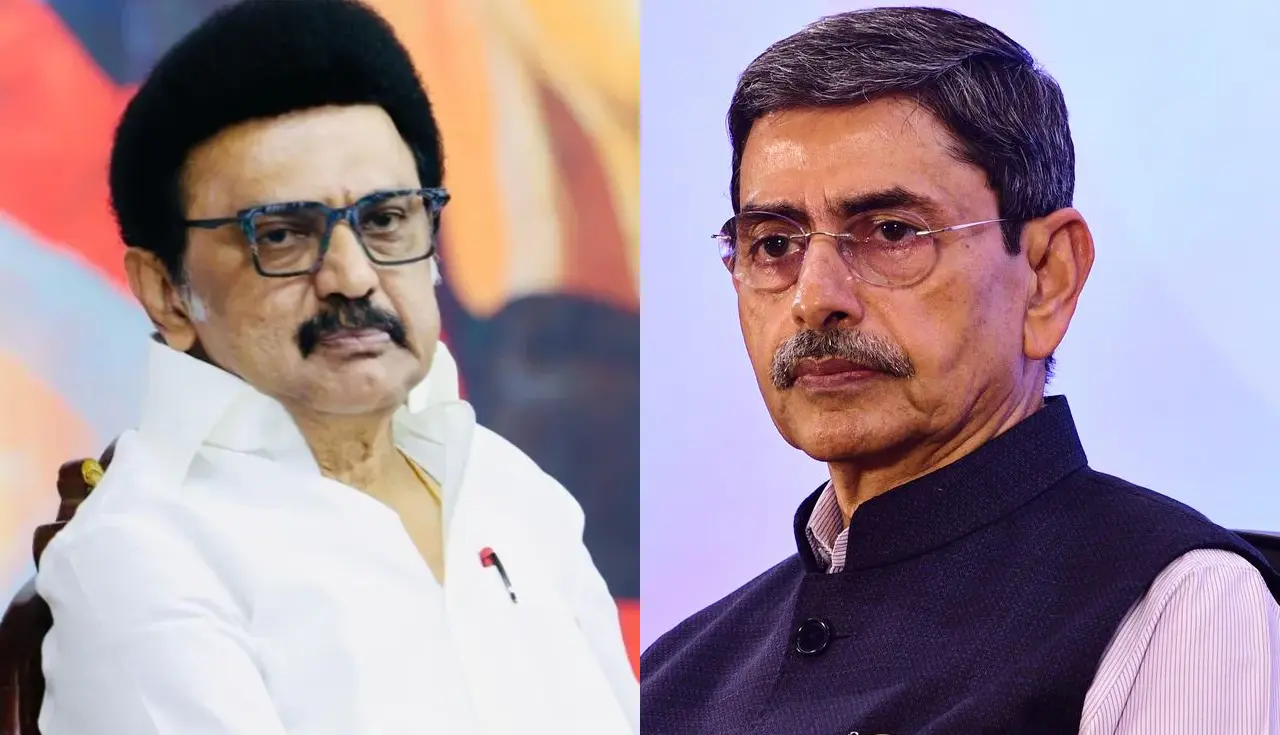
TN Raj Bhavan Refutes Delay Allegations, Says 81% Assembly Bills Cleared by Governor Ravi 4
Tamil Nadu Governor R N Ravi, TN Raj Bhavan statement, Tamil Nadu Assembly Bills, Governor Bill assent controversy, Raj Bhavan news
The Tamil Nadu Raj Bhavan on Thursday dismissed allegations that Governor R N Ravi was deliberately delaying his assent to Bills passed by the State Assembly, asserting that 81% of all Bills received had already been approved.
In a detailed statement issued on November 7, the Raj Bhavan termed the claims “unfounded and factually incorrect,” adding that the Governor has been acting “strictly in accordance with the Constitution” and without any political bias.
“As of October 31, 81% of the total Bills received have been assented to by the Governor, and 95 of these were cleared within three months,” the statement said. It further noted that 13% of the Bills were reserved for Presidential consideration, of which 60% were on the recommendation of the State Government itself. The remaining Bills, received only in the last week of October 2025, are still under review.
Rejecting allegations circulating on social media and public forums, the Raj Bhavan clarified that all Bills returned by the Governor and re-passed by the Assembly had since received assent. However, ten Bills were withheld after being found inconsistent with University Grants Commission (UGC) regulations, and were later reserved for the President’s consideration when resubmitted.
The statement emphasised that the Governor examines every Bill “with due diligence” to ensure that all legislation conforms to the Constitution and protects public interest. “The Governor has always acted transparently and fairly, performing his constitutional duties with sincerity and without political considerations,” it said.
Reaffirming the Governor’s respect for Tamil Nadu’s people and culture, the Raj Bhavan said R N Ravi “holds the highest regard for Tamil heritage, art, and literature” and continues to support initiatives that promote the state’s spiritual, cultural, and linguistic identity within the framework of the Constitution of India.
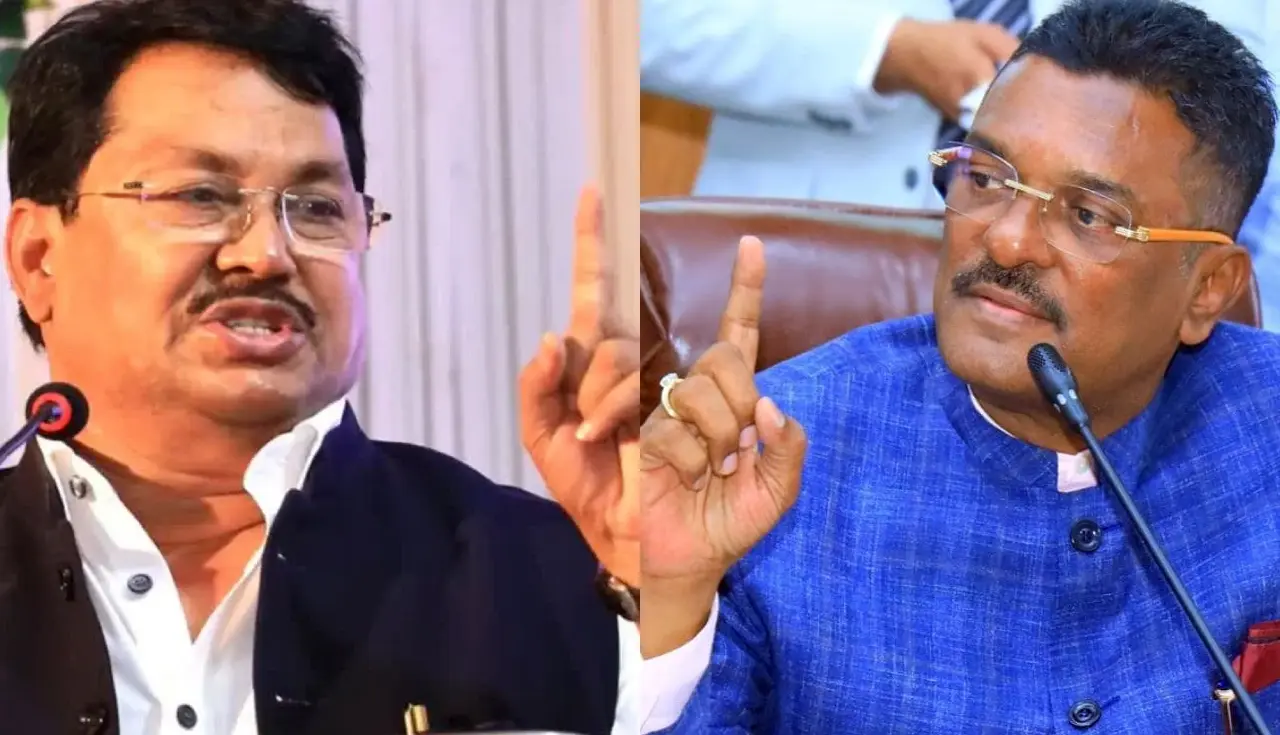
Wadettiwar Alleges Minister Pratap Sarnaik Bought Rs 200-Crore Land for Just Rs 3 Crore; Sarnaik Denies Charge 6
Congress leader Vijay Wadettiwar on Saturday (November 8, 2025) alleged that Maharashtra Minister Pratap Sarnaik purchased a four-acre land parcel worth ₹200 crore in Mira Bhayandar for just ₹3 crore to establish an educational institute — a charge the minister has strongly denied, demanding proof of the claim.
The allegations come amid ongoing controversy surrounding Deputy Chief Minister Ajit Pawar’s son Parth Pawar, whose firm’s ₹300-crore land deal in Pune’s Mundhwa area was recently cancelled after questions were raised over missing clearances.
Addressing the media, Wadettiwar claimed that the State Transport Minister acquired prime land near Mumbai at an “unbelievably low price,” adding that such transactions reflected the current state of governance in Maharashtra.
“Can a minister procure such valuable land for his personal educational institute? If this is permissible, then we might as well accept that this is Maharashtra under their rule,” Wadettiwar said, lashing out at the ruling government.
In response, Pratap Sarnaik dismissed the allegations as baseless and politically motivated. “Wadettiwar is a senior Congress leader, and I expect him to show documents to back his claims. I am unaware of any such land or connection to me. Ministers often face such unfounded accusations,” he said.
Revenue Minister Chandrashekhar Bawankule, reacting to the controversy, said no formal complaint had been received regarding the allegation. “These leaders prefer making accusations through the media rather than submitting proper complaints. If a formal complaint is filed, we will initiate an inquiry. Look at the recent Pune case — once it was officially raised, the state government immediately ordered a probe,” Bawankule stated.
The latest accusation has added to a series of high-profile land controversies in Maharashtra, sparking political tensions as opposition parties intensify their attacks on the Mahayuti government ahead of the upcoming local body polls.
Pune Land Deal Row: Parth Pawar's Firm to Pay Rs 42 Crore in Double Stamp Duty for Sale Deed Cancellation 8
The Pune land deal controversy involving Deputy Chief Minister Ajit Pawar’s son Parth Pawar has taken a new turn, with officials confirming that Amadea Enterprises LLP — the firm co-owned by Parth and his cousin Digvijay Amarsinh Patil — will now have to pay double stamp duty amounting to ₹42 crore to cancel the sale deed.
According to the Department of Registration and Stamps, the company must pay the original 7% stamp duty (5% under the Maharashtra Stamp Act, 1% Local Body Tax, and 1% Metro Cess) that was waived earlier, as well as an additional 7% duty to execute the cancellation deed. Officials stated that the exemption was granted after Amadea claimed it was setting up a data centre on the land, but the cancellation deed now clarifies that the plan has been dropped.
The disputed land spans 40 acres in Pune’s upscale Mundhwa area and was purchased for ₹300 crore. Opposition leaders have alleged that the actual market value of the land was ₹1,800 crore, sparking demands for a full probe. The sale deed, executed in May this year, came under scrutiny after it was revealed that the land belonged to the Maharashtra government and that the stamp duty had allegedly been waived in collusion with a sub-registrar.
Following an internal inquiry, the Pimpri Chinchwad Police registered an FIR against Digvijay Patil, Shital Tejwani (who represented 272 landowners via power of attorney), and sub-registrar R. B. Taru for misappropriation and cheating.
Ajit Pawar, addressing the controversy on Friday, stated that his son Parth was unaware the land was government-owned, adding that the ₹300 crore deal had been cancelled. “If any irregularities are found, due process will follow,” he said.
Joint Sub-Registrar A. P. Fulaware confirmed in his order that the deficit stamp duty and penalty must be deposited with the Stamps Collector, Pune City, before the cancellation is processed. “The cancellation deed will only be executed after full payment of the required duties,” the official noted.
Joint Inspector General of Stamps and Registration Rajendra Muthe further explained that the earlier exemption claim under the pretext of establishing a data centre was invalid. “Upon scrutiny, it was found that such exemption cannot be granted. Hence, the firm must pay 7% stamp duty for the sale deed and another 7% for its cancellation,” he said.
The total payable stamp duty now stands at ₹42 crore, marking another major development in what has become one of Maharashtra’s most high-profile land deal controversies in recent months.
Massive Fire Guts 500 Shanties in Delhi’s Rohini; One Dead, Another Injured 10
A massive fire broke out late Friday night near Rithala Metro Station in Delhi’s Rohini, engulfing around 500 shanties and leaving one man dead and another injured, officials from the Delhi Fire Services (DFS) confirmed.
According to police, the blaze spread rapidly after multiple LPG cylinders exploded, causing chaos and panic among residents who rushed to save their belongings and escape the flames.
Eyewitnesses reported thick plumes of smoke rising across the night sky as the fire tore through the densely populated slum cluster. Fire officials said preliminary estimates indicate that 400 to 500 huts were completely gutted in the blaze.
The DFS control room received a distress call at 10:56 pm, following which several fire tenders and firefighting robots were dispatched to the site. Police quickly cordoned off the area, while additional fire engines were placed on standby to prevent the flames from spreading further.
The fire was brought under control by early Saturday morning, officials said. The deceased was identified as Munna, while another man, Rajesh, sustained burn injuries and was rushed to a nearby hospital for treatment.
Authorities have launched an investigation to determine the cause of the fire, while teams from the disaster management and local administration are assisting affected families who lost their homes and possessions in the tragedy.
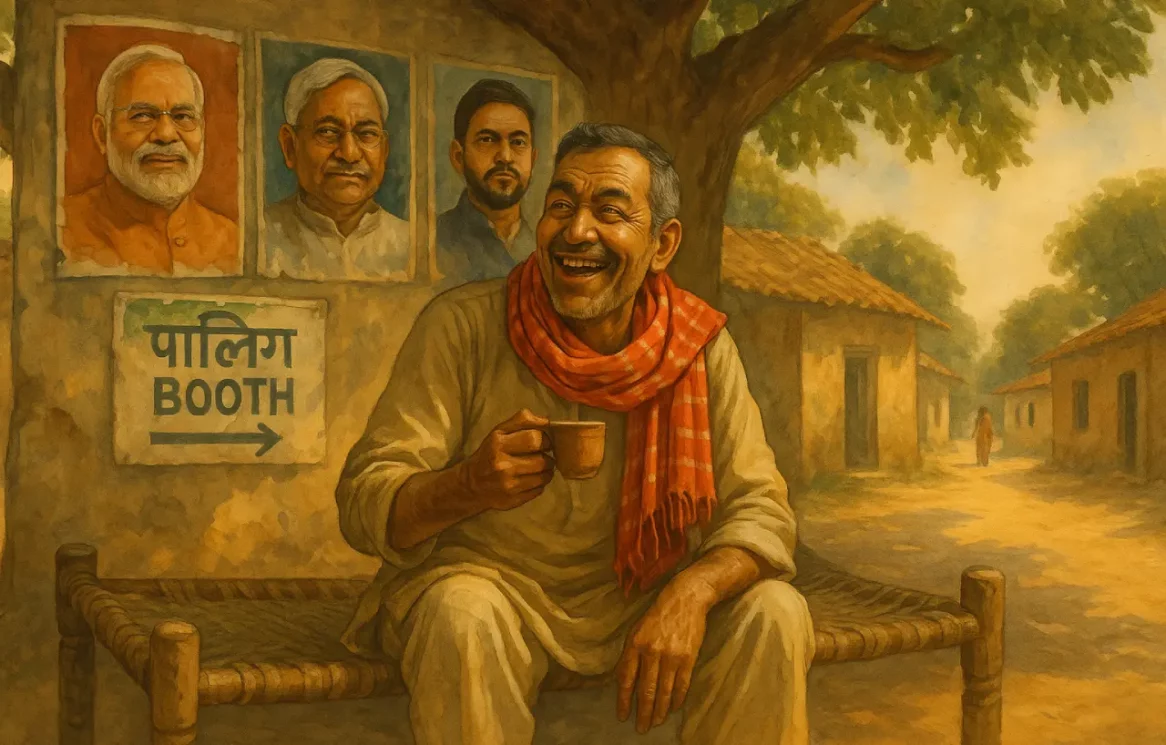
Bihar Votes Again: Where Democracy Wears a Gamcha and Laughs at Its Own Promises 12
Ah, Bihar — the land where politics isn’t just an event, it’s theatre. And this election season, the stage is set bigger, louder, and a whole lot more unpredictable than ever before. The first phase of voting on November 6 saw history being made — or at least rewritten with a more enthusiastic pen. A record voter turnout of around 65% showed that Biharis have decided not just to sit back and watch the drama unfold; they’re now writing the script themselves. Considering this is the state that once gave India Chanakya, it’s only fair that strategy and street-smartness run in the DNA.
With 121 constituencies spread across 18 districts, the voters of Bihar braved the November dust, chaos, and political promises that could put a Bollywood script writer to shame. The Election Commission, for once, deserves a round of applause — the SIR (Special Intensive Revision) of electoral rolls had zero appeals, and this time, they claim, the voter list is as pure as Ganga jal (though we’ll let you decide which part of Ganga). For a state where politics and caste have been lifelong companions, the idea of a clean roll is almost revolutionary — like finding punctuality in Indian Railways.
Let’s talk about the ruling alliance — the BJP and JD(U), that long and occasionally awkward marriage of convenience between Narendra Modi’s juggernaut and Nitish Kumar’s ever-evolving political conscience. It’s like watching a couple who’ve been together so long, they don’t even bother pretending anymore. The chemistry’s gone, but the compulsion remains — for power, for survival, and for that one last round of governance glory.
And yet, Bihar’s electorate, those 74 million souls — more than the entire population of France — have never been easy to fool. They’ve heard it all: development, employment, women’s safety, youth empowerment, even free Wi-Fi. But they’ve also seen their young migrate to other states in droves, their rivers flood every year, and their infrastructure swings between potholes and election promises. Bihar’s biggest export continues to be manpower, not manufacturing. Every Bihari family has at least one son or daughter working in Delhi, Mumbai, or Dubai — while home remains a place of nostalgia, and unkept political promises.
Meanwhile, the Election Commission’s attempts at modernization — colored candidate photos on EVMs, phone deposit facilities, and even wheelchairs and e-rickshaws for elderly voters — deserve some credit. For once, voting didn’t feel like an endurance test. It was an event. There were Jeevika women volunteers ensuring order, and queues that actually moved. Miracles do happen — in Bihar, they just need polling day to occur.
Now, on to the circus — sorry, the campaign trail. Prime Minister Modi’s rallies, as usual, are less about Bihar and more about reaffirming his connection with the masses — the charisma still works, the crowd still cheers, and the opposition still fumes. On the other hand, Rahul Gandhi, the eternal underdog of Indian politics, promised to “prove to Gen Z” that Modi’s rise was based on “election manipulation.” Ah, the irony — if elections are manipulated, one wonders how Rahul still finds the courage to contest them every time.
Then there’s Prashant Kishor — Bihar’s very own political scientist turned political sage. Once the architect of others’ victories, he now plays the critic, taunting BJP’s Samrat Chaudhary for boasting too much and doing too little. Kishor’s advice to Samrat was sharp: win your own seat before counting the NDA’s chickens. Fair point. After all, Bihar’s politics is not about what Delhi thinks, it’s about who controls Tarapur and how many crowds you can actually gather without free biryani.
The Lok Janshakti Party’s Arun Bharti, meanwhile, dusted off some history books to remind everyone that Bihar was once an economic powerhouse — producing 60% of India’s coal, 40% of its sugar, and a fair amount of intellectuals. “Congress ruined it all,” he thundered, blaming the infamous Freight Equalisation Policy that stripped Bihar of its industrial advantage. Hard to argue there — Bihar’s decline was less an accident and more a long bureaucratic murder, carried out slowly, file by file.
And in this theatre of the absurd, we have Mukesh Sahani, VIP chief and Mahagathbandhan’s Deputy CM candidate, cracking one-liners after an attack on Deputy CM Vijay Sinha’s convoy. “They’re suffering from the Bihar they created,” he said, proving that in Bihar politics, sarcasm is the new diplomacy. For a man nicknamed “Son of Mallah,” Sahani knows how to steer a boat through political storms — and he’s smelling a wave of change. Or at least he hopes the wave doesn’t capsize halfway through.
Bihar’s voters, however, are playing it close to the chest. Women, especially, have emerged as the quiet game-changers. Their turnout has been consistently higher than men’s, their concerns more practical — safety, education, employment, dignity. Every party now chants the “nari shakti” mantra, but Bihar’s women have seen more slogans than solutions. Congress promises monthly allowances, BJP talks of empowerment schemes, and Nitish Kumar reminds them of prohibition — though everyone knows liquor still flows, just with better delivery options.
The larger story, however, goes beyond local seats and alliances. This election is a referendum on political will. Bihar is the test lab of Indian democracy — if governance can work here, it can work anywhere. And yet, decades later, the state still oscillates between hope and heartbreak. Infrastructure crawls, jobs vanish, and crime remains an uninvited guest at every political celebration. The young Bihari, educated but unemployed, looks at politics with the same mix of faith and frustration that one reserves for Indian customer service — “maybe this time, they’ll actually do something.”
Nitish Kumar, now a veteran of every political permutation possible, finds himself fighting fatigue — not of age, but of credibility. The once-iconic “Sushasan Babu” image has faded into bureaucratic beige. Even his allies struggle to defend him with enthusiasm. The opposition, led by Tejashwi Yadav, capitalizes on youth and nostalgia — a strange mix that somehow resonates in the land of contradictions. Tejashwi talks about jobs and development, but the shadow of Lalu-era chaos still lingers. Bihar has long memories — and longer scars.
As for the voters — they’re not naïve. They’ve learned to separate drama from delivery, speeches from substance. They know that whoever wins will promise the moon and deliver maybe a lamp post. But still, they show up, vote, and hope. Because Bihar, for all its struggles, never gives up on democracy. It still believes that change can come — if not through leaders, then through sheer stubbornness.
So yes, Bihar’s elections are interesting. Not because of Modi’s rallies or Rahul’s accusations or Kishor’s sarcasm — but because of the quiet determination of its people. The farmers who still slow despite floods. The youth who still prepare for exams despite power cuts. The women who still vote despite indifference. That’s Bihar’s real story — resilience dressed in humour, patience wrapped in irony.
And as November 14 approaches, when the results roll in, one thing is certain: no matter who wins, Bihar will continue doing what it’s always done best — survive, laugh at its politicians, and wait for the next election, where hope will once again wear a fresh coat of paint.
Because in Bihar, politics isn’t a choice — it’s heritage.
ED Arrests Third Person in ₹68-Crore Fake Bank Guarantee Case Linked to Anil Ambani’s Reliance Power 14
The Enforcement Directorate (ED) has made a third arrest in the ongoing money laundering probe linked to a ₹68-crore fake bank guarantee issued on behalf of Anil Ambani’s Reliance Power, official sources said on Friday.
The latest accused, identified as Amar Nath Dutta, was taken into custody on Thursday under the Prevention of Money Laundering Act (PMLA). He has been remanded to four days of ED custody by a special court.
Earlier, the agency had arrested Ashok Kumar Pal, former Chief Financial Officer (CFO) of Reliance Power, and Partha Sarathi Biswal, Managing Director of Odisha-based Biswal Tradelink, in connection with the same case.
According to investigators, the case revolves around a fake bank guarantee worth ₹68.2 crore, allegedly submitted to the Solar Energy Corporation of India Limited (SECI) on behalf of Reliance NU BESS Limited, a subsidiary of Reliance Power. The company, previously known as Maharashtra Energy Generation Limited, reportedly submitted a bank guarantee purportedly from FirstRand Bank, Manila — a branch that does not exist.
The ED alleges that Biswal Tradelink operated a racket supplying fake bank guarantees to corporate entities for an 8% commission. The money laundering investigation stems from an FIR filed by Delhi Police’s Economic Offences Wing (EOW) in November 2024.
Officials revealed that Biswal Tradelink used a fake email domain (s-bi.co.in) — similar to the State Bank of India’s official domain (sbi.co.in) — to send forged communications to SECI, creating a false impression of authenticity. The company’s registered office was found to be a residential property belonging to one of Biswal’s relatives.
In its defence, Reliance Power said it was a “victim of fraud, forgery, and cheating conspiracy” and had already reported the incident to the stock exchanges on November 7, 2024. A company spokesperson confirmed that a criminal complaint had been filed with the Delhi Police in October 2024 against the third party involved.
The Reliance Group also clarified that Anil Ambani has not been on the board of Reliance Power for over three and a half years and has “no connection with the case.”
The ED continues to investigate the flow of funds and the possible role of intermediaries in what officials describe as a “sophisticated financial fraud using fake documentation and forged banking channels.”
After living under the shadow of conviction for over 27 years, Ramprakash @ Popat Govind Manohar has finally been acquitted by the Bombay High Court, which ruled that there was no evidence of cruelty or abetment in the suicide of his wife, Rekha.
Justice Milind Sathaye set aside the 1998 judgment delivered by a Pune sessions court that had sentenced Manohar to three years’ rigorous imprisonment under Sections 306 (abetment of suicide) and 498-A (cruelty) of the Indian Penal Code. His mother, who was also charged in the case, had been acquitted earlier.
The case dates back to May 1997, when Manohar married Rekha. Just six months later, she was found dead in a river near Pune. The prosecution had claimed Rekha was harassed by her husband and in-laws for money and a sewing machine, which allegedly drove her to suicide — a charge Manohar consistently denied.
After examining the case record, the High Court found no credible evidence to support the allegations. “The necessary ingredient of cruelty in the form of conduct likely to drive a woman to suicide is not clearly spelt out, much less proved,” Justice Sathaye observed, adding, “Mere statements that the deceased used to be unhappy or wept are not sufficient to conclude harassment beyond reasonable doubt.”
The court also noted several lapses in the prosecution’s case — no neighbours were examined, the panch witness turned hostile, and the recovery of the alleged sewing machine from the accused’s home was unsubstantiated. The ownership of the machine itself was in doubt since the purchase receipt was in another person’s name.
Significantly, the judge observed that Manohar had filed a missing person complaint on the day Rekha disappeared, reporting that she had left her ornaments at home. During the subsequent police inquiry, Rekha’s parents did not allege any harassment at that time.
Concluding that the trial court had erred in holding that Rekha was driven to suicide by mental cruelty, Justice Sathaye extended the benefit of doubt to Manohar and acquitted him of all charges.
The court directed Manohar to furnish a personal bond of ₹15,000, ensuring his appearance if the State challenges the verdict before the Supreme Court.
With this judgment, the Bombay High Court not only restored Manohar’s reputation after nearly three decades but also reinforced that “unhappiness alone does not establish cruelty or abetment under criminal law.”
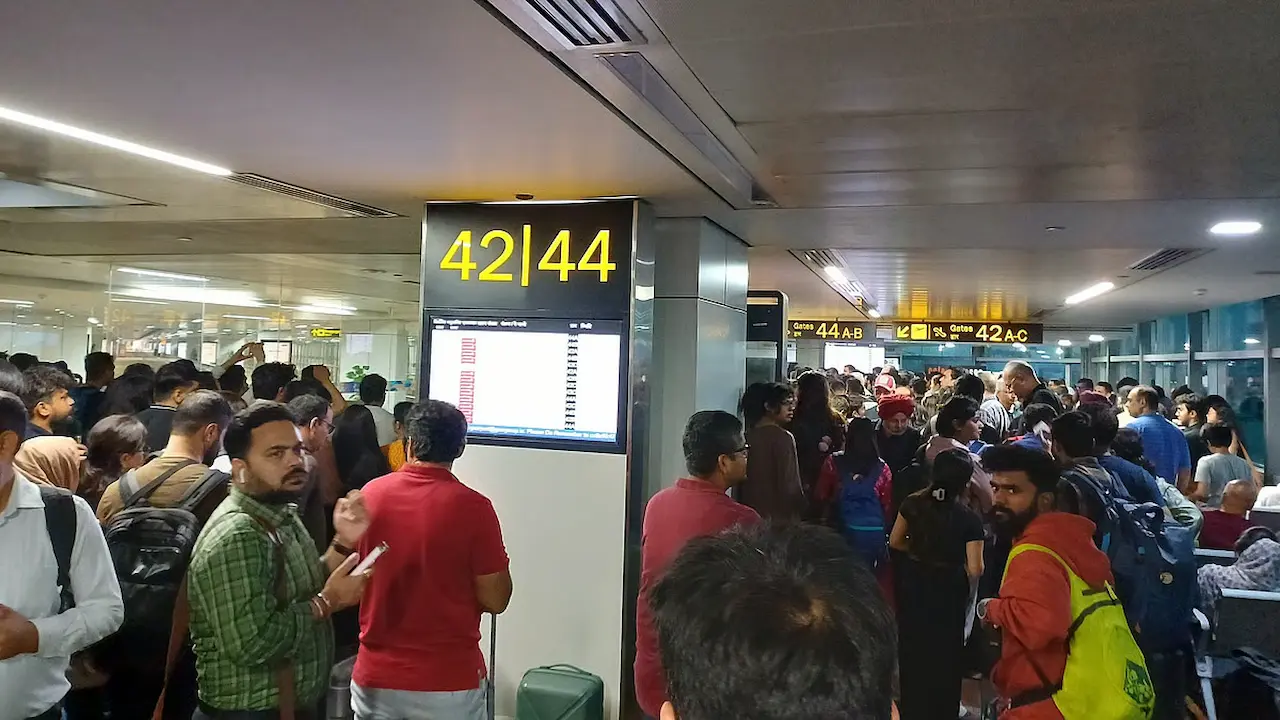
Chaos at Delhi Airport as Over 100 Flights Delayed After Major ATC System Glitch 17
Flight operations at Delhi’s Indira Gandhi International Airport (IGIA) descended into chaos on Friday morning after a major glitch in the Air Traffic Control (ATC) system caused widespread disruptions. According to airport authorities, over 100 flights were delayed, leaving passengers stranded and prompting frustration across terminals.
In a post on X (formerly Twitter), Delhi Airport confirmed the disruption, stating, “Due to a technical issue with the Air Traffic Control (ATC) system, flight operations at IGIA are experiencing delays. The team is working with all stakeholders, including DIAL, to resolve the issue at the earliest. Passengers are advised to stay in touch with their airlines for the latest flight updates.”
The airport also expressed regret for the inconvenience caused, assuring that efforts were underway to restore normal operations quickly.
Air Traffic Control (ATC) plays a crucial role in coordinating and guiding the movement of aircraft on the ground and in controlled airspace. Even a brief malfunction can cause a ripple effect, delaying take-offs, landings, and overall scheduling.
Meanwhile, in a separate development, Air India announced a “Flexi Contract for Pilots”—a new work model that allows flight crew to opt for shorter duty patterns while maintaining operational efficiency. The initiative, aimed at enhancing work-life balance, applies to Line Pilots and Line Training Captains on A320, B777, and A350 fleets.
Under the new policy, wide-body pilots will follow a 15 days on–15 days off schedule, while narrow-body pilots will operate on a 20 days on–10 days off pattern. The 12-month contracts are extendable and can be reverted to the original terms at the company’s discretion.
As of Friday afternoon, flight operations at Delhi Airport were gradually resuming, though delays were expected to continue for several hours as air traffic controllers worked to clear the backlog and stabilize the system.
Fadnavis Orders Probe into 'Serious' Land Deal Irregularities Involving Ajit Pawar's Son Parth 19
Maharashtra Chief Minister Devendra Fadnavis on Thursday ordered a high-level probe into alleged irregularities in a land deal involving Parth Pawar, son of Deputy CM and NCP leader Ajit Pawar. Calling the allegations “prima facie serious,” Fadnavis said a detailed investigation had been initiated.
The controversy centres around a 16.19-hectare land parcel in Pune’s Mundhwa, purchased by Amadea Enterprises LLP, a firm in which Parth Pawar is one of two directors. The land, reportedly worth ₹1,804 crore, was allegedly bought for ₹300 crore, according to activist Anjali Damania, who posted details of the transaction on X (formerly Twitter). The land registration document she shared lists the market price at ₹294.65 crore.
अजित पवारांची ही केस …. एकनाथ खडसेंसारखीच नाही का ? मुख्यमंत्री देवेंद्र फडणवीस आता त्यांच्या लाडक्या उप मुख्यमंत्र्यांवर कारवाई करणार ?
पार्थ अजित पवार हे डायरेक्टर असलेल्या Amadea Holdings LLP नावाच्या कंपनीने, १८०४ कोटीची महार वतनाची जमीन ३०० कोटीला घेतली? ह्या व्यवहारात २… pic.twitter.com/kQgRlCSgh2
Damania further alleged that the ₹21 crore stamp duty applicable on the deal was waived off within 48 hours, and the company paid only ₹500 for registration instead. She claimed the transaction showed signs of gross undervaluation and misuse of official authority.
Speaking to reporters in Nagpur, Fadnavis said he had directed the Revenue Department, the Inspector General of Registration, and the Land Records Office to compile a comprehensive report on the case. “I have requested all pertinent details regarding the case. The preliminary information appears serious. Once the full report is received, strict action will follow,” the CM said.
The probe will be led by IAS officer Vikas Kharge, Additional Chief Secretary of the Revenue Department. Fadnavis also emphasised that Deputy CM Ajit Pawar himself would not shield any wrongdoing. “Our government is clear — if any irregularity is found, action will be taken without hesitation,” he said.
Activist Anjali Damania alleged that Amadea Holdings LLP, incorporated in December 2021 with an authorised capital of ₹1 lakh, has Parth Pawar and Digvijay Patil as partners. The firm reportedly paid only ₹30,000 in registration charges for the ₹300 crore purchase.
The allegations have triggered a political storm in Maharashtra, with the opposition demanding a transparent inquiry and accountability over what could be one of the state’s biggest land valuation controversies in recent years.