Home Blog Page 5

Karma in Indian Politics: The Cycle of Accusation, Power, and Collapse

karma, indian politics, cbi, UPA government, cbi, kejriwal, Aam Aadmi Party
Karma in Indian Politics: The Cycle of Accusation, Power, and Collapse 2

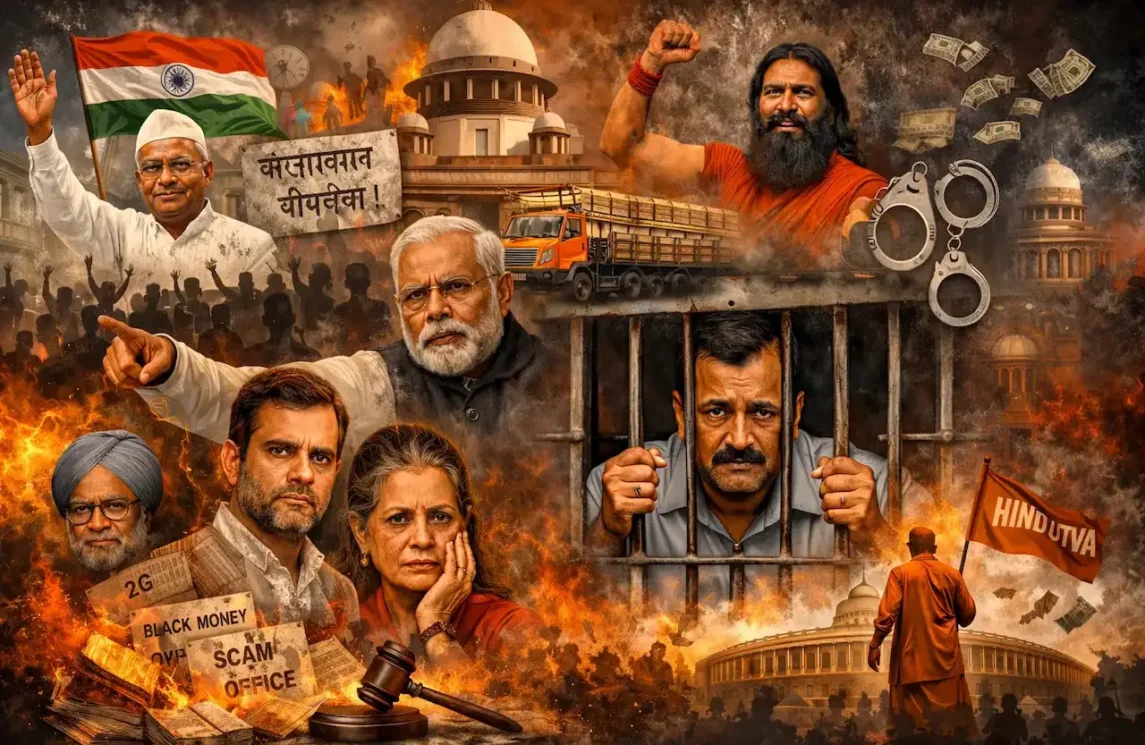
Indian politics has perfected a brutal art — the art of manufacturing morality, weaponizing outrage, and then pretending innocence when the same weapons are turned inward. What we are witnessing over the past decade is not just a contest of ideologies or governance models. It is the exposure of a cruel, cyclical system where power is pursued through public humiliation, narrative manipulation, and institutional combat. Every party that ascends the throne does so on the shoulders of accusation, and every party that falls cries vendetta. This is not ideology; this is a revolving door of political karma.

When the UPA government led by Manmohan Singh was in power, a nationwide moral spectacle was staged in the name of anti-corruption. Anna Hazare was projected as a modern-day Gandhi — fasting, speaking softly, wrapped in moral symbolism. The message was simple and emotionally explosive: the country had been looted. Television channels amplified every slogan. Social media, then a growing political weapon, converted suspicion into certainty.

Behind that moral theatre stood sharp political operators, most notably Arvind Kejriwal. Files were displayed before cameras. Complex policy decisions were reduced to punchlines. Allegations became prime-time verdicts. The target was clear: discredit the Congress ecosystem entirely. Sheila Dikshit was relentlessly attacked. Sonia Gandhi and Rahul Gandhi were dragged into a daily cycle of ridicule and suspicion. The branding of Rahul Gandhi as “Pappu” was not spontaneous mockery; it was a calculated erosion of legitimacy, repeated until it entered public vocabulary.

Simultaneously, Baba Ramdev entered the stage promising to bring back black money. Then came Narendra Modi with electrifying rallies and sweeping assurances that illicit wealth would return to citizens. The emotional pitch worked. Anger was consolidated. In 2014, the Bharatiya Janata Party secured a historic mandate. The anti-corruption movement had achieved its political outcome.

But this is where the cruelty of Indian politics reveals itself most starkly. Allegations that dominate headlines do not always translate into convictions in courtrooms. Legal processes move differently from television debates. Over time, several high-profile cases that were projected as decisive scandals did not end with dramatic punishments. Yet reputations had already been damaged. Elections had already been won. Narratives had already reshaped public opinion. In politics, accusation often achieves what evidence later cannot undo.

The anti-corruption agitation also gave birth to the Aam Aadmi Party. Arvind Kejriwal, once the accuser, became the establishment in Delhi. The outsider became Chief Minister. The system he condemned became the system he governed. And then the wheel began to turn again.

Investigative agencies became central to political battles. Cases were registered. Arrests were made. AAP leaders described it as vendetta; the BJP described it as accountability. The script felt familiar because it was familiar. The language once used against Congress was now being used against AAP. The same moral intensity. The same media framing. The same public shaming.

By 2025, the BJP reclaimed power in Delhi. By 2026, AAP leaders secured bail in major cases and began portraying themselves as victims of political persecution. Demands for apology surfaced. Appeals to democratic fairness were made. But a haunting question lingered: when Congress leaders were relentlessly targeted, who apologized when courts did not deliver the apocalyptic conclusions that were predicted? When reputations were dragged through mud for years, who restored them?

The cruelty of Indian politics lies not merely in competition, but in the normalization of character assassination as a legitimate electoral strategy. Allegations are amplified beyond proportion. Social media ecosystems are mobilized to create permanent perceptions. Institutions are drawn into political narratives. The public is conditioned to see every opponent not as a rival, but as a criminal-in-waiting.

Today, even the BJP faces rising discomfort among sections of voters over economic strain, centralization of authority, and governance challenges. Its ideological plank of Hindutva continues to energize a committed base, but fatigue and skepticism are visible in other quarters. The irony is unmistakable: the very strategy of relentless narrative control that once dismantled Congress is now scrutinized by a more digitally aware electorate. Political permanence is an illusion; dominance is temporary.

This is not about declaring any party innocent or guilty. Courts exist for that purpose. This is about recognizing the pattern: outrage is weaponized to win power; once in power, the same instruments are justified as governance tools; when out of power, they are condemned as authoritarian misuse. Every party claims moral superiority in opposition and procedural legitimacy in government. Every party speaks of democracy when cornered and strength when dominant.

And the voter? The voter watches this cycle unfold with growing exhaustion. There is anger, yes — but also disgust. Not because politics is adversarial, but because it often feels performative and vindictive. The language is extreme, the accusations dramatic, the promises grand. Yet accountability rarely matches rhetoric.

The cruel face of Indian politics is not a single party. It is the system of mutual destruction that all major players have, at different times, embraced. Congress once enjoyed near-unchallenged authority. It declined. The BJP rose with unprecedented dominance. It now faces its own tests. AAP emerged as a moral alternative. It too became entangled in the very structures it criticized. The wheel turns without sentiment.

Karma in politics is not mystical revenge; it is structural inevitability. If you normalize public humiliation as strategy, you will one day be humiliated. If you reduce governance debates to criminal insinuations, you will one day defend yourself against insinuations. If you build power through anger, you will eventually confront anger.

The deeper tragedy is institutional erosion. When investigative agencies, courts, media, and digital platforms become intertwined with political narratives, public trust weakens. Democracy survives not merely through elections but through credibility. And credibility is fragile.

So the final question is not whether one party deserves sympathy or another deserves criticism. The real question is whether Indian politics can move beyond this cycle of accusation and retaliation. Can it mature into a system where evidence precedes outrage, where dissent is not equated with criminality, where victory does not require annihilation of the opponent’s dignity?

Or will we continue watching leaders bite at each other’s heels while citizens oscillate between hope and cynicism?

The cruel face of Indian politics is not hidden. It is visible in every rally, every televised debate, every trending hashtag. Power is pursued with moral fervor and defended with institutional force. But the electorate remembers. And in democracy, memory is the most unpredictable force of all.
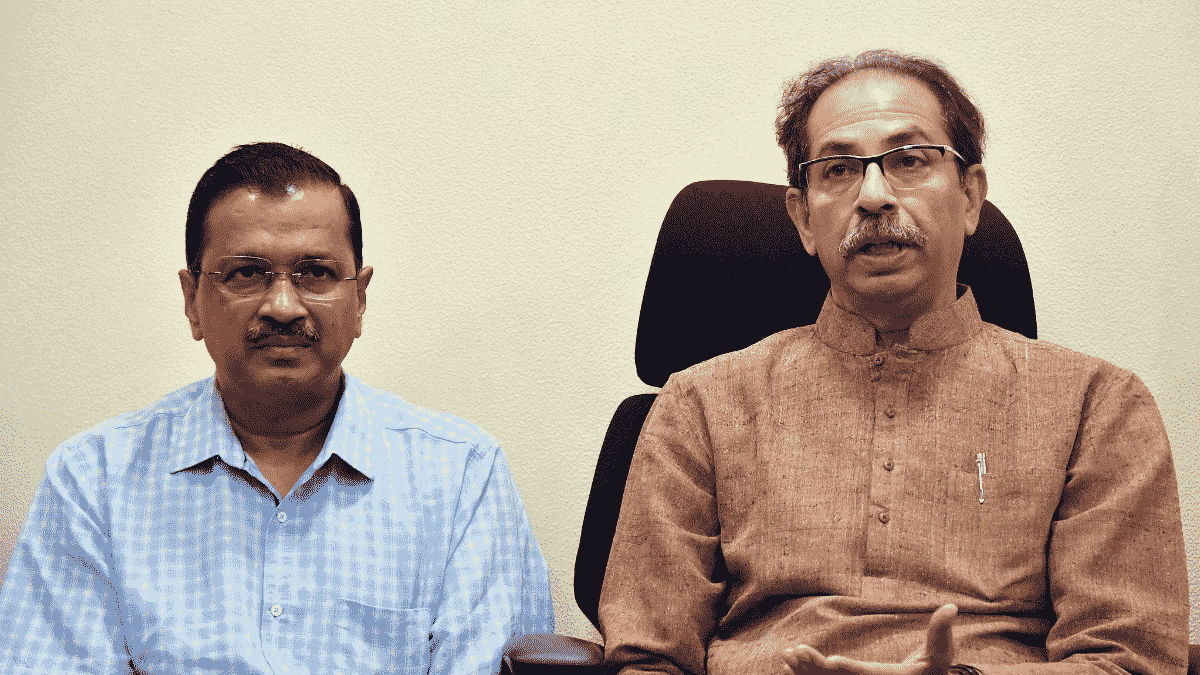
Sena (UBT) Calls Kejriwal’s Discharge a ‘Slap on Vendetta Politics’, Demands Action Against Probe Agencies

arvind kejriwal, uddhav thackeray, thackeray, sena (ubt), kejriwal, cbi, vendetta politics
Sena (UBT) Calls Kejriwal’s Discharge a ‘Slap on Vendetta Politics’, Demands Action Against Probe Agencies 4

The Shiv Sena (UBT) on Saturday described Aam Aadmi Party (AAP) leader Arvind Kejriwal’s discharge in the excise policy case as a “slap” on political vendetta and demanded action against those who allegedly fabricated charges against the former Delhi chief minister.

In a strongly worded editorial in its mouthpiece Saamana, the Uddhav Thackeray-led party claimed the case was politically motivated and alleged that BJP leaders, the Delhi Lieutenant Governor and central probe agencies such as the Enforcement Directorate (ED) and the Central Bureau of Investigation (CBI) acted in tandem to destabilise the AAP government.

A Delhi court on Friday discharged Kejriwal, former deputy chief minister Manish Sisodia and 21 others in the excise policy case. The court observed that it did not find any overarching conspiracy or criminal intent in the policy and criticised the CBI for failing to substantiate its allegations.

Kejriwal, who was arrested by the ED on March 21, 2024, and later by the CBI, had spent 155 days in jail before being granted bail.

The Sena (UBT) editorial termed the verdict a significant setback to what it called a “politically driven prosecution,” asserting that the charges lacked merit and that no criminal conspiracy had been established. It alleged that raids and arrests were carried out to portray the AAP government as corrupt ahead of the Delhi Assembly elections.

The party further claimed that central agencies had tightened a “noose” around Kejriwal, Sisodia and other ministers, and said the court’s decision had now exposed weaknesses in the case.

The editorial demanded that Prime Minister Narendra Modi and Union Home Minister Amit Shah apologise to Kejriwal and called for action against officials involved in the investigation. It also alleged that central agencies have been misused over the past decade to target political opponents.

Referring to Maharashtra, the party cited cases involving leaders such as Chhagan Bhujbal, Anil Deshmukh, Nawab Malik and Sanjay Raut, claiming that prolonged incarcerations and investigations were used as political pressure tactics.

The Sena (UBT) also criticised the judiciary, alleging that it had failed to adequately curb what it described as excesses by central agencies and violations of democratic norms.

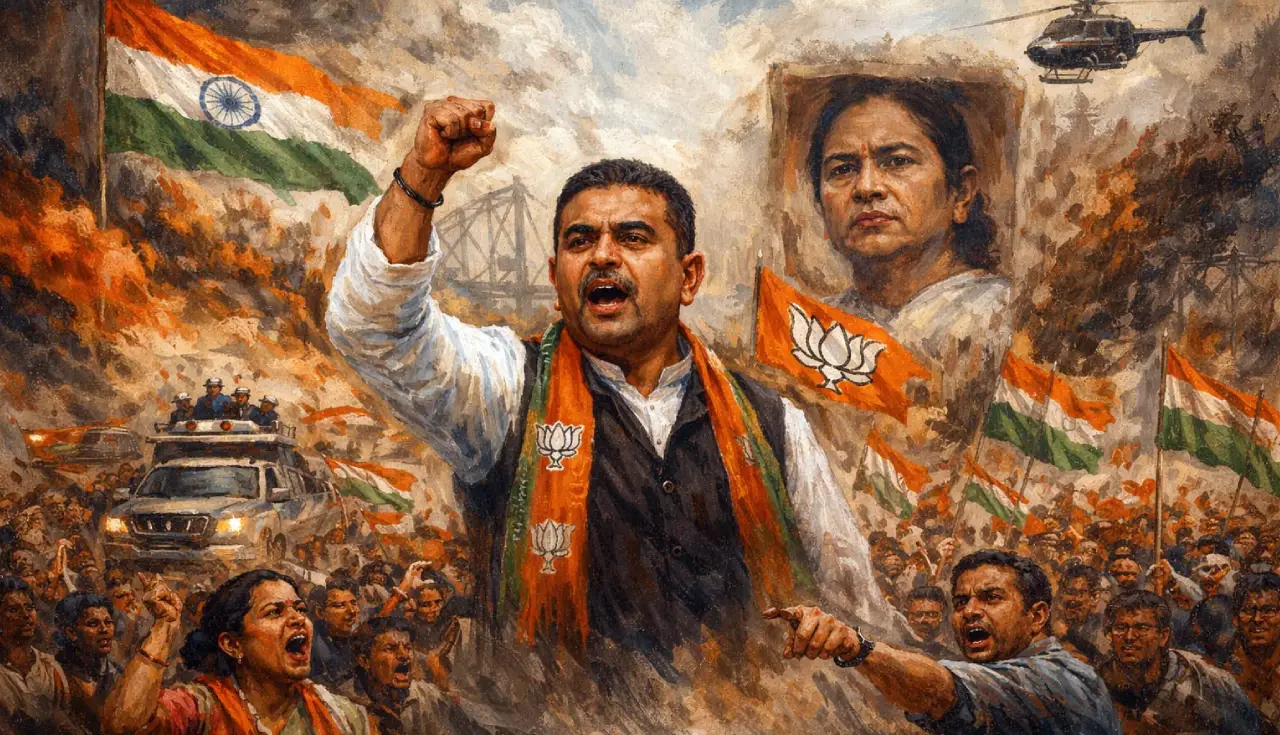
Suvendu Adhikari: The Relentless Challenger Bengal Cannot Ignore

suvendu adhikari, suvendu, adhikary, bjp, west bengal, bengal, tmc, trinamool congress, mamata banerjee, mamata
Suvendu Adhikari: The Relentless Challenger Bengal Cannot Ignore 6

I went to Kolkata to meet writers and journalists. Politics, as always in Bengal, found its way into every conversation. When I asked a simple but decisive question—who is the BJP’s real bet against Mamata Banerjee in the coming battle?—there was no hesitation, no diplomatic evasion, no chorus of multiple names.

There was one name. Spoken with conviction. Suvendu Adhikari.

West Bengal does not fall for ornamental leadership. It never has. This is a state that has lived through ideological wars, street struggles, cadre politics, and mass mobilizations. Bengal rewards leaders who sweat on the ground, not those who glide from convoy to podium and vanish. And in today’s BJP ecosystem in Bengal, Suvendu stands apart precisely because he operates like a field commander, not a weekend campaigner.

What struck me most was what local journalists told me—he is accessible. One call away. And if he cannot reach personally, his team responds. Follow-ups happen. Complaints are addressed. In a political culture where post-election amnesia is almost standard practice, that alone is disruptive.

But accessibility is only one dimension. There is a deeper factor—memory and connection. It is said that Suvendu knows large numbers of people in his constituency by name. Not as voter data, not as booth-level figures, but as individuals. This sounds old-fashioned. Good. Bengal still respects that old-fashioned model. Leaders here were once known to attend family ceremonies, funerals, and community gatherings without cameras. Suvendu has revived that style of politics in a party often perceived as distant in the state.

Let’s be blunt. The BJP in West Bengal struggled for years because it lacked rooted faces. Many leaders relied on motorcades, layered security, and stage-managed optics. They delivered thunderous speeches, promised structural overhauls, and disappeared until the next rally. Expensive lifestyles and perceived detachment cost the party emotional credibility. Voters want to feel ownership over a leader. They must see him as one of us.

When Suvendu left the Trinamool Congress and joined the BJP, he brought more than political weight. He brought networks, booth-level relationships, and a culture of relentless mobilisation. His political résumé is substantial—former Transport and Irrigation Minister, former Lok Sabha MP from Tamluk, now Leader of the Opposition in the West Bengal Assembly since May 2021. Experience is not his liability; it is his arsenal.

Yes, he came from outside the traditional BJP-RSS fold. And yes, that has caused discomfort among certain long-standing state leaders. Internal friction exists. There are veterans who question his ideological lineage. There are factions wary of his rapid rise. But politics is not a nostalgia club—it is a performance arena. Parties that prioritize ego hierarchies over winning strategies do so at their peril.

If the BJP in West Bengal is serious about defeating Mamata Banerjee, it needs clarity, not confusion. Discipline, not rivalry. A single power centre, not competing egos.

So what must BJP do?

First, project a clear Chief Ministerial face. Bengal’s voter psychology revolves around strong personalities. Mamata Banerjee’s dominance is built on a narrative of singular authority. To defeat that structure, BJP cannot rely solely on national leadership imagery. It must present a credible, assertive, locally embedded alternative. Suvendu fits that profile more convincingly than any other current state leader.

Second, rebuild grassroots machinery with zero tolerance for factional sabotage. Electoral battles in Bengal are booth-driven, hyper-local, and emotionally charged. Cadre strength must be energised and unified under one strategic command. The party must decide—does it want internal comfort or electoral victory? It cannot have both.

Third, sharpen narrative clarity. The BJP needs a balanced, strategic mix of governance critique and aspirational messaging. Attack corruption relentlessly. Highlight administrative lapses. But also present a bold development blueprint tailored specifically for Bengal—not recycled national templates.

Fourth, invest in community outreach beyond rhetoric. Bengal’s social fabric is complex—culturally proud, politically alert, economically varied. Building trust requires presence in villages, small towns, minority-dominated belts, industrial pockets, and intellectual spaces alike. Suvendu’s method of physical engagement should be institutionalized across the party’s structure.

Fifth, stabilise leadership lines. If Suvendu is to be the spearhead, he must be given operational autonomy in state strategy. Half-empowered leaders become scapegoats. Fully backed leaders become force multipliers.

Can Suvendu Adhikari emerge as the future Chief Ministerial face for BJP in West Bengal?

The possibility is real. But it demands courage—from the party as much as from him.

He has demonstrated stamina, combative clarity, and organisational experience. As Leader of the Opposition, he has taken an aggressive stance inside the Assembly. On the streets, he remains visible and vocal. His electoral victory against Mamata Banerjee in Nandigram remains symbolically potent within BJP circles. That battle turned him from defector to frontline challenger overnight.

Leadership in Bengal is not granted through designation—it is earned in public confrontation. Suvendu has repeatedly shown he is willing to confront, not negotiate his relevance.

However, being a Chief Ministerial candidate requires expanding perception beyond stronghold zones. He must consolidate broader statewide appeal—urban middle class, youth voters, and undecided segments. He must be seen not only as a fighter but also as an administrator-in-waiting. The transition from opposition warrior to governance architect is delicate.

Yet among the current lineup, he appears best positioned for that leap.

The BJP today stands at a decisive juncture in West Bengal. It can either remain an ambitious challenger fragmented by internal calculations, or it can evolve into a cohesive alternative anchored by a grounded, assertive leader. If it chooses the latter path, it must invest its full faith in leaders who command organic loyalty.

Bengal has never feared strong personalities. It respects them—if they remain accessible, if they remain visible, if they remain accountable.

Suvendu Adhikari’s political currency is hard-earned mass contact. It was not manufactured in television studios. It was built in streets, blocks, and booths. If the BJP harnesses that energy rather than dilute it through internal anxieties, the 2026 Assembly election could shift from speculation to serious contest.

Defeating Mamata Banerjee will not be easy. She remains a formidable, battle-tested leader with deep cadre roots. Underestimating her would be fatal.

But Bengal’s political landscape is not static. It changes when momentum meets organization.

Suvendu has momentum.

Now the BJP must decide whether it has the organisational maturity—and the strategic courage—to transform that momentum into a full-fledged power bid.

If it does, Bengal may witness a new political chapter. If it hesitates, history will repeat itself.

In this state, opportunity waits for no one.

Thane MACT Awards Rs 58 Lakh to Techie Who Lost Leg in 2019 Truck Crash

accident, scene, image,
Thane MACT Awards Rs 58 Lakh to Techie Who Lost Leg in 2019 Truck Crash 8

The Motor Accident Claims Tribunal (MACT) in Thane has awarded Rs 58.3 lakh in compensation to a 35-year-old software engineer who lost his leg after being hit by a speeding truck in 2019.

In an order dated February 23, MACT member R V Mohite directed the truck’s insurance company to first pay the compensation to the claimant and then recover the amount from the vehicle owner, amid a dispute over the authenticity of the insurance policy.

The claimant, Kiran Suresh Mali, a senior software developer, was riding his motorcycle on Ghodbunder Road in Thane’s Anand Nagar area on March 30, 2019, when a truck rammed into his two-wheeler from behind. The collision caused a severe crush injury, resulting in the amputation of his left leg and 65 per cent permanent disability.

The truck owner failed to appear before the tribunal, and the case proceeded ex parte against him.

The insurance company contested the claim, alleging that the policy produced was “fake and fabricated.” However, the tribunal observed that records from the Regional Transport Office (RTO) showed that the vehicle was insured with the firm.

The tribunal noted that even if the insurer was not strictly liable due to policy-related disputes, the claimant, as a third party, was entitled to compensation. It cited rulings of various high courts and the Supreme Court holding that insurers must satisfy the award in favour of third-party victims in the first instance and may later recover the amount from the vehicle owner or driver.

While assessing the impact of the disability on Mali’s career, the tribunal observed that the same percentage of physical disability could result in varying degrees of loss of earning capacity depending on the nature of the profession, age and other factors. It assessed his functional disability at 25 per cent and fixed a notional monthly income of Rs 45,000, as he had not submitted income tax returns or bank statements to substantiate his claimed salary of over Rs 84,000.

The compensation awarded includes Rs 21.6 lakh towards loss of income, Rs 8.64 lakh for future prospects and Rs 18 lakh for a future artificial limb and its maintenance. The tribunal also directed that the amount be paid with interest at 9 per cent per annum from April 2019, the date of filing the petition.

Priyanka Gandhi Accuses Kerala Govt of Delaying Congress Housing Project for Landslide Victims

priyanka, gandhi, rahul gandhi, vadra, Sankalp Satyagraha, disqualification, congress
Priyanka Gandhi Accuses Kerala Govt of Delaying Congress Housing Project for Landslide Victims 10

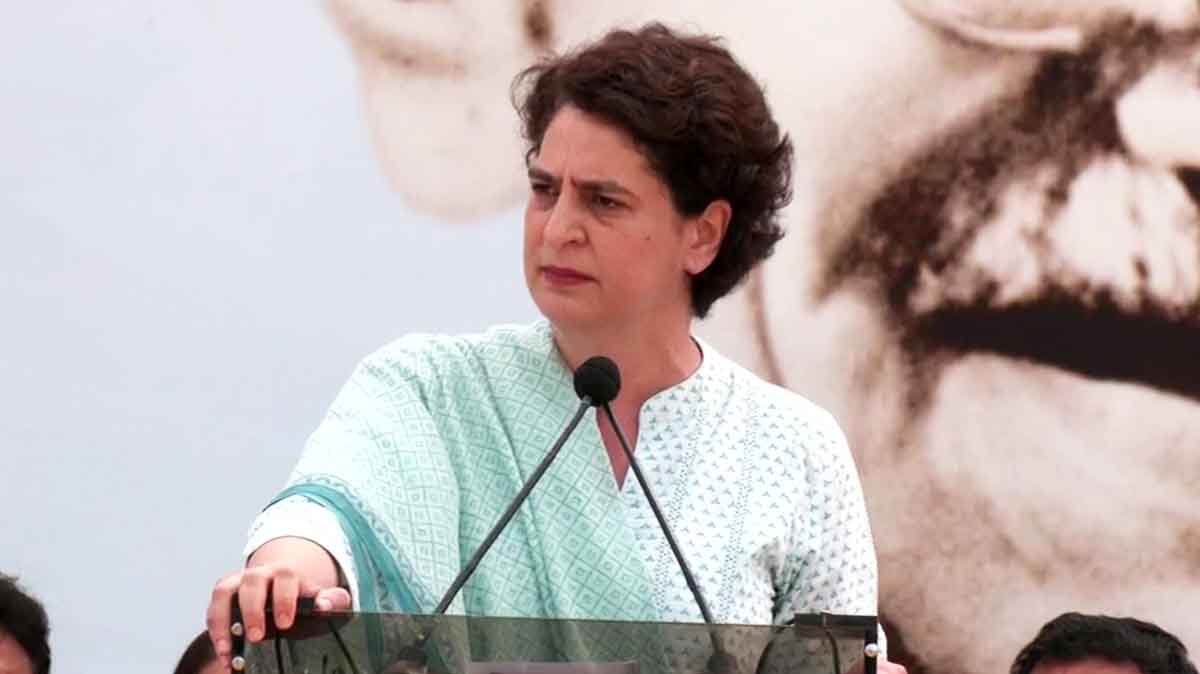
Congress MP Priyanka Gandhi Vadra on Thursday accused the Kerala government of delaying the launch of the party’s housing project for families affected by the 2024 Chooralmala landslide.

Speaking to reporters after a meeting, she alleged that the state government dragged its feet in allotting land for the rehabilitation initiative, leading to significant delays. She expressed hope that the project, for which the foundation stone is set to be laid soon, would now move forward without further hurdles.

“There was a lot of delay due to paperwork and land-related issues. Fortunately, we have been able to resolve them, and hopefully we will complete the project soon,” she said.

Priyanka Gandhi claimed that greater cooperation from the state government at an earlier stage would have enabled faster implementation of the housing scheme. Asked whether the Congress would be able to complete the project on time, she said she remained hopeful but pointed out that official clearances had taken considerable time.

The Congress leader also remarked that people in Kerala were looking for political change and voiced optimism that such a shift would take place.

Responding to questions about welfare activities in her constituency, she said she was satisfied with the overall efforts but flagged delays in funding. “Central government funds are very slow. In some cases, the state government is also slow. But more than that, the central government is slowing down funding for many schemes, which is causing delays,” she said.

The 2024 landslide in Chooralmala had left several families displaced, prompting rehabilitation efforts from both government and political organisations.

Supreme Court Bans Class 8 NCERT Book Over Judiciary Corruption Chapter, Orders Seizure and Digital Takedown

ncert, books, supreme court, ncert books, judiciary corruption, sc
Supreme Court Bans Class 8 NCERT Book Over Judiciary Corruption Chapter, Orders Seizure and Digital Takedown 12

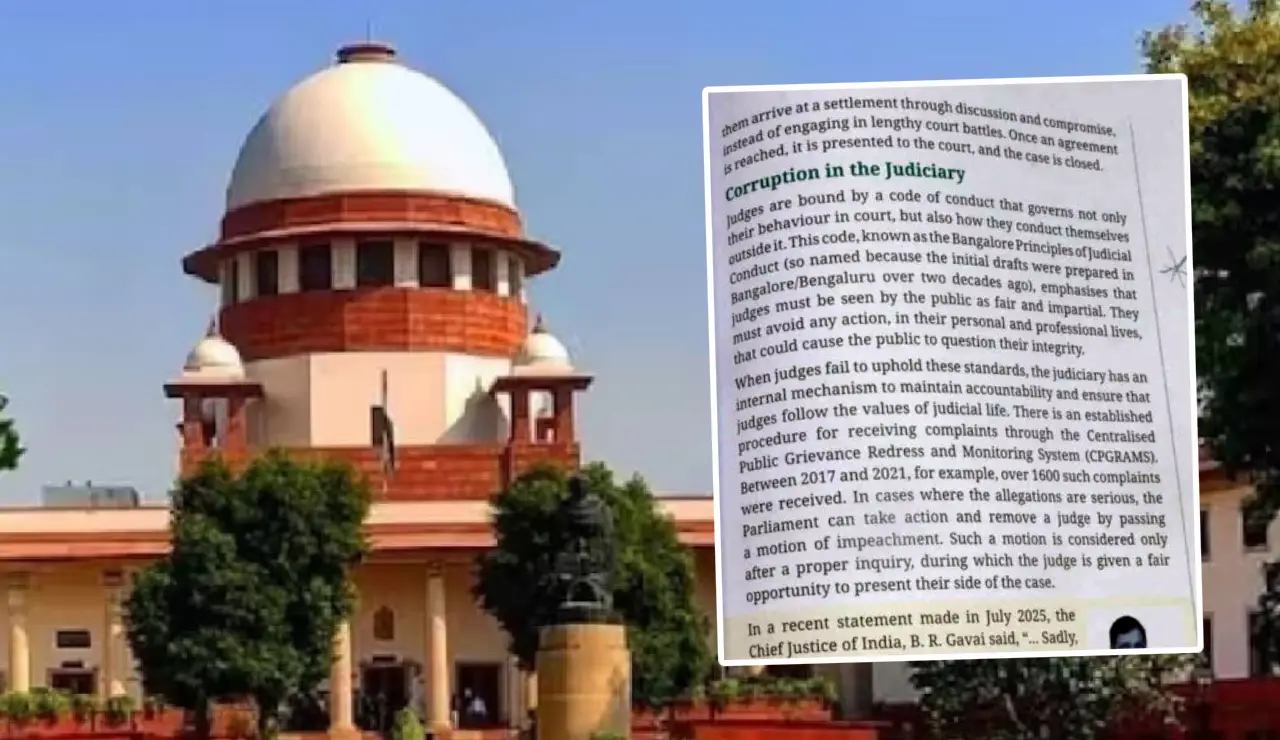
The Supreme Court on Thursday imposed a blanket ban on a Class 8 NCERT textbook containing a chapter on corruption in the judiciary, directing authorities to seize all physical copies and ensure immediate removal of its digital versions.

The apex court ordered the Centre and state governments to comply with its directions without delay, warning of “serious action” in case of any defiance. It also issued show-cause notices to the NCERT Director and the School Education Secretary, asking them to explain why action should not be initiated against those responsible for the publication.

A bench headed by Chief Justice Surya Kant observed that the inclusion of the contentious content appeared to be a “calculated move” to undermine the institution and demean the dignity of the judiciary. The court remarked that such misconduct, with a potentially lasting impact on public confidence, could fall within the ambit of criminal contempt.

“If allowed to go unchecked, this will erode people’s faith in the judiciary. No one will be allowed to go scot-free,” the bench said, adding that a deeper probe was required. The Chief Justice asserted that as head of the institution, it was his duty to identify those responsible, stating that “heads must roll” if wrongdoing is established.

The court also took exception to NCERT’s communication issued on Wednesday, noting that it did not contain a word of apology and instead appeared to justify the content. At the outset of the hearing, Solicitor General Tushar Mehta tendered an unconditional and unqualified apology on behalf of the Ministry of Education.

The matter has been posted for further hearing on March 11.

President Droupadi Murmu Begins Four-Day Multi-State Tour Across Maharashtra, Jharkhand and Rajasthan

droupadi murmu president, president, droupadi murmu
President Droupadi Murmu Begins Four-Day Multi-State Tour Across Maharashtra, Jharkhand and Rajasthan 14

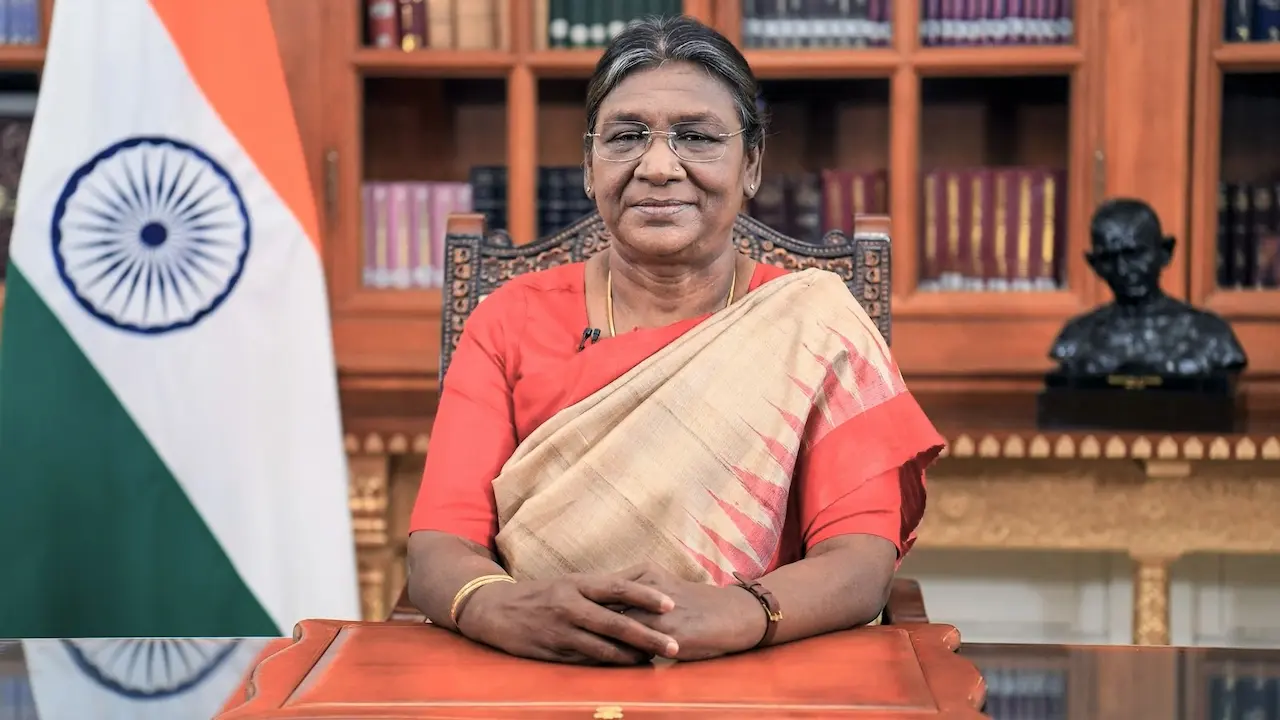
President Droupadi Murmu will embark on a four-day visit to Maharashtra, Jharkhand and Rajasthan beginning today, with a series of high-profile public engagements and ceremonial events lined up across the three states.

On the first day of her visit, the President will inaugurate the nationwide campaign ‘Saving Lives and Building a Healthier Bharat’, organised by PD Hinduja Hospital at Lok Bhavan in Mumbai.

On Tuesday, she will attend the ‘National Arogya Fair 2026’, organised by the Union Ministry of AYUSH in Shegaon, Buldhana district. She will also grace the state-level launch of the programme titled ‘Golden Era of Maharashtra through Unity and Trust’, organised by the Brahma Kumaris in Nagpur on Wednesday.

On Thursday, President Murmu will participate in the Bhoomi Pujan ceremony of the Sri Jagannath Temple in Jamshedpur, Jharkhand. The event is being organised by the Shri Jagannath Spiritual and Cultural Charitable Centre Trust. During her visit to Jamshedpur, she will also tour Manipal TATA Medical College and interact with students.

Concluding her tour on Friday, the President will witness ‘Ex Vayushakti’ at Pokharan in Rajasthan, a major demonstration of the Indian Air Force’s operational capabilities.

The visit underscores the President’s engagement with health, cultural, spiritual and defence initiatives across different regions of the country.

Bombay High Court Quashes ED’s PMLA Case Against Lawyer Kishor Devani in Anil Deshmukh Probe

anil deshmukh, deshmukh, ncp, nationalist congress party, maratha, maratha kranti morcha, jalna
Bombay High Court Quashes ED’s PMLA Case Against Lawyer Kishor Devani in Anil Deshmukh Probe 16

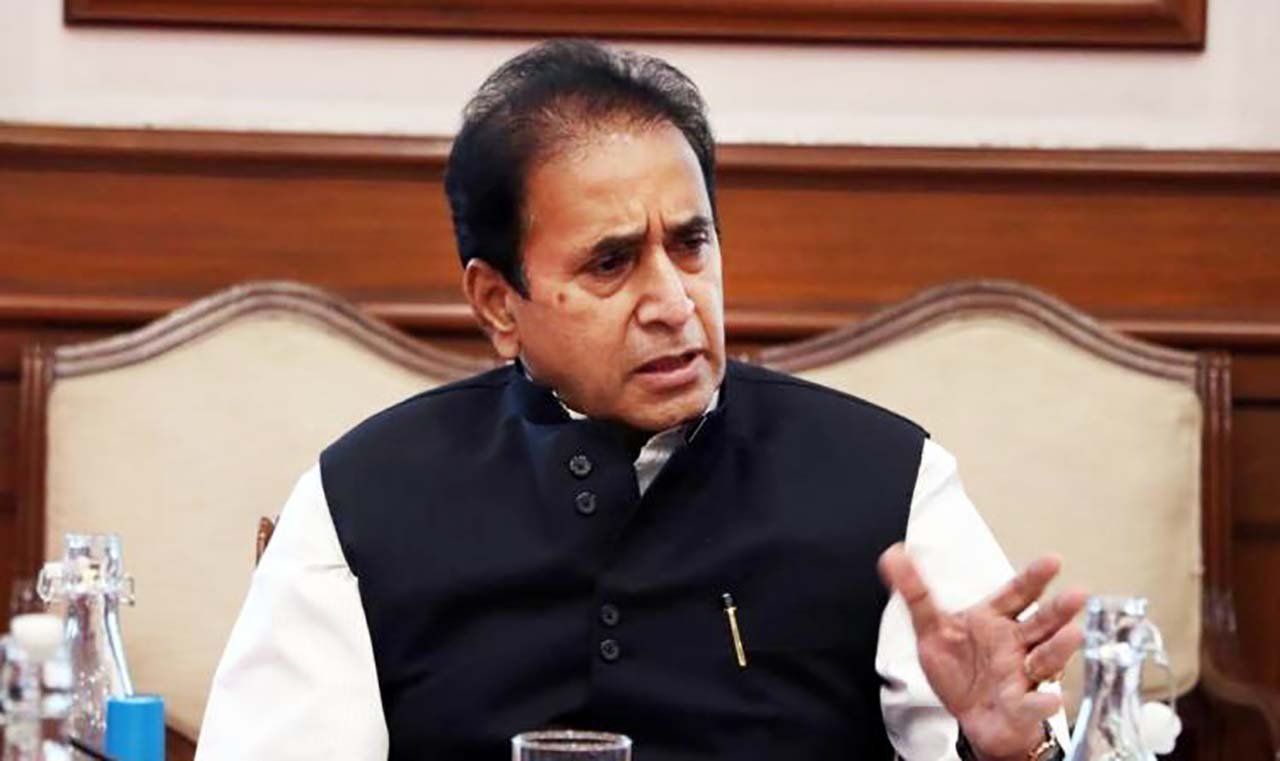
The Bombay High Court has quashed the Enforcement Directorate’s (ED) money laundering case against lawyer Kishor Devani, a close associate of former Maharashtra Home Minister Anil Deshmukh, granting him major relief in the high-profile investigation.

In its order, a single-judge bench of Justice Ashwin Bhobe set aside the criminal proceedings initiated by the ED as well as the process issued against Devani under the Prevention of Money Laundering Act (PMLA). Devani had been accused of assisting Deshmukh and his family in laundering alleged illegal collections amounting to nearly Rs 100 crore per month from Mumbai bar owners.

The ED had alleged that Devani had been a director of M/s Premier Port Links Private Limited since 2009 and that Deshmukh’s wife and son were joint shareholders in the company. According to the agency, the firm received a loan of Rs 100 crore, including Rs 2.20 crore allegedly routed from M/s Flourish Properties Private Limited, an entity linked to the Deshmukh family. The funds were allegedly used to purchase land in Dhutum village as part of a layered money laundering transaction.

However, Devani contended that Premier Port Links was jointly owned, with a 50 per cent stake held by him and the remaining by the Deshmukh family. He argued that the Dhutum village properties were acquired between 2005 and 2007—well before the alleged proceeds of crime, which the ED itself placed between December 2020 and February 2021.

After examining the charge sheets and material on record, Justice Bhobe observed that even if the ED’s allegations were accepted at face value, the purported proceeds of crime arose much later than the property transactions in question. The court found no material to establish a link between the properties purchased in 2005–2007 and the alleged criminal proceeds.

The High Court further held that the ED had failed to demonstrate that Devani knowingly dealt with proceeds of crime, a necessary requirement under Sections 3 and 4 of the PMLA. The court also criticised a September 16, 2021 order of a special PMLA court in Mumbai, stating that it lacked proper application of mind and did not satisfy the threshold for initiating proceedings.

Concluding that no prima facie case was made out, the High Court quashed the ED complaint and the process order against Devani, effectively ending the proceedings against him in the case.

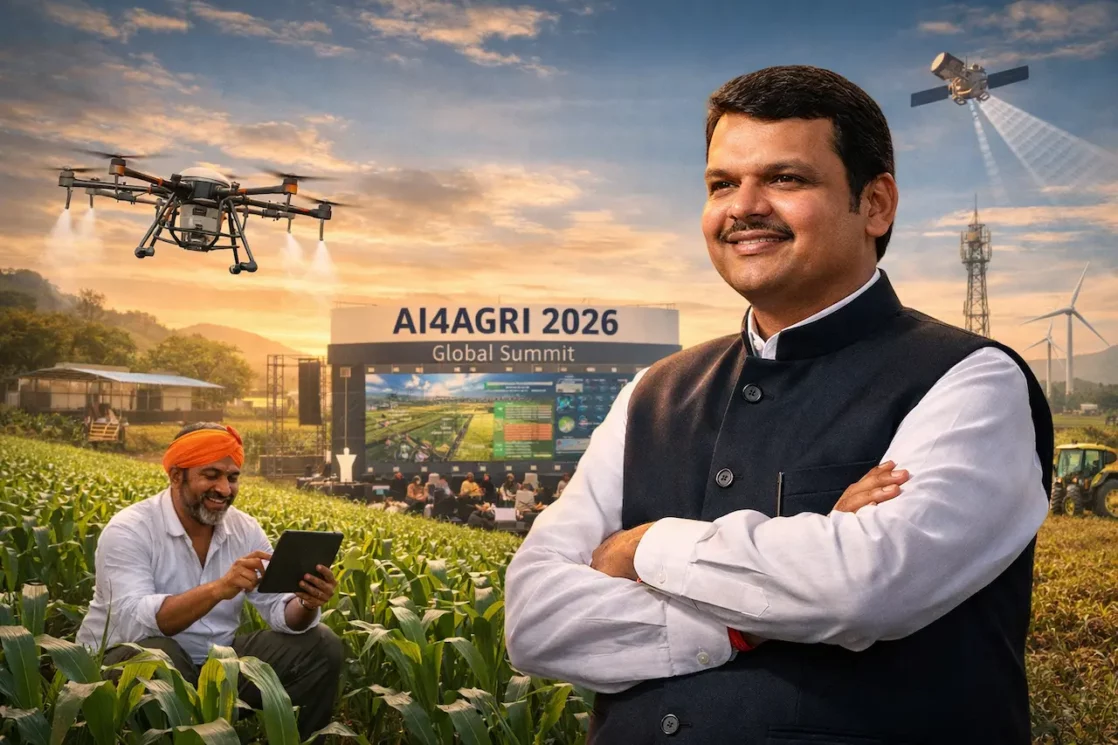
Intelligent Agriculture: Maharashtra’s AI-Led Green Revolution in Motion

al-lead, ai, green revolution, devendra fadnavis, fadnavis, ai agri,
Intelligent Agriculture: Maharashtra's AI-Led Green Revolution in Motion 18

Artificial intelligence is no longer a passing wave in technology; it is becoming the structural framework of the next global economy. With projections placing its economic contribution near $15 trillion by 2030, the real question for nations is not whether AI will matter—but whether they will shape it or simply consume it. In agriculture, that question becomes even more urgent. Climate unpredictability, rising input costs, fragmented landholdings, and volatile markets have exposed the limits of traditional farming systems. Experience and instinct remain invaluable, but in an era of data abundance and weather disruption, they must be reinforced by precision, prediction, and platform-driven intelligence. Maharashtra has recognized this inflection point and chosen to act decisively.

The AI4AGRI 2026 Global Conference, organised at the Jio World Convention Centre in Bandra Kurla Complex, Mumbai, was not staged as a ceremonial gathering but as a strategic declaration. Conceived as a global knowledge-exchange platform, it brought together policymakers, state governments, international scientists, climate experts, investors, multilateral institutions, and AgriTech innovators to engage in evidence-based dialogue on deploying AI and digital public infrastructure for agricultural transformation. The ambition was clear: to move beyond incremental reform and design an ecosystem where frontier AI, advanced analytics, generative AI, remote sensing, and affordable computing converge to strengthen productivity, resilience, and farmer incomes.

Agriculture has always been India’s civilizational spine. But modern pressures demand intelligent systems capable of operating at scale. AI-powered advisory tools can integrate soil data, satellite imagery, weather forecasts, crop histories, and market signals to generate hyper-local recommendations. Instead of generic guidance, farmers receive region-specific insights—optimal sowing windows, irrigation adjustments, early pest detection alerts, nutrient management suggestions, and yield forecasting. Drone surveillance and remote sensing help detect crop stress before it becomes irreversible. Predictive climate modelling reduces uncertainty. Data-backed market intelligence narrows the information gap between producer and buyer. When farming decisions become data-informed rather than purely reactive, risk declines and margins improve.

The strength of this transformation lies not only in algorithms but in infrastructure. India has already demonstrated that digital public platforms can operate at population scale with reliability and trust. Extending that framework into agriculture creates the foundation for secure data flows, transparent traceability, and scalable innovation. AI systems require trust as much as intelligence; farmers must believe that data will not be exploited and that recommendations are practical, not theoretical. This is where responsible AI governance, digital identity, platform design, and policy coherence intersect.

AI4Agri has therefore been structured not as a one-time event but as a multi-year global platform aimed at mobilising international collaboration and investment into Agri-AI solutions. Its agenda reflects strategic depth: inclusive AI models for women farmers and emerging rural leaders; digital public infrastructure that ensures data integrity and traceability; capital alignment to scale innovations; scientific collaboration through global research networks; and policy frameworks that embed accountability in AI deployment. This approach acknowledges a basic truth—technology without governance destabilises, but technology with foresight transforms.

Leadership becomes decisive at such moments of transition. Agricultural reform has often oscillated between subsidies and short-term relief. What Maharashtra is attempting signals a shift toward systems thinking—toward building institutional architecture that can endure technological change rather than chase it. A Green Revolution powered by AI will not resemble the chemical-intensive transformation of the past; it will be driven by intelligence, precision, sustainability, and inclusion. The aim is not merely higher output but resilient food systems capable of withstanding climate shocks while preserving soil health and water resources.

When governments, industry, academia, and global institutions converge around a shared framework, ecosystems begin to form. Standards evolve. Research aligns with field realities. Investment scales solutions beyond pilots. Maharashtra’s positioning as a convening hub for Agri-AI dialogue indicates strategic intent: not to imitate global leaders blindly, but to contribute meaningfully to shaping the future of intelligent agriculture. In a world where technology defines competitiveness, the ability to integrate tradition with data-driven modernization becomes a formidable strength.

The coming decades will test whether agriculture remains vulnerable to uncertainty or becomes empowered by insight. The choice is not between tradition and technology; it is between stagnation and evolution. By embedding AI within its agricultural vision, Maharashtra signals that the next revolution in farming will not arrive through accident or rhetoric—it will be engineered through foresight, collaboration, and disciplined execution. And in an age defined by disruption, foresight is the most valuable crop a nation can cultivate.

Rohit Pawar Slams Maharashtra Govt Over CBI Probe in Ajit Pawar Crash, Raises Fresh Questions

rohit pawar, cbi, probe, ajit pawar, pawar, devendra fadnavis, maharashtra
Rohit Pawar Slams Maharashtra Govt Over CBI Probe in Ajit Pawar Crash, Raises Fresh Questions 20

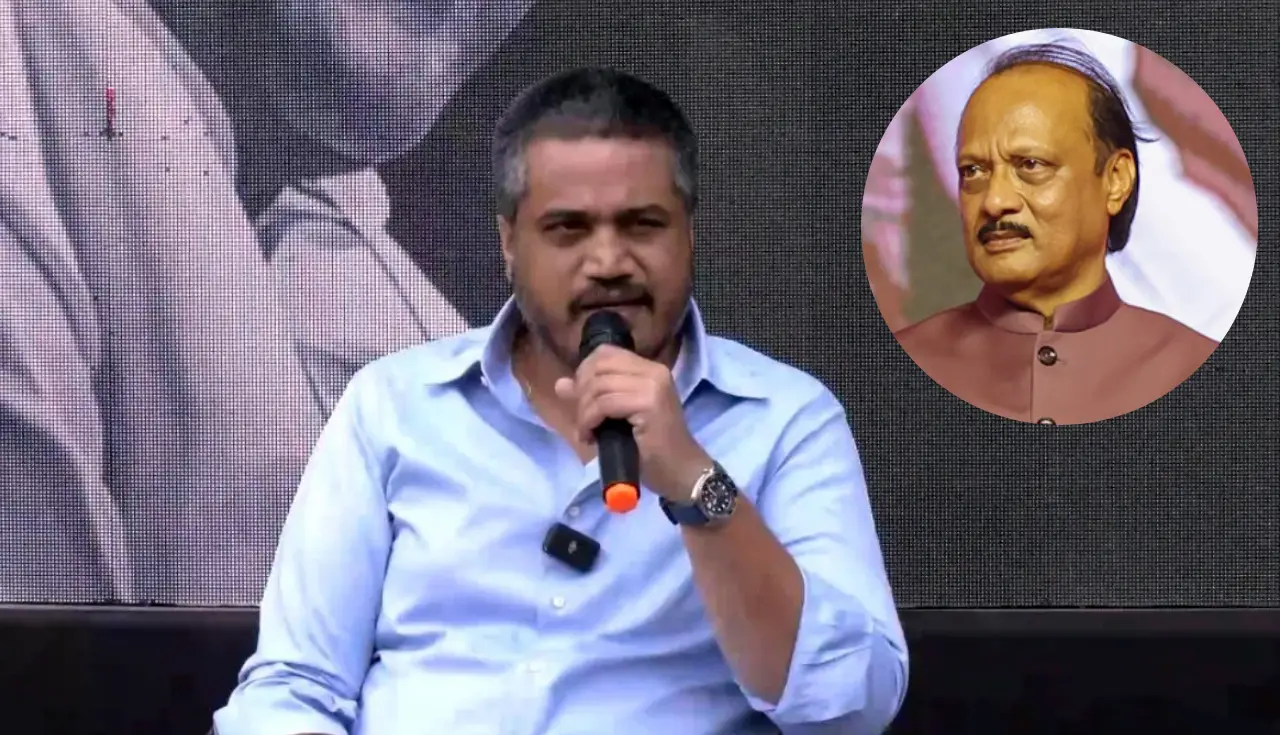
NCP (SP) MLA Rohit Pawar on Monday criticised the Maharashtra government’s decision to seek a CBI probe into the plane crash that killed Deputy Chief Minister Ajit Pawar, alleging that handing the case to the central agency would only delay the investigation.

His remarks came a day after Chief Minister Devendra Fadnavis said the state had requested Union Home Minister Amit Shah to order a CBI inquiry into the January 28 crash in Baramati that claimed five lives.

Speaking to reporters at the Vidhan Bhavan, Rohit Pawar said a report seeking a CBI investigation had already been submitted to the Directorate General of Civil Aviation (DGCA), the Union ministry concerned and the chief minister. He argued that the CBI was burdened with nearly 7,000 pending cases, including around 2,500 pending for more than a decade, and claimed that the Maharashtra CID was capable of conducting a timely probe.

“We will not tolerate wastage of time in the name of investigation. Only 30 per cent of the information regarding the crash has been made public. Seventy per cent of the material is still with me,” he said.

Rohit Pawar also questioned reports that the black box of the ill-fated Learjet 45 aircraft had been burnt, claiming photographs of the device had reached him. “If any irregularity comes to light, this government will have to pay a heavy price,” he warned.

He reiterated his demand that Union Civil Aviation Minister K Ram Mohan Naidu step aside until the investigation is completed.

Recalling Ajit Pawar’s legislative contributions, Rohit Pawar said this was the first session without his uncle, who had presented the state budget 11 times and could have gone on to set new records. “He would always say that no matter what happens, one must fight — and that is why we are fighting,” he added.

On the absence of NCP (SP) leaders at the Maha Vikas Aghadi meeting ahead of the budget session, Rohit Pawar said senior leaders were held up elsewhere. He also said Sharad Pawar’s vast experience could continue to guide the party, especially with Rajya Sabha elections approaching.

NCP (SP) MLA Jitendra Awhad, meanwhile, said delays in the probe had fuelled public suspicion. He termed the claim that the black box was burnt as “the biggest doubt,” adding that such an occurrence was unprecedented. Awhad also alleged that the aircraft had exceeded its permitted flying hours and lacked proper clearance.

The Maha Vikas Aghadi, he asserted, remained united.