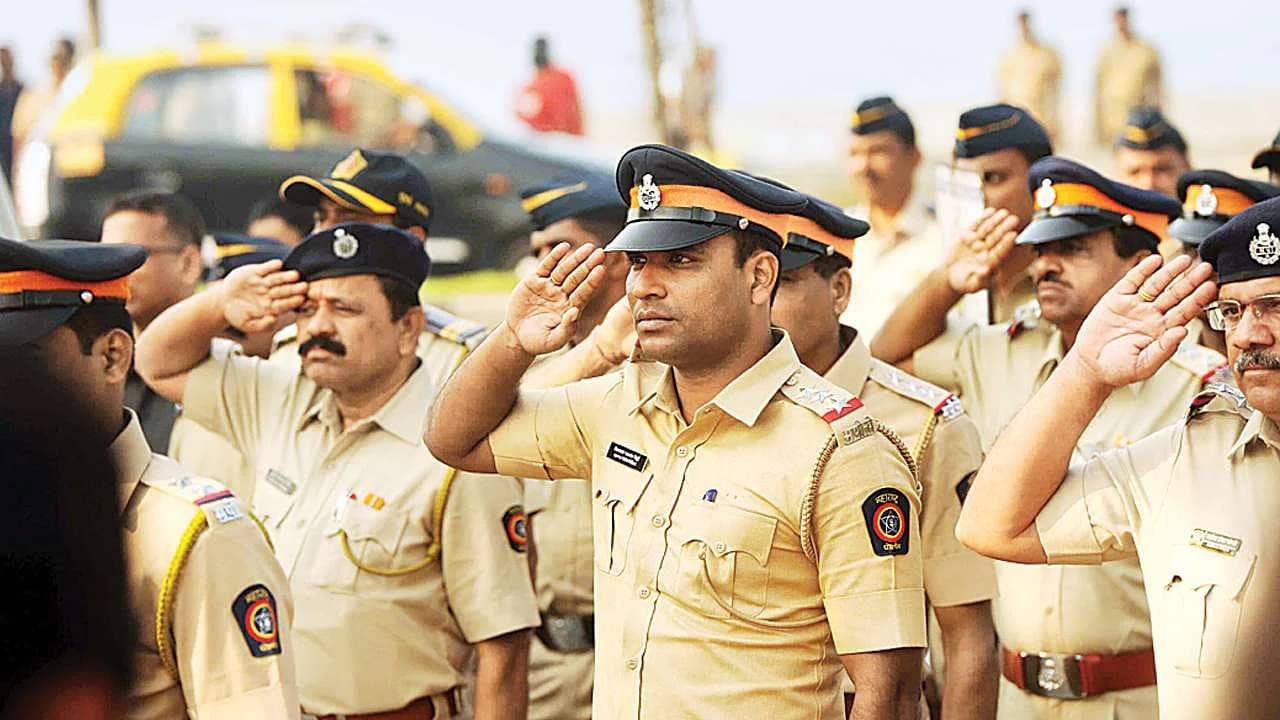
Maharashtra’s female police personnel have been on 8-hour duty shifts since September last year, a move that was introduced by Mumbai CP Pandey when he was the state’s acting director-general of police. The Mumbai Police’s constabulary can shift to a compact 8-hour duty schedule as against the existing 12-hour schedule from May 17, according to an order issued by police commissioner Sanjay Pandey on Wednesday. The new order is applicable to male members of the constabulary.
According to the new order for Mumbai Police personnel of the rank of assistant sub-inspector and below, the subordinate ranks can still opt for a 12-hour shift and take the next 24 hours off. But it will not entitle police officers who go for this option to get any weekly offs. It essentially designed this option for policemen who live more than 50km from the place of posting.
The order added that police personnel over 55 years of age and those suffering from diabetes, high blood pressure and cancer will also have the option to select either eight-hour shifts or a 12-hour duty schedule followed by a 24-hour break. But policemen performing office duties at police stations will have to put in 10 hours every day, from 10 am to 8 pm. Besides, they will not give police officers deployed in the motor transport department and on security duties this benefit of reduced work hours and will have to continue to work 12-hours a day, as recommended by the duty committee headed by an additional commissioner of police.
The committee, according to the order, was set up after senior officers noticed positive changes in the efficiency of policewomen after their duty hours were reduced from 12 hours a day to 8 hours a day, and the demand from male members of the constabulary for a less gruelling schedule. The constabulary will, however, have to work for 12 hours a day on 25 days every year – for public functions, religious and other festivals and when there is a law-and-order situation in their respective jurisdiction. To be sure, Mumbai has been looking at reducing duty shifts for overworked police personnel for more than a decade and first introduced the 8-hour duty schedule for the main control room at Crawford Market in 2011.
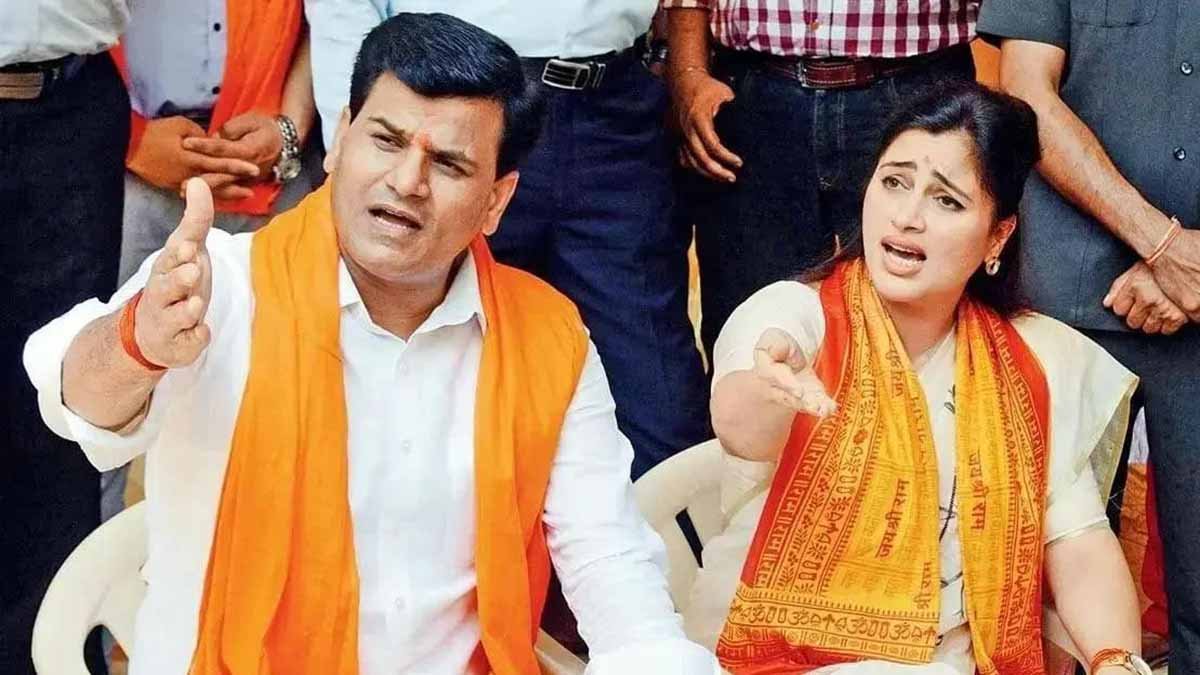
Court has granted conditional bail to Navneet Rana and Ravi Rana 4
Navneet Rana and her MLA husband Ravi Rana got bail in the Hanuman Chalisa row. The court has imposed some conditions such as they were asked to cooperate in the investigation and interrogation.
The court has also directed police to issue an advance notice of 24 hours to them. Another condition is that no trouncing or tampering be done with evidence. They may not give any sort of interview to the media. Hopefully, they will be released by this evening.
The Ranas were booked and arrested by Khar police station officials on April 23 for alleged offences of sedition and breach of harmony, after they declared their intention to chant the ‘Hanuman Chalisa’ outside Matoshree, the personal residence of Maharashtra chief minister Uddhav Thackeray, in Bandra (east).
The police reply, dated April 29, against the bail for the Ranas cited “media bytes” by the couple given between April 20 and April 23. The reply stated the remarks made by the Ranas “prove their criticism and comments are neither within reasonable limits nor consistent with the fundamental right of freedom of expression”. The plea had stated that their statements had hence come within the ambit of Section 124A (sedition) religious feelings of Hindus as having been violated or, if allowed, it would hurt religious feelings of citizens of other religions as it would show that only Hinduism is preferred in this republic state”.
On April 25, the couple moved to a session court, seeking bail through their advocate Rizwan Merchant. Their plea said that the announcement to recite ‘Hanuman Chalisa’ was made to enlist popular support and there was no intention to cause ill-will or feelings of hatred.
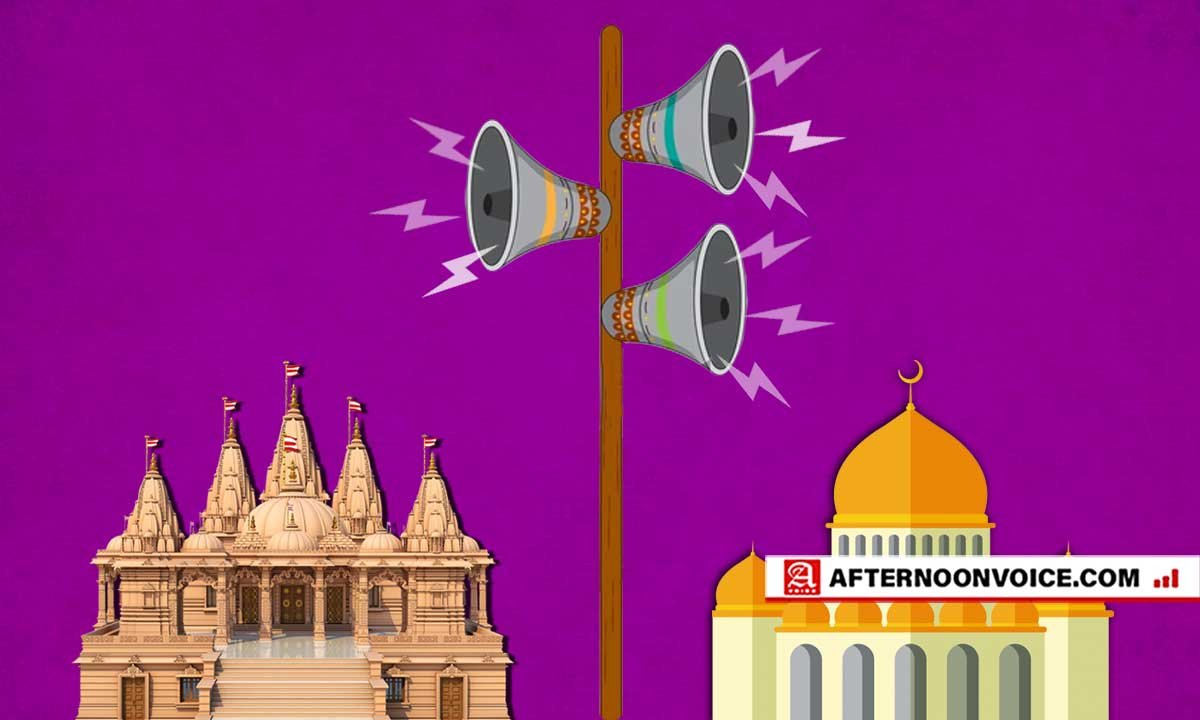
The loudspeaker politics in Maharashtra gathers steam 6
Raj Thackeray recently became BJP’s voice and tried creating unrest in the loudspeaker’s name. Looking at this chaos, I reminded myself of a Bhonga Marathi-language drama film. The film revolves around a middle-class Muslim family where a nine-month-old baby is suffering from a chronic disease named Cerebral hypoxia. This disease causes the amount of oxygen in the blood drops and it affects the brain. A family leaves their home because of financial difficulties. The new house stands back from a mosque. The movie then recounts the story of the child’s father, uncle, and other villagers. ‘Bhonga’ movie is based on a true story.
The film is not against the Muslim or Hindu religion. This is the story of a film producer’s friend, who stays in Malegoan. He was suffering from the same medical issues when he was born. There were over 20 mosques near his house and how the sound of Azaan from a neighbouring mosque troubled him. Well, the movie was very special about noise pollution in all religious places. But the tamasha in Maharashtra in the name of loudspeaker has gone worst.
The politics over loudspeakers at religious places, and main mosques, took a dangerous turn. Around 22,000 loudspeakers were removed in Uttar Pradesh and Madhya Pradesh. A mob of Shiv Sena workers gathered at Khar, outside the Mumbai residence of Amravati MP Navneet Rana and her MLA husband Ravi Rana, trying to break the barricades and enter their house. It gathered numerous Shiv Sainiks outside Matoshree, the residence of Maharashtra Chief Minister Uddhav Thackeray in suburban Bandra, sloganeering against the Rana family.
Claiming 90% success, Raj vows to drag the ‘anti-loudspeakers’ campaign. SC decision is the same for all. Now our temples also have to withstand it. It’s a black day for us Hindus that people couldn’t hear Aartis because of BJP’s politics in cahoots with Raj Thackeray. Over the last four decades, the Shiv Sena and the BJP have repeatedly resorted to ‘temple and mosque’ politics to buttress their Hindutva commitment, both as allies and adversaries. This is around the same time that the Shiv Sena embraced the larger Hindutva agenda, leaving behind its identity of just being an outfit for the sons of the soil.
They conceived the Shiv Sena as a nativist movement in June 1966, but, by the 1980s, Bal Thackeray realised that the party needed more ideological ammunition in order to expand beyond Mumbai. Therefore, the Sena officially adopted Hindutva as an agenda at the party’s second adhiveshan (session) held at Mahad in the Konkan region in 1985. Bal Thackeray then employed his aptitudes to highlight the Shiv Sena’s newfound Hindutva agenda with his speeches and columns.Political observers believe the 1980s Vile Parle bypoll was the electoral battle that led Hindutva into the mainstream of Maharashtra politics.
Bal Thackeray and his Shiv Sena organised such ‘Maha Aartis’ on an especially grand scale around the time of the 1992-93 riots. In its report on the 1992-93 riots, the Srikrishna Commission identified ‘Maha Aartis’ as among the factors that provoked violence in Mumbai. While many Shiv Sena leaders take pride in objecting to namaz being offered on public roads, some cite that it was the Sena-led govt (1995-1999) that increased Mumbai’s Floor Space Index (FSI) — a ratio that defines the extent of construction allowed on a given plot. The 1990s decade was also when Bal Thackeray questioned the use of loudspeakers in mosques for the first time. Claiming “90 per cent success” on the first day of the anti-loudspeakers drive, Maharashtra Navnirman Sena president Raj Thackeray vowed to continue the campaign on a long-term basis till the issue was resolved completely. A majority of the mosques in Mumbai and other parts of Maharashtra reportedly did not use the loudspeakers for the morning ‘azan’ call to the faithful, the MNS chief told media persons at his home. In Mumbai, there are 1,140 mosques, 135 sounded the ‘azan’ call on loudspeakers before 5 a.m., flouting the Supreme Court directives.
The Aurangabad police on Tuesday registered a case against MNS chief Raj Thackeray, days after he called for “silencing” loudspeakers atop mosques from May 4, an official said. Earlier in the day, Maharashtra director general of police Rajnish Seth said the Aurangabad police commissioner will take legal action against Thackeray over his speech against loudspeakers in mosques. The city Chowk police registered a case against Thackeray under sections 153 (wantonly giving provocation with intent to cause riot), 116 (abetment of an offence punishable with imprisonment-if offence be not committed) and 117 (abetting commission of the offence by the public or by more than 10 persons) of the Indian Penal Code and provisions of the Maharashtra Police Act.
Leaders of the ruling Maha Vikas Aghadi (MVA) on Wednesday met in the presence of Nationalist Congress Party supremo Shard Pawar, amidst the ongoing loudspeaker row in Maharashtra, in which a case has been registered against MNS chief Raj Thackeray. The meeting began earlier today at the Sahyadri State Guest House in Mumbai. Ajit Pawar, Jayant Patil, Lazdada Bhuse (Dadaji Dagadu Bhuse), and Balasaheb Thorat were among those who attended the meeting. Let us hope that the government will come out with better options.
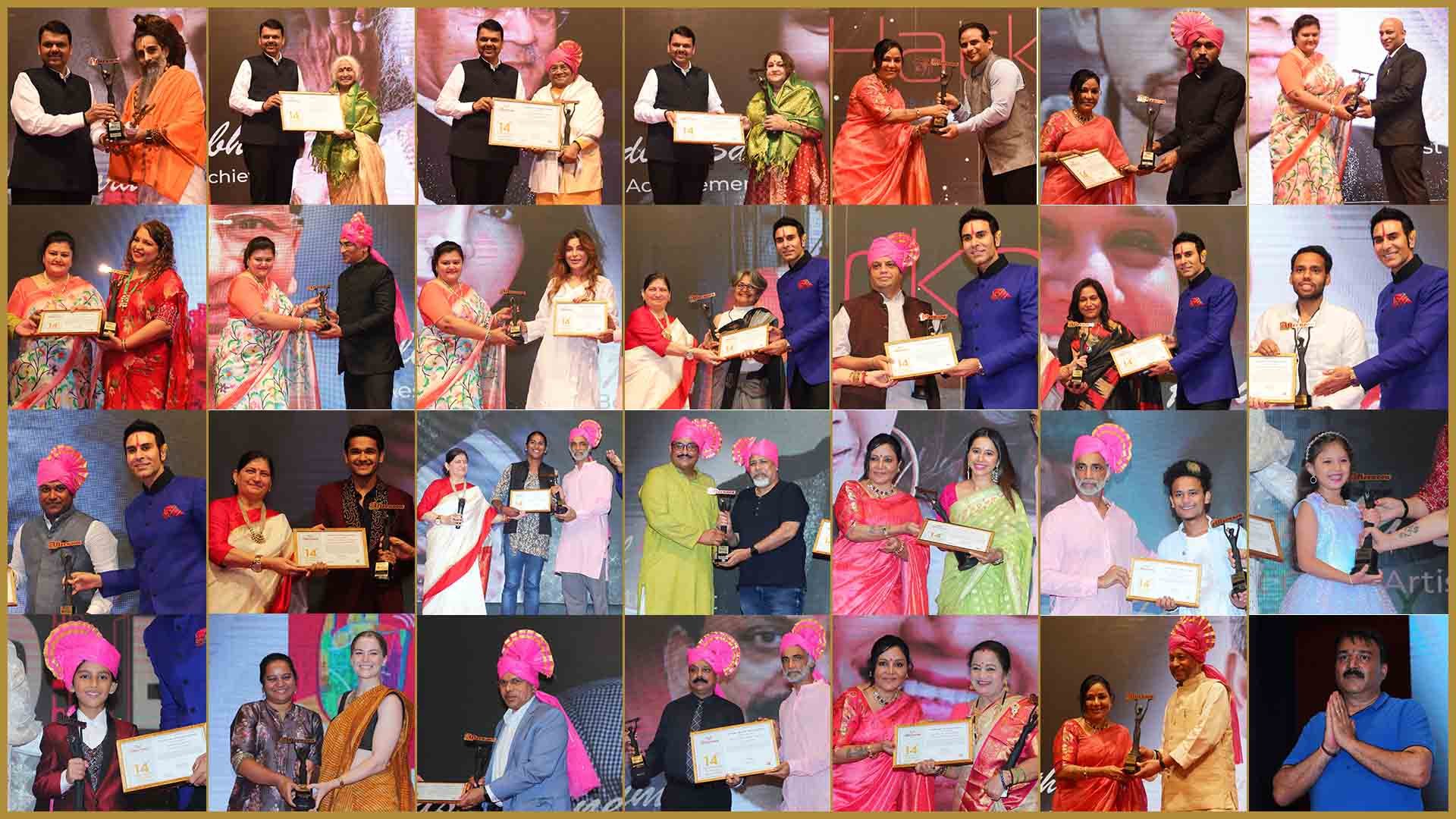
14th Newsmakers Achievers Award held in Mumbai; LoP Devendra Fadnavis graced the event as Chief Guest 37
The power-packed Newsmakers Achievers award event was held at Yashwantrao Chavan Auditorium on 1st May 2022, in the presence of eminent personalities of Maharashtra. Dr Prabha Atre, an Indian classical vocalist, Nadira Babbar, an Indian theatre actress, and Ved Prakash Vaidik, a senior journalist were awarded the Lifetime Achievers Award. NCP leader Sharad Pawar could not attend the event due to some health reasons.
Speaking at the 14th Newsmakers Achievers Award, the Former Chief Minister of Maharashtra Devendra Fadnavis who was also the chief guest said, “Some awards make people feel great and some receivers make the award great. Newsmakers’ Achiever’s award is a prestigious award and I appreciate Dr Vaidehi for her enormous efforts.”
Devendra Fadnavis also said, “I am honoured to give awards to Prabha Atre Ji, Vaidik Ji and Nadira Babbar. But I missed Sharad Pawar. He is a prominent politician and contributed a lot to the state.”
Former CM of Uttarakhand Tirath Singh Rawat said, “Thank you Afternoon Voice group for giving me the ‘Best Performing Politician Award’ at the 14th #NewsMakersAchieversAwards2022 ceremony in Mumbai. Feeling extremely blessed to receive this award in the presence of eminent personalities.”
IAS Ashish Kumar said “It was an extremely humbling experience to be awarded by The Afternoon voice the event was immaculately organized.
Arvind Guruji said, “The lifetime achievement awardees are the rare gems of India and are proud to be a part of the same award list. Vaidehi you brilliantly and candidly anchored the event. Thank you for making me a part of this wonderful event.”
Rafique Mulla said Proud to be sharing a mention and rubbing shoulders at 14th Newsmakers Achievers Awards with, Padma Vibhushan Prabha Atre and Senior journalist Ved Prakash Vaidik.”
Santoshee Mishra said, “I feel honoured to accept the award hosted by Afternoon Voice which is truly a voice of common man, oppressed and those striving to survive in the present-day times when a divide between the haves and have nots is widening. I sincerely wish the paper and award will give hope to such sections to stand up against all odds, weather all challenges and make their presence.”
Shreya Bugde Seth said, “I love the way the whole Award ceremony has been conducted. It was straight from the heart with emotional attachment to what the Afternoon Voice team is doing in the field of journalism. The presence of eminent personalities from various fields had shown that they also believe in honesty. I felt honoured to receive this award.”
Dr Zinal Shah said, “Dr Vaidehi the Editor-in-Chief is a real moving spirit and outstanding leader of her team in this Era the Newspaper business has become very difficult, but in such a competitive scenario, AFTERNOON is having sustainable and persistent growth. Newspapers have tremendous power to bring socio-economic changes and preserve, protect and promote democracy. The Contribution of print and electronic media is outstanding in this mission. In my entire life, this was the first award ceremony without sponsors. This Gesture of Afternoon family has taken the decorum of the function to different levels.”
Shiv Sena leader Sanjay Raut said, “Vaidehi and the team of Afternoon voice for having the vision and foresight, I wish him all the luck.”
14th Newsmakers Achievers Award held in Mumbai; LoP Devendra Fadnavis graced the event as Chief Guest 3814th Newsmakers Achievers Award held in Mumbai; LoP Devendra Fadnavis graced the event as Chief Guest 3914th Newsmakers Achievers Award held in Mumbai; LoP Devendra Fadnavis graced the event as Chief Guest 4014th Newsmakers Achievers Award held in Mumbai; LoP Devendra Fadnavis graced the event as Chief Guest 4114th Newsmakers Achievers Award held in Mumbai; LoP Devendra Fadnavis graced the event as Chief Guest 4214th Newsmakers Achievers Award held in Mumbai; LoP Devendra Fadnavis graced the event as Chief Guest 4314th Newsmakers Achievers Award held in Mumbai; LoP Devendra Fadnavis graced the event as Chief Guest 4414th Newsmakers Achievers Award held in Mumbai; LoP Devendra Fadnavis graced the event as Chief Guest 4514th Newsmakers Achievers Award held in Mumbai; LoP Devendra Fadnavis graced the event as Chief Guest 4614th Newsmakers Achievers Award held in Mumbai; LoP Devendra Fadnavis graced the event as Chief Guest 4714th Newsmakers Achievers Award held in Mumbai; LoP Devendra Fadnavis graced the event as Chief Guest 4814th Newsmakers Achievers Award held in Mumbai; LoP Devendra Fadnavis graced the event as Chief Guest 4914th Newsmakers Achievers Award held in Mumbai; LoP Devendra Fadnavis graced the event as Chief Guest 5014th Newsmakers Achievers Award held in Mumbai; LoP Devendra Fadnavis graced the event as Chief Guest 5114th Newsmakers Achievers Award held in Mumbai; LoP Devendra Fadnavis graced the event as Chief Guest 5214th Newsmakers Achievers Award held in Mumbai; LoP Devendra Fadnavis graced the event as Chief Guest 5314th Newsmakers Achievers Award held in Mumbai; LoP Devendra Fadnavis graced the event as Chief Guest 5414th Newsmakers Achievers Award held in Mumbai; LoP Devendra Fadnavis graced the event as Chief Guest 5514th Newsmakers Achievers Award held in Mumbai; LoP Devendra Fadnavis graced the event as Chief Guest 5614th Newsmakers Achievers Award held in Mumbai; LoP Devendra Fadnavis graced the event as Chief Guest 5714th Newsmakers Achievers Award held in Mumbai; LoP Devendra Fadnavis graced the event as Chief Guest 5814th Newsmakers Achievers Award held in Mumbai; LoP Devendra Fadnavis graced the event as Chief Guest 5914th Newsmakers Achievers Award held in Mumbai; LoP Devendra Fadnavis graced the event as Chief Guest 6014th Newsmakers Achievers Award held in Mumbai; LoP Devendra Fadnavis graced the event as Chief Guest 6114th Newsmakers Achievers Award held in Mumbai; LoP Devendra Fadnavis graced the event as Chief Guest 6214th Newsmakers Achievers Award held in Mumbai; LoP Devendra Fadnavis graced the event as Chief Guest 6314th Newsmakers Achievers Award held in Mumbai; LoP Devendra Fadnavis graced the event as Chief Guest 6414th Newsmakers Achievers Award held in Mumbai; LoP Devendra Fadnavis graced the event as Chief Guest 6514th Newsmakers Achievers Award held in Mumbai; LoP Devendra Fadnavis graced the event as Chief Guest 66
From the past few months, Minister of Road Transport and Highways of India, Nitin Gadkari and Devendra Fadnavis opposition leader have visited Raj Thackeray’s house several times. Entire April month they were emphasising on alliance for BMC elections. April 21st meeting that took place in Nagpur in which RSS chief Mohan Bhagwat, Maharashtra’s Leader of Opposition Devendra Fadnavis and BJP national joint general secretary (organization) Shiv Prakash took part. In this meeting, the RSS gave a nod to the alliance. Soon after the meeting, Fadnavis sent a very close representative to Raj Thackeray on April 24 to convey RSS’ green signal.
In the meantime, the MNS chief is likely to meet Uttar Pradesh Chief Minister Yogi Adityanath. On June 5, both of them are likely to travel to Ayodhya together. However, BJP leaders maintained that their party can fight elections on its own and showed confidence in coming to power in the Brihanmumbai Municipal Corporation and the state.
The dead MNS and inactive Raj Thackeray have taken on the Hindutva issue and bounced back in state politics. Despite differences between MNS and BJP ideology, they both are trying to team up for some gain. Raj Thackeray’s turn towards Hindutva gained momentum after they threw away its existing flag – which has three colours – saffron, green and blue. He took a dig at MVA for the arrest of Nawab Malik and Anil Deshmukh.
Some Political analysts told Afternoon Voice, Raj is a very unpredictable politician, there must be some pressure on him to act against Sharad Pawar and side the BJP. In this spin, he lost his individuality and credibility both.
Hindu religion has many casts, and sub casts and here started the discrimination too. Castes primarily were not a symbol for status or a justification for discrimination. Ancient Hinduism had its own way of distributing human resources and labour to various sections of the society. They gave each section of the society a specific task to do. Like Kshatriyas were the warrior class. Their job was to fight for the kingdom. But, as time passed, the actual meaning of a caste tainted .Some egoistic and misguided people of the society treated some jobs as filthy or “untouchable”. The reason behind this was to prove supremacy by one section over another under the excuse that God has created some sections to do the mucky works.
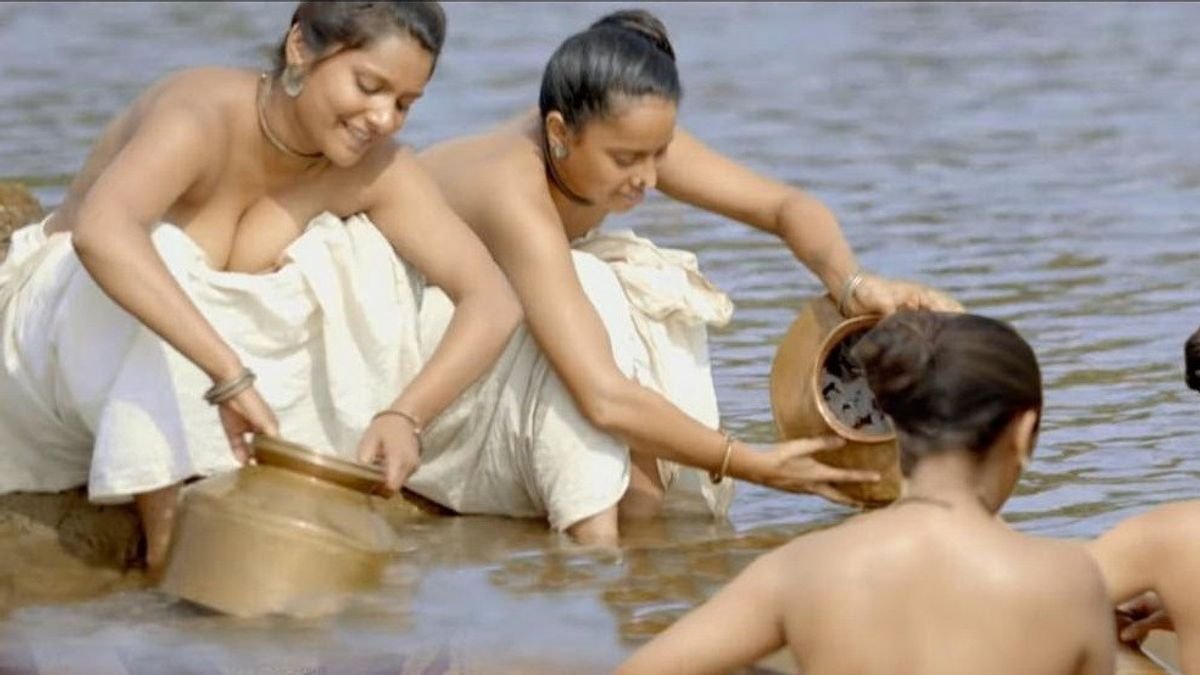
Upper cast men used to summon these women of lower cast to satisfy their lust. Even today, this practice continues in rural areas. Recently a senior police official in Bihar (supposedly upper-caste) was suspended after a viral video showed him receiving a massage inside a police station from a woman who had gone there, reportedly to file a complaint of atrocities. During the 19th century, the King of Travancore announced the payment of breast tax and it was to be paid by the only so called lower caste women within that community. The breast tax was also known as “Mulakkaram”. This was to harass a lower caste woman. In those days, women were treated like objects.
Once the lower caste women attained puberty, the tax would start. It is believed that this practice was put in place to suppress them, particularly people from Ezhava and Nadar. The high caste men were the ones who collected this tax. Caste system was extremely oppressive, and these women could not wear upper garments. A refusal to do so meant that it would charge them to pay for their disobedience. In those days the amount of tax to be paid was determined based on the breast size of each woman. Two primary reasons were largely attributed to the imposition of payment of the breast tax: to insult the lower caste people and burden them with debts that kept them in poverty. Sadly, while the lower caste struggled, the upper class Brahmins and Nairs continued to enjoy prosperity and decency. The era of atrocities always ends with agitation and for that, someone has to stand against the odds.
Nangeli, a lower caste woman from Cherthala, played a vital role in putting the breast tax to an end.First, she could not afford to pay the breast tax because she was from a poor family. She obviously refused to expose her breasts in public places. After hearing of Nangeli’s rebellious acts and that she had refused to pay tax, a tax inspector went to challenge her to stop breaking the law. Although several authorities have reported it contrarily, it is said that when the inspector arrived at Nangeli’s house, she had cut off her breasts as protest against the unjust and hateful caste-based breast tax. Once the officer sighted Nangeli’s severed breasts, which had been put on a leaf, he ran away. Sadly, this incident led to Nangeli’s death as she died from excessive bleeding.
This step, taken by her, led to the succeeding abolition of the breast tax. During Nangeli’s burial, her husband, Chirkundan jumped into the burning pyre of his late wife and ended his life. It remains unclear whether he did this as a form of protest against the breast tax or because he was heartbroken. In their honour, we currently know the place where Nangeli and Chirkundan both died as “Mulachiparambu”, otherwise called “the land of the women’s breast.”
Nangeli’s rebelliousness against oppression is known as a gigantic form of confrontation. Although she is well known as a local legend, history has no record of Nangeli’s act of bravery and the academic has remained largely conflicted about the correct order of events. The revolution continued after Nangeli’s death.
The local rulers and traditionalists didn’t initially agree to the women’s objections because they wanted them to keep moving about bare-chested as a sign of respect and to reflect the caste system. However, this introduced more people to Christianity, more modest standards arose which differed from the initially accepted customs. This influenced many women’s decision to cover their chests. The lower caste communities continued fighting against the unjust tax system till they forced the king to abolish it. To date, it was popularly known women from the Nadar communities to have fought for the right to cover their breasts during the Channar revolt between 1839 to 1859. The breast tax was eventually scrapped in 1924.
Even today, in this 21st century, female get raped, burned killed for the lust of upper cast men. There are hundreds of incidences of protest and agitation, but things have not changed in rural areas. The Caste system has blotted Hindu religion at large.
Why should people be allowed to exploit government properties? 71
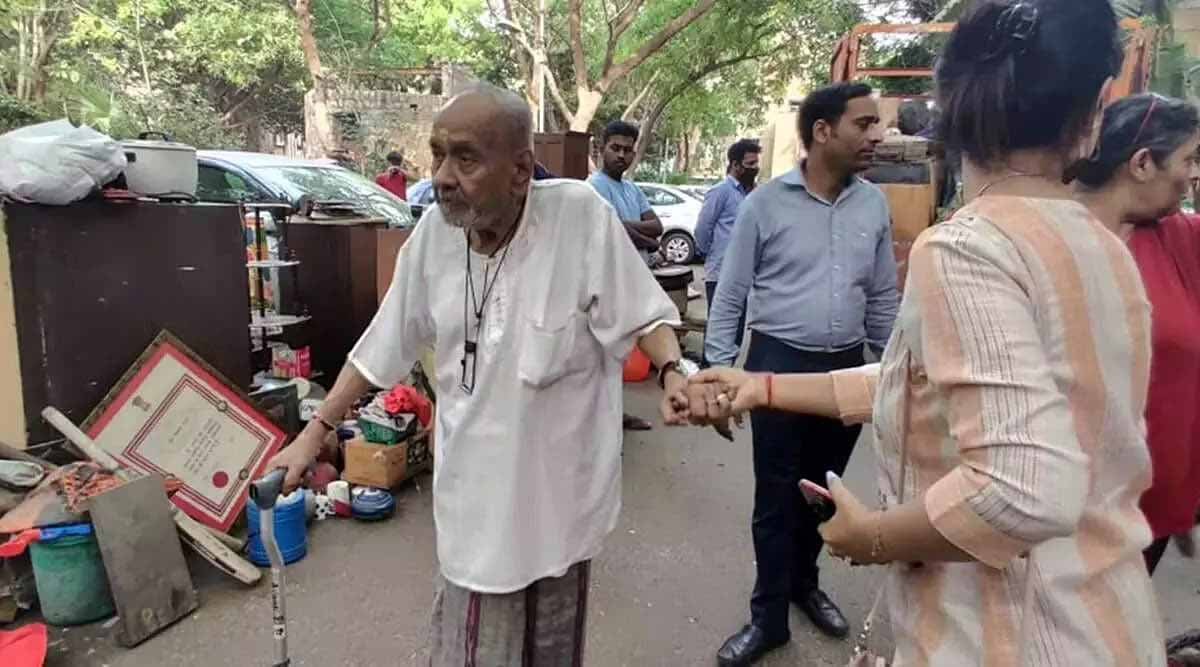
A 90-year-old Padma Shri awarded and Odissi dancer Guru Mayadhar Raut was evicted from his government accommodation in Delhi’s Asian Games village yesterday. The government says the accommodation was cancelled in 2014 and eviction notices had already been served. He, as well as other artists, had approached the court but lost the case and had been given April 25 as the deadline to move out. It is very difficult in India to impose laws. Once accommodation is allotted, be it to the politicians, or others, like in this case; they must vacate to make room for others and they give ample time to find alternative accommodation. Modi and the Centre are being blamed for everything nowadays. It is hard to manage a tough country like India where people refuse to follow rules.
Media circulated the images of frail Raut outside his residence surrounded by his belongings to trigger a repercussion against the Centre. People saw his Padma Shri citation lying on the street. Intentionally and artistically, the scene was created for media attention. We saw many belongings around the house but no gold jewellery box or valuables on the road. Playing Victim card is very common these days. Raut’s daughter, Madhumita Raut, told media that while the eviction is legal, the manner in which they did it is objectionable. She slammed the Centre, saying artists don’t get respect in the PM Modi-led government.
She said that the government might have decided in 2014, but they only communicated it to the artists in 2020. She also raised questions on the intent of the government and asked if it was a “political game” that, since Rajiv Gandhi allotted the accommodation, BJP has to snatch it away. A senior Union Housing and Urban Affairs Ministry official said out of 28 artistes, there are still around eight who have not moved out of their government accommodations despite multiple notices.
They gave all these artists enough time to find another shelter, but the receiver of the highest civilian award thought they wouldn’t be shunted out on such a note. They probably wanted to take advantage of their status. When the government pushed them out the families were playing the victim card. Sad though this happened, but it’s time for them to move out. All of them who stay in rented places have to move out as per agreement.
Similar thing happened with the late Ram Vilas Paswan’s house. Officials threw the belongings of former union minister late Ram Vilas Paswan. After the demise of Ram Vilas Paswan in October 2020, the government allotted the bungalow to Union Railways and IT Minister Ashwini Vaishnaw in August 2021. After the death of Paswan, the government served several notices to his family to vacate the bungalow. They thought they would sustain the premises by approaching some political sources, since these are official accommodations of cabinet ministers, one has to vacate it.
They sent a government team to execute an eviction order issued to him last year. Moving furniture and household goods from the bungalow in Janpath in Lutyens’ Delhi started shortly after a team from the Directorate of Estates, which comes under the Union Housing and Urban Affairs Ministry. Ram Vilas Paswan, one of the country’s most prominent Dalit leaders, died at 74 in October 2020. He had been a minister in central governments headed by parties of contrasting ideological persuasions, ranging from the Janata Dal to the Congress and the BJP, since 1989.
Guru Mayadhar Raut, about 12 other artists, including Mohiniyattam dancer Bharati Shivaji, Kuchipudi dancer Guru V Jayarama Rao, Dhrupad singer Ustad F Wasifuddin Dagar, Rani Shinghal, Kathak expert Geetanjali Lal, lithographer KR Subanna, sarangi player Kamal Sabri, Devraj Dakoji, Kamalini, artist Jatin Das, Pt Bhajan Sopori and singer Rita Ganguly, will also face similar proceedings. For decades, artists such as classical dancers, painters, singers, and photographers have lived in government bungalows provided by the central government under a discretionary quota. Some allotments date back to the 1980s, while others were distributed in the early 2000s.
The government has now asked them to vacate their homes, claiming that the allotment expired due to a policy change in 2008. The government has also said that the artists have not paid licence fee arrears for several years.
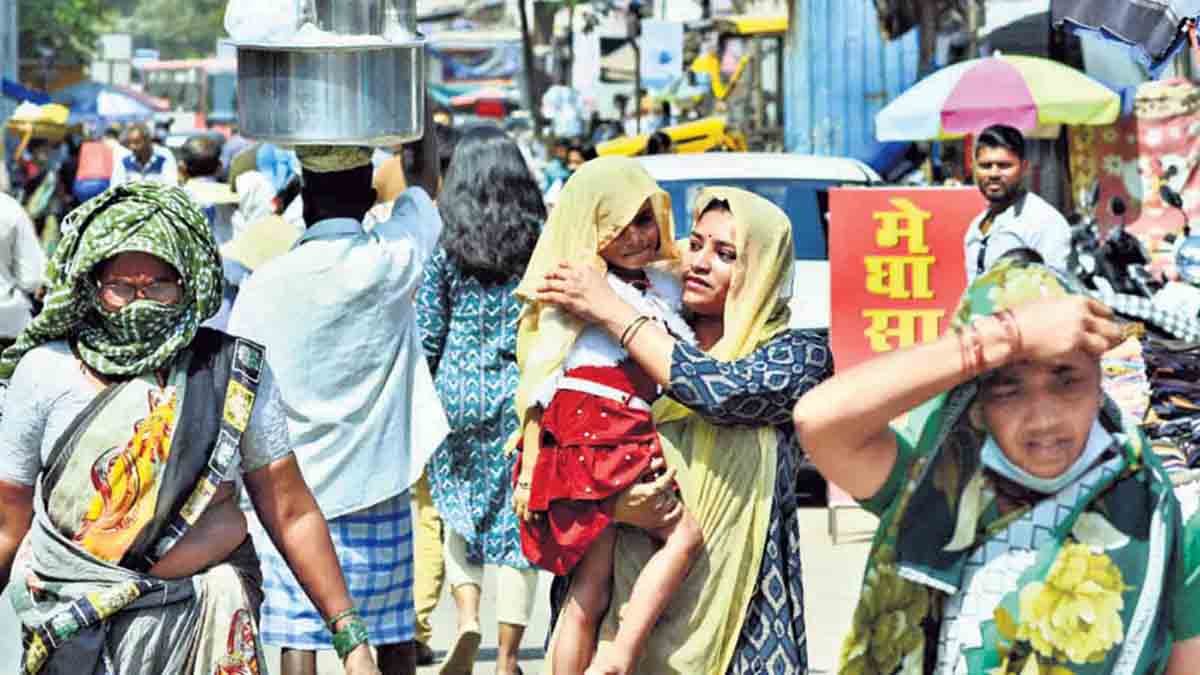
India Meteorological Department (IMD) has predicted heatwaves in several parts of Maharashtra to Odisha and Bengal over the next few days. As per IMD definition, a heatwave is when the temperature of any place crosses 40 degrees Celsius in the plains, 37 degrees in coastal areas, and 30 degrees in the hills.
It also announces a heatwave when a place registers a maximum temperature that is 4.5 to 6.4 degrees Celsius more than the normal temperature for the area for that day, and it is a severe heatwave if this temperature is over 6.4 degrees. “Rise by about 2 degrees Celsius in maximum temperatures likely over most parts of Northwest India during the next three days and fall by about 2 degrees Celsius thereafter,” it said.
By the end of April, some of the hottest cities in India were (maximum temperature in degrees Celsius) — Barmer (45.1), Brahmapuri (44.7), Rajgarh (44.6), Akola (44.5), Jaisalmer and Wardha (44.4), Bikaner (44.1), Kandla (43.8), Jamshedpur (43.6) and Varanasi (43.4).
The governor's power has become a controversial issue in Indian politics 74
We all must know that the office of the governor under the constitution of independent India is overall altered from the provincial governors of the Maurya, Mughal or British empires. The Governor’s role and purposes had been broadly debated by some of the think tanks of the Constituent Assembly like Dr Ambedkar, Dr P.S. Deshmukh, T.T. Krishnamachari, and HV Kamath, Pt. H.N. Kunzru, Alladi Krishnaswamy Ayyar, Rohini Kumar Chaudhury, Shibban Lal Sakshena, K.M. Munshi.
Their understanding was that the proposed constitution was creating ‘responsible government’ in the states as much as at the centre — that is, responsible alone to the respective legislatures, that the states were indeed sovereign within their own domain, that the discretionary power, beyond the specific situations mentioned in the constitution, does not enable a governor to override the state government.
As Dr. Ambedkar had said, “I have no doubt in my mind that discretionary power is in no sense a negation of responsible government. It is not a general clause giving the governor power to disregard the advice of his ministers in any matter in which he finds he ought to disregard.” Therefore, selecting a chief minister of his choice or creating/utilising opportunities for defections to change the party in power cannot be a governor’s job.
The tussle between the governors and the ruling party of the state is not new to Indian politics. Remember how Delhi Chief Minister Arvind Kejriwal used to stage continuous protests against then the Lieutenant Governor. The Governor troubled him on various issues. When Arvind kept power for the second time his challenges to deal with Lieutenant Governor minimised.
Similarly, during the last few years, the governors of Karnataka, Madhya Pradesh, Kerala, Maharashtra and, of course, West Bengal have played their roles in such a way as to make them highly debatable without essentially adding to the glory of the position and Raj Bhvan. The negative image of the state governors as “a proxy of the centre” has proved difficult to wipe out.
The MVA government and governor have been engaged in a series of spats over various issues. In February, the state government denied Koshyari permission to use the state’s airplane to travel to Dehradun. Last October, Koshyari and the CM wrote letters to each other over the reopening of places of worship. The Governor ridiculed the CM as “secular” while Thackeray reminded him of the Constitution and the oath he had taken.
In September 2021, Governor wrote to CM following the Saki Naka rape incident, asking him to hold a two-day special session over security for women in the state. In response, Thackeray wrote back to Koshyari, saying that since violence against women was a national issue, Koshyari should request Prime Minister Modi and Union home minister Amit Shah to call a four-day special session of the Parliament to discuss the same. The present controversies have been around the issues of the speaker’s election. On December 28, the state passed the Maharashtra Public Universities Act Amendment Bill to curtail the powers of the Governor in appointing vice chancellors of various universities.
The Governor said he had never questioned the prerogative of the House in the matter of its procedure/proceedings but he could not be pressured to give consent to a process “which prima facie appears to be unconstitutional and illegal, as enshrined in Article 208 of the Constitution”. Well! The Article 208 (I) of the Indian Constitution empowers each House of Legislature of a State to make Rules for regulating its procedures and conduct of its business. For nearly one year, the Governor has not approved the nomination of 12 members to the Legislative Council. But there are letter of exchange between the ruling party and governor. The government had planned to hold the election for the Speaker’s post on December 28, through voice vote instead of the secret ballot.
The government has emphasized that the amendments are constitutional and the legislature has followed all procedures to make them. Also, the same practice is followed in the Lok Sabha and other states and that the Governor needs to act on the advice of the state cabinet. However, the Opposition had objected to it, stating that rules of the Speaker’s election cannot be amended in the absence of the Speaker and called the MVA government the “most insecure government”.
While the legislature has the power to amend the rules and they followed similar process in the Lok Sabha. Maharashtra adopted the same process of electing the Speaker by voice vote. It followed the same tradition in other states. Therefore, the decision taken by the Maharashtra legislature is not unconstitutional.
Under Article 178 of the Constitution, the Assembly chooses the Speaker, which means it is an internal procedure of the House and the Governor has nothing to do with it. Similarly, Article 208 of the Constitution also states that the House decides the internal matter of the legislature; however, it must be in conformity with the Constitution, which has been followed in this case. It again means that it is the prerogative of the state Assembly whether the election is conducted by a secret ballot system or voice vote etc. Every Legislative Assembly of a State shall, as soon as may be, choose two members of the Assembly to be respectively Speaker and Deputy Speaker thereof and, so often as the office of Speaker or Deputy Speaker becomes vacant, the Assembly shall choose another member to be Speaker or Deputy Speaker, as the case may be.
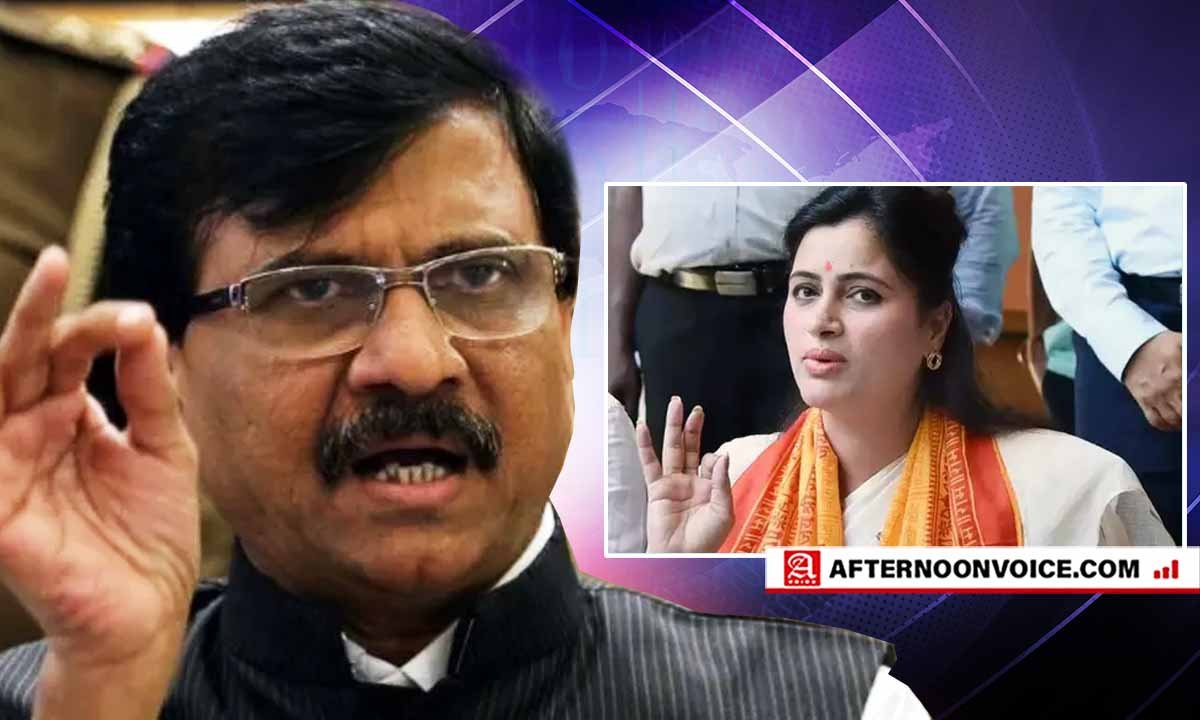
Sanjay Raut alleges Navneet Rana has underworld connections 76
Underworld connection of Amravati MP Navneet Rana has come up. She had taken a loan of Rs 80 lakh from Yusuf Lakdawala, who died in jail. Lakdawala was arrested by ED in a money laundering case of Rs 200 crore & had links with the ‘D’ gang claimed Shiv Sena leader Sanjay Raut. Lakdawala’s transactions were investigated except the one with Navneet Rana.
When will ED question her? Someone is trying to save her. This is clear that there was an underworld connection in the incidents that took place in Maharashtra recently Shiv Sena leader Sanjay Raut told the media
MP Navneet Rana has written to Delhi police commissioner Rakesh Asthana demanding action against Shiv Sena leader Sanjay Raut alleging that Raut has used derogatory and casteist remarks against her in the past few days. MP Navneet Rana writes to Delhi police commissioner, demands action against Sanjay Raut
MP Navneet Rana has written to Delhi police commissioner Rakesh Asthana demanding action against Shiv Sena leader Sanjay Raut alleging that Raut has used derogatory and casteist remarks against her in the past few days, reports ANI. According to Mumbai Police, MP Navneet Rana, her husband Ravi Rana had told Bandra court on Sunday (April 24) that they had no complaints against the police in view of the “ill-treatment in custody” allegations levelled by Navneet Rana.
Every unjustifiable & ridiculous allegation sponsored with a political motive doesn’t necessitate a reaction. Let them come forth with evidence and we’ll deal with it: MP Navneet Rana and her husband Ravi Rana’s advocate Rizwan Merchant.