Home Blog Page 648

Why is the BJP government spying on opponents and the media?

bjp, modi, modi government, bjp government, spying, spyware, pegasus, narendra modi
Why is the BJP government spying on opponents and the media? 2

Modi governs our country, not by pretence; hence he actually need not spy on anyone. He should focus on the best governance to improve voters’ lives. In simple words, 140 crore Indians are peeping constantly on the Modi government, even as Modi and Amit Shah are spending 500–1000 crores of taxpayers’ money to pay for Pegasus spyware to snoop on the people of India, and the opposition leaders, and even the BJP ministers of Modi government. In Maharashtra, the scenario is much more critical. BJP in opposition still can’t digest they are not in power and know only to oppose. They will cook up some story with their slave media help right at the time of every parliamentary session, wasting valuable time and public tax money every time.

Today the Mumbai police made a shocking revelation that the phones of Shiv Sena leader Sanjay Raut and NCP leader Eknath Khadse were tapped on the pretext of them being anti-social elements. What made BJP assume them as an anti-social element? If Sanjay Raut is anti-social why BJP was in alliance with Shiv Sena? Eknath Khadse was one of the tallest leaders of BJP Maharashtra then. Spying on such leaders for political motives is a really bad idea.

The opposition party in Maharashtra continues to exploit democratic freedom for their own gain, not for the benefit of the citizens who elect them. Will this spying scam allegedly by the BJP government make any effect on the coming state elections in 2024 or BMC elections this year? They will drift away. This may surely dent the BJPs image and some votes from the party. More people are taking an active part in politics and social media. As a result, the relationship between government and society is changing fast and people are more aware of what the government is doing and how the opposition is behaving. Every action of the government is closely watched and monitored. Maha Vikas Aghadi never failed to perform. Mumbai’s beautification is at its peak. They take care of water meter and gutter problems. Economically, Maharashtra is stronger than BJP ruled states.

BJP being in power, shouldn’t have spied on their alliance leaders. The ruling legislators raised the issue in the Assembly after Nana Patole, state Congress chief and legislator, informed them that they tapped his phone during the Fadnavis government. He said that this was done with other elected representatives as well. In 2016-17, the previous government tapped his phone by giving a dummy named — Amjad Khan. They did it on the grounds of narcotics smuggling. Who gave the order to tap his phone needs to be probed. Phones of other public representatives were also tapped.

In March 2021, Fadnavis exposed that several IPS officers were lobbying for posting for money. Fadnavis said that he has 6.3 GB of data of call records obtained from phone tapping allegedly conducted by the then State Intelligence Department (SID) commissioner Rashmi Shukla in which they discussed the names of several key police officers. Asserting that corruption was taking place on a large scale in police transfers in Maharashtra, Fadnavis read out a report publicly that Shukla had written to former DGP Subhodh Jaiswal.

The then DGP forwarded the report to the Additional Chief Secretary (Home) Sitaram Kunte for action. Following this, the government instructed Kunte to inquire into the incident, who then in his report, alleged that Shukla deliberately misled the government to tap phones. Kunte’s report noted, “Seems prima facie … a copy from Shukla’s office. It is suspected that she may have leaked (it). It leaked the matter although the letter was top-secret and it is a serious matter. If the suspicion is proved, she will be subject to severe action.

A case was registered under the Official Secrets Act and Telegraph Act at the BKC cyber cell on March 26, 2021, against five unknown persons. Since then the crime branch is trying to identify the person who leaked it. The Mumbai crime branch has so far recorded the statement of 25 people linked to the case. The statement of Shukla was also recorded in May 2021, after a team from the cyber cell was sent to Hyderabad, where she is currently posted as Additional Director General of Police at the Central Reserve Police Force.

The BJP in the centre used Pegasus spyware. Media reports said Modi’s main rival, former Congress party president Rahul Gandhi, was among dozens of Indian politicians, activists and government critics identified as potential targets of the Pegasus spyware. Judiciary, cabinet ministers, journalists and other activities were spied on through a foreign entity’s spyware, not treason and an inexcusable dismantling of national security. Forbidden Stories and Amnesty International had access to a list of tens of thousands of phone numbers worldwide that were potentially targeted by Pegasus spyware and shared it with media organisations from different countries.

Among the Indians whose phones they had targeted with the NSO-owned spyware was Ashok Lavasa, the former election commissioner of India, who had faulted Modi for violations of the model code of conduct before the 2019 election. BJP in the centre and then in the state were trying to enforce “surveillance raj”. The Modi Government is the deplorer and executor of this illegal snooping. Then the BJP government, before the polls, tried to gather information about what and with whom these (NCP-Congress) leaders were talking. BJP leader had informed Sanjay Raut that his phone was being tapped by the Fadnavis government, in which his party was an ally. The BJP’s agenda was to secure limitless and unconcealed power – the government should immediately conduct an inquiry and make the report public.
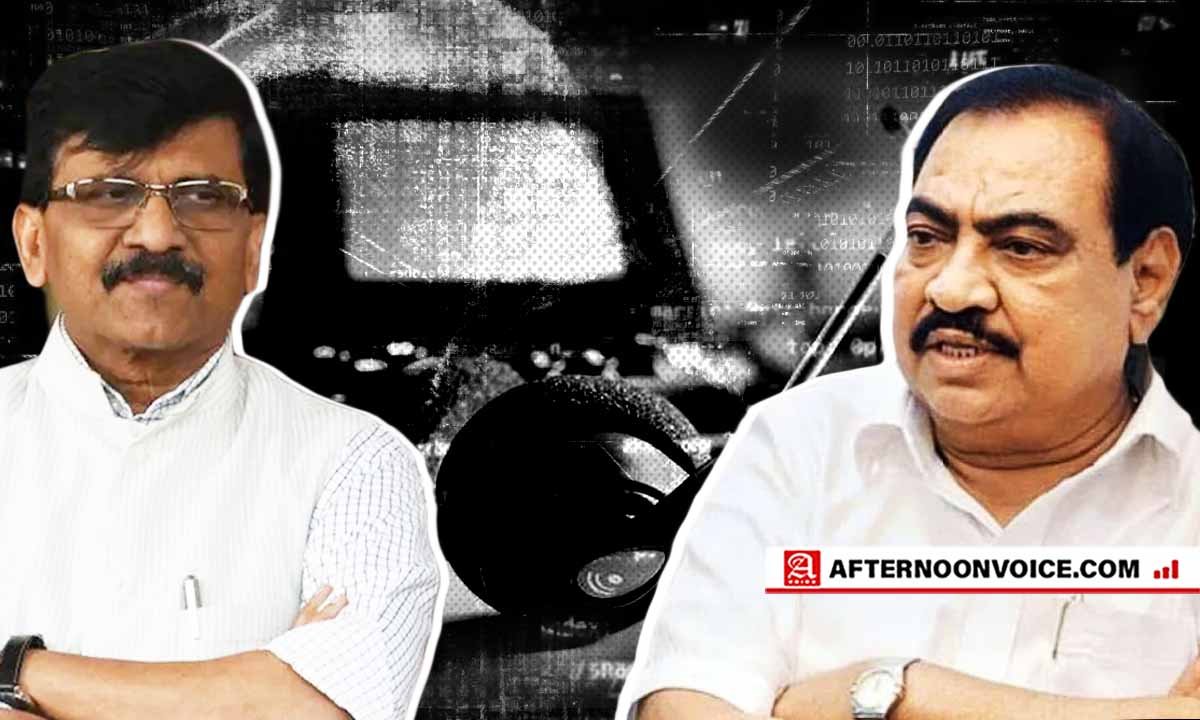
Sanjay Raut and Eknath Khadse’s phones were tapped: Mumbai Police

phone tapping, khadse, eknath khadse, sanjay raut, raut
Sanjay Raut and Eknath Khadse's phones were tapped: Mumbai Police 4

Phones of Shiv Sena leader Sanjay Raut and NCP leader Eknath Khadse were tapped on their pretext as anti-social elements, said Mumbai Police. During the investigation, it was found, that some other names were mentioned as anti-social elements in State Intelligence Dept (SID) letter which was sent to ACS Home for phone tapping that’s why the ACS permitted the same.

The Maharashtra government formed a three-member committee headed by the director-general of police (DGP) Sanjay Pandey to probe the allegations of tapping of phones of elected representatives during the former CM Devendra Fadnavis’s government. Ashutosh Dumbre, commissioner, state intelligence department (SID), and Sunil Kolhe, additional commissioner of police, special branch, are the other members of the committee. The panel is probing if the phones were tapped illegally for political motives and will fix the responsibility on those involved in it.  The committee was asked to submit its report in three months.

Dilip Walse-Patil told the media that the committee has been asked to investigate all phone tapping cases conducted in the past five years between 2015 and 2019. It will examine if the phones of elected representatives were tapped for ulterior political motives and by illegal means. Mumbai crime branch already recorded the statement of Opposition leader and former chief minister Devendra Fadnavis in a case about alleged phone-tapping carried out by the State Intelligence Department (SID).

In March 2021, Fadnavis revealed that several IPS officers were lobbying for posting in exchange for money. Fadnavis said that he has 6.3 GB of data of call records obtained from phone tapping allegedly conducted by the then State Intelligence Department (SID) commissioner Rashmi Shukla in which names of several key police officers were discussed.

Alleging that corruption was taking place on a large scale in police transfers in Maharashtra, Fadnavis read out a report publicly that Shukla had written to former DGP Subhodh Jaiswal. The then DGP forwarded the report to then Additional Chief Secretary (Home) Sitaram Kunte for action. Following this, the government instructed Kunte to inquire into the incident, who then in his report, alleged that Shukla deliberately misled the government to tap phones.

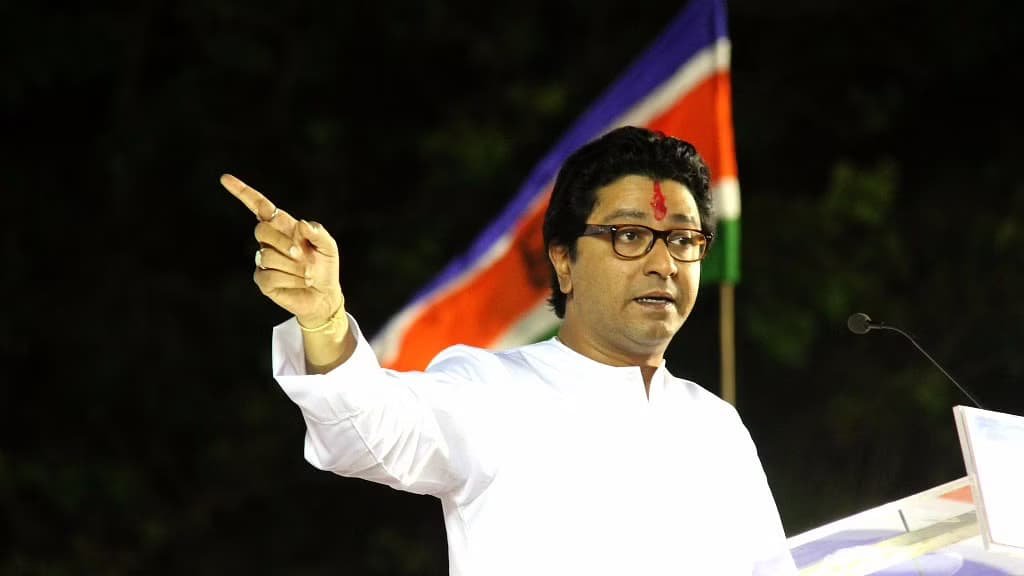
Raj Thackeray asking for Z+ security; receiving anonymous threats on the phone

raj thackeray security
Raj Thackeray asking for Z+ security; receiving anonymous threats on the phone 6

The communal tension started brewing across Maharashtra after MNS chief Raj Thackeray, earlier this month, told his workers to chant Hanuman Chalisa in front of mosques if the loudspeakers were not removed. He has given the government time until May 3 the removal the speakers from mosques.

Thackeray has asked party workers to lay low till the holy month of Ramzan ends, and intensify the agitation against mosques if loudspeakers are not removed by May 3.

MNS leader Bala Nandgaonkar said, “Raj Thackeray Saheb is getting anonymous threat calls following his stand on the loudspeakers. We are asking for Z+ security for Raj Ji from the state police.”

Senior MNS leader said on the condition of anonymity that the Central government is all set to provide Thackeray with protection if the state doesn’t upgrade his security. The MNS chief has planned a tour of Ayodhya on June 5, for which the Uttar Pradesh Government is likely to deploy additional security.

The home department will come up with new guidelines for loudspeakers usage in religious places. MNS Chief Raj Thackeray held a meeting with the party’s top leaders at his residence today. In today’s meeting, they prepared a strategy on the issues of the May 3 ultimatum to remove mosque loudspeakers, May 1 party meeting in Aurangabad & Ayodhya visit in June.

State Home Minister Dilip Walse-Patil told Afternoon Voice, “I have discussed the issues with Maharashtra DGP and Mumbai commissioner of police (CP). I have asked local police stations to prepare a list of unauthorised ‘players’ in their jurisdiction. They are preparing the new guidelines regarding the use of loudspeakers. The guidelines will incorporate the Supreme Court’s directives, such as the hours prescribed for not using loudspeakers at all and the decibel levels allowed in different sound zones. As per law, police permission is required to use the sound system, not just at religious places but also at public places, unauthorized use will be traced and stopped.”

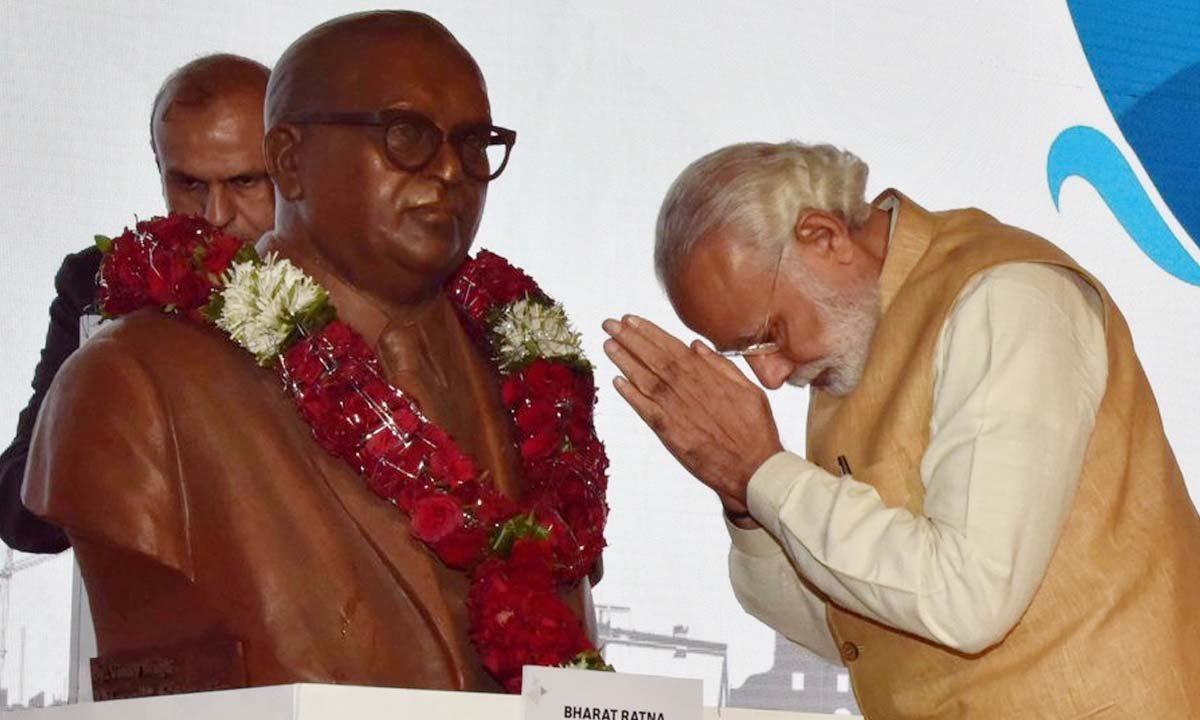
Can we really compare Modi with Baba Saheb Ambedkar?

narendra modi babasaheb ambedkar
Can we really compare Modi with Baba Saheb Ambedkar? 8

In the pre-independence era, where untouchability and illiteracy were at their peak, and social atrocities were at the core of human behaviour, Baba Saheb Ambedkar had to fight the odds. Baba Saheb Ambedkar crusaded against social discrimination toward Dalits who were also called untouchables. Through his approach, he inspired the Dalit Buddhist movement and founded a Buddhist society. He himself suffered untouchability since his school days.

Modi faced no discrimination. Rather, the Dalits under his rule are subjected to cruelty. Today we are in the 22nd century and our Prime Minister Modi is the most privileged minister in the country. A man who was suited, booted from childhood, enjoying almost all the lavishes cannot be compared with Baba Saheb Ambedkar.

Maybe Maestro Ilayaraja’s ambition to become a Rajya Sabha member must have forced him to make a wrong comparison.  His praise for Prime Minister Narendra Modi and comparing him to Dr B R Ambedkar perceives both opposition and support in the social media while BJP national president JP Nadda has hit out at harsh criticism. Both these outstanding personalities succeeded against the odds that people from socially underprivileged sections of society face.

The book published by Bluekraft Digital Foundation ‘Ambedkar & Modi, has made the comparison and lauded pro-women initiatives like the ‘Beti Bachao Beti Padhao’. Ilayaraja in his foreword mentioned Modi and Baba Saheb both saw poverty and stifling social structures from close quarters and worked to dismantle them, but both are also practical men who believe in action rather than mere thought exercises. Point to be noted, the actions Modi believes in are very different from the actions Ambedkar took in empowering his people.

Dr Baba Saheb Ambedkar was a profound scholar of Economics, Political Science, Sociology and Law. He had not been influenced by either popularity or power. He was an intrinsically independent thinker. If Modi would have been similar to Baba Saheb, today they have given the economy the highest priority. He would have avoided minority appeasement and also the rise in militant Hindutva. The concept of positive discrimination for SC and ST would have got implemented. After 75 years, there might not have been a need for its continuation.

The concept of secularism would undergo change. It means equality of all religions and non-interference by the state in the private religion of its citizens. Babasaheb embraced Buddhism because, unlike Hinduism, it is not based on any caste system. And we have a history where BJP and few others have played religion-based politics. Babasaheb promoted secularism and his followers too accepted the same. Whereas, Modi’s politics revolves around Hindutva and communal riots. We cannot compare Modi to Ambedkar as the former is committed to Hindutva while the latter is a reformist leader who dedicated his entire life to the upliftment of the oppressed people.

Modi supporters defended the praise for their leader, saying the maestro has only pointed out a fact that both the Prime Minister and Ambedkar succeeded against all odds through sheer work and despite belonging to socially disempowered sections of society. The war of words spilt over to the political arena with the BJP coming out in full support of Raja Ji. Supporters of Left parties and pro-Tamil and Dalit outfits are among those who have opposed in social media Ilayaraja comparing Modi with Ambedkar.

Tamil Nadu unit BJP president K Annamalai, on his Twitter handle, posted a letter from his party chief Nadda to the people. In the letter, Nadda, in reference to Tamil Nadu and without naming Ilayaraja, says: “In Tamil Nadu, elements aligned to the ruling party in the State have left no stone unturned in verbally lynching, smearing and humiliating one of India’s tallest music maestro just because he has views not palatable to one political party and their allies. Is this democratic? One can have different views and yet co-exist happily, but why take to insults?”

On BJP leader and Union Minister L Murugan’s remark that Ilayaraja has the freedom of expression to praise Modi, the DMK said the Minister should understand that others with a different viewpoint have the same right to make criticisms. The DMK warned Murugan to not drag the DMK into the issue.

BlueKraft Foundation, on its website, says “The book is a prism that reflects upon the multitude of contributions of Dr Babasaheb Ambedkar in the nation-building process. Many of his ideas and interventions continue to define our governance paradigm, especially with PM Narendra Modi at the helm ensuring that it revived his legacy. Ilayaraaja’s recent movie is also being viewed by political observers as an attempt to lean towards neo-Brahmanism and soft-core Hindutva.

The BJP tried to rope in Rajnikanth to break the DMK’s vote bank. Similarly, the saffron party is trying to rope in Ilayaraaja and this is being opposed by his fans. Ilayaraaja’s fans across castes and religions oppose him for the same reason they were against actor Rajinikanth, allying with the BJP. BJP had used Rajinikanth to bring back the AIADMK, and Tamil Nadu would have turned into another communal state. Let it be Ilayaraaja or Raj Thackeray, BJP needs people to become their speakers, as all have their quest for survival.


BJP’s ‘Poll Khol’ is welcomed provided they should speak the truth says, Kishori Pednekar

kishori pednekar, pednekar, bmc, poll khol, bjp, ashish shelar, bjp ashish shelar
BJP's 'Poll Khol' is welcomed provided they should speak the truth says, Kishori Pednekar 10

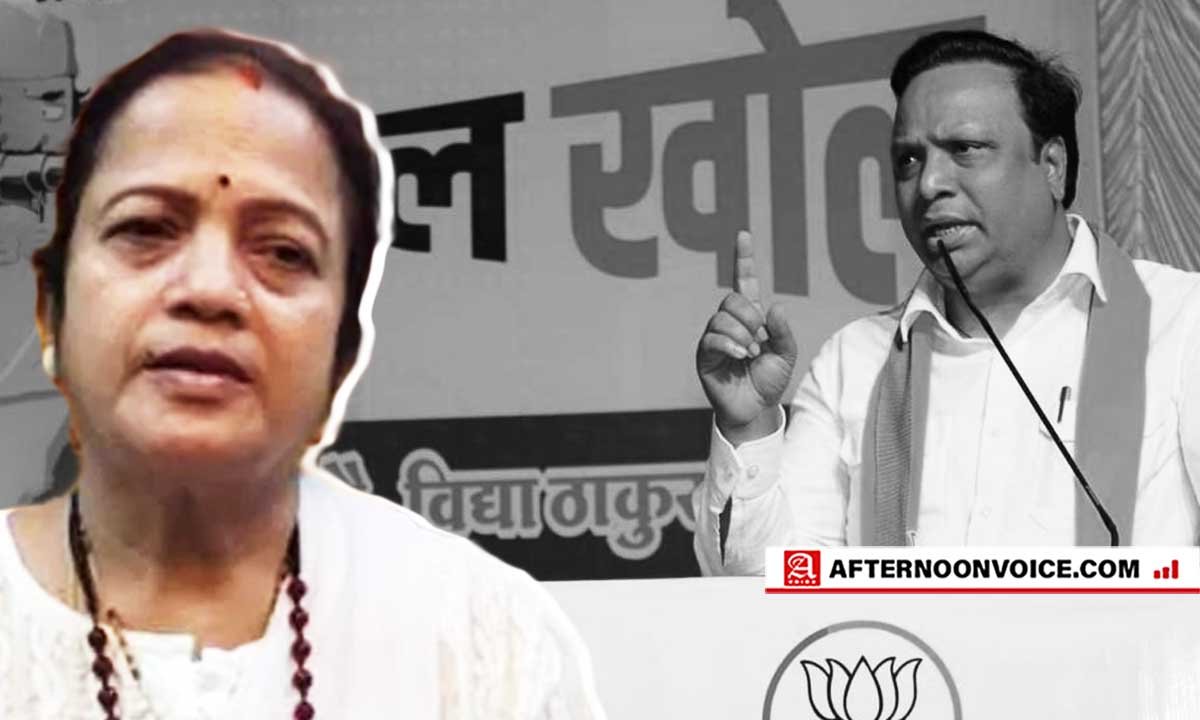
BJP called out for a ‘Poll Khol’ campaign to expose BMC’s corruption. A screen mounted on a mobile van beaming speeches of BJP MLAs on the alleged corruption in BMC was launched, kick-starting the party’s ‘Pol Khol’ campaign for the BMC election.

Kishori Pednekar, Mayor of Brihanmumbai Municipal Corporation told Afternoon Voice, “We welcome this Pol Khol drive if BJP is going to speak the truth and not the fabricated agenda. During the Pandemic things were very costly, there was a lack of manpower, and the situation was panic. One rupee cost us double its rate but we were focused on resolving issues that looking at the rate card.”

“Our priority was people and their wellbeing, BJP did politics even during the pandemic by creating panic among people. For them, the only agenda is winning elections and they can go to any extent of telling lies. I want them to speak their side of flaws too, let them start with their Poll Khol first,” Pednekar further said.

BJP Mumbai president Mangal Prabhat Lodha urged party workers to go door-to-door, explaining the corruption in BMC that is resulting in poor quality of life for Mumbaikars. BJP leader Ashish Shelar told reporters that during the agitation party workers will sensitize people about “how the party in power is not doing justice to their demands.” It is a preparation for the BMC polls and will improve the party’s base in the city, he added.

All the civic polls are postponed because of the OBC quota issue. As many as 12 senior leaders of the BJP will tour the state from April 15 to 30 to strengthen the party’s base not just for upcoming local governing body polls but for 2024 general elections too, Shelar said.

BMC: Stray cat sterilization is a difficult task for Corporation

stray cats, cats sterilization, bmc, ngo, animal ngo
Photo by Kristin Wilson on Unsplash

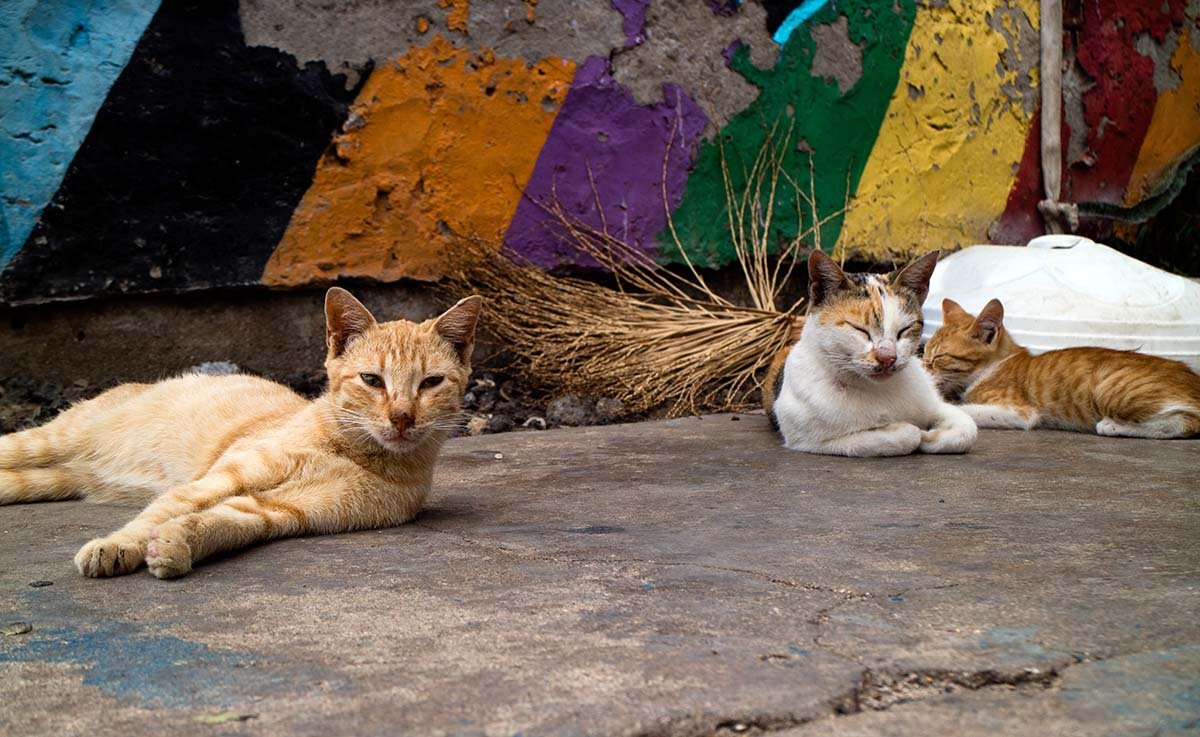
The city is overpopulated with stray cats. Catching them and sterilizing them has become difficult as the Cats are a very aggressive species. The Brihanmumbai Municipal Corporation has managed to find two sterilisation agencies in the past four years to help neuter the cats. Since August 2019, the BMC has sterilized 4,261 stray cats.

The proposal was made by corporator Anil Patankar who says that the cat population has gone unnoticed in the city and has risen manifolds. He says “Catching stray cats is more problematic than catching stray dogs, as they are smaller in size and can run anywhere. They can even climb trees, while there is no survey to suggest what is the cat population in the city their number has increased especially in slums, chawls and markets where fish and meat are sold ” said an officer of the BMC veterinary department.

Along with the Mumbai Veterinary College, the BMC has collaborated with In Defence of Animals, Deonar, informed Dr Kalimpasha Pathan, head of BMC’s veterinary department. “We are in the process of appointing two more agencies for the final stage,” Dr Pathan added. The BMC bears an expense of Rs 600 for the sterilisation of a male cat and Rs 800 for a female cat. There are no figures available for the number of stray cats in the city.

“After sterilisation, the female cat has to be kept under observation for seven to eight days till the wound is clear,” said a veterinary doctor, adding that there are limited places to keep the animals. He added that the civic agency is working to sort out these issues.

Raj Thackeray to visit Ayodhya in June says “will give tit for tat if loudspeakers on mosques are not removed by May 3”

raj thackeray, thackeray, mns, maharashtra navnirman sena, mns, hanuman chalisa, hanuman, islam, loudspeakers
Raj Thackeray to visit Ayodhya in June says "will give tit for tat if loudspeakers on mosques are not removed by May 3" 13

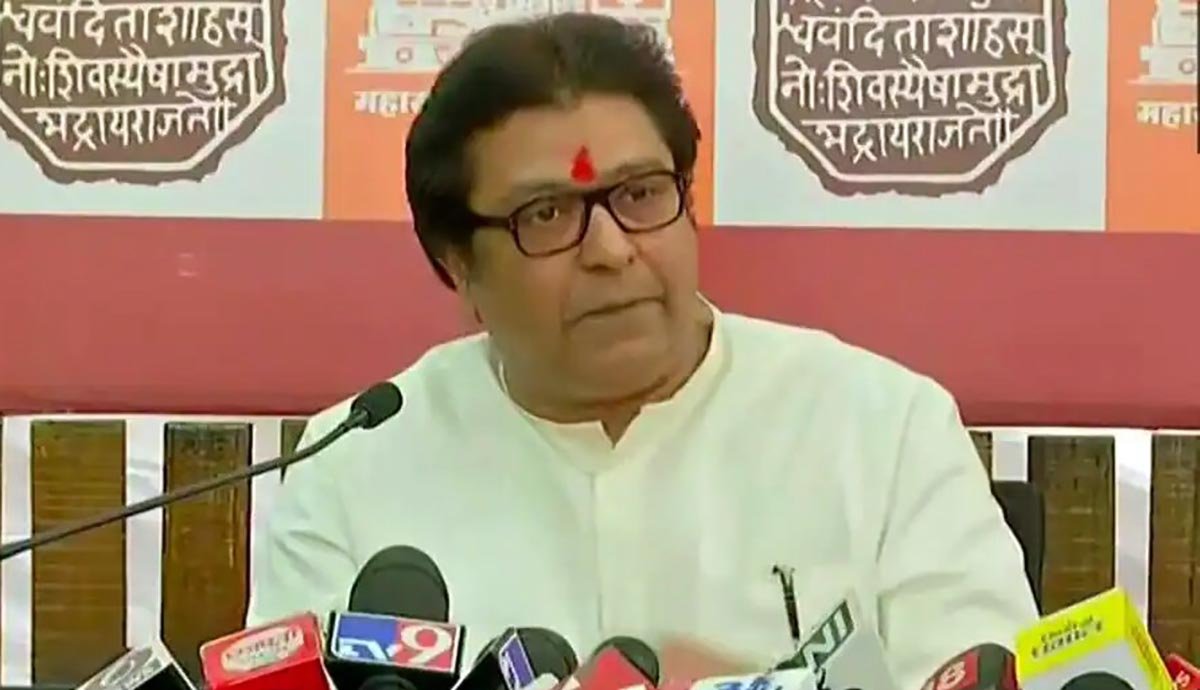
Raising the pitch for Hindutva, MNS president Raj Thackeray on Sunday said he will visit Ayodhya on June 5 to take darshan of Lord Ram and appealed to ”Hindu brothers” to ”be prepared” if loudspeakers are not removed from mosques by May 3.

Stating that loudspeakers relaying the ‘azan’ call is more a social issue than a religious one, Raj Thackeray said they don’t want peace in the society disturbed, ”but if the use of loudspeakers continues then they (Muslims) will also have to listen to our prayers on loudspeakers”.

”On May 1, I will address a public gathering at Sambhajinagar (Aurangabad). On June 5, I will visit Ayodhya for darshan along with MNS volunteers. I also appeal to others to come to Ayodhya,” the Maharashtra Navnirman Sena (MNS) president told a press conference in Pune.

When asked about the purpose of his visit to Ayodhya, Raj Thackeray parried the question, saying he has not travelled out for a long time. Interestingly, amid a war of words between the ruling Shiv Sena and Raj Thackeray, Sena MP Sanjay Raut on Saturday said that state minister Aaditya Thackeray will visit Ayodhya next month. He reiterated his demand that loudspeakers on mosques be removed by May 3 or else MNS will play ‘Hanuman Chalisa’ eulogising Lord Hanuman on loudspeakers outside mosques.

”People think that loudspeakers atop mosques are religious issues, but it is a social issue. If you want to play loudspeakers five times a day then we will play ‘Hanuman Chalisa’ five times in front of mosques. I appeal to all Hindu brothers to be prepared. We will wait till May 3 when Ramzan ends. But if they don’t stop, and if they think that their religion is bigger than the judiciary, then we will give tit for tat. The MNS is preparing for it,” he said.

Stating that the MNS never wanted communal riots to occur in the country or disturb the peace, Raj Thackeray said the Muslim community should look at the demand for the removal of loudspeakers from mosques from a humanitarian angle. ”We are not opposing their prayers. But if they insist on using loudspeakers, they will have to listen to our prayers on loudspeakers,” the MNS chief said.

He narrated an incident involving a Muslim reporter who had told MNS leader Bala Nandgaonkar how he had to visit the mosque near his house and ask the management to shut down speakers as his newborn child is disturbed by the loud noise of prayers. When asked about the police action against MNS volunteers for playing Hanuman Chalisa on loudspeakers, Raj Thackeray asked why separate legal parameters are applied for mosques and MNS workers.

Replying to the purported statement of a Popular Front of India leader that nobody will be allowed to touch loudspeakers atop mosques, Raj Thackeray said, ”our hands are not tied”. When asked about Shiv Sena MP Sanjay Raut calling him a ”new Hindu Owaisi”, the MNS chief said he doesn’t respond to ”lavender” (spineless people). ”If our processions are attacked then we won’t stay calm. Our hands are not tied. Don’t force us to pick up weapons,” he said when asked about the attack on a Hanuman Jayanti procession on Saturday.

Its election time – Aaditya Thackeray promises water for all in Mumbai

aaditya thackeray, thackeray, aaditya, water for all, bmc, brihanmumbai municipal corporation, bmc water
Its election time - Aaditya Thackeray promises water for all in Mumbai 15

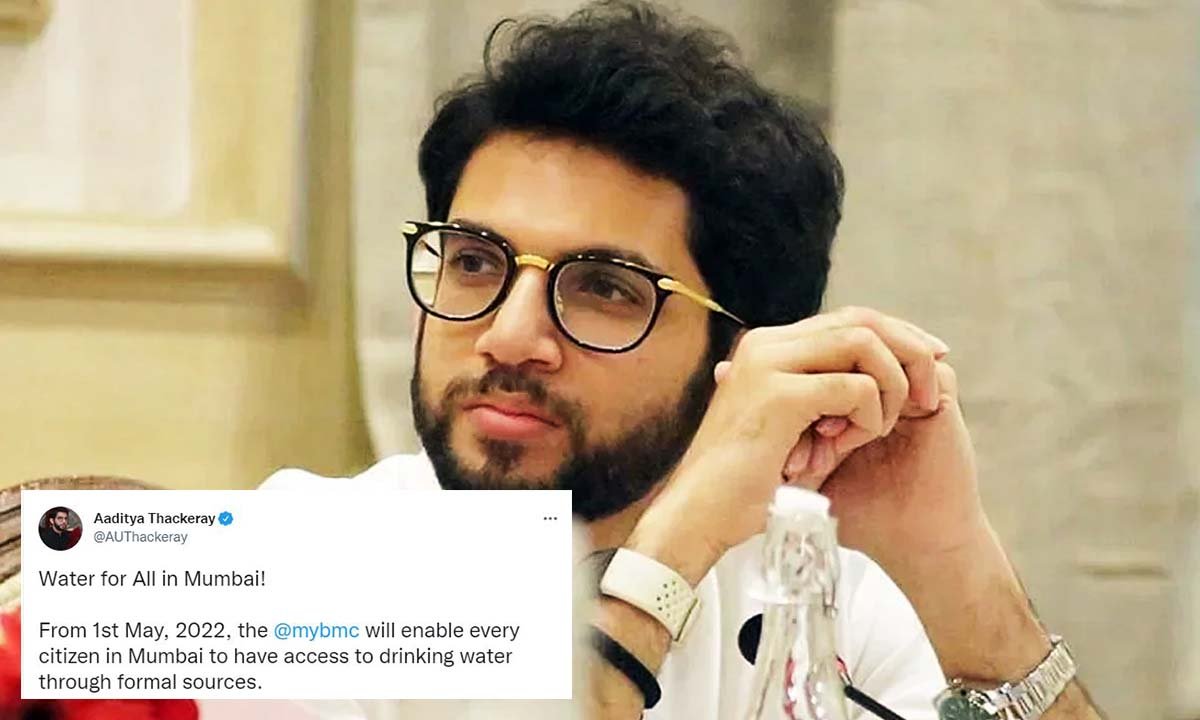
Maharashtra’s environment minister Aaditya Thackeray gave a dreamy promise to Mumbaikar ahead of elections; that every citizen in Mumbai should have access to drinking water through formal sources. Every resident of Mumbai including those living in slums or buildings without an Occupation Certificate (OC) will have access to drinking water from May 1, this would not change the legal status of a house, but will enable the residents of slums or buildings which lack OC to get water connection. Thackeray’s party, the Shiv Sena, controls the Brihanmumbai Municipal Corporation, the elections for which are due this year.

Aditya Thackeray said, “We are committed to ensuring a right to life with dignity to every citizen by providing access to drinking water. This will also eradicate the illegal connections that disrupt and pollute our water supply,” he added. Thackeray had conducted a special meeting about the “water for all policies” at the BMC headquarters with civic officials earlier.

Vijay Salgaonkar, a working man, said, “Mangroves should be removed. People from Mira Road are facing problems coming to Dahisar as there are mangroves in between. They have to pay “Toll Tax” at “Dahisar Check Naka” to come to Dahisar, which is just one stop. This is ridiculous. The government should at least remove the mangroves between “Mira Road and Dahisar” and construct roads over there. Water promises are just to grab votes; most of our areas do not have a basic water line.”

A 76 year physically disabled man told AV, “I had a water connection for the past 20 years and from August 2021 I am not getting water. I paid taxes up to date and went to BMC; they said the water connection is damaged. I followed all their instructions regarding the repair work and paid for the repair work. I have all the legal documents from the BMC. They asked me to go to the commissioner’s office in VT during this pandemic. I am running pins to poll for the past two years, but my water connection is yet to be repaired. And now the minister is making a promise?”

When a senior citizen handicapped is crying for an old connection for 6 to 7 months. Aaditya Thackeray should check with BMC how many people are suffering from BMC not giving water. Shiv Sena controlled BMC for so many years, but till now they were sleeping and didn’t care if people got water or not. The environment minister should also see that there is an urgent need for a desalination plant for the future of Mumbai. What if there is insufficient rainfall because of Global Warming it’ll be very useful for the residents of Mumbai?

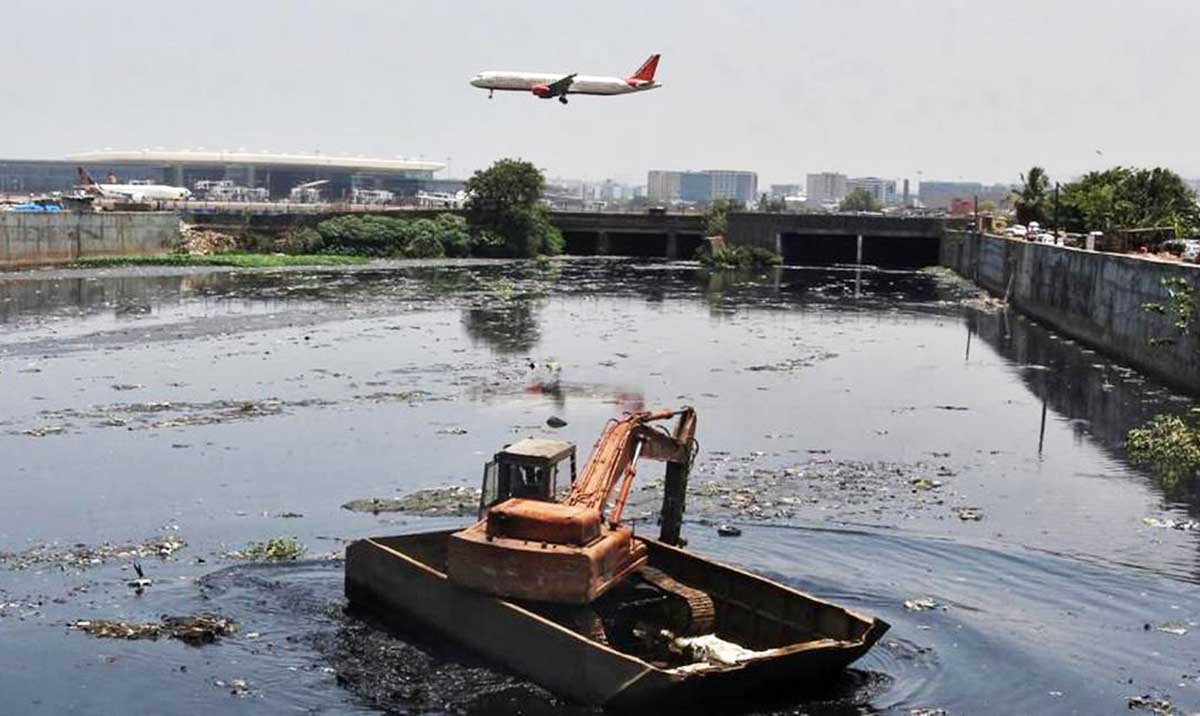
There is no proper drainage system in Mumbai for toilets

drainage, drainage system, mumbai, nullah, mumbai nullah, drainage system in mumbai, aaditya thackeray
Image: HT Photo/Praful Gangurde

In 2015, as a part of the overhyped Swachh Bharat Mission, the BMC then announced its ‘One-Home-One-Toilet’ scheme. But it remained a populist gimmick that was abruptly abandoned two years later. In Mumbai, many homes lack toilet facilities. Even today if you go to chawls in Girgaon, Jogeshwari, and Lalbaug the toilets are outside the house in a row and they are common lavatories. Traditionally, the Girgaonkar believed that impurity should not touch their homes. They believed that the place of cooking and the place of excretion shouldn’t be inside the home. Hence, they never made toilets inside their homes. They always considered defecation impure. Even today, if you travel by local trains you can see, women would group together and lighten them away from the colony early in the morning before sunrise. Men would do it anywhere.

BMC and local MLAs built several common toilets across slums, but compared to the population and geographic area, those toilets are not enough for such an enormous population. In the morning hours, to avoid long waiting, they prefer defecation in open spaces around railway tracks or alongside roads. Toilets are still unavailable in many slums because of infrastructural issues or financial problems. What is shocking is that even cities like Mumbai lack toilet facilities. This is common in the slums and chawls and is mostly due to lack of space.

Now BMC came up with a blueprint to reduce Mumbai’s carbon footprint and make it a climate-resistant city. An investigation under the Mumbai Climate Action Plan (MCAP) has shown that only 58 per cent of the population has access to toilets at home. Most of the homes with an area of 100 square feet or less do not have sanitation and water supply, because applications for individual toilets and water taps are pending approval or the structures sit on intruder land. These slums have no private water taps, like toilets the water taps are also common and they collect water by taking turns. In such a scenario, maintaining toilets is a colossal task.

The slums are overpopulated and congested. There is no suitable space for building toilet blocks. Hence, work in those areas has come to a halt. Apart from posing serious health hazards, poor sanitation can pollute surface water and groundwater and increase air pollution. The MCAP report emphasizes its finding that 41.7 per cent of Mumbai’s population still depends on community toilets. A few years ago, a WHO-UNICEF Joint Monitoring Programme had termed the community toilets an unaltered sanitation source.

They’re not enough spaces in this city to build toilets in every home. Such a scheme will not work unless there is 100 per cent commitment from authorities. Now Aditya Thackeray claims that there will be drinking water for all from May 1. As of now, 29 per cent or one in three households do not have water taps. Water is long pending crucial issues. Even today most of the buildings are dependent on tanker water supply. There are so many toilets that are not connected to the sewerage network. There are taps, but no adequate water. The chawl has a common water tap so that they have to queue up based on turns and during the monsoon, it becomes very unhygienic. The sewage and water lines flow together.

Looking at Mumbai’s demography, it is almost very difficult to provide individual toilets, as sewage lines are not available in many places. In 2014, Mumbai had over 1 lakh toilet seats. The idea to resolve this issue is to increase the number of community toilets, and expedite redevelopment so more households could get separate toilets and the long-term solution is to complete work on building STPs and sewage networks. BMC and government come up with many pleasing announcements ahead of local body elections, but they do not fulfil these promises. Water, gutter and meter are the basic issues of Mumbaikar. Monsoon is another mess, because of lack of drainage arrangements and garbage chocks, the gutters overflow, potholes on the road take many lives, water logs and traffic jams go hand in hand. Each government promised improvisation but that was just lip service.

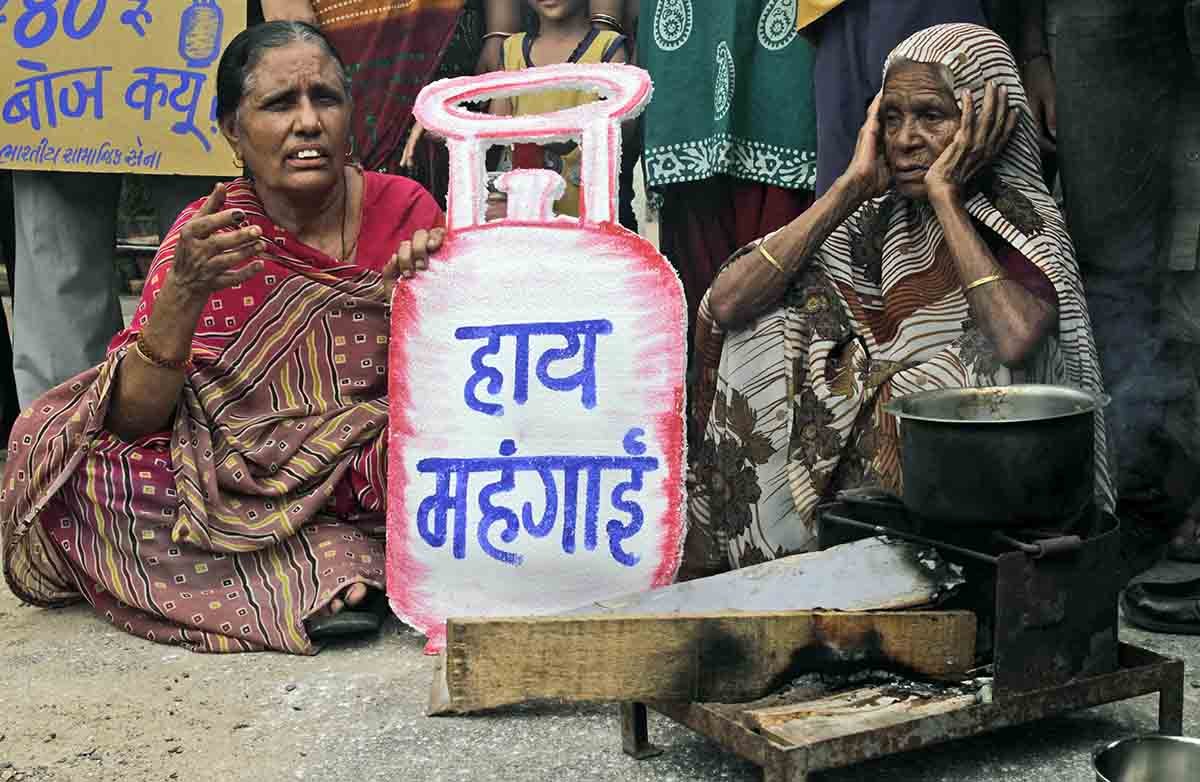
The middle class has been badly affected by the price hike

price hike, middle class, inflation, petrol prices, vada pav, poor people, middle class in cities, mumbai, cylinder, lpg gas, cng price hike, latest petrol price, diesel price
Image: AP Photo/Ajit Solanki

Mumbai has the provision of living for everyone. Poor people to prosperous elites all live here comfortably. But in the recent past due to price rises, everything has become costly. From public toilets usage rates to public transport. Earlier public toilets used to charge 5 rupees for one-time usage, now they charge ten rupees because maintenance cost has gone up.

Auto rides to private and public transport tickets have doubled their prices. High transaction costs are being fueled by rising petrol and diesel prices. Fuel prices have surged for the 14th time in the last 14 days, with petrol and diesel rates going up by Rs 10 per litre each in the past 16 days. The government doesn’t care about price rises, they only care about their political survival by stressing irrelevant subjects. They know they will get votes based on abhorrence. The government is running away from the dialogue on the price rise issue because they don’t have an answer to the current crisis and they don’t have a plan to tackle it.

Vada Pav, Bhajia Pav and Poha are stapled foods of Mumbaikar, most of the common man survives on street food. Due to the price rise, one Vada Pav which used to be ten rupees now the price is doubled. It is not reasonably priced to sell Vada Pav at the earlier rate anymore. The price of commercial cylinders has increased by around Rs 200 and vendors have to pay Rs 2,400 for each cylinder. Similarly, refined oil prices have also climbed from around Rs 1,400-Rs 1,500 to Rs 2,400. Chilli, potato. onion prices have gone up. So, street food also has become costly.

Pani Puri has gone up from 15 rupees per plate to 30 rupees per plate. Earlier 15 rupees we used to get six small Idlis now it’s gone up to 25 rupees.  The rate of oil and other groceries has gone up. The sugar and milk prices have gone so the cup of cutting tea is now 15 rupees.  Earlier each Vada Pav was for Rs 20 but now increased it to Rs 22. Similarly, samosa pav for Rs 23 as opposed to earlier Rs 20, and bhaji pav for Rs 22, up from Rs 20. The price of sunflower oil is up by 40 per cent while Palm Olein Oil and Soya Bean oil prices rose by around 30-40 per cent. Most people who sell fast food in the city use Palm Olein Oil, which used to be priced at Rs 60-65 per litre but now costs Rs 150-160.”

With another hike of Rs 2.5 per kg, the price of CNG (compressed natural gas) has cumulatively increased by Rs 9.10 per kg in the last six days. CNG now costs Rs 69.11 per kg in the national capital Delhi. Prices of several essential items are on rising and it is hurting the common man the most. Soaring prices of cars, cement, fuel, and housing are also adding to people’s woes.

On the other hand, the price of beans, which is a staple vegetable in the Indian kitchens, has touched Rs 120 per kg. Cauliflower, which was being sold for Rs 40 a kg a month ago, now costs double the rate, at Rs 80 per kg. The rates of the most cheap snacks available in the city—Vada Pav, Bhaji Pav and Samosa Pav—have increased by Rs 2 to Rs 5 in view of the hike in rates of edible oils and commercial cylinders due to the ongoing Russia-Ukraine war. Sellers said they cannot continue to sell at the earlier price anymore and added the prices of other ingredients.

If Covid-19 has wreaked havoc on the health front, the rise and the resulting hike in prices of essential commodities in the face of salary cuts and job losses have dealt a double blow for the common man, especially those from the middle and lower-middle income groups and below poverty line (BPL) sections of society.

The price hike is compelling people to shrink diets and reduce the use of daily essentials at a time when robust nutrition should be the priority to boost immunity in the light of the current pandemic. A daily wager’s family earns up to Rs 10,000-12,000 a month and their monthly expenses would be Rs 3,000-4,000 even after getting a PDS ration. But now they have to spend about Rs 7,000 and many are struggling to eke out a living, with no savings. Last year, dal was Rs 90 per kg and now the price jumped to Rs 170-plus, based on quality. As fuel prices increased, other items have also become more expensive.

Those from underprivileged sections, who normally consume boiled rice, are opting for lower quality rice through the public distribution system. For most BPL families, survival has become a challenge due to the hike in prices of essential commodities. children’s education and medical expenses, basic needs everything has gone up. The middle class has been badly affected by the price hike. Farmers are not benefiting from the price hike and neither are customers. It looks like only the government and agents are benefiting from it.

A survey released by SNEHA, a non-profit working in the field of malnourishment across the slums of Mumbai, shows over 83 per cent of infants, aged six months to 23 months, in these areas are consuming unhealthy, low-cost food. The cross-sectional survey, released on World Health Day this year, was carried out in Mankhurd, Wadala and Dharavi slum areas with a sample size of 1,562. It reveals that the foods commonly consumed by infants include wafers, Vada Pav, fried foods, Chinese Bhel, Toast, Butter, Khari, instant noodles and sugary foods, which are available at affordable prices. More than half the toddlers—52 per cent in Wadala, 61 per cent in Dharavi and 69 per cent in Mankhurd—did not consume fruits and vegetables and now junk food is also not reasonable.