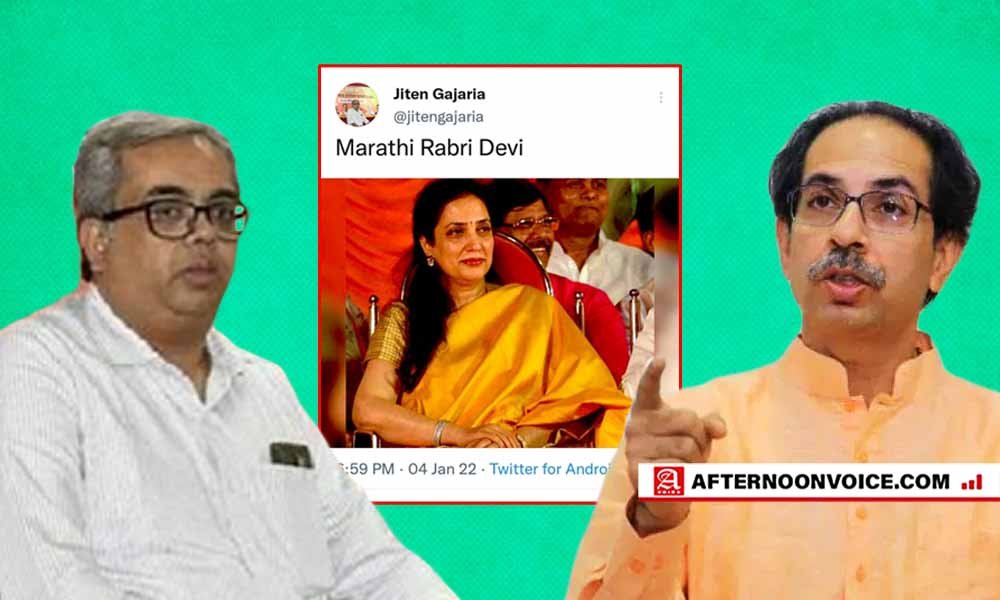
"Marathi Rabri Devi" - Jab at CM Uddhav Thackeray's Wife sparked controversy 2
Marathi Rabri Devi trending on Twitter and BJP supporters made derogatory comments on Uddhav Thackeray’s wife and Son Aditya Thackeray. Earlier on Thursday, the social media convenor of Bharatiya Janata Party in Maharashtra Jiten Gajaria was summoned for questioning by Mumbai Police Crime Branch’s Cyber Cell for his tweet on Chief Minister Uddhav Thackeray’s wife Rashmi Thackeray. Jiten Gajaria was seen present at BKC Cyber Police Station to record his statement after being summoned by police over his tweets.
Reportedly, Gajaria had on January 4, posted a photo of Rashmi Thackeray with the caption “Marathi Rabri Devi”. After the uproar, Jiten Gajaria deleted the Twitter post. Mumbai Mayor Kishori Pednekar reacted to Bharatiya Janata Party (BJP) leader Jiten Gajaria’s tweet on Chief Minister Uddhav Thackeray’s wife Rashmi Thackeray and said that the BJP is passing derogatory comments on the daughter-in-law of Shiv Sena founder Balasaheb Thackeray who helped BJP become a big name in politics. She added that Gajaraia is a turncoat who is now passing derogatory comments on Maharashtra women.
Mumbai resident Jiten Gajaria who has nearly 20,000 followers also hosted a Twitter poll on the same subject. His post was shared by many people on Twitter, mostly those who support the BJP ideology.
Gajaria’s lawyer claimed that his client was called in for questioning by the cyber police without revealing the nature of the complaint lodged with the police. There was no FIR in the case. A source hinted that the police may call Gajaria again for questioning. Cyber police officials refused to comment on the development. The arbitrary action has been taken against the BJP leader by Maharashtra police at the behest of the Shiv Sena government led by Uddhav Thackeray.
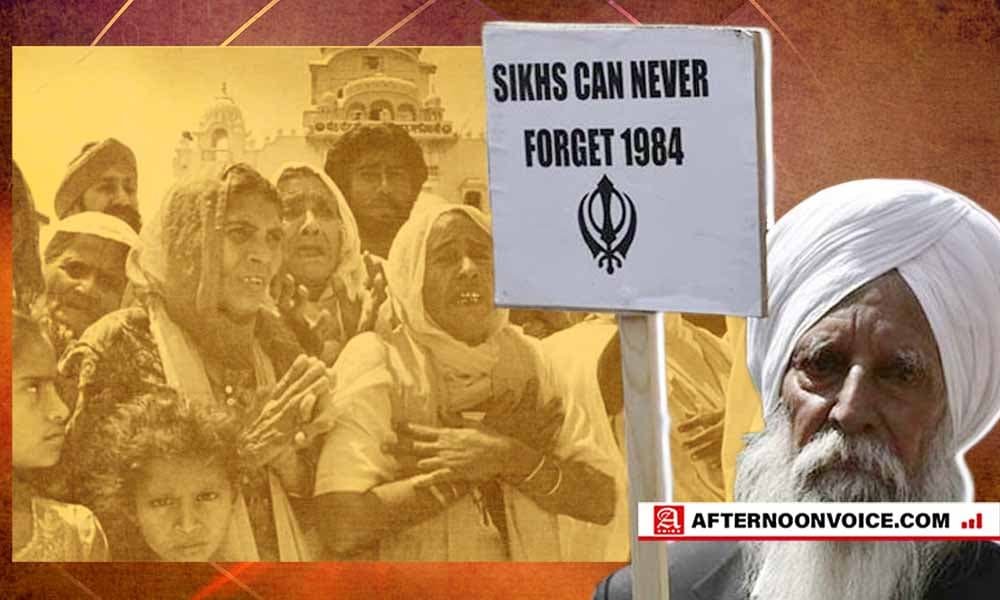
Are we waiting for another anti-Sikh riots like 1984? 4
Since the protesting farmers hardened their stand against the Center’s new farm laws they were labelled as Khalistani to demoralize agitation. Sikh’s farmers were the centre of attraction in this entire saga. The Bharatiya Janata Party alleged that the Khalistani agenda is being propagated under the garb of the Punjab farmers’ agitation and accused the Congress which is in office in the state — of aligning with radical elements.
BJP IT cell in-charge Amit Malviya tweeted that an alleged video of protesting farmers where a man is heard citing PM Indira Gandhi’s assassination in an apparent bid to threaten PM Modi should their 3 December discussions with the government fail to resolve their grievances against the farm laws. Since then, the hate against Sikhs rose among certain sects.
They are hassled on social media; they are trolled and threatened. Most of the TV channels are projecting Sikh’s as anti-nationals and anti-Modi. The hate knows no boundary; minorities are always under attack but this time its Sikhs at large. Successful agitation dominated by Sikhs for reversal in 3 farm laws is seen as resistance to the otherwise invincible chariot of the Modi-Shah duo.
Though defamation of Sikhs is not a new phenomenon, an exponential increase in hate comments and actions have been observed in what seems like a well thought out narrative building exercise. Ever since the start of the Protest in June 2020 – Barring a few, most mainstream media ran from pillar to post to declare it terrorists led the movement to destabilize India. Efforts were made to make it a “Sikh vs Nation” and paint Sikhs as anti-India. Though that remained mostly unsuccessful primarily due to the presence Hindu Jaat community on the ground, narratives got traction online and in areas not close to ground zero.
Lakhimpur Khiri where BJP sitting Union minister’s son used his jeep to crush farmers, were all Sikhs. Most recently, the PM’s unsuccessful trip to Ferozpur (Punjab) calling for a repeat of 1984 can be trending on social media. There hasn’t been any action taken by police, judiciary, or administration to take notice of serious intimidations, so far. In fact, the hollow rhetoric of “Sikhs vs. India” has been propagated intensely by most of the national media.
BJP is wounded because Punjab’s Sikh Majority always spurned Modi’s Hindutva agendas. During the Lok Sabha elections, Congress won eight out of 13 seats, it was all because of the BJP’s obvious Hindutva agenda which motivated Sikh voters to shun the Shiromani Akali Dal-BJP combine. The Narendra Modi-Amit Shah brand of majoritarian politics has had a startling impact on elections in Punjab, dismantling traditional voting patterns, consolidation of the Hindu votes and creation of an insecure Sikh community. Punjab is India’s only Sikh majority state and here, religion and politics have been working hand-in-hand much before the BJP gave Hindutva to the nation.
For long, the SAD-BJP alliance worked well, its arithmetic based on the premise that while the SAD – which claims to champion the rights of Sikhs – brought in the Sikh votes, the Hindus, at least in urban areas, mostly voted for the BJP and the combine had smooth sailing for a while, winning election after election. But overdoing on their agenda and always attacking Sikhs did not go well with BJP’s fortune in Punjab. Punjab always opposed the Arya samaj (Hindu supremacist thinking) and BJP is all about pro casteism. For more than a few decades, the SAD represented Sikh politics in Punjab, in line with the Sikh concept of ‘Miri Piri wherein it wielded political power to watch over the political interests of Sikhs while the Akal Takhat and the Shiromani Gurdwara Parbandhak Committee (SGPC) looked after the spiritual aspects. The Akal Takht, the highest temporal authority for Sikhs, has condemned the Modi government’s farm laws, slammed the RSS for being “divisive” and even called for a ban on it earlier this year.
Sikh achievers from several fields – from Sahitya Akademi Award-winning literary figures to Arjuna Award-winning sportspersons, decorated soldiers and prominent scientists – have returned awards given to them by the government. Somewhere Sikh Community gave a strong message to Modi and his government that they don’t like the way they play decisive politics.
Recently the failed rally of Modi, Punjab is portrayed as a bloodthirsty state that was trying to eliminate the PM, there was a lot of social media uproar and a series of Primetime debates accusing Congress and Sikhs as anti-establishment. People are made to believe that the attempt was made to attack Modi but he somehow recused himself. With such wrong narratives and misinterpretations of events, what are they trying? Another 1984 like riots?
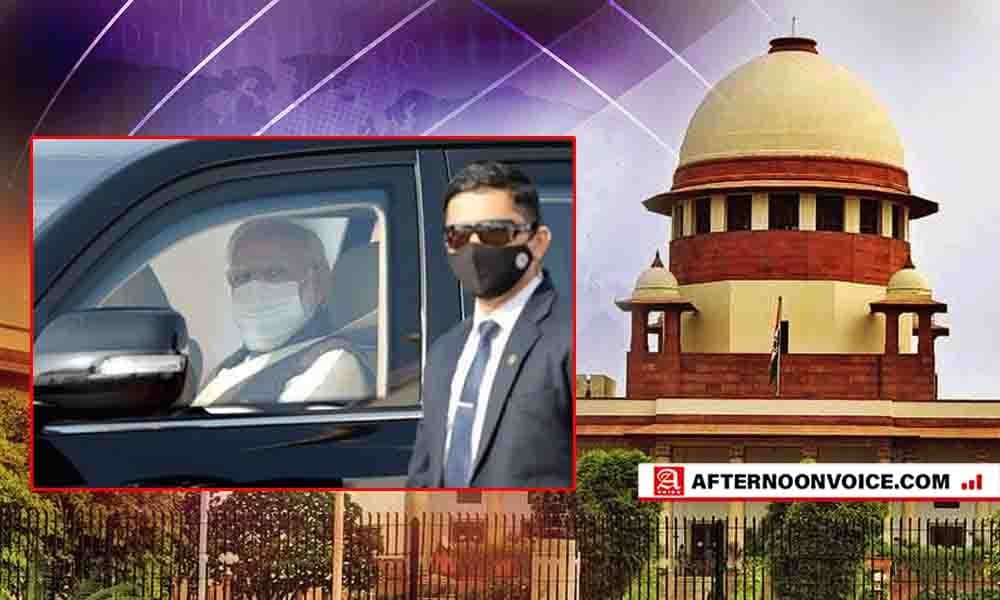
PM Modi security fiasco: SC asks for travel records to be preserved 6
The Punjab and Haryana High Court’s Registrar General has been asked to “keep all records in his safe custody” and the Punjab Police, the Special Protection Group (SPG) and other Centre and state agencies are to “cooperate and provide necessary assistance” to him, the Supreme Court said.
On a security breach that left Prime Minister Narendra Modi stuck on a highway in Punjab for 15 minutes on Wednesday, the Supreme Court today directed that his travel records be preserved.
A bench headed by Chief Justice NV Ramana also directed that the separate investigations ordered by the Punjab government and the Centre be paused till Monday. The security lapse is a “rarest of the rare” case that could cause potential international embarrassment, the Centre told the Supreme Court, backing a petition calling for a probe by the National Investigation Agency (NIA).
“The incident created a very serious situation for the PM’s security,” Solicitor General Tushar Mehta said, urging the Supreme Court to call for records related to PM Modi’s visit and security in Punjab on Wednesday. In the middle of an intense campaign for the approaching Punjab election, allegations have been flying between the Centre and the state over the incident that took place when PM Modi visited Bathinda for events that included a rally at Ferozepur.
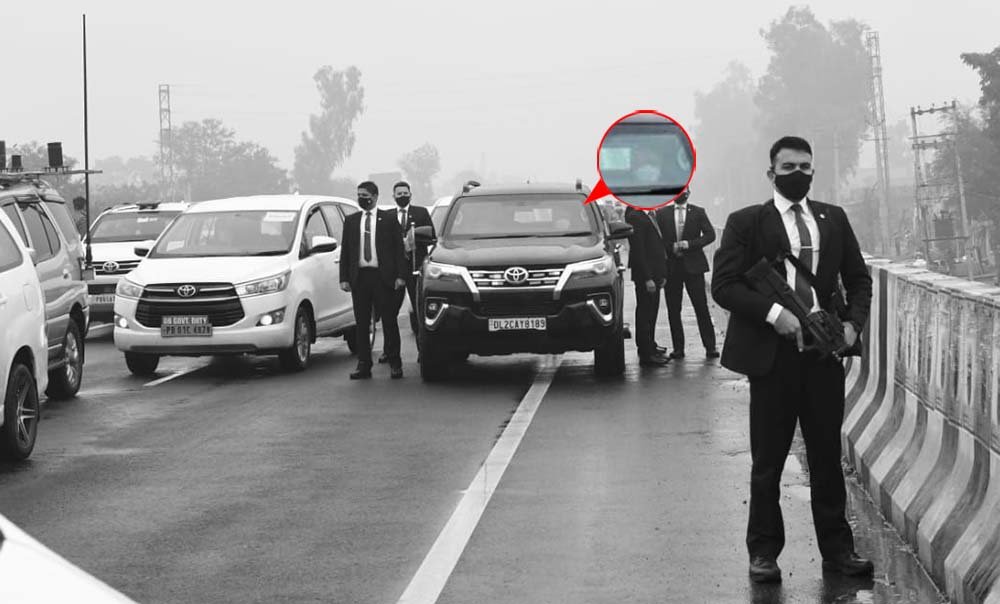
When bad weather prevented PM Modi from flying to the rally site by helicopter, his convoy took off by road for a two-hour journey. Around 10 km short of the rally venue, the PM’s convoy was stranded on a flyover because of protesting farmers. After waiting for 20 minutes, PM Modi turned back and left, scraping his programmes.
“Both the Punjab government and the police were responsible for the security lapse…There’s also the possibility of cross border terrorism. This is something which ought to have been avoided, it’s a case of potential international embarrassment,” Mehta said.
The Punjab government countered that it is not taking the case lightly. “We have formed a committee on the same day. Even the Centre has formed a committee. We are open… any person can be appointed to investigate this matter,” said the state’s lawyer.
“Our Chief Minister has said the PM is our PM too. We also want it to be investigated. Whatever the court thinks fit may be done.”
Many Prime Ministers in the past were hassled but maintained calm 8
After Punjab disgrace, the big question is “what is in danger, BJP’s fortune, or PM’s security?” Around 10,000 security personnel were deployed for the PM’s Rally. All arrangements were made in tandem with SPG and other agencies. A route was carved even for all buses of BJP workers from Haryana or Rajasthan. The PM decided to take a road journey to Hussainiwala. It was not part of his original schedule to travel by road. Why do the PM and security agencies take this risk?
Was it a drama created by BJP in Punjab with a view to getting sympathy for the Uttar Pradesh elections? Priyanka Gandhi has almost succeeded in giving them a tough time in UP. We all know Punjab farmers are the protestors. Till today they pleaded for the opportunity to talk to the Prime Minister of India but now when the PM landed in Punjab, they wanted to greet him. Let’s assume there was a threat, during the visit of the Prime Minister, security is taken over by MHA i.e., SPG. Hence, it is wrong to hold the Punjab Government responsible. The home ministry and agencies should be interrogated first.
Was it a plot by BJP and Modi to save face value because of low turnout in their election rally and BJP accessed ground situation? BJP realized that the low turnout in the Punjab rally will reflect in UP election rallies too. Because this delay was not for the first time, in 2017 December, the PM’s convoy was stuck in traffic in Uttar Pradesh’s Gautam Buddh Nagar when he was on his way to inaugurate a metro line. Two policemen were suspended after this. But they did not say that the PM’s life was in danger.
In 2018, the PM got stuck in traffic in Delhi on two occasions. And both times, the spin by pro-BJP media channels was that “it’s the end of VVIP culture” rather than a security breach. So, it is curious why the allegation that the “PM’s life is in danger” is being made in the context of poll-bound Punjab. While such a tactic may not work in Punjab, it could have an impact on Uttar Pradesh and Uttarakhand.
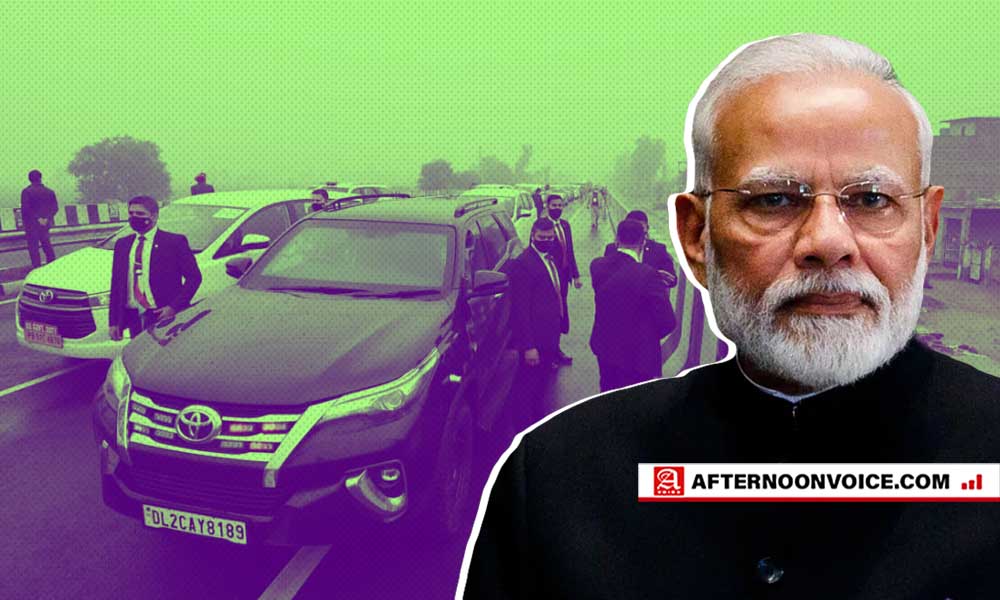
Prime Minister stating threat to his life in Punjab, Isn’t this an insult to three crores Punjabis? BJP doesn’t want their votes? Visuals from Bathinda showed the Prime Minister’s convoy on the flyover, surrounded by Special Protection Group (SPG) personnel. PM Modi was seen waiting in a black armoured Toyota Fortuner ringed by SPG officers. PM doesn’t trust SPG commandos? What was he really scared of? The moral of this story is that the public can also get angry if you kill hundreds of people with your decisions. A leader should have the courage to face public displeasure.
The year was 1967, Indira Gandhi had gone to Orissa for a rally. Orissa used to be a stronghold of the Swatantra Party. As soon as Indira Gandhi started speaking in an election meeting, the crowd present there started pelting stones. The local Congressmen asked her to stop the speech immediately, but Indira Gandhi did not listen to anyone and continued to speak. She faced the irate crowd and said, “Will you build the country like this? Will you vote for such people?” Then suddenly a stone came and hit her nose. Her nose started bleeding. Indira Gandhi wiped the blood flowing from her nose. Covered her nose with a handkerchief and continued giving her speech. After the incident, she left for Kolkata for the next public meeting. In Kolkata, she gave a speech with a bandage on her nose. Later it was found that her nose bone was broken. The nose had to be plastered. She also had nose surgery. For several days, Indira Gandhi campaigned across the country with plaster on her face. Once she joked with the people that her face has become exactly like ‘Batman’. After taking off the plaster, she used to jokingly say that I had a feeling that the doctor would make my nose beautiful by doing plastic surgery. You know how long my nose is but an opportunity to make it beautiful was lost. Doctors did nothing and I remained the same. That was commendable leadership.
In 1977-78, when Prime Minister Morarji Desai visited Hyderabad, His motorcade was passing through Bible House on Secunderabad’s Rashtrapathi Road. Someone ran into the middle of the road and in a flash, rushed to the PM to shake hands. The PM stepped out of the car, smiled, shook the man’s hand warmly, waved at the crowd on either side of the road, got into his car and sped away. No one ever made an issue of it. Later on, the man was taken into police custody.
In 2009, a computer engineering student hurled a sneaker towards the then Prime Minister Manmohan Singh from where he was addressing his first poll rally in Gujarat. Those days Modi was CM of Gujarat but Manmohan did not make a fuss. People get angry, but they don’t kill. Indira and Rajiv gave their lives but still, their family never said they felt threatened.
15 minutes delay and the PM felt threatened is really cowardice. What you sow is what you reap, if you had cared for the citizens, you could have got their respect. Remember you avoided the farmers for a year and never met them, same with Tamil Nadu farmers. It was not the PM but a politician who was going to Punjab. Farmers waited an entire year for the PM to come to them. The farm laws were withdrawn purely for elections, and this trip was also for the same purpose but this time voters deterred you.
Any suggestions, comments or disputes with regards to this article send us at feedback@www.afternoonvoice.com
Prime Minister's flyover fiasco: BJP calls it a death threat and Congress calls it a flop show 10
Prime Minister Narendra Modi’s visit to Punjab summed up with humiliation on Wednesday, 5 January, and this has spiralled into a war of words between the BJP-led Union government and the Congress-led Punjab government, also on social media. Each political party and their supporters are backing their agenda but none of them points towards those agencies and the Home Minister Amit Shah for these security lapses.
The blame actually lies with a number of agencies. Neither the Punjab Police nor the Special Protection Group responsible for PM’s security can escape blame on this. The shortest route from Bathinda airport to Hussainiwala is 106 km, passing through Kotkapura, Faridkot, and Ferozepur. On a normal day, this would take two to two and a half hours. Why did the Punjab Police give clearance for the PM’s convoy to take this route at such short notice? Why didn’t the SPG red-flag it?
The entire route passes through districts like Bathinda, Faridkot, and Ferozepur, which are in rural Malwa – the epicentre of the farmers’ protest. So surely, central agencies, like the Intelligence Bureau, should have anticipated protests? Ideally, when it was known that it wouldn’t be possible for the PM to travel by chopper from Bathinda to Hussainiwala, his visit should have been cancelled, instead of trying to take him there by road. Above all when briefed to the PM, why did he give his nod?
It isn’t clear whose call it was. The MHA claimed that the Punjab Police gave the clearance. Chief Minister of Punjab Charanjit Singh Channi claimed that the Punjab Police had limited say in the matter and that they had cleared the roads by convincing the protesters. But he also said that the problem occurred due to a last-minute change of plans.
PM landed at Bathinda airport, and from there, he was supposed to go to the national martyr’s memorial at Hussainiwala by helicopter. This is the plan that had been decided upon by the Center and the Punjab government in advance. However, it became clear after landing that going by chopper would not be possible due to bad weather. Therefore, it was decided to take the PM by road to Hussainiwala.
About 25 km before Hussainiwala, and just before Firozpur city, the PM’s cavalcade was stranded allegedly due to protesting farmers blocking the road. The PM’s convoy turned back and went to Bathinda, and all his events were cancelled.
At the airport, ANIquoted the PM as having told the Punjab government officials to “thank your CM that I reached Bathinda airport alive” – in what is being seen as a sarcastic dig at the state government. The Ministry of Home Affairs issued a statement accusing the Punjab government of a lapse in the PM’s security.
CM Channi held a press conference and expressed regret for what happened. But he also claimed that there was no threat to the PM’s life and that the protesters shouldn’t be seen from a security point of view. Now, the entire row is stuck in between the security aspect and the political aspect.
BJP leader Smriti Irani gave very melodramatic statements to the media, BJP president JP Nadda and several others BJP leaders also attacked the Punjab government for the alleged “security lapse.”
CT Ravi, BJP general secretary went to the extent of tweeting “Desh ke gaddaro ko goli maro (shoot the traitors)”. Pro-BJP channels are running, “Modi managed to escape danger.”
Later on, Wednesday night, the BJP released a video alleging that there was a conspiracy to unleash violence by “Pakistanis, Khalistanis and the Congress” and claimed that it was foiled by PM Modi. The narrative is basically to highlight the alleged “security threat in Punjab” from “anti-nationals” and how the PM is the “only one fighting it”.
The political spin is also evident from the fact that this is not the first time that the PM’s convoy got stranded. But the allegation that his “life was under threat” is being made for the first time in such a situation.
World No. 1 Novak Djokovic denied entry to Australia, has visa cancelled 12
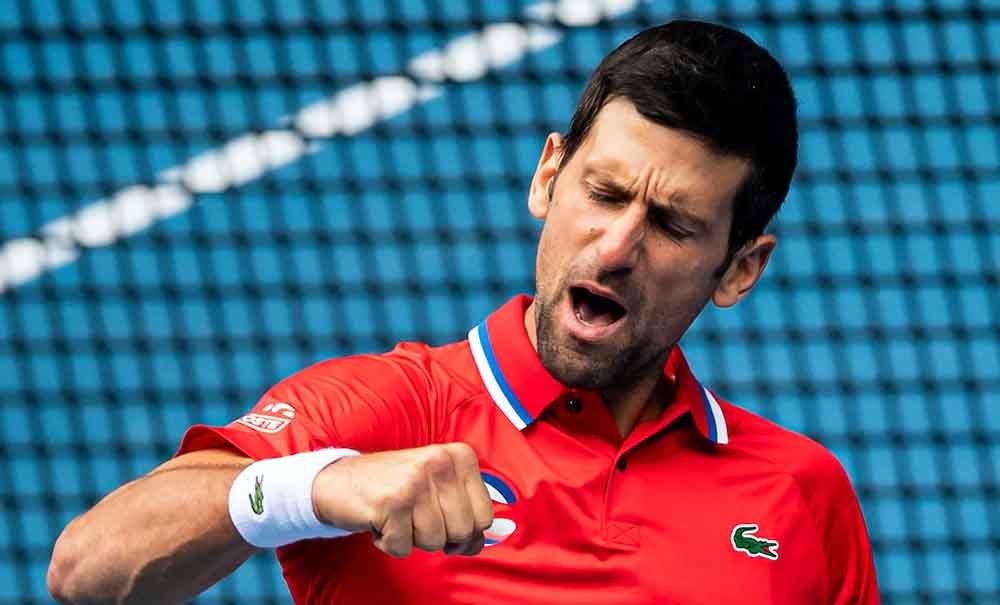
Novak Djokovic’s chance to play for a 10th Australian Open title was thrown into limbo on Thursday when the country denied him entry and cancelled his visa because he failed to meet the requirements for an exemption to COVID-19 vaccination rules.
The top-ranked Djokovic announced on social media Tuesday that he had “exemption permission” and landed in Australia late Wednesday after receiving a medical exemption from the Victoria state government that would shield him from the strict vaccination regulations in place for this year’s first major tennis tournament.
But border authorities did not accept the exemption. The Australian Border Force issued a statement saying Djokovic failed to meet entry requirements.
“The rule is very clear,” Prime Minister Scott Morrison told a news conference Thursday. “You need to have a medical exemption. He didn’t have a valid medical exemption. We make the call at the border, and that’s where it’s enforced.” Health Minister Greg Hunt said the visa cancellation followed a review of Djokovic’s medical exemption by border officials who looked “at the integrity and the evidence behind it.” He said Djokovic was free to appeal the decision, “but if a visa is cancelled, somebody will have to leave the country.” The president of Djokovic’s native Serbia’s blasted the “harassment” of the star, who was detained overnight at Melbourne Tullamarine Airport. The 20-time major winner had to wait more than eight hours at the airport to find out if he would be allowed into the country. He was later moved to a hotel, pending arrangements for a flight or legal action.
Morrison confirmed the cancellation in a Twitter post: ”Rules are rules, especially when it comes to our borders. No one is above these rules. Our strong border policies have been critical to Australia having one of the lowest death rates in the world from COVID, we are continuing to be vigilant.” Responding later to questions about confusion between the different requirements of federal and state governments, Morrison said it was ultimately up to individual travellers to have correct documentation when they arrive.
The prime minister also rejected the suggestion that Djokovic was being singled out, but he acknowledged that other players may be in Australia on the same type of medical exemption and visa.
“One of the things the Border Force does is they act on intelligence to direct their attention to potential arrivals,” he said. “When you get people making public statements about what they say they have, and they’re going to do, they draw significant attention to themselves.” Anyone who does that “whether they’re a celebrity, a politician, a tennis player…they can expect to be asked questions more than others before you come.” The medical exemptions, vetted by two independent panels of experts and based on information supplied anonymously by players, had been designed to allow Djokovic to play in the Australian Open, regardless of his vaccination status for COVID-19.
He has spoken out against vaccines in the past and has steadfastly refused to acknowledge whether he received any shots against the coronavirus.
His father, Srdjan Djokovic, told the B92 internet portal that his son was held at the airport “in a room which no one can enter” and guarded by two police officers.
Serbian President Aleksandar Vucic said on Instagram that he spoke to Djokovic while he was being held at the airport. He said Serbian authorities were taking measures “so the harassment of the best tennis player in the world be stopped in the shortest possible time”.
Djokovic’s revelation on social media that he was heading to Australia seeking a record 21st major title instantly became a hot political topic, with many Australians furious that he was granted an exemption to enter the country. Critics questioned what grounds he could have for the exemption, and backers argued that he has a right to privacy and freedom of choice.
Australian Open tournament director Craig Tiley defended the “completely legitimate application and process” and insisted there was no special treatment for Djokovic.
The Victoria state government has mandated that only fully vaccinated players, staff members, fans and officials can enter Melbourne Park when the tournament begins Jan 17.
Only 26 people connected with the tournament applied for a medical exemption and, Tiley said, only a “handful” were granted.
Among the acceptable reasons for an exemption are acute major medical conditions, serious adverse reaction to a previous dose of COVID-19 vaccine or evidence of a COVID-19 infection within the previous six months.
Djokovic tested positive for the coronavirus in June 2020 after he played in a series of exhibition matches that he organized in Serbia and Croatia without social distancing amid the pandemic.
Concerns about Djokovic’s visa status started building Wednesday.
Morrison initially said the medical exemption decision was a matter for the government of Victoria, where Melbourne is the state capital.
But Home Affairs Minister Karen Andrews then clarified the border process.
“While the Victorian government and Tennis Australia may permit a non-vaccinated player to compete in the Australian Open, it is the Commonwealth government that will enforce our requirements at the Australian border,” Andrews said.
“If an arriving individual is not vaccinated, they must provide acceptable proof that they cannot be vaccinated for medical reasons to be able to access the same travel arrangement as fully vaccinated travellers.” When asked again about Djokovic’s case later Wednesday, Morrison added: “If that evidence is insufficient, then he won’t be treated any different to anyone else, and he’ll be on the next plane home.”
Dr Sindhutai Sapkal was an inspirational epic of bravery, devotion and charity 14
The proverb ‘simple living high thinking’ aptly suits Sindhutai Sapkal. Her simplicity of life and high thoughts in morale and in conduct is rare. She never displayed her possessions everywhere and to everyone; it just got noticed by the people and her moral highness and purity of thoughts spread across the globe. Sindhutai Sapkal became a social activist after a traumatic life.
Born in a poor, cattle-grazing family in Wardha as Chindi (Ragamuffin), Sindhutai was first married off at the age of 10 to a man who was 20 years elder to her and then abandoned by her husband on charges of infidelity.
Travelling through the backwaters of Maharashtra, the Braveheart never abandoned hope and courage and ended up in San Jose on a fund-raising mission for her orphanage which still provides shelter to homeless kids.
Sindhutai was born in the Wardha district of Maharashtra on November 14, 1948. She studied only up to class 4. After her marriage, she settled in the Navargaon forest area of Wardha. During her pregnancy, a local landlord spread rumours about her, following which her husband abandoned her, her own family slammed the door on her and the community boycotted her. Sindhutai then gave birth to her child in a cowshed.
She made her living by singing and begging on trains. During this period of struggle, she realized that there were hundreds of children who needed a mother. It then changed the course of her life as she started adopting orphaned and abandoned children. Sindhutai ran an orphanage called Sanmati Bal Niketan Sanstha – in the Hadapsar area of Pune.
In this constant tussle to survive, she found herself in Chikhaldara, situated in the Amravati district of Maharashtra. Here, due to a tiger preservation project, 84 tribal villages were evacuated. Amidst the confusion, a project officer impounded 132 cows of Adivasi villagers and one of the cows died. Sapkal decided to fight for the proper rehabilitation of the helpless tribal villagers. Her efforts were acknowledged by the Minister of Forests and he made appropriate arrangements for alternative relocation.
Sapkal fought for the rehabilitation of eighty-four villages. In the course of her agitation, she met Chhedilal Gupta, the then Minister of Forests. He agreed that the villagers should not be displaced before the government had made appropriate arrangements at alternative sites. When Prime Minister Indira Gandhi arrived to inaugurate the tiger project, Sapkal showed her photographs of an Adivasi who had lost his eyes to a wild bear. She is quoted as saying, “I told her that the forest department paid compensation if a cow or a hen was killed by a wild animal, so why not a human being? She immediately ordered compensation.
After being informed of the plight of orphaned and abandoned Adivasi children, Sapkal took care of the children in return for meagre amounts of food. Shortly thereafter, it became the mission of her life. She had received more than 750 awards for her social work. She was awarded the Padma Shri in 2021, and the Ahilyabai Holkar Award in 2010 from the Maharashtra government. She had adopted more than 1,000 orphan children.
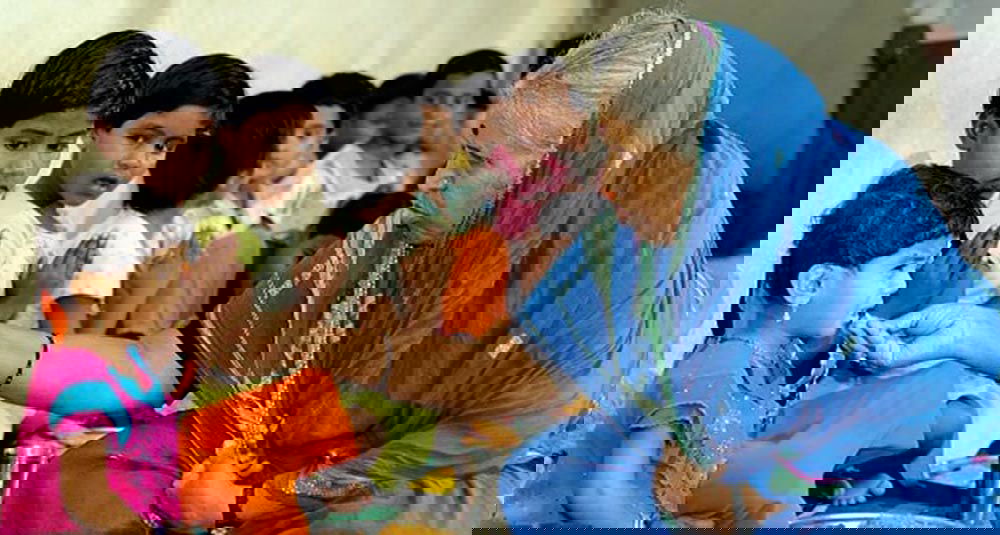
Sapkal devoted herself to orphans. As a result, she was fondly called “Mai”, which means “mother”. She nurtured over 1,500 orphaned children and through them had a grand family of 382 sons-in-law and 49 daughters-in-law.
We Indians are really proud of this legend, social activist. One ordinary young woman victim of domestic violence, forced to beg and sing in trains for a living, while begging also the abandoned children were her priority, she was homeless but fought off the shelters of many, she had to grill and grind herself in odd situations to make some lives worth living. Such courageous women make a lot of difference to society and the nation at large.
She reached the highest of the stages with her accomplishments, but she never flaunted that in her conduct, always draped in a 9-yard pink or red saree, head covered, one black Bindi of the forehead and simple chappal in feet. She used to look like Aai, a simple mother who carries the universe in her arms for her children.
Watch Makarand Deshpande's "Ram" to perceive Ram within you 16
In the era of hatred, where Ram has become a tool to violence and political possession, Makarand Deshpande’s play “Ram” is an eye-opener. Their Play is about an Impotent and helpless law enforcement agency, violent self-declared custodians of Rama and a mad man who forces Ram to come out of the temple with his utmost madness called devotion.
These days ‘Jai Shree Ram’ is said by those unethical morons and hypocrites who lynch fellow humans for their lifestyle, eating habits, caste and religion. Gang Rapes inside a temple, and they proudly say “Jai Shree Ram”? (Will Ram approve this act (or) is this Rama Rajiyam is all about?) Those who bluff people by building Ram Temple at Ayodhya, keeping the issue and heat as it is to polarize Hindu. This insult to Ram by a particular sect is portrayed beautifully in this play. Words once used by pure Bhakts these days are used by Brainwashed Extremists & Gandhi Killers that look like “Devils preaching Sermons”.
The simple message is that “Do not turn off your brain. Faith can be reasonable and rational. Faith is not superstition. As a seeker, you will be looking for reasons for your faith, for the truth about spiritual matters, and for seeing your own evidence of a divine being. Be open-minded about the supernatural, without being gullible. One needs to see within to witness Ram, unless you don’t go crazy with yourself you won’t find him here and there” says writer-director Makarand Deshpande, whose new play Ram opened during the Prithvi Festival yesterday. Theatre was houseful, in spite of it being a working day.
Fearless and honest dialogues, very neat script, it makes you laugh, it tickles your ribs and also sends ripples, makes you sad looking at the irony that we are witnessing in the name of Ram, religion and cast. The drama is a power-packed emotional trip. There is a dialogue in this play “Once people used to humbly greet others saying “Jai Ram Ji ki, but now it scares us”. In many parts of the country, it is a common greeting to relatives and known in the form of sometimes ‘Ram-Ram’ or ‘Jai Siya Ram’ as well. The narrative of greeting has changed to sloganeering for violent attacks.
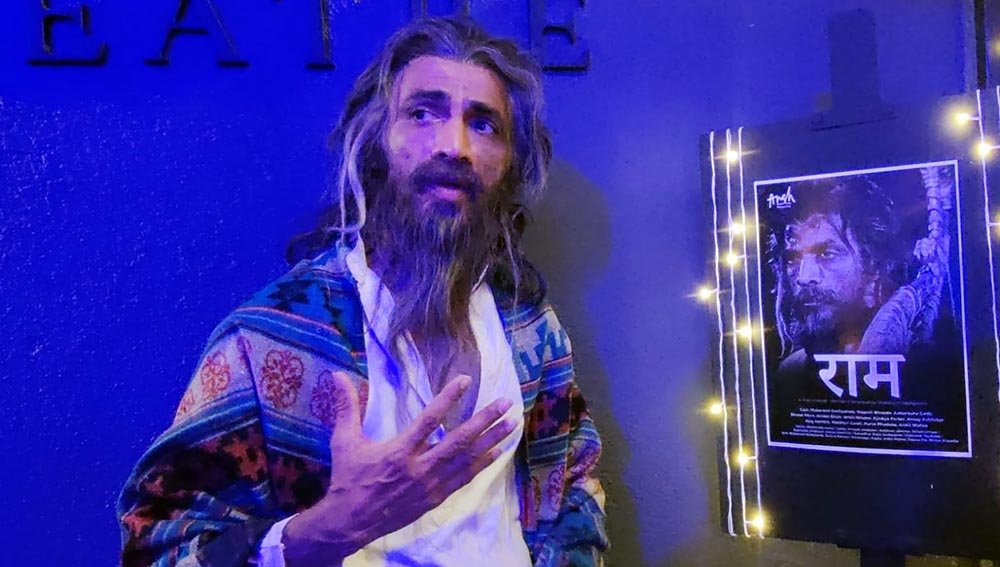
The play centres on a mad man (Makarand Deshpande) seeking shelter in a Ram temple only to be kicked out by Ram-bhakts because they think he doesn’t look the part of a devotee. It’s an obvious mention to self-proclaimed janitors of religion who frequently create chaos in the country. The mad man and so-called devotees clash prompting a police constable (Nagesh Bhosle) to intervene. The constable and the hobo strike up a conversation and what follows is a two-hour-long commentary on the country’s political, religious and social state of affairs.
What unfurls next is a series of events as the beggar is questioned by people from various walks of life about his claims. We can relate to various scenes in the play since it questions how we as a society have changed. From religious violence to mob lynching. Nagesh Bhosle was hilarious and outstanding on his part, in many scenes, he just stole the show. Nagesh’s versatile act keeps you glued.
The play also features Ajay Kamble, Ninad Limaye and Madhuri Gawli; they all were best in their roles, each actor in the play knew their craft well. The play is Written and Directed by Makarand Deshpande. He felt the need to write the play, mainly due to the “misconception” of Ram. “There have been instances where people who aren’t followers of Ram have been forced to chant ‘Jai Shri Ram’ but I didn’t want to make the play a case study,” he says.
“What charmed me most about the story was that Ram is more human than superhuman as a character. That’s something I wanted to bring out in the play. The simplicity of the character, and the fact that he was a son, a husband and a brother first and God after, is fascinating and this is my version of Ram,” says Makarand.
Markard is known for his roles in movies such as Swadesh, Makdee, and Mahesh Bhatt’s Sadak 2. He is one of the actors and directors who are hugely contributing to Indian theatre. He is an individual who can beautifully balance between films and theatre. “I don’t know why people fail to notice my work on a national level, never mind I will keep doing my best”, he said. His work demands national acclaim. But he is not the one who can be a doormat in political corridors.
“I don’t have to convince anybody of what I am capable of delivering, whereas films are a different ball game altogether. Theatre is always going to be my forte and I have a lot of freedom to express myself here, that’s why I write beyond the frame and that gives scope of improvisation for all my characters,” says Makarand.
In a discourse that seems to spring from a heartfelt need in Deshpande to make people examine received beliefs and check their own majoritarian impulses, the tramp advises the constable to write his own mythological epic. The same custodians of religion campaigner of a single version of the epics, one of which they approve, when there are in fact many. He goes on to demonstrate how the two great Indian epics, Ramayana and Mahabharata, can be married and, in the process, suggests that over time, the world has only gotten more violent and bigoted.
While watching the play and efforts of Makarand to seed that poise belief in people, a few lines of Ramcharitmanas stroke my mind “तुलसी मेरे राम को, रीझ भजो या खीज। भौम पड़ा जामे सभी, उल्टा सीधा बीज॥”. In this quadrant, Tulsidas says that when the seeds are sown in the ground, it is not seen whether the seeds are inverted or straight, but in time all the seeds germinate and all the seeds are inverted. He has done his job, it’s the viewers who have to decide how they want to see their Ram.
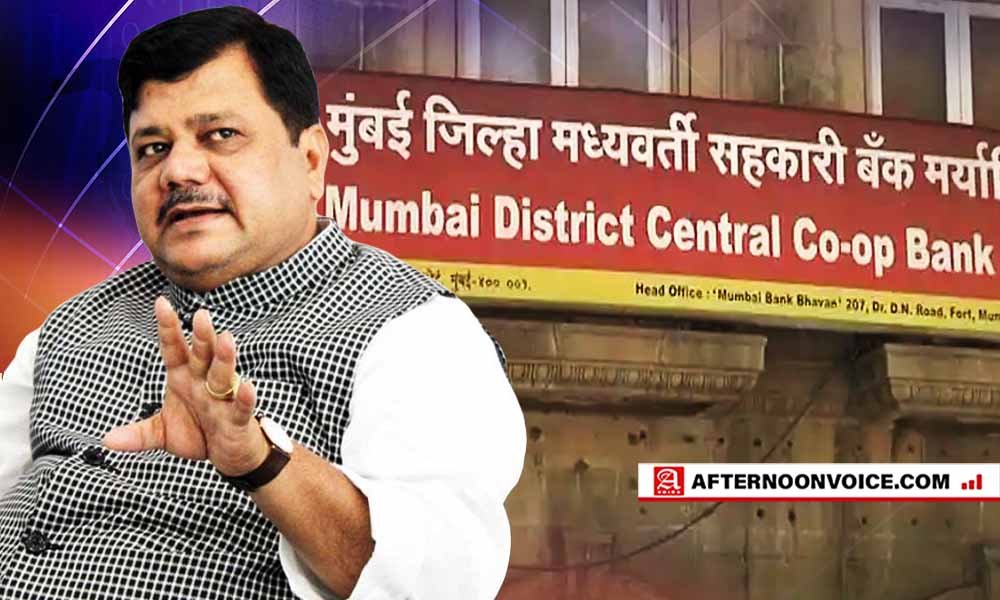
Pravin Darekar declared himself as unqualified as a labourer on January 3, 2022, by the Divisional Joint Registrar of Co-operative Societies in its order. Darekar is not a qualified labourer, but he has been working for the Mumbai District Central Co-operative Bank as a Director and Chairman for the last several years.
Darekar obtained the membership by submitting false information, the order said that he is not eligible to be elected as the director from any category for the next year as per section 78A of the Maharashtra Co-operative Societies Act, 1960. BJP leader and Leader of Opposition Pravin Darekar is under the scanner of the Maharashtra Government in connection with his election to the bank from the labourer category.
Veteran Congress leader said, “Labour Darekar is as true as Modi a chaiwala or chowkidar, BJP leaders are living high profile life but trying to portray themselves as a common man but the public knows that they are con men.”
NCP Chief Spokesman and Minority Affair Minister Nawab Malik had urged Chief Minister Uddhav Thackeray to take appropriate action against him under sections 199, 200, 420 and 37 of the Indian Criminal Code as well as other appropriate laws as for falsely claiming himself a labourer. “Therefore, an appropriate action should be taken against him under sections 199, 200, 420 and 37 of the Indian Criminal Code as well as other appropriate laws,” said Malik.
According to Malik, Darekar had won the Mumbai Bank election by showing himself as a labourer but he is the leader of opposition in the state legislative council. Further, Darekar’s earnings are very high and he is paying significant income tax. Interestingly, the Divisional Joint Registrar of Co-operative Societies in its order, said the affidavit submitted by Darekar to the Election Commission as a legislator does not include the assets of crores of rupees as well as the entries made as a professional. A person earning Rs 2.5 lakh as legislator-Leader of Opposition cannot be a labourer.
Darekar may have to struggle to continue as the Leader of Opposition in the state legislative council in the wake of yesterday’s order. However, Darekar claimed that he has been selectively targeted on this issue. “Action against me is with vengeance. The cooperation department annually conducts an audit but it seems it was sleeping during that time. I will approach the Bombay High Court against the government action,” he said.
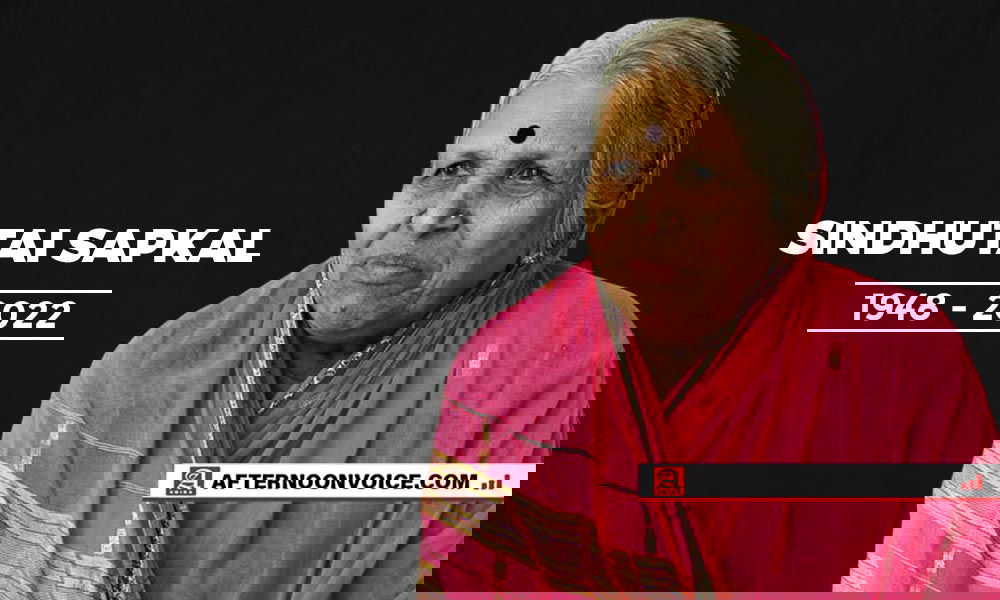
Sindhutai Sapkal, better known as ‘Mother of orphans’, passed away following a heart attack at a private hospital in Pune on Tuesday. She was 74. She was known for her work in raising hundreds of orphans, abandoned and destitute children, as well as towards the rehabilitation of women.
She had undergone surgery on November 24 last year for a large diaphragmatic hernia. She had recovered well, but about a week ago, she developed a lung infection. She suffered a massive cardiac arrest on Tuesday and passed away, said Dr Shailesh Puntambekar, medical director of Galaxy Care Hospital.
Chief Minister Uddhav Thackeray said, “The news of Sindhutai’s death is shocking. She gave motherly care to thousands of orphan children. In her sudden death, an inspirational personality has been taken away from the field of social work.”
NCP chief Sharad Pawar said, “The kind of social work that Sindhutai has done will inspire generations to come.” Former CM Ashok Chavan said, “Sindhutai herself faced a difficult life but she worked relentlessly to uplift the lives of orphan and abandoned children. Her life is a source of inspiration for millions.”