Priyanka Gandhi Accuses Kerala Govt of Delaying Congress Housing Project for Landslide Victims 2
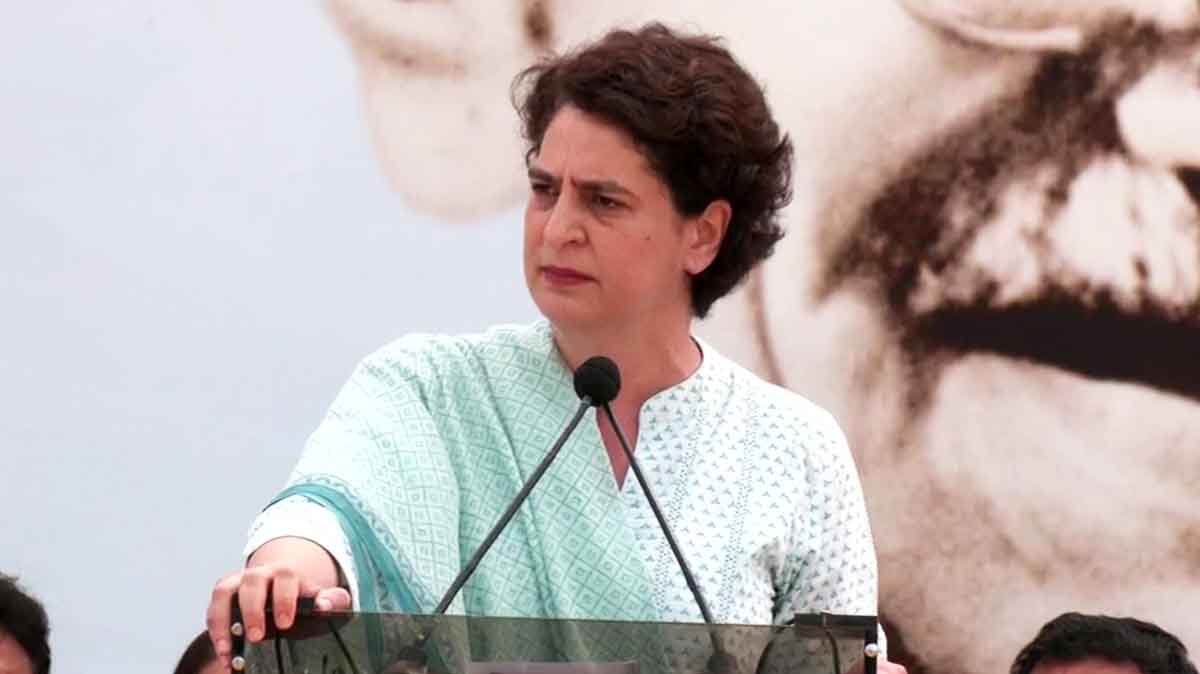
Congress MP Priyanka Gandhi Vadra on Thursday accused the Kerala government of delaying the launch of the party’s housing project for families affected by the 2024 Chooralmala landslide.
Speaking to reporters after a meeting, she alleged that the state government dragged its feet in allotting land for the rehabilitation initiative, leading to significant delays. She expressed hope that the project, for which the foundation stone is set to be laid soon, would now move forward without further hurdles.
“There was a lot of delay due to paperwork and land-related issues. Fortunately, we have been able to resolve them, and hopefully we will complete the project soon,” she said.
Priyanka Gandhi claimed that greater cooperation from the state government at an earlier stage would have enabled faster implementation of the housing scheme. Asked whether the Congress would be able to complete the project on time, she said she remained hopeful but pointed out that official clearances had taken considerable time.
The Congress leader also remarked that people in Kerala were looking for political change and voiced optimism that such a shift would take place.
Responding to questions about welfare activities in her constituency, she said she was satisfied with the overall efforts but flagged delays in funding. “Central government funds are very slow. In some cases, the state government is also slow. But more than that, the central government is slowing down funding for many schemes, which is causing delays,” she said.
The 2024 landslide in Chooralmala had left several families displaced, prompting rehabilitation efforts from both government and political organisations.
Supreme Court Bans Class 8 NCERT Book Over Judiciary Corruption Chapter, Orders Seizure and Digital Takedown 4
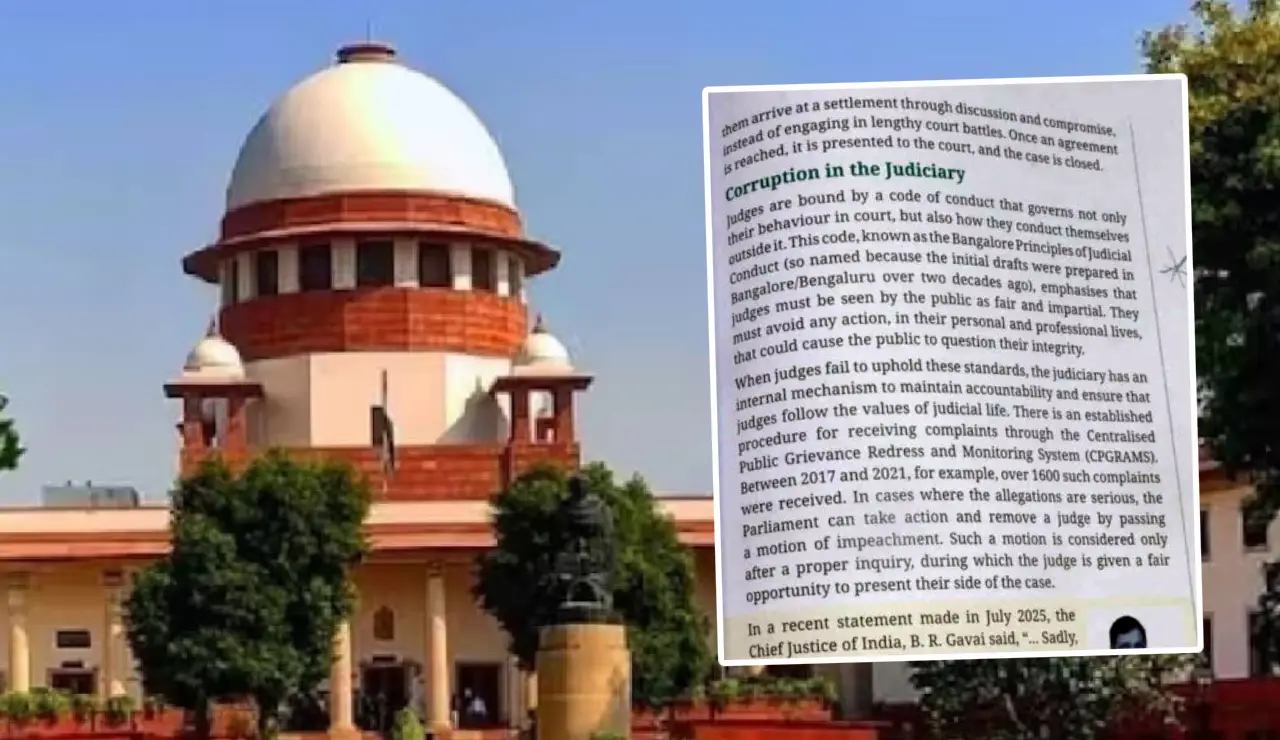
The Supreme Court on Thursday imposed a blanket ban on a Class 8 NCERT textbook containing a chapter on corruption in the judiciary, directing authorities to seize all physical copies and ensure immediate removal of its digital versions.
The apex court ordered the Centre and state governments to comply with its directions without delay, warning of “serious action” in case of any defiance. It also issued show-cause notices to the NCERT Director and the School Education Secretary, asking them to explain why action should not be initiated against those responsible for the publication.
A bench headed by Chief Justice Surya Kant observed that the inclusion of the contentious content appeared to be a “calculated move” to undermine the institution and demean the dignity of the judiciary. The court remarked that such misconduct, with a potentially lasting impact on public confidence, could fall within the ambit of criminal contempt.
“If allowed to go unchecked, this will erode people’s faith in the judiciary. No one will be allowed to go scot-free,” the bench said, adding that a deeper probe was required. The Chief Justice asserted that as head of the institution, it was his duty to identify those responsible, stating that “heads must roll” if wrongdoing is established.
The court also took exception to NCERT’s communication issued on Wednesday, noting that it did not contain a word of apology and instead appeared to justify the content. At the outset of the hearing, Solicitor General Tushar Mehta tendered an unconditional and unqualified apology on behalf of the Ministry of Education.
The matter has been posted for further hearing on March 11.
President Droupadi Murmu Begins Four-Day Multi-State Tour Across Maharashtra, Jharkhand and Rajasthan 6
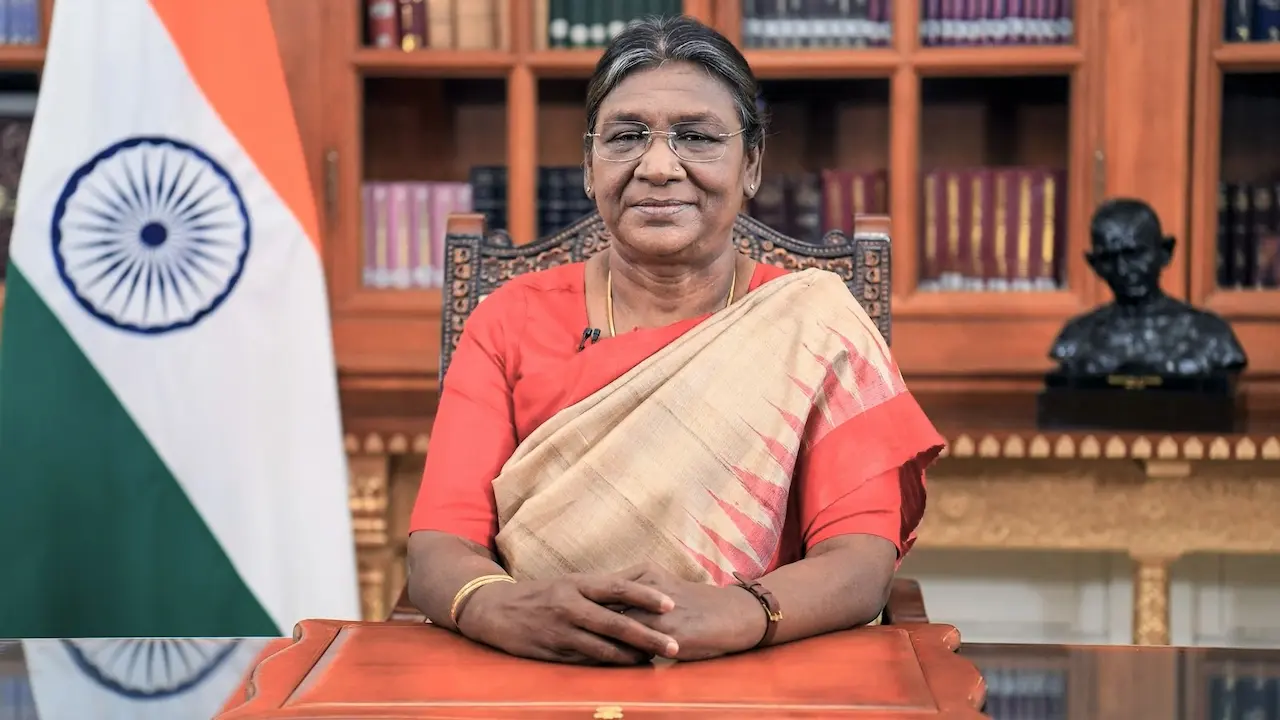
President Droupadi Murmu will embark on a four-day visit to Maharashtra, Jharkhand and Rajasthan beginning today, with a series of high-profile public engagements and ceremonial events lined up across the three states.
On the first day of her visit, the President will inaugurate the nationwide campaign ‘Saving Lives and Building a Healthier Bharat’, organised by PD Hinduja Hospital at Lok Bhavan in Mumbai.
On Tuesday, she will attend the ‘National Arogya Fair 2026’, organised by the Union Ministry of AYUSH in Shegaon, Buldhana district. She will also grace the state-level launch of the programme titled ‘Golden Era of Maharashtra through Unity and Trust’, organised by the Brahma Kumaris in Nagpur on Wednesday.
On Thursday, President Murmu will participate in the Bhoomi Pujan ceremony of the Sri Jagannath Temple in Jamshedpur, Jharkhand. The event is being organised by the Shri Jagannath Spiritual and Cultural Charitable Centre Trust. During her visit to Jamshedpur, she will also tour Manipal TATA Medical College and interact with students.
Concluding her tour on Friday, the President will witness ‘Ex Vayushakti’ at Pokharan in Rajasthan, a major demonstration of the Indian Air Force’s operational capabilities.
The visit underscores the President’s engagement with health, cultural, spiritual and defence initiatives across different regions of the country.
Bombay High Court Quashes ED’s PMLA Case Against Lawyer Kishor Devani in Anil Deshmukh Probe 8
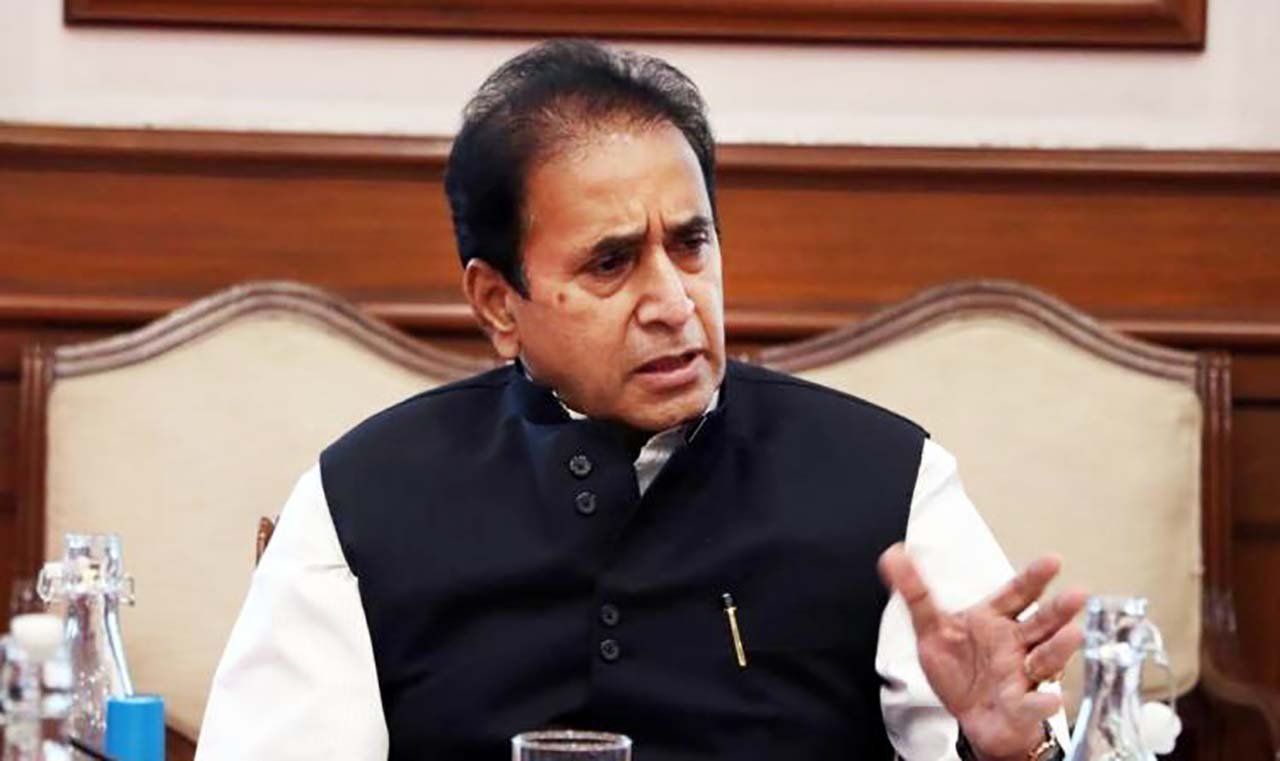
The Bombay High Court has quashed the Enforcement Directorate’s (ED) money laundering case against lawyer Kishor Devani, a close associate of former Maharashtra Home Minister Anil Deshmukh, granting him major relief in the high-profile investigation.
In its order, a single-judge bench of Justice Ashwin Bhobe set aside the criminal proceedings initiated by the ED as well as the process issued against Devani under the Prevention of Money Laundering Act (PMLA). Devani had been accused of assisting Deshmukh and his family in laundering alleged illegal collections amounting to nearly Rs 100 crore per month from Mumbai bar owners.
The ED had alleged that Devani had been a director of M/s Premier Port Links Private Limited since 2009 and that Deshmukh’s wife and son were joint shareholders in the company. According to the agency, the firm received a loan of Rs 100 crore, including Rs 2.20 crore allegedly routed from M/s Flourish Properties Private Limited, an entity linked to the Deshmukh family. The funds were allegedly used to purchase land in Dhutum village as part of a layered money laundering transaction.
However, Devani contended that Premier Port Links was jointly owned, with a 50 per cent stake held by him and the remaining by the Deshmukh family. He argued that the Dhutum village properties were acquired between 2005 and 2007—well before the alleged proceeds of crime, which the ED itself placed between December 2020 and February 2021.
After examining the charge sheets and material on record, Justice Bhobe observed that even if the ED’s allegations were accepted at face value, the purported proceeds of crime arose much later than the property transactions in question. The court found no material to establish a link between the properties purchased in 2005–2007 and the alleged criminal proceeds.
The High Court further held that the ED had failed to demonstrate that Devani knowingly dealt with proceeds of crime, a necessary requirement under Sections 3 and 4 of the PMLA. The court also criticised a September 16, 2021 order of a special PMLA court in Mumbai, stating that it lacked proper application of mind and did not satisfy the threshold for initiating proceedings.
Concluding that no prima facie case was made out, the High Court quashed the ED complaint and the process order against Devani, effectively ending the proceedings against him in the case.
Intelligent Agriculture: Maharashtra's AI-Led Green Revolution in Motion 10
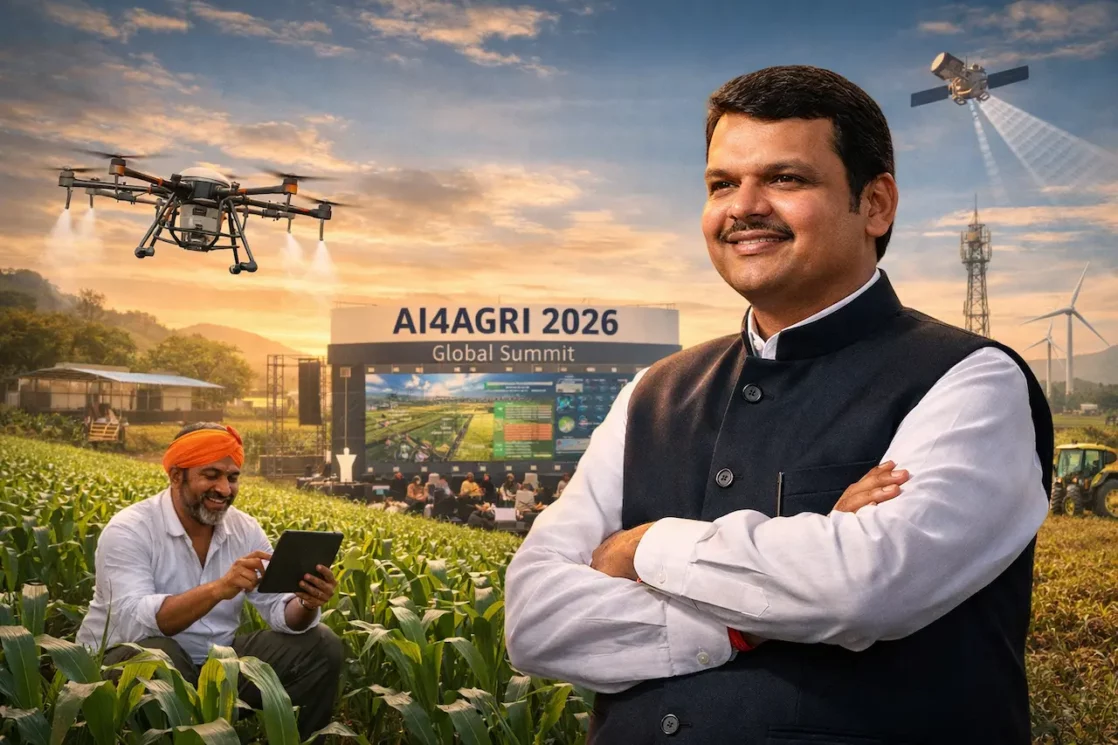
Artificial intelligence is no longer a passing wave in technology; it is becoming the structural framework of the next global economy. With projections placing its economic contribution near $15 trillion by 2030, the real question for nations is not whether AI will matter—but whether they will shape it or simply consume it. In agriculture, that question becomes even more urgent. Climate unpredictability, rising input costs, fragmented landholdings, and volatile markets have exposed the limits of traditional farming systems. Experience and instinct remain invaluable, but in an era of data abundance and weather disruption, they must be reinforced by precision, prediction, and platform-driven intelligence. Maharashtra has recognized this inflection point and chosen to act decisively.
The AI4AGRI 2026 Global Conference, organised at the Jio World Convention Centre in Bandra Kurla Complex, Mumbai, was not staged as a ceremonial gathering but as a strategic declaration. Conceived as a global knowledge-exchange platform, it brought together policymakers, state governments, international scientists, climate experts, investors, multilateral institutions, and AgriTech innovators to engage in evidence-based dialogue on deploying AI and digital public infrastructure for agricultural transformation. The ambition was clear: to move beyond incremental reform and design an ecosystem where frontier AI, advanced analytics, generative AI, remote sensing, and affordable computing converge to strengthen productivity, resilience, and farmer incomes.
Agriculture has always been India’s civilizational spine. But modern pressures demand intelligent systems capable of operating at scale. AI-powered advisory tools can integrate soil data, satellite imagery, weather forecasts, crop histories, and market signals to generate hyper-local recommendations. Instead of generic guidance, farmers receive region-specific insights—optimal sowing windows, irrigation adjustments, early pest detection alerts, nutrient management suggestions, and yield forecasting. Drone surveillance and remote sensing help detect crop stress before it becomes irreversible. Predictive climate modelling reduces uncertainty. Data-backed market intelligence narrows the information gap between producer and buyer. When farming decisions become data-informed rather than purely reactive, risk declines and margins improve.
The strength of this transformation lies not only in algorithms but in infrastructure. India has already demonstrated that digital public platforms can operate at population scale with reliability and trust. Extending that framework into agriculture creates the foundation for secure data flows, transparent traceability, and scalable innovation. AI systems require trust as much as intelligence; farmers must believe that data will not be exploited and that recommendations are practical, not theoretical. This is where responsible AI governance, digital identity, platform design, and policy coherence intersect.
AI4Agri has therefore been structured not as a one-time event but as a multi-year global platform aimed at mobilising international collaboration and investment into Agri-AI solutions. Its agenda reflects strategic depth: inclusive AI models for women farmers and emerging rural leaders; digital public infrastructure that ensures data integrity and traceability; capital alignment to scale innovations; scientific collaboration through global research networks; and policy frameworks that embed accountability in AI deployment. This approach acknowledges a basic truth—technology without governance destabilises, but technology with foresight transforms.
Leadership becomes decisive at such moments of transition. Agricultural reform has often oscillated between subsidies and short-term relief. What Maharashtra is attempting signals a shift toward systems thinking—toward building institutional architecture that can endure technological change rather than chase it. A Green Revolution powered by AI will not resemble the chemical-intensive transformation of the past; it will be driven by intelligence, precision, sustainability, and inclusion. The aim is not merely higher output but resilient food systems capable of withstanding climate shocks while preserving soil health and water resources.
When governments, industry, academia, and global institutions converge around a shared framework, ecosystems begin to form. Standards evolve. Research aligns with field realities. Investment scales solutions beyond pilots. Maharashtra’s positioning as a convening hub for Agri-AI dialogue indicates strategic intent: not to imitate global leaders blindly, but to contribute meaningfully to shaping the future of intelligent agriculture. In a world where technology defines competitiveness, the ability to integrate tradition with data-driven modernization becomes a formidable strength.
The coming decades will test whether agriculture remains vulnerable to uncertainty or becomes empowered by insight. The choice is not between tradition and technology; it is between stagnation and evolution. By embedding AI within its agricultural vision, Maharashtra signals that the next revolution in farming will not arrive through accident or rhetoric—it will be engineered through foresight, collaboration, and disciplined execution. And in an age defined by disruption, foresight is the most valuable crop a nation can cultivate.
Rohit Pawar Slams Maharashtra Govt Over CBI Probe in Ajit Pawar Crash, Raises Fresh Questions 12
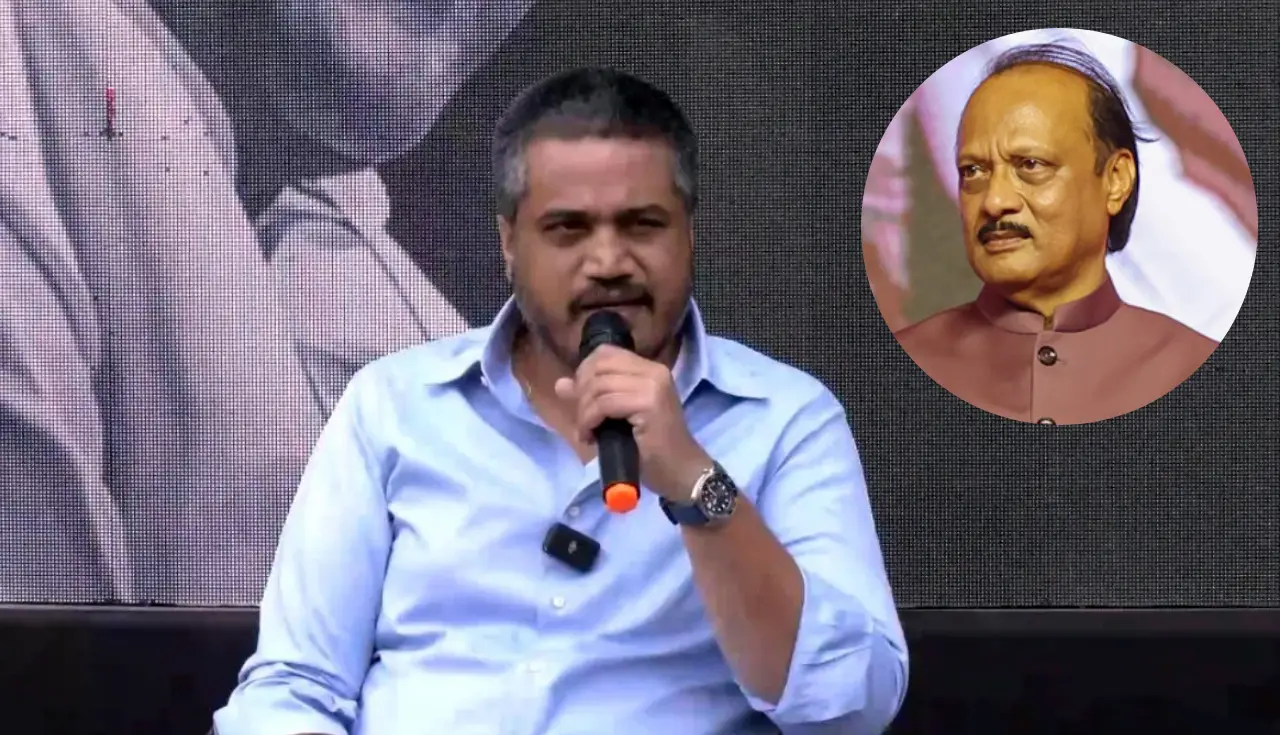
NCP (SP) MLA Rohit Pawar on Monday criticised the Maharashtra government’s decision to seek a CBI probe into the plane crash that killed Deputy Chief Minister Ajit Pawar, alleging that handing the case to the central agency would only delay the investigation.
His remarks came a day after Chief Minister Devendra Fadnavis said the state had requested Union Home Minister Amit Shah to order a CBI inquiry into the January 28 crash in Baramati that claimed five lives.
Speaking to reporters at the Vidhan Bhavan, Rohit Pawar said a report seeking a CBI investigation had already been submitted to the Directorate General of Civil Aviation (DGCA), the Union ministry concerned and the chief minister. He argued that the CBI was burdened with nearly 7,000 pending cases, including around 2,500 pending for more than a decade, and claimed that the Maharashtra CID was capable of conducting a timely probe.
“We will not tolerate wastage of time in the name of investigation. Only 30 per cent of the information regarding the crash has been made public. Seventy per cent of the material is still with me,” he said.
Rohit Pawar also questioned reports that the black box of the ill-fated Learjet 45 aircraft had been burnt, claiming photographs of the device had reached him. “If any irregularity comes to light, this government will have to pay a heavy price,” he warned.
He reiterated his demand that Union Civil Aviation Minister K Ram Mohan Naidu step aside until the investigation is completed.
Recalling Ajit Pawar’s legislative contributions, Rohit Pawar said this was the first session without his uncle, who had presented the state budget 11 times and could have gone on to set new records. “He would always say that no matter what happens, one must fight — and that is why we are fighting,” he added.
On the absence of NCP (SP) leaders at the Maha Vikas Aghadi meeting ahead of the budget session, Rohit Pawar said senior leaders were held up elsewhere. He also said Sharad Pawar’s vast experience could continue to guide the party, especially with Rajya Sabha elections approaching.
NCP (SP) MLA Jitendra Awhad, meanwhile, said delays in the probe had fuelled public suspicion. He termed the claim that the black box was burnt as “the biggest doubt,” adding that such an occurrence was unprecedented. Awhad also alleged that the aircraft had exceeded its permitted flying hours and lacked proper clearance.
The Maha Vikas Aghadi, he asserted, remained united.
The Kerala Story 2: Stop Turning Kerala into a Political Scapegoat 14
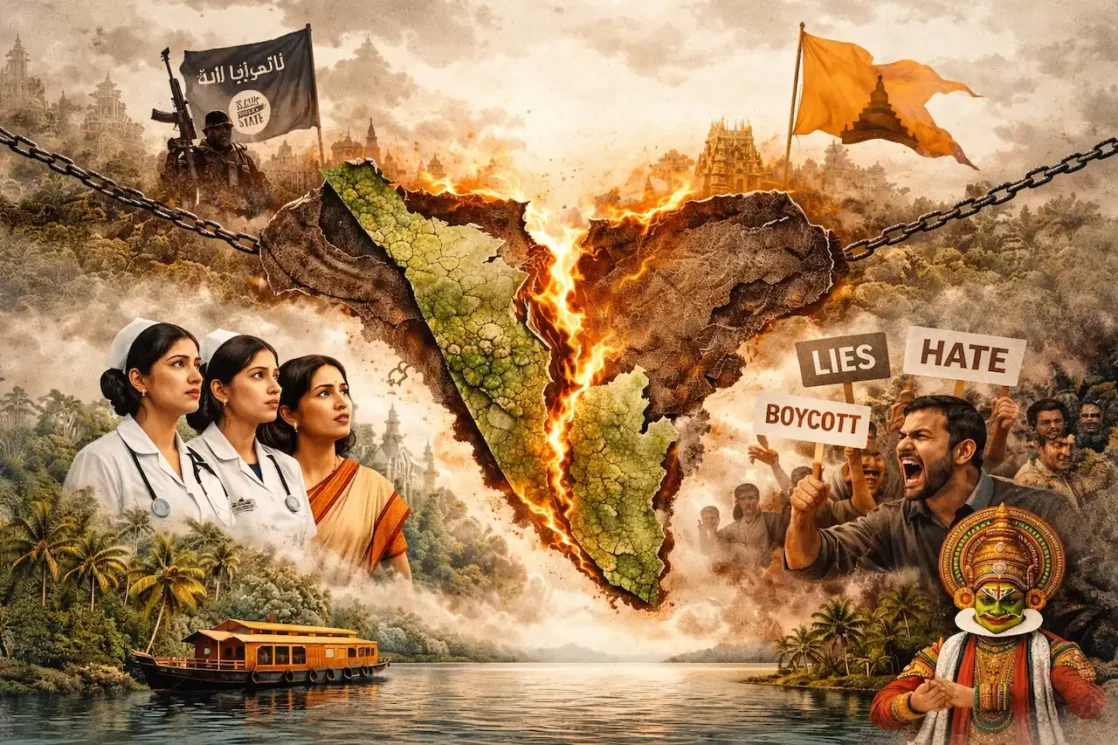
Kerala has long been called God’s Own Country, and not without reason. A narrow, fertile strip between the Arabian Sea and the Western Ghats, it is a land of temples and churches, mosques and monasteries, coconut groves and backwaters, literature and learning. Its nurses heal across continents, its teachers shape generations abroad, its migrant workers carry the state’s resilience into the Gulf and beyond. It is devout yet politically argumentative, traditional yet fiercely modern. And precisely because it defies neat categorisation, it has become a convenient target for neat political narratives.
In recent years, Kerala has repeatedly been framed as a hotbed of demographic conspiracy, radical recruitment and civilisational vulnerability. The 2023 Hindi-language film The Kerala Story, directed by Sudipto Sen and produced by Vipul Amrutlal Shah, claimed to be inspired by real events involving the alleged coercion of Hindu women into extremist networks. It was marketed with dramatic numbers suggesting mass conversion and recruitment. Eventually, the filmmakers had to include disclaimers acknowledging that the figures were inauthentic and that the story was fictionalised. Critics described it as propaganda; supporters called it a brave exposé. Either way, the film ignited a national controversy not merely about content but about intent.
The sequel has deepened the confrontation. Within hours of the trailer release of The Kerala Story 2: Goes Beyond, social media from Kerala erupted in sharp resistance. Memes, rebuttals and counter-campaigns flooded timelines. Now the Kerala High Court has issued notice to the producers, the Central Board of Film Certification and the Union Government over a petition questioning the film’s certification and even its title. The concern is straightforward: when narratives involving multiple states are branded exclusively as “The Kerala Story,” they attach allegations of terrorism, forced conversion and demographic conspiracy uniquely to Kerala’s identity. Titles are not neutral. They frame public imagination.
Strip away the cinematic intensity and a sober question emerges: is Kerala truly facing an organised existential threat, or is the state being drafted into a larger political strategy? Kerala is not without problems. No society is. There have been isolated cases of radicalisation; law enforcement has acted in such matters. There have been interfaith marriages that later turned controversial. There have been instances of ideological friction. But official investigations have repeatedly stated that there is no evidence of a coordinated mass campaign of forced conversion as portrayed in exaggerated narratives. The widely discussed Hadiya case, examined by investigative agencies and ultimately addressed by the Supreme Court, reaffirmed the constitutional right of an adult woman to choose her partner and her faith. That ruling was not merely about one individual; it was about autonomy in a republic governed by law.
To suggest that Kerala’s Hindu women are collectively naïve, easily manipulated or under siege is not only factually contestable but deeply patronising. Kerala’s women are among the most literate in India. Many serve as nurses and therapists across the globe, particularly in Muslim-majority nations. They navigate diverse cultural environments daily, often as primary earners in their households. They are not sheltered caricatures of innocence; they are professionals shaped by one of India’s most robust educational systems. Interfaith relationships, whether between Hindu women and Muslim men or vice versa, are complex social realities influenced by personal choice, changing aspirations and individual circumstances. They are not automatically evidence of conspiracy. Allegations of coercion, if proven, must be prosecuted with full force of law. But conflating isolated cases with an orchestrated demographic war corrodes rational debate.
Kerala’s social fabric is the product of centuries of plural contact. Arab traders reached the Malabar coast long before many parts of North India encountered Islamic rule. Jewish communities found refuge in Kochi. Syrian Christians trace ancient roots there. Temple culture flourished alongside mosque architecture. Onam is celebrated across communities. Communal harmony in Kerala has not been perfect, but it has been negotiated over time through reform movements, social renaissance leaders and political mobilisation that cut across caste and religion. Simplifying such a layered history into a binary of victim and aggressor is historically irresponsible.
The political context cannot be ignored. Kerala is not governed by the BJP; it is led by a Left coalition under Chief Minister Pinarayi Vijayan. In a highly polarised national environment, ideological difference often sharpens narrative battles. When a state does not align electorally with a dominant national party, its internal tensions can become amplified symbols. Problems that would be treated as local elsewhere become national flashpoints when attached to Kerala. Cinema, in such circumstances, morphs into a political instrument. That does not mean filmmakers lack the right to explore dark themes. It does mean that audiences are entitled to question whether storytelling is serving truth or serving strategy.
Cultural misunderstanding further complicates matters. Few issues reveal India’s diversity as starkly as the debate around cattle and beef. In much of North India, the cow holds sacred status shaped by centuries of agrarian dependence and religious symbolism. In Kerala, geography shaped a different economy. Large stretches were historically waterlogged paddy fields where water buffalo were better suited for cultivation than bullocks. The region never depended heavily on cattle rearing in the way the Gangetic plains did. The coconut tree, providing food, oil, fibre and fuel, became central to daily life. Over time, beef became part of Kerala’s culinary mainstream across religious lines. It is legal in the state, widely available and embedded in local cuisine. For many in Kerala, dietary practice is cultural rather than ideological. For many in the plains, reverence for the cow is civilisational. National maturity requires understanding both emotional landscapes without demonising either.
The surge in beef consumption in Kerala over the twentieth century was driven as much by economic shifts and cattle import patterns as by religious demography. The absence of sweeping cultural taboos allowed it to integrate into local diets. None of this makes Kerala anti-national. It makes Kerala different. Diversity has always meant difference, not uniformity. Demanding identical symbols of reverence from every region of India misunderstands how civilisations actually function.
What is troubling is not discussion of security. Vigilance against extremism is necessary everywhere. What is troubling is the leap from vigilance to sweeping indictment. When exaggerated figures are used to suggest thousands of women have been radicalised without substantiating evidence, public anxiety is manufactured faster than facts can respond. When one community is portrayed predominantly as predator and another exclusively as prey, social distrust deepens. That trajectory is dangerous in a country as plural as India.
Cinema has power. It shapes perception beyond box office numbers. A film that claims to reveal hidden truths bears a responsibility to anchor itself in verifiable data. If disclaimers are later required to clarify that figures are inaccurate and depictions fictionalised, credibility suffers. Propaganda is not defined solely by political alignment; it is defined by selective amplification designed to provoke. Audiences increasingly recognise the difference between art that interrogates reality and art that weaponises it.
The backlash from Kerala—court petitions, organised social media campaigns and pointed satire—reveals something important. The state is not silent. It pushes back. That pushback is not denial of problems; it is resistance to caricature. Kerala has confronted its own violent clashes between political cadres, its own episodes of communal tension, its own socioeconomic strains arising from migration and unemployment. These issues deserve granular reporting, not grand narrative inflation.
The heart of the matter is balance. If credible threats emerge, they must be confronted transparently and decisively. But if numbers are exaggerated, if incidents are generalised, if a state’s name becomes shorthand for terror in the national imagination without proportionate evidence, then the discourse shifts from security to stigmatisation. That shift harms not only Kerala’s image but India’s social cohesion.
India is not strengthened by setting one community against another. Nor is it strengthened by dismissing all concerns as hysteria. It is strengthened by clarity, by constitutional fidelity, by refusing to infantilise its women and demonise its minorities. Kerala embodies contradiction—deep religiosity coexisting with leftist politics, temple festivals flourishing alongside church feasts, beef on one table and strict vegetarianism on another. That coexistence is messy, imperfect and democratic.
The real story of Kerala is not mass conspiracy. It is negotiation. It is argument conducted within constitutional boundaries. It is young women boarding flights to Doha as nurses, remitting income back to families that light lamps at temples and celebrate festivals across faith lines. It is courts examining contested films. It is citizens responding with critique rather than violence.
If the nation seeks strength, it must resist the temptation of easy villains. Hard truths deserve evidence, not exaggeration. Kerala does not require myth-making to be understood. It requires honesty. And honesty, not propaganda, is what ultimately sustains both democracy and unity.
Rahul Gandhi Appears in Bhiwandi Court, Submits New Surety in RSS Defamation Case 16
Congress leader Rahul Gandhi on Saturday appeared before a magistrate’s court in Bhiwandi, Maharashtra’s Thane district, to furnish a new surety in an ongoing defamation case filed against him by an RSS activist.
The court had directed Gandhi to present a fresh surety after former Union Home Minister Shivraj Patil, who had stood as his guarantor in the case, passed away in December last year. Gandhi submitted Maharashtra Pradesh Congress Committee chief Harshwardhan Sapkal as his new surety.
The magistrate had specifically instructed the Leader of Opposition in the Lok Sabha to remain present in person to complete the legal formalities related to the change of surety, his lawyer had earlier said.
The case stems from a complaint filed by Rashtriya Swayamsevak Sangh (RSS) activist Rajesh Kunte, who alleged that Gandhi, during a rally at Sonale village in the run-up to the 2014 Lok Sabha elections, stated that the RSS was behind the assassination of Mahatma Gandhi. Kunte claimed the remark was false and damaged the organisation’s reputation, and filed the complaint under Section 500 (defamation) of the Indian Penal Code.
The trial has progressed with Kunte’s cross-examination and re-examination already completed. The matter, which was initially scheduled for hearing on December 20, 2025, was adjourned to January 17 due to the requirement of a new surety. On January 17, the magistrate further deferred the hearing to February 21.
The Robotic Dog Scandal and India's Moment of Embarrassment 18
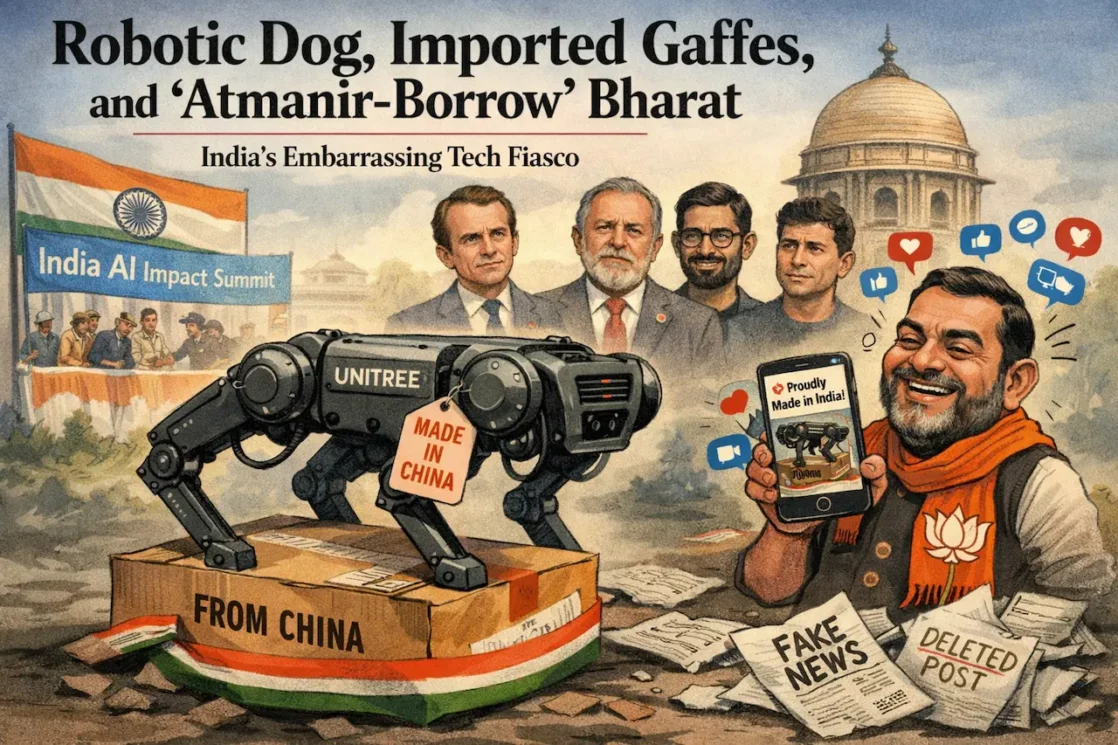
India hosted the India AI Impact Summit with all the pomp and ambition of a nation ready to proclaim itself a technological powerhouse. The stage was global, the audience formidable. Leaders like Emmanuel Macron and Luiz Inácio Lula da Silva were in attendance, global tech heavyweights such as Sundar Pichai, Sam Altman and Cristiano Amon were expected to participate, and Prime Minister Narendra Modi was set to address the gathering. This was supposed to be India’s moment — a confident announcement to the Global South that we are not just consuming artificial intelligence, we are building it. Instead, what stole the spotlight was not a breakthrough algorithm or a groundbreaking chip, but a robotic dog that could be ordered online.
The controversy exploded when videos from the summit circulated widely on social media. Representatives from Galgotias University showcased a sleek four-legged robot named “Orion,” describing it as a product of the university’s Centre of Excellence. The optics were powerful: a made-in-India quadruped symbolizing indigenous innovation. The applause, however, did not last long. Internet users quickly identified the machine as the Unitree Go2, a commercially available robotic dog manufactured by China-based Unitree Robotics. Available for purchase in India for roughly ₹2–3 lakh, and globally at modest price points, it is widely used in labs and classrooms around the world. There was nothing mysterious about it, and certainly nothing indigenous.
What followed was a textbook case of narrative outrunning facts. Critics accused the university of passing off imported technology as homegrown innovation. Under pressure, Galgotias University clarified on social media that the robot had indeed been procured from Unitree and was being used merely as a teaching aid. Yet the explanation came too late. Government sources indicated that the university was asked to vacate its exhibition space at Bharat Mandapam during the summit. Professor Neha Singh later stated she never explicitly claimed the robot was built from scratch but had only presented it as an exhibit. Still, the perception of misrepresentation had already hardened.
The embarrassment did not stop there. Reports soon highlighted another product displayed by the university — a drone soccer device allegedly developed on campus. Observers pointed out striking similarities between the showcased drone and commercially available models associated with South Korea’s Helsel, the pioneer of drone soccer technology since 2015. Once again, what was suggested to be domestic innovation appeared suspiciously like imported hardware. Two incidents in quick succession turned what should have been a triumphant AI gathering into an uncomfortable international talking point.
The real damage lies not in buying foreign technology. Universities across the world procure international tools for research. There is no shame in importing a robot for educational purposes. The humiliation arises when optics blur into exaggeration. At a summit attended by heads of state and CEOs evaluating India’s AI ecosystem, the line between showcasing research capability and implying product ownership must be crystal clear. Investors and global partners do not measure technological leadership by viral videos; they examine patents, supply chains, intellectual property, and research depth.
Equally troubling was the rush by several political figures and supporters to amplify the robotic dog as a symbol of India’s success without basic verification. Posts celebrating the “indigenous breakthrough” spread quickly. Images were circulated proudly. When online users exposed the truth, those celebratory posts quietly disappeared. Deleting a tweet may remove it from a timeline, but it does not erase the digital trail or the credibility lost in the process. In the age of screenshots, enthusiasm without due diligence is not harmless; it is reckless.
This episode has wider implications. The India AI Impact Summit was marketed as a flagship initiative projecting India as a serious AI leader for the Global South. When an internationally visible event becomes associated with questions of authenticity, it risks overshadowing the genuine achievements of Indian scientists and startups. The country has brilliant engineers building large language models, robotics solutions, semiconductor designs, and AI applications across sectors. Their painstaking work does not deserve to be diluted by careless showmanship.
There is also a question of institutional responsibility. How did a private university’s exhibit pass through vetting processes at such a high-profile international summit without clearer disclosures? Large-scale events require rigorous screening, not just elaborate staging. Transparency should not depend on social media detectives correcting public claims after the fact. The credibility of national platforms rests on strong institutional filters long before exhibition booths are opened.
The broader irony cuts deeper. The government has consistently championed the vision of “Atmanirbhar Bharat,” emphasizing self-reliance in manufacturing and technology. The aspiration is legitimate and necessary. But self-reliance cannot be retroactively stamped onto imported machines. It is built through sustained research investment, academic integrity, and honest representation of progress. Branding cannot substitute for building. A slogan becomes hollow the moment presentation outpaces substance.
International observers are not easily swayed by spectacle. When leaders like Macron or Lula attend an AI summit in New Delhi, and global executives such as Pichai or Altman share the stage, they are evaluating whether India offers credible partnerships, robust innovation ecosystems, and trustworthy institutions. An episode involving misrepresented hardware risks feeding skepticism that India is better at packaging than producing. Whether fair or not, perceptions matter on the global stage.
The government now faces a choice. It can treat this episode as a minor embarrassment and move on, or it can use it as a catalyst for stricter standards. Clear guidelines must define how institutions present imported technologies at official forums. Claims of indigenous development must be backed by documentation. Political endorsements should follow verification, not precede it. A developed nation does not rely on viral validation; it relies on verifiable achievement.
It is tempting in moments like this to demand punitive action out of anger — cancellation of accreditation, arrests, sweeping punishments. Yet durable solutions require systemic reform rather than symbolic fury. The objective should be to restore credibility and prevent recurrence, not merely to produce scapegoats. Transparency, accountability, and procedural rigor are stronger correctives than outrage alone.
India stands at an important technological crossroads. The ambition to become a developed nation by the coming decades is not fantasy; it is achievable. But development is not a marketing campaign. It is discipline sustained over years. When we celebrate prematurely, we invite scrutiny. When scrutiny reveals exaggeration, we invite ridicule. When ridicule becomes international, we undermine the very institutions tasked with carrying the national vision forward.
The robotic dog saga may fade from daily headlines, but its lesson should not. If we want the world to take India’s AI aspirations seriously, we must first take our own standards seriously. Celebrate what is real. Build what does not yet exist. And above all, remember that credibility, once dented on a global stage, costs far more to repair than any robotic dog ever will.
When Politics Sinks to the Gutter: Deflection, Distortion, and the Assault on India’s Democratic Memory 20
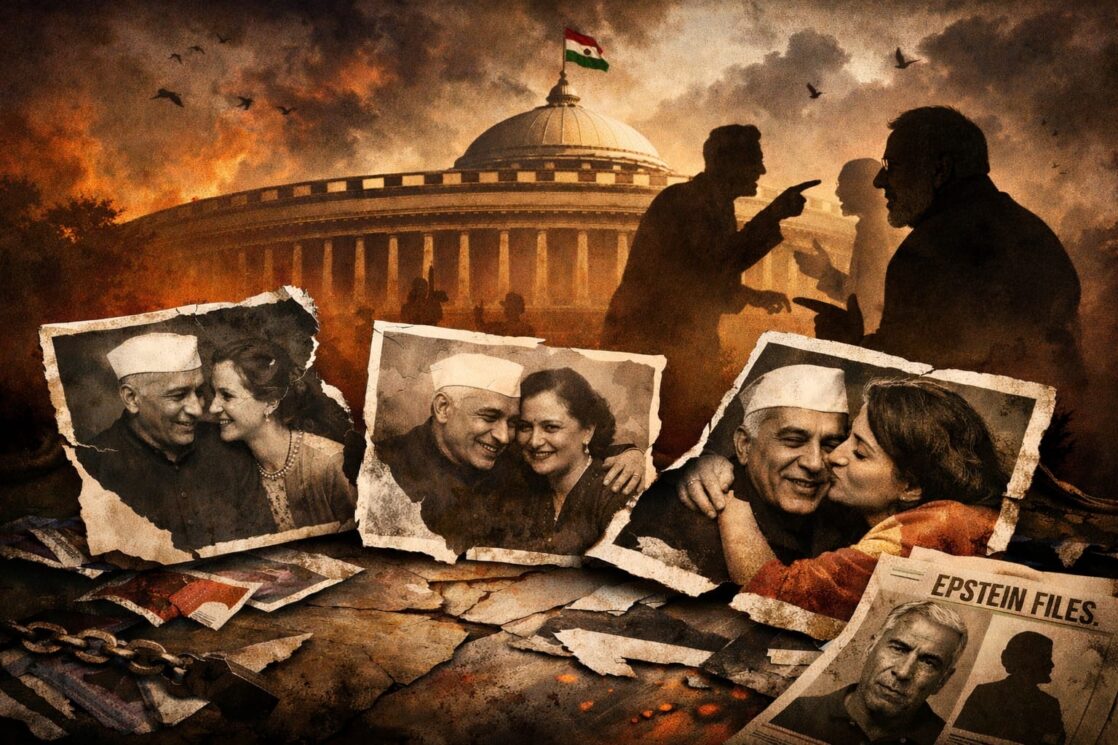
The scenes that unfolded outside Parliament yesterday were not just another episode in India’s noisy political theatre. They were a revealing moment — one that exposed how fragile, reactionary and intellectually hollow public discourse can become when political desperation takes precedence over dignity.
A senior leader of the Bharatiya Janata Party, while responding to allegations circulating about so-called “Epstein files” and an alleged connection being whispered around Prime Minister Narendra Modi, chose not to confront the matter with evidence, clarity, or reason. Instead, he stood before the media with a handful of photographs of India’s first Prime Minister, Jawaharlal Nehru. One photograph showed Nehru alongside Edwina Mountbatten. Another featured his sister, Vijaya Lakshmi Pandit. The third showed a tender family moment — his niece, Nayantara Sahgal, affectionately hugging and kissing her uncle on the cheek.
It was, by all reasonable standards, a loving family photograph. Anyone with basic emotional intelligence can recognise affection within a family without descending into cheap insinuations.
And yet, what appeared to be the subtext of this spectacle? A crude attempt to imply: “Even if Modi’s name appears in certain speculative files, Nehru was no saint either.” This is not argument. This is intellectual bankruptcy dressed up as outrage.
Let us examine the absurdity.
First, the relationship between Nehru and Vijaya Lakshmi Pandit was that of brother and sister. Pandit was a distinguished diplomat who later became President of the United Nations General Assembly. To weaponise photographs of siblings standing together is not political debate — it is moral decay.
Second, the photograph with Nayantara Sahgal depicted familial affection between an uncle and niece. Sahgal herself has written extensively about growing up in Anand Bhavan surrounded by intense political discussions and nationalist fervour. To twist such images into something unsavoury is not only shameful; it reflects a disturbing willingness to defile even family bonds for political convenience.
Third, and most sensationalised over decades — Nehru’s friendship with Edwina Mountbatten. Yes, the two shared a deep bond. It has been documented, analysed, romanticised, and scrutinised. But it has also been clarified by Edwina’s daughter in her memoir Daughter of Empire, where she emphasised the respect, emotional kinship and platonic nature of their relationship. Both Nehru and Edwina belonged to elite political circles. They interacted frequently in public, amidst officials and dignitaries. Their correspondence, when released, revealed warmth — not scandal.
History records human relationships in shades of complexity. It does not validate sensational gossip engineered decades later for political mud-slinging.
Now let us turn to the deeper issue — the practice of dragging freedom fighters into contemporary controversies. Nehru was not merely India’s first Prime Minister. He was a central architect of independent India. He spent nine long years in British prisons. He helped lay down the foundations of democratic institutions — from IITs and scientific research centres to a secular constitutional framework. He navigated a shattered nation through Partition’s horrors without social media, without propaganda machinery, and without an IT cell narrating his glory day and night.
Disagree with his policies. Critique his economic model. Debate his Kashmir approach. That is legitimate in a democracy. But equating affectionate family photographs with modern allegations tied to entirely unrelated global scandals crosses into intellectual delinquency.
As for the mention of “Epstein files” — allegations and insinuations are not convictions. The global controversy surrounding Jeffrey Epstein has engulfed politicians, businessmen, celebrities and royals worldwide, often on the basis of association rather than proof. Dragging such speculative matters into India’s internal politics without verified evidence is reckless. If credible facts exist, they should be investigated transparently. If not, weaponising whispers is nothing but character assassination.
Equally troubling is the use of allegedly AI-generated or digitally manipulated images in political attacks. In an age where artificial intelligence can fabricate convincing visuals, deploying altered historical imagery to score points is deeply unethical. Once truth becomes optional, democracy becomes ornamental.
The larger question is this: Is there even a valid comparison between Modi and Nehru?
Nehru governed a fragile newborn republic emerging from colonial ruin. Literacy was abysmal. Infrastructure was skeletal. Industrial capacity was marginal. He was building from ashes. Today’s India, for all its challenges, stands on the institutional scaffolding erected in those first years. To deny his role in shaping modern India is historical illiteracy.
Prime Minister Narendra Modi governs a rising economic power with digital governance, global connectivity, expansive media networks and unparalleled communication tools. His political era operates in a completely different landscape. He benefits from decades of institutional continuity.
Every leader must be judged within their context.
But what unfolded yesterday was not contextual criticism. It was deflection. Instead of directly addressing questions raised by the Opposition — including Rahul Gandhi’s recent parliamentary demands for accountability over tariff policies — the ruling party appeared more interested in rewriting old narratives. Gandhi’s recent speech, questioning economic policy and accountability, deserved rebuttal with data. Instead, what the public witnessed was distraction, diversion, and personal denigration.
This pattern reflects a broader concern: the shrinking space for reasoned discourse. Dissent is increasingly labelled as disloyalty. Questions are treated as conspiracies. Historical figures are selectively vilified while contemporary leaders are elevated beyond criticism.
Democracy does not function on personality cults. It functions on accountability.
Nehru did not silence critics by projecting doctored imagery of his predecessors. He debated them inside Parliament. His speeches remain on record — articulated, reasoned, and often self-critical. Today, Parliament sessions are frequently disrupted, Opposition voices curtailed, and media narratives polarised into camps.
One may strongly support or oppose any leader — Modi included. But lowering standards of debate to insinuations about family affection photographs sets a dangerous precedent. It tells younger generations that nothing is sacred — not freedom fighters, not familial bonds, not historical truth.
Criticise policies. Scrutinise decisions. Demand transparency over tariffs, economic partnerships, diplomatic positions — absolutely. That is the lifeblood of democracy. But attempting to obscure contemporary allegations by dredging up distorted historical photographs insults the intelligence of the nation.
India is not a playground of propaganda. It is a civilisation-state with memory.
You can disagree with Nehru’s vision, but you cannot erase his sacrifices. You can defend Modi robustly, but you cannot shield him through historical mud. The strength of a government lies not in silencing debate but in winning it through argument.
Yesterday’s episode was not merely poor optics. It was a moral low. And if political parties continue racing toward theatrical sensationalism rather than substantive governance debates, the casualty will not be one leader’s image — it will be public trust itself.
In a mature democracy, truth does not need manipulated images. It needs courage.