


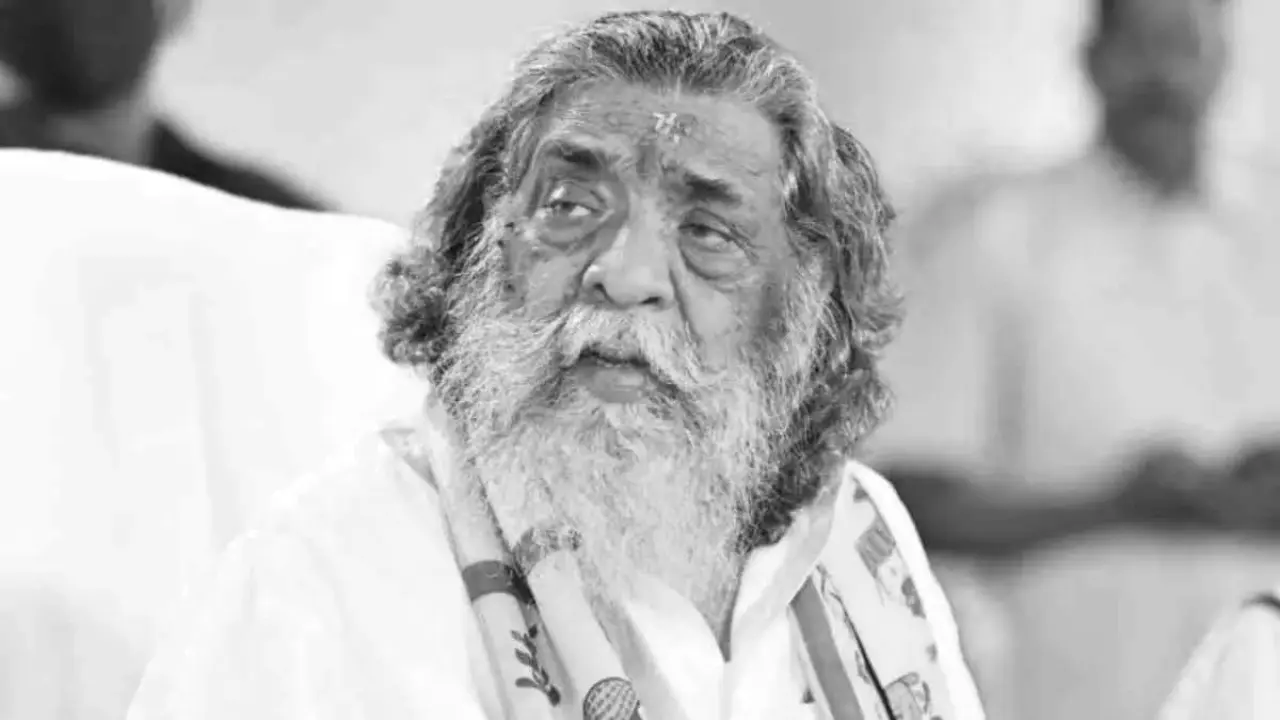
Veteran tribal leader and Jharkhand Mukti Morcha (JMM) founder Shibu Soren, who passed away at the age of 81, leaves behind a towering legacy defined by relentless advocacy for tribal rights, landmark political milestones, and a career punctuated by controversy. His death marks the end of an era in Indian regional politics and the tribal movement he helped bring to national prominence.
Born on January 11, 1944, in Nemra village (then in Bihar, now in Jharkhand), Soren—popularly known as “Dishom Guru”—emerged from personal tragedy and socio-economic hardships to become a voice for the oppressed. The brutal killing of his father by moneylenders when he was just 15 became the catalyst for his lifelong fight against exploitation and injustice.
In 1973, Soren co-founded the JMM alongside AK Roy and Binod Bihari Mahto, transforming a grassroots movement into a powerful political force that championed the creation of a separate tribal state. After years of agitation, Jharkhand was finally carved out of Bihar on November 15, 2000.
Soren’s political influence extended beyond state borders. Elected multiple times to the Lok Sabha from Dumka and later to the Rajya Sabha, he also served thrice as Jharkhand’s Chief Minister—though each term was short-lived due to unstable coalitions. He held the Union Coal Ministry portfolio under the UPA government but faced legal troubles that overshadowed his ministerial roles.
In 2004, an arrest warrant in the 1975 Chirudih massacre case led him to briefly go underground. Though later granted bail and acquitted in 2008, he again found himself at the center of controversy after being convicted in 2006 in the sensational 1994 kidnapping and murder of his former secretary, Shashinath Jha. The case, tied to the infamous 1993 no-confidence vote bribery scandal, captured national attention. However, Soren was acquitted, and the Supreme Court upheld the decision in 2018.
Surviving even an assassination attempt in 2007, Soren’s resilience made him an enduring symbol of tribal resistance and empowerment. His political clout remained unshaken, and he served as JMM president for nearly four decades until April 2025, when he was named founding patron. His son, Hemant Soren, succeeded him as party chief and continues to serve as Jharkhand’s Chief Minister. Another son, Basant Soren, is a legislator, while daughter Anjani leads the party’s Odisha unit.
Despite the controversies, Soren is remembered as the architect of Jharkhand’s tribal identity—a figure who gave voice to the marginalized and left an indelible imprint on Indian politics.
