


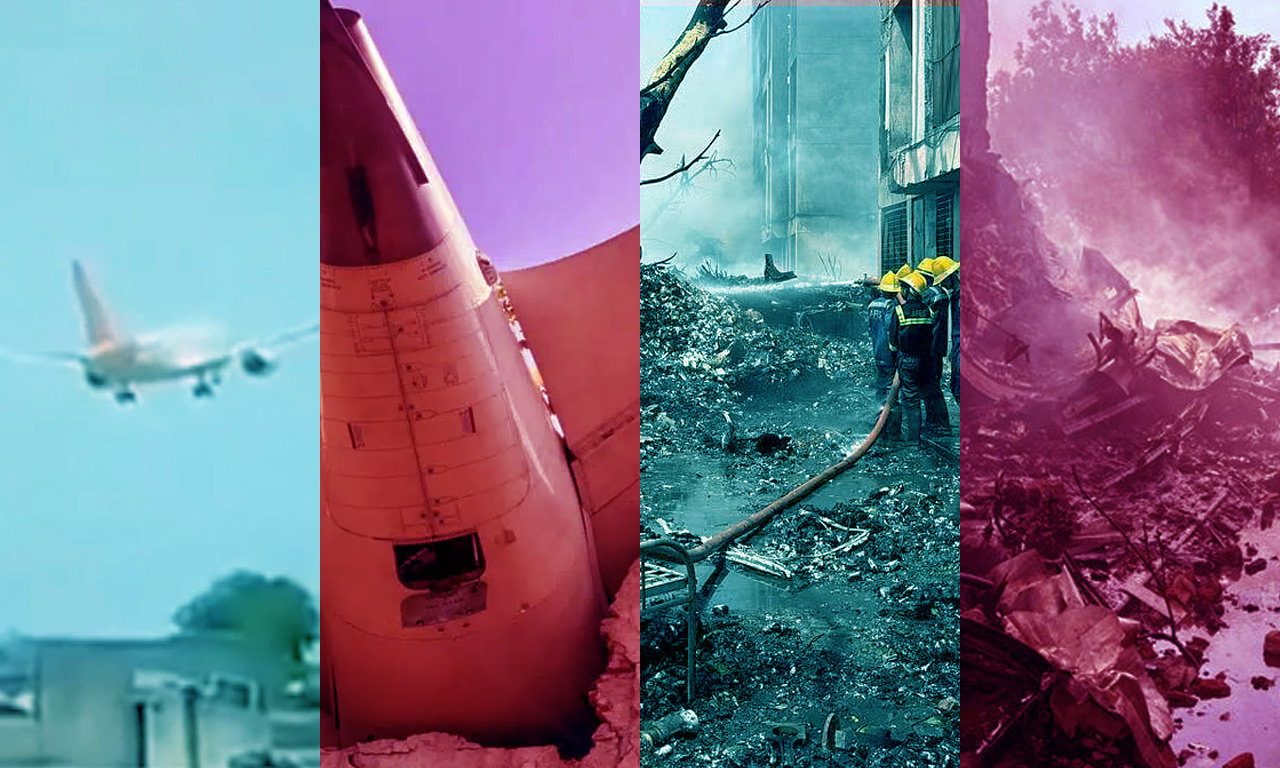
June 12, 2025, will be etched in the memory of the nation as a dark and devastating day. An Air India flight, AI171, en route from Ahmedabad to London, crashed into a residential area just moments after takeoff from Ahmedabad Airport. All 242 souls on board — including 10 crew members — perished in a fireball that turned homes into ashes and lives into memories. But let us be very clear: this was not an accident born of fate. This was a preventable tragedy, fuelled by gross negligence, systemic lethargy, and cold bureaucratic apathy.
Just hours before the crash, a passenger claimed on social media that he had been on the very same aircraft and noticed multiple technical flaws — from non-functioning air-conditioning to strange mechanical sounds. He raised concerns. But what did the authorities do? Absolutely nothing. Air India, the DGCA, and the concerned aviation authorities brushed it aside — business as usual — and 242 lives were allowed to board a death machine.
Among the victims was former Gujarat Chief Minister Vijay Rupani, who was critically injured and later succumbed. The wreckage of six doctors was recovered from a nearby doctors’ mess. Hospitals are overwhelmed. Ambulances are ferrying burned bodies. Families are weeping uncontrollably. This isn’t just a crash site — it’s a graveyard of broken dreams, lost futures, and unanswered prayers.
The Air Traffic Control at Ahmedabad confirmed the aircraft took off at 1:39 PM from Runway 23 and issued a “Mayday” call moments later — a distress signal indicating severe emergency. After that, all communication was lost. Eyewitnesses and television footage captured the aircraft disappearing behind a row of houses, followed by a massive explosion and columns of thick, black smoke spiraling into the sky.
The visuals are gut-wrenching: burning debris scattered across residential blocks, bodies being pulled from under collapsed structures, terrified children clinging to blood-soaked parents, and hospitals echoing with cries of the bereaved. It’s a scene straight out of a nightmare — except it’s horrifyingly real.
And yet, the questions remain:
- How was this plane cleared for takeoff despite clear warnings?
- Who is accountable for this horrific lapse in safety protocols?
- Why is our aviation system still reactive instead of preventive?
- Why are human lives so expendable in the eyes of our institutions?
The government issued statements. Prime Minister Narendra Modi — whose home state is Gujarat — “directed authorities to ensure support to rescue operations.” But is that all we do after a mass tragedy? Offer condolences and compensation cheques while the actual culprits hide behind corporate shields and government silence?
The Adani Group, which operates Ahmedabad Airport, suspended flight operations. Boeing released a standard note that it was “gathering more information.” Tata Group, which owns Air India, activated an emergency helpline and a “support team.” The British Prime Minister, Keir Starmer, called the crash “devastating,” and King Charles was reportedly kept informed. But in India, the pattern is painfully familiar — headlines today, forgotten tomorrow.
This isn’t the first time. The last major crash was in 2020 at Kozhikode — another Air India disaster, where a flight overshot the runway, killing 21. That tragedy also prompted “investigations,” “reforms,” and “promises.” And yet, here we are again.
Air India was taken over by the Tata Group in 2022 and later merged with Vistara in 2024, with big promises of modernization and safety. But what modernization allows a technically compromised aircraft to fly? What safety ensures no accountability for the dead?
Let this be said loud and clear:
The #AI171 crash was not destiny — it was a result of deadly indifference, a collapsed safety culture, and a system that puts profit and convenience over human life.
Our country deserves better. The victims deserved better. And the families now burying their loved ones deserve justice — not just condolences.
