


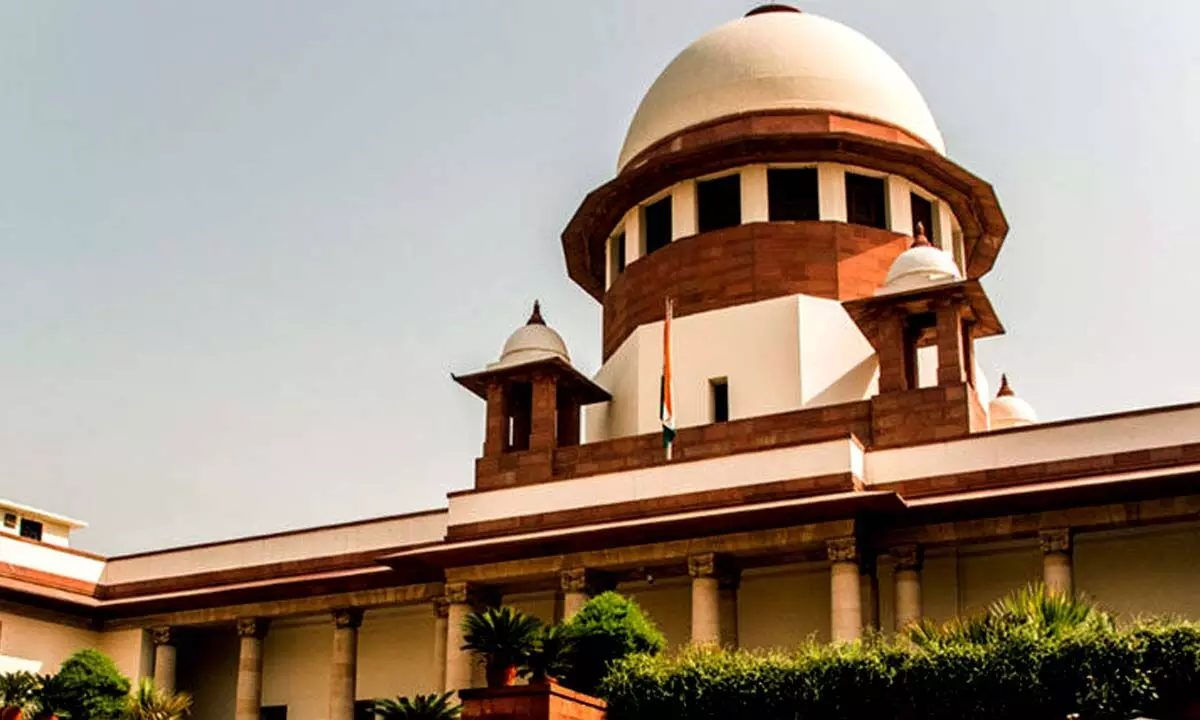
A nine-judge Constitution bench of the Supreme Court of India on Thursday observed that if individuals begin questioning religious practices before constitutional courts, it could lead to a flood of litigation challenging rituals and ultimately weaken religions and the country’s civilisational fabric.
The bench, headed by Chief Justice of India Surya Kant, is hearing petitions related to discrimination against women at religious places, including the Sabarimala Temple, and examining the scope of religious freedom across different faiths, including issues involving the Dawoodi Bohra community.
The Constitution bench also comprises Justices B V Nagarathna, M M Sundresh, Ahsanuddin Amanullah, Aravind Kumar, Augustine George Masih, Prasanna B Varale, R Mahadevan and Joymalya Bagchi.
The matter stems from a petition filed in 1986 by the Central Board of the Dawoodi Bohra Community seeking to overturn a 1962 judgment that struck down the Bombay Prevention of Excommunication Act, 1949. The Act had made excommunication of community members illegal.
The 1962 Constitution bench had ruled that the Dawoodi Bohra community’s religious head had the constitutional right under Article 26(b) to manage religious affairs, including excommunication on religious grounds.
Senior advocate Raju Ramachandran, appearing for reformist Dawoodi Bohras, argued that practices arising from secular or social conduct should not receive constitutional protection under Articles 25 and 26. He submitted that any religious practice adversely affecting fundamental rights cannot be immune from judicial scrutiny.
Responding to the arguments, Justice Nagarathna remarked that if every religious practice starts being challenged before constitutional courts, “what happens to this civilisation where religion is so intimately connected with Indian society?”
“There will be hundreds of petitions questioning this right and that right, opening of the temple and closure of the temple. We are conscious of this,” she observed.
Justice M M Sundresh added that unrestricted judicial intervention in religious matters could have far-reaching consequences.
“Every religion will break and every constitutional court will have to be closed,” he said, warning that allowing every internal dispute to become a constitutional issue could lead to endless litigation.
Justice Nagarathna further said India’s strength lies in its diversity and deep civilisational roots, where religion remains closely linked to social life.
“What we lay down is for a civilisation that is India. India must progress, but we cannot break that constant,” she observed.
Ramachandran, however, argued that India is a civilisation governed by the Constitution and practices contrary to constitutional values cannot continue unchecked. He said courts cannot avoid adjudicating such issues merely because they may lead to multiple petitions.
