


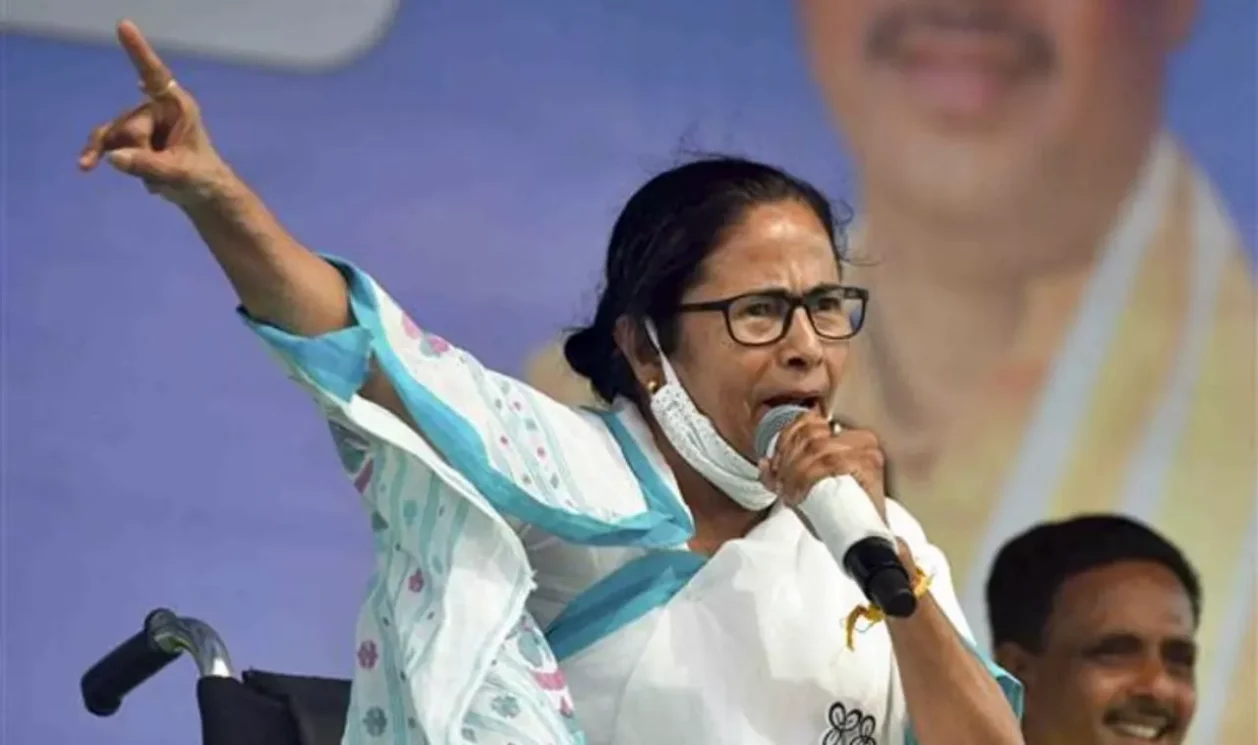
Sanjay Raut on Wednesday backed Mamata Banerjee’s decision not to resign after the Assembly poll defeat in West Bengal, describing it as a form of protest against the Centre and the Election Commission of India (EC).
The Nationalist Congress Party (Sharadchandra Pawar) (NCP-SP) also extended support to the Trinamool Congress chief, alleging that democratic processes were manipulated and central agencies were used to influence the election outcome.
Speaking to reporters, Raut said Opposition parties must unite against what he termed the “dictatorship of the Centre” and the “partisan behaviour” of the Election Commission. He alleged that the poll body had become a “slave” of the central government.
“Mamata Banerjee not resigning is part of her agitation against the government, the Election Commission and a series of acts against democracy,” the Rajya Sabha MP said.
Raut added that the Opposition now needs to collectively decide how to respond politically to the situation.
Banerjee had on Tuesday refused to resign as chief minister despite the Bharatiya Janata Party (BJP)’s sweeping victory in the state, alleging that the verdict was “not a people’s mandate but a conspiracy.”
The BJP secured 207 seats in the 294-member Assembly, ending the All India Trinamool Congress (TMC)’s uninterrupted 15-year rule in the state. The TMC managed to win only 80 seats.
In a Facebook post, Raut said Banerjee’s stand was justified and drew parallels with the 2022 political crisis in Maharashtra involving former chief minister Uddhav Thackeray.
He recalled that during hearings related to the Shiv Sena split, the then Chief Justice of India had observed that Thackeray could have been reinstated as chief minister had he not resigned.
Raut also said that Uddhav Thackeray had personally spoken to Banerjee after the election results and assured her of support. According to him, several INDIA bloc leaders had also reached out to the TMC supremo.
Meanwhile, NCP (SP) spokesperson Mahesh Tapase alleged that institutions such as the Election Commission, the Central Bureau of Investigation (CBI), Enforcement Directorate, Income Tax Department and CRPF were used in a manner that influenced the electoral process.
Tapase claimed that voters in Bengal were unable to exercise their franchise freely due to the pressure created by central agencies and forces, raising serious concerns over the fairness of the elections.
