


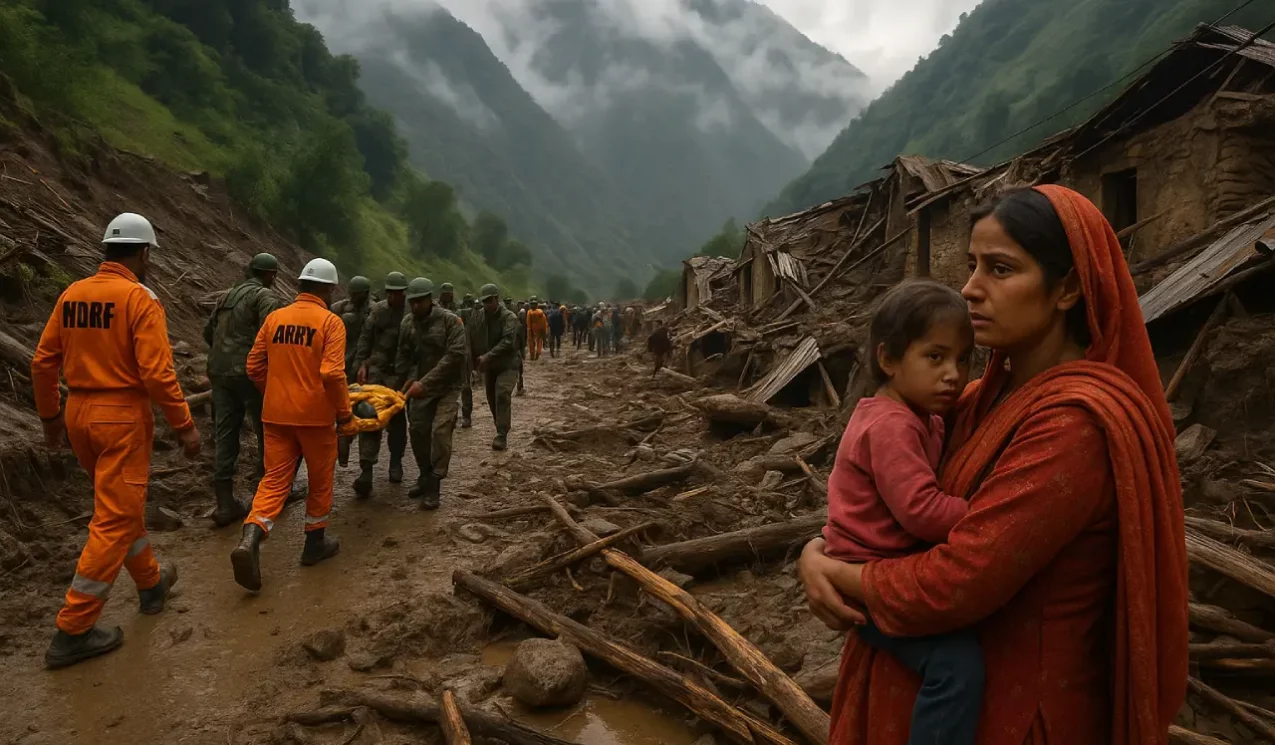
The serene hills of Jammu and Kashmir’s Kishtwar district were shattered on Thursday afternoon when a sudden and massive cloudburst over Chashoti village triggered devastating flash floods along the Machail Mata Yatra route. What should have been a sacred pilgrimage turned into a nightmare of mud, debris, and loss. The scale of the disaster is sobering—at least 60 lives lost, over 100 injured, and hundreds feared trapped beneath rubble and sludge.
Among the survivors is Shalu Mehra, a pilgrim whose ordeal captures the raw terror of that moment. “Suddenly, there was a sound like a bomb exploding, and everyone started shouting—‘run, run’,” she recalled. In the chaos, she was trapped under debris and struck on the head by an electricity pole. Her daughter’s quick thinking saved her life, but even then, her thoughts turned immediately to her son, who was several kilometers ahead on the route. Such testimonies remind us of the human face of this calamity—the panic, the pain, and the desperate search for loved ones.
The tragedy has prompted urgent rescue operations involving the National Disaster Response Force (NDRF), State Disaster Response Force (SDRF), the Army, police, and local volunteers. Yet, the grim reality is that the number of casualties may still climb. National Conference Chief Farooq Abdullah has warned that more than 500 people could still be trapped, with some officials fearing the figure might exceed 1,000.
Chief Minister Omar Abdullah, in his Independence Day address at Srinagar’s Bakshi Stadium, expressed heartfelt condolences to the bereaved families and prayed for the speedy recovery of the injured. His acknowledgement of the need to examine possible administrative lapses—given that weather forecasts had warned of severe conditions—was a crucial and commendable note of accountability. In disasters of this magnitude, empathy must be accompanied by rigorous scrutiny and systemic improvement.
The Prime Minister has been briefed on the situation, and the state administration has set up a control room to assist victims and their families. This is an essential first step, but it must be followed by relentless action—search and rescue must be conducted with every available resource, and relief efforts must reach even the most remote and inaccessible corners. The urgency is heightened by the fact that many victims are pilgrims far from home, dependent entirely on local authorities and the goodwill of strangers.
Kishtwar’s disaster is a test of governance, preparedness, and compassion. While nature’s fury cannot always be tamed, its impact can often be mitigated through better forecasting, timely evacuation, and effective disaster management protocols. If such lapses occurred, they must be identified—not for blame alone, but to ensure that precious lives are never again lost to preventable oversights.
For now, our thoughts and prayers remain with the people of Kashmir. But as an editorial voice, we must go beyond sympathy: we urge both the Union and the State governments to act with speed, transparency, and accountability. In a land that has seen too much suffering, every effort must be made to bring relief, restore dignity, and rebuild trust.
