


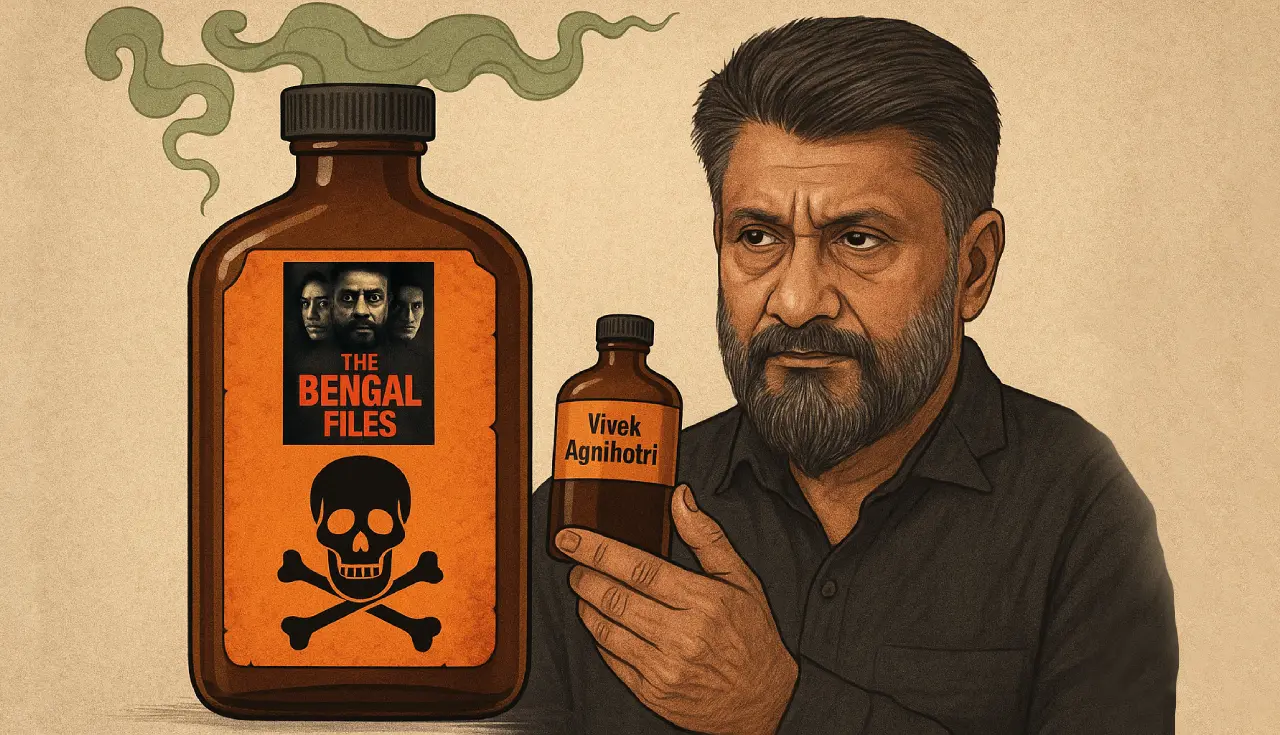
Vivek Agnihotri is not making films—he is manufacturing venom. The Bengal Files is not art; it is political propaganda, carefully packaged to inflame, distort, and divide. By dragging the name of Gopal Chandra Mukhopadhyay—popularly known as Gopal Patha—into this cesspool, Agnihotri has crossed the line between artistic license and malicious slander.
Gopal Patha was no “butcher.” He was a wrestler, a freedom fighter, and, above all, a protector. In the chaos of 1946, when Calcutta burned under the horrors of Direct Action Day—engineered by the Muslim League and abetted by the then chief minister H.S. Suhrawardy—it was Gopal who mobilized Hindus not for indiscriminate slaughter, but for defense. His orders were crystal clear: women, children, and innocents must not be harmed. He stood as a bulwark against the barbarity unleashed on Hindus—massacres, rapes, kidnappings, and arson—and in doing so prevented Calcutta from collapsing entirely to Suhrawardy’s Pakistan-backed plans.
Yet Agnihotri, intoxicated by his own false bravado, chooses to depict this man as a “Muslim-hating butcher.” A grotesque lie, one his own grandson has condemned as “belittling, dehumanising and demonising.” The family has filed legal action, and rightly so. To smear a man who fought to keep Calcutta from drowning in blood is not only dishonest—it is vile.
And let’s not pretend the timing is innocent. With Bengal elections around the corner, the film slots neatly into a political narrative. Agnihotri plays martyr when his trailer launch is disrupted, whining about “freedom of expression,” all while peddling half-truths and communal venom. Expression is not license to falsify history or profit from hate.
History is brutal, yes—but it is also sacred. Direct Action Day is one of the darkest chapters of Partition: a pre-planned pogrom against Hindus, encouraged by Jinnah’s chilling declaration, “India divided or India burned.” Hindu neighborhoods were torched, men slaughtered, women raped, and young girls paraded as trophies of fanaticism. Suhrawardy gave rioters free rein, and mobs led by criminals like Munna Chaudhary and Meena Punjabi terrorized Calcutta with unspeakable crimes. Police records tell of hacked and naked bodies of Hindu girls hanging in slaughterhouses.
Against this carnage rose Gopal Patha and his Bharat Jatiya Bahini, uniting Hindus across castes and regions, arming themselves with whatever they could find—knives, spears, pistols, acid bombs. Their resistance was targeted: they fought back the very mobs that had butchered innocents, and they never touched Muslim women or children. By August 20, Suhrawardy’s dream of tearing Calcutta into Pakistan’s fold had collapsed.
This is history—ugly, raw, undeniable. And yet, Agnihotri’s so-called film trashes it. Instead of portraying Gopal as the man who saved countless Hindus and defended his city, he twists him into a caricature—a hate-spewing villain—for cheap applause and electoral mileage.
Let’s call it what it is: The Bengal Files is a disgrace. It reduces suffering into a circus, exploits grief for profit, and poisons public discourse. Art is meant to confront, to illuminate, to humanise. This is the opposite: cowardly, manipulative, toxic storytelling that tears apart the very fabric of society.
India does not need more of this garbage. It needs truth, courage, and integrity—values Gopal Patha lived and died for. Agnihotri, on the other hand, has chosen distortion, division, and disgrace. Shame on those who dignify this poison by calling it cinema.
