


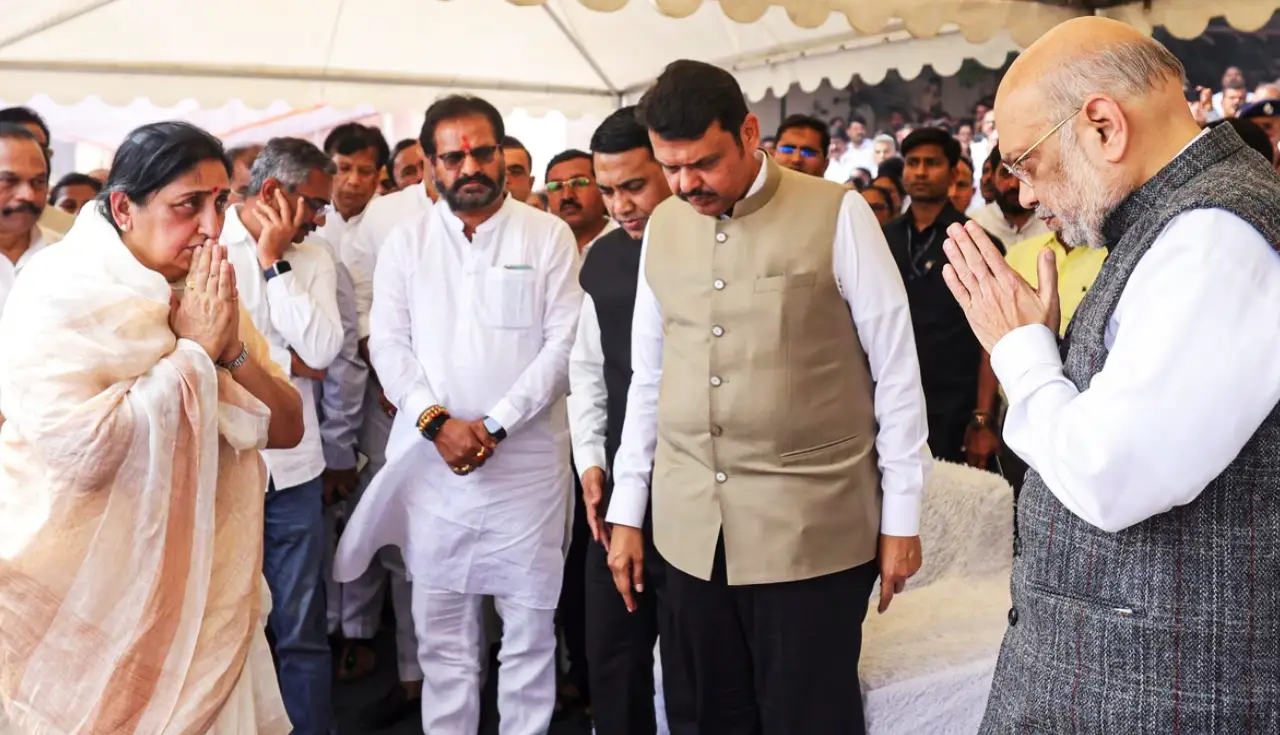
Maharashtra has not merely lost a politician; it has lost a voice that shaped the rhythm of its politics for decades. Ajit Pawar was many things—controversial to some, commanding to others—but he was never inconsequential. His speeches carried the authority of experience, his humour disarmed hostile rooms, and his media interactions reflected a man deeply aware of power and its mechanics.
As a journalist, I watched Ajit Pawar closely for years. His grasp of administration, his instinct for negotiation, and his understanding of Maharashtra’s political anatomy were not inherited gifts. They were earned, slowly and painfully, through electoral battles, internal party conflicts, criticism, and survival. His death has caused genuine pain. Maharashtra will miss him—and rightly so.
But grief cannot be allowed to paralyse judgment.
Respect for the dead does not mean suspension of scrutiny for the living. And this is precisely where Maharashtra faces an uncomfortable moment—one that demands honesty over emotion.
Within days of Ajit Pawar’s passing, succession plans began circulating with unsettling speed. Reports suggested that his wife, Sunetra Pawar, would step into the vacant Deputy Chief Minister’s position. Simultaneously, news emerged that his son was being positioned for a Rajya Sabha seat. What should have remained a period of personal mourning was rapidly transformed into a phase of political redistribution.
This shift deserves pause—not outrage, not drama—but scrutiny.
The wife is yet to fully emerge from sorrow. The children are still mourning their father. The loss is raw and recent. And yet, power has already been reorganised. This haste is not continuity. It is convenience.
There is something morally troubling about converting death into political acceleration. Even in politics, which is rarely gentle, there exist unwritten codes of restraint. When authority is claimed before mourning finds its breath, the act ceases to resemble public service. It begins to resemble entitlement.
Ajit Pawar’s political stature is not transferable property. His experience cannot be inherited. His instincts were not genetic traits. Governance is not an heirloom passed within a family.
This brings us to the fundamental issue—not legality, but legitimacy.
What political experience qualifies Sunetra Pawar to occupy one of the most powerful offices in the state? What administrative crises has she independently handled? What electoral verdict has she faced? Which governance challenges has she navigated in her own right?
The Deputy Chief Minister’s position is not symbolic. It is not ceremonial. It demands authority, competence, and the ability to manage crisis. These attributes are built through exposure and accountability—not proximity to power.
The son’s elevation raises equally serious concerns. He contested the 2019 Lok Sabha election and lost. Loss is part of politics. But defeat traditionally calls for rebuilding trust, reconnecting with voters, and earning credibility. It does not automatically justify a parliamentary berth through backroom arrangements.
To label this as political responsibility is dishonest.
What message does this send to thousands of party workers who dedicate decades to grassroots politics? What does it say to voters who believe elections matter? And what lesson does it teach young citizens—that surnames matter more than struggle?
The defence offered against such criticism is predictable: that questioning succession is insensitive during a period of mourning.
That argument is flawed.
The politics is not being done by journalists. It is being done by those who rushed to occupy power. Silence is demanded in the name of sensitivity, while authority is claimed in the name of sympathy.
This is how dynastic politics survives—by emotionally disarming accountability.
India has seen this pattern repeatedly. Political families across parties treat leadership as hereditary. Internal democracy is quietly replaced by bloodline consensus. Merit is celebrated in speeches and discarded in practice.
Ironically, Ajit Pawar himself did not rise through entitlement alone. He survived internal rebellions, public scrutiny, and electoral judgment. To equate his journey with immediate family succession is to weaken his legacy, not honour it.
Legacy is not about occupying the same chair.
Legacy is about matching competence.
If this transition is about stability, Maharashtra deserves an explanation for why experienced leaders were bypassed. If it is about public demand, that demand must be demonstrated, not assumed. And if it is about sympathy, then sympathy has replaced scrutiny.
And that is dangerous.
Democracies do not collapse suddenly. They erode quietly—through convenience, compromise, and silence.
I can feel sorrow for Ajit Pawar’s death and still feel disturbed by the political opportunism that followed it. These emotions are not contradictory. They are honest.
Grief deserves dignity. Politics demands accountability. Maharashtra deserves better than inherited power disguised as service.
