Maharashtra Ends Decades-Old Fragmentation Barrier, Granting Land Rights to 3 Crore Citizens 2
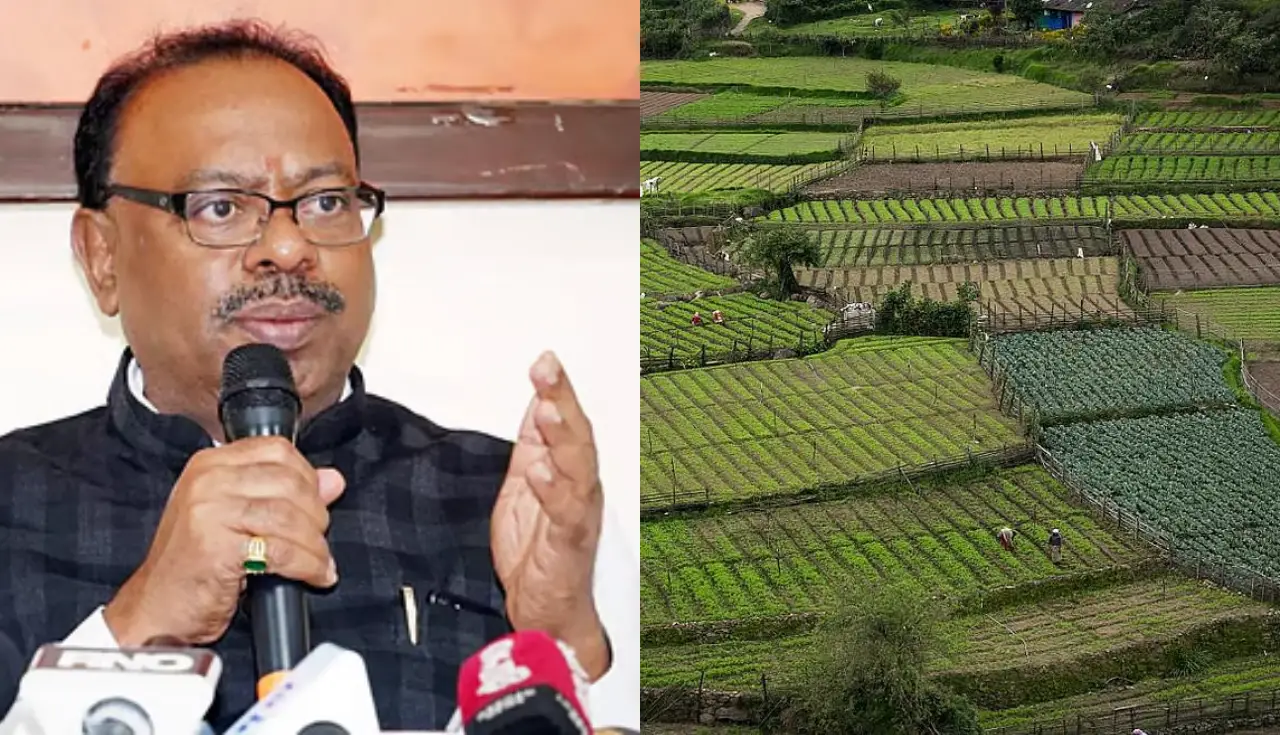
In a landmark move ending decades of hardship for urban homeowners, Maharashtra has passed the Maharashtra Land Revenue Code (Second Amendment) Bill, 2025, freeing nearly three crore citizens from restrictive fragmentation laws that prevented them from securing legal land titles or selling small plots.
Approved on December 9, the amendment brings long-awaited relief to around 60 lakh families who have lived in legal uncertainty despite owning homes for generations. Under the old rules, countless citizens occupied tiny urban plots yet remained excluded from land records, and transactions on parcels as small as 5–10 gunthas were nearly impossible due to repeated non-agricultural (NA) permissions and procedural hurdles.
The new law eliminates the requirement for separate NA approvals in areas covered by sanctioned Development Plans or Regional Plans. Instead, homeowners can complete the process with a one-time premium, enabling swift land title issuance and individual 7/12 entries without bureaucratic delays. Introducing the bill, Revenue Minister Chandrashekhar Bawankule said it corrects an “unjust system” that kept legitimate homeowners in limbo for decades.
The amendment triggered strong debate in the Assembly. Shiv Sena (UBT) MLA Bhaskar Jadhav declined support, warning the law might benefit builders more than citizens. Congress leader Vijay Wadettiwar argued that without proper Development Plans, land regularisation alone would not address basic infrastructure gaps.
However, several MLAs—including Nana Patole, Suresh Dhas, Pravin Datke, Amit Deshmukh, Rahul Kul, Krishna Khopde, Hiramana Khoskar, Prashant Solanke, Abhijit Patil, Sanjay Gaikwad and Ravi Rana—strongly backed the bill and praised Bawankule for delivering long-awaited justice.
Representatives Chandradeep Narke, Vikram Pachpute and Ramesh Bornare urged that similar relief be extended to rural regions, where low holding limits still obstruct land transactions.
Bawankule clarified that the amendment is intended to empower citizens, not builders. He emphasised that reservations will remain unaffected and that all eligible cases before October 15, 2024, will receive full benefit, although fragmentation after that date will not be permitted. He also instructed district collectors to work closely with local representatives during implementation.
The reform marks a decisive shift away from outdated land policies—finally granting millions of ordinary Maharashtrians the legal certainty, dignity and ownership they have been denied for generations.
Male Wardens Posted in Girls’ Hostels: Major Safety Violation Sparks Uproar in Maharashtra Assembly 4
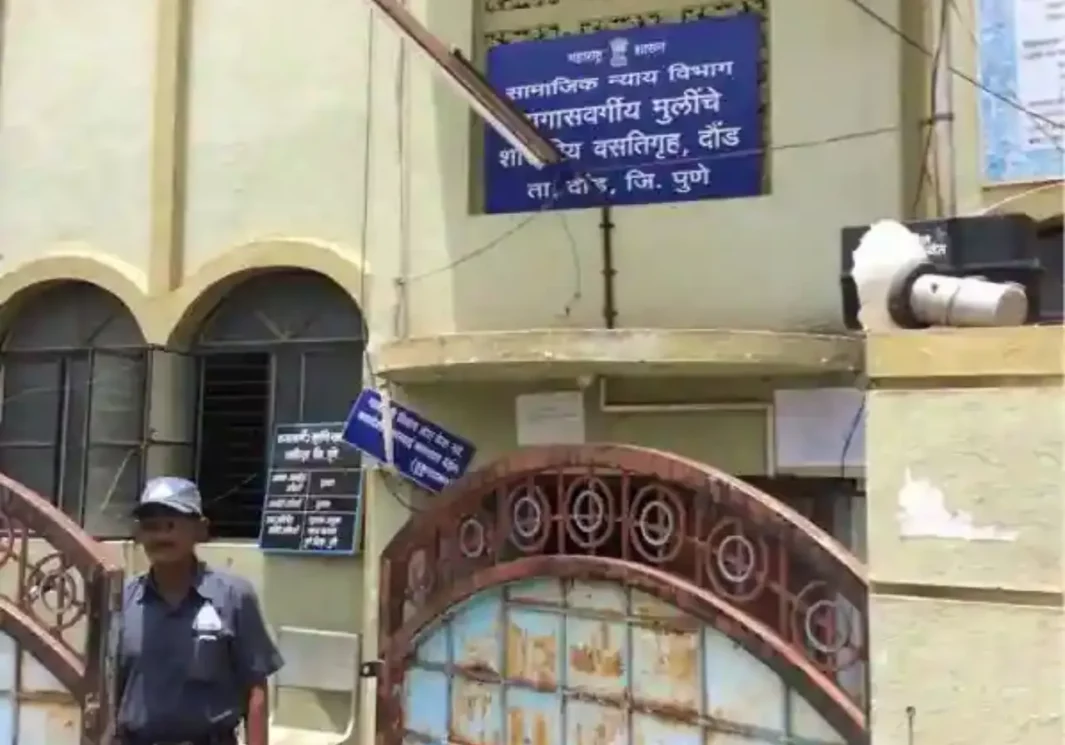
A major safety breach in Maharashtra’s nursing training institutes has triggered outrage in the Assembly after it was revealed that male wardens were appointed inside girls’ hostels, in clear violation of established norms and regulations. Legislators demanded answers on how such a serious lapse in protocol was allowed to occur.
The government admitted that under the 1996 recruitment rules and Indian Nursing Council standards, only female wardens are permitted in girls’ hostels. Despite this, male wardens were posted — raising grave concerns about student safety and administrative accountability.
The controversy deepened when the government acknowledged that official written directives had already been issued to Mumbai, Nagpur and Aurangabad mandating the appointment of female wardens only. Yet male wardens were still placed at three locations, a move the administration attempted to downplay, further fuelling public suspicion.
Questions now loom large over how these appointments were approved, who authorised them, and why corrective action was not taken immediately despite clear rules. Lawmakers stressed that this was not a minor oversight but a systemic failure that compromised the safety of young women in state-run facilities.
As outrage grows, demands for strict action and accountability have intensified. Observers warn that unless strong corrective measures are enforced, such violations may continue unchecked — leaving the safety of thousands of female students at risk.
Aapla Dawakhana Exposed: A Grand Promise Crumbling Under Its Own Pretence 6
The Balasaheb Thackeray Aapla Dawakhana project was launched with the promise of transforming urban healthcare, but the government’s recent responses reveal a widening gap between grand announcements and ground reality. Legislators pointed out that despite the official declaration of 1,342 clinics and over 800 wellness centres, only 408 clinics have actually begun operating. The government proudly cites these numbers as progress, but the truth is far simpler: a majority of the facilities exist only on paper.
The administration claims that all functioning centres are operating strictly as per guidelines. Yet in the same breath, it acknowledges that pharmacist posts were never sanctioned and that nurses are distributing medicines. This directly violates basic health regulations and the Pharmacy Act, making it clear that compliance is more rhetorical than real. Running a clinic without a qualified pharmacist is neither safe nor legally sound, and it certainly does not fit any definition of “guideline-based” functioning.
MLAs further alleged that many clinics have effectively shut down due to the absence of pharmacists. The government’s response — that no centres are technically closed — is a clever piece of bureaucratic wordplay. A clinic with open shutters but no capacity to dispense medicines is not a functioning health unit; it is a hollow structure waiting for an audit. Reports from multiple districts and observations recorded as early as 2021 corroborate that several centres operate symbolically, if at all.
The official line that “the question does not arise” is the clearest sign of administrative avoidance. When most centres are incomplete, staffing norms are being bypassed, and audit flags remain unaddressed, the question doesn’t merely arise — it becomes unavoidable. Even more troubling is the admission that pharmacist posts were never sanctioned to begin with. Launching a major public health initiative without creating essential positions is not a logistical oversight; it is a fundamental failure of planning. It reduces a flagship programme to a political display devoid of operational backbone.
The project itself is visionary and could have delivered immense public benefit. But vision without execution is just theatre, and execution without accountability collapses into confusion. What should have been a proud milestone in public healthcare has become an example of announcement-heavy and action-light governance. The public deserves honest updates, not evasive replies. The scheme deserves proper staffing, not makeshift solutions. And healthcare deserves seriousness, not improvisation. Unless the government prioritises recruitment, transparency, and on-ground functionality, Aapla Dawakhana will remain yet another ambitious idea lost in its own paperwork.
Massive Scam Alleged in Maharashtra Water Conservation Projects; Costs Inflated by Crores 8
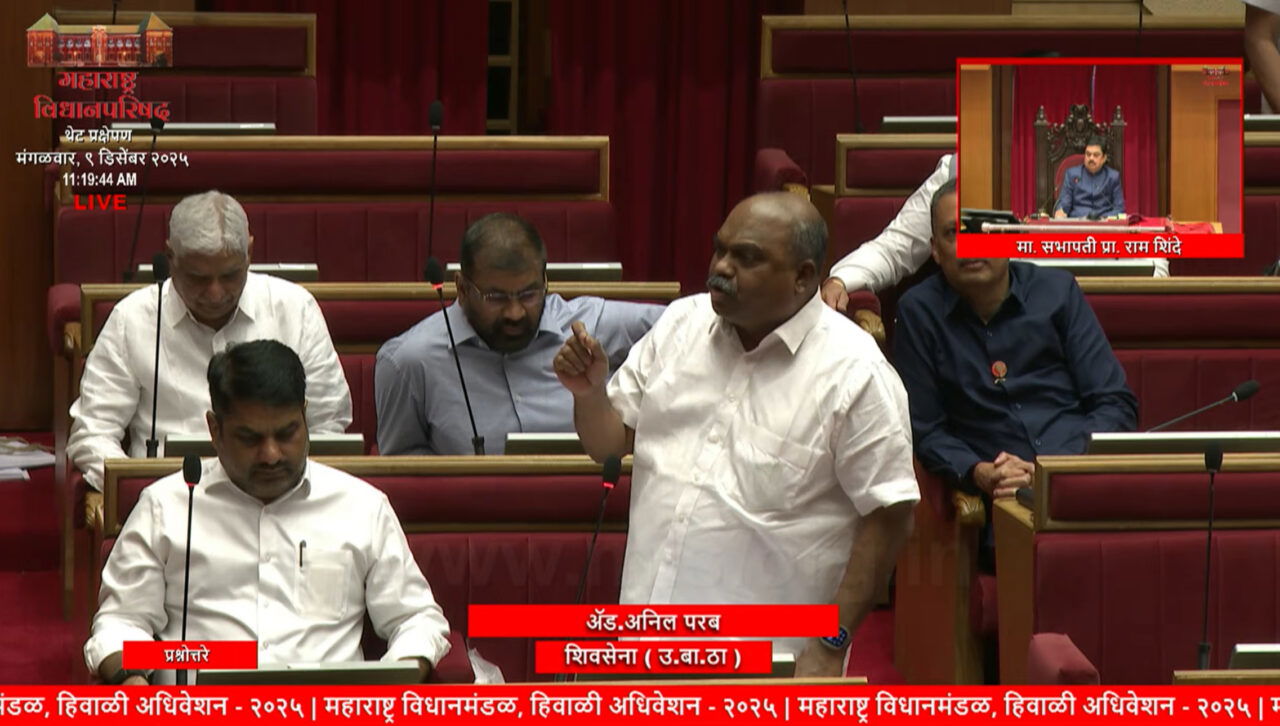
Serious allegations of massive irregularities running into thousands of crores in Maharashtra’s water conservation projects were raised in the Assembly on Thursday, with MLA Anil Parab demanding answers over alleged corruption in multiple schemes.
Parab cited documents detailing striking discrepancies. In Buldhana’s Sagargaon storage tank project, irregularities worth several crores have reportedly been uncovered. In Sindhudurg’s Ari minor irrigation tank project, a tender initially sanctioned for ₹10 crore allegedly ballooned to ₹80 crore.
He further alleged that Shreeram Associates secured a 2009 tender using a false affidavit, forged documents and even a fake RC book, as indicated in revenue records. There are also claims of collusion between the contractor and both former and serving officials of the Pune Water Conservation Department.
Additionally, estimated costs for river-deepening and water collection works, originally pegged at ₹2.38 crore, were allegedly inflated to nearly ₹22 crore.
A clarification has been sought from the Minister for Soil and Water Conservation as the state turns its attention to what could become one of Maharashtra’s most serious water sector controversies in recent years.
Nagpur's Winter Session 2025: A Week That Will Test Maharashtra's Spine 10
The Maharashtra Winter Session 2025 in Nagpur arrives at a moment when the state’s political, administrative, and social machinery is creaking under pressure, yet the government has chosen to squeeze the entire exercise into a single week. No grand explanation can hide the fact that this truncation is convenient for those in power and inconvenient for those demanding accountability. Nagpur is not just a venue; it is the ideological epicentre of the RSS and the political homeland of Devendra Fadnavis. Whatever happens here echoes across the state. And this year, the echo is louder because the stakes are unforgiving.
Winter sessions in Nagpur have traditionally stretched over 10 to 15 days, giving ample space for legislative scrutiny. But with local body elections underway, the government has opted for a hurried, compressed version from December 8 to 14. Officials blame logistics, the opposition blames fear, and citizens—the ones paying the price for both—see the truth clearly: too many scams, too many controversies, and too many unresolved crises make a long session politically dangerous. When the house is filled with smoke, those responsible prefer a quick exit over a long inspection.
Meanwhile, an estimated ₹100 crore is being pumped into beautifying Nagpur for this one-week spectacle. Roads, buildings, and infrastructure are receiving emergency touch-ups not because citizens deserve better, but because the political class needs optics. A hundred crore could have bolstered rural schools, strengthened women’s safety systems, repaired irrigation canals, or offered genuine relief to distressed farmers. Instead, it is being poured into cosmetic upgrades that will be forgotten the moment the session ends. It’s hard to preach governance when priorities themselves look like a scam.
To add to the irony, both Houses will begin the session without a Leader of the Opposition—a constitutional abnormality that should make every voter uneasy. The LoP’s absence is not just a technical glitch; it weakens the very foundation of democratic pushback. After the 2024 elections fractured the MVA, neither the Shiv Sena (UBT) nor the Congress secured the numbers required to claim the post in the Assembly. In the Council, Ambadas Danve’s term is over. With the opposition itself divided over who deserves which chair, the ruling alliance finds an empty field where a strong challenger should have stood. Maharashtra’s democracy deserved better than a Legislature without a designated voice of dissent.
Inside the government too, the fractures are widening. The MahaYuti alliance is a three-legged stool constantly threatening to topple. Devendra Fadnavis, the BJP’s organisational backbone and Nagpur’s favourite son, finds himself balancing the ambitions of two volatile partners—Eknath Shinde, who heads a divided Shiv Sena, and Ajit Pawar, whose NCP faction still struggles to justify its ideological somersault. Their differences no longer hide behind closed doors. Administrative files get stuck between power blocs, decisions are delayed because every department now runs through political calculations, and public welfare often becomes collateral damage in the internal tug-of-war.
This tension will be amplified on the floor of the House, especially with the Mundwa land scam involving Parth Pawar dangling like a sword above the Deputy Chief Minister. The opposition is gearing up to corner Ajit Pawar, and even within the government, the embarrassment is palpable. Add to this the ongoing agrarian crisis that has pushed farmers toward despair, the Tapovan tree-felling controversy in Nashik, the irregularities surfacing in the Majhi Ladki Bahin scheme, rising urban crime, violent incidents like those in Beed, and Maharashtra’s governance begins to look not just strained but compromised.
Opposition parties—though divided, leaderless, and bruised—are preparing to unleash fiery attacks on inflation, unemployment, collapsed infrastructure, corruption in civic elections, and the government’s inability to handle unseasonal rains. Farmers are demanding complete loan waivers. Youth are demanding jobs. Women are demanding safety. Citizens are demanding accountability. And yet, the legislature has only seven days to examine the rot, debate solutions, and hold the government responsible.
This session matters because Maharashtra is at a turning point. Urban infrastructure is failing under the weight of its own population. Water distribution has become an annual crisis. Crime has grown teeth. BMC elections—whenever they finally happen—will shape political equations for years. Local body polls across the state will determine who controls grassroots governance. And the Fadnavis–Shinde–Pawar triangle will continue to dictate the state’s stability, or the lack of it. With the RSS headquarters just a few kilometres away, the ideological expectations from the BJP are higher than usual. Fadnavis cannot afford a weak performance—not on his home turf, not in front of the parent organisation, and not at a time when the government’s credibility is under fire.
The tragedy is that Maharashtra needs a long, honest, no-nonsense legislative session more than ever before. There are too many issues that demand detailed scrutiny, too many scams begging for answers, too many citizens suffering silently while political calculations take priority. Instead, we are being served a hurried ritual—loud on theatrics, low on substance, and perfectly designed to avoid deep questioning.
Yet, hope survives because Maharashtra has seen good work emerge even from difficult sessions. There have been moments when politics took a backseat and governance took a step forward. If there is even a trace of sincerity left in the ruling benches and the opposition, they must use this week to deliver something real. Something that touches lives outside the Vidhan Bhavan. Something that justifies the trust voters place in the democratic process.
The coming days will see protests, interruptions, name-calling, dramatic walkouts, and fiery speeches that make good headlines but rarely change ground realities. But beneath the noise lies a simple truth: the people of Maharashtra are tired. They are tired of excuses, gimmicks, factional wars, and political selfies wrapped in public-relations language. They want governance, not games. Relief, not rhetoric. Stability, not constant bickering.
This winter session, however short, is a test. Not of who shouts louder, but of who works harder. Not of who blames whom, but of who delivers something tangible to the farmer in Vidarbha, the woman in Mumbai commuting after dark, the youth in Marathwada searching for a job, the family in Thane paying for water tankers, and the voter in Nagpur expecting better from a government that promised transformation.
Nagpur watches every gesture. The RSS watches every signal. Devendra Fadnavis’s own constituency watches whether its most powerful leader can steer a divided government toward accountability. And the people of Maharashtra watch because their patience is thinning and their expectations are rising.
Seven days. A mountain of issues. A political class running short on credibility. The winter session may be short, but its consequences will be long. If our leaders choose drama over duty, Maharashtra will continue drifting. If they choose responsibility over self-interest—even for a week—the state may finally get a breath of relief.
Somewhere between the fire, friction, and noise, there lies a chance for meaningful governance. Whether anyone grabs it is the real question.
The Ministry of Civil Aviation has stepped in amid rising concerns over steep airfares charged during the ongoing operational disruption triggered by IndiGo’s mass flight cancellations. Citing reports of opportunistic pricing by some airlines, the ministry has invoked its regulatory powers to impose temporary fare caps across affected routes.
In a directive issued to all carriers, the government has mandated strict compliance with the capped pricing structure, which will remain in force until operations stabilise. Officials said the move is intended to prevent exploitation of passengers — particularly senior citizens, students and medical travellers — who are often forced to book urgent flights at inflated rates.
The ministry will continuously monitor airfares through real-time data and coordination with airlines and online travel platforms. Any deviation from the prescribed limits will attract immediate punitive action, the statement said.
The intervention comes at a time when India’s aviation sector is witnessing large-scale disruptions, leaving thousands scrambling for alternative travel options and raising concerns over consumer protection in crisis situations.
Ayodhya Mosque Project May Roll Out by April 2026, But Land and Funding Hurdles Persist: IICF Chief 14
Thirty-three years after the Babri Masjid was demolished in Ayodhya, the long-delayed mosque project at Dhannipur may finally begin around April 2026, the head of the Indo-Islamic Cultural Foundation (IICF) said on Thursday—provided the Ayodhya Development Authority (ADA) approves the revised layout plan expected to be submitted by the end of December.
Zufar Faruqi, chairman of the IICF, told PTI that although a tentative timeline is emerging, significant uncertainties still surround the project more than five years after the Supreme Court allotted five acres of land for the mosque.
The trust’s first proposed design was rejected by the ADA and later abandoned after widespread community criticism of its modern architectural style. A new, more traditional layout is nearly ready, Faruqi said.
However, he acknowledged the project faces an acute land shortage. Although five acres were allotted at Dhannipur, technical constraints have left the trust with only about four usable acres. As a result, Faruqi hinted for the first time that the mosque complex—which includes plans for a 500-bed hospital, community kitchen and educational facilities—may have to be built in phases at multiple locations if additional land cannot be acquired.
He rejected suggestions that the Dhannipur site’s distance from Ayodhya city was a factor behind potential changes, questioning the motives of those raising objections.
The mosque project has also been slowed by delays in obtaining clearances and a lack of donor enthusiasm. While construction of the Ram temple has been completed, the mosque trust has raised barely ₹3 crore against an estimated requirement of ₹65 crore for the mosque and related facilities.
The IICF hopes to begin fundraising overseas once it receives Foreign Contribution (Regulation) Act (FCRA) clearance from the Centre—a decision it expects by year-end or early 2026. Faruqi said donations from within India’s Muslim community have been limited and door-to-door fundraising is difficult without adequate resources.
Political statements have added to the spotlight on the project, including a controversial claim by a suspended Trinamool MP about building a “Babri masjid-style” structure in Murshidabad and a recent remark by Defence Minister Rajnath Singh suggesting Jawaharlal Nehru once supported government-funded reconstruction of the Babri mosque.
Despite the noise, the IICF maintains that it is waiting only for key approvals before it can set a formal construction timeline for the Dhannipur mosque.
PM Modi Pays Tribute to Dr B.R. Ambedkar on Mahaparinirvan Diwas: ‘His Ideals Guide India Towards Viksit Bharat’ 16
Prime Minister Narendra Modi on Saturday paid tribute to Dr Babasaheb Ambedkar on Mahaparinirvan Diwas, honouring his lasting contributions to justice, equality and India’s constitutional framework.
Modi said Ambedkar’s visionary leadership and steadfast commitment to human dignity continue to guide the nation’s progress. In a message on X, he wrote: “Remembering Dr Babasaheb Ambedkar on Mahaparinirvan Diwas. His visionary leadership and unwavering commitment to justice, equality and constitutionalism continue to guide our national journey. He inspired generations to uphold human dignity and strengthen democratic values. May his ideals keep lighting our path as we work towards building a Viksit Bharat.”
Dr Bhimrao Ramji Ambedkar, the principal architect of the Indian Constitution, was a pioneering jurist, reformer and champion of the marginalised. His lifelong fight against caste discrimination and advocacy for Dalit rights reshaped India’s socio-political landscape.
Ambedkar passed away on December 6, 1956, and was posthumously awarded the Bharat Ratna in 1990. His birth anniversary, celebrated annually on April 14 as Ambedkar Jayanti, continues to inspire millions across the nation.
RBI Cuts Repo Rate to 5.25%, Making Home, Auto and Business Loans Cheaper 18
In a significant boost for borrowers, the Reserve Bank of India on Friday cut the repo rate by 25 basis points to 5.25 per cent, making housing, auto and commercial loans cheaper.
Announcing the fifth bi-monthly monetary policy, RBI Governor Sanjay Malhotra said the Monetary Policy Committee (MPC) unanimously agreed to reduce the short-term lending rate while maintaining a neutral stance. The move comes despite concerns over the rupee’s sharp depreciation, which crossed 90 against the US dollar earlier this week.
The rate cut follows three consecutive months of CPI-based retail inflation staying below the government’s mandated lower band of 2 per cent. India’s retail inflation hit a historic low of 0.25 per cent in October 2025 — the lowest since the CPI series began. At the same time, GDP growth surged to a six-quarter high of 8.2 per cent in Q2, strengthening the case for monetary easing.
Although the weakening rupee has made imports more expensive and raised fears of inflationary pressures, the RBI has revised its full-year growth projection upward to 7.3 per cent from the earlier estimate of 6.8 per cent.
This is the fourth rate cut of the year, following reductions of 25 bps each in February and April and a 50 bps cut in June as inflation continued to soften. Retail inflation has remained below 4 per cent since February, helped by easing food prices and a favourable base effect.
The central bank continues to be guided by its mandate of keeping inflation at 4 per cent with a tolerance band of ±2 per cent, even as it attempts to support the economy amid global uncertainty.
SEBI Orders Impounding of ₹601 Crore from Avadhut Sathe for Alleged Unregistered Investment Advisory 20
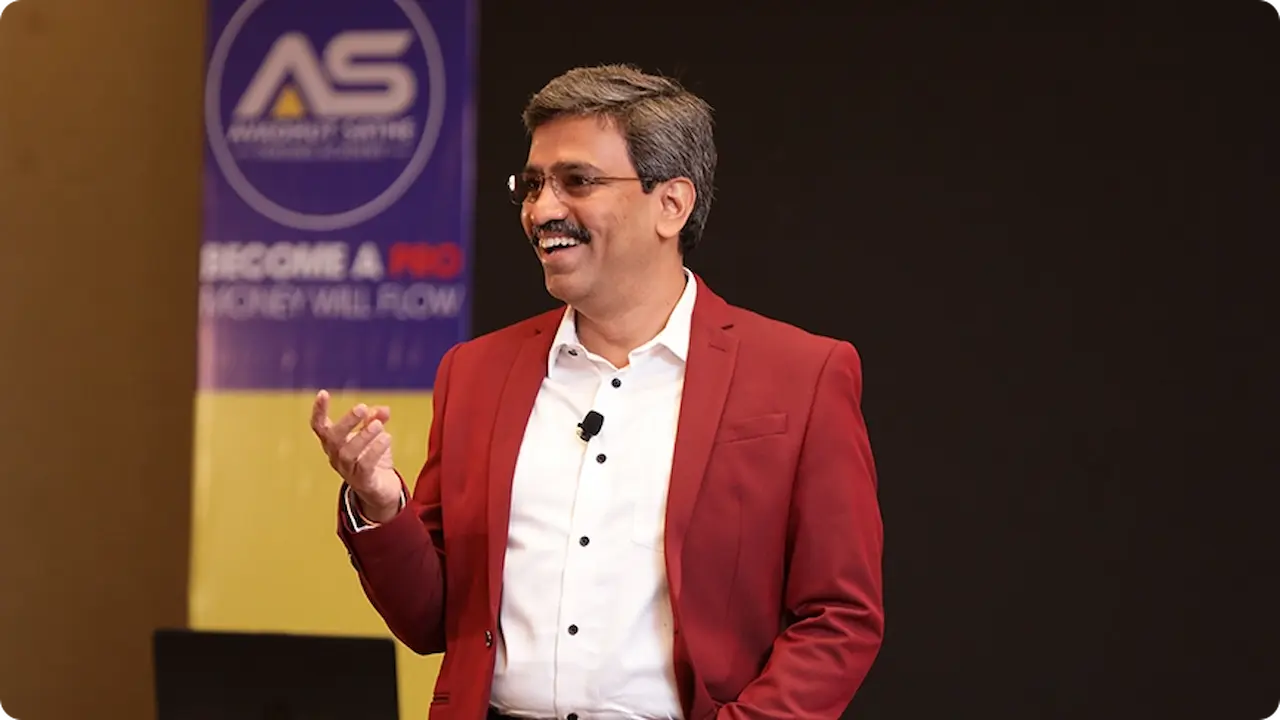
SEBI has passed an ex-parte interim order-cum-show cause notice against Avadhut Sathe Trading Academy Pvt. Ltd. (ASTAPL), its founder Avadhut Dinkar Sathe and director Gouri Avadhut Sathe, alleging that the academy carried out large-scale unregistered investment advisory and research analyst activities while marketing its services as stock market education.
The 125-page order, issued by Whole Time Member Kamlesh C. Varshney after a detailed FY24 investigation and an August 2025 search-and-seizure operation, states that despite a prior warning issued in March 2024, the academy continued publishing misleading promotional content showcasing only profitable trades. Several participants alleged that the courses promised extraordinary returns but instead led to heavy losses, and that live market sessions involved direct stock recommendations.
SEBI’s review of video evidence revealed that specific stock tips, targets, stop-loss levels and directional calls were routinely shared, with Sathe also displaying his own MTM positions. Participants were seen confirming that they executed trades based on his suggestions. Private WhatsApp groups for mentorship batches—charging up to ₹6.75 lakh—were allegedly used to circulate trade advice, option strategies and index forecasts, amounting to unregistered advisory activity.
Citing prima facie violations of the SEBI Act, Investment Advisers Regulations, Research Analysts Regulations and PFUTP norms, the regulator has barred ASTAPL, Avadhut Sathe and Gouri Sathe from accessing the securities market, except for liquidating existing holdings. They are prohibited from offering advisory or research services, conducting any stock-specific training, or issuing trade-related communication across platforms.
SEBI has ordered impounding of ₹5,46,16,65,367—identified as prima facie unlawful gains—and directed that the amount be placed in fixed deposits within 15 days, with a lien in favour of SEBI. Banks have been told to block debit transactions from the noticees’ accounts except transfers into these deposits. The parties must also furnish details of all bank accounts, assets, liabilities, fee collections and client lists within 15 days.
The regulator has further proposed joint and several disgorgement and monetary penalties totalling ₹601 crore plus interest. The noticees have 21 days to respond. The interim restrictions will remain in force until SEBI concludes its proceedings and issues a final order.