Home Blog Page 23

Assam Breaks the Silence: A Historic Strike Against Polygamy and the Exploitation of Women

assam, polygamy, assam bans polygamy, himanta biswa sarma
Assam Breaks the Silence: A Historic Strike Against Polygamy and the Exploitation of Women 2

Polygamy in Assam is not an overnight phenomenon; it is the outcome of a long, layered history where culture, migration, socio-economic factors, and weak legal enforcement all collided to create a system that silently crushed women generation after generation. When Assam passed the Assam Prohibition of Polygamy Bill 2025, it wasn’t a random political gesture. It was the state finally admitting a long-hidden social wound, turning towards a future where women are not treated as replaceable, divisible assets. The law signals that the era of silent suffering is over and that accountability will finally walk into bedrooms where injustice once hid behind customs and religious freedoms.

Polygamy’s roots in Assam can be traced back centuries. In earlier times, certain tribal communities practiced it within a structured social setup. It served utilitarian purposes—like labour sharing or resource management—and women still retained dignity and decision-making power within their clans. But what might have been a balanced, culturally contextual practice centuries ago slowly mutated into something exploitative. The deeper scars began to appear during the late 19th and early 20th centuries, when waves of migration from Bengal and later East Pakistan (now Bangladesh) altered Assam’s demographic and cultural landscape. With these migrations came practices where polygamy was not cultural cooperation but male-centric expansion, often used to increase family size, establish economic clout, or consolidate land and political influence. Women became the silent casualties in this demographic shift.

Over time, in districts with low literacy, weak awareness, and fragile local administrative structures, polygamy entrenched itself as a kind of twisted social status symbol. A man with multiple wives was perceived as prosperous or powerful. It was a public display of male privilege masquerading as cultural acceptance. But the price of this “status” was paid by women whose voices were buried under layers of obedience, dependency, and social conditioning.

The situation worsened when polygamy found refuge behind religious laws. While over 130 to 140 countries worldwide—Turkey, France, America, Germany, Sweden, England, Australia, Canada, Japan, Spain, Italy among them—have imposed strict restrictions or outright bans on polygamy, India continued a fragmented legal system where personal laws dictated marital rights differently for different communities. This inconsistency created loopholes. It allowed certain groups to continue the practice without fear of consequences, even though the Constitution speaks of gender equality and dignity. In Assam, these loopholes became escape routes for exploitation. A man could marry a second or third time without informing the first wife. He could abandon a woman without formal divorce, leaving her economically stranded. And he could justify everything under the shield of personal law.

When women lack economic independence, social support, and legal literacy, they become easy targets. In Assam, countless women—especially in rural belts—found themselves trapped in marriages where their husbands brought home second wives without warning. The emotional shock is only the beginning. Once a second marriage takes place, the first wife often faces immediate financial cutbacks. Her children receive less attention, fewer resources, and weaker inheritance rights. The man’s income—already limited in many households—now stretches over multiple families. In such scenarios, women silently slide into poverty while the man enjoys the unchallenged privilege of expanding his household at will.

Many first wives are pushed out of the home through psychological harassment or direct intimidation. Some are labelled “burdens,” or blamed for not having sons, or accused of being incapable of maintaining marital harmony—all convenient excuses for a husband seeking a new, younger wife. This is not culture; this is deeply structured injustice presented under the disguise of tradition.

Societally, polygamy does even more damage. It destabilises family structures, creates rivalry among children from different wives, and fuels long-term emotional conflict within households. When two or three families compete for the same breadwinner’s attention and resources, instability becomes a way of life. This has implications for mental health, education, and child welfare—three pillars that decide a society’s long-term progress.

At the community level, polygamy fuels population pressure. In regions where the practice is more common, population growth rates spiked far faster than the state’s average. More wives meant more children, which strained local resources, increased dependency on state welfare schemes, and limited upward mobility. In areas lacking strong education systems and employment opportunities, this demographic pressure contributed to deeper poverty cycles. When women have little say in family planning, population policies cannot function effectively. This is a reality Assam lived with for decades.

Against this background, the Assam Prohibition of Polygamy Bill 2025 emerges as a bold, long-overdue correction. The law imposes up to ten years’ imprisonment for men who enter a second marriage while concealing an existing one, and two years of imprisonment with heavy fines for village heads, kazis, priests, or parents who knowingly facilitate such marriages. This directly targets the ecosystem that enables polygamy—not just the act itself. It breaks the chain of social sanction by holding intermediaries accountable. When a priest, kazi, or village elder fears jail time and a personal fine of one to one-and-a-half lakh rupees, the casual acceptance of polygamy collapses.

The law goes a step further by removing state benefits from offenders. Anyone convicted will lose the right to government jobs, welfare schemes, and even the right to contest elections. This may sound harsh, but let’s face the truth: a person who cannot remain loyal to one family, who deceives and destroys the life of a woman who trusted him, shouldn’t be sitting in public office or enjoying taxpayer-funded benefits. Accountability begins at home. When a man destabilise his own household, society has no reason to trust him with broader responsibilities. What truly shifts the balance is the support promised to victims. Women subjected to polygamy will receive legal assistance, financial support, and protection from further abuse. This empowers them to step out of silence. This is not just prohibition; it is rehabilitation. The state is not punishing and walking away—it is rebuilding the lives of those who were harmed.

Globally, the trend is clear: countries that value women’s freedom, economic independence, and human dignity have rejected polygamy because it is fundamentally unequal. It reduces women to commodities, divides families, and weakens social stability. Even many Islamic countries have introduced strict restrictions, requiring judicial permission or the consent of the first wife—something rarely given. The world has moved on, because societies that treat women as equal partners progress faster in every measurable way: economy, education, health, and innovation.

India cannot claim to be a modern, forward-thinking nation while allowing loopholes that jeopardise women’s basic rights. Equality cannot be selective. If men and women are equal citizens, polygamy cannot survive. Assam has taken the first courageous step, and it will not remain confined to one state. Other states will inevitably follow, because social justice moves slowly but decisively. Once one pillar falls, the old walls cannot stand.

The truth is simple: polygamy is not tradition; it is an outdated power structure. It does not protect culture; it protects male privilege. It does not strengthen families; it fractures them from within. And it does not honour women; it reduces them to silent spectators in their own lives.

Assam’s new law marks a turning point. It restores dignity to women, stabilises families, and sets a national precedent that exploitation cannot be hidden behind the veil of custom. It is a reminder that societies evolve not by preserving everything from the past but by discarding what harms the future. Assam choose courage over convenience, justice over silence, and fairness over fear.

When the pages of history are written, this moment will stand out—not as a legal reform, but as a social awakening. A state finally stood up and said, “Women are not options. They are individuals with rights, dignity, and agency.” And that statement is long overdue, not just for Assam, but for India.
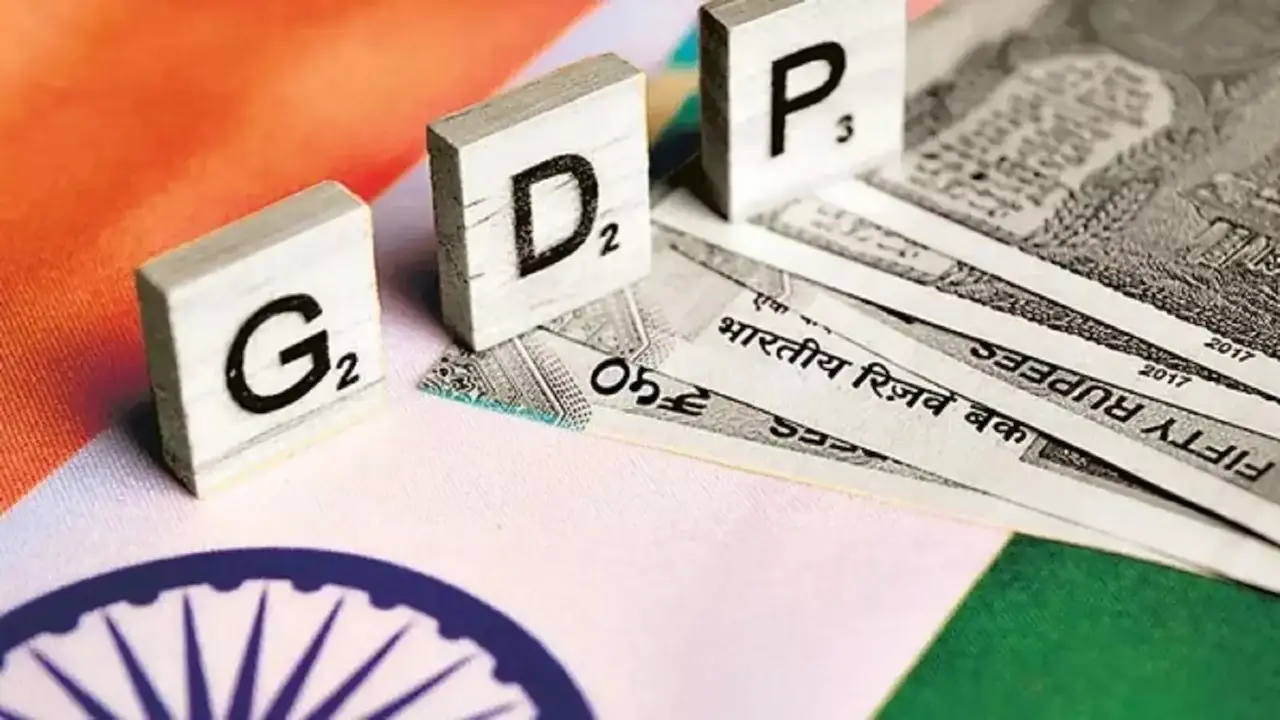
India Posts 8.2% GDP Growth in Q2 — Highest in Six Quarters, Powered by Manufacturing and Services

indai, gdp growth, gdp, market
India Posts 8.2% GDP Growth in Q2 — Highest in Six Quarters, Powered by Manufacturing and Services 4

India’s economy posted a six-quarter high GDP growth of 8.2% in Q2 FY2025-26, outpacing expectations as strong manufacturing output and a robust services sector offset a slowdown in agriculture. The growth rate was higher than the 7.8% recorded in the previous quarter and significantly above the 5.6% seen a year earlier.

This performance also helped India retain its position as the world’s fastest-growing major economy, with China expanding 4.8% during the same period.

According to the National Statistics Office (NSO), GDP growth for the first half of FY2025-26 averaged 8%, compared with 6.1% in the year-ago period. With this momentum, India appears poised to surpass the full-year growth target of 6.3–6.8% projected in the Economic Survey.

Manufacturing and Services Drive Growth

Manufacturing grew 9.1% year-on-year, a sharp rise from 2.2% last year. Factories scaled up production in anticipation of festive-season demand following Prime Minister Narendra Modi’s GST rate cut announcement in his Independence Day address. The revised rates took effect on September 22.

The services sector—including finance, real estate and professional services—expanded 10.2%, significantly higher than 7.2% in Q2 last year.

However, agriculture growth slowed to 3.5%, down from 4.1% a year earlier.

Economists See Growth Surpassing 7% for FY26

The RBI, earlier in October, revised its GDP projection upward to 6.8% for the current financial year.

Key GDP Indicators

  • Real GDP (Constant Prices), Q2: ₹48.63 lakh crore vs. ₹44.94 lakh crore last year
  • Nominal GDP (Current Prices), Q2: ₹85.25 lakh crore vs. ₹78.40 lakh crore
  • Real GDP, H1: ₹96.52 lakh crore (8% growth)
  • Nominal GDP, H1: ₹171.30 lakh crore (8.8% growth)
  • Private Consumption Growth (PFCE): 7.9% vs. 6.4% last year
  • Gross Fixed Capital Formation: 7.3% growth

India continues to demonstrate strong macroeconomic resilience, with analysts expecting growth to stay above 7% despite global uncertainties.

Maharashtra Cancels All Birth Certificates Issued Solely on Aadhaar Basis, Orders FIRs for Discrepancies

chandrashekhar bawankule, revenue minister, minister, birth certificates, aadhaar
Maharashtra Cancels All Birth Certificates Issued Solely on Aadhaar Basis, Orders FIRs for Discrepancies 6

The Maharashtra government has ordered the cancellation of all birth certificates issued solely on the basis of an Aadhaar card, declaring that Aadhaar will no longer be accepted as a valid document for delayed birth registrations.

The decision comes amid a statewide crackdown on a racket involving fake birth and death certificates, allegedly used to obtain government benefits, capture land, and compromise national security.

Revenue Minister Chandrashekhar Bawankule said the government would take strict action against those involved. “Fake birth and death certificates are being misused to gain benefits, seize land, and even endanger national security. We will not tolerate such racketeering,” he said.

According to the state’s directive, any birth certificate issued solely using Aadhaar after the August 2023 amendment will now be considered invalid and cancelled. If discrepancies are found between application details and the Aadhaar date of birth, an FIR will be registered immediately.

Officials who issued such certificates will also face action.

The Revenue Department has circulated a 16-point verification checklist to Tehsildars, Sub-Divisional Officers, District Collectors, and Divisional Commissioners. Cancellations will take place only after verification under these guidelines.

The government has identified 14 districts as hotspots for certificate malpractice, including Amravati, Akola, Anjangaon Surji, Achalpur, Ardhapur, Sillod, Sambhajinagar, Latur, Pusad, Parbhani, Beed, Gevrai, Jalna and Parli.

What the cancellation order means:

  • Birth certificates issued using only Aadhaar as proof will be cancelled.
  • Any mismatch with Aadhaar data will lead to FIR against the applicant.
  • Applicants unable to produce original documents or who cannot be traced will be declared absconding, with FIRs registered.
  • Special verification camps will be held under direct supervision of District Collectors and Divisional Commissioners.

The government says the crackdown is aimed at restoring authenticity and preventing misuse of the civil registration system.

After DC Shooting, US Orders Fresh Review of Green Cards Issued to Immigrants From 19 Countries

donald trump, green card, dc shooting, dc
After DC Shooting, US Orders Fresh Review of Green Cards Issued to Immigrants From 19 Countries 8

The Trump administration has announced a “rigorous” re-examination of all Green Cards issued to immigrants from 19 “countries of concern”, following the shooting of two National Guard service members in Washington, DC, by an Afghan national earlier this week.

US Citizenship and Immigration Services (USCIS) Director Joseph Edlow said President Donald Trump had directed a full-scale review of Green Cards issued to immigrants from these nations, noting the safety of Americans remains the administration’s top priority.

“The American people will not bear the cost of the prior administration’s reckless resettlement policies,” Edlow said in a post on X, adding that the new policy guidance applies immediately to all pending and future requests filed on or after November 27, 2025.

The new rules allow USCIS to weigh “negative, country-specific factors” when vetting immigrants from the 19 countries, which include Afghanistan, Iran, Cuba, Somalia, Yemen, Libya, Myanmar, Haiti and Venezuela. These nations were previously included in a travel ban issued by Trump in June.

The move follows Wednesday’s shooting that left US Army Specialist Sarah Beckstrom, 20, dead, and US Air Force Staff Sgt. Andrew Wolfe, 24, critically injured. The accused, Rahmanullah Lakanwal, arrived in the US under the Biden-era refugee programme Operation Allies Welcome, meant for Afghans fleeing after the Taliban’s 2021 takeover.

Edlow said the updated policy will help USCIS determine whether an immigrant poses a public safety or national security threat, accusing the Biden administration of eroding crucial vetting safeguards over four years.

Trump, calling the shooting a “terrorist attack,” claimed many Afghan arrivals were brought in “unvetted” and vowed to remove individuals he deemed dangerous.

USCIS said the guidance follows the administration’s earlier halt on Afghan refugee resettlement and further strengthens vetting procedures to prevent similar incidents.

‘No Friday Prayers at Sanjauli Mosque,’ Warns Devbhoomi Sangharsh Samiti Amid Ongoing Protest

Sanjauli mosque, shimla, protest, Devbhoomi Sangharsh Samiti
'No Friday Prayers at Sanjauli Mosque,' Warns Devbhoomi Sangharsh Samiti Amid Ongoing Protest 10

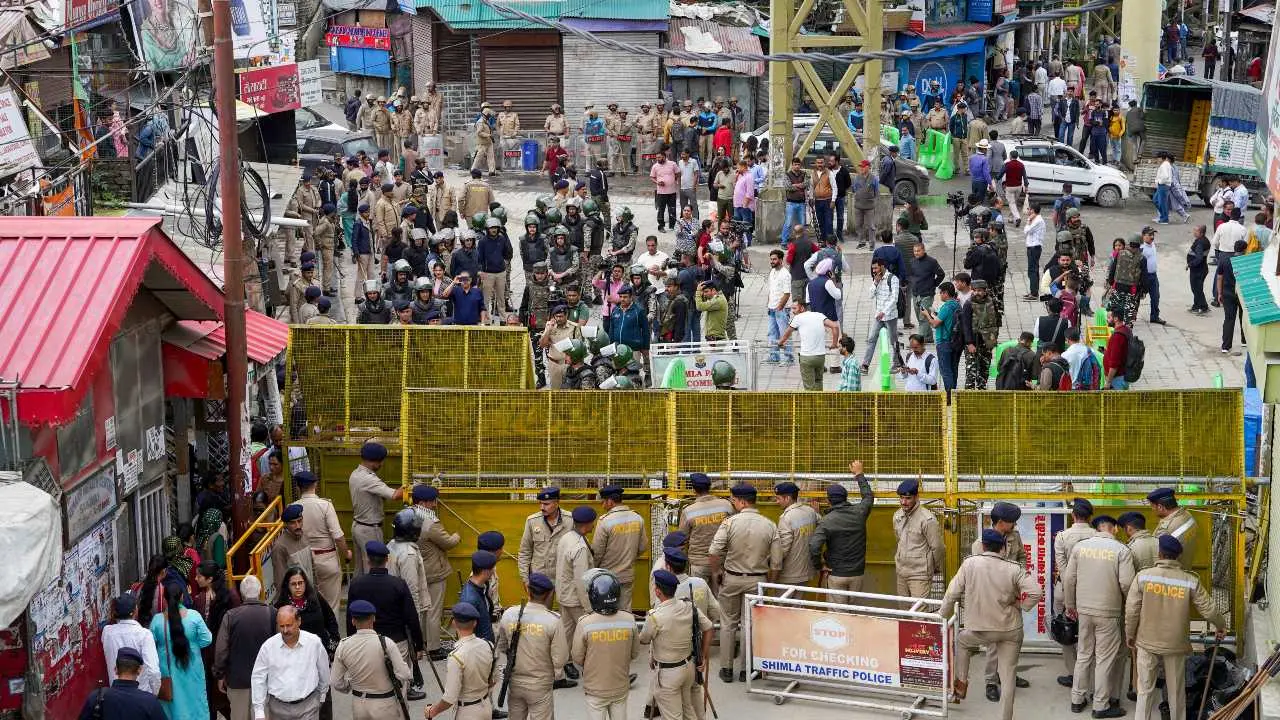
The Devbhoomi Sangharsh Samiti on Thursday said it would not allow Friday prayers at the disputed Sanjauli mosque, urging the Muslim community to avoid visiting the site in order to maintain communal harmony.

Samiti members have been protesting in Sanjauli for the past ten days and on Thursday performed ‘Shastra Puja’ as part of their ongoing agitation.

Co-convener Vijay Sharma said the organisation is awaiting its scheduled meeting with the administration on November 29, after which it will decide how to proceed. “If the meeting fails to produce positive results, we will intensify our agitation against the mosque,” he said.

Sharma claimed prayers were still being offered at the structure despite the court declaring it illegal and ordering its demolition, calling the situation “very unfortunate.”

The dispute has heightened tensions in the area, with authorities keeping a close watch ahead of Friday.

Bombay HC Slams State for Blaming Ethiopia Volcano, Says Mumbai’s Air Was ‘Already Hazardous’

Bombay High Court Solapur Gang Rape Case
Representative Image

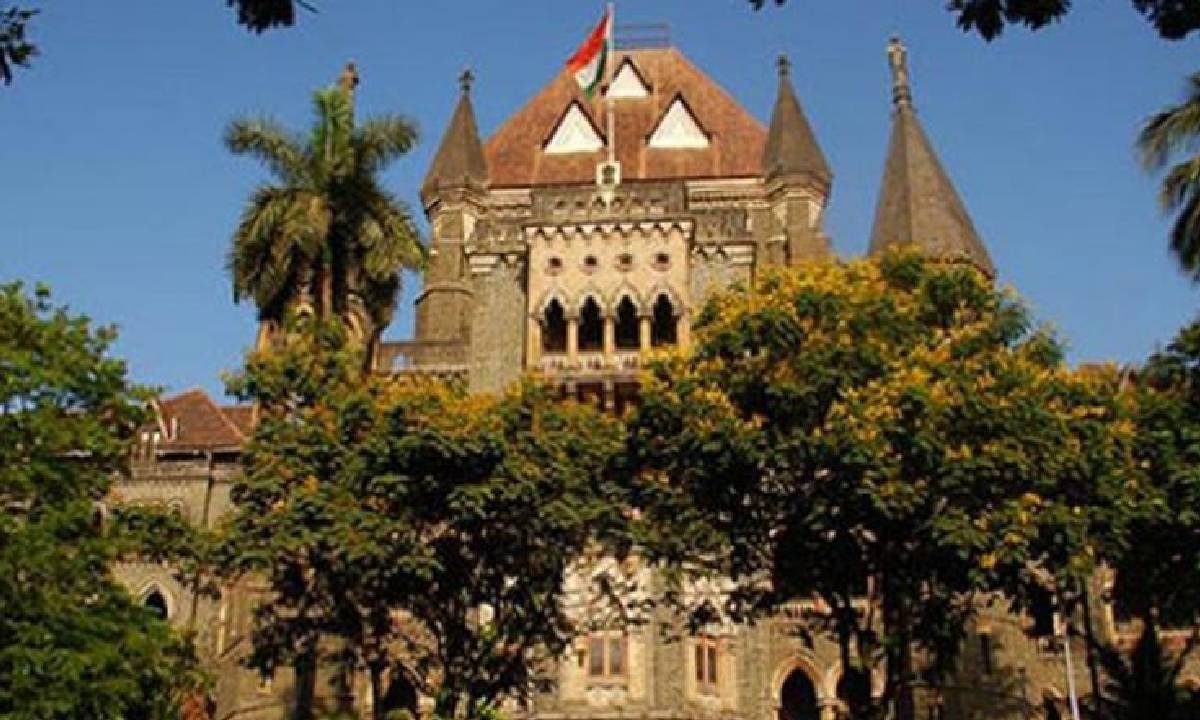
The Bombay High Court on Thursday sharply criticised the Maharashtra government for attributing Mumbai’s deteriorating air quality to the volcanic eruption in Ethiopia, observing that the city’s air quality index (AQI) had been poor long before the eruption.

A bench of Chief Justice Shree Chandrashekhar and Justice Gautam Ankhad was hearing a batch of petitions—including a suo motu PIL from 2023—on the alarming rise in air pollution across Mumbai.

Senior counsel Darius Khambata, acting as amicus curiae, informed the court that the city’s AQI had remained above 300 throughout the month, indicating consistently “very poor” air quality.

However, additional government pleader Jyoti Chavan argued that the pollution spike was primarily due to volcanic ash from Ethiopia’s eruption two days ago.

The bench dismissed the explanation, remarking, “Air pollution was already bad much before the eruption. Even earlier, visibility was poor beyond 500 metres.”

Expressing concern over the worsening situation, the judges drew parallels with Delhi’s severe pollution crisis and asked the government to outline the most effective measures to address Mumbai’s air quality emergency. The matter will be heard again on Friday.

The High Court took suo motu cognisance of the rising pollution on October 31, 2023, and later formed a committee of experts from IIT, an environmental specialist, and a retired principal secretary to recommend solutions. Since then, it has been issuing directives to the BMC and Maharashtra Pollution Control Board to control emissions and dust.

A Unicef report submitted to the court last year highlighted the gravity of the crisis, noting that 21 lakh deaths in India are linked to air pollution, including 1.69 lakh children under five.

The court reiterated that authorities must treat the issue with urgency as pollution levels continue to threaten public health across the city.

Assam Assembly Passes Bill to Ban Polygamy; CM Himanta Biswa Sarma Vows to Implement UCC if Re-Elected

polygamy, himanta biswa sarma, assam assembly, assam cm
Assam Assembly Passes Bill to Ban Polygamy; CM Himanta Biswa Sarma Vows to Implement UCC if Re-Elected 13

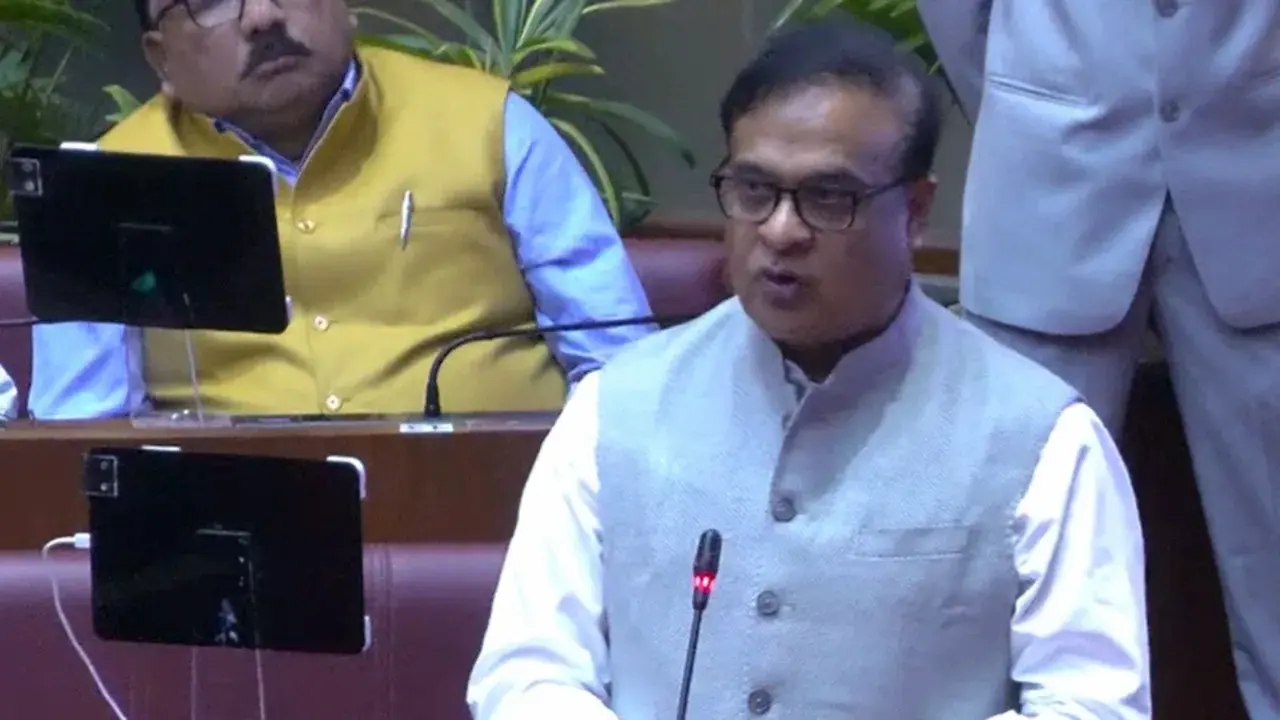
The Assam Assembly on Thursday passed the Assam Prohibition of Polygamy Bill, 2025, making polygamy a criminal offence punishable by up to 10 years in prison, with specific exemptions for Scheduled Tribes (STs) and areas under the Sixth Schedule.

Chief Minister Himanta Biswa Sarma, who piloted the Bill, said the legislation was aimed at empowering women and promoting equality, asserting that it was not directed against any particular religion. “The Hindus are not free from polygamy either. This Bill applies equally to people from all faiths — Hindu, Muslim, Christian and others,” Sarma said during the debate.

The CM appealed to opposition parties to withdraw their proposed amendments to ensure the Bill’s unanimous passage, calling it a historic step towards women’s empowerment. However, suggestions from AIUDF and CPI(M) were defeated by a voice vote.

Sarma also linked the Bill to the broader goal of implementing a Uniform Civil Code (UCC) in Assam. “I assure the House that if I return as Chief Minister after the next Assembly elections, the UCC Bill will be introduced in the very first session,” he declared.

He further announced that a Bill against deceptive marriages, often associated with so-called love jihad cases, will be brought in by the end of February. “Whatever we have said about love jihad, we will do that,” Sarma added.

The passage of the Bill marks another major reform move by the Himanta Biswa Sarma government, which has been vocal about introducing uniform personal laws and curbing religious and social practices it deems regressive.

Bombay HC Questions Delay in Disha Salian Death Inquiry: “How Long Will Police Keep Probing?”

disha salian, bombay hc, bombay high court, inquiry
Bombay HC Questions Delay in Disha Salian Death Inquiry: "How Long Will Police Keep Probing?" 15

The Bombay High Court on Thursday questioned the prolonged delay in the investigation into the death of celebrity manager Disha Salian, asking how long the Mumbai Police intended to continue its inquiry.

Salian, who had worked with several Bollywood personalities, died on June 8, 2020, after falling from the 14th floor of a residential building in Malad, north Mumbai. The police had registered an Accidental Death Report (ADR) following the incident.

A division bench of Justices A.S. Gadkari and R.R. Bhonsale observed that even after five years, the police had yet to determine whether the death was a case of suicide or culpable homicide. “Why is the inquiry still ongoing? Someone has died — all you have to ascertain is whether it was a suicide or culpable homicide,” the bench remarked after Public Prosecutor Mankhunwar Deshmukh informed the court that the inquiry was still underway.

Deshmukh said the probe was being conducted “minutely” to rule out all possibilities.

Disha’s father, Satish Salian, had filed a petition earlier this year seeking a CBI investigation, alleging that his daughter was raped and murdered, and claiming a political cover-up to shield influential individuals. He also sought the registration of an FIR against Shiv Sena (UBT) leader Aditya Thackeray.

The prosecutor, however, told the court that both Satish and his wife had earlier told investigators they had no suspicion or doubt about anyone’s involvement, questioning the credibility of the new allegations raised after five years.

The bench also asked why the police had not shared copies of statements and basic investigation documents with Disha’s father. “He is the father of the victim. Any document that is legally permissible can be handed over to him,” the judges said, directing the police to clarify their stance by December 11 and to produce the post-mortem report before the court.

Meanwhile, Aditya Thackeray has filed an application to intervene in the case, terming the petition “false, frivolous, and politically motivated.”

The court will hear the matter further on December 11, when the police are expected to present their report and explain the reasons for the prolonged inquiry.

Delhi-NCR Breathes Slight Relief as GRAP-3 Curbs Lifted After Marginal AQI Improvement

delhi, smog, air quality, aqi, weather
Delhi-NCR Breathes Slight Relief as GRAP-3 Curbs Lifted After Marginal AQI Improvement 17

The Commission for Air Quality Management (CAQM) on Wednesday revoked Stage III restrictions of the Graded Response Action Plan (GRAP) in Delhi-NCR after a marginal improvement in pollution levels, while retaining measures under Stages I and II with stricter enforcement.

The decision came as Delhi’s overall Air Quality Index (AQI) improved slightly to 327, shifting from the “severe” to the “very poor” category. The capital had been reeling under toxic air for several consecutive days, prompting the Stage III curbs last week.

With the rollback, activities such as non-essential construction, entry restrictions on certain heavy vehicles, and bans on BS-III petrol and BS-IV diesel cars in parts of NCR have been lifted. However, CAQM clarified this is not a full relaxation, urging agencies to ensure rigorous compliance with existing Stage I and II controls to prevent another spike.

Ongoing measures include mechanised road cleaning, water sprinkling, strict dust control at construction sites, checks on industrial emissions, and use of anti-smog guns at key pollution hotspots. Citizens have been urged to use public transport, carpool, and avoid outdoor activities during peak pollution hours.

Officials said the decision followed a detailed review of real-time air quality data by the Central Pollution Control Board (CPCB) and forecasts by the India Meteorological Department (IMD) and Indian Institute of Tropical Meteorology (IITM), which predict that air quality will likely remain in the “very poor” category for the next few days due to low wind speeds and winter inversion.

The CAQM noted that local emissions from vehicles and industries, combined with calm winds and falling temperatures, continue to trap pollutants despite a reduction in crop residue burning across neighbouring states.

Stage III restrictions were imposed on November 20 when Delhi’s AQI crossed the 400-mark in multiple locations. The winter trend, as in previous years, has seen sharp deterioration in air quality following Diwali and the early wedding season, despite ongoing efforts under the National Clean Air Programme (NCAP) and GRAP framework.

Authorities reiterated their appeal for citizen cooperation to help sustain the improvement and avoid a relapse into the “severe” zone.

44 Dead, 279 Missing in Hong Kong’s Worst High-Rise Fire; Three Construction Executives Arrested

Wang Fuk Court, Hong Kong, Building Fire
44 Dead, 279 Missing in Hong Kong's Worst High-Rise Fire; Three Construction Executives Arrested 19

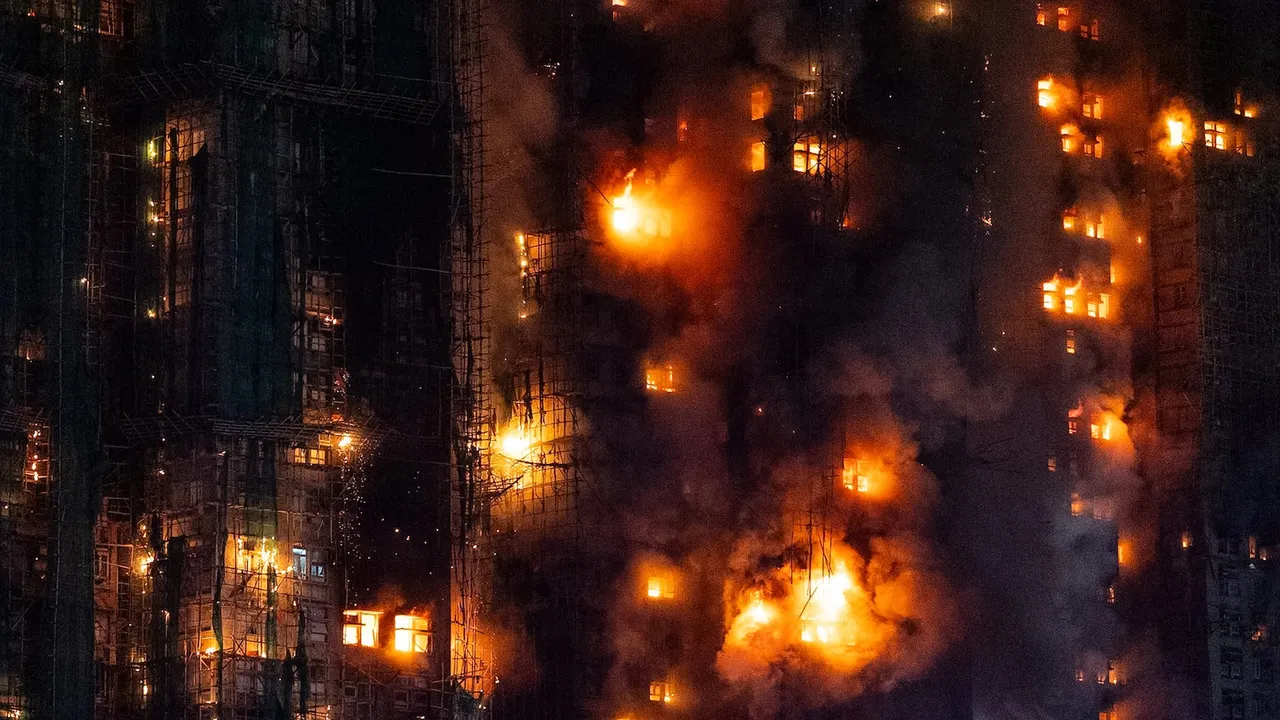
At least 44 people were killed and 279 remain missing after a devastating fire swept through multiple high-rise towers in Hong Kong’s Wang Fuk Court, in what is being described as the worst fire in the city’s history, Chinese state media reported on Thursday.

The Hong Kong Police Force confirmed that three men — two company directors and a project consultant aged between 52 and 68 — have been arrested for suspected manslaughter. The arrested men are executives of a construction firm responsible for installing materials now believed to have accelerated the blaze.

Preliminary investigations revealed that protective nets, waterproof canvas, and plastic coverings used on the buildings did not meet fireproof standards. Police also found that polyurethane foam, a highly flammable substance, had been used to seal windows in elevator lobbies, which may have caused the fire to spread rapidly.

Hong Kong’s Chief Executive John Lee said the fire has left 45 others injured, while hundreds remain unaccounted for. Authorities have launched a large-scale search and rescue operation, with emergency teams working round the clock to locate survivors.

Chinese President Xi Jinping extended his condolences late Wednesday, expressing grief over the tragic incident. He directed the Hong Kong and Macao Work Office and the Liaison Office of the Central People’s Government to support local authorities in rescue operations, medical care, and aid for the victims’ families, according to the Xinhua news agency.

Xi also instructed officials to conduct a thorough safety review to prevent future tragedies, emphasizing that “every possible effort” must be made to extinguish the fire, rescue those missing, and comfort affected families.

The Wang Fuk Court fire marks a dark chapter in Hong Kong’s urban safety record, with residents demanding stronger enforcement of building safety regulations and accountability for lapses that led to the catastrophic loss of life.