Sonia Gandhi Condoles IPS Y Puran Kumar's Death, Slams 'Prejudice in Bureaucracy' 2
Congress leader Sonia Gandhi has written to Amneet P Kumar, the wife of senior IPS officer Y Puran Kumar, who allegedly died by suicide in Chandigarh, calling his death a grim reminder of the prejudice and bias that continue to plague India’s bureaucracy.
In her condolence letter, the Congress Parliamentary Party chairperson said, “The news of the tragic death of your husband and senior IPS officer, Mr Y Puran Kumar, is both shocking and deeply saddening. My heartfelt condolences to you and your entire family in this time of immense difficulty.”
Gandhi added, “The passing of Mr Y Puran Kumar is a reminder to us that even today, the prejudiced and biased attitude of those in power deprives even the most senior officials of social justice. I and millions of people of the country stand with you on this path to justice.”
She wished Amneet P Kumar “strength and courage” to face the difficult time ahead.
Y Puran Kumar, 52, a 2001-batch IPS officer, allegedly shot himself at his residence in Chandigarh’s Sector 11 on Tuesday. His wife, a senior IAS officer, serves as Commissioner and Secretary in the Haryana government.
A six-member Special Investigation Team (SIT) has been formed by Chandigarh Police to probe the case. However, Kumar’s family has not yet consented to the post-mortem, citing “incomplete information” in the FIR.
Kumar, who was posted as Inspector General at the Police Training Centre in Rohtak’s Sunaria, reportedly left behind an eight-page note naming eight senior IPS officers, including Haryana DGP Shatrujeet Kapur and Rohtak SP Narendra Bijarniya, alleging “mental harassment” and humiliation.
Following the controversy, the Haryana government transferred SP Bijarniya on Saturday.
The Samajwadi Party (SP) has claimed that the official Facebook account of its president and former Uttar Pradesh chief minister Akhilesh Yadav has been suspended, accusing the BJP-led government of attempting to silence opposition voices.
According to party sources, Yadav’s verified Facebook account, which had over 8 million followers, was suspended around 6 pm on Friday. The page was frequently used by the SP chief to share his opinions, highlight government shortcomings, and interact with supporters.
Condemning the move, SP spokesperson Fakhrul Hasan Chaand wrote on X, “Suspending the Facebook account of respected Akhilesh Yadav ji, the national president of the country’s third-largest party, is an attack on democracy. The BJP government has imposed an undeclared emergency, where every opposing voice is being suppressed. But the Samajwadi Party will continue to fight against the BJP’s anti-people policies.”
Facebook has not yet issued an official statement regarding the suspension.
ED Arrests Reliance Group CFO Ashok Pal in Money Laundering Case Linked to Anil Ambani Firms 6
The Enforcement Directorate (ED) has arrested Ashok Pal, the Chief Financial Officer (CFO) of Reliance Power, a company under Anil Ambani’s Reliance Group, on charges of money laundering, official sources said on Saturday.
Pal was taken into custody on Friday under provisions of the Prevention of Money Laundering Act (PMLA), following a detailed investigation into financial irregularities linked to the group.
According to sources, the ED is probing multiple Anil Ambani-led Reliance Group companies in connection with alleged multi-crore bank fraud cases. The investigation focuses on suspected fund diversions and potential violations of banking and financial regulations.
The arrest marks a major development in the agency’s ongoing crackdown on corporate money laundering and financial misconduct cases involving major business groups.
SC Gives Centre Four Weeks to Clarify Stand on Jammu & Kashmir Statehood Restoration 8
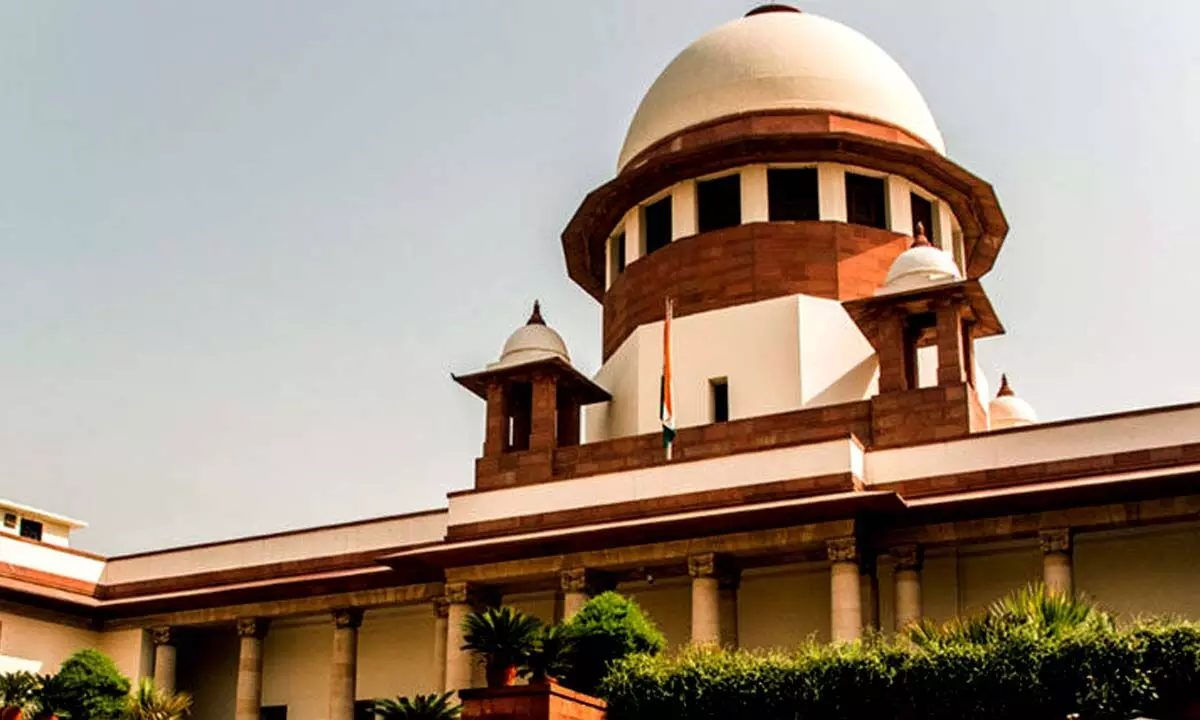
The Supreme Court on Friday granted the Centre four weeks to file its response to multiple petitions seeking the restoration of statehood to the Union Territory of Jammu and Kashmir.
A bench comprising Chief Justice B.R. Gavai and Justice K. Vinod Chandran heard the petitions filed by academician Zahoor Ahmad Bhat and socio-political activist Ahmad Malik, who urged the implementation of the Centre’s assurance to restore J&K’s statehood “at the earliest.” The assurance was earlier made during the hearings on the abrogation of Article 370.
Solicitor General Tushar Mehta, representing the Centre, told the bench that while peaceful elections were conducted in the region last year, the government required additional time to assess the situation in light of continuing security challenges, including the recent Pahalgam terror attack.
“Elections were held peacefully and an elected government is in place. Over the last six years, substantial progress has been made in Jammu and Kashmir. However, certain recent incidents such as the Pahalgam attack must be factored in before a final decision,” Mehta said, adding that consultations with the J&K administration were ongoing.
Calling the matter sui generis (unique), Mehta emphasized that while the government acknowledged its earlier assurance, “several factors need to be considered before restoring statehood.” He also alleged that certain groups were spreading a grim and misleading picture of the Union Territory.
Chief Justice Gavai noted that security remained a serious concern in the region, citing the Pahalgam incident. When senior advocate Gopal Sankaranarayanan, representing Zahoor Bhat, said “Pahalgam happened under their watch,” Mehta objected sharply, saying, “It is under our government. I object to this.”
Sankaranarayanan argued that the Centre had previously assured the court of restoring statehood in 2023, adding, “Much water has flowed since then.” To this, Mehta retorted, “And blood too. This is a citizen before the Supreme Court who treats the Government of India as your government and not my government.”
Sankaranarayanan also urged that the matter be placed before a five-judge Constitution Bench since the Article 370 verdict was delivered by one. He clarified that the petitioners were not reopening the abrogation issue but merely seeking enforcement of the Union’s commitment “within a reasonable timeframe.”
Senior advocate Menaka Guruswamy, appearing for MLA Irfan Hafiz Lone, contended that the prolonged delay in restoring statehood was eroding the federal structure of the Constitution. “If a state can be converted into a Union Territory like this, what does it mean for federalism?” she asked. She added that the J&K Assembly had already passed a resolution demanding statehood a year ago and warned that continuing as a UT “sets a dangerous precedent.”
She cited Articles 1, 2, and 3 of the Constitution, saying they did not permit converting a state into a Union Territory. “If this is allowed, any state could be downgraded for political convenience—tomorrow it could be Uttar Pradesh or Tamil Nadu,” another counsel added.
The CJI intervened when the Solicitor General objected to the remarks, saying, “Why are you getting agitated? Let him complete the submissions,” drawing mild laughter in the courtroom.
Counsel representing Jammu-based lawyers argued that the delay in statehood had led to unemployment and stagnation in development. “There is hardly any developmental work in the Jammu region. Despite incidents like Pahalgam, peace has largely prevailed and tourism is flourishing. Security cannot be a perpetual excuse,” they said.
Responding, Mehta said Jammu and Kashmir had witnessed significant progress. “Everyone is happy; 99.9% of people consider the Government of India as their own. These arguments belong elsewhere, not in this court,” he asserted.
The petitioners’ plea warned that further delay in restoring statehood would “erode democratic representation” and amount to a “grave violation of federalism, a basic structure of the Constitution.” It added that both the Assembly and Lok Sabha elections were conducted peacefully in J&K without major security concerns, and therefore, “there is no impediment preventing the restoration of statehood as assured by the Union of India.”
'Absolute Ban Not Practical': Supreme Court Hints at Easing Firecracker Curbs Ahead of Diwali 10
Just days before Diwali, the Supreme Court on Friday said that a complete ban on bursting firecrackers in Delhi-NCR is “neither practical nor ideal,” noting that such restrictions are frequently violated and a balance must be struck between environmental protection and public celebration.
The observation came from a bench comprising Chief Justice B.R. Gavai and Justice K. Vinod Chandran, which reserved its order on pleas seeking permission to manufacture and sell green firecrackers in Delhi and the National Capital Region.
Solicitor General Tushar Mehta, appearing for the Centre and NCR states, argued for lifting the blanket ban imposed since 2018. He said children should be allowed to celebrate Diwali and other festivals without time restrictions. “Let the children celebrate for two days. It’s only for festivals like Diwali, Gurpurab, and Christmas,” Mehta urged, adding humorously that “the child inside me is persuading the child in your Lordships.”
The Chief Justice questioned whether the ban had yielded any tangible improvement in air quality. “Has the air quality index improved or worsened since 2018? Was pollution much less then compared to now?” he asked. Mehta responded that data from the Commission for Air Quality Management (CAQM) showed pollution levels remained “more or less the same,” except during the COVID-19 lockdown when industrial and vehicular activity halted.
Emphasizing the need for a realistic approach, CJI Gavai said, “Despite a complete ban, firecrackers continue to be used. Extreme orders create problems.” The court hinted at allowing only certified green crackers approved by the National Environmental Engineering Research Institute (NEERI) and Petroleum and Explosives Safety Organisation (PESO) under strict monitoring.
Mehta suggested that the sale of firecrackers be limited to licensed traders and that no online platforms be allowed to sell them. He also recommended regular inspections of manufacturing units, with violators facing immediate closure.
Senior advocate K. Parameshwar, representing green cracker manufacturers, argued that the ban was imposed “without consultation” and contradicted the Supreme Court’s 2017 and 2018 rulings that permitted eco-friendly firecrackers. He noted that manufacturers had invested heavily in NEERI-approved facilities and were being unfairly penalized despite compliance.
Some counsels also pointed out that Delhi’s air pollution was largely caused by stubble burning and industrial emissions rather than festive fireworks.
The bench reserved its order after hearing extensive arguments from the Centre, Delhi government, NCR states, environmentalists, and industry representatives. The verdict is expected soon, setting the tone for how Delhi-NCR will celebrate Diwali this year.
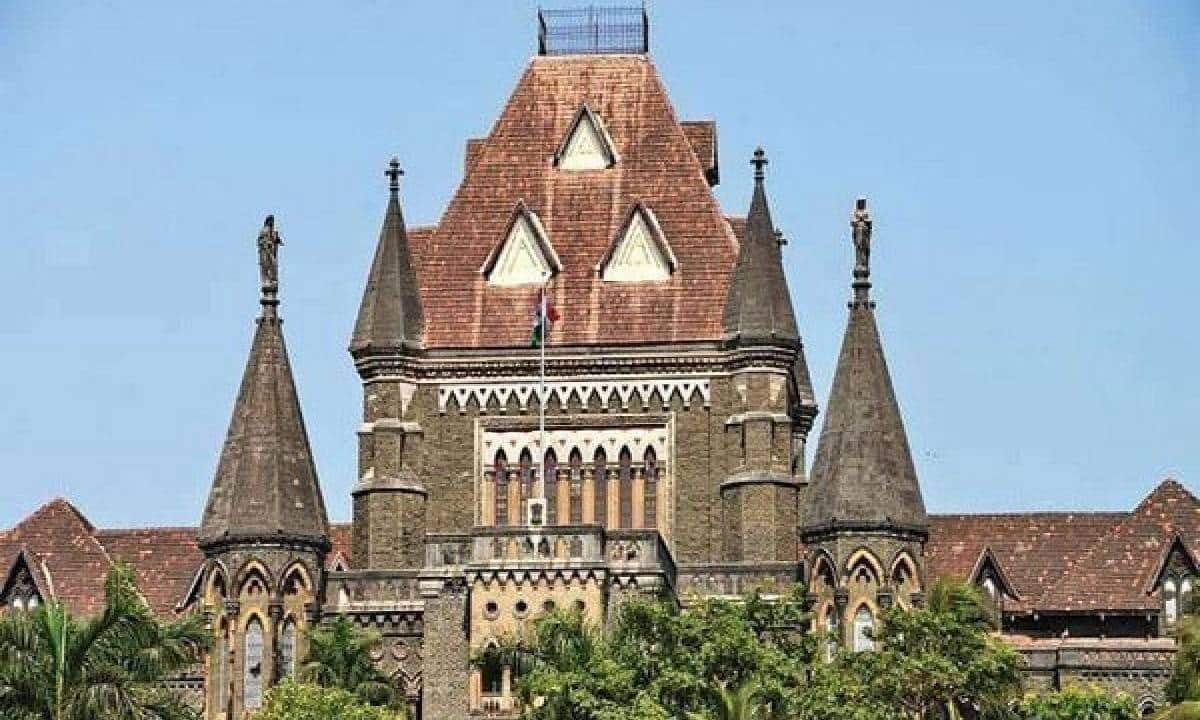
The Bombay High Court has directed the Mumbai Police not to file a chargesheet against a 15-year-old girl booked under the Protection of Children from Sexual Offences (POCSO) Act for allegedly sending sexually suggestive messages to her classmate and her mother.
A bench comprising Chief Justice Shree Chandrashekhar and Justice Gautam Ankhad questioned the police’s decision to apply the POCSO Act in a case involving two minors. “Why has the police registered the case under POCSO? There is no POCSO,” the bench observed, highlighting the overreach in the investigation.
The court was hearing a petition filed by the accused girl through her father, seeking to quash the FIR registered by the Kandivali police on July 10. The complaint was lodged after a 15-year-old girl reported receiving obscene messages from an unknown number that claimed to be in love with her. Mistaking the sender for a man, the complainant blocked the number, but similar messages continued appearing on her social media posts.
Soon, even the victim’s mother began receiving messages of a similar nature. When both blocked the number, the sender created a WhatsApp group with the victim’s friends and continued sending explicit texts, prompting the family to approach the police.
During the investigation, police discovered that the sender was actually the complainant’s classmate — another 15-year-old girl — who claimed she was merely playing a prank without understanding the legal implications.
The girl later approached the High Court seeking relief from the FIR, arguing that the incident was a childish mistake and not a sexual offense.
Additional Public Prosecutor S.C. Gavand told the court that the POCSO charges were filed based on the initial complaint, as the sender’s identity was unknown at the time. “During the investigation, it was revealed that the messages were sent by a girl,” Gavand explained.
The petitioner’s advocate urged the court to ensure that the police do not file a chargesheet while the plea is pending. The bench agreed and instructed the prosecutor to inform the investigating officer about the ongoing High Court hearing.
The matter has been listed for further hearing next week.
Israel Ratifies Gaza Ceasefire and Hostage Deal with Hamas, Ending Two-Year War 13
Israel’s government has ratified a ceasefire with the Palestinian militant group Hamas, clearing the way to end hostilities in Gaza within 24 hours and release Israeli hostages within the following 72 hours.
The cabinet’s approval early Friday came nearly a day after mediators announced the deal, which includes a phased withdrawal of Israeli forces from Gaza and an exchange of Israeli hostages for Palestinian prisoners. The agreement, part of U.S. President Donald Trump’s peace initiative, marks a significant step toward ending the two-year-long Gaza war.
“The government has just approved the framework for the release of all hostages — both the living and the deceased,” Israeli Prime Minister Benjamin Netanyahu announced on X.
The war has left Israel diplomatically isolated and plunged the Middle East into turmoil, drawing in Iran, Yemen, and Lebanon while straining U.S.-Israel ties. Trump, showing growing impatience with Netanyahu, had intensified pressure for a ceasefire.
The announcement sparked celebrations across Israel and the Palestinian territories — a rare moment of relief in a conflict that has claimed over 67,000 Palestinian lives and left entire cities in ruins.
Hamas’ exiled Gaza chief Khalil Al-Hayya said he received guarantees from the United States and mediators that “the war is over.” An Israeli spokesperson confirmed the truce would take effect within 24 hours, with hostages to be released within 72 hours thereafter.
According to Israeli authorities, 20 hostages are believed alive, 26 are presumed dead, and two remain unaccounted for. Hamas has indicated that retrieving the bodies of deceased captives may take longer than freeing the living.
Once the ceasefire is implemented, humanitarian convoys carrying food, medicine, and aid will enter Gaza to assist civilians displaced by the conflict. Hundreds of thousands of Palestinians have been forced to live in tents after their homes and cities were destroyed during Israel’s offensive.
Despite optimism, hurdles remain. Palestinian sources revealed that the final list of prisoners to be released by Israel has not been settled, with Hamas demanding freedom for prominent detainees and hundreds of others arrested during the war. Key elements of Trump’s 20-point peace plan, including Gaza’s postwar governance and Hamas’ disarmament, are yet to be discussed.
Within Israel, Netanyahu faces internal opposition. National Security Minister Itamar Ben-Gvir has threatened to withdraw support for the government if Hamas is not dismantled.
Still, the ceasefire announcement brought scenes of joy. “Thank God for the ceasefire, the end of bloodshed and killing,” said Abdul Majeed Abd Rabbo of Khan Younis in southern Gaza. “All of Gaza and the Arab world are happy.”
In Tel Aviv, Einav Zaugauker, mother of hostage Matan Zaugauker, broke down in tears at Hostages Square: “I can’t breathe. I can’t explain what I’m feeling — it’s unbelievable.”
Israeli airstrikes continued in Gaza before the official start of the ceasefire, though casualties were significantly lower. Local health officials reported seven deaths in two isolated strikes on Thursday.
President Trump announced he would travel to the region on Sunday, possibly to attend a signing ceremony in Egypt. Israeli Knesset Speaker Amir Ohana invited him to address the legislature — the first such invitation to a U.S. president since 2008.
The agreement has drawn widespread support from Arab and Western nations, with analysts calling it Trump’s most significant diplomatic achievement to date. Western and Arab officials met in Paris to discuss postwar reconstruction and the creation of an international peacekeeping task force for Gaza.
The U.S. will deploy 200 troops as part of this multinational effort, joining forces from Egypt, Qatar, Turkey, and the UAE, though no American soldiers will enter Gaza.
The ceasefire marks the potential end of a devastating conflict that began on October 7, 2023, when Hamas-led militants attacked Israeli towns and a music festival, killing 1,200 people and taking 251 hostages.
If successfully implemented, the deal could signal not only peace for Gaza but also a pivotal moment in reshaping Middle Eastern diplomacy.
From Ballot to Bloodline: The Silent Coup of Dynastic Politics in India 15
India’s democracy is facing a slow, deliberate suffocation—not by authoritarian decrees, but by the rise of dynastic politics disguised as social representation. What began as a democratic dream to empower the underrepresented has morphed into a vicious cycle of nepotism, entitlement, and political inheritance. Across every major party, from the Congress and BJP to regional behemoths like the DMK, RJD, SP, NCP, and Shiv Sena, the new rule of Indian politics is simple: power must stay within the family. What was once a republic of citizens is degenerating into a republic of surnames.
Let’s not romanticize this with phrases like “political legacy.” Legacy is what a leader leaves behind for the nation. What we are witnessing today is inheritance—where the throne, constituency, and party apparatus are passed from father to son, husband to wife, uncle to nephew, as if the electorate were mere tenants on a family estate. This trend is especially pronounced within caste-based politics. What should have been a revolution for social justice—bringing backward classes, Dalits, and marginalized groups into the corridors of power—has mutated into an oligarchy of caste elites. The gatekeepers of representation have become the hoarders of it.
From Amit Shah’s son Jay Shah’s rapid ascent in the BCCI to Akhilesh Yadav taking over from Mulayam Singh, from Udhayanidhi Stalin inheriting Tamil Nadu’s throne to Tejashwi Yadav being groomed as Lalu Prasad’s political heir, from Supriya Sule’s seamless glide into Pawar’s NCP empire to Aaditya Thackeray’s ministerial debut before he could finish learning governance—the pattern is clear. These aren’t isolated events; they represent a system meticulously built to preserve power through bloodlines. The political establishment, whether left, right, or center, has quietly agreed on one thing: democracy is fine as long as it doesn’t disrupt dynastic continuity.
Even the BJP, which claims to be a cadre-based, ideology-driven party, has begun showing signs of the same rot. While the Congress was always synonymous with dynastic control—starting from the Nehru-Gandhi family—the BJP’s moral high ground is fast eroding. Rajnath Singh’s son Pankaj Singh holds a strong political position in Uttar Pradesh, and other leaders have paved similar hereditary paths for their kin. The difference between the Congress and BJP is no longer about ideology; it’s about degree. The Congress institutionalized dynastic politics openly. The BJP, while publicly denouncing it, practices it quietly through patronage and positioning.
Regional parties, however, have taken it to another level—crafting miniature monarchies within states. The Dravidian parties of Tamil Nadu are a textbook example. M. Karunanidhi handed over the DMK to his son M.K. Stalin, who in turn has now anointed Udhayanidhi Stalin as heir apparent. In Maharashtra, Sharad Pawar’s NCP has split into two branches, one led by his daughter Supriya Sule and another by his nephew Ajit Pawar. Both factions claim to represent the same “Maratha pride,” yet both are primarily fighting for control of the family’s political assets. The Shiv Sena, founded on Balasaheb Thackeray’s charisma, is now reduced to a tug-of-war between Uddhav and Eknath Shinde’s claimants, with Aaditya Thackeray’s ascension seen as destiny, not democracy.
In Uttar Pradesh and Bihar, the dynastic chains are even thicker. The Samajwadi Party, born out of socialist ideals, has become the Yadav family’s private property. Mulayam Singh’s mantle passed to Akhilesh Yadav; the family feud only highlighted how power within the party flows through kinship, not ideology. Lalu Prasad Yadav’s Rashtriya Janata Dal is similarly entrenched in familial politics, with Tejashwi and Tej Pratap Yadav representing the next generation. These so-called champions of social justice have reduced backward caste empowerment to family franchise. The Yadavs of Uttar Pradesh and Bihar, the Marathas of Maharashtra, and the Reddys of Andhra Pradesh have effectively converted caste capital into dynastic capital.
This perversion of democracy is not just moral decay—it’s structural capture. In a genuine democracy, power flows upward from the people; in India’s current system, it circulates laterally within families. This hollowing of institutions is dangerous because it wears a democratic mask. The Election Commission still conducts polls, parties still hold conventions, and the media still covers rallies. But beneath that façade, the internal machinery of politics has become closed, self-replicating, and hereditary. When a young party worker from a small town dreams of contesting an election, he faces not ideological competition but dynastic monopoly. The message is simple: unless your surname opens doors, you can remain a loyal foot soldier forever.
Dynastic politics is the antithesis of meritocracy. It kills ambition in the grassroots, discourages honest participation, and breeds entitlement among heirs who inherit power without proving competence. Worse, it disconnects leadership from lived realities. Many political heirs grow up in elite bubbles—educated abroad, sheltered from public life, surrounded by sycophants. When they enter politics, they bring the arrogance of inheritance, not the humility of struggle. They claim to represent the poor and backward, but they themselves are the feudal elite of a new age—draped in democracy, yet drunk on entitlement.
The backward caste leadership that once symbolized India’s democratic awakening has now fossilized into dynastic strongholds. Mandal politics, which was meant to break upper-caste monopoly, ended up replacing one form of hierarchy with another. The Yadavs in north India, the Jats in Haryana, the Patels in Gujarat, the Marathas in Maharashtra—all now have entrenched political families who claim to represent their communities but actually represent themselves. The illusion of empowerment persists, while real political mobility within these castes has stagnated. The same surnames dominate ballots decade after decade, and community aspirations are bartered for family loyalty.
This phenomenon is corrosive because it transforms representation into patronage. A family head becomes the community’s self-proclaimed guardian, deciding who gets benefits, who gets tickets, and who remains loyal. The result is a political economy built not on ideas or governance but on kinship networks and caste calculus. When voters are told that rejecting the family means betraying the community, democracy collapses into emotional blackmail. And when political heirs are parachuted into ministries, bureaucracy stops respecting competence; it starts respecting bloodlines.
Amit Shah’s own political empire is an instructive case. Though his son Jay Shah’s position in cricket administration isn’t technically political, it reveals the ecosystem of privilege that binds politics, business, and sport. It is this very ecosystem—opaque, interlinked, and self-serving—that fuels India’s culture of nepotism. The boundaries between governance, commerce, and influence have blurred so completely that power today is inherited, not earned. The BJP, which once prided itself on a disciplined cadre and ideological purity, now finds itself struggling with the same disease it accused others of—nurturing sons, daughters, and protégés instead of leaders who rose from the soil.
The consequences of this dynastic entrenchment are profound. Policy-making turns into family management. Constituencies are treated as hereditary fiefs; party posts are distributed like family dowries. Internal democracy within parties, already weak, becomes a joke. The Congress has not held meaningful internal elections for decades, and regional parties are no better. In the DMK, SP, RJD, NCP, and Shiv Sena, succession plans are decided in drawing rooms, not party conferences. The illusion of youth leadership is maintained by promoting heirs in their thirties, as if age alone were proof of reform. But replacing one generation of dynasts with another is not renewal—it’s repetition.Voters, too, share part of the blame. Many justify dynastic politics as “experience continuity” or “recognizable faces.” But this argument is hollow. Recognition doesn’t mean leadership. Name recall doesn’t mean competence. By electing heirs simply because they belong to familiar families, voters reinforce the very feudal structure democracy was meant to destroy. We are seduced by surnames and blinded by nostalgia, mistaking inheritance for legacy and charisma for capability.
The media, which should challenge this, has instead normalized it. Dynastic heirs are celebrated as “youth icons,” their marriages covered like royal events, their political debuts treated as coronations. The same media that attacks corruption in bureaucracy rarely investigates the moral corruption of nepotism. Television studios are filled with heirs of politicians and journalists alike—a full-blown ecosystem of inherited influence, masquerading as democracy.The biggest tragedy, however, is that dynastic politics kills reform from within. A political heir rarely challenges the system that made him or her possible. Instead, they perfect it. They learn to balance symbolism with control, rhetoric with patronage. They maintain the illusion of mass appeal while ensuring power never escapes the family circle. Thus, real leadership—born of struggle, experience, and public accountability—is suffocated before it can emerge. For every genuine grassroots worker, there are ten privileged heirs waiting to leapfrog into power with the blessings of their surnames.
If this continues, India’s political landscape will evolve into a closed caste oligarchy, where each region is dominated by a handful of powerful families who negotiate power among themselves. Democracy will exist only in form, not in substance. The institutions of accountability—Election Commission, anti-corruption bodies, internal party mechanisms—will wither into ceremonial entities, powerless against hereditary power. The republic will remain in name, but its soul will be feudal.The cure for this disease is neither quick nor convenient. It requires radical transparency within parties—mandatory disclosure of familial links of candidates and office-bearers, open primaries to challenge hereditary nominations, and statutory term limits for intra-family succession. It demands that voters reject emotional loyalty and demand performance, not pedigree. It needs the media to stop glorifying dynasts and start questioning them with the same vigor it reserves for populists. And it needs the youth to stop waiting for seats to be gifted and start fighting for them through ideas and credibility.
India’s strength has always been its ability to reinvent democracy against all odds. We survived colonial rule, Emergency, and sectarian strife because people still believed that democracy belongs to them. But the silent expansion of dynastic politics is eroding that belief. When power remains concentrated in a few families across caste and party lines, the idea of participatory governance collapses. A democracy without mobility is not a democracy—it’s a disguised monarchy.
The choice before India is stark. Either we confront this creeping feudalism head-on, or we accept a future where the next generation of leaders is already decided by birth. If we continue to confuse dynasty with democracy, we will not remain a republic of equals but a federation of families—each ruling their caste, constituency, and conscience as private property. The slogans will still say “Janta Ka Raj,” but behind the curtain, it will be the same old script—written by lineage, performed by heirs, and paid for by the people.
From Bullets to Shoes: How Intolerance Is Choking India's Democracy 17
India’s strength has always been its ability to balance diversity of thought with the supremacy of law, but the current climate reveals a dangerous slide backwards from that ideal. The recent sequence of events surrounding Chief Justice B.R. Gavai illustrates how rapidly public discourse is abandoning constitutional maturity and embracing mob-style intimidation. It began with the ruling party’s attempt to symbolically woo Dalit voters before the Bihar elections by inviting Kamala Gavai, the CJI’s mother, to an RSS centenary event. She politely declined, citing her Ambedkarite convictions and her late husband’s lifelong commitment to social justice. Instead of respecting her choice, a torrent of online abuse followed, targeting not just her but also her deceased husband, exposing the intolerance festering beneath political opportunism. This episode signalled a disturbing mindset—when persuasion fails, coercion takes its place.
This escalation reached its shameful climax inside the Supreme Court itself when senior advocate Rakesh Kishore hurled a shoe toward the Chief Justice during a live hearing, shouting religious slogans. That the nation’s highest court, the temple of constitutional justice, could become a stage for such spectacle is a damning reflection of how far civic discipline has eroded. Kishore’s justification was not a principled legal argument but personal outrage over a speech where the CJI had stated that India is governed by the rule of law, not bulldozers. Instead of countering the argument with reason or seeking redress through legal channels, he chose humiliation and disruption. Such acts do not merely disrespect an individual; they desecrate the very institution that safeguards the Constitution. They normalise contempt for law, signalling that violence and theatrics can replace dialogue and jurisprudence.
This behaviour is not isolated. History shows that intolerance toward dissent invariably begins with targeting individuals who hold authority—whether it was Gandhi, who was assassinated because his idea of India clashed with extremist narratives, or judges who are now vilified and physically attacked for decisions perceived as inconvenient. The same mindset drives both acts: a refusal to engage with opposing ideas and an obsession with silencing them. The moment a society accepts such conduct as a legitimate form of protest, democracy ceases to be a contest of ideas and becomes a battleground of egos.
Such incidents also erode the sanctity of the judiciary, which is the last bulwark against executive excess and majoritarian impulses. If judges must fear for their safety or their families’ dignity, their independence is compromised. They may hesitate to deliver unpopular verdicts, and the scales of justice may tilt under the weight of intimidation. Moreover, dragging the CJI’s family into political theatre undermines the separation between constitutional offices and electoral politics. Judges are not meant to be vote-bank instruments, nor are their relatives to be exploited as symbolic endorsements. The rule of law demands that constitutional offices remain above partisan games.
What is equally alarming is the growing tendency to equate judicial scrutiny with hostility to religion or nationalism. Court rulings on matters like Jallikattu, Dahi Handi, or demolition drives are interpreted not through the lens of legality but through sectarian sentiment. This reframing is corrosive because it delegitimises the judiciary’s role as a neutral arbiter. It also emboldens individuals to believe that if a judgment offends their faith or ideology, they are entitled to attack the judge rather than challenge the verdict through appeals, reviews, or public discourse. That is not democracy; that is mob rule dressed up as patriotism.
India has witnessed similar assaults on judicial dignity before—whether it was the chaos inside the Patiala House courts during the JNU sedition hearings or lawyers resorting to strikes despite clear Supreme Court rulings declaring such actions illegal. Each time, the judiciary stood firm, but repeated incidents chip away at public confidence and institutional authority. And once that confidence collapses, it is the powerless and marginalised who suffer most, for they depend on the judiciary for protection against the might of the state and the majority.
The bullet that killed Gandhi and the shoe flung at the Chief Justice are separated by decades but united by an identical impulse: destroy or humiliate anyone who disagrees. Such thinking is a symptom of intellectual cowardice and societal decay. It fears debate because it knows it cannot win on the strength of reason. If we allow this mentality to thrive, we reduce democracy to a circus where noise replaces dialogue, intimidation replaces justice, and anger replaces accountability. Attacking a judge does not strengthen faith, protect culture, or defend democracy—it only signals that the very foundations of our republic are under siege from those who claim to protect it. If India is to progress, it must draw a hard line: ideas must be challenged with ideas, not with bullets, abuse, or shoes. Anything less is a betrayal of the Constitution and the civilisation it seeks to uphold.
93rd Air Force Day: IAF Honours Operation Sindoor with Spectacular Air Power Display at Hindon 19
The 93rd Indian Air Force (IAF) Day was celebrated in grand style at the Hindon Air Force Station on Wednesday, honouring the valour, discipline, and professionalism of India’s Air Warriors. This year’s celebration carried special significance with the recognition of Operation Sindoor, a landmark mission that reaffirmed the decisive role of air power in modern warfare.
Addressing the gathering, Chief of Air Staff Air Chief Marshal A.P. Singh hailed Operation Sindoor as a “shining example of what can be achieved through meticulous planning, disciplined training, and determined execution.” He praised the performance of indigenously developed weapons and platforms, which enabled precise, high-impact strikes, restoring the primacy of offensive air action in national consciousness.
Recalling the IAF’s glorious history — from the 1948, 1971, and 1999 wars to the Balakot airstrikes — Singh underscored the Air Force’s role as both the protector of India’s skies and guardian of national honour. He lauded the seamless integration of new systems and weapons into operational plans and highlighted the growing culture of accountability, safety, and mission readiness among personnel.
Operation Sindoor, launched in May 2025 following the Pahalgam terror attack, involved precision airstrikes on nine terrorist camps across Pakistan-occupied Kashmir and deep inside Pakistan. Utilizing the Integrated Air Command and Control System (IACCS) and advanced indigenous aircraft, the operation showcased India’s expanding technological and strategic dominance. Air Chief Marshal Singh described it as “a reaffirmation of air power’s ability to shape military outcomes within days.”
The Air Chief also highlighted the IAF’s humanitarian role through Operation Sindhu, conducted in June to evacuate Indian nationals from conflict zones in Iran and Israel. He commended the swiftness, reliability, and compassion with which the missions were executed despite hazardous conditions.
The celebrations at Hindon featured a grand parade reviewed by Air Chief Marshal Singh, showcasing the prowess of frontline fighters like Rafale, Sukhoi Su-30MKI, and MiG-29, along with a farewell salute to the MiG-21 Bison, marking over six decades of service. Indigenous assets such as the Netra AEW&C, Akash Surface-to-Air Missile System, C-17 Globemaster III, C-130J Hercules, Apache attack helicopters, and Advanced Light Helicopters were also displayed, reflecting India’s growing self-reliance in defence manufacturing.
Top defence officials, including Chief of Defence Staff General Anil Chauhan, Army Chief General Upendra Dwivedi, and Navy Chief Admiral Dinesh K. Tripathi, joined Air Chief Marshal Singh at the National War Memorial to pay homage to the fallen heroes.
The static and aerial displays symbolized the Indian Air Force’s combat excellence, technological innovation, and humanitarian commitment — reaffirming its role as a cornerstone of India’s national security and pride.