Opposition Moves to Remove CEC Gyanesh Kumar: Here's the Constitutional Process 2
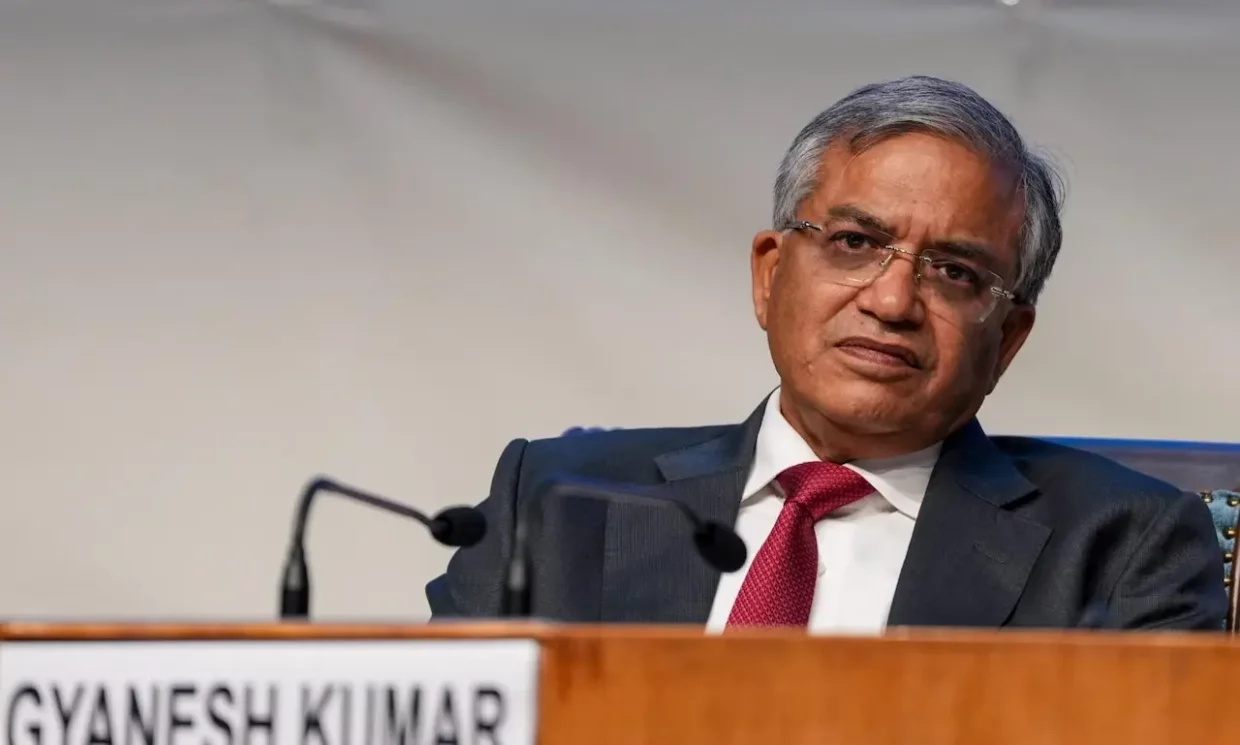
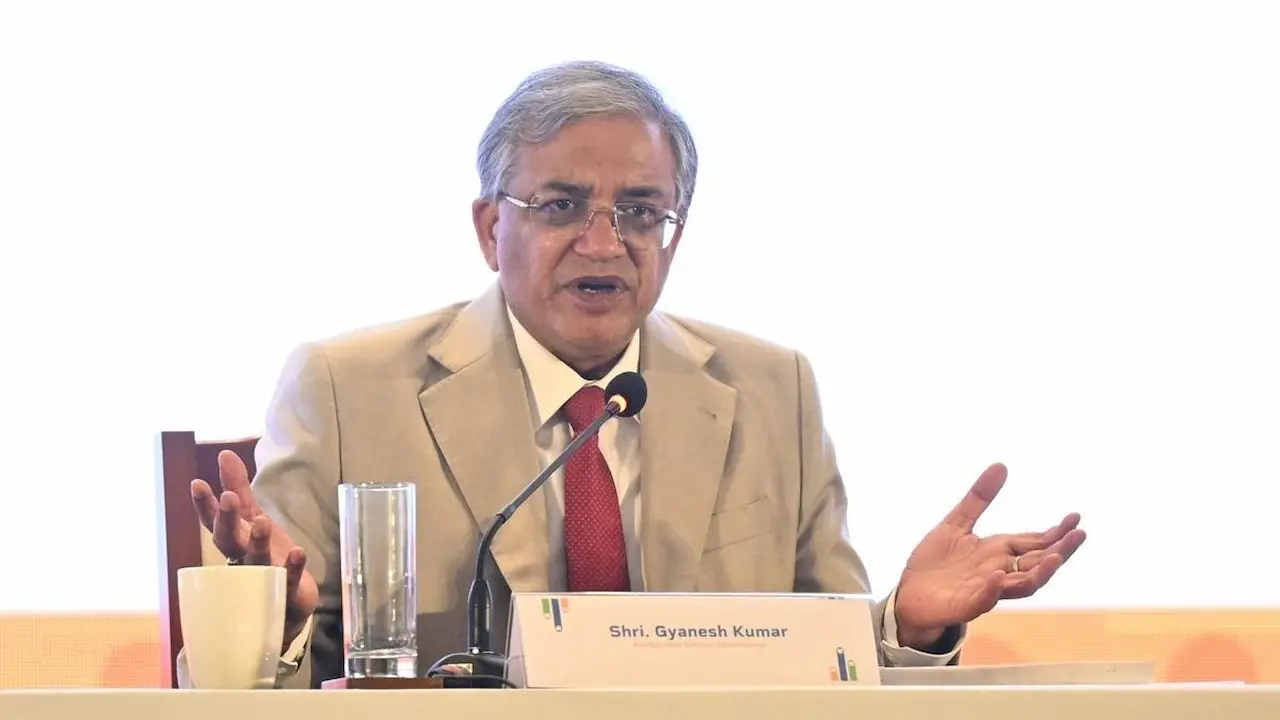
Opposition Members of Parliament have submitted notices in both Houses of Parliament seeking a motion for the removal of Chief Election Commissioner (CEC) Gyanesh Kumar, sources said on Friday.
According to sources, the notice has been signed by 130 MPs in the Lok Sabha and 63 MPs in the Rajya Sabha. The signatories include members from parties associated with the INDIA bloc as well as the Aam Aadmi Party (AAP), which, though no longer formally part of the alliance, has backed the initiative. Some Independent MPs have also supported the move, while several others have reportedly shown interest in joining it.
This marks the first time in India’s parliamentary history that a notice has been submitted seeking the removal of a Chief Election Commissioner.
Sources said the notice lists seven allegations against Kumar, including claims of “partisan and discriminatory conduct in office”, “deliberate obstruction of investigation into electoral fraud”, and “mass disenfranchisement”. Opposition parties have accused the CEC of favouring the ruling Bharatiya Janata Party (BJP), particularly in relation to the ongoing Special Intensive Revision (SIR) of electoral rolls, which they claim could benefit the party at the Centre.
Under the Constitution, the process for removing the Chief Election Commissioner is similar to that for removing a judge of the Supreme Court or a High Court. The removal can only take place on grounds of “proven misbehaviour or incapacity”.
In a blog post, Trinamool Congress Rajya Sabha MP Derek O’Brien said the term “proven misbehaviour” has been interpreted to include deliberate abuse of authority, partisan exercise of constitutional duties in favour of a particular political formation, and actions that erode public confidence in the independence and impartiality of the Election Commission.
O’Brien noted that India has had 25 Chief Election Commissioners in the past 75 years and that Parliament has never before initiated a removal motion against a CEC.
Describing the move as a “strong message”, he said opposition parties were using “every constitutional tool available to protect the sanctity of India’s democratic institutions”. He added that if the notice is not taken up by the government, questions may arise about a possible understanding between the executive and the CEC.
Article 324(5) of the Constitution states that the CEC cannot be removed except in the same manner and on the same grounds as a judge of the Supreme Court. The motion can be introduced in either House of Parliament and must be passed by a special majority — a majority of the total membership of the House and at least two-thirds of members present and voting.
According to the Judges (Inquiry) Act, 1968, if such notices are submitted in both Houses on the same day, a committee will be constituted only after the motion is admitted in both Houses. The committee is jointly formed by the Lok Sabha Speaker and the Rajya Sabha Chairman.
The inquiry panel consists of the Chief Justice of India or a Supreme Court judge, the Chief Justice of one of the High Courts, and a distinguished jurist. The committee conducts proceedings similar to a court trial, including examination and cross-examination of witnesses.
The Chief Election Commissioner is also given an opportunity to present his defence before the panel. Once the committee submits its findings, the report is tabled in Parliament and debated before a final vote on the motion in both Houses.
193 Opposition MPs Move Motion to Remove CEC Gyanesh Kumar, Alleging Electoral Bias 4
A total of 193 Opposition Members of Parliament have submitted notices in both Houses of Parliament seeking a motion for the removal of Chief Election Commissioner (CEC) Gyanesh Kumar, sources said on Friday.
According to sources, the notice has been signed by 130 MPs in the Lok Sabha and 63 MPs in the Rajya Sabha.
The signatories include representatives from parties that are part of the INDIA bloc, as well as members of the Aam Aadmi Party, which has supported the initiative despite no longer being formally part of the opposition alliance. Some independent MPs have also backed the move, while several others have reportedly expressed interest in joining the effort.
If taken up, this would mark the first time a motion has been introduced in Parliament seeking the removal of a Chief Election Commissioner.
Sources said the notice outlines seven charges against Kumar, including allegations of “partisan and discriminatory conduct in office”, “deliberate obstruction of investigation into electoral fraud”, and “mass disenfranchisement”.
Opposition parties have accused the CEC of favouring the ruling Bharatiya Janata Party (BJP) in several instances, particularly in connection with the ongoing Special Intensive Revision (SIR) of electoral rolls.
The Opposition has alleged that the revision exercise could result in the removal of legitimate voters and may influence electoral outcomes in favour of the ruling party at the Centre.
The development marks a significant escalation in the ongoing confrontation between the Opposition and the Election Commission ahead of upcoming electoral battles.
After Major Blaze, Thane Factories Ordered to Submit Fire Safety Audit Reports Within a Week 6
Factories operating in the Ambernath industrial belt of Maharashtra’s Thane district have been directed to submit fire and safety audit reports within eight days following a major fire at a chemical unit earlier this week, officials said on Friday.
The directive was issued by Maharashtra Industries Minister Uday Samant after a massive blaze broke out at Shree Ganesh Chemical Company located in the Anandnagar Maharashtra Industrial Development Corporation (MIDC) area on Monday.
Samant visited the accident site on Wednesday and reviewed the safety measures in place at industrial units in the region. During the inspection, he instructed officials to ensure that factories under their jurisdiction strictly comply with fire and safety norms.
“The officials must have comprehensive information about the companies operating in their jurisdiction, particularly regarding their safety systems and fire prevention measures. This information should also be available to public representatives,” Samant said while addressing officials.
The minister also warned of strict action if investigations reveal that any industrial unit deliberately triggered a fire to claim insurance benefits.
“It is our primary responsibility to protect the human settlements located near industrial estates. The safety of citizens cannot be compromised under any circumstances,” he added.
Officials said the MIDC administration has been instructed to ensure that all factories in the Ambernath industrial area submit their fire and safety audit reports within the stipulated time.
The move is aimed at strengthening industrial safety compliance and preventing future fire incidents in one of the region’s major manufacturing hubs.
A Rare Verdict of Mercy: The Harish Rana Case and India's Difficult Conversation with Dignity in Death 8
Courts are built on the fundamental principle of protecting life. In India, this principle is deeply rooted in Article 21 of the Constitution, which guarantees every citizen the right to life and personal liberty. Traditionally, courts lean toward preserving life under all circumstances, often interpreting the law in ways that prevent its premature termination. But occasionally, the judiciary is confronted with a case so complex and emotionally wrenching that it must reconsider the meaning of life itself. The recent Supreme Court decision allowing passive euthanasia for Ghaziabad resident Harish Rana, who has remained in a vegetative state for nearly thirteen years, is one such rare moment in Indian legal history.
This verdict is extraordinary not merely because it concerns euthanasia, but because it forces society to confront a deeply uncomfortable question: when life continues only as a biological function, without consciousness, awareness, or the possibility of recovery, does the law still serve justice by insisting that it must continue?
Harish Rana’s story is one of prolonged tragedy. For over a decade, he has remained confined to a bed in a condition medically described as a persistent vegetative state. In such a condition, the body continues to perform basic functions—breathing, circulation, reflexive responses—but the brain loses the capacity for conscious awareness. The person no longer interacts with the world in any meaningful way. There is no recognition, no communication, and no possibility of returning to the life that once existed.
For thirteen long years, his parents cared for him. They did what countless families in India do when confronted with devastating illness—they held on to hope. Medical consultations, treatments, and prayers continued as the years passed. But hope gradually collided with the harsh limits of medical science. Doctors eventually confirmed that Harish’s condition was irreversible, leaving no possibility that he would regain consciousness or recover.
The decisive medical opinion came from experts at the All India Institute of Medical Sciences (AIIMS). Their assessment was unequivocal: there was no clinical possibility of recovery. Harish’s body was functioning only because of sustained medical care and life-support systems.
Faced with this grim reality, Harish’s parents made an agonizing decision that no parent ever imagines making. They approached the Supreme Court of India, requesting permission for passive euthanasia—the withdrawal of life-sustaining treatment so that their son could be allowed to die naturally and with dignity.
The request itself highlights why the case is so rare.
In India, euthanasia remains a legally sensitive subject. Active euthanasia, where a person is deliberately given a drug or injection to end life, is illegal and treated as a criminal act. Passive euthanasia, however, occupies a narrow legal space under strict judicial guidelines. It involves the withdrawal or withholding of medical treatment that artificially prolongs life.
The roots of this legal framework lie in one of the most emotional cases ever heard by the Indian judiciary—the Aruna Shanbaug case.
Aruna Shanbaug was a young nurse working at Mumbai’s King Edward Memorial Hospital in 1973 when she was brutally assaulted by a hospital ward boy. The attack left her with severe brain damage, pushing her into a vegetative state from which she never recovered. For 42 years, she remained confined to a hospital bed, unable to speak, move, or respond to the world around her.
Her case reached the Supreme Court in 2011 when journalist Pinki Virani filed a petition seeking permission for euthanasia. The court faced an unprecedented moral and legal dilemma. On one hand was the sanctity of life, a principle deeply embedded in Indian law. On the other was the question of whether keeping a person alive indefinitely in a vegetative state could truly be called life.
In its landmark 2011 judgment, the Supreme Court rejected active euthanasia but allowed passive euthanasia under strict conditions, laying down detailed guidelines for such cases. The court ruled that in exceptional circumstances, life-support treatment could be withdrawn if a medical board confirmed that the patient had no chance of recovery and if the decision was approved by the High Court.
Although Aruna Shanbaug herself continued to live until 2015 under hospital care, her case transformed India’s legal approach to end-of-life decisions.
The legal framework evolved further in 2018, when the Supreme Court recognized the concept of a “living will.” This allowed individuals to declare in advance that if they were ever placed in an irreversible medical condition, they did not wish to be kept alive artificially. The court also reaffirmed that the right to life includes the right to die with dignity, though within carefully regulated limits.
Yet despite these guidelines, cases like Harish Rana’s remain extremely rare.
Unlike many situations where hospitals themselves initiate the process through medical boards, the Rana case reached the Supreme Court directly through a family plea. The court therefore approached the matter with exceptional caution. Judges did not rely solely on medical documents; they even interacted with Harish’s parents during the hearings to understand their emotional and financial circumstances.
The court wanted to ensure that the request was not driven by fatigue, economic hardship, or external pressure. In matters involving life and death, such safeguards are essential.
After reviewing the medical reports and hearing the family’s plea, the Supreme Court arrived at a carefully considered decision. The court granted permission for passive euthanasia but ordered that the process must take place under strict medical supervision at AIIMS’ palliative care unit.
The ruling emphasized that life-support treatment would be gradually withdrawn while ensuring that the patient experiences no suffering or indignity during the process. The objective was not to hasten death but to allow a natural end once artificial medical intervention was removed.
This insistence on dignity reflects the broader philosophy of Indian constitutional law. Over the years, the Supreme Court has repeatedly interpreted Article 21 as more than just a right to exist. It is a right to live with human dignity, autonomy, and self-respect.
The Harish Rana case pushes that interpretation into one of the most sensitive areas of human existence. It forces society to confront a difficult truth: modern medicine can keep the body alive far beyond the point where consciousness and personhood have vanished.
Technology can prolong biological life, but it cannot restore the human experience that gives life its meaning.
The Supreme Court’s verdict therefore walks a delicate line. It does not undermine the sanctity of life, nor does it open the door to widespread euthanasia. Instead, it acknowledges that in certain extreme and irreversible situations, compassion and dignity must guide the law.
For Harish Rana’s parents, the ruling brings an end to thirteen years of suspended grief. For the legal system, it marks another step in India’s evolving conversation about the ethics of life, suffering, and dignity.
And for society at large, the case revives a profound and unsettling question—one that neither law nor medicine can fully answer.
When life becomes only a mechanical continuation of breath and heartbeat, is the true duty of compassion to prolong it indefinitely, or to allow it to end with dignity?
The Supreme Court, in this rare and courageous verdict, has chosen dignity.
Kejriwal Questions PM Modi on Strait of Hormuz: Has Iran Assured Safe Passage for Indian Ships? 10
Aam Aadmi Party (AAP) convenor and former Delhi chief minister Arvind Kejriwal on Friday asked Prime Minister Narendra Modi whether Iran had assured India that its ships would be allowed to pass safely through the Strait of Hormuz amid escalating tensions in West Asia.
Kejriwal’s remarks came a day after Prime Minister Modi spoke with Iranian President Masoud Pezeshkian over the phone to discuss the “serious situation” in the region.
During the conversation, Modi emphasised that the safety and security of Indian nationals, along with the uninterrupted transit of goods and energy supplies, remain India’s top priorities.
Reacting to the development, Kejriwal took to social media platform X to question whether India had received any assurance from Tehran regarding the safe passage of Indian vessels through the strategic waterway.
“Prime Minister, has the President of Iran assured you that they will allow our ships to pass through Hormuz? Will the country soon get relief from this serious crisis?” Kejriwal wrote in Hindi.
His statement comes amid growing concerns over disruptions to global energy supplies after Iran reportedly closed the Strait of Hormuz, one of the world’s most critical shipping routes through which a significant portion of India’s crude oil imports pass.
Tensions have further intensified after a bulk oil carrier bound for India was reportedly fired upon by Iranian forces while attempting to cross the Strait of Hormuz three days ago.
The developments have raised questions about the impact of the West Asia crisis on India’s energy security and maritime trade routes.
Lok Sabha Runs by Rules, No MP Can Speak Without Chair's Permission: Speaker Om Birla 12
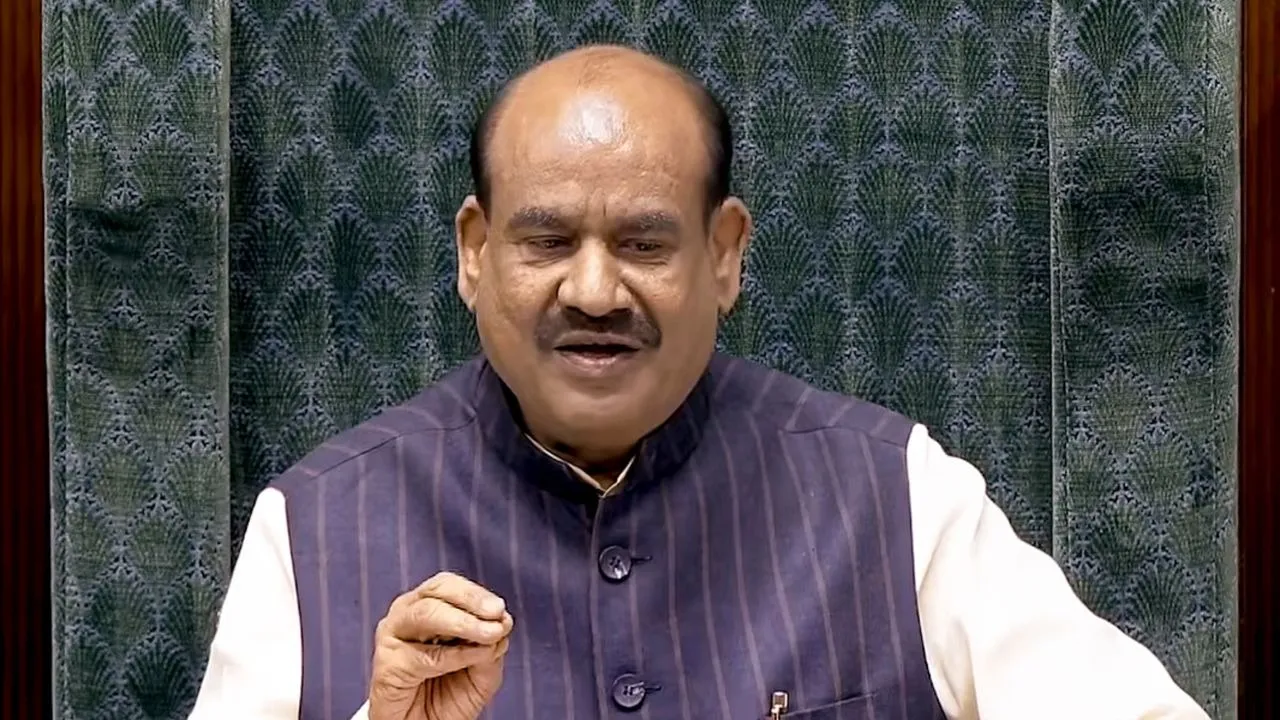
Lok Sabha Speaker Om Birla on Thursday asserted that the House functions strictly according to established rules and procedures, and no member has the privilege to speak at any time or on any subject outside the framework laid down by parliamentary norms.
His remarks came a day after a resolution seeking his removal from office was defeated in the Lok Sabha.
Addressing the House, Birla said the Speaker’s chair represents the dignity and prestige of Parliament and does not belong to any individual. He emphasised that proceedings would continue to be conducted strictly according to the rules, regardless of whether they are acceptable to members.
“The House runs according to rules and regulations and will continue to function in the same manner. I will discharge my duties with sincerity and impartiality,” Birla said, amid desk-thumping by members of the ruling benches.
The Speaker expressed gratitude to members who participated in the debate on the resolution and thanked those who spoke both in support of him and against him.
Thursday marked Birla’s first appearance in the chair since the opposition submitted a notice seeking his removal on February 10 during the first phase of the Budget session, which concluded on February 13. The second phase of the session began on March 9.
Referring to concerns raised during the debate, Birla said some members had argued that Leader of Opposition Rahul Gandhi was not given enough opportunities to speak and should be allowed to speak whenever he wished.
“Every member has the right to speak in the House, but it must be within the framework of rules. No member—not even the prime minister or a minister—can speak without the permission of the Chair,” Birla said.
He reiterated that while MPs enjoy freedom of speech in Parliament, they must adhere to procedural norms.
Responding to allegations that microphones are switched off when certain members attempt to speak, Birla clarified that the Speaker does not control the microphone switch. “The microphone is activated only when the Chair grants permission to a member to speak,” he said.
Birla also addressed criticism regarding the refusal to allow Rahul Gandhi to table a magazine article based on the unpublished memoir of former Army chief M M Naravane on the 2020 India-China conflict. Citing precedents set by previous Speakers, he said such decisions were consistent with parliamentary practice.
Following his remarks, the Speaker adjourned the House till 2 pm.
Bombay HC Issues Notices Over LPG Supply Crunch Plea Amid Iran War Energy Crisis 14
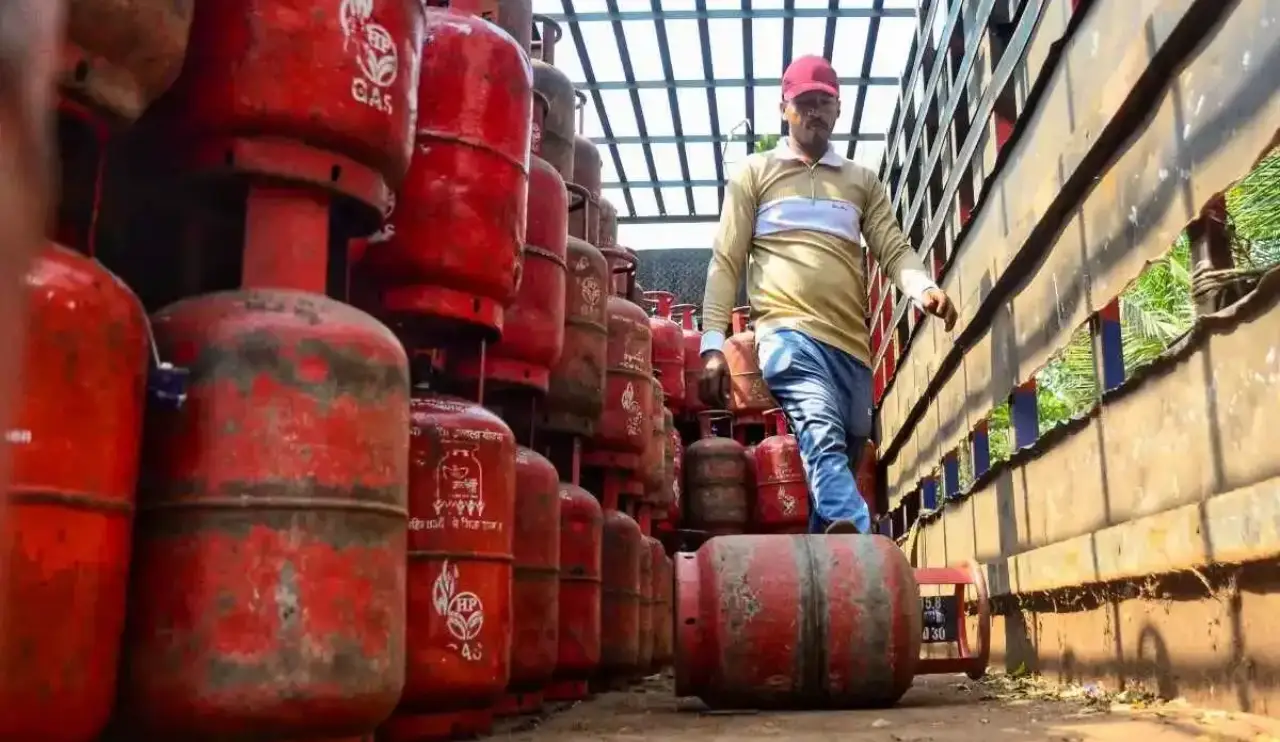
The Bombay High Court on Thursday issued notices to the Union Ministry of Petroleum and Natural Gas and a private company after six LPG distributors approached the court alleging a shortage of domestic cooking gas supply amid the ongoing energy crisis linked to the Iran conflict.
The distributors claimed that Nagpur-based Confidence Petroleum India Ltd had failed to increase the supply of household LPG cylinders despite the Centre’s directive prioritising domestic distribution.
The petition, filed through advocates Shyam Dewani and Saahil Dewani, argued that the Iran war has disrupted global crude supplies, leading to constraints in LPG production. In response to the situation, the Ministry of Petroleum and Natural Gas had directed that LPG production and distribution for domestic consumers should be given priority.
However, the petitioners alleged that repeated representations requesting the company to halt LPG exports and divert supplies to the domestic market had gone unanswered. According to the plea, the company informed distributors that it could not prioritise domestic supply due to its international export commitments.
A division bench of Justices Anil S Kilor and Raj D Wakode of the Nagpur bench issued notices to the Ministry of Petroleum and Natural Gas (MoPNG), the Directorate General of Foreign Trade (DGFT) and Confidence Petroleum India Ltd, directing them to respond by Monday.
The court also observed that, in the interim, the government’s policy prioritising the supply of domestic LPG cylinders must be strictly followed.
The petition stated that the six distributors procure LPG from Confidence Petroleum India Ltd and supply it to households, hotels, small industries and commercial establishments across Nagpur and other districts in Maharashtra.
The distributors further argued that the Ministry of Petroleum and Natural Gas is responsible for framing policies and issuing directions related to petroleum products, including LPG, while the Directorate General of Foreign Trade regulates export restrictions and trade policy decisions.
The petitioners have urged the High Court to direct Confidence Petroleum India Ltd to prioritise LPG supply to the domestic market and temporarily halt exports until domestic availability stabilises. They have also requested the court to instruct the petroleum ministry to ensure adequate LPG availability for household consumption.
Former IPS Officer R N Ravi Sworn In as 22nd Governor of West Bengal 16
Former IPS officer R N Ravi was sworn in as the 22nd Governor of West Bengal at a ceremony held at Lok Bhavan on Thursday morning.
The oath of office was administered by Chief Justice of the Calcutta High Court Sujoy Paul in the presence of Chief Minister Mamata Banerjee, Assembly Speaker Biman Banerjee, senior minister and Kolkata Mayor Firhad Hakim, and Left Front chairman Biman Bose.
Several senior bureaucrats, including Chief Secretary Nandini Chakravorty and top police officials, were also present at the swearing-in ceremony.
However, no leader from the opposition BJP attended the programme.
Ravi assumed office following the resignation of his predecessor, C V Ananda Bose, who stepped down from the post on March 5.
A seasoned administrator and former intelligence officer, Ravi has previously served as the governor of Nagaland, Meghalaya and Tamil Nadu before taking charge in West Bengal.
No Fuel Shortage Amid West Asia Crisis, Govt Assures Lok Sabha 18
The Centre on Thursday assured the Lok Sabha that there is no shortage of petrol, diesel or kerosene in the country despite the ongoing crisis in West Asia, urging people not to fall for rumours or misinformation.
Responding to concerns raised by Leader of the Opposition Rahul Gandhi, Petroleum and Natural Gas Minister Hardeep Singh Puri said the government has taken adequate steps to ensure uninterrupted fuel supplies across the country. He emphasised that maintaining steady fuel availability for India’s 33 crore households remains a top priority for the government.
Puri informed the House that retail fuel outlets are well stocked and supply chains are functioning normally, ensuring that consumers are not affected by geopolitical developments in the region.
Amid sloganeering by opposition members during the discussion, the minister said India had successfully secured sufficient crude oil supplies despite disruptions in the Strait of Hormuz, a key global shipping route for oil.
He attributed the stability in supply to Prime Minister Narendra Modi’s diplomatic outreach, stating that India managed to procure crude volumes exceeding what could have been delivered through the disrupted shipping corridor during the same period.
The government reiterated that there is no immediate threat to the country’s fuel availability and called on the public to avoid spreading panic or unverified information regarding energy supplies.
Farooq Abdullah Escapes Assassination Attempt in Jammu; Gunman Arrested 20
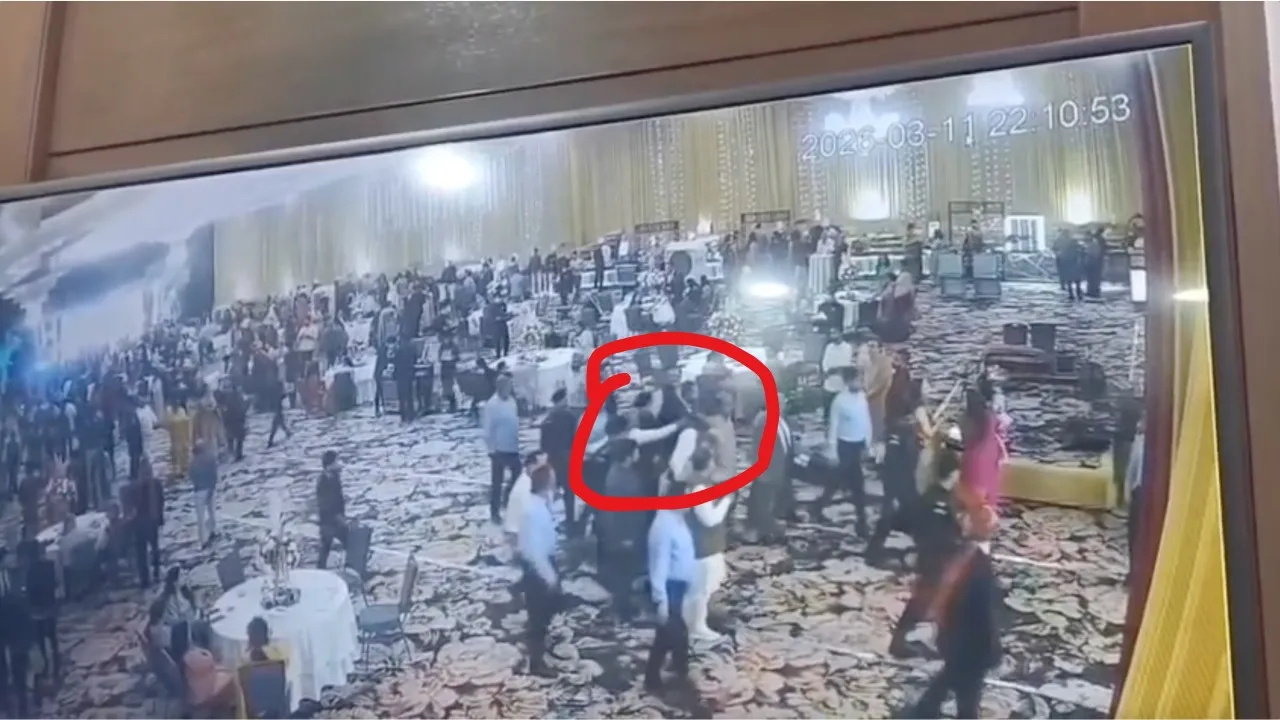
National Conference president and former Jammu and Kashmir chief minister Farooq Abdullah narrowly escaped a gunshot attack when a man opened fire at him while he was leaving a wedding function in Jammu on Wednesday night, officials said.
Deputy Chief Minister Surinder Choudhary and Chief Minister Omar Abdullah’s advisor Nasir Aslam Wani were accompanying Abdullah at the time of the incident.
The accused, identified as 63-year-old Kamal Singh Jamwal, a resident of Purani Mandi in Jammu, was immediately overpowered by security personnel and taken into custody. Police said Jamwal told investigators that he had been waiting for an opportunity to target Abdullah for nearly two decades.
According to police, the incident occurred at a marriage ceremony held at Royal Park in the Greater Kailash area of Jammu. As Abdullah was leaving the venue, the gunman approached him from behind and fired a shot at close range. Members of the former chief minister’s security detail quickly intervened, preventing the attack from causing any harm.
Police said the weapon used in the attack, a licensed pistol, has been seized from the accused and further investigation is underway. CCTV footage from the venue reportedly shows the attacker approaching Abdullah and firing the shot from point-blank range.
Officials said the accused appeared to be intoxicated at the time of the incident. He was subdued by two officers from the security wing of the Jammu and Kashmir Police—an inspector and a sub-inspector.
Abdullah and Choudhary had attended the event to congratulate party leader B S Chouhan on his daughter’s wedding and had been at the venue for more than an hour before the incident occurred.
Senior police officials ruled out a terror angle in the case. “There has been a firing incident using a licensed weapon at a marriage party where former chief minister Farooq Abdullah was present. The accused has been arrested and a detailed investigation is underway,” SP (City South) Ajay Sharma said in a statement.
Omar Abdullah said his father had a “very close shave” and credited the close protection team for preventing a tragedy. “A man with a loaded pistol managed to reach point-blank range and fire a shot. It was only the swift action of the protection team that deflected the shot and ensured the assassination attempt failed,” he said, while raising questions about how the attacker managed to get so close to a Z+ NSG-protected leader.
Deputy Chief Minister Surinder Choudhary described the incident as a serious security lapse, questioning how an armed person could enter the venue when senior political leaders were present.
Eyewitnesses said Abdullah had just finished dinner with guests and was leaving the wedding venue when the gunman fired. One witness claimed the accused identified himself as the chairman of an organisation called “Jagran Manch.”
Nasir Aslam Wani thanked the security personnel for acting swiftly and said the situation could have turned serious had the attacker not been overpowered in time. Police said the accused has been interrogated and further details will emerge as the investigation progresses.