Home Blog Page 5

Mamata’s Moment of Reckoning: Inside the Hidden Battle for West Bengal

mamata, mamata banerjee, trinamool congress, congress, West Bengal elections, west bengal
Mamata’s Moment of Reckoning: Inside the Hidden Battle for West Bengal 2

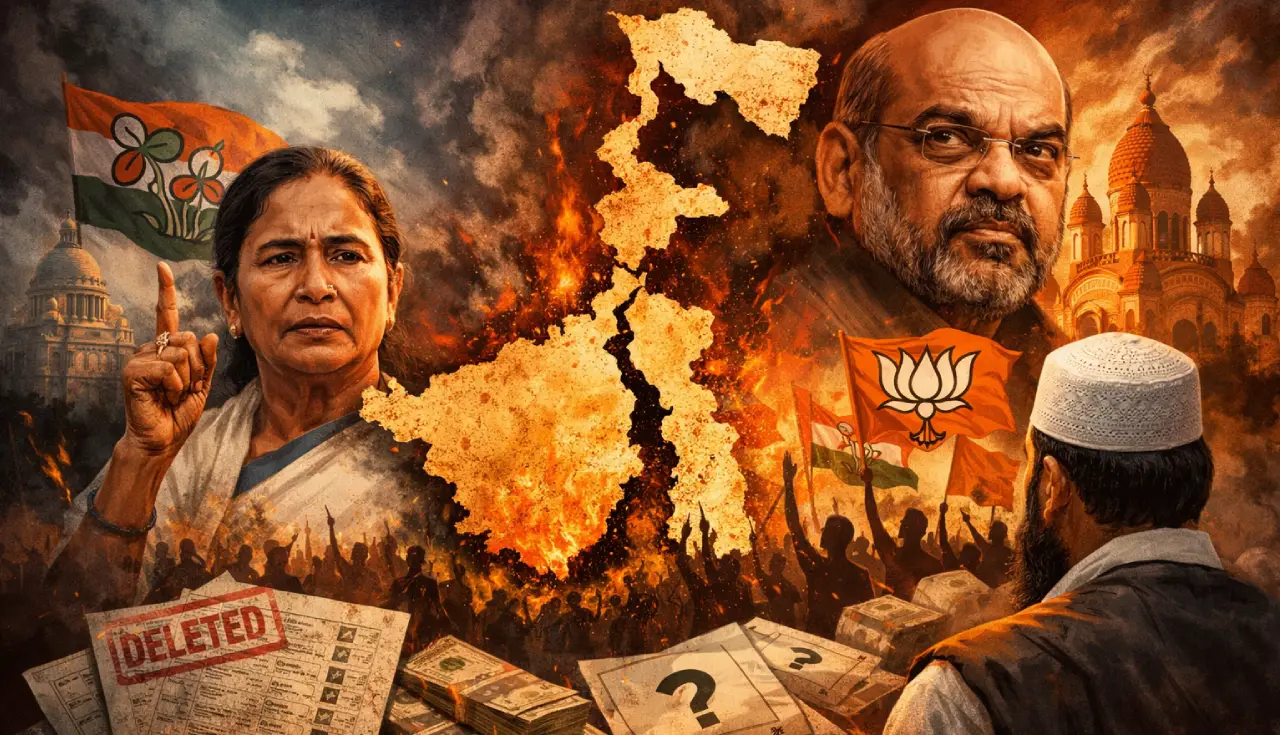
West Bengal is moving toward an election that will not merely decide a government; it will determine the direction of the state’s political character for the next decade. Beneath the visible noise of rallies, slogans, and campaign strategies, the real contest is unfolding quietly in demographics, electoral arithmetic, and strategic negotiations that rarely reach the public domain. After fifteen years of uninterrupted rule by Mamata Banerjee and the Trinamool Congress, the question before Bengal is no longer whether anti-incumbency exists—it inevitably does after such a long tenure—but whether that dissatisfaction has matured into a political wave capable of dismantling one of India’s most resilient regional political structures. Bengal has historically defied simplistic electoral predictions. It has shifted from Congress dominance to three decades of Left rule and then dramatically to the Trinamool Congress. Each transition appeared impossible until it suddenly became inevitable. The present moment carries the same sense of uncertainty.

During recent interactions across districts and political circles in the state, a noticeable undercurrent is emerging. There are quiet attempts by multiple actors to rearrange political equations in ways that could weaken the Trinamool Congress from within. The BJP, still hungry to conquer the last major bastion in eastern India, understands that defeating Mamata Banerjee requires more than slogans and polarization. The party must crack the demographic fortress that has protected the TMC for over a decade. That fortress is the Muslim vote, which constitutes roughly twenty-seven percent of the state’s population but becomes decisive in dozens of constituencies where the community forms the dominant electoral bloc. In districts such as Murshidabad, Malda, Uttar Dinajpur, Birbhum and South 24 Parganas, Muslim voters range from thirty-five to more than sixty percent of the electorate. These districts together account for eighty-five assembly seats that function as the political backbone of the Trinamool Congress.

The scale of that dominance became visible in the 2021 Assembly election when the TMC captured seventy-five of those eighty-five seats, effectively sealing Mamata Banerjee’s return to power despite the BJP’s aggressive campaign. Yet the assumption that Muslim voters operate as a uniform political bloc has always been an oversimplification. Like any large social group, they are divided by class interests, regional identities, sectarian differences and local leadership networks. Prior to 2019, Muslim voting behavior in Bengal was fragmented between the Congress, the Left Front and regional players. The consolidation behind the TMC occurred largely as a defensive reaction to the rise of the BJP’s Hindutva politics. But political consolidation driven by fear rarely remains permanent. Over time, new leaders emerge who attempt to renegotiate their community’s political leverage.

One such figure attracting attention in Bengal’s political circles is Bharatpur MLA Humayun Kabir. Kabir has increasingly positioned himself as a vocal Muslim political voice, raising community concerns while simultaneously exploring political options that extend beyond the Trinamool Congress framework. According to political sources in the state, Kabir has attempted to establish back-channel communication with BJP leadership in Delhi, seeking substantial political and financial commitments in exchange for potential external support that could weaken Mamata Banerjee’s hold on power. In one such attempt, he reportedly held discussions with senior BJP leader and Union Minister Bhupender Yadav, who has been among the most aggressive critics of the TMC government ahead of the West Bengal polls, describing the state government’s budget as little more than a farewell document for a declining regime. However, the conversation appears to have ended without any concrete outcome, leaving Kabir searching for a direct line to the BJP’s national leadership. Whether such negotiations eventually produce tangible alliances remains uncertain, but their mere existence reveals a deeper political reality: Bengal’s minority politics is no longer entirely predictable.

At the same time, the BJP is attempting to consolidate a counterbalancing force through Hindu political mobilization. In many districts, particularly among younger voters, the narrative that Mamata Banerjee’s administration practices minority appeasement has gained traction. Political messaging framed around Hindutva has successfully reshaped perceptions among sections of the Hindu electorate who increasingly see the state government as hostile to their interests. This ideological shift is not uniform across Bengal, which historically possessed a culture of political pluralism rather than religious polarization. Yet the BJP has clearly succeeded in altering the emotional vocabulary of political debate, especially among younger Hindu voters who now view the election as a struggle to reclaim political space.

Despite these efforts, electoral arithmetic continues to favor the Trinamool Congress in key regions. Data from the most recent Lok Sabha segments within forty-one high-minority constituencies reveals that the TMC still commands a significant average vote share of roughly forty-five percent. The Congress-Left alliance captures a large portion of the anti-TMC vote in these areas, leaving the BJP with barely twenty-one percent support—far below its statewide average. This fragmentation of the opposition remains Mamata Banerjee’s strongest structural advantage. As long as anti-TMC votes remain divided between multiple parties, the ruling party can continue to survive even with declining popularity.

Yet a new and far more unpredictable factor has entered the political equation: the Special Intensive Revision of West Bengal’s electoral rolls. The scale of this exercise is unprecedented in the state’s electoral history. Before the revision began, West Bengal had approximately 7.66 crore registered voters. After the draft electoral rolls were published in December 2025, the number fell sharply to 7.08 crore. Following the final publication of the rolls in February 2026, the electorate shrank further to around 7.04 crore. In total, nearly 1.21 crore electors—almost one out of every six voters in the state—have been classified either as “deleted” or “under adjudication.” Among them, more than 61 lakh voters have been removed entirely from the rolls, while another 60 lakh remain under administrative scrutiny, their eligibility unresolved.

The political implications of these numbers are staggering. In 140 assembly constituencies, the number of deleted voters alone exceeds the winning margins recorded in the 2024 Lok Sabha election. Across 234 of the state’s 294 constituencies, the volume of affected electors is larger than the previous winning margins. In many minority-dominated constituencies, the number of voters currently under adjudication exceeds fifty-five thousand per seat. In seventeen constituencies, this pending voter pool is greater than the margin by which the previous election was decided. Seats such as Asansol Uttar, Durgapur Purba, Barrackpore and Bally illustrate how fragile electoral outcomes could become if even a fraction of these unresolved voters are added or removed from the final rolls. The phenomenon raises a deeper question about whether administrative processes rather than voter sentiment may ultimately shape the contours of Bengal’s next government.

Against this backdrop, Mamata Banerjee faces perhaps the most complicated political challenge of her career. Fifteen years in power inevitably produce fatigue among sections of the electorate. Allegations of corruption, internal factionalism and governance lapses have weakened the aura of invincibility that once surrounded the Trinamool Congress. Yet Mamata Banerjee remains one of India’s most instinctively political leaders. She has repeatedly demonstrated an ability to convert adversity into mass sympathy and to transform political attacks into narratives of regional pride. For the BJP, Bengal remains the unfinished chapter in its national expansion. Despite significant growth in vote share since 2019, the party has not yet cracked the final electoral equation necessary to dethrone the TMC. The Congress and the Left Front, though diminished from their historic dominance, still retain enough localized support to disrupt the BJP’s rise in many minority-heavy constituencies.

What is unfolding in Bengal is therefore not a straightforward contest between two parties but a layered political struggle shaped by religion, governance, administrative intervention and demographic arithmetic. Voters themselves appear caught between competing impulses: the desire for stable governance and the emotional pull of religious and identity-based politics. For the Trinamool Congress, survival will depend on its ability to retain minority consolidation while preventing large-scale Hindu polarization. For the BJP, victory requires simultaneously eroding the TMC’s minority base and unifying Hindu voters behind a single political banner—an extraordinarily difficult task in a state where political loyalties are deeply entrenched.

The coming election will reveal whether Mamata Banerjee’s political fortress is merely weathered or genuinely vulnerable. Bengal has a long tradition of producing dramatic electoral shifts when public mood quietly transforms beneath the surface. Whether such a transformation is underway now remains the central mystery of this election. One thing, however, is certain: the outcome will not only determine the future of the Trinamool Congress but will also define whether West Bengal remains the last major regional bastion resisting the BJP’s national political expansion or becomes the next chapter in its march across India.
Beyond the Constitution: Dalit Struggle in India

dalit struggle, dalit, reservation, caste discrimination, struggle, dalit movement, india, schedule caste
Beyond the Constitution: Dalit Struggle in India 4

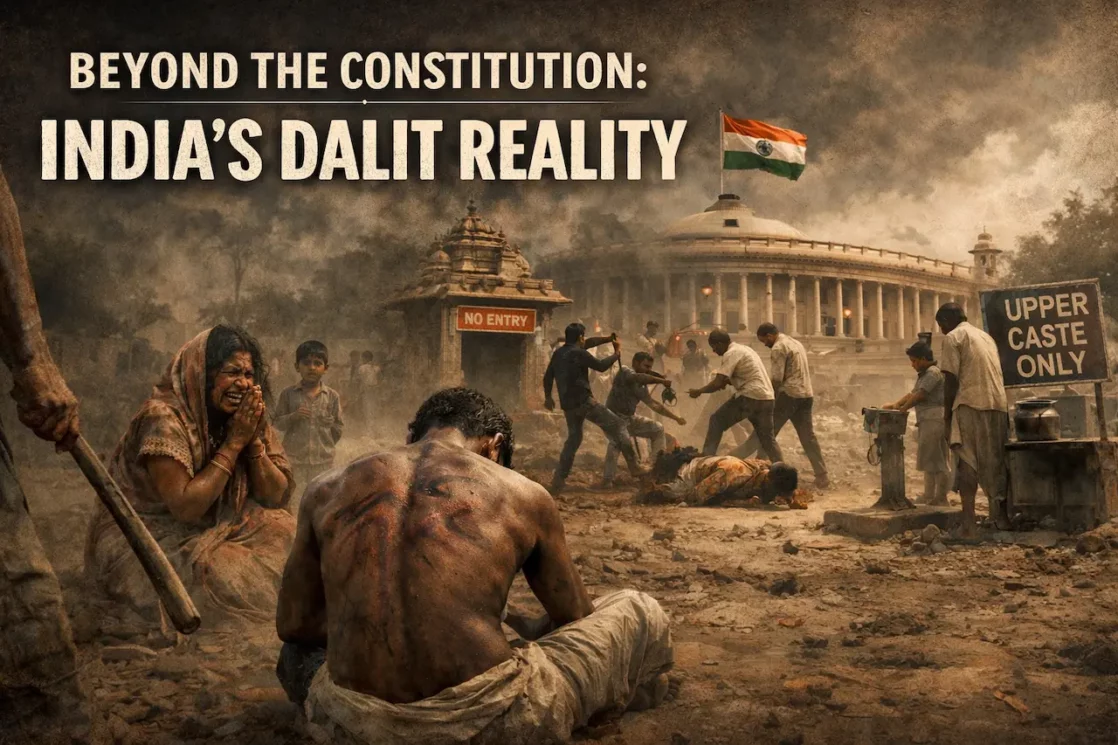
India often takes pride in calling itself the world’s largest democracy, a nation that constitutionally guarantees equality and dignity to every citizen. Yet beneath the confident rhetoric of progress lies a disturbing reality that many prefer not to confront openly. The oppression of Dalits, historically categorized as Scheduled Castes, continues to haunt the social fabric of the country even after decades of independence, constitutional protections, and social reform movements. It is one of those uncomfortable truths that survives quietly in the shadows of India’s rapid economic growth and technological advancement. While urban India celebrates start-ups, space missions, and global influence, millions of Dalits still struggle against a deeply embedded system of social hierarchy that has shaped Indian society for centuries.

The brutality of caste discrimination is not merely a relic of history; it remains a living social reality. Every year thousands of cases of violence against Dalits are registered across India. These incidents include physical assaults, murders, sexual violence, social boycotts, humiliation, and denial of access to basic resources such as water sources, temples, or community spaces. Behind every statistic lies a painful human story. In several rural areas Dalits have been attacked for riding a horse during their wedding procession, for sitting on chairs in the presence of dominant castes, or for attempting to assert equal rights that the Constitution supposedly guarantees. Such incidents expose the harsh contradiction between legal equality and social reality. Laws exist, but social attitudes remain deeply resistant to change.

The root of the problem lies in the historical structure of caste itself. Unlike many other forms of social discrimination around the world, caste in India is not merely a matter of prejudice between individuals. It is a rigid hereditary system that historically assigned people a fixed social status at birth. Over centuries this hierarchy became intertwined with religion, occupation, land ownership, and social prestige. Even after modern laws abolished untouchability, the cultural memory of caste hierarchy remained deeply embedded in everyday life. It shapes marriage alliances, social networks, economic opportunities, and political mobilization. Many Indians may publicly claim that caste no longer matters, yet one simple question often reveals the truth: before marriage alliances, business partnerships, or even friendships deepen, people quietly ask about caste background. The system may have softened in its outward appearance, but it still influences the invisible architecture of social relations.

Removing caste discrimination is extraordinarily difficult because it is sustained not only by prejudice but also by power. Historically dominant castes-controlled land, education, and social institutions. These advantages accumulated over generations and translated into economic and cultural capital. Dalits, on the other hand, were historically denied access to these resources and were forced into degrading occupations that society considered impure. Even today the economic gap created by centuries of exclusion continues to affect opportunities. While reservation policies in education and government jobs have enabled the rise of a Dalit middle class, a large proportion of Dalits still live in conditions marked by poverty, limited educational access, and social vulnerability.

Affirmative action policies were designed to correct this historical injustice, yet they have also created intense political debate. Many people from historically dominant castes believe that reservation policies unfairly disadvantage them. This resentment sometimes fuels social tensions, especially in regions where competition for jobs and educational opportunities is fierce. Dalit activists, however, argue that reservations are not a privilege but a minimal corrective mechanism for centuries of structural inequality. The clash between these viewpoints reveals how deeply caste still shapes India’s political and social landscape.

The role of the Brahmin community in the contemporary caste debate is often discussed in emotional and polarized ways. Historically Brahmins occupied the highest rung in the traditional social order and enjoyed cultural authority through their role as scholars, priests, and interpreters of sacred knowledge. This historical association with privilege has made Brahmins symbolic targets in modern caste discourse. At the same time, the reality of contemporary India is more complex. Not every Brahmin family enjoys wealth or power, and many struggle economically like any other social group. However, historical advantages such as access to education and intellectual networks did provide many upper-caste groups with a head start in modern professions such as academia, administration, and media. This historical advantage continues to influence perceptions of inequality even today.

One of the most troubling aspects of the Dalit question is the relative silence or inconsistency of mainstream media. Caste atrocities often receive limited national attention unless they become politically explosive. Several observers have pointed out that leadership positions in major news organizations are still dominated by individuals from upper-caste backgrounds, while marginalized communities remain underrepresented in editorial decision-making. When the voices shaping national narratives do not come from diverse social backgrounds, certain issues inevitably receive less attention. The result is a media environment where caste discrimination appears sporadically in headlines but rarely becomes a sustained national conversation.

Political parties have also contributed to the persistence of caste divisions. While leaders publicly condemn discrimination and promise social justice, electoral politics frequently relies on caste arithmetic. Communities are mobilized as vote banks, alliances are built around caste equations, and political rhetoric often reinforces social identities rather than transcending them. Caste thus becomes both a problem and a political tool. Leaders who claim to fight caste discrimination often depend on caste loyalties to secure power. This contradiction ensures that the system remains politically useful even as it is publicly criticized.

The most brutal truth is that social hierarchies rarely disappear simply because laws prohibit them. The Indian Constitution abolished untouchability and declared equality as a fundamental right, yet laws cannot instantly erase centuries of cultural conditioning. Real change requires transformation in social attitudes, economic structures, and personal relationships. It requires people to question inherited prejudices, challenge discriminatory practices within their own communities, and build institutions that genuinely promote equal opportunity.

India stands at a crossroads where its aspirations as a global power collide with unresolved social realities at home. The nation has achieved remarkable progress in science, technology, and economic development, yet the persistence of caste discrimination exposes a deeper moral challenge. A society that tolerates humiliation and violence against any community cannot truly claim to be modern or just. The plight of Dalits is therefore not merely a problem affecting one section of society; it is a mirror reflecting the unfinished work of India’s democratic promise.

Whether discrimination will ever completely disappear remains uncertain. Social systems that have survived for thousands of years rarely vanish within a few generations. Yet acknowledging the truth is the first step toward change. Ignoring the problem, romanticizing the past, or silencing uncomfortable discussions only prolongs injustice. India’s future credibility as a democratic civilization will depend on whether it confronts the legacy of caste with honesty and courage rather than denial.

Maharashtra Budget 2026: Fadnavis Announces Rs 2 Lakh Farm Loan Waiver, Push for Infrastructure and AI-Driven Agriculture

maharashtra government, budget 2026, maharashtra budget 2026, devendra fadnavis, loan waiver
Maharashtra Budget 2026: Fadnavis Announces Rs 2 Lakh Farm Loan Waiver, Push for Infrastructure and AI-Driven Agriculture 6

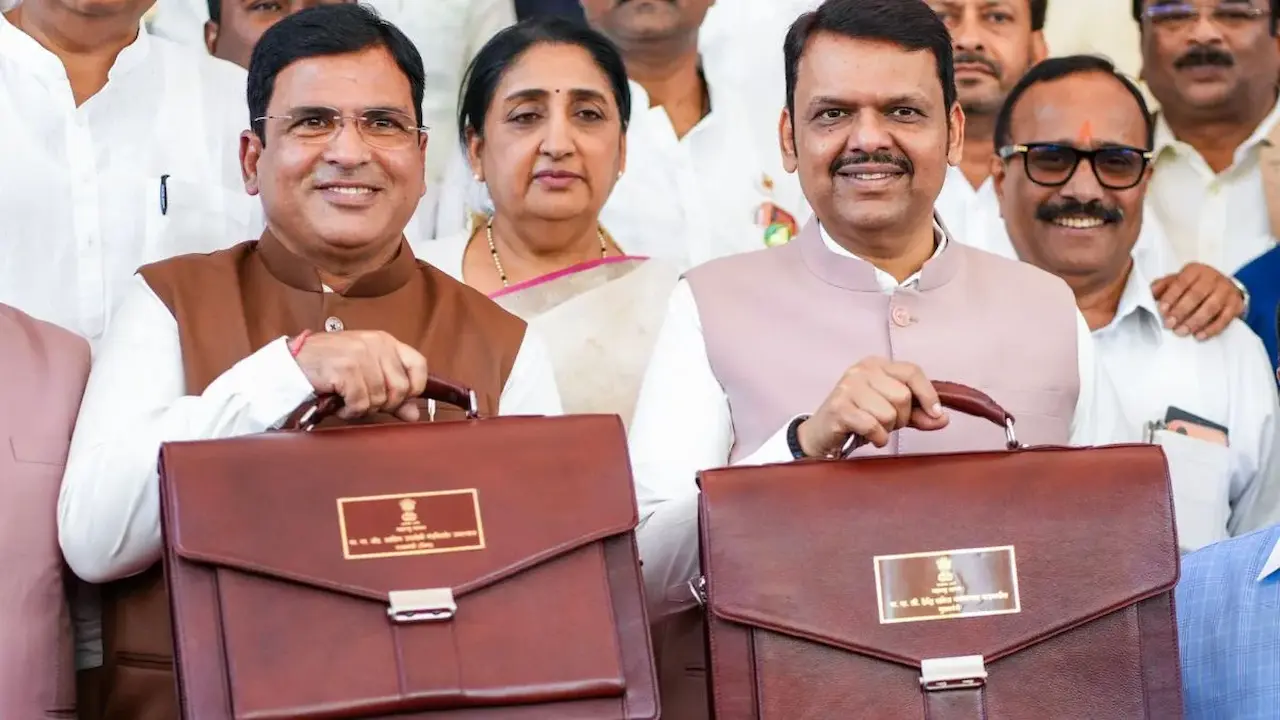
Maharashtra Chief Minister Devendra Fadnavis on Friday announced a farm loan waiver of up to Rs 2 lakh while presenting the state Budget for 2026, along with a series of welfare and infrastructure initiatives aimed at strengthening the rural economy and boosting agricultural productivity.

Under the Punyashlok Ahilyabai Holkar Shetkari Karj Maafi Yojana, crop loans of up to Rs 2 lakh taken by farmers and overdue until September 30, 2025, will be waived. The government also announced an incentive of up to Rs 50,000 for farmers who repay their loans regularly.

Fadnavis said the government would continue the popular Majhi Laadki Bahin scheme, which provides financial assistance to women, though the monthly payout will remain at Rs 1,500 for now instead of being increased to Rs 2,100 as previously proposed. He added that adequate funds have been allocated for the scheme and announced that a new welfare policy for single women will soon be introduced with a target to benefit around 25 lakh women.

The Budget allocates Rs 7,69,467 crore in total expenditure for the year. The state faces a revenue deficit of Rs 40,552 crore and a fiscal deficit of Rs 1,50,491 crore, but the government has kept the fiscal deficit below 3 per cent and the revenue deficit under 1 per cent, Fadnavis said.

Highlighting Maharashtra’s economic ambitions, the Chief Minister said the state aims to become a USD 5 trillion economy by 2047. “Maharashtra is the country’s financial engine, and our share will be the biggest,” he said.

During his speech, Fadnavis recited an Urdu couplet to underline the government’s aspirations: “Jab irada bana liya hai unchi udaan ka, fir dekhna fizul hai sar asmaan ka,” indicating that once a high goal is set, no sky is too high to reach.

To strengthen agriculture, the government plans to develop an integrated supply chain for around 15 crops to help farmers access international markets. Artificial Intelligence will also be integrated into the agriculture sector through the Mahavistar AI platform, which will include support for tribal languages.

The Chief Minister announced the implementation of the Agristack initiative, under which more than one crore agriculture cards have already been prepared for farmers, including those from tribal communities. The Budget also proposes the launch of the Maharashtra Organic Farming Scheme and the inclusion of farm labourers under the Gopinath Munde Accident Insurance Scheme.

Fadnavis said that Rs 33,410 crore has been spent under the Pradhan Mantri Awas Yojana (Gramin), with rooftop solar systems to be installed on houses built under the scheme to promote sustainable housing. Around 3.57 lakh houses are expected to be completed under PMAY.

He also noted that 1.31 crore farmer digital IDs have already been created and more than 30 lakh farmers are receiving real-time updates on weather and market prices. All four agricultural universities in the state are using AI-based systems to assist farmers, helping improve productivity and income through the Agristack initiative.

The Chief Minister added that capital investment in agriculture and related infrastructure will be increased over the next four years to further strengthen the sector.

Mamata Banerjee Launches Sit-In in Kolkata, Alleges BJP–EC Plot Over Voter Roll Deletions

mamata banerjee, protest, sit in, kolkata, sir, tmc, trinamool congress
Mamata Banerjee Launches Sit-In in Kolkata, Alleges BJP–EC Plot Over Voter Roll Deletions 8

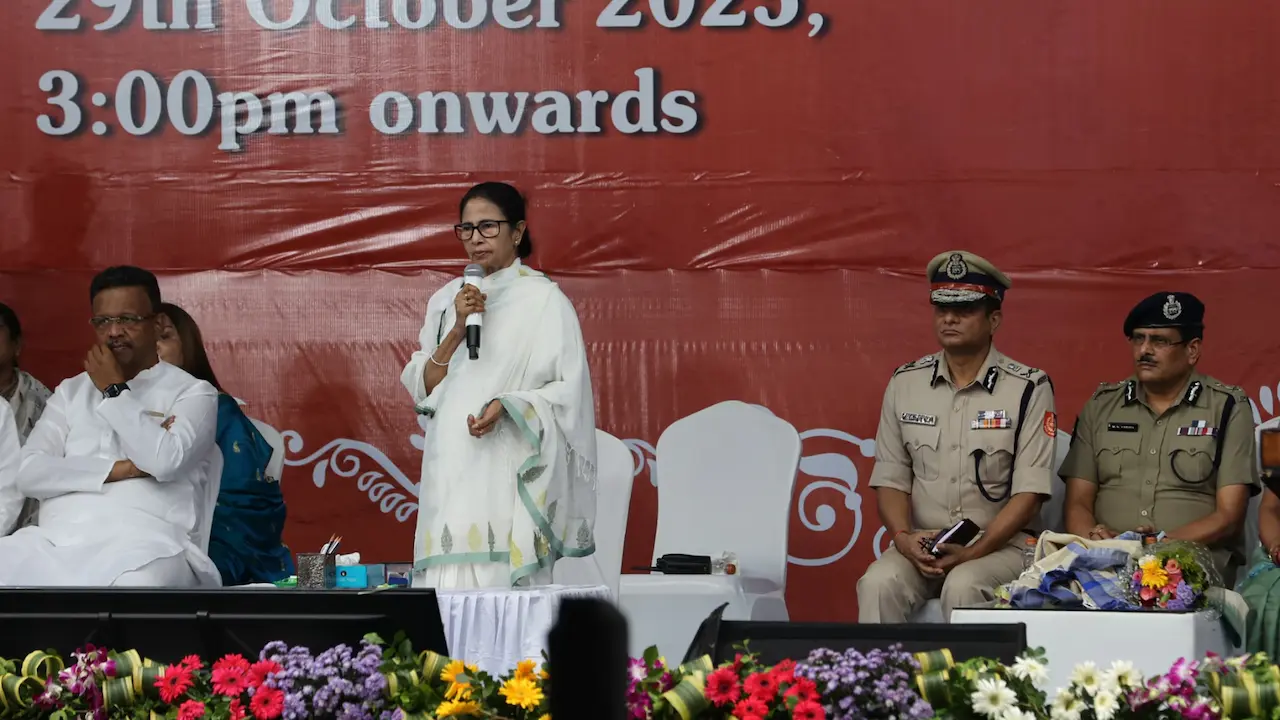
West Bengal Chief Minister Mamata Banerjee on Friday began a sit-in protest in Kolkata against what she described as arbitrary deletions from the revised electoral rolls, intensifying the Trinamool Congress’s confrontation with the Election Commission ahead of the upcoming state assembly elections.

Launching the dharna at the Esplanade Metro Channel in central Kolkata, Banerjee accused the BJP and the Election Commission of conspiring to disenfranchise Bengali voters. “I will expose the BJP–EC conspiracy to disenfranchise Bengali voters,” the TMC chief said while addressing supporters at the protest site.

She also alleged that several voters had been wrongly marked as deceased in the updated rolls and claimed that those individuals would be presented at the protest to demonstrate the alleged irregularities. “I will bring those voters whom the Election Commission has declared dead and present them here,” Banerjee said.

The sit-in, which began at around 2.15 pm, was earlier announced by TMC national general secretary Abhishek Banerjee. He had accused the Election Commission of carrying out a “politically motivated” revision exercise that could potentially deprive lakhs of legitimate voters of their voting rights.

The protest comes days after the Election Commission released the post-Special Intensive Revision (SIR) electoral rolls, which have significantly altered the state’s voter database. According to official figures issued on February 28, around 63.66 lakh names—about 8.3 per cent of the electorate—have been removed since the revision process began in November last year. As a result, the voter base has declined from approximately 7.66 crore to just over 7.04 crore.

Additionally, more than 60.06 lakh voters have been placed in the “under adjudication” category, meaning their eligibility will be determined through legal scrutiny in the coming weeks. The process could further influence constituency-level electoral equations in the run-up to the state polls.

Ayatollah Ali Khamenei: The Architect of Iran’s Strategic State — And Why His Departure Will Redefine Global Power

Ayatollah Ali Khamenei, Iran, supreme leader, leader, israel-iran war, israel war, missiles
Ayatollah Ali Khamenei: The Architect of Iran's Strategic State — And Why His Departure Will Redefine Global Power 10

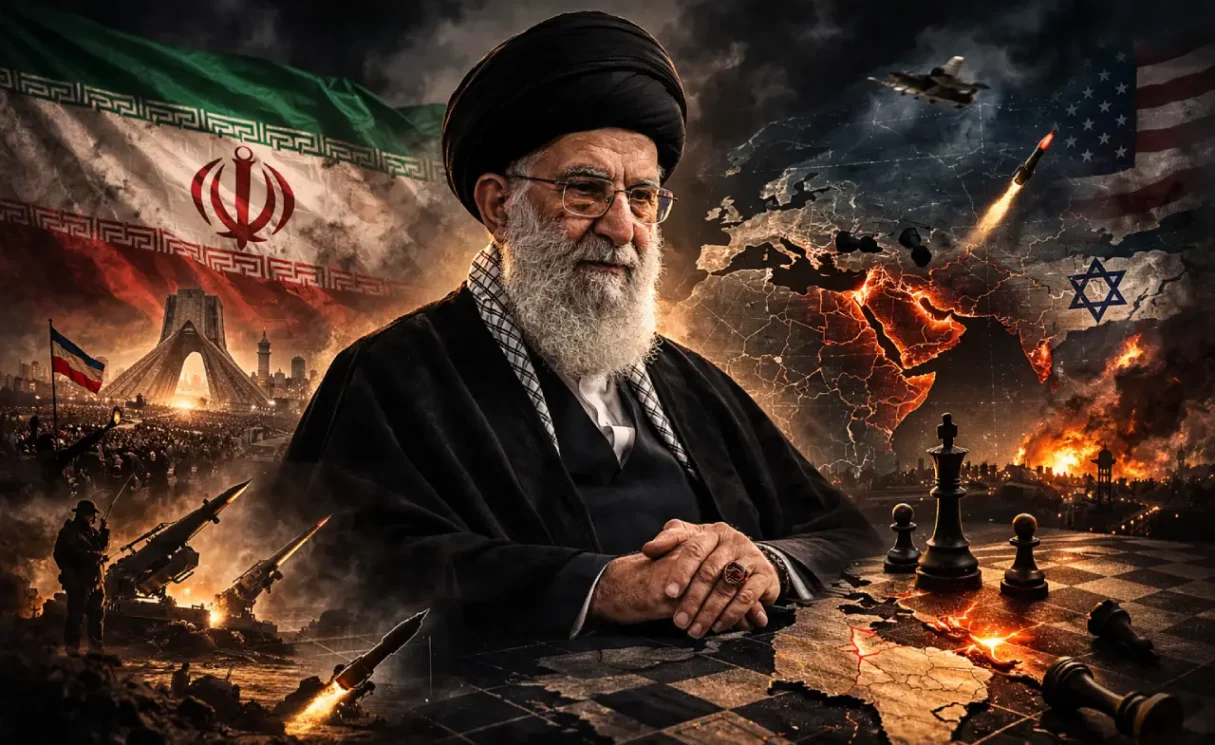
Leaders come and go. Systems endure. But once in a generation, a figure emerges who fuses himself with the machinery of the state so completely that separating the two becomes nearly impossible. Ayatollah Sayyed Ali Khamenei is one such figure. For more than three decades, he has not merely led the Islamic Republic of Iran — he has defined its structure, calibrated its ideology, and engineered its global posture.

To understand why his eventual death will reshape geopolitical equations from Washington to Riyadh, from Tel Aviv to Moscow, one must first understand how a mid-ranking cleric, not even a Grand Ayatollah at the time of his elevation, became one of the most powerful men in the Middle East.

Ali Khamenei was born in 1939 in Mashhad, into a clerical family with modest means. His early formation came through hawza education — first in Mashhad, later in Qom, where he came under the influence of Ruhollah Khomeini. It was here that he absorbed the revolutionary synthesis of Shi’a theology and political activism that would later define the Islamic Republic. Under Mohammad Reza Pahlavi, the Shah of Iran, Khamenei became involved in oppositional networks. Arrested multiple times and eventually exiled, he built credibility within revolutionary circles not as a theoretician, but as a disciplined cadre operator.

During the 1978–79 Iranian Revolution, Khamenei was not its face — Khomeini was. But he was embedded in its organizational arteries. After the monarchy fell, he entered the power structure quickly. He served in the Revolutionary Council, held military liaison roles during the Iran–Iraq War, and survived an assassination attempt in 1981 that permanently damaged his right arm. That attack added to his revolutionary legitimacy; survival became part of his personal mythology.

His presidency from 1981 to 1989 occurred during wartime. The Iran–Iraq War hardened the regime and militarized governance. It was during this period that Khamenei developed deep, durable ties with the Islamic Revolutionary Guard Corps (IRGC). Those relationships would later become decisive.

The real turning point came in 1989 with the death of Ayatollah Khomeini. Khamenei was not a Grand Ayatollah. He lacked the highest clerical standing. His elevation to Supreme Leader required both constitutional adjustments and political choreography inside the Assembly of Experts. It was a calculated compromise candidate outcome: acceptable to clerical leadership, aligned with the security elite, and close to then-President Akbar Hashemi Rafsanjani.

From that moment onward, Khamenei transformed the office of Supreme Leader from a symbolic pinnacle into the central command node of Iran’s hybrid theocratic-republican system.

He did this in three ways.

First, institutional consolidation. Under Khamenei, power migrated steadily toward the Supreme Leader’s office. Oversight of the judiciary, armed forces, state broadcasting, key economic foundations, and strategic decision-making channels tightened around the leadership core. Parallel institutions — especially the IRGC — expanded both politically and economically.

Second, militarized statecraft. The IRGC evolved from a revolutionary guard into a regional power instrument. Through the Quds Force, Iran supported non-state actors across Lebanon, Iraq, Syria, Yemen, and Gaza. This “Axis of Resistance” doctrine enabled Iran to project power asymmetrically, offsetting conventional military disadvantages. Rather than confronting adversaries head-on, Iran operated through layered deterrence — missile capabilities, proxy networks, ideological alliances.

Third, ideological calibration. Khamenei was often labeled a “hardliner,” but his governance was pragmatic when required. When sanctions threatened regime stability, he permitted nuclear negotiations that led to the 2015 Joint Comprehensive Plan of Action (JCPOA). When protests challenged legitimacy — in 1999, 2009, 2017–18, 2019–20, and during the Mahsa Amini unrest — the system responded with force, but also recalibrated tactically. His doctrine combined ideological rigidity with tactical flexibility.

Internationally, Khamenei positioned Iran as a resistant pole against US influence, Israeli regional dominance, and Saudi strategic competition. Under his leadership, Iran cultivated ties with Russia and China, leveraged energy geopolitics, and inserted itself decisively into the Syrian civil war to prevent the fall of Bashar al-Assad — a move that reshaped the Middle East’s balance of power.

Critics argue his tenure entrenched repression, suppressed dissent, and curtailed civil liberties. Supporters claim he defended sovereignty, resisted foreign domination, and preserved ideological continuity after revolutionary turbulence. Both assessments coexist because Khamenei’s leadership was neither simplistic nor one-dimensional. It was structural.

And this is precisely why his eventual death will not be an ordinary leadership transition.

Iran’s system is theoretically designed to survive its leader. The Assembly of Experts is tasked with selecting a successor. Potential candidates include senior clerics and figures with close ties to the IRGC establishment. But the succession will test the cohesion of three power blocs: the clerical establishment, the IRGC-security apparatus, and the technocratic political class.

If succession proceeds smoothly, Iran may continue on its current trajectory — hardened anti-Western posture, regional proxy deterrence, calibrated nuclear advancement.

But if fissures appear, the regional consequences could be enormous.

A more IRGC-dominant leadership could accelerate militarization and reduce clerical balancing influence. A comparatively pragmatic successor might reopen negotiated channels with the West, especially if sanctions pressures intensify domestic economic strain. A contested succession could trigger internal instability, emboldening opposition movements while simultaneously provoking hard security crackdowns.

Global politics would shift accordingly.

Israel’s security calculus would adjust immediately. US regional posture — naval deployments, Gulf alliances — would tighten during uncertainty. Saudi Arabia and the UAE would recalibrate risk tolerance. Russia and China would move swiftly to secure influence in the transition vacuum.

Energy markets would react. Oil price volatility would likely spike if political instability threatens production or transport lanes. The Strait of Hormuz would regain headlines overnight.

Khamenei’s central achievement was system durability. He ensured that the Islamic Republic did not fragment under sanctions, war pressure, or domestic protest waves. But durability does not eliminate fragility — it merely compresses it.

What makes his eventual death geopolitically consequential is not sentiment, nor symbolism, but structure. For over three decades, he has been the ultimate arbitrator among Iran’s factions. Remove the arbiter, and suppressed rivalries may surface.

History shows that revolutionary systems are most vulnerable during generational transitions. The first generation carries legitimacy derived from struggle. The second often governs through institutional inertia. The third must either reform or rigidify.

Iran stands on that threshold.

Ayatollah Ali Khamenei’s rise was not inevitable. It was engineered through ideological alignment, political maneuvering, and security partnerships. His longevity was not accidental. It was sustained by calculated balancing between repression and pragmatism, theology and realpolitik.

His eventual departure will test whether Iran is leader-centric or system-centric.

And the world will be watching — because whenever the strategic center of one of the Middle East’s most consequential states shifts, the balance of global power shifts with it.

MHA Alerts States Over Communal Tension Risk Amid Middle East Crisis; Internet Curbs in Kashmir After Protests

bharat purv, bharat parv 2025, bharat parv, amit shah, sardar patel
MHA Alerts States Over Communal Tension Risk Amid Middle East Crisis; Internet Curbs in Kashmir After Protests 12

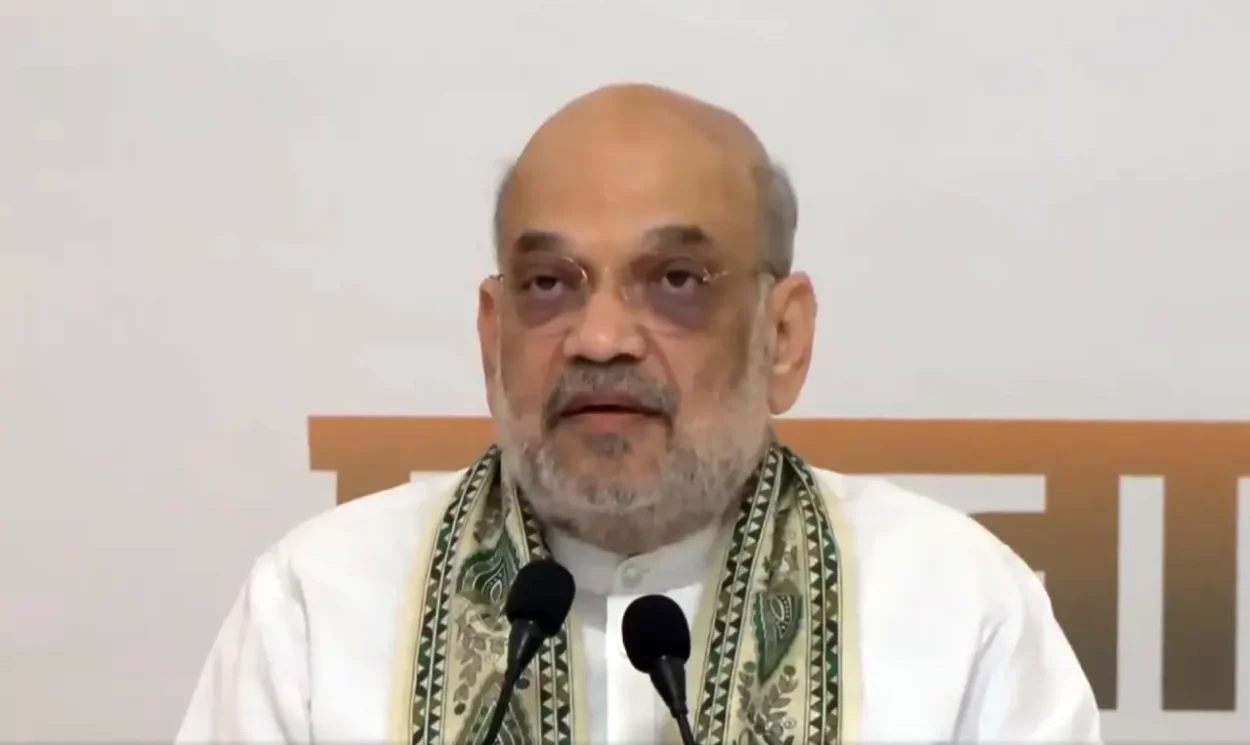
The Union Ministry of Home Affairs (MHA) has issued a cautionary advisory to all state governments, urging heightened vigilance against possible communal unrest in India amid escalating tensions in the Middle East following recent US and Israeli military strikes on Iran.

In a communication circulated on February 28, the MHA warned that the widening conflict could have “ripple effects” within the country, particularly through inflammatory speeches at religious gatherings or public events. The advisory asked states to closely monitor and identify individuals delivering provocative sermons that could incite unrest or aggravate communal sentiments during the sensitive period.

The Home Ministry stressed the need for strengthened intelligence-sharing, proactive preventive measures and close coordination among law enforcement agencies to ensure that law and order is not disrupted.

Meanwhile, mobile internet speeds have been curtailed across Kashmir as a precautionary step after protests erupted over the killing of Iranian Supreme Leader Ayatollah Ali Khamenei in a reported US-Israel airstrike in Tehran. Iranian state media confirmed his death on Sunday.

Officials said the decision to throttle internet services was taken to prevent the spread of misinformation and maintain public order amid heightened emotions. Demonstrations were reported from several parts of the Valley, including Lal Chowk and Saida Kadal in Srinagar, as well as Budgam, Bandipora, Anantnag and Pulwama.

Security forces have been deployed in sensitive areas to prevent escalation. Authorities said the restrictions on internet speed would remain under review based on the evolving situation.

The security alert comes as tensions rise in the Middle East following joint military operations targeting Iranian cities and military infrastructure, raising concerns of a broader regional conflict. India has called for restraint from all sides and reiterated the importance of safeguarding its citizens, including the large Indian diaspora in the Gulf region.

Officials in New Delhi are closely monitoring both the international developments and their potential domestic impact, amid concerns that external events could be exploited by extremist elements to trigger local unrest.

Karma in Indian Politics: The Cycle of Accusation, Power, and Collapse

karma, indian politics, cbi, UPA government, cbi, kejriwal, Aam Aadmi Party
Karma in Indian Politics: The Cycle of Accusation, Power, and Collapse 14

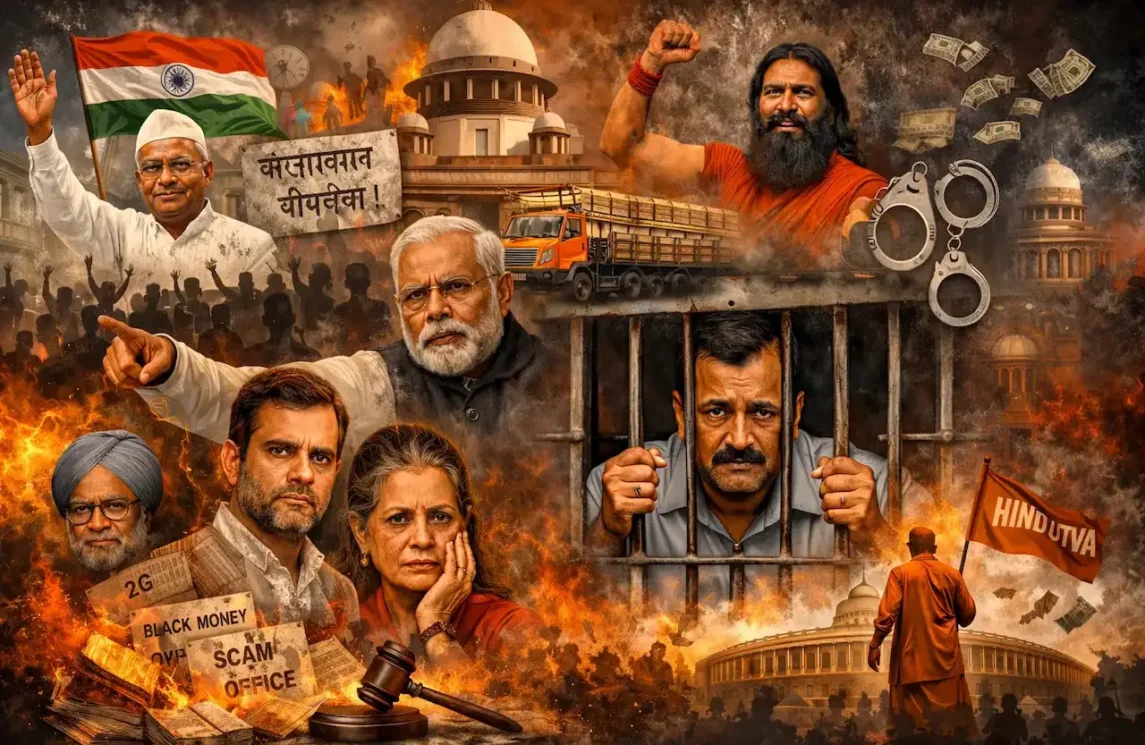
Indian politics has perfected a brutal art — the art of manufacturing morality, weaponizing outrage, and then pretending innocence when the same weapons are turned inward. What we are witnessing over the past decade is not just a contest of ideologies or governance models. It is the exposure of a cruel, cyclical system where power is pursued through public humiliation, narrative manipulation, and institutional combat. Every party that ascends the throne does so on the shoulders of accusation, and every party that falls cries vendetta. This is not ideology; this is a revolving door of political karma.

When the UPA government led by Manmohan Singh was in power, a nationwide moral spectacle was staged in the name of anti-corruption. Anna Hazare was projected as a modern-day Gandhi — fasting, speaking softly, wrapped in moral symbolism. The message was simple and emotionally explosive: the country had been looted. Television channels amplified every slogan. Social media, then a growing political weapon, converted suspicion into certainty.

Behind that moral theatre stood sharp political operators, most notably Arvind Kejriwal. Files were displayed before cameras. Complex policy decisions were reduced to punchlines. Allegations became prime-time verdicts. The target was clear: discredit the Congress ecosystem entirely. Sheila Dikshit was relentlessly attacked. Sonia Gandhi and Rahul Gandhi were dragged into a daily cycle of ridicule and suspicion. The branding of Rahul Gandhi as “Pappu” was not spontaneous mockery; it was a calculated erosion of legitimacy, repeated until it entered public vocabulary.

Simultaneously, Baba Ramdev entered the stage promising to bring back black money. Then came Narendra Modi with electrifying rallies and sweeping assurances that illicit wealth would return to citizens. The emotional pitch worked. Anger was consolidated. In 2014, the Bharatiya Janata Party secured a historic mandate. The anti-corruption movement had achieved its political outcome.

But this is where the cruelty of Indian politics reveals itself most starkly. Allegations that dominate headlines do not always translate into convictions in courtrooms. Legal processes move differently from television debates. Over time, several high-profile cases that were projected as decisive scandals did not end with dramatic punishments. Yet reputations had already been damaged. Elections had already been won. Narratives had already reshaped public opinion. In politics, accusation often achieves what evidence later cannot undo.

The anti-corruption agitation also gave birth to the Aam Aadmi Party. Arvind Kejriwal, once the accuser, became the establishment in Delhi. The outsider became Chief Minister. The system he condemned became the system he governed. And then the wheel began to turn again.

Investigative agencies became central to political battles. Cases were registered. Arrests were made. AAP leaders described it as vendetta; the BJP described it as accountability. The script felt familiar because it was familiar. The language once used against Congress was now being used against AAP. The same moral intensity. The same media framing. The same public shaming.

By 2025, the BJP reclaimed power in Delhi. By 2026, AAP leaders secured bail in major cases and began portraying themselves as victims of political persecution. Demands for apology surfaced. Appeals to democratic fairness were made. But a haunting question lingered: when Congress leaders were relentlessly targeted, who apologized when courts did not deliver the apocalyptic conclusions that were predicted? When reputations were dragged through mud for years, who restored them?

The cruelty of Indian politics lies not merely in competition, but in the normalization of character assassination as a legitimate electoral strategy. Allegations are amplified beyond proportion. Social media ecosystems are mobilized to create permanent perceptions. Institutions are drawn into political narratives. The public is conditioned to see every opponent not as a rival, but as a criminal-in-waiting.

Today, even the BJP faces rising discomfort among sections of voters over economic strain, centralization of authority, and governance challenges. Its ideological plank of Hindutva continues to energize a committed base, but fatigue and skepticism are visible in other quarters. The irony is unmistakable: the very strategy of relentless narrative control that once dismantled Congress is now scrutinized by a more digitally aware electorate. Political permanence is an illusion; dominance is temporary.

This is not about declaring any party innocent or guilty. Courts exist for that purpose. This is about recognizing the pattern: outrage is weaponized to win power; once in power, the same instruments are justified as governance tools; when out of power, they are condemned as authoritarian misuse. Every party claims moral superiority in opposition and procedural legitimacy in government. Every party speaks of democracy when cornered and strength when dominant.

And the voter? The voter watches this cycle unfold with growing exhaustion. There is anger, yes — but also disgust. Not because politics is adversarial, but because it often feels performative and vindictive. The language is extreme, the accusations dramatic, the promises grand. Yet accountability rarely matches rhetoric.

The cruel face of Indian politics is not a single party. It is the system of mutual destruction that all major players have, at different times, embraced. Congress once enjoyed near-unchallenged authority. It declined. The BJP rose with unprecedented dominance. It now faces its own tests. AAP emerged as a moral alternative. It too became entangled in the very structures it criticized. The wheel turns without sentiment.

Karma in politics is not mystical revenge; it is structural inevitability. If you normalize public humiliation as strategy, you will one day be humiliated. If you reduce governance debates to criminal insinuations, you will one day defend yourself against insinuations. If you build power through anger, you will eventually confront anger.

The deeper tragedy is institutional erosion. When investigative agencies, courts, media, and digital platforms become intertwined with political narratives, public trust weakens. Democracy survives not merely through elections but through credibility. And credibility is fragile.

So the final question is not whether one party deserves sympathy or another deserves criticism. The real question is whether Indian politics can move beyond this cycle of accusation and retaliation. Can it mature into a system where evidence precedes outrage, where dissent is not equated with criminality, where victory does not require annihilation of the opponent’s dignity?

Or will we continue watching leaders bite at each other’s heels while citizens oscillate between hope and cynicism?

The cruel face of Indian politics is not hidden. It is visible in every rally, every televised debate, every trending hashtag. Power is pursued with moral fervor and defended with institutional force. But the electorate remembers. And in democracy, memory is the most unpredictable force of all.

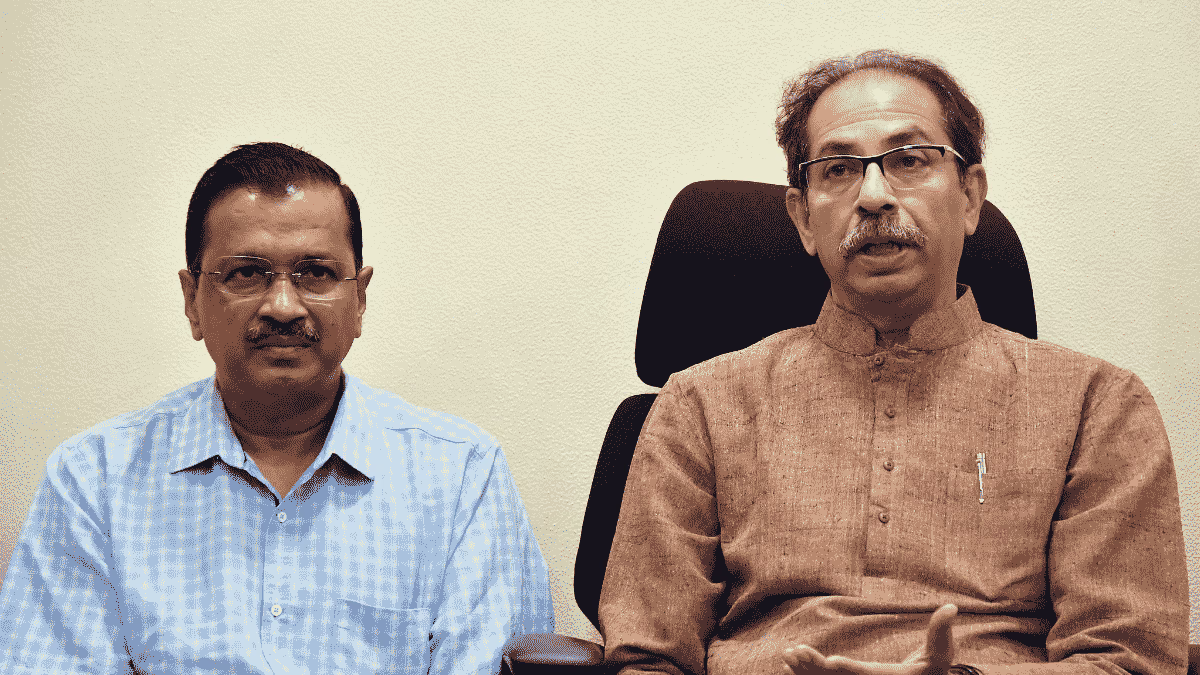
Sena (UBT) Calls Kejriwal’s Discharge a ‘Slap on Vendetta Politics’, Demands Action Against Probe Agencies

arvind kejriwal, uddhav thackeray, thackeray, sena (ubt), kejriwal, cbi, vendetta politics
Sena (UBT) Calls Kejriwal’s Discharge a ‘Slap on Vendetta Politics’, Demands Action Against Probe Agencies 16

The Shiv Sena (UBT) on Saturday described Aam Aadmi Party (AAP) leader Arvind Kejriwal’s discharge in the excise policy case as a “slap” on political vendetta and demanded action against those who allegedly fabricated charges against the former Delhi chief minister.

In a strongly worded editorial in its mouthpiece Saamana, the Uddhav Thackeray-led party claimed the case was politically motivated and alleged that BJP leaders, the Delhi Lieutenant Governor and central probe agencies such as the Enforcement Directorate (ED) and the Central Bureau of Investigation (CBI) acted in tandem to destabilise the AAP government.

A Delhi court on Friday discharged Kejriwal, former deputy chief minister Manish Sisodia and 21 others in the excise policy case. The court observed that it did not find any overarching conspiracy or criminal intent in the policy and criticised the CBI for failing to substantiate its allegations.

Kejriwal, who was arrested by the ED on March 21, 2024, and later by the CBI, had spent 155 days in jail before being granted bail.

The Sena (UBT) editorial termed the verdict a significant setback to what it called a “politically driven prosecution,” asserting that the charges lacked merit and that no criminal conspiracy had been established. It alleged that raids and arrests were carried out to portray the AAP government as corrupt ahead of the Delhi Assembly elections.

The party further claimed that central agencies had tightened a “noose” around Kejriwal, Sisodia and other ministers, and said the court’s decision had now exposed weaknesses in the case.

The editorial demanded that Prime Minister Narendra Modi and Union Home Minister Amit Shah apologise to Kejriwal and called for action against officials involved in the investigation. It also alleged that central agencies have been misused over the past decade to target political opponents.

Referring to Maharashtra, the party cited cases involving leaders such as Chhagan Bhujbal, Anil Deshmukh, Nawab Malik and Sanjay Raut, claiming that prolonged incarcerations and investigations were used as political pressure tactics.

The Sena (UBT) also criticised the judiciary, alleging that it had failed to adequately curb what it described as excesses by central agencies and violations of democratic norms.

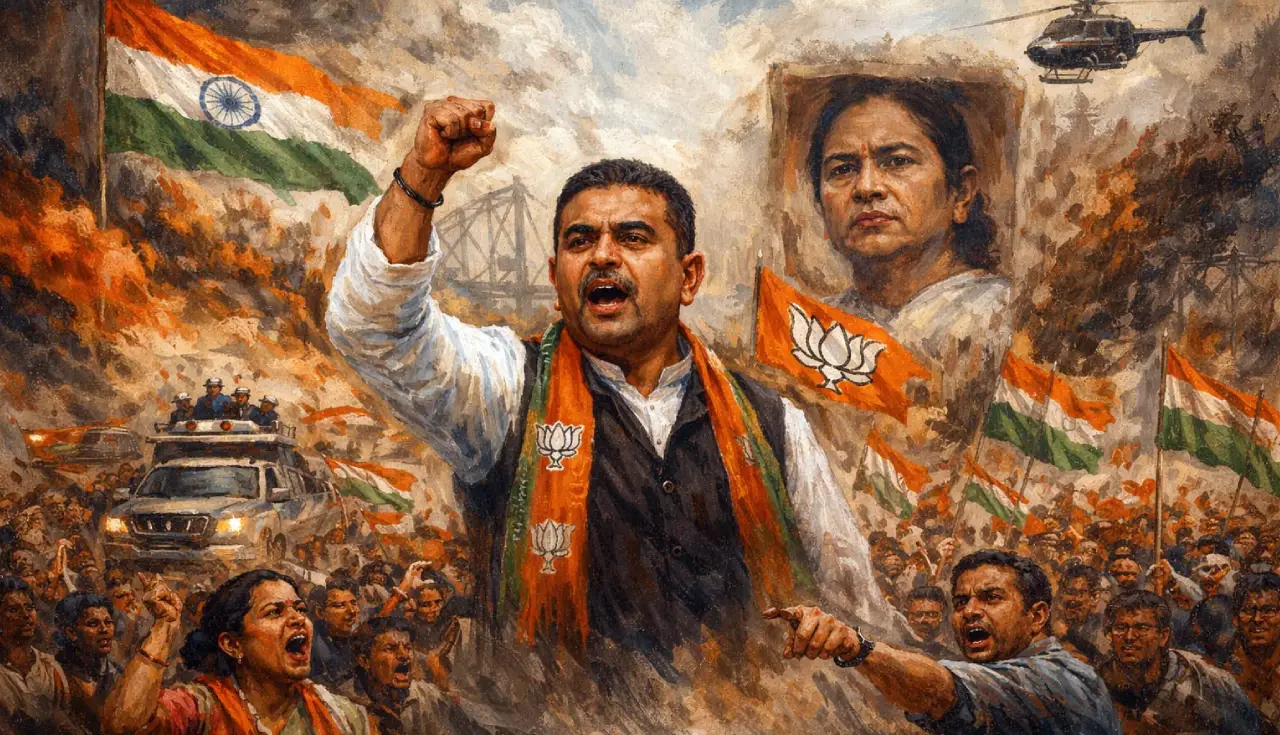
Suvendu Adhikari: The Relentless Challenger Bengal Cannot Ignore

suvendu adhikari, suvendu, adhikary, bjp, west bengal, bengal, tmc, trinamool congress, mamata banerjee, mamata
Suvendu Adhikari: The Relentless Challenger Bengal Cannot Ignore 18

I went to Kolkata to meet writers and journalists. Politics, as always in Bengal, found its way into every conversation. When I asked a simple but decisive question—who is the BJP’s real bet against Mamata Banerjee in the coming battle?—there was no hesitation, no diplomatic evasion, no chorus of multiple names.

There was one name. Spoken with conviction. Suvendu Adhikari.

West Bengal does not fall for ornamental leadership. It never has. This is a state that has lived through ideological wars, street struggles, cadre politics, and mass mobilizations. Bengal rewards leaders who sweat on the ground, not those who glide from convoy to podium and vanish. And in today’s BJP ecosystem in Bengal, Suvendu stands apart precisely because he operates like a field commander, not a weekend campaigner.

What struck me most was what local journalists told me—he is accessible. One call away. And if he cannot reach personally, his team responds. Follow-ups happen. Complaints are addressed. In a political culture where post-election amnesia is almost standard practice, that alone is disruptive.

But accessibility is only one dimension. There is a deeper factor—memory and connection. It is said that Suvendu knows large numbers of people in his constituency by name. Not as voter data, not as booth-level figures, but as individuals. This sounds old-fashioned. Good. Bengal still respects that old-fashioned model. Leaders here were once known to attend family ceremonies, funerals, and community gatherings without cameras. Suvendu has revived that style of politics in a party often perceived as distant in the state.

Let’s be blunt. The BJP in West Bengal struggled for years because it lacked rooted faces. Many leaders relied on motorcades, layered security, and stage-managed optics. They delivered thunderous speeches, promised structural overhauls, and disappeared until the next rally. Expensive lifestyles and perceived detachment cost the party emotional credibility. Voters want to feel ownership over a leader. They must see him as one of us.

When Suvendu left the Trinamool Congress and joined the BJP, he brought more than political weight. He brought networks, booth-level relationships, and a culture of relentless mobilisation. His political résumé is substantial—former Transport and Irrigation Minister, former Lok Sabha MP from Tamluk, now Leader of the Opposition in the West Bengal Assembly since May 2021. Experience is not his liability; it is his arsenal.

Yes, he came from outside the traditional BJP-RSS fold. And yes, that has caused discomfort among certain long-standing state leaders. Internal friction exists. There are veterans who question his ideological lineage. There are factions wary of his rapid rise. But politics is not a nostalgia club—it is a performance arena. Parties that prioritize ego hierarchies over winning strategies do so at their peril.

If the BJP in West Bengal is serious about defeating Mamata Banerjee, it needs clarity, not confusion. Discipline, not rivalry. A single power centre, not competing egos.

So what must BJP do?

First, project a clear Chief Ministerial face. Bengal’s voter psychology revolves around strong personalities. Mamata Banerjee’s dominance is built on a narrative of singular authority. To defeat that structure, BJP cannot rely solely on national leadership imagery. It must present a credible, assertive, locally embedded alternative. Suvendu fits that profile more convincingly than any other current state leader.

Second, rebuild grassroots machinery with zero tolerance for factional sabotage. Electoral battles in Bengal are booth-driven, hyper-local, and emotionally charged. Cadre strength must be energised and unified under one strategic command. The party must decide—does it want internal comfort or electoral victory? It cannot have both.

Third, sharpen narrative clarity. The BJP needs a balanced, strategic mix of governance critique and aspirational messaging. Attack corruption relentlessly. Highlight administrative lapses. But also present a bold development blueprint tailored specifically for Bengal—not recycled national templates.

Fourth, invest in community outreach beyond rhetoric. Bengal’s social fabric is complex—culturally proud, politically alert, economically varied. Building trust requires presence in villages, small towns, minority-dominated belts, industrial pockets, and intellectual spaces alike. Suvendu’s method of physical engagement should be institutionalized across the party’s structure.

Fifth, stabilise leadership lines. If Suvendu is to be the spearhead, he must be given operational autonomy in state strategy. Half-empowered leaders become scapegoats. Fully backed leaders become force multipliers.

Can Suvendu Adhikari emerge as the future Chief Ministerial face for BJP in West Bengal?

The possibility is real. But it demands courage—from the party as much as from him.

He has demonstrated stamina, combative clarity, and organisational experience. As Leader of the Opposition, he has taken an aggressive stance inside the Assembly. On the streets, he remains visible and vocal. His electoral victory against Mamata Banerjee in Nandigram remains symbolically potent within BJP circles. That battle turned him from defector to frontline challenger overnight.

Leadership in Bengal is not granted through designation—it is earned in public confrontation. Suvendu has repeatedly shown he is willing to confront, not negotiate his relevance.

However, being a Chief Ministerial candidate requires expanding perception beyond stronghold zones. He must consolidate broader statewide appeal—urban middle class, youth voters, and undecided segments. He must be seen not only as a fighter but also as an administrator-in-waiting. The transition from opposition warrior to governance architect is delicate.

Yet among the current lineup, he appears best positioned for that leap.

The BJP today stands at a decisive juncture in West Bengal. It can either remain an ambitious challenger fragmented by internal calculations, or it can evolve into a cohesive alternative anchored by a grounded, assertive leader. If it chooses the latter path, it must invest its full faith in leaders who command organic loyalty.

Bengal has never feared strong personalities. It respects them—if they remain accessible, if they remain visible, if they remain accountable.

Suvendu Adhikari’s political currency is hard-earned mass contact. It was not manufactured in television studios. It was built in streets, blocks, and booths. If the BJP harnesses that energy rather than dilute it through internal anxieties, the 2026 Assembly election could shift from speculation to serious contest.

Defeating Mamata Banerjee will not be easy. She remains a formidable, battle-tested leader with deep cadre roots. Underestimating her would be fatal.

But Bengal’s political landscape is not static. It changes when momentum meets organization.

Suvendu has momentum.

Now the BJP must decide whether it has the organisational maturity—and the strategic courage—to transform that momentum into a full-fledged power bid.

If it does, Bengal may witness a new political chapter. If it hesitates, history will repeat itself.

In this state, opportunity waits for no one.

Thane MACT Awards Rs 58 Lakh to Techie Who Lost Leg in 2019 Truck Crash

accident, scene, image,
Thane MACT Awards Rs 58 Lakh to Techie Who Lost Leg in 2019 Truck Crash 20

The Motor Accident Claims Tribunal (MACT) in Thane has awarded Rs 58.3 lakh in compensation to a 35-year-old software engineer who lost his leg after being hit by a speeding truck in 2019.

In an order dated February 23, MACT member R V Mohite directed the truck’s insurance company to first pay the compensation to the claimant and then recover the amount from the vehicle owner, amid a dispute over the authenticity of the insurance policy.

The claimant, Kiran Suresh Mali, a senior software developer, was riding his motorcycle on Ghodbunder Road in Thane’s Anand Nagar area on March 30, 2019, when a truck rammed into his two-wheeler from behind. The collision caused a severe crush injury, resulting in the amputation of his left leg and 65 per cent permanent disability.

The truck owner failed to appear before the tribunal, and the case proceeded ex parte against him.

The insurance company contested the claim, alleging that the policy produced was “fake and fabricated.” However, the tribunal observed that records from the Regional Transport Office (RTO) showed that the vehicle was insured with the firm.

The tribunal noted that even if the insurer was not strictly liable due to policy-related disputes, the claimant, as a third party, was entitled to compensation. It cited rulings of various high courts and the Supreme Court holding that insurers must satisfy the award in favour of third-party victims in the first instance and may later recover the amount from the vehicle owner or driver.

While assessing the impact of the disability on Mali’s career, the tribunal observed that the same percentage of physical disability could result in varying degrees of loss of earning capacity depending on the nature of the profession, age and other factors. It assessed his functional disability at 25 per cent and fixed a notional monthly income of Rs 45,000, as he had not submitted income tax returns or bank statements to substantiate his claimed salary of over Rs 84,000.

The compensation awarded includes Rs 21.6 lakh towards loss of income, Rs 8.64 lakh for future prospects and Rs 18 lakh for a future artificial limb and its maintenance. The tribunal also directed that the amount be paid with interest at 9 per cent per annum from April 2019, the date of filing the petition.