Home Blog Page 13

The Brahmin Community: A Manufactured Image of Supremacy and an Ignored Reality

Brahmin community, Manusmriti, socio-economic insecurity, Brahmin community reality
The Brahmin Community: A Manufactured Image of Supremacy and an Ignored Reality 2

In Indian social discourse, certain assumptions have been repeated so often that they are now accepted as truth, even when historical outcomes do not support them. One such assumption is that the Brahmin community has, for centuries, been the natural inheritor of power, resources, and privilege. Manusmriti has been positioned as the central pillar of this belief, and over time a narrative was constructed in which Brahmins were portrayed as permanently “dominant,” while others were framed as perpetually “oppressed.” Yet when history is examined not through emotional slogans but through social consequences and structural realities, a far more complex and unsettling picture emerges.

If any community was subjected to the strictest moral discipline in the name of Manusmriti, it was the Brahmin community itself. Renunciation, austerity, restraint, contentment, and service were not presented to Brahmins as optional virtues but as compulsory duties. This was described as a morally elevated path, yet its social consequences were rarely examined honestly. This framework made Brahmins custodians of knowledge, but simultaneously kept them systematically distant from power, property, and material resources. This was not accidental; it was a long-term social arrangement in which intellectual labour was assigned to one group while material control flowed elsewhere.

Historical evidence clearly shows that real power in India—political, military, and economic—was rarely concentrated in Brahmin hands, even briefly. Brahmin rulers were exceptions, not the rule. Yet a handful of isolated examples were used to generalize an entire civilizational history, branding the community as structurally dominant. Such conclusions lack both historical balance and sociological integrity.

Another crucial fact repeatedly ignored in public discourse is that the Brahmin community never cultivated a culture of destroying knowledge. It did not burn books, suppress ideas through violence, or fear intellectual dissent. On the contrary, whenever India experienced invasions, regime changes, or political upheavals, the first institutions to be destroyed were centres of learning—gurukuls, ashrams, schools, and libraries. Those most frequently killed were teachers and scholars. This reality fundamentally contradicts the notion that Brahmins historically lived in safety or privilege.

In contemporary India, this distorted historical image has taken on a new form. Today’s Brahmin community faces tangible socio-economic challenges, yet continues to be viewed through the lens of alleged historical supremacy. In rural India, large sections of the community are landless or marginal landholders. In urban settings, they face middle-class insecurity, unemployment, and declining social capital. Despite this, there is little serious research or policy discussion addressing their present condition.

The paradox is stark: the Brahmin community today has neither institutional protection nor organized political representation. Yet in public narratives, it is portrayed as a powerful force that, in reality, does not exist. This is a form of imagined dominance, where real individuals pay real costs for a power they do not possess. It amounts to narrative-based punishment, where people are judged not by their current circumstances or actions, but by an imposed historical image.

It is also worth asking why the language of social justice—which rightly emphasizes structural disadvantage—becomes selective in this context. Brahmin poverty is treated as an anomaly, Brahmin vulnerability is rendered invisible, and questioning this framework is often viewed as morally suspect. No community remains static across centuries. Social groups evolve with time, policy, and circumstance. To freeze the Brahmin community permanently inside a historical caricature is neither intellectually honest nor socially just.

Questioning religious texts is a legitimate exercise in any modern society. However, such questioning must distinguish between a text, its interpretations, and its historical use. Manusmriti was not a living authority; it was a text interpreted differently across eras, often by ruling powers for their own purposes. To transfer the burden of those interpretations wholesale onto contemporary Brahmins reflects neither historical understanding nor ethical fairness.

This editorial does not argue for superiority, exemption, or entitlement. It argues for recognition—recognition of the Brahmin community as a living, changing social reality, not a fossilized symbol of the past. Its poverty, insecurity, and social invisibility deserve the same seriousness afforded to any other group.

India’s future depends on a social discourse that resists simplification and embraces complexity. Until history is viewed in its full dimensions and the present is freed from the weight of inherited prejudice, neither justice nor balance can be achieved. The Brahmin community preserved knowledge across centuries, often at great personal cost. If today it stands at a point of existential uncertainty, ignoring that reality—or dismissing it through ideological noise—will only repeat yet another historical mistake.

Justice is not selective empathy; it is universal moral sensitivity. When that sensitivity extends to the Brahmin community as well, Indian social discourse may finally align its ideals with its conscience.
Suresh Kalmadi Passes Away at 81, Ending an Era in Pune Politics Shadowed by CWG Controversy

suresh kalmadi, passes away, cwg, commonwealth games, cwg scam, congress
Suresh Kalmadi Passes Away at 81, Ending an Era in Pune Politics Shadowed by CWG Controversy 4

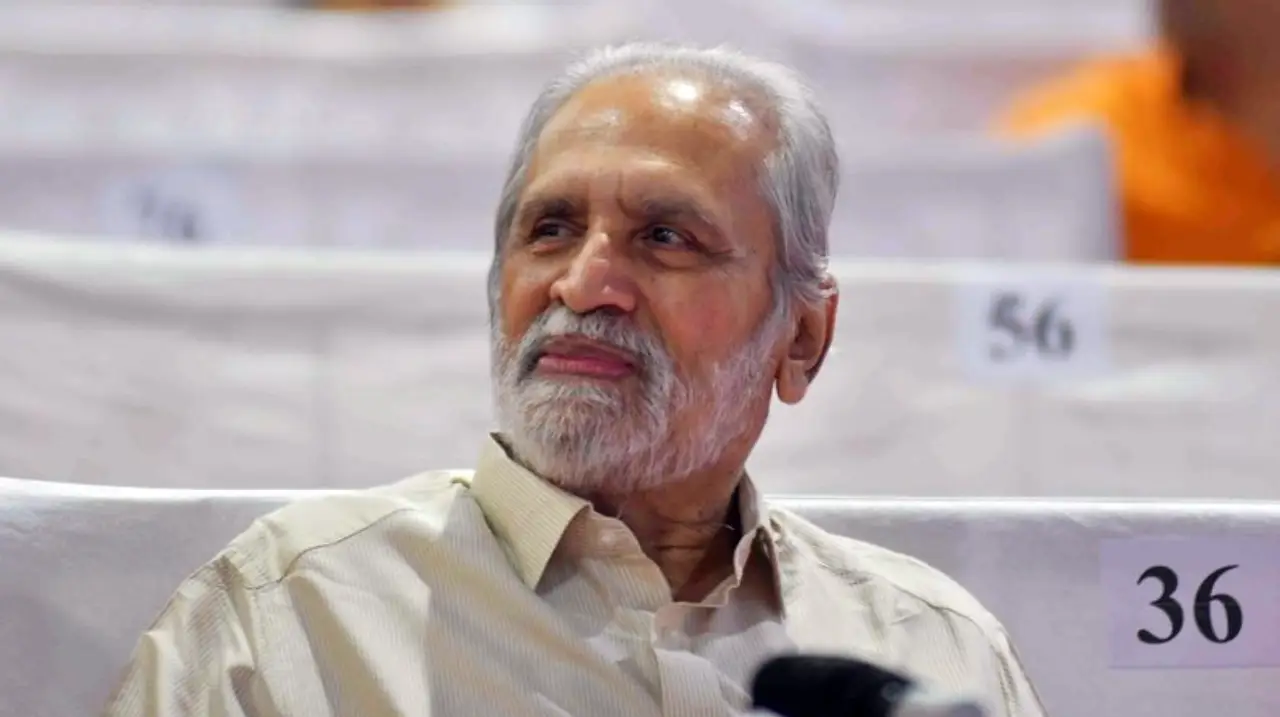
Senior Congress leader and former Union minister Suresh Kalmadi passed away in Pune early Tuesday after a prolonged illness, family sources said. He was 81.

His mortal remains will be kept at Kalmadi House in Erandwane till 2 pm, following which the last rites will be performed at the Vaikunth crematorium in Navi Peth at 3.30 pm.

For decades, Kalmadi was among Pune’s most influential political figures, combining electoral clout with deep roots in the city’s civic and cultural life. A former Indian Air Force pilot, he entered public life through the Youth Congress and went on to serve multiple terms in Parliament, including representing Pune in the Lok Sabha. During the mid-1990s, he served as Minister of State for Railways in the Union government.

Beyond politics, Kalmadi cultivated a strong local network through high-profile public events such as the Pune Festival and the Pune International Marathon, initiatives that helped him build cross-party goodwill and a mass connect in the city.

At the national level, he emerged as a powerful figure in sports administration, serving as president of the Indian Olympic Association and holding key positions in athletics bodies over the years. His influence in sports peaked when he headed the organising committee of the 2010 Commonwealth Games in Delhi.

That event, however, came to define the most controversial chapter of his public life. The Games were marred by allegations of corruption and irregularities flagged in audits and probed by investigative agencies. Kalmadi was arrested in April 2011 in connection with the case and was subsequently suspended by the Congress.

The legal aftermath of the CWG controversy stretched over years. In 2025, a Delhi court accepted the Enforcement Directorate’s closure report in the Commonwealth Games money-laundering case, effectively ending that investigation. However, a separate CBI case related to the timing-scoring-results system contract, in which Kalmadi was named, has continued, with the trial still pending amid prolonged evidence recording.

Leaders across party lines expressed condolences on Tuesday, marking the passing of a leader whose career spanned public service, sports administration and political dominance in Pune, before the CWG scandal reshaped how a generation came to remember him.

Indore Water Crisis Worsens: 142 Hospitalised as Fresh Diarrhoea Cases Surface, Political Heat Rises

indore, water crisis, diarrhoea
Indore Water Crisis Worsens: 142 Hospitalised as Fresh Diarrhoea Cases Surface, Political Heat Rises 6

The water contamination crisis in Indore deepened on Sunday with 142 people currently hospitalised, including 11 in intensive care units, even as fresh diarrhoea cases emerged during large-scale health screenings in Bhagirathpura, the epicentre of the outbreak.

Health officials said 20 new patients were detected after medical teams screened 9,416 people across 2,354 households in Bhagirathpura, where six deaths have been officially confirmed due to consumption of contaminated drinking water. In total, 398 people have been admitted to hospitals since the outbreak began, of whom 256 have been discharged following recovery.

Authorities maintained that the situation is now under control, though hospitalisations continue. Chief Medical and Health Officer Dr Madhav Prasad Haasani said a team from the Kolkata-based National Institute for Research in Bacterial Infections has reached Indore to investigate the outbreak and provide technical support to contain it.

While the district administration has confirmed six deaths, the toll remains disputed. Mayor Pushyamitra Bhargava has claimed 10 fatalities, while local residents allege that at least 16 people, including a six-month-old child, have died.

The crisis has triggered sharp political reactions. The Congress held bell-ringing protests across Madhya Pradesh, demanding the resignation of senior minister Kailash Vijayvargiya after he sparked controversy by using the word “ghanta” while responding to reporters’ questions on the crisis on December 31. The Congress termed the remark insensitive and demanded a judicial inquiry, along with Vijayvargiya’s removal from office. Bhagirathpura falls under his Indore-1 assembly constituency.

State Congress president Jitu Patwari warned of a statewide agitation from January 11 if corrective measures were not taken. He demanded the registration of a culpable homicide case against the Indore mayor and concerned civic officials, alleging that residents had been complaining about contaminated tap water for the past eight months without action. He further claimed that even water supplied through municipal tankers remained unsafe.

Amid the escalating controversy, a sub-divisional magistrate in neighbouring Dewas was suspended on Sunday for allegedly reproducing portions of a Congress memorandum verbatim in an official order related to law and order arrangements during protests. Ujjain division revenue commissioner Ashish Singh said the action was taken for serious negligence and irregularities in official conduct.

Renowned water conservationist Rajendra Singh, a Magsaysay Award winner popularly known as the “Waterman of India,” described the deaths as a “system-created disaster” and blamed deep-rooted corruption. Expressing concern that such a crisis could unfold in India’s cleanest city, he warned that the condition of drinking water systems elsewhere could be far worse.

Government officials have acknowledged that sewage overflow entered drinking water pipelines, triggering severe cases of vomiting and diarrhoea. Singh alleged that cost-cutting practices, including laying water pipelines close to drainage lines, and falling groundwater levels have made cities like Indore increasingly vulnerable to such crises.

Delhi Riots Case: Supreme Court Denies Bail to Umar Khalid, Sharjeel Imam, Grants Relief to Five Others

sharjeel imam, umar khalid, bail plea rejected, supreme court
Delhi Riots Case: Supreme Court Denies Bail to Umar Khalid, Sharjeel Imam, Grants Relief to Five Others 8

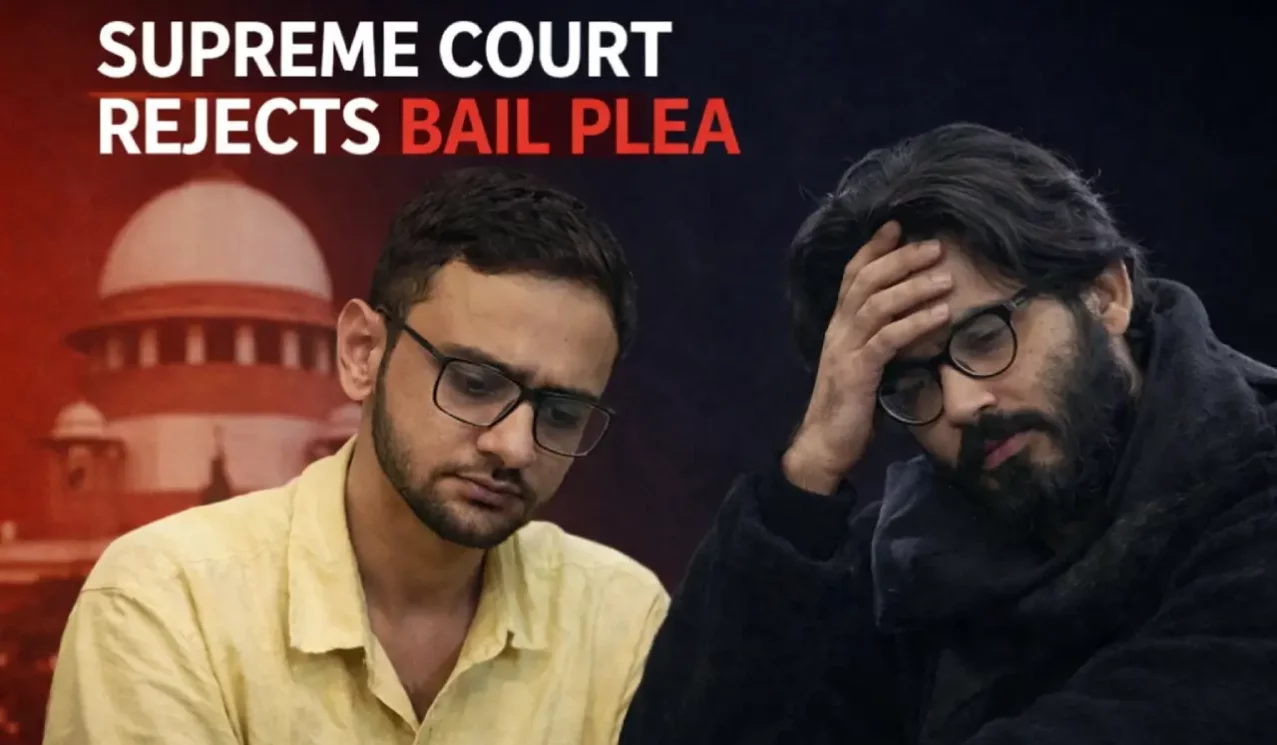
The Supreme Court of India on Monday rejected the bail pleas of activists Umar Khalid and Sharjeel Imam in the “larger conspiracy” case linked to the February 2020 Delhi riots, holding that the two stand on a “qualitatively different footing” from the other accused.

In the same verdict, a bench comprising Justices Aravind Kumar and N. V. Anjaria granted bail to five other accused—Gulfisha Fatima, Meeran Haider, Shifa Ur Rehman, Mohd. Saleem Khan and Shadab Ahmad—who are also facing charges in the case.

Khalid, Imam and the other accused were booked under the Unlawful Activities (Prevention) Act and provisions of the Indian Penal Code in a case in which the Delhi Police has alleged a larger conspiracy behind the communal violence in northeast Delhi in 2020. The riots claimed 53 lives and left over 700 people injured, erupting amid protests against the Citizenship (Amendment) Act and the proposed National Register of Citizens.

The bail pleas before the apex court had challenged a September 2, 2025 order of the Delhi High Court, which had declined bail to the accused in the conspiracy case. The Supreme Court had reserved its verdict in December 2025 after hearing detailed arguments from both the prosecution and the defence.

Details of the operative conditions attached to the bail granted to the five accused were not immediately available at the time of filing.

IMD Issues Orange Alert as Dense Fog, Cold Wave Grip North and East India

India Meteorological Department (IMD), IMD, weather
IMD Issues Orange Alert as Dense Fog, Cold Wave Grip North and East India 10

The India Meteorological Department has issued an orange alert for dense to very dense fog across several parts of the country, including Delhi, Chandigarh, East Uttar Pradesh, Haryana, Madhya Pradesh, Odisha and Punjab, warning that conditions are likely to persist till Tuesday.

According to the IMD, dense fog is also expected over parts of Gangetic West Bengal, sub-Himalayan West Bengal, Jharkhand and the northeastern states over the next two days. Similar foggy conditions are likely to continue in Himachal Pradesh and Uttarakhand until January 9.

The weather agency has further predicted cold wave conditions over Delhi, Punjab, Haryana, Chandigarh, Jharkhand and Rajasthan during the next three days, while cold day conditions have been forecast for Bihar and Uttarakhand on Monday.

Meanwhile, air quality in the national capital region remains a concern. Data from the Central Pollution Control Board showed that Delhi’s average Air Quality Index stood at 266 at 7 am on Monday, placing it in the ‘poor’ category.

Authorities have advised people to exercise caution while commuting in foggy conditions and to take necessary precautions against cold-related health issues as winter weather continues to intensify across large parts of the country.

Tension in Bengaluru’s JJR Nagar After Stones Thrown at Om Shakti Devotees’ Procession

bengaluru, jjr nagar, tense, stone, religious procession
Tension in Bengaluru's JJR Nagar After Stones Thrown at Om Shakti Devotees' Procession 12

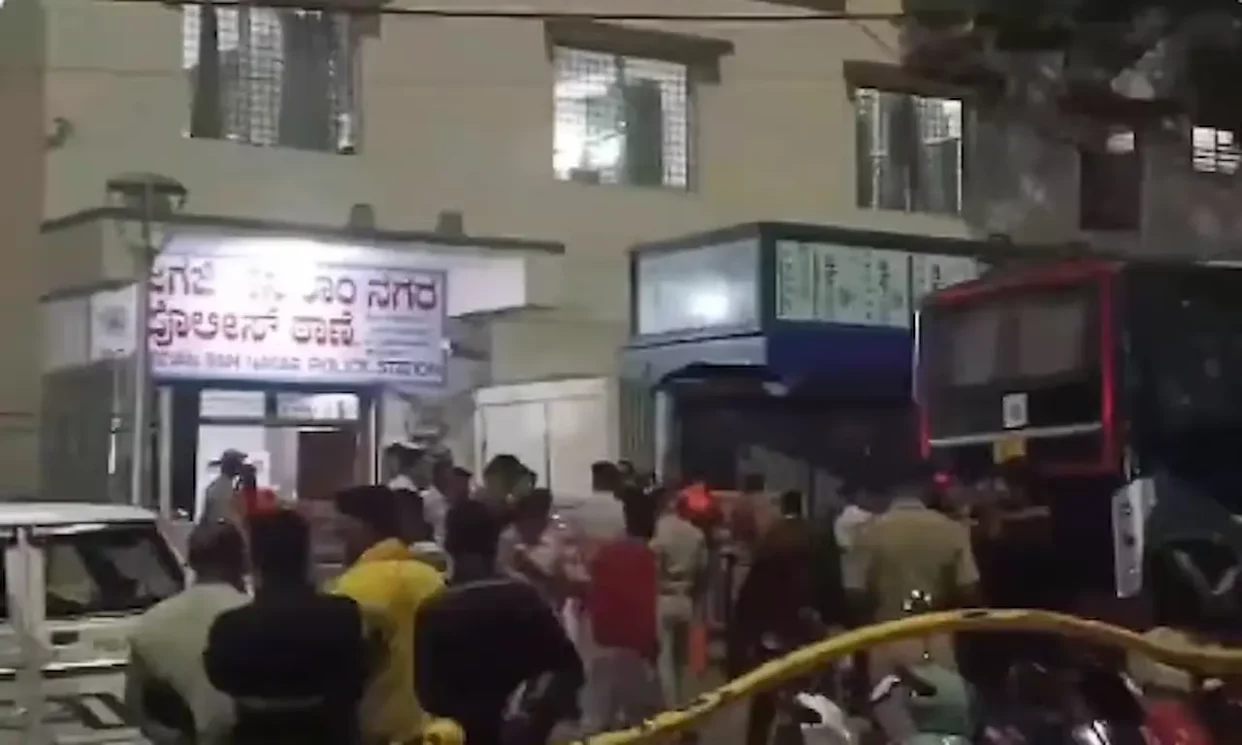
The situation remained tense but under control in Jagjeevan Ram Nagar on Monday following a stone-pelting incident targeting a procession of Om Shakti devotees, police said.

Two women were injured when miscreants allegedly hurled stones at the religious procession on Sunday night. The incident triggered protests by local residents, who gathered outside the JJ Nagar police station demanding swift and strict action against those responsible.

In view of the tension and the possibility of retaliatory incidents, police deployed additional forces in the area. Senior police officers camped in the locality and initiated an investigation to identify and trace the accused.

A First Information Report was registered late Sunday night based on a complaint filed by Shashikumar N, a resident of VS Garden. According to the complaint, the incident took place between 8.15 pm and 9.00 pm while devotees were taking out a religious procession through the area.

Shashikumar stated that he has been participating in Om Shakti and Ayyappa Swamy worship for the past 23 years, observing the rituals by wearing the Om Shakti garland and carrying the Irumudi. He alleged that three to four youths pelted stones at the procession, during which a woman devotee suffered a serious head injury and bleeding wounds. She was later admitted to a local hospital for treatment.

The complaint also alleged that similar incidents had occurred in the past, claiming that on two or three earlier occasions miscreants had set fires during religious observances in the locality. It further stated that the area has a significant Dalit population and that incidents of atrocities against Dalits have previously been reported.

Calling the attack an assault on religious sentiments and an act of intimidation, Om Shakti and Ayyappa Swamy devotees jointly demanded stringent legal action against those involved. Police said investigations are ongoing and security arrangements will remain in place to maintain peace.

‘Don’t Rob Gen Z of Votes’: Uddhav Thackeray Seeks Cancellation of 68 Unopposed Civic Wins

uddhav thackeray, gen z, voters, bmc elections, bmc, bmc polls, mumbai
'Don't Rob Gen Z of Votes': Uddhav Thackeray Seeks Cancellation of 68 Unopposed Civic Wins 14

Shiv Sena (UBT) chief Uddhav Thackeray on Sunday urged the State Election Commission to cancel results in 68 civic wards where candidates of the ruling Mahayuti were declared elected unopposed, arguing that such outcomes effectively deny first-time voters and Gen Z citizens their right to vote.

Sharing the stage with Raj Thackeray while unveiling their joint manifesto for the upcoming Mumbai civic polls, Uddhav warned against democracy slipping into “mobocracy”. Launching a sharp attack on the Mahayuti government, he alleged that since his government was ousted in June 2022 and Eknath Shinde assumed office, the Brihanmumbai Municipal Corporation’s finances were being squandered on contractors. He claimed that after “stealing votes”, the ruling alliance was now “stealing candidates”.

Raj Thackeray accused the BJP of double standards, recalling that the party had approached the Supreme Court of India in similar cases in West Bengal where ruling party candidates were elected unopposed. He asked the BJP to clarify its stand now that 68 Mahayuti candidates—44 of them from the BJP—have won without contest in Maharashtra, largely due to withdrawals by rivals or rebels.

Responding to the criticism, Chief Minister Devendra Fadnavis said the people’s mandate would prevail even if the Opposition moved the courts. Speaking at a roadshow in Chandrapur, he said, “They can certainly go to court, but the people’s court has elected us.” He also questioned the Opposition’s silence on unopposed victories of independents and Muslim candidates, alleging that the protests stemmed from a fear of defeat.

Referring to the uncontested results ahead of the January 15 elections to 29 civic bodies, Uddhav said the State Election Commission should have the courage to cancel polls in wards where candidates were elected unopposed and restart the process. Such outcomes, he said, amounted to denying voters—especially the Gen Z electorate—the opportunity to exercise their franchise.

Uddhav also alleged large-scale financial irregularities at the BMC, claiming that if its expenditure budget stood at ₹15,000 crore, advance mobilisation payments to contractors had ballooned to ₹3 lakh crore, which he termed a “scam”. He further alleged that kickbacks were being used to fund civic election campaigns.

The Sena (UBT) chief demanded the suspension of Maharashtra Assembly Speaker Rahul Narwekar, accusing him of interfering in the nomination process and tampering with CCTV footage. Narwekar, a BJP MLA from Colaba, has rejected the allegations as baseless and politically motivated.

Both Thackeray cousins indicated that the “sons-of-the-soil” plank would be a central theme of their campaign, particularly in Mumbai. Raj Thackeray asserted that Mumbai and other cities would have Marathi mayors and stressed the need to respect the local language, warning the ruling alliance that power is not permanent.

A total of 15,931 candidates are contesting 2,869 seats across 893 wards in 29 municipal corporations. Except for Mumbai, which has 227 seats, the remaining corporations have multi-member wards. Votes will be counted on January 16.

Sena (UBT)-MNS Manifesto Targets Mumbai Voters with Free Power, Rs 1,500 Allowance for Women

uddhav thackeray, raj thackeray, mns, bmc, polls, manifesto
Sena (UBT)-MNS Manifesto Targets Mumbai Voters with Free Power, Rs 1,500 Allowance for Women 16

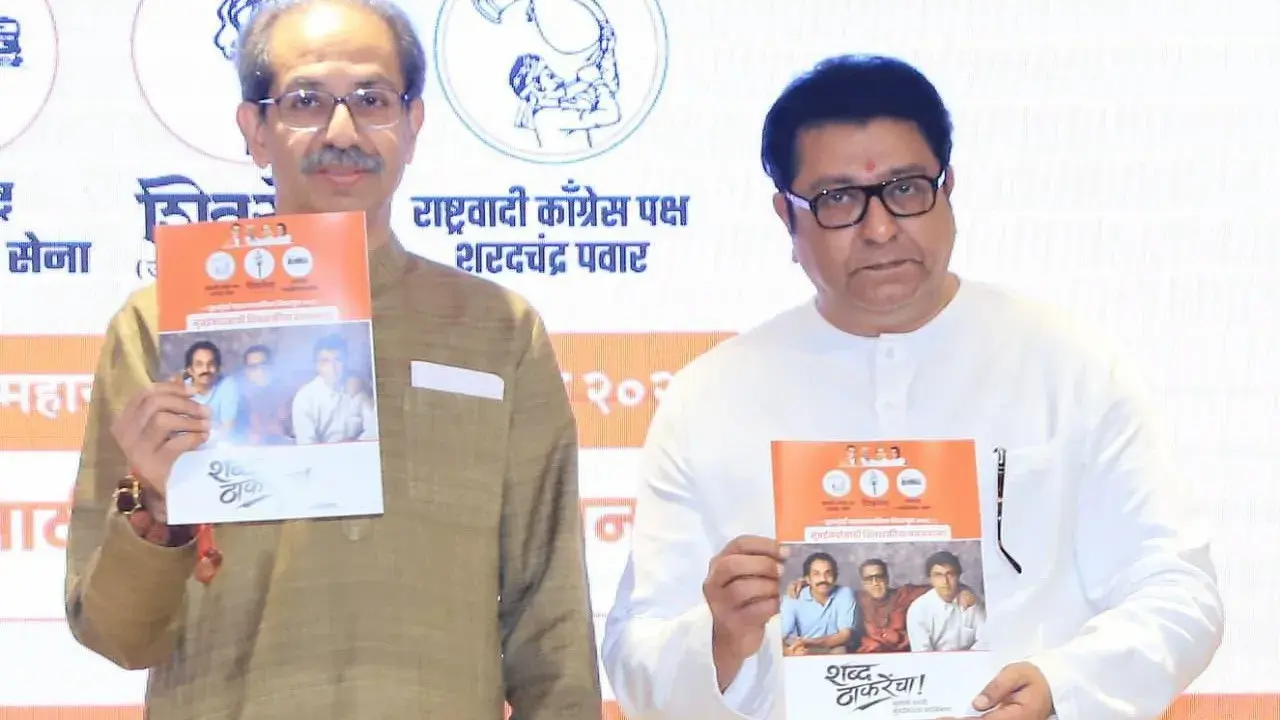
The Shiv Sena (UBT)–MNS alliance on Sunday unveiled a joint manifesto promising free electricity, a ₹1,500 monthly allowance for women domestic helps and fish vendors, and a waiver of property tax for homes up to 700 sq ft, as it sharpened its pitch to Mumbai voters ahead of the Brihanmumbai Municipal Corporation (BMC) elections.

The manifesto, titled “Vachan Nama, Shabd Thackerencha”, was released at Shiv Sena Bhawan during a joint press conference attended by Uddhav Thackeray and Raj Thackeray, marking Raj Thackeray’s return to the venue after nearly two decades. The cover prominently features the two cousins alongside Shiv Sena founder Balasaheb Thackeray.

Although the alliance also includes the NCP (SP), no senior leader from the Sharad Pawar-led party was present on the dais at the launch.

A major focus of the manifesto is on women voters. Under the proposed “Swabhiman Nidhi”, the alliance has promised ₹1,500 per month for women domestic workers and women from the Koli fishing community who sell fish, mirroring the Mahayuti government’s Ladki Bahin Yojana. The document also promises clean and well-maintained public toilets for women on major roads across the city.

Among other welfare measures, the alliance has announced a subsidised meal scheme similar to the Shiv Bhojan Thali, under which breakfast and lunch would be provided for ₹10. It has also asserted that Mumbai’s land will be used primarily for Mumbaikars, promising affordable housing for BMC, government and BEST employees, as well as mill workers.

The manifesto proposes setting up a dedicated housing authority under the BMC and constructing one lakh affordable homes over the next five years. It also promises 100 units of free electricity for residential consumers through the Brihanmumbai Electricity Supply and Transport (BEST) Undertaking, with efforts to extend the benefit to the eastern and western suburbs. However, it remains unclear whether the free power units would apply only to areas currently serviced by BEST or across the entire city.

Youth and gig workers have also been targeted, with the alliance promising financial assistance ranging from ₹25,000 to ₹1 lakh for self-employment, along with an interest-free loan of ₹25,000 for gig economy workers.

Other civic promises include waiving property tax on homes up to 700 sq ft, changing redevelopment rules to ensure at least one parking slot per flat, reducing the minimum bus fare from ₹10 to ₹5, and introducing new buses and routes.

To strengthen public healthcare, the alliance has pledged to establish five new medical colleges in civic-run hospitals, oppose any move towards privatisation of these facilities, set up a super-speciality cancer hospital, and launch rapid bike-based medical assistance services.

In the education sector, BMC-run “Mumbai Public Schools” would offer classes from junior kindergarten to Class 12, while creches would be set up in every assembly segment to support working parents. The manifesto also lists pet parks, veterinary clinics, pet ambulances and crematoriums as proposed civic initiatives.

Voting for the Brihanmumbai Municipal Corporation will be held on January 15, along with elections to 28 other civic bodies across Maharashtra.

When Democracy Is Auctioned: A Question the Election Commission Cannot Dodge

democracy, auctioned, democrats, election, elections commission of india, eci, india
When Democracy Is Auctioned: A Question the Election Commission Cannot Dodge 18

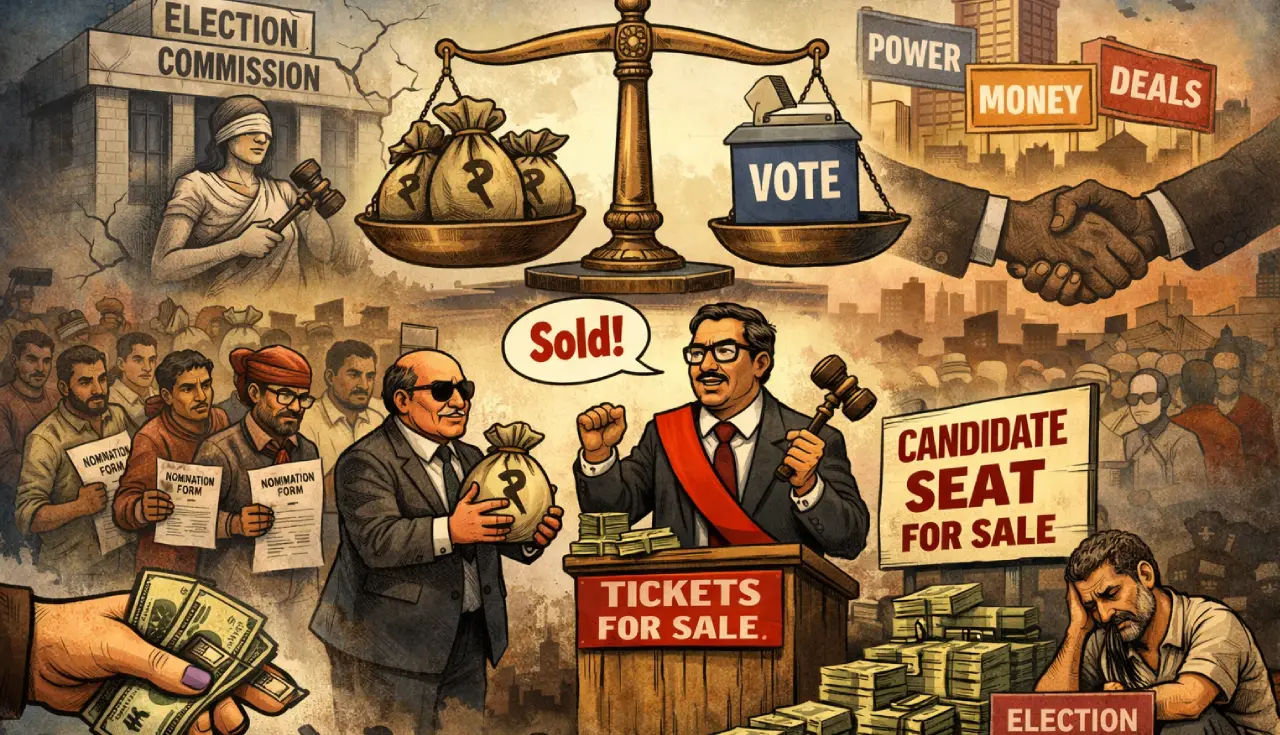
What unfolded during the Pune Mahanagar Palika election process is not a logistical footnote—it is a loud moral indictment. Thousands of nomination forms sold in a flash, queues that looked less like civic enthusiasm and more like a cattle market, and whispers—no, allegations—that “tickets” are effectively priced rather than earned. Call it what you want: procedure, enthusiasm, or coincidence. To the ordinary citizen, it smells like a democracy on discount.

Let’s stop pretending. When nomination forms are sold in bulk with such frenzy, the obvious question is why. Civic service does not suddenly become a mass obsession overnight. What has exploded is not public spirit, but political profiteering. Tickets have become commodities, wards have price tags, and ideology has been replaced by investment-return calculations. If governance were a stock market, Pune just witnessed an IPO frenzy.

And where, exactly, is the referee in this spectacle?

The credibility of the Election Commission of India stands squarely in the dock. Not accused of bias—but of blindness. When the system allows money power to bulldoze entry into the electoral arena, neutrality becomes negligence. A watchdog that merely watches while the house is looted cannot later claim it barked enough.

This is not about one party or another; that excuse is old, lazy, and dishonest. This is about structural rot. When ticket distribution becomes opaque, when the cost of entry silently eliminates the capable but poor, democracy mutates into an exclusive club for the wealthy, the connected, and the cynical. Elections then stop being a voice of the people and become background music for deal-making.

The tragedy is deeper. Pune is not some political backwater. It is an intellectual, cultural, and economic nerve centre. If this is the standard here, one shudders to imagine the silent compromises happening elsewhere. The middle class shrugs, the poor despair, and the political class laughs its way to the counting room.

The Pune Municipal Corporation elections should have been about urban planning, water, transport, housing, and collapsing infrastructure. Instead, they have turned into a masterclass on how to launder ambition through procedural loopholes. Democracy isn’t dying in loud coups; it is being suffocated in orderly queues with printed forms and unasked questions.

The Election Commission must answer—not with press notes, but with reform. Transparent caps, strict audits of party nominations, public disclosure of candidate selection criteria, and real-time financial scrutiny are not “nice ideas”; they are democratic CPR. If the Commission cannot enforce this, it must at least admit the system it oversees is compromised.

Because when citizens begin to believe that elections are for sale, they don’t just lose faith in politicians—they lose faith in the ballot itself. And once that faith is gone, no amount of ink on fingers can bring it back.

Democracy was never meant to be perfect. But it was never meant to be purchasable either.

Unnao Rape Case: Protesters Gather Outside Delhi High Court Over Suspension of Kuldeep Sengar’s Sentence

delhi hc, unnao rape case, protest, hc
Unnao Rape Case: Protesters Gather Outside Delhi High Court Over Suspension of Kuldeep Sengar’s Sentence 20

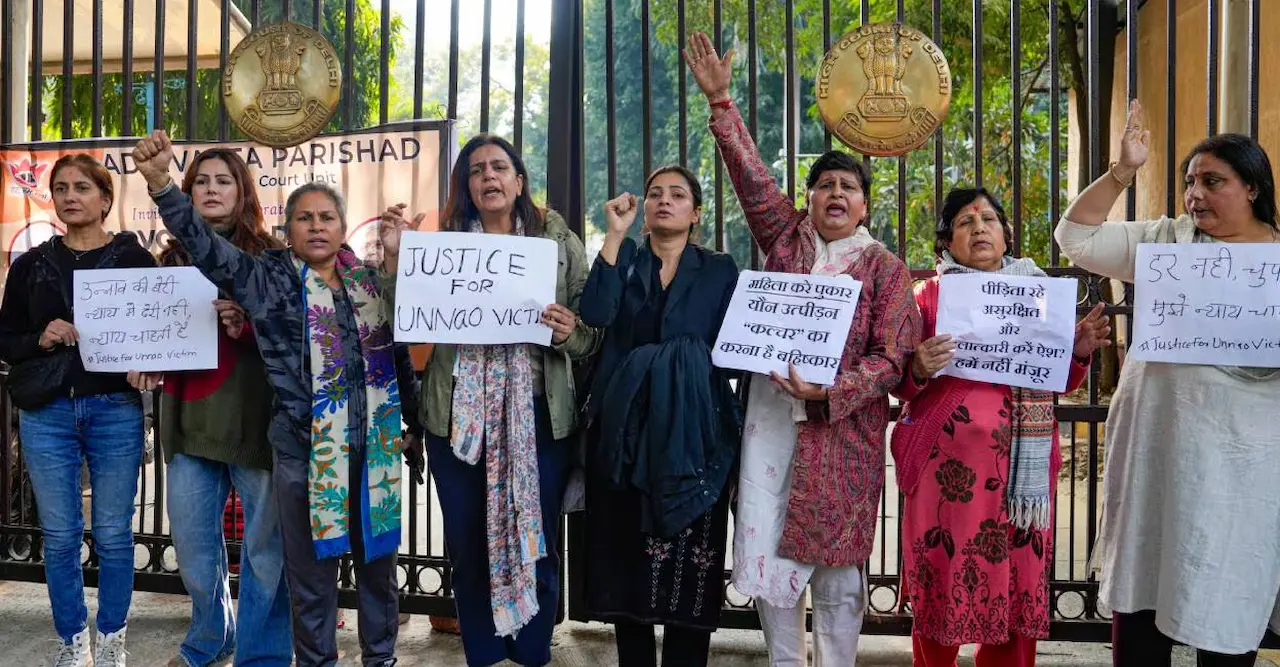
A protest was held outside the Delhi High Court on Friday against the suspension of the jail sentence of Kuldeep Sengar, who was convicted in the Unnao rape case.

Holding placards and raising slogans such as “Balatkariyo ko sanrakshan dena band kro” (stop protecting rapists), the protesters expressed solidarity with the Unnao rape survivor. Women activists from the All India Democratic Women’s Association joined the demonstration, along with activist Yogita Bhayana and the survivor’s mother.

Speaking to reporters, the survivor’s mother said she had come to protest the court’s decision, stating that her daughter had already suffered immensely. “I am not blaming the entire court, but only the two judges whose decision has shattered our trust,” she said.

She added that earlier judicial orders had delivered justice to the family, but the recent suspension of the sentence had caused deep distress. “This is an injustice to our family. We will approach the Supreme Court of India, as I have full faith in it,” she said.

On Tuesday, the Delhi High Court ordered the release of Sengar on bail pending the disposal of his appeal against his conviction and life sentence awarded by a trial court in December 2019. The court imposed strict conditions, directing that the former Bharatiya Janata Party MLA must not enter within a five-kilometre radius of the survivor’s residence or threaten the survivor or her mother, warning that any violation would result in automatic cancellation of bail.

Despite the bail order in the rape case, Sengar will continue to remain in prison as he is also serving a 10-year sentence in connection with the custodial death of the survivor’s father and has not been granted bail in that matter.