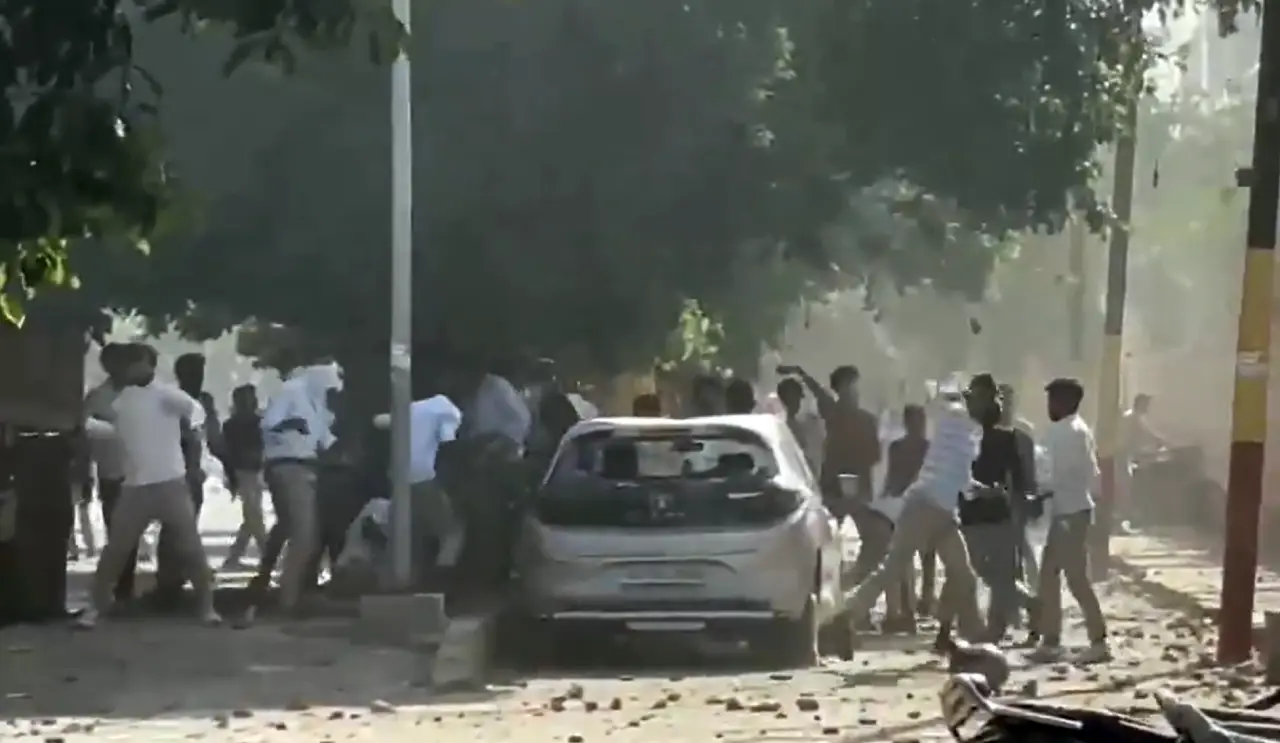
A protest by factory workers demanding a wage hike turned violent in Noida on Monday, with vehicles set on fire, property vandalised and incidents of stone-pelting reported from Phase 2 and Sector 60 areas, police said.
The unrest severely disrupted traffic during peak morning hours, leaving thousands of commuters stranded on roads leading to Delhi. Long queues of vehicles stretched for several kilometres, particularly near the Delhi-Noida border.
According to officials, large groups of workers from multiple industrial units gathered to press for long-pending salary revisions and raised slogans during demonstrations. Similar protests were reported from Sectors 62 and 84, including at a unit of the Motherson group, while protesters also blocked National Highway 9.
The situation escalated as sections of protesters allegedly resorted to violence, damaging property, pelting stones and torching vehicles.
Police said adequate forces have been deployed across industrial areas under the Gautam Buddh Nagar Commissionerate, with senior officials present on the ground to monitor developments. “The situation is under control and being closely monitored. Efforts are being made to counsel workers and restore normalcy,” the police said, adding that minimum force was used to maintain law and order.
Authorities urged the public not to spread or believe rumours and assured that steps are being taken to restore peace.
The violence comes a day after the Uttar Pradesh government announced labour welfare measures, including double overtime pay and timely wages for workers in Gautam Buddh Nagar. District Magistrate Medha Roopam had also directed industrial units to ensure worker-friendly policies and maintain dialogue with employees.
Security was heightened along key entry points into Delhi, with additional police personnel, barricades and rapid response teams deployed to prevent any spillover of unrest. Officials said strict vigilance and vehicle checks are being carried out to maintain law and order.
Police confirmed they are in coordination with their Uttar Pradesh counterparts and continue to monitor the situation closely.
Parliament Set to Make 'New History' with Women’s Reservation Act: PM Modi 4
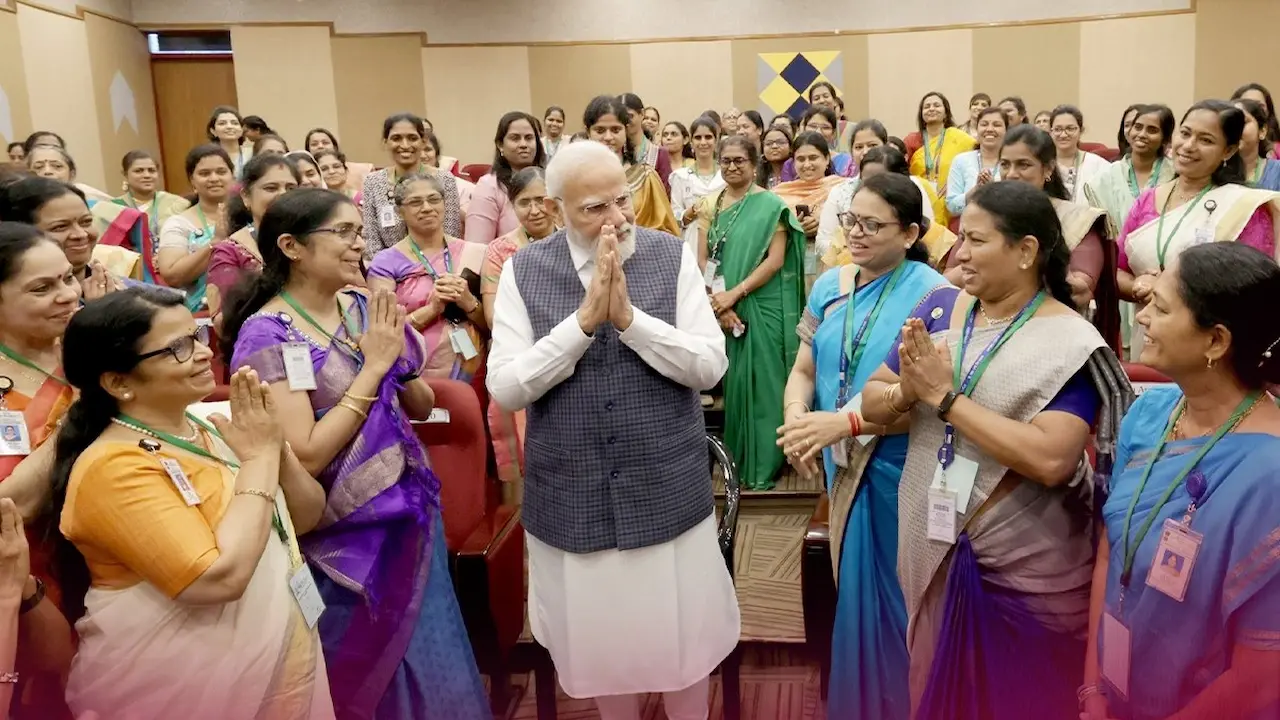
Prime Minister Narendra Modi on Monday said Parliament is poised to create “new history” with the amendment of the Women’s Reservation Act this week, paving the way for its implementation by 2029.
Addressing a gathering at the ‘Nari Shakti Vandan Sammelan’ ahead of a special three-day Parliament session, Modi highlighted that the legislation, introduced in 2023, had received unanimous support across party lines.
He noted that there was a collective demand, particularly from the Opposition, to ensure the law’s implementation within the stipulated timeline.
“Our Parliament is close to creating a new history—one that will realise the visions of the past and fulfil the resolutions of the future,” Modi said, emphasising that the move would strengthen the foundation of an egalitarian society.
The Prime Minister underscored that the amendment would help embed social justice into governance, making it an integral part of decision-making and work culture in India.
The proposed changes to the Nari Shakti Vandan Adhiniyam are expected to be taken up during the special session, with the government aiming to operationalise the long-pending provision of reservation for women in legislative bodies.
Veer or Villain? The Real Question Is: Have We Learned to Respect Our Own History 6
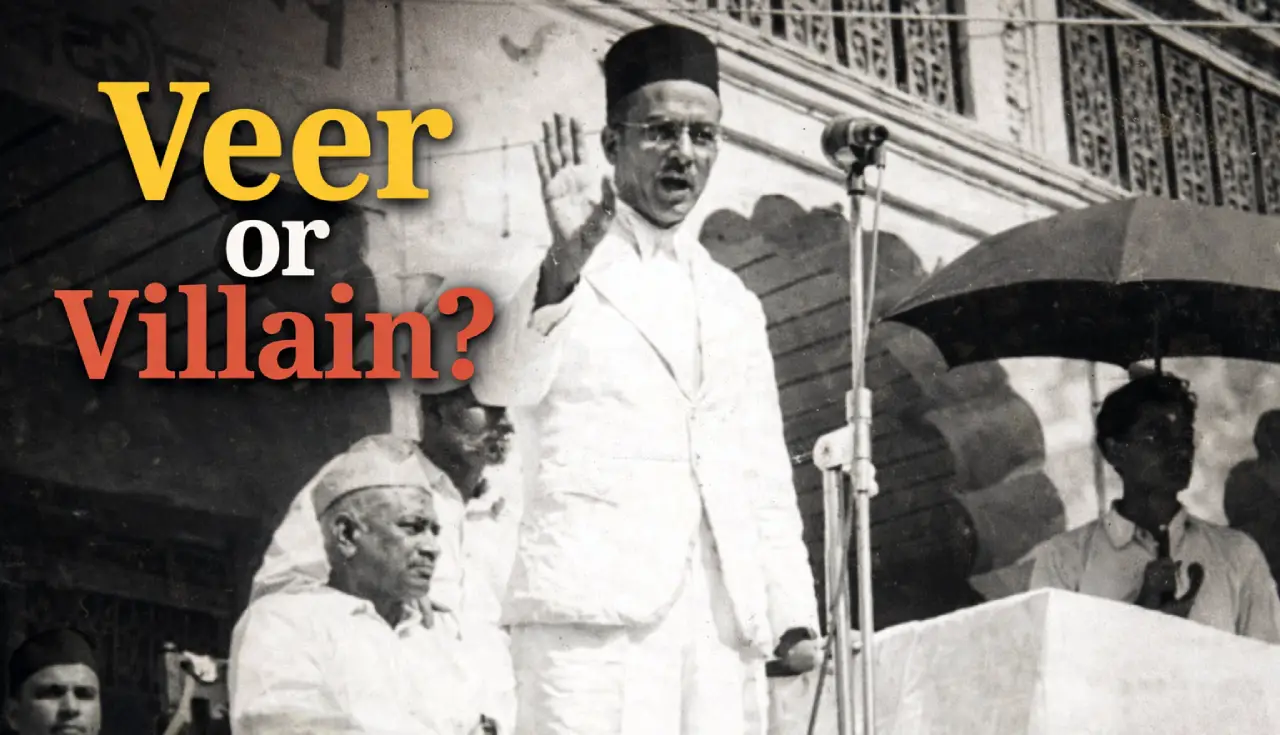
The debate over whether Vinayak Damodar Savarkar deserves the title “Veer” is not really about Savarkar. It is about us—our intellectual honesty, our political maturity, and our willingness to treat history as something more than a weapon of convenience.
Let’s begin with a simple, uncomfortable truth: “Veer” was not a government-issued decoration. It was not conferred by a regime, nor printed in any official gazette. It was a title earned in the court of public consciousness. Savarkar was called “Veer” because people of his time saw in him extraordinary courage—whether in organizing revolutionary networks in London, inspiring armed resistance against the British Empire, or enduring the horrors of the Cellular Jail in the Andamans.
And those horrors were not symbolic. They were real, brutal, and dehumanizing. Prisoners were yoked to oil mills like cattle, flogged for the smallest defiance, and subjected to psychological isolation designed to break the human spirit. To reduce such a life to a shallow talking point about “mercy petitions” is not critique—it is intellectual laziness dressed up as moral superiority.
Yet, this is precisely what modern political discourse has done.
When leaders like Rahul Gandhi publicly dismiss Savarkar as someone who “apologized” to the British, they are not engaging in historical debate—they are simplifying history into slogans. The aftermath has been predictable: defamation cases filed across India, including ongoing proceedings in courts such as those in Pune, where complainants argue that such statements malign not just a man, but the dignity of India’s freedom struggle itself.
This is where the issue stops being political and starts becoming civilizational.
A nation that begins to casually defame those who fought for its existence is not displaying courage—it is displaying amnesia. And amnesia, in civilizational terms, is a slow form of self-destruction.
Let’s be clear: Savarkar is not beyond criticism. No historical figure is. He evolved over time—from a fiery revolutionary to a political ideologue. His views, particularly in later years, can and should be debated. But debate requires depth, context, and integrity. What we are witnessing instead is selective outrage, where complex lives are reduced to single episodes, stripped of context, and then weaponized for electoral gain.
This is not history. This is propaganda.
And the damage is not limited to Savarkar alone.
When we begin ranking freedom fighters based on current political convenience, we fracture the very foundation of our national narrative. Mahatma Gandhi, Subhas Chandra Bose, Bhagat Singh, and Savarkar represented different streams of resistance—non-violence, militarized struggle, revolutionary activism, and ideological nationalism. Together, they formed the mosaic of India’s freedom movement. Remove one, distort another, and the entire picture collapses.
The British did not rule India for two centuries because Indians lacked courage. They ruled because Indians were divided. It is a bitter irony that decades after independence, we are recreating that division—not under foreign pressure, but through our own political narratives.
So what should be done?
First, we must draw a firm line between criticism and defamation. Criticism questions actions; defamation distorts intent. Saying “Savarkar’s political ideology is debatable” is legitimate. Reducing him to a caricature of cowardice is not. It is not only historically dishonest—it is morally irresponsible.
Second, history must be reclaimed from the courtroom and returned to scholarship. Courts can adjudicate defamation, but they cannot settle historical truth. That responsibility lies with historians, researchers, and a society willing to engage with nuance rather than noise.
Third—and perhaps most importantly—we must develop a baseline of respect for all those who endured the brutality of colonial rule. You may disagree with their methods. You may challenge their ideologies. But you cannot deny the price they paid.
A man who spent years in the Cellular Jail did not do so for comfort. A revolutionary who risked execution did not do so for applause. These were individuals who placed the idea of India above their own lives. That alone demands a certain dignity in how we speak about them.
There is also a generational responsibility at stake.
Today’s youth are not reading primary sources. They are consuming fragments—tweets, headlines, political speeches. If those fragments are distorted, then their understanding of India’s past will be equally distorted. And a generation disconnected from its history is a generation vulnerable to manipulation.
This is why the Savarkar debate matters. Not because it will change the past, but because it will shape the future.
If we normalize the casual dismantling of historical figures, then no one will remain untouched. Today it is Savarkar. Tomorrow it could be Gandhi. The day after, Bose. Once the culture of selective defamation takes root, it does not stop—it spreads.
A mature civilization does not erase its complexities; it engages with them. It does not flatten its heroes into propaganda tools; it studies them, questions them, and ultimately respects them.
So, was Savarkar “Veer”?
That is the wrong question.
The real question is this: Do we, as a nation, possess the intellectual honesty to evaluate our past without turning it into a political battlefield?
Because if the answer is no, then the tragedy is not Savarkar’s legacy being debated—it is India’s historical consciousness being diminished.
And that is a far greater loss than any title could ever represent.
Kunal Kamra Cites Bal Thackeray Cartoon, Questions Privilege Action by Maharashtra Legislature 8
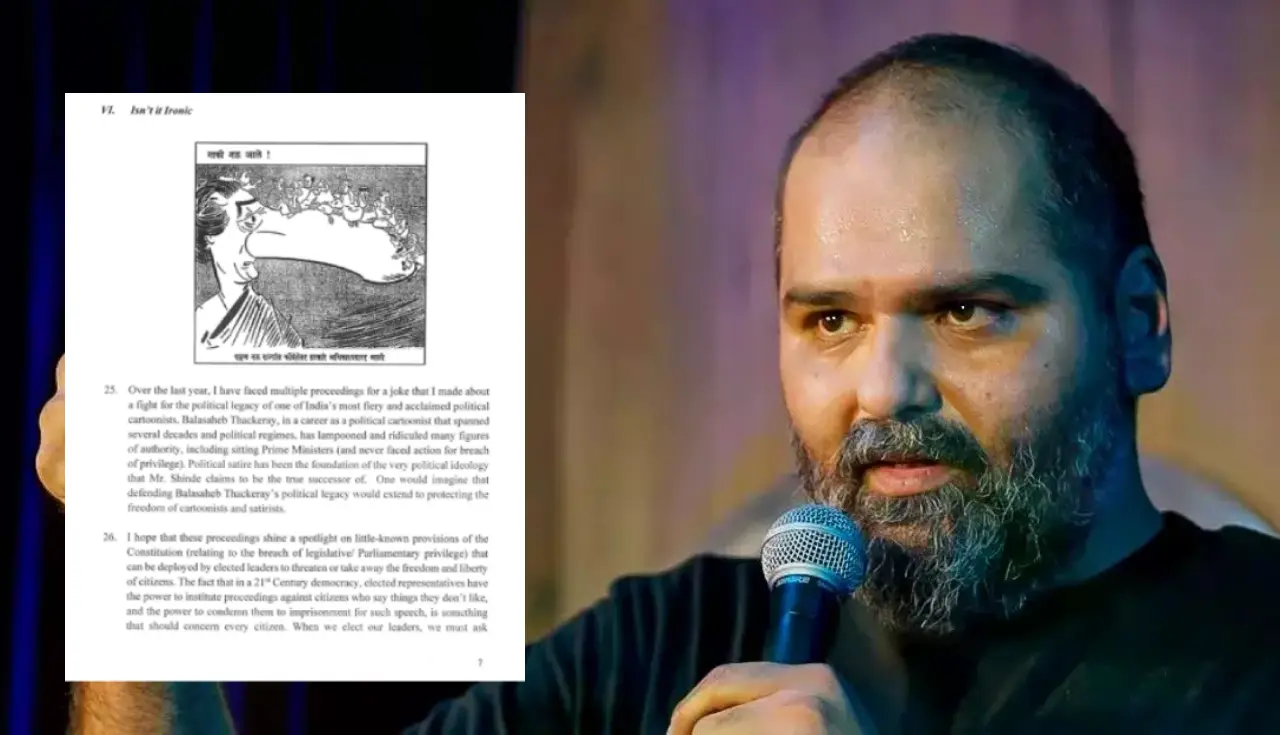
Stand-up comedian Kunal Kamra has questioned the Maharashtra legislature’s privilege proceedings against him, citing a cartoon by Shiv Sena founder Bal Thackeray that criticised former Prime Minister Indira Gandhi to argue that satire has historically not invited such action.
Kamra, who has been served a breach of privilege notice over a satirical song targeting Deputy Chief Minister Eknath Shinde, shared excerpts of his written submission to the legislature’s privileges committee on social media.
In his deposition, Kamra referred to Thackeray’s work as a political cartoonist, noting that he had openly criticised leaders, including sitting prime ministers, without facing privilege proceedings. He argued that defending Thackeray’s legacy should also mean protecting the freedom of satire and expression.
The comedian’s remarks came in response to statements by Shiv Sena leader and state minister Pratap Sarnaik, who said the privilege motion had been duly referred to a committee and warned Kamra about the “aggressive approach” of Shiv Sainiks.
Kamra, however, maintained that political satire forms an essential part of democratic discourse. “In a 21st-century democracy, the use of legislative privilege to act against citizens for their speech should concern everyone,” he said, adding that such provisions could potentially be misused to curb freedom of expression.
He reiterated his refusal to issue an unconditional apology, calling it “insincere” and cautioning that it would set a negative precedent for artistic freedom.
The privileges committee, headed by BJP MLC Prasad Lad, will take a decision based on Kamra’s response. The complaint against him was filed by BJP leader Pravin Darekar, who alleged that Kamra’s remarks in a stand-up performance insulted Eknath Shinde and constituted a breach of privilege.
The controversy stems from a show in Mumbai last year, where Kamra performed a parody song referencing the political split in the Shiv Sena following Shinde’s rebellion against Uddhav Thackeray in 2022. After the performance clip surfaced online, Shiv Sena supporters allegedly vandalised the venue earlier this year.
An FIR was also registered against Kamra at Khar police station based on a complaint alleging defamatory remarks against the deputy chief minister.
Rahul Gandhi Alleges RSS-BJP Aiming to 'Undermine Constitution' at Ambedkar Event 10
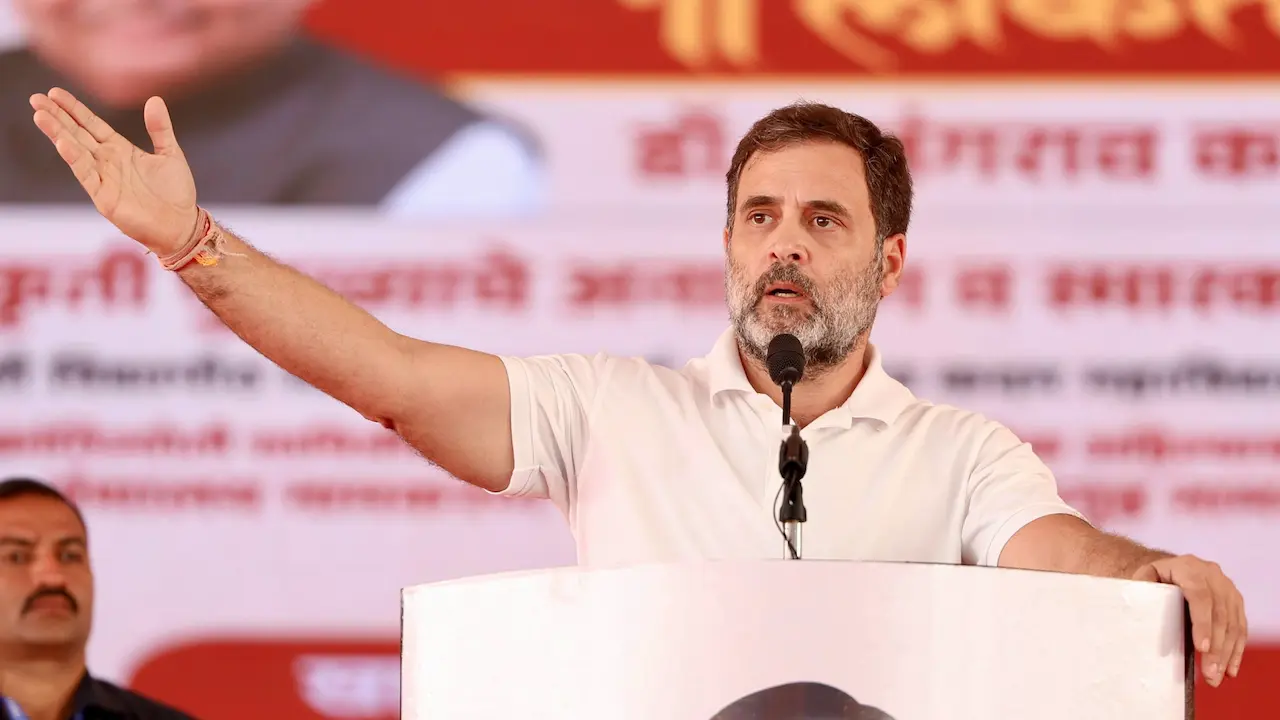
Congress leader Rahul Gandhi on Sunday accused the RSS-BJP of attempting to undermine the Constitution, alleging that their primary objective is to weaken the principle of equality in India.
Gandhi made the remarks while flagging off the ‘Run for Ambedkar, Run for Constitution’ marathon at Mandi House, ahead of Dr B R Ambedkar’s birth anniversary on April 14.
Addressing participants, the Leader of Opposition in the Lok Sabha said the Constitution is the foundation of India’s identity and warned that forces opposed to it do not believe in equal rights for all citizens.
“Without the Constitution, India would not exist in its present form. Those aligned with the RSS-BJP ideology want to finish it because they do not want equality for everyone,” Gandhi said.
He further alleged that despite publicly paying tribute to Ambedkar, their actions contradict his ideals. “They may bow before Ambedkar’s statue, but their objective is to weaken the Constitution. Our goal is to protect and strengthen it,” he added.
Gandhi emphasised that the marathon was organised to spread awareness about constitutional values and ensure that its principles reach every corner of the country.
In a social media post later, he reiterated the Congress party’s commitment to upholding Ambedkar’s vision and called for collective action against injustice and discrimination.
The event saw participation from several leaders, including former Indian cricket captain and Telangana minister Mohammad Azharuddin, who supported the initiative and stressed the importance of unity for the country’s progress.
Ambedkar Jayanti, observed annually on April 14, commemorates the birth anniversary of Dr B R Ambedkar, the chief architect of the Indian Constitution and a champion of social justice.
TMC vs BJP: Battle for Women, Youth and Welfare Voters Heats Up in Bengal Polls 12
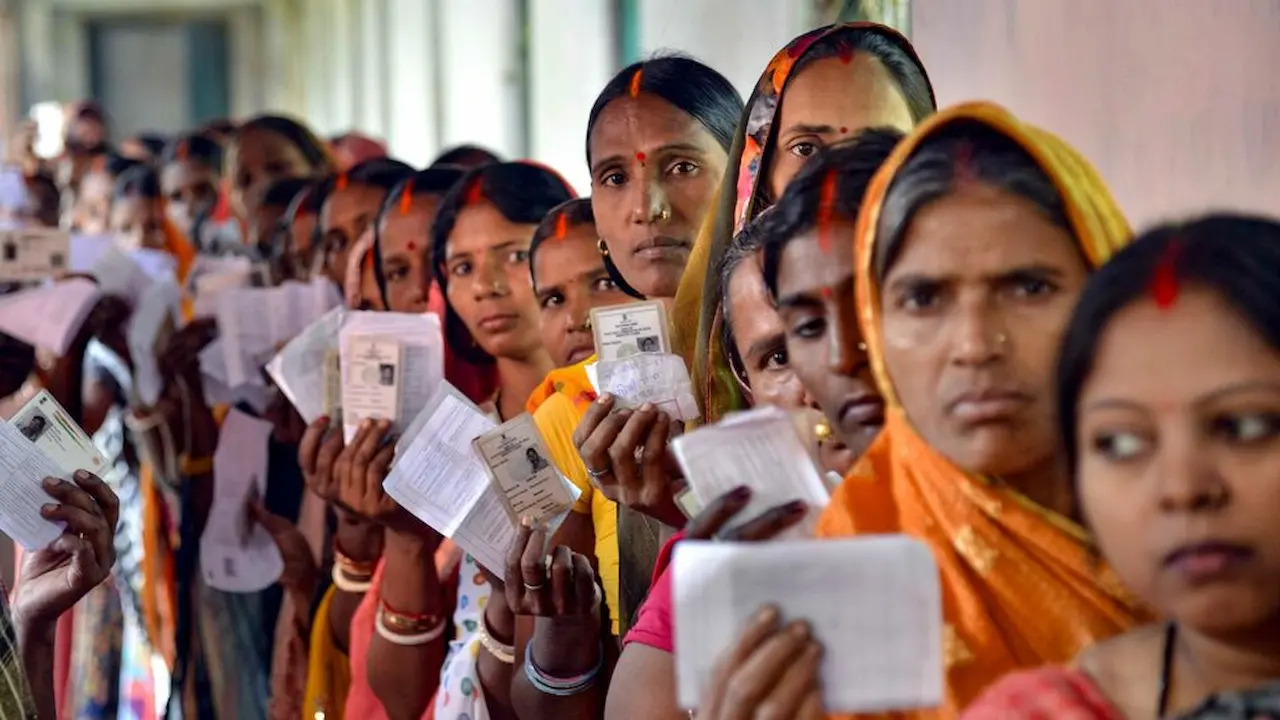
The Trinamool Congress (TMC) and the Bharatiya Janata Party (BJP) are locked in a direct contest to woo the same voter base—women, youth and welfare scheme beneficiaries—through competing promises in their manifestos for the West Bengal Assembly elections.
While Chief Minister Mamata Banerjee is banking on her established social coalition of women, minorities and SC/ST voters, the BJP is attempting to break into this base with a mix of welfare assurances, identity-driven politics and promises of economic support.
The TMC has doubled down on its welfare-centric approach, proposing an increase in financial assistance under schemes like Lakshmir Bhandar, aiming to further consolidate women voters who have played a decisive role in past elections. The party has also emphasised outreach to minorities and backward communities to retain its traditional support base.
In contrast, the BJP has countered with aggressive promises, including higher direct cash transfers for women, free public transport, job reservations and enhanced security measures. The party is also focusing on issues of law and order, attempting to capitalise on public concerns over safety and governance.
Beyond welfare, the BJP has sharpened its ideological pitch, promising implementation of the Uniform Civil Code, stricter action against illegal immigration and measures framed around cultural and national identity. At the same time, it has sought to position itself closer to regional sentiments by invoking Bengali pride and cultural heritage.
The TMC, on the other hand, has framed the election as a fight to preserve social harmony, highlighting its inclusive policies and warning against divisive politics. It has also focused on schemes for minorities, education and skill development in a bid to retain its broad voter coalition.
Meanwhile, the Left Front and Congress are attempting to regain relevance in a largely bipolar contest by shifting focus towards employment, industrial growth and anti-incumbency issues, rather than identity politics.
As the election approaches, both the TMC and BJP are crafting targeted appeals to key voter groups, making welfare schemes, identity narratives and economic promises central to their campaign strategies.
Rampal Walks Free After 11 Years as HC Grants Bail in 2014 Violence Case 14
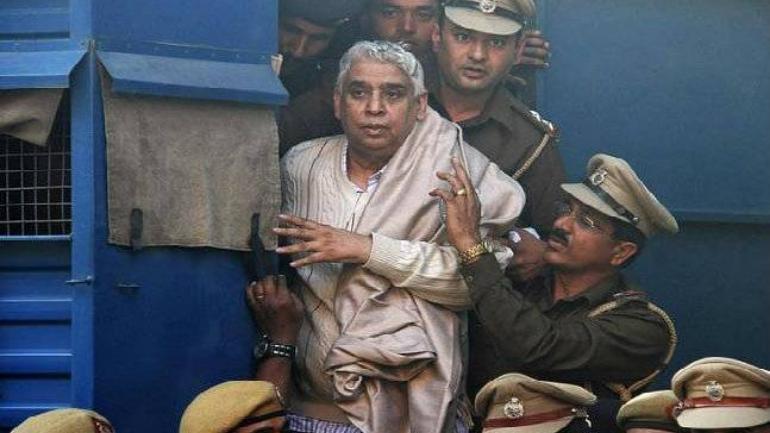
Controversial preacher Rampal walked out of a Haryana jail on Friday after more than 11 years in custody, following bail granted by the Punjab and Haryana High Court in connection with the 2014 Satlok Ashram violence case.
Rampal, 75, was received by his family members and legal team outside the prison, where heavy security arrangements were put in place as a large number of followers gathered.
On April 8, the High Court granted him bail while imposing strict conditions, including refraining from promoting “mob mentality” and avoiding participation in gatherings that could disturb law and order.
The bail order was issued by a division bench of Justices Gurvinder Singh Gill and Ramesh Kumari, allowing Rampal’s appeal against a Hisar court’s earlier decision rejecting his bail plea.
Rampal had been booked under multiple charges, including attempt to murder, waging war against the State, and provisions of the Unlawful Activities (Prevention) Act (UAPA). The case relates to the 2014 standoff at the Satlok Ashram in Hisar’s Barwala area, where he and his followers allegedly resisted arrest, leading to violent clashes.
According to the prosecution, hundreds of supporters had gathered at the ashram, some allegedly armed, and violence broke out during the police operation.
During the hearing, Rampal’s counsel highlighted his advanced age and prolonged incarceration since December 2014, noting that many co-accused had already been granted bail. The court also took into account that only a fraction of the 425 prosecution witnesses have been examined, and the trial is unlikely to conclude soon.
Observing that the accused had spent over a decade in custody and that the trial would take considerable time, the court deemed it appropriate to grant regular bail.
West Asia Crisis: Maharashtra Orders 24/7 Helplines, Pushes PNG Expansion Amid LPG Concerns 16
Amid disruptions in global energy supply due to the ongoing West Asia crisis, the Maharashtra government has directed city gas distribution (CGD) companies to activate 24/7 helplines and accelerate the expansion of piped natural gas (PNG) connections across the state.
In a Government Resolution issued by the Food and Civil Supplies Department on Friday, authorities highlighted concerns over constraints in LPG supply caused by global geopolitical tensions and stressed the need to expand PNG coverage as an immediate alternative.
The government has instructed CGD companies to operationalise round-the-clock helplines and enhance consumer support services to ensure a seamless application process for PNG connections. Companies have also been asked to increase the number of helpdesks and service centres in proportion to population and demand.
To further improve accessibility, the state has directed the expansion of ward-level centres for accepting applications and mandated the availability of both online and offline application systems, supported by widespread public awareness campaigns.
Housing societies and residents of both existing and upcoming buildings have been encouraged to submit individual or collective applications to facilitate faster rollout of PNG infrastructure.
Additionally, municipal corporations, district supply officers and CGD firms have been tasked with setting up dedicated information and assistance centres. Regular district-level reviews will be conducted to monitor progress.
For effective implementation, CGD companies are required to appoint district-level nodal officers and submit weekly progress reports on pipeline expansion and new connections. These reports will be reviewed at the state level on a weekly basis.
The government clarified that these measures will remain in place until the global energy situation stabilises.
Congress Withdraws Baramati Bypoll Candidate, Cites Political Decorum After Ajit Pawar's Demise 18
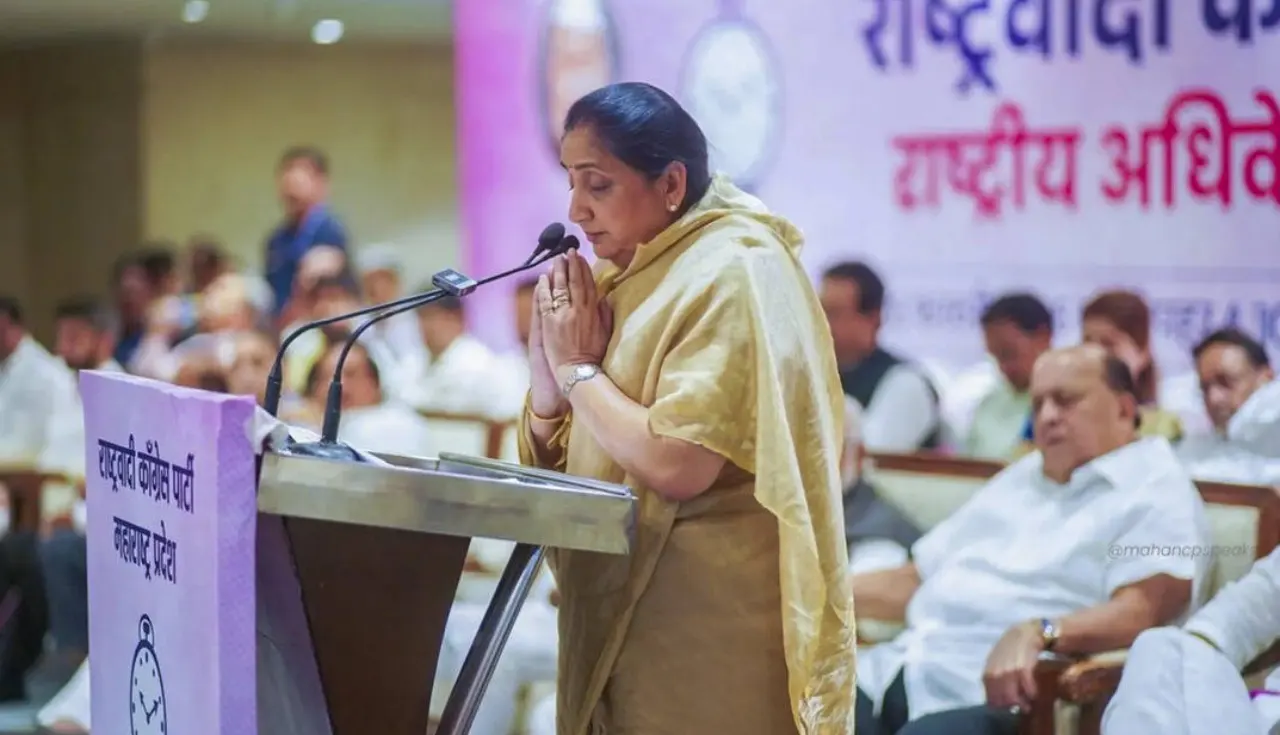
The Congress on Thursday withdrew its candidate from the Baramati Assembly bypoll in Pune district, where Deputy Chief Minister Sunetra Pawar is contesting, stating that the move was aimed at maintaining political decorum in Maharashtra.
Party nominee Akash More withdrew his nomination shortly before the deadline, confirming that the decision was taken following instructions from the party leadership.
State Congress president Harshwardhan Sapkal said the decision was influenced by the recent death of former Deputy Chief Minister Ajit Pawar, Sunetra Pawar’s husband, who died in a plane crash just over two months ago. He said the party chose to step back in keeping with the state’s political culture and traditions.
“We are taking two steps back as the bypoll is being held soon after the tragic demise of Ajit Pawar. This decision is to uphold political decorum and dialogue,” Sapkal said, adding that the Congress is not extending support to any candidate despite withdrawing from the contest.
He clarified that the move was not influenced by any request from Chief Minister Devendra Fadnavis for an unopposed election.
Despite the Congress’ withdrawal, the bypoll scheduled for April 23 will proceed, as more than 30 candidates remain in the fray. Counting of votes will take place on May 4.
Sapkal also revealed that Sunetra Pawar had reached out to him multiple times and had met Congress president Mallikarjun Kharge in Delhi, requesting the party to withdraw its candidate.
Looking ahead, he asserted that the Congress will contest the Baramati seat in the 2029 Assembly elections and aims to secure victory.
He further said that the same political courtesy should be extended in the Rahuri Assembly bypoll in Ahilyanagar district, which was necessitated by the death of BJP legislator Shivajirao Kardile. While the BJP has fielded his son Akshay Kardile, the NCP (SP) has nominated Govind Mokate.
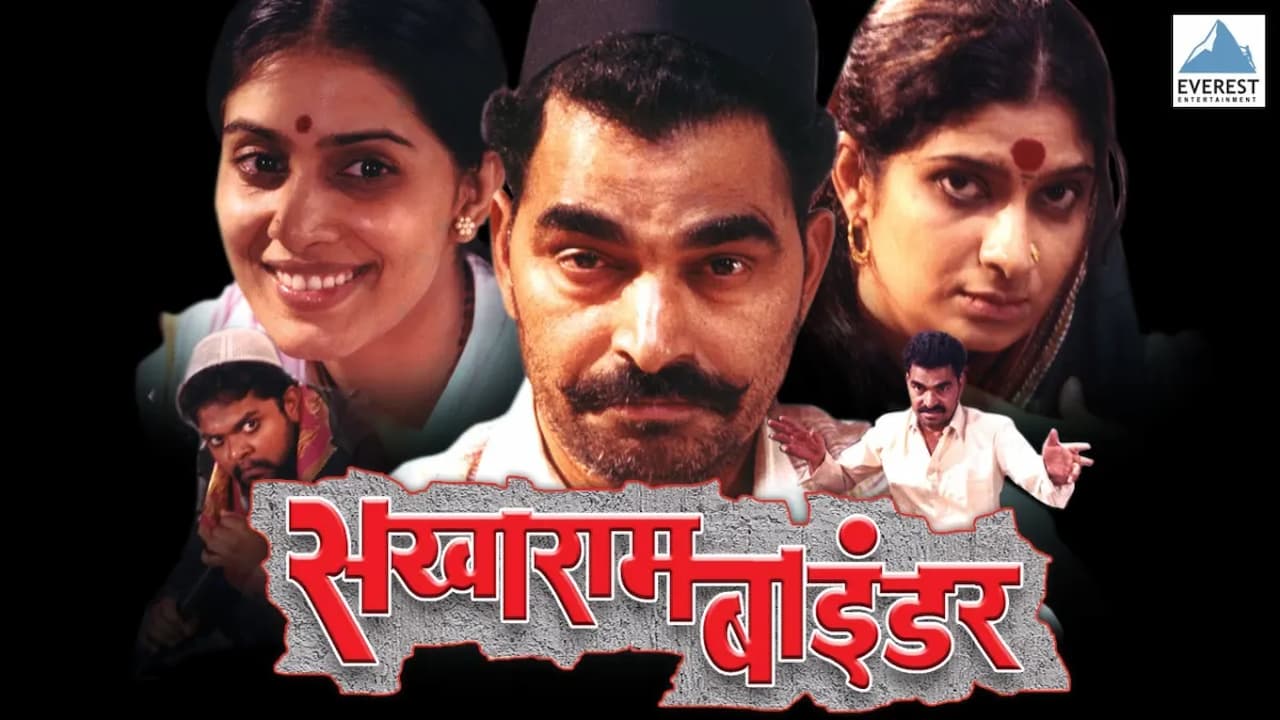
Sakharam Binder – Sonali Kulkarni Stays With You Long After the Curtains Fall 20
Some stories don’t come looking for you—you stumble upon them. And sometimes, all it takes is a fleeting moment to pull you into something unforgettable.
I was in the middle of my newsroom routine, mindlessly scrolling, when a reel from Sakharam Binder stopped me in my tracks. It was Sonali Kulkarni, gently speaking to an ant that had fallen into her cup of chai. A moment so delicate, so unassuming—yet it carried an emotional depth that felt almost spiritual. That one fleeting reel did what only powerful storytelling can—it compelled me to witness the entire play.
And what unfolded was not just theatre—it was an experience.
From the very first scene, the stage grips you with its rawness. Each actor walks in not merely as a performer, but as a lived reality of the world Vijay Tendulkar created decades ago. Sayaji Shinde as Sakharam is fierce, unapologetic, and disturbingly convincing. He embodies a man who believes he has cracked the system—living outside societal norms while justifying his actions in the name of blunt honesty.
Chinmayi Sumit, Vinod Lavekar, and Milind Shinde, along with the rest of the ensemble, bring remarkable depth and authenticity to the stage. Each character, no matter how brief their presence, leaves an imprint. There is no weak link here—every actor delivers their absolute best with sincerity, precision, and emotional commitment. It is this collective brilliance that elevates the play into a lived, breathing reality.
Yet, even amidst such powerful performances, Sonali Kulkarni rises as the emotional soul of the narrative.
Her Laxmi is not loud, not dramatic in the conventional sense—but quietly devastating. She carries within her a world of contradictions: kindness towards even the smallest creatures, unwavering faith in God, a fragile vulnerability shaped by exploitation—and yet, an inner strength that refuses to be erased. She speaks less, but every pause, every glance, every tremor in her voice speaks volumes.
What makes her performance extraordinary is the restraint. She doesn’t demand your attention—you find yourself drawn to her, almost involuntarily.
And then comes the climax.
A moment so unsettling that it shakes your moral ground. The same Laxmi, who endured humiliation and abuse, chooses to protect Sakharam—helping him conceal the body of a woman he kills in a fit of rage. It is not just a plot twist; it is a psychological jolt. You are left questioning everything—victimhood, morality, conditioning, and the complex nature of human attachment.
Set against the rustic backdrop of Konkan, Sakharam Binder lays bare the uncomfortable truths of a society that prides itself on values while quietly enabling exploitation. Sakharam’s world is not fictional—it is disturbingly real. Originally written by Vijay Tendulkar and first staged in 1974, Sakharam Binder remains as provocative as ever. It tells the story of a man who prides himself on being “honest” while openly exploiting vulnerable women cast out by society. Sakharam believes he has outsmarted morality—but what the play masterfully reveals is that truth without humanity is its own form of violence.
Under the nuanced and compelling direction of Sandesh Kulkarni, this revival reinvents a timeless classic for a new generation. Under the assured direction, this revival breathes new life into a timeless, controversial classic. It doesn’t try to modernize for the sake of it—it simply presents the truth, unfiltered, and trusts the audience to confront it.