Rajasthan HC Live-In Ruling Raises Safety Fears for Minors, Says BJP Leader Chitra Wagh 2
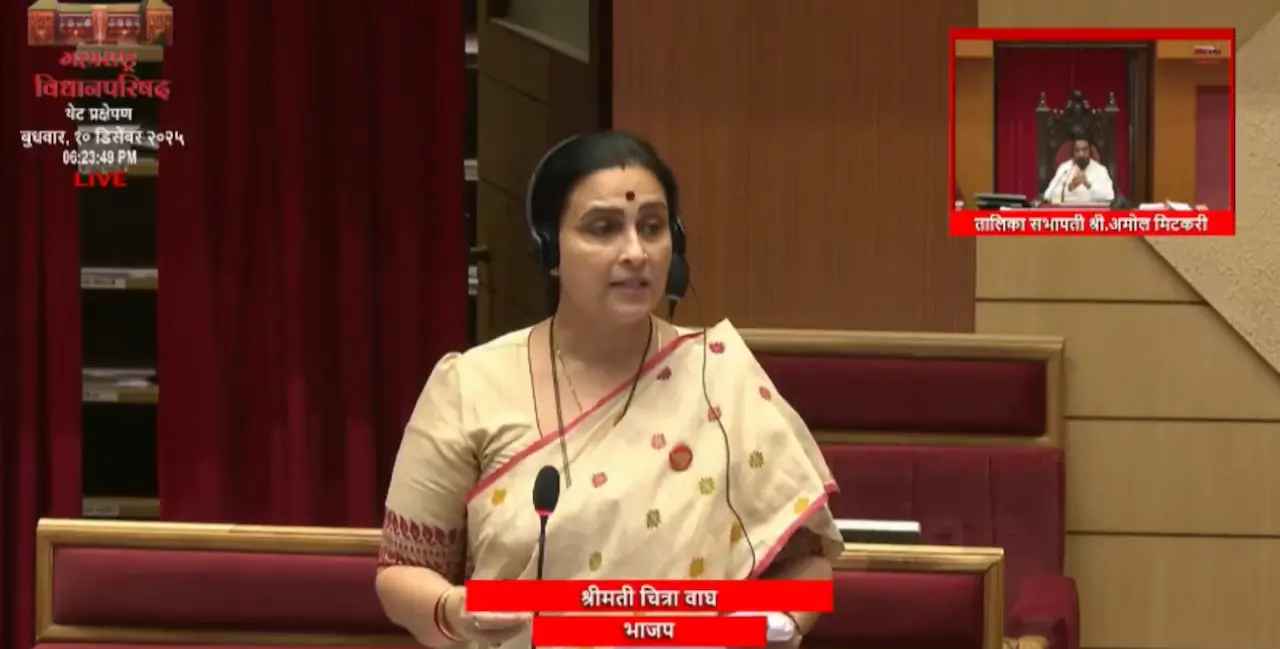
BJP Mahila Morcha state president Chitra Kishor Wagh has strongly criticised the Rajasthan High Court’s recent ruling on live-in relationships, saying it creates a troubling situation where minors appear to receive indirect consent to enter such arrangements. She warned that the judgment poses a serious threat to India’s cultural ethos, family structure and, most importantly, the safety of young girls.
Wagh said that in Indian society, protecting daughters, preserving family values and safeguarding cultural norms are foundational responsibilities, not merely legal concerns. At a time when minor girls are increasingly vulnerable to online grooming, emotional manipulation and exploitation, allowing them to enter live-in relationships could heighten these risks, she cautioned.
Speaking “as a mother, a sister and a responsible Indian woman,” Wagh said the ruling is neither appropriate nor safe for the country’s children. She urged that the long-term social consequences of such decisions be examined with utmost seriousness to prevent harm to minors and preserve societal stability.
Aviation in Freefall: IndiGo’s Collapse Exposes India’s Two-Tier Air System” 4
India loves to boast about being the world’s fastest-growing aviation market, but the recent IndiGo crisis has stripped away the glossy PR and exposed a far more embarrassing reality: our aviation system works smoothly only for the powerful, while the common citizen is treated as an afterthought. As politicians, industrialists and celebrities glide through the skies in private jets without a minute’s delay, ordinary Indians were left stranded in terminals, sleeping on cold floors, staring helplessly at departure boards filled with cancellations. This is not turbulence; this is a systemic failure that both IndiGo and the government helped create through complacency, arrogance and poor planning.
IndiGo controls more than 65% of India’s domestic market—an unhealthy dominance in any functioning democracy. When a single airline gets this big, it is effectively running a parallel aviation system. Any crack within its operations becomes a national crisis. Crew shortages, scheduling gaps, and mounting fatigue warnings did not appear overnight. These were known issues, predicted by aviation analysts, ignored by the airline, and under-enforced by the regulator. When the meltdown finally hit, IndiGo reacted with predictable corporate coldness—vague statements, robotic PR lines, no real accountability and complete indifference to the thousands stuck at airports. Passengers were not seen as customers worth protecting. They were reduced to statistics.
The government did not fare any better. DGCA had announced tougher fatigue rules, digital licensing procedures, ATC upgrades and stricter audits long ago. These reforms were not surprises; they required airlines to hire more staff, modernize their systems and build buffers. IndiGo had enough time to prepare. It did not. The government had enough time to enforce compliance. It did not. In India, rules remain rules only on paper until a crisis erupts and the embarrassment becomes too big to hide.
The contrast between India’s aviation aristocracy and its ordinary travellers is now sharper than ever. While common citizens were battling chaos, VIPs were stepping effortlessly out of private jets that receive quicker clearances than passengers waiting for boarding announcements. This is the real two-tier India. The skies belong to the wealthy, while the rest fight for scraps of information and refunds that rarely arrive on time. The IndiGo crisis did not create this divide; it only exposed it in the harshest possible light.
Behind all this chaos is a quiet, simmering tension between the government and IndiGo—an undeclared tug-of-war over compliance, safety audits, staffing data and monopoly influence. The airline believes the government is tightening controls too quickly. The government believes IndiGo is dragging its feet and hiding behind its market dominance. Yet instead of resolving this friction transparently, both sides let it spill onto passengers, who paid the price for a conflict they had no role in.
The absence of a strong passenger-rights regime is another glaring failure. In any serious aviation market, mass cancellations without clear explanation would trigger lawsuits, penalties and parliamentary scrutiny. In India, we get a meeting, a press note, and a promise that the matter is being “looked into.” Meanwhile, families remain stranded, refunds crawl through the system, and call centres collapse under pressure. The aviation sector keeps growing in numbers but shrinking in credibility.
The truth is brutal but unavoidable: India has built an aviation bubble, not an aviation system. Overdependence on a single airline is a recipe for disaster. Regulators hesitate to act decisively. Airports get upgraded for optics, not capacity. Airlines push staff to the edge in the name of efficiency. And passengers, the very backbone of the system, are treated as expendable.
If India wants to be taken seriously as a global economic power, it cannot have a system where VIP aircraft glide smoothly while taxpayer-funded terminals turn into refugee camps every time a major airline coughs. Real reform requires competition, transparency, hard-edged audits, mandatory compensation for delays and cancellations, and penalties that hurt enough to force behavioural change. It demands a government willing to discipline monopolies instead of tiptoeing around them. And it demands airlines that treat passengers as human beings, not collateral damage.
The IndiGo crisis is not just a bad week for aviation—it is a warning shot. A country that cannot protect the dignity of its own travellers cannot pretend to be an aviation hub for the world. India faces a choice: confront the hard truths and rebuild the system with honesty, or continue letting the skies remain a playground for the privileged and a battlefield of frustration for everyone else.
Inquiry Confirms Irregular Spending at Vasantrao Naik Marathwada Agricultural University 6
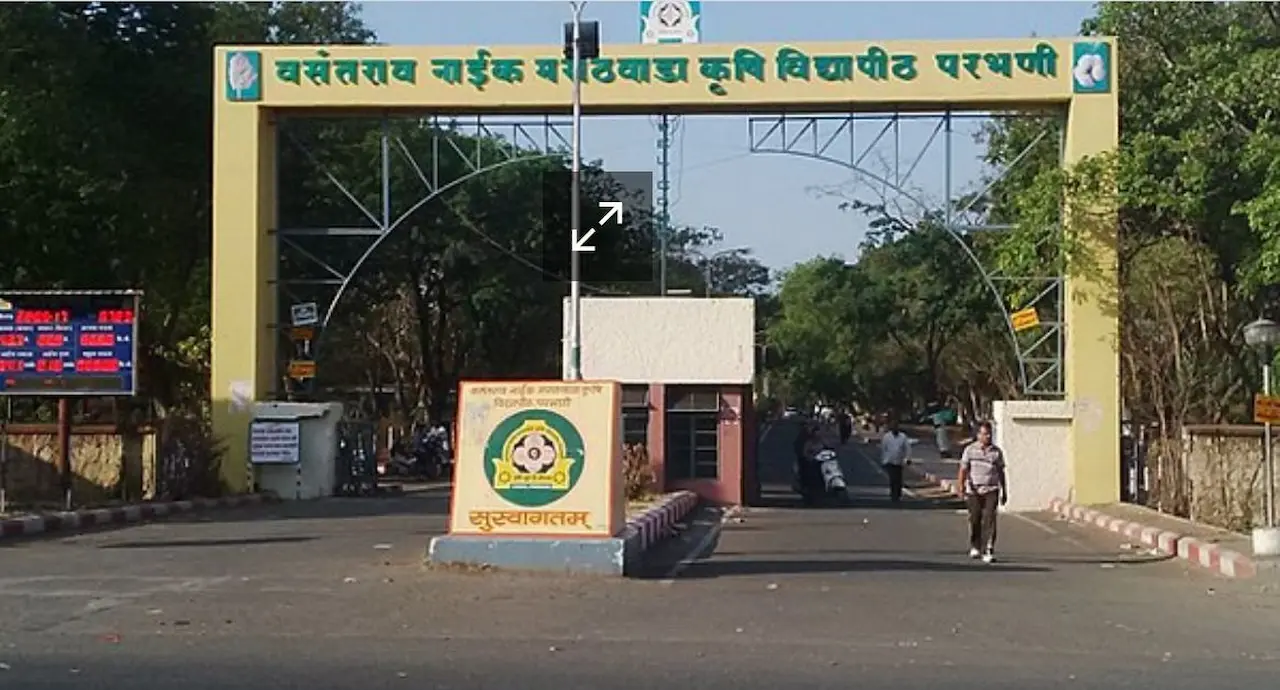
A series of financial and procedural irregularities at the Vasantrao Naik Marathwada Krishi Vidyapeeth (VNMKV) has come under official scrutiny after questions were raised in the Maharashtra Legislature. Allegations included spending nearly ₹19 crore on research and development works, repairs, and building upgrades without obtaining mandatory approval from the Executive Council and the Maharashtra State Agricultural Council
Responding to questions from legislators Shri Vikram Kale and Smt. Satyajeet Chahande, Agriculture Minister Dhananjay Munde confirmed that the allegations of bypassing tender procedures and failing to follow prescribed norms were partly true. He further stated that these concerns were serious enough to warrant a formal probe.
A five-member committee was constituted under the Maharashtra Agricultural Education and Research Council, Pune, to investigate the financial and administrative lapses at the university. The committee has completed its inquiry, and its report has been submitted to the government.
Minister Munde added that the report is under examination at senior administrative levels, and any officials found guilty will face appropriate action. He also confirmed that there are no pending questions from the government’s side at this stage.
The matter has raised concerns about oversight and accountability within state agricultural universities, prompting demands for stricter monitoring mechanisms.
'Walkout Reveals Their True Fear': Amit Shah Says Opposition Protecting 'Illegal Immigrant Vote Bank' 8
Home Minister Amit Shah on Wednesday said the Opposition’s dramatic walkout from the Lok Sabha over his reference to “ghuspathiye” (illegal immigrants) had exposed the “real agenda” behind its two-day attack on the Special Intensive Revision (SIR) of electoral rolls. He alleged that the Opposition was trying to protect an illegal-immigrant vote bank that SIR would remove from voter lists.
Shah’s remarks came during a debate on election reforms. Although the Opposition remained seated as he accused Jawaharlal Nehru, Indira Gandhi and Sonia Gandhi of historic instances of “vote chori,” they walked out the moment he turned to illegal immigrants being included in voter rolls.
“The Opposition wants to normalise and formalise the ‘ghuspathiye’ and add them to electoral rolls,” Shah said. After the walkout, he reiterated that despite boycotts, the NDA would continue its policy to “detect, delete and deport” illegal immigrants. “Can a democracy be safe if prime ministers and chief ministers are decided by ‘ghuspathiye’?” he asked.
Rejecting allegations that SIR was partisan, Shah said it was a long-standing, routine procedure used by successive governments to remove deceased voters, add new 18-year-olds and delete foreign nationals “one by one.” He listed multiple rounds of SIR conducted under Nehru, Shastri, Indira Gandhi, Rajiv Gandhi, Narasimha Rao, Atal Bihari Vajpayee and Manmohan Singh.
He accused the Opposition of propagating “one-sided falsehoods” for months, not to protect democracy but “to tarnish India’s image” and shield a vote base they feared losing.
At the political level, Shah escalated his attack on the Congress leadership, citing three examples of alleged “vote chori.” He referred to Nehru’s elevation as PM despite lower support among Congress leaders post-Independence, Indira Gandhi granting herself immunity after her election was set aside, and the case questioning Sonia Gandhi’s voter registration before acquiring citizenship.
Shah said the Congress blames everyone except its leadership for electoral defeats. “If someone asks them a question, he’s a BJP agent. If they lose a case, they blame the judge. If they lose an election, they blame EVMs,” he said, adding that electronic voting machines had ended “election chori,” which is why the Opposition now targets them.
He dismissed claims that the government resisted discussions on SIR, saying it falls under the Election Commission’s domain. Once the Opposition broadened the demand to “electoral reforms,” the government agreed immediately, he said, but Opposition MPs used the debate to reignite the SIR controversy.
By the end of his speech, Shah sharpened his political charge: the timing of the walkout proved, he claimed, that the Opposition’s core worry was not electoral reform but the deletion of illegal immigrants from voter rolls — a process they feared would erode what he called their “vote bank.”
From Sacred to Stolen: Maharashtra's Criminal Neglect of Temple Lands 10
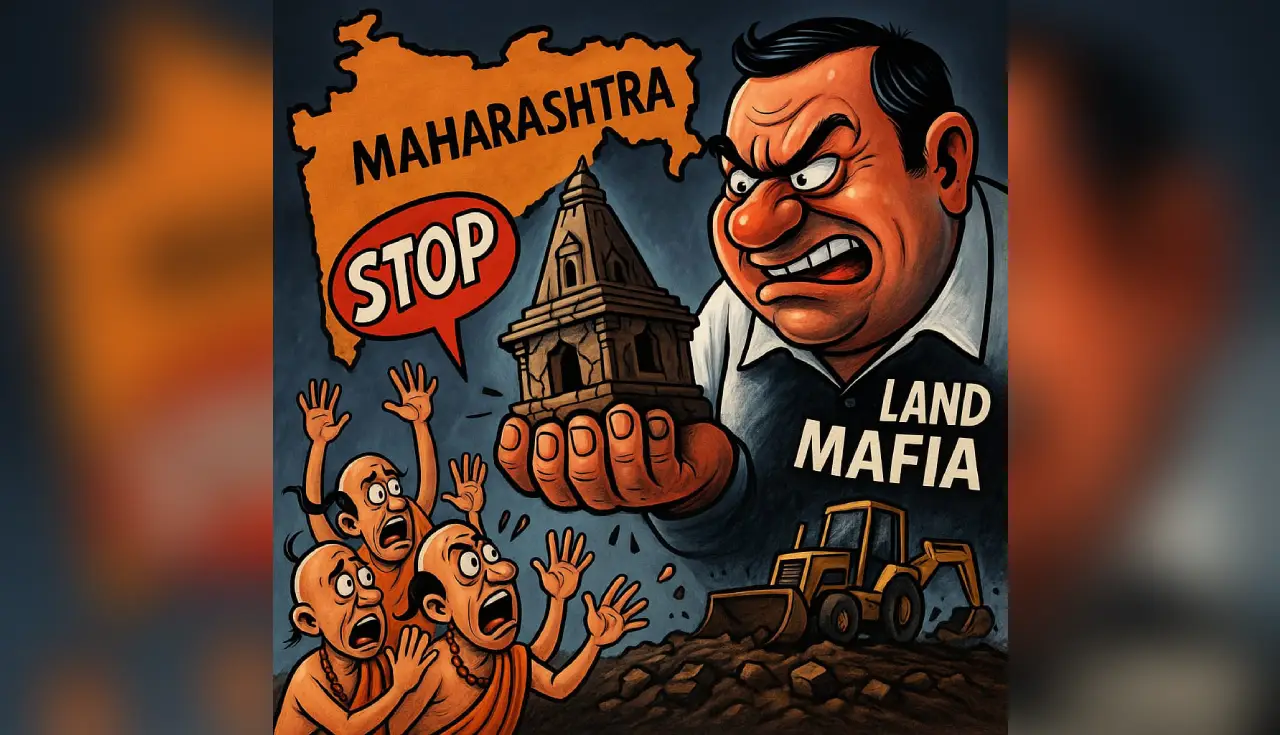
Maharashtra prides itself on being the land of saints, temples, and timeless spiritual heritage—yet ironically it has become one of the easiest hunting grounds for land sharks preying on temple properties. What began centuries ago as acts of devotion—farmers, kings, saints, and common devotees donating fertile lands to ensure temple upkeep—has now turned into a modern tragedy where thousands of acres meant for nitya-puja, festival expenses, and community service have been swallowed by a nexus of land mafias, corrupt revenue machinery, and a shockingly apathetic state system. If this isn’t an assault on heritage, then what is? The betrayal is not merely administrative; it is civilizational.
The rot runs deep, and the method is deceptively simple. Temple lands, especially Devasthan Inam lands classified as non-transferable, were protected by law for decades. But when greed meets government files, records turn into clay. Local revenue officers, village clerks, and well-connected middlemen systematically tampered with Inam registers and village record books. In entry after entry, the name of the temple quietly disappeared and was replaced with the names of benami holders, or so-called “tenants,” who magically emerged as legal owners. Thousands of acres slipped out of temple hands without a single puja stopping or a single devotee knowing. The theft was bloodless, silent, and brilliantly engineered.
The Western Maharashtra Devasthan Management Committee alone reports encroachment on more than 671 land parcels under its jurisdiction. And this is just one committee in one region; the statewide picture is far more horrifying. Under the disguise of tenancy rights and exploitation of loopholes in the Maharashtra Tenancy and Agricultural Lands Act, mafias converted temple property into private estates. Land grabbing became not just profitable—it became institutionalized. And Maharashtra looked away.
What blows the lid off the nexus are cases from Vidarbha. The Maharashtra Mandir Mahasangh fought legal battles to restore temple lands whose valuations run into tens of crores. Yet officials had “sold” such plots for a few thousand rupees. In Amravati, a fifty-crore plot belonging to Shri Someshwar Devasthan was transferred for just 960 rupees—less than the price of a modest dinner bill. In Akola, Balaji temple land worth ₹30 crore was almost gifted away under the table. Only after the Mahasangh intervened, litigated, and fought tooth and nail did some justice emerge. But justice delivered after decades is nothing but posthumous consolation. The painful truth is that temples—centers of faith for millions—had to beg the courts and activists to reclaim their own property while the state’s revenue protectors became the plunderers.
If this sounds familiar, it should. Medieval invaders stormed temples with swords; today’s mafia storms their land records with pens. Different weapons, same objective. Gajni, Tughlaq, Babar, Aurangzeb attacked temples openly; their modern descendants operate through registries, mutation forms, and sub-registrar offices. Calling them land sharks is almost polite. They are nothing less than the updated machinery of cultural erasure.
The judiciary, to its credit, has not been asleep. The Supreme Court in A.A. Gopalkrishnan vs Cochin Devaswom Board made it crystal clear: protecting temple property is the state’s bounden duty. The Bombay High Court re-affirmed in April 2025 that deleting “Devasthan Inam” from land records does not erase its religious character or ownership. Yet, what good are judicial pronouncements when the state lacks the spine to criminalize the theft? Maharashtra is embarrassingly behind states like Gujarat, Karnataka, Andhra Pradesh, and Assam that passed stringent anti-land-grabbing laws years ago. In those states, grabbing land is a jail-worthy, non-bailable offense. Gujarat prescribes 10–14 years imprisonment and penalties equal to market value. Karnataka has jail terms, fines, and special courts. Maharashtra? Here, stealing temple land is treated like a polite civil disagreement, to be resolved leisurely in civil courts over decades. This legal softness is the oxygen that fuels land mafias.
When the law is toothless, criminals grow fangs. Maharashtra’s refusal—or inability—to declare land grabbing a criminal offence has given open licence to encroachers. Devotees who donated land 200 years ago would turn in their graves knowing that their offerings are being converted into private villas, real estate ventures, gated colonies, and speculative assets. You can throw a stone anywhere on the outskirts of any major city—Pune, Nashik, Kolhapur, Nagpur—and find temple land either grabbed, litigated, or under dispute. Builders often target dilapidated or poorly managed temples, adopting the “free real estate” model: allow the temple to crumble, let the priesthood weaken, then swoop in with fabricated records and buy-off officials. Within a few years, what was once a sanctified space becomes the foundation pit for a high-rise.
India is failing its temples not because the laws are weak everywhere, but because Maharashtra—the state that prides itself on progressive governance—refuses to evolve. When thieves walk faster than lawmakers, heritage falls first. Temples are not protected by sentiment; they are protected by statutes, enforcement, and political will. And Maharashtra has sadly shown none.
The government has taken a few steps, thanks to relentless public pressure. Revenue Minister Chandrashekhar Bawankule imposed a temporary freeze on all transactions involving Devasthan lands until a new policy is framed and formed a committee headed by the Revenue Principal Secretary. Admirable, yes. Sufficient, absolutely not. Committees do not scare land mafias; criminal laws do. Circulars do not reclaim stolen lands; special investigation teams do. Strong speeches do not protect cultural heritage; strong statutes do. Maharashtra cannot keep pretending that goodwill and guidelines will fix what only handcuffs and courtroom convictions can.
The truth is uncomfortable but unavoidable: the state needs to declare war on the land-grab ecosystem, and it needs to do so now. No more waiting for the next Assembly session. No more consultations that drag on for years. No more apologetic half-measures. Maharashtra must immediately issue an Anti-Land Grabbing Ordinance modelled on Gujarat and Karnataka. The offence must be cognizable and non-bailable and carry a minimum 10–14 year prison sentence not just for the mafias but also for the officials who enabled, hid, or facilitated the fraud. Accountability must run downward and upward—clerks, tahsildars, deputy collectors, and even senior officers must answer for every fraudulent mutation, every vanished entry, and every forged note. Until fear enters the system, justice will not.
Alongside the law, a state-level Special Investigation Team must review all temple land transfers over the last 20–25 years. Let the truth spill out. Let every illegal transfer be reversed. Let every fraudulent document be cancelled. Let every officer who signed off be prosecuted. The SIT should not be a ceremonial tiger—it must have claws, arrest powers, and a mandate to report directly to the Chief Minister. Anything less is eyewash.
There is also an urgent need for Special Fast-Track Courts dedicated exclusively to temple land cases. Justice delayed is justice extinguished. Temples cannot afford to wait for decades while land sharks profit year after year. A six-month resolution window, as practiced in Gujarat, should be the benchmark.
Equally important is stakeholder inclusion. The Maharashtra Mandir Mahasangh, representing thousands of temples across the state, must be invited to participate in drafting the law and policy. Those who have fought in the trenches understand the battlefield better than those who only study files in Mantralaya. If temple lands are to be reclaimed, temple voices must be heard.
The irony screaming beneath all this is heartbreaking: temples that once fed entire villages now struggle to pay for lamps and daily rituals, while the lands meant for their upkeep have been converted into profit farms for mafias. Devotees donate coins while criminals enjoy acres. Priests struggle to maintain ancient traditions while builders negotiate the next skyscraper on sacred soil. This moral inversion is unbecoming of Maharashtra, the land of Shivaji Maharaj, who fiercely defended temple honour not just with faith, but with a sword of justice.
The state today needs that same spirit—firm, unapologetic, protective. Maharashtra stands at a crossroads: either it restores the dignity of its temples or it allows them to be slowly cannibalized by greed. The millions of devotees, thousands of temple trustees, and countless communities who draw cultural sustenance from these sacred spaces are watching. They are waiting. And their patience is not infinite.
If Maharashtra truly considers temples the heart of its identity, then protecting their lands is non-negotiable. The government must act not as a commentator but as a guardian. Enact the law. Punish the guilty. Reclaim what was stolen. Restore what was betrayed. Anything less will be remembered as cowardice.
Temples have survived invasions, plunder, and centuries of upheaval. It would be a shame—a historic shame—if they fall today not to marauders but to paperwork and greed. The time for hesitation is over. The time for decisive action is now.
Maharashtra Ends Decades-Old Fragmentation Barrier, Granting Land Rights to 3 Crore Citizens 12
In a landmark move ending decades of hardship for urban homeowners, Maharashtra has passed the Maharashtra Land Revenue Code (Second Amendment) Bill, 2025, freeing nearly three crore citizens from restrictive fragmentation laws that prevented them from securing legal land titles or selling small plots.
Approved on December 9, the amendment brings long-awaited relief to around 60 lakh families who have lived in legal uncertainty despite owning homes for generations. Under the old rules, countless citizens occupied tiny urban plots yet remained excluded from land records, and transactions on parcels as small as 5–10 gunthas were nearly impossible due to repeated non-agricultural (NA) permissions and procedural hurdles.
The new law eliminates the requirement for separate NA approvals in areas covered by sanctioned Development Plans or Regional Plans. Instead, homeowners can complete the process with a one-time premium, enabling swift land title issuance and individual 7/12 entries without bureaucratic delays. Introducing the bill, Revenue Minister Chandrashekhar Bawankule said it corrects an “unjust system” that kept legitimate homeowners in limbo for decades.
The amendment triggered strong debate in the Assembly. Shiv Sena (UBT) MLA Bhaskar Jadhav declined support, warning the law might benefit builders more than citizens. Congress leader Vijay Wadettiwar argued that without proper Development Plans, land regularisation alone would not address basic infrastructure gaps.
However, several MLAs—including Nana Patole, Suresh Dhas, Pravin Datke, Amit Deshmukh, Rahul Kul, Krishna Khopde, Hiramana Khoskar, Prashant Solanke, Abhijit Patil, Sanjay Gaikwad and Ravi Rana—strongly backed the bill and praised Bawankule for delivering long-awaited justice.
Representatives Chandradeep Narke, Vikram Pachpute and Ramesh Bornare urged that similar relief be extended to rural regions, where low holding limits still obstruct land transactions.
Bawankule clarified that the amendment is intended to empower citizens, not builders. He emphasised that reservations will remain unaffected and that all eligible cases before October 15, 2024, will receive full benefit, although fragmentation after that date will not be permitted. He also instructed district collectors to work closely with local representatives during implementation.
The reform marks a decisive shift away from outdated land policies—finally granting millions of ordinary Maharashtrians the legal certainty, dignity and ownership they have been denied for generations.
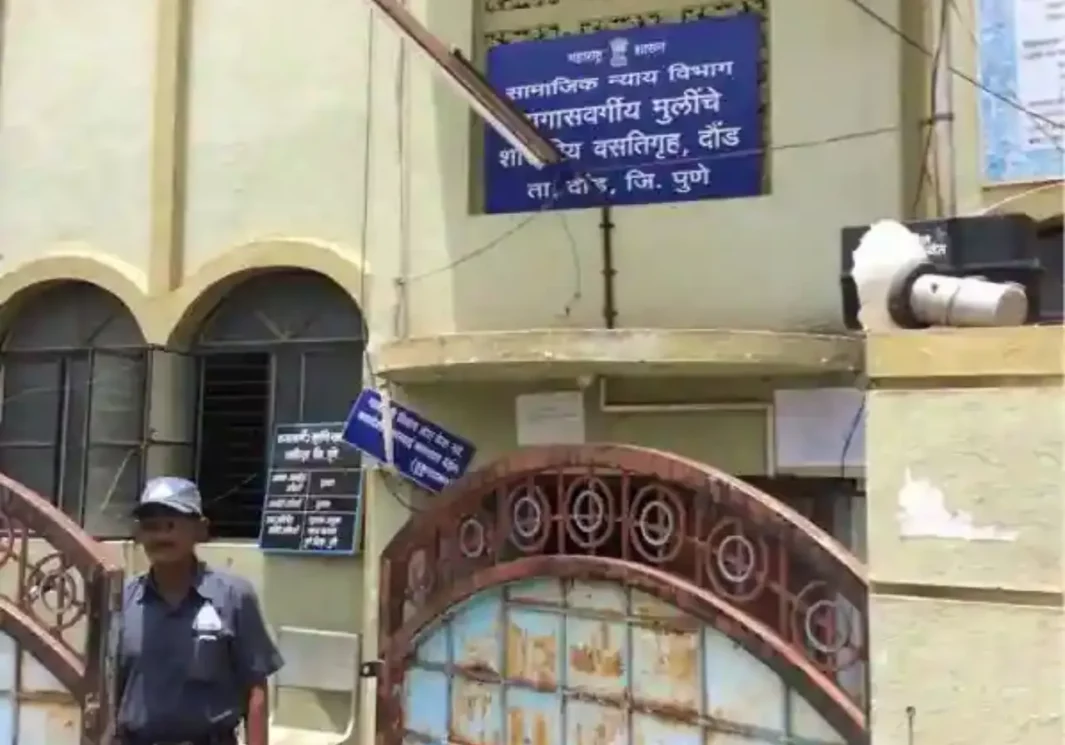
Male Wardens Posted in Girls’ Hostels: Major Safety Violation Sparks Uproar in Maharashtra Assembly 14
A major safety breach in Maharashtra’s nursing training institutes has triggered outrage in the Assembly after it was revealed that male wardens were appointed inside girls’ hostels, in clear violation of established norms and regulations. Legislators demanded answers on how such a serious lapse in protocol was allowed to occur.
The government admitted that under the 1996 recruitment rules and Indian Nursing Council standards, only female wardens are permitted in girls’ hostels. Despite this, male wardens were posted — raising grave concerns about student safety and administrative accountability.
The controversy deepened when the government acknowledged that official written directives had already been issued to Mumbai, Nagpur and Aurangabad mandating the appointment of female wardens only. Yet male wardens were still placed at three locations, a move the administration attempted to downplay, further fuelling public suspicion.
Questions now loom large over how these appointments were approved, who authorised them, and why corrective action was not taken immediately despite clear rules. Lawmakers stressed that this was not a minor oversight but a systemic failure that compromised the safety of young women in state-run facilities.
As outrage grows, demands for strict action and accountability have intensified. Observers warn that unless strong corrective measures are enforced, such violations may continue unchecked — leaving the safety of thousands of female students at risk.
Aapla Dawakhana Exposed: A Grand Promise Crumbling Under Its Own Pretence 16
The Balasaheb Thackeray Aapla Dawakhana project was launched with the promise of transforming urban healthcare, but the government’s recent responses reveal a widening gap between grand announcements and ground reality. Legislators pointed out that despite the official declaration of 1,342 clinics and over 800 wellness centres, only 408 clinics have actually begun operating. The government proudly cites these numbers as progress, but the truth is far simpler: a majority of the facilities exist only on paper.
The administration claims that all functioning centres are operating strictly as per guidelines. Yet in the same breath, it acknowledges that pharmacist posts were never sanctioned and that nurses are distributing medicines. This directly violates basic health regulations and the Pharmacy Act, making it clear that compliance is more rhetorical than real. Running a clinic without a qualified pharmacist is neither safe nor legally sound, and it certainly does not fit any definition of “guideline-based” functioning.
MLAs further alleged that many clinics have effectively shut down due to the absence of pharmacists. The government’s response — that no centres are technically closed — is a clever piece of bureaucratic wordplay. A clinic with open shutters but no capacity to dispense medicines is not a functioning health unit; it is a hollow structure waiting for an audit. Reports from multiple districts and observations recorded as early as 2021 corroborate that several centres operate symbolically, if at all.
The official line that “the question does not arise” is the clearest sign of administrative avoidance. When most centres are incomplete, staffing norms are being bypassed, and audit flags remain unaddressed, the question doesn’t merely arise — it becomes unavoidable. Even more troubling is the admission that pharmacist posts were never sanctioned to begin with. Launching a major public health initiative without creating essential positions is not a logistical oversight; it is a fundamental failure of planning. It reduces a flagship programme to a political display devoid of operational backbone.
The project itself is visionary and could have delivered immense public benefit. But vision without execution is just theatre, and execution without accountability collapses into confusion. What should have been a proud milestone in public healthcare has become an example of announcement-heavy and action-light governance. The public deserves honest updates, not evasive replies. The scheme deserves proper staffing, not makeshift solutions. And healthcare deserves seriousness, not improvisation. Unless the government prioritises recruitment, transparency, and on-ground functionality, Aapla Dawakhana will remain yet another ambitious idea lost in its own paperwork.
Massive Scam Alleged in Maharashtra Water Conservation Projects; Costs Inflated by Crores 18
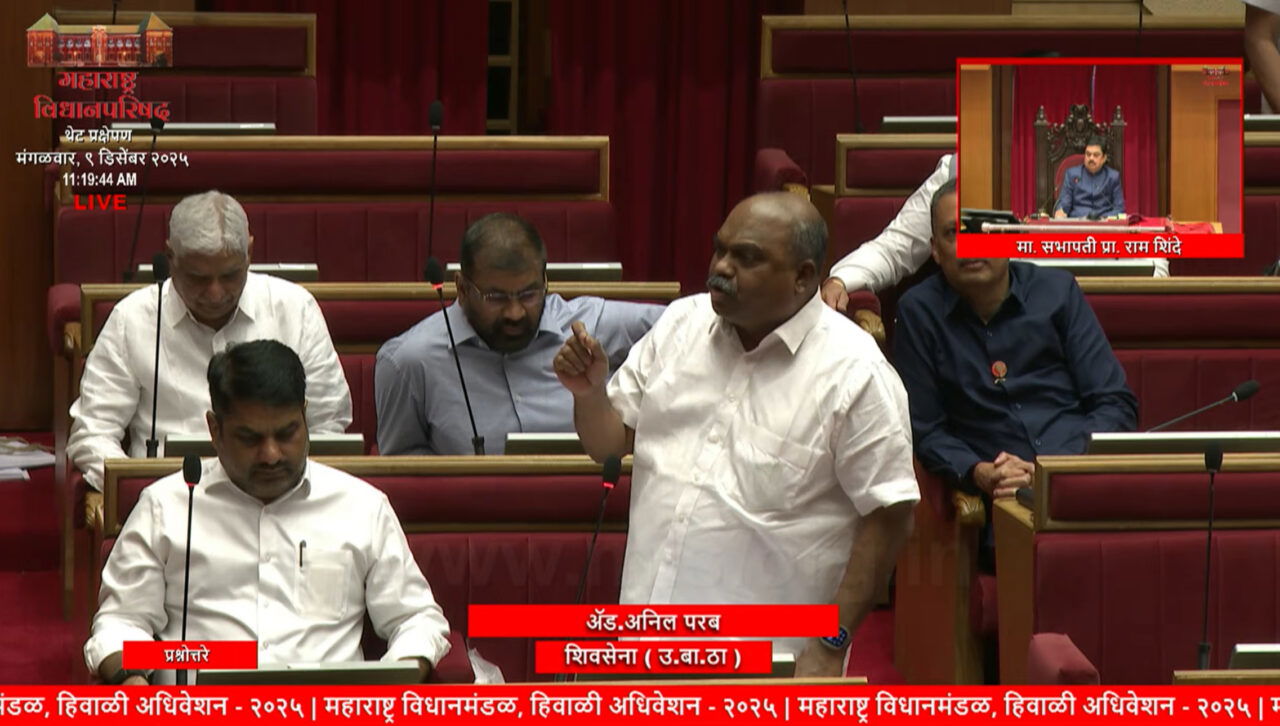
Serious allegations of massive irregularities running into thousands of crores in Maharashtra’s water conservation projects were raised in the Assembly on Thursday, with MLA Anil Parab demanding answers over alleged corruption in multiple schemes.
Parab cited documents detailing striking discrepancies. In Buldhana’s Sagargaon storage tank project, irregularities worth several crores have reportedly been uncovered. In Sindhudurg’s Ari minor irrigation tank project, a tender initially sanctioned for ₹10 crore allegedly ballooned to ₹80 crore.
He further alleged that Shreeram Associates secured a 2009 tender using a false affidavit, forged documents and even a fake RC book, as indicated in revenue records. There are also claims of collusion between the contractor and both former and serving officials of the Pune Water Conservation Department.
Additionally, estimated costs for river-deepening and water collection works, originally pegged at ₹2.38 crore, were allegedly inflated to nearly ₹22 crore.
A clarification has been sought from the Minister for Soil and Water Conservation as the state turns its attention to what could become one of Maharashtra’s most serious water sector controversies in recent years.
Nagpur's Winter Session 2025: A Week That Will Test Maharashtra's Spine 20
The Maharashtra Winter Session 2025 in Nagpur arrives at a moment when the state’s political, administrative, and social machinery is creaking under pressure, yet the government has chosen to squeeze the entire exercise into a single week. No grand explanation can hide the fact that this truncation is convenient for those in power and inconvenient for those demanding accountability. Nagpur is not just a venue; it is the ideological epicentre of the RSS and the political homeland of Devendra Fadnavis. Whatever happens here echoes across the state. And this year, the echo is louder because the stakes are unforgiving.
Winter sessions in Nagpur have traditionally stretched over 10 to 15 days, giving ample space for legislative scrutiny. But with local body elections underway, the government has opted for a hurried, compressed version from December 8 to 14. Officials blame logistics, the opposition blames fear, and citizens—the ones paying the price for both—see the truth clearly: too many scams, too many controversies, and too many unresolved crises make a long session politically dangerous. When the house is filled with smoke, those responsible prefer a quick exit over a long inspection.
Meanwhile, an estimated ₹100 crore is being pumped into beautifying Nagpur for this one-week spectacle. Roads, buildings, and infrastructure are receiving emergency touch-ups not because citizens deserve better, but because the political class needs optics. A hundred crore could have bolstered rural schools, strengthened women’s safety systems, repaired irrigation canals, or offered genuine relief to distressed farmers. Instead, it is being poured into cosmetic upgrades that will be forgotten the moment the session ends. It’s hard to preach governance when priorities themselves look like a scam.
To add to the irony, both Houses will begin the session without a Leader of the Opposition—a constitutional abnormality that should make every voter uneasy. The LoP’s absence is not just a technical glitch; it weakens the very foundation of democratic pushback. After the 2024 elections fractured the MVA, neither the Shiv Sena (UBT) nor the Congress secured the numbers required to claim the post in the Assembly. In the Council, Ambadas Danve’s term is over. With the opposition itself divided over who deserves which chair, the ruling alliance finds an empty field where a strong challenger should have stood. Maharashtra’s democracy deserved better than a Legislature without a designated voice of dissent.
Inside the government too, the fractures are widening. The MahaYuti alliance is a three-legged stool constantly threatening to topple. Devendra Fadnavis, the BJP’s organisational backbone and Nagpur’s favourite son, finds himself balancing the ambitions of two volatile partners—Eknath Shinde, who heads a divided Shiv Sena, and Ajit Pawar, whose NCP faction still struggles to justify its ideological somersault. Their differences no longer hide behind closed doors. Administrative files get stuck between power blocs, decisions are delayed because every department now runs through political calculations, and public welfare often becomes collateral damage in the internal tug-of-war.
This tension will be amplified on the floor of the House, especially with the Mundwa land scam involving Parth Pawar dangling like a sword above the Deputy Chief Minister. The opposition is gearing up to corner Ajit Pawar, and even within the government, the embarrassment is palpable. Add to this the ongoing agrarian crisis that has pushed farmers toward despair, the Tapovan tree-felling controversy in Nashik, the irregularities surfacing in the Majhi Ladki Bahin scheme, rising urban crime, violent incidents like those in Beed, and Maharashtra’s governance begins to look not just strained but compromised.
Opposition parties—though divided, leaderless, and bruised—are preparing to unleash fiery attacks on inflation, unemployment, collapsed infrastructure, corruption in civic elections, and the government’s inability to handle unseasonal rains. Farmers are demanding complete loan waivers. Youth are demanding jobs. Women are demanding safety. Citizens are demanding accountability. And yet, the legislature has only seven days to examine the rot, debate solutions, and hold the government responsible.
This session matters because Maharashtra is at a turning point. Urban infrastructure is failing under the weight of its own population. Water distribution has become an annual crisis. Crime has grown teeth. BMC elections—whenever they finally happen—will shape political equations for years. Local body polls across the state will determine who controls grassroots governance. And the Fadnavis–Shinde–Pawar triangle will continue to dictate the state’s stability, or the lack of it. With the RSS headquarters just a few kilometres away, the ideological expectations from the BJP are higher than usual. Fadnavis cannot afford a weak performance—not on his home turf, not in front of the parent organisation, and not at a time when the government’s credibility is under fire.
The tragedy is that Maharashtra needs a long, honest, no-nonsense legislative session more than ever before. There are too many issues that demand detailed scrutiny, too many scams begging for answers, too many citizens suffering silently while political calculations take priority. Instead, we are being served a hurried ritual—loud on theatrics, low on substance, and perfectly designed to avoid deep questioning.
Yet, hope survives because Maharashtra has seen good work emerge even from difficult sessions. There have been moments when politics took a backseat and governance took a step forward. If there is even a trace of sincerity left in the ruling benches and the opposition, they must use this week to deliver something real. Something that touches lives outside the Vidhan Bhavan. Something that justifies the trust voters place in the democratic process.
The coming days will see protests, interruptions, name-calling, dramatic walkouts, and fiery speeches that make good headlines but rarely change ground realities. But beneath the noise lies a simple truth: the people of Maharashtra are tired. They are tired of excuses, gimmicks, factional wars, and political selfies wrapped in public-relations language. They want governance, not games. Relief, not rhetoric. Stability, not constant bickering.
This winter session, however short, is a test. Not of who shouts louder, but of who works harder. Not of who blames whom, but of who delivers something tangible to the farmer in Vidarbha, the woman in Mumbai commuting after dark, the youth in Marathwada searching for a job, the family in Thane paying for water tankers, and the voter in Nagpur expecting better from a government that promised transformation.
Nagpur watches every gesture. The RSS watches every signal. Devendra Fadnavis’s own constituency watches whether its most powerful leader can steer a divided government toward accountability. And the people of Maharashtra watch because their patience is thinning and their expectations are rising.
Seven days. A mountain of issues. A political class running short on credibility. The winter session may be short, but its consequences will be long. If our leaders choose drama over duty, Maharashtra will continue drifting. If they choose responsibility over self-interest—even for a week—the state may finally get a breath of relief.
Somewhere between the fire, friction, and noise, there lies a chance for meaningful governance. Whether anyone grabs it is the real question.