Assam Assembly Passes Bill to Ban Polygamy; CM Himanta Biswa Sarma Vows to Implement UCC if Re-Elected 2
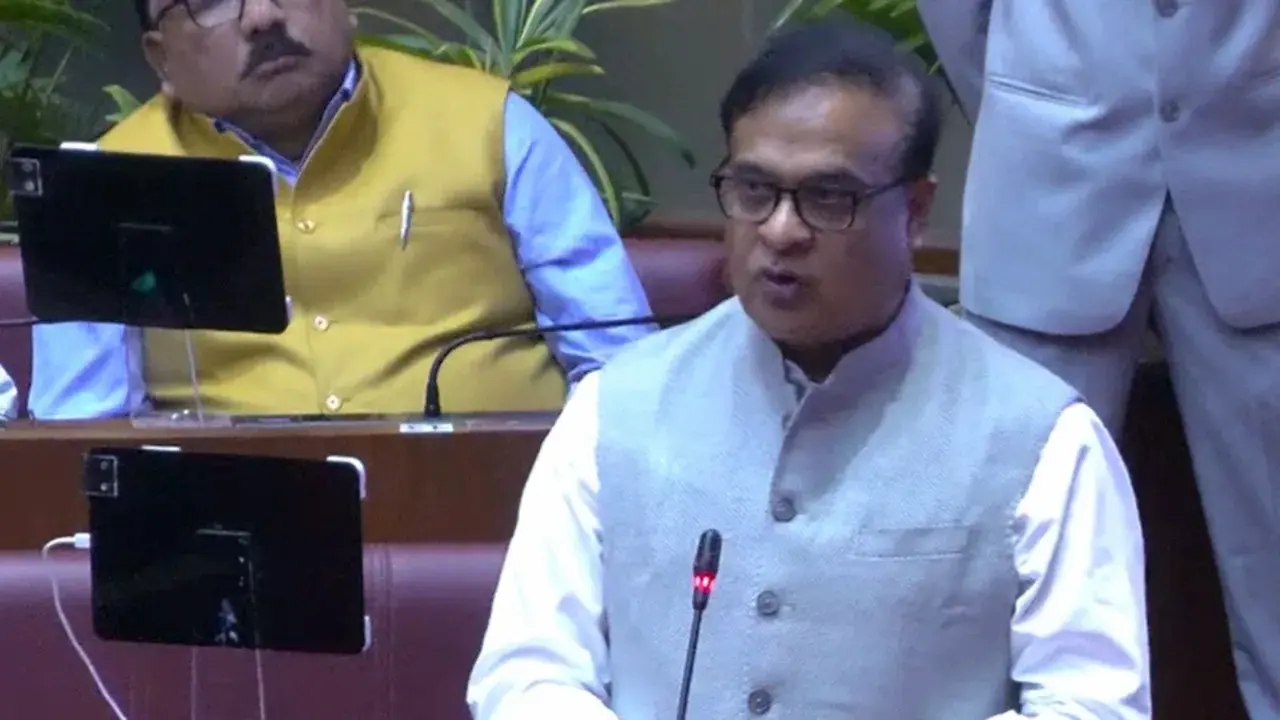
The Assam Assembly on Thursday passed the Assam Prohibition of Polygamy Bill, 2025, making polygamy a criminal offence punishable by up to 10 years in prison, with specific exemptions for Scheduled Tribes (STs) and areas under the Sixth Schedule.
Chief Minister Himanta Biswa Sarma, who piloted the Bill, said the legislation was aimed at empowering women and promoting equality, asserting that it was not directed against any particular religion. “The Hindus are not free from polygamy either. This Bill applies equally to people from all faiths — Hindu, Muslim, Christian and others,” Sarma said during the debate.
The CM appealed to opposition parties to withdraw their proposed amendments to ensure the Bill’s unanimous passage, calling it a historic step towards women’s empowerment. However, suggestions from AIUDF and CPI(M) were defeated by a voice vote.
Sarma also linked the Bill to the broader goal of implementing a Uniform Civil Code (UCC) in Assam. “I assure the House that if I return as Chief Minister after the next Assembly elections, the UCC Bill will be introduced in the very first session,” he declared.
He further announced that a Bill against deceptive marriages, often associated with so-called love jihad cases, will be brought in by the end of February. “Whatever we have said about love jihad, we will do that,” Sarma added.
The passage of the Bill marks another major reform move by the Himanta Biswa Sarma government, which has been vocal about introducing uniform personal laws and curbing religious and social practices it deems regressive.
Bombay HC Questions Delay in Disha Salian Death Inquiry: "How Long Will Police Keep Probing?" 4
The Bombay High Court on Thursday questioned the prolonged delay in the investigation into the death of celebrity manager Disha Salian, asking how long the Mumbai Police intended to continue its inquiry.
Salian, who had worked with several Bollywood personalities, died on June 8, 2020, after falling from the 14th floor of a residential building in Malad, north Mumbai. The police had registered an Accidental Death Report (ADR) following the incident.
A division bench of Justices A.S. Gadkari and R.R. Bhonsale observed that even after five years, the police had yet to determine whether the death was a case of suicide or culpable homicide. “Why is the inquiry still ongoing? Someone has died — all you have to ascertain is whether it was a suicide or culpable homicide,” the bench remarked after Public Prosecutor Mankhunwar Deshmukh informed the court that the inquiry was still underway.
Deshmukh said the probe was being conducted “minutely” to rule out all possibilities.
Disha’s father, Satish Salian, had filed a petition earlier this year seeking a CBI investigation, alleging that his daughter was raped and murdered, and claiming a political cover-up to shield influential individuals. He also sought the registration of an FIR against Shiv Sena (UBT) leader Aditya Thackeray.
The prosecutor, however, told the court that both Satish and his wife had earlier told investigators they had no suspicion or doubt about anyone’s involvement, questioning the credibility of the new allegations raised after five years.
The bench also asked why the police had not shared copies of statements and basic investigation documents with Disha’s father. “He is the father of the victim. Any document that is legally permissible can be handed over to him,” the judges said, directing the police to clarify their stance by December 11 and to produce the post-mortem report before the court.
Meanwhile, Aditya Thackeray has filed an application to intervene in the case, terming the petition “false, frivolous, and politically motivated.”
The court will hear the matter further on December 11, when the police are expected to present their report and explain the reasons for the prolonged inquiry.
Delhi-NCR Breathes Slight Relief as GRAP-3 Curbs Lifted After Marginal AQI Improvement 6
The Commission for Air Quality Management (CAQM) on Wednesday revoked Stage III restrictions of the Graded Response Action Plan (GRAP) in Delhi-NCR after a marginal improvement in pollution levels, while retaining measures under Stages I and II with stricter enforcement.
The decision came as Delhi’s overall Air Quality Index (AQI) improved slightly to 327, shifting from the “severe” to the “very poor” category. The capital had been reeling under toxic air for several consecutive days, prompting the Stage III curbs last week.
With the rollback, activities such as non-essential construction, entry restrictions on certain heavy vehicles, and bans on BS-III petrol and BS-IV diesel cars in parts of NCR have been lifted. However, CAQM clarified this is not a full relaxation, urging agencies to ensure rigorous compliance with existing Stage I and II controls to prevent another spike.
Ongoing measures include mechanised road cleaning, water sprinkling, strict dust control at construction sites, checks on industrial emissions, and use of anti-smog guns at key pollution hotspots. Citizens have been urged to use public transport, carpool, and avoid outdoor activities during peak pollution hours.
Officials said the decision followed a detailed review of real-time air quality data by the Central Pollution Control Board (CPCB) and forecasts by the India Meteorological Department (IMD) and Indian Institute of Tropical Meteorology (IITM), which predict that air quality will likely remain in the “very poor” category for the next few days due to low wind speeds and winter inversion.
The CAQM noted that local emissions from vehicles and industries, combined with calm winds and falling temperatures, continue to trap pollutants despite a reduction in crop residue burning across neighbouring states.
Stage III restrictions were imposed on November 20 when Delhi’s AQI crossed the 400-mark in multiple locations. The winter trend, as in previous years, has seen sharp deterioration in air quality following Diwali and the early wedding season, despite ongoing efforts under the National Clean Air Programme (NCAP) and GRAP framework.
Authorities reiterated their appeal for citizen cooperation to help sustain the improvement and avoid a relapse into the “severe” zone.
44 Dead, 279 Missing in Hong Kong's Worst High-Rise Fire; Three Construction Executives Arrested 8
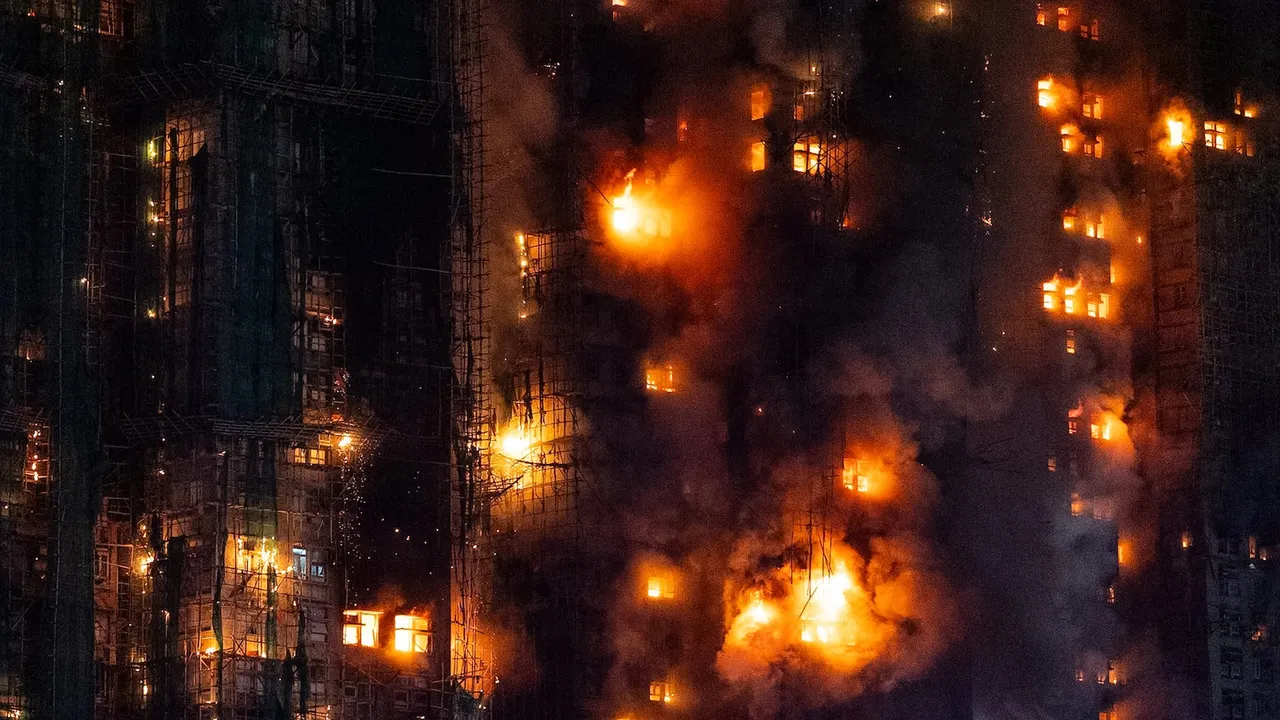
At least 44 people were killed and 279 remain missing after a devastating fire swept through multiple high-rise towers in Hong Kong’s Wang Fuk Court, in what is being described as the worst fire in the city’s history, Chinese state media reported on Thursday.
The Hong Kong Police Force confirmed that three men — two company directors and a project consultant aged between 52 and 68 — have been arrested for suspected manslaughter. The arrested men are executives of a construction firm responsible for installing materials now believed to have accelerated the blaze.
Preliminary investigations revealed that protective nets, waterproof canvas, and plastic coverings used on the buildings did not meet fireproof standards. Police also found that polyurethane foam, a highly flammable substance, had been used to seal windows in elevator lobbies, which may have caused the fire to spread rapidly.
Hong Kong’s Chief Executive John Lee said the fire has left 45 others injured, while hundreds remain unaccounted for. Authorities have launched a large-scale search and rescue operation, with emergency teams working round the clock to locate survivors.
Chinese President Xi Jinping extended his condolences late Wednesday, expressing grief over the tragic incident. He directed the Hong Kong and Macao Work Office and the Liaison Office of the Central People’s Government to support local authorities in rescue operations, medical care, and aid for the victims’ families, according to the Xinhua news agency.
Xi also instructed officials to conduct a thorough safety review to prevent future tragedies, emphasizing that “every possible effort” must be made to extinguish the fire, rescue those missing, and comfort affected families.
The Wang Fuk Court fire marks a dark chapter in Hong Kong’s urban safety record, with residents demanding stronger enforcement of building safety regulations and accountability for lapses that led to the catastrophic loss of life.
Bar Is the Torchbearer of the Constitution, Says CJI Surya Kant on Constitution Day 10
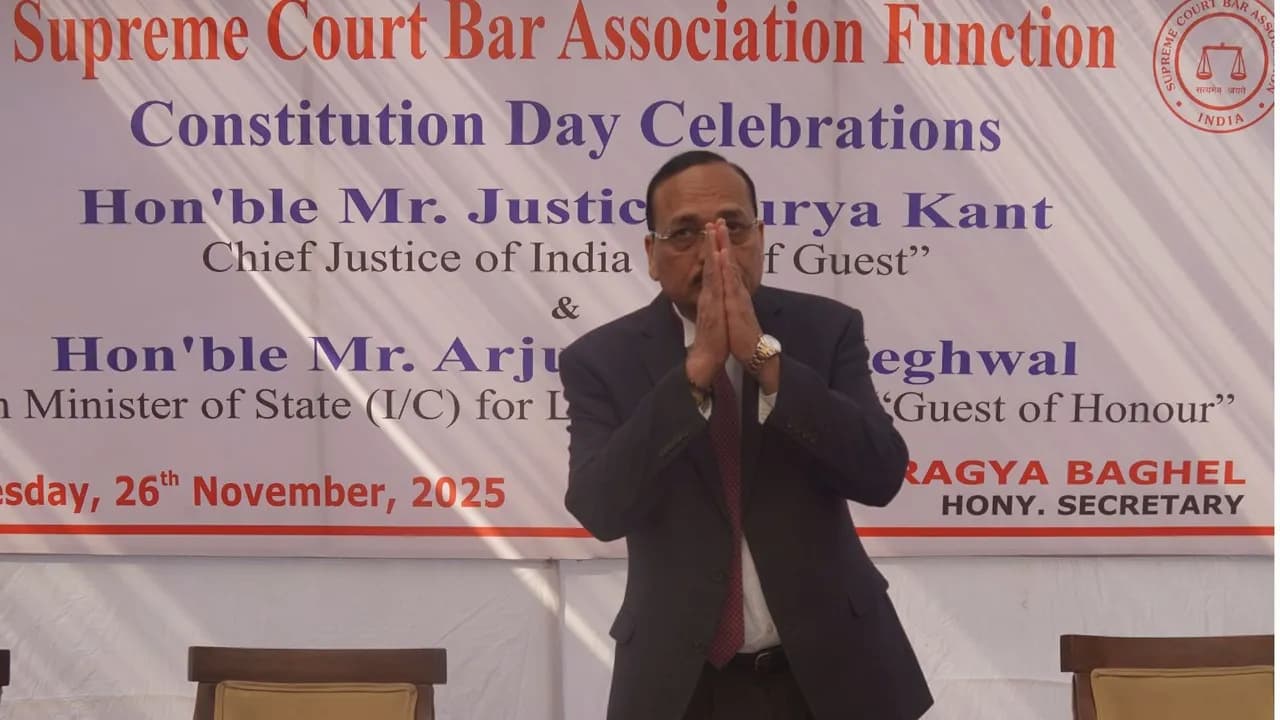
Chief Justice of India Surya Kant on Wednesday hailed the indispensable role of the Bar in safeguarding the rule of law and upholding the sanctity of the Constitution, describing lawyers as the “torchbearers” who guide the judiciary in fulfilling its constitutional responsibilities.
Addressing the Constitution Day celebrations organised by the Supreme Court Bar Association (SCBA), the CJI said that while the courts are seen as sentinels of the Constitution, the Bar ensures that justice reaches every corner of society.
“When we celebrate the moment when the people of India gave unto themselves the Constitution, I must emphasise that the Bar occupies an indispensable place in fortifying the rule of law and upholding the sanctity of our Constitution. If the courts are the sentinels, then the Bar are the torchbearers who illuminate our path,” Justice Kant said.
He noted that the legal fraternity plays a crucial role in offering legal aid to the vulnerable and marginalised, and in ensuring that constitutional ideals such as justice, liberty, and equality are not mere words but lived realities. “Your perspectives matter profoundly. The seriousness with which you engage in your craft directly influences the transformation of our constitutional future,” he added.
The CJI urged lawyers to take purposeful steps to spread awareness about constitutional values and align their practice with the Directive Principles of State Policy, calling it essential for a just and inclusive democracy.
Solicitor General Tushar Mehta, who also addressed the gathering, said the Constitution’s beauty lies in its balance of power among the executive, legislature, and judiciary. “No organ is supreme — only the Constitution is sovereign,” he said, adding that the judiciary has always intervened when other institutions strayed from constitutional morality.
SCBA president Vikas Singh stressed the need to strengthen law-making, justice delivery, and access to justice, while highlighting issues such as black money in elections and criminal elements in politics. He also called for urgent improvements in lower court infrastructure and judicial training to ensure that justice remains accessible to all citizens.
Since 2015, November 26 has been celebrated as Constitution Day (Samvidhan Diwas) to commemorate the adoption of the Indian Constitution by the Constituent Assembly in 1949. The day, earlier known as Law Day, honours India’s democratic framework and the vision of its founding fathers.
Rahul Gandhi Vows to Defend Constitution, Says He’ll Be First to Stand Against Any Attack 12
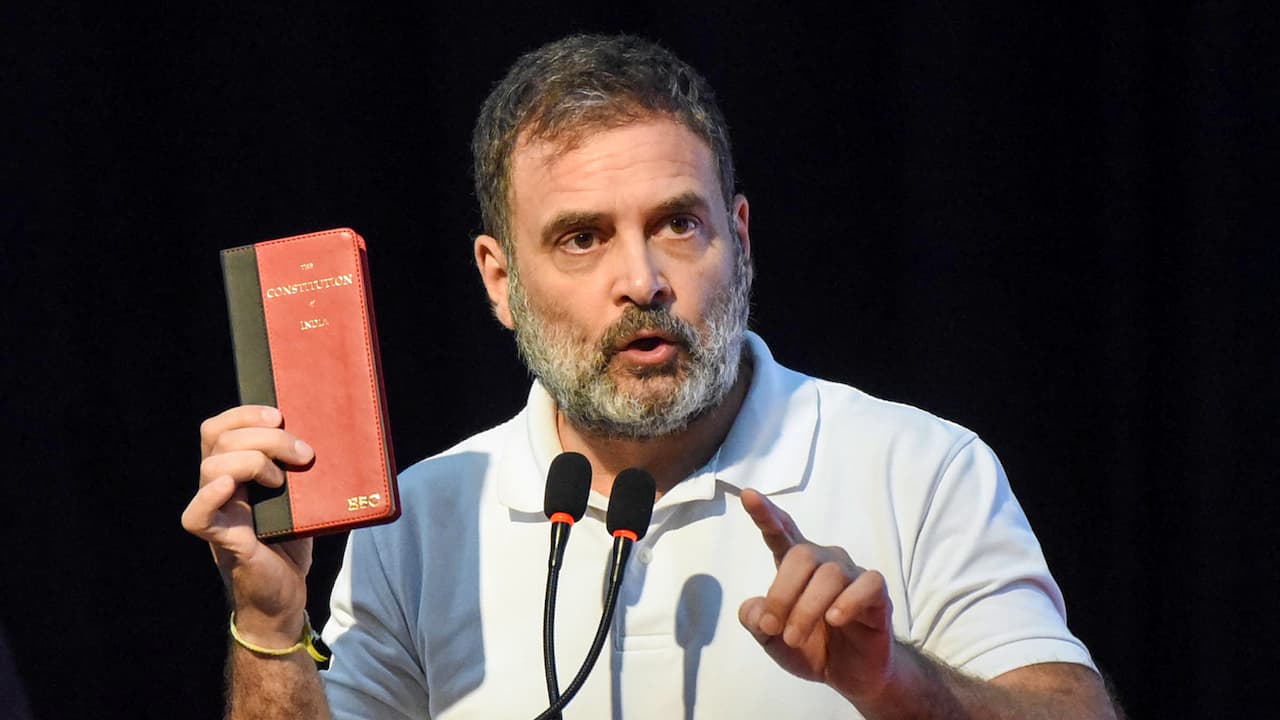
Congress leader and Leader of Opposition Rahul Gandhi on Wednesday pledged to defend the Indian Constitution, declaring that he would be the first to stand up against any attack on it. Calling the Constitution the “protective shield of the poor and the deprived,” Gandhi urged citizens to unite in safeguarding the democratic values that define India.
In a post on X, Gandhi wrote, “The Constitution of India is not just a book; it is a sacred promise made to every citizen — ensuring equality, respect, and justice regardless of religion, caste, region, or language. As long as the Constitution is protected, the rights of every Indian are protected. Let us pledge that we will not allow any attack on it. It is my duty to protect it, and I will be the first to stand up against any assault.”
Marking Constitution Day, Congress president Mallikarjun Kharge also called upon citizens to defend the core values of justice, equality, freedom, secularism, and socialism. Quoting Dr. B.R. Ambedkar, Kharge said the Constitution is not merely a legal document but “a way of life” that upholds the unity, integrity, and democratic spirit of India.
“We remember the invaluable contributions of the framers of our Constitution — from Mahatma Gandhi and Jawaharlal Nehru to Sardar Patel, Subhash Chandra Bose, Maulana Azad, Rajendra Prasad, Sarojini Naidu, and Babasaheb Ambedkar,” Kharge said, adding that it was the duty of every citizen to uphold these ideals for peace and harmony.
The Congress party also recalled that on November 26, 1949, Dr. Ambedkar presented the draft Constitution in the Constituent Assembly, a moment that has since been commemorated as Constitution Day (Samvidhan Diwas) since 2015. The party alleged that both Ambedkar and the Constitution had faced “ferocious assaults” from those opposed to its egalitarian principles — an indirect reference to the RSS.
As India celebrated 76 years since the adoption of its Constitution, the Congress reiterated its commitment to defending democracy, ensuring social justice, and upholding the rights and freedoms guaranteed to every citizen under the Constitution of India.
PM Modi Urges Citizens to Uphold Constitutional Duties as Pillars of Strong Democracy 14
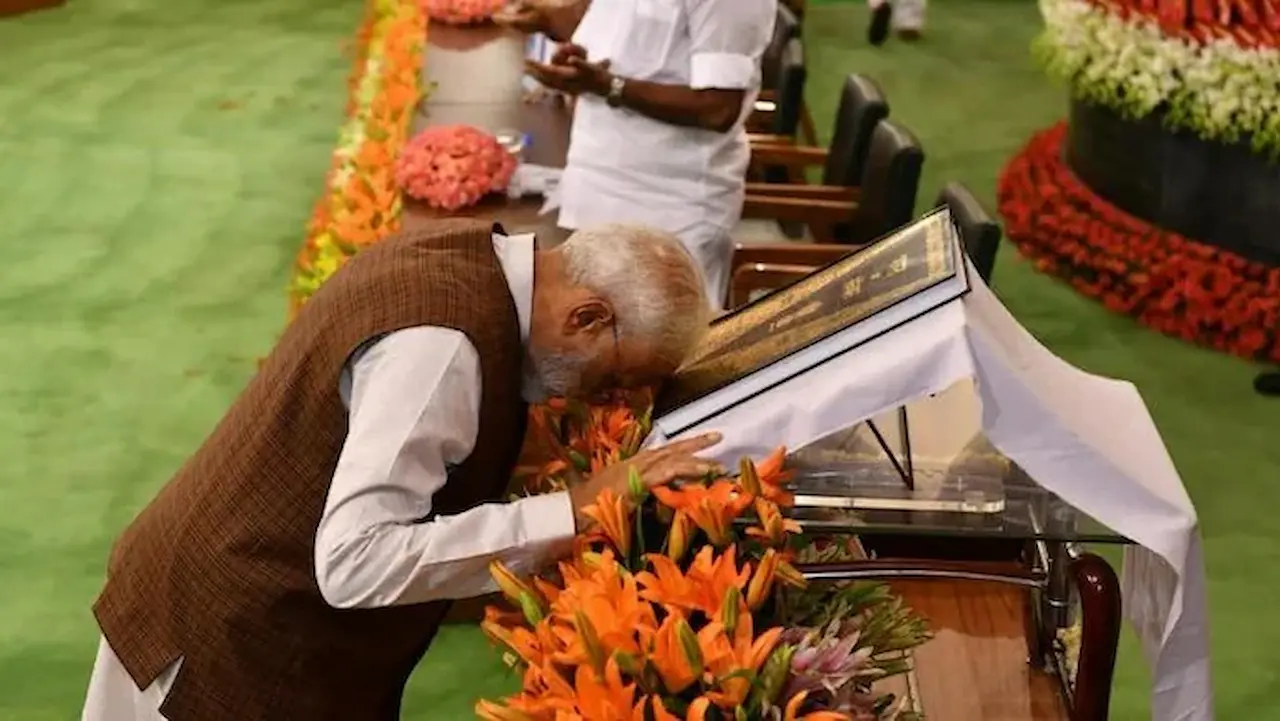
Prime Minister Narendra Modi on Wednesday urged citizens to fulfil their Constitutional duties, calling them the foundation of a strong democracy and essential to achieving the vision of a Viksit Bharat.
In a letter to citizens on the occasion of Constitution Day, Modi emphasised that strengthening democracy begins with responsible citizenship, particularly through active participation in the electoral process. He suggested that schools and colleges mark the day by celebrating first-time voters turning 18, symbolising the spirit of democratic participation.
Recalling Mahatma Gandhi’s belief that rights naturally flow from the performance of duties, the Prime Minister said that fulfilling one’s responsibilities is fundamental to social and economic progress. “The policies and decisions we take today will shape the lives of future generations. Every citizen must place their duties foremost as India strides towards a Viksit Bharat,” he said.
In a post on X (formerly Twitter), Modi wrote, “Our Constitution gives utmost importance to human dignity, equality, and liberty. While it empowers us with rights, it also reminds us of our duties as citizens. These duties are the foundation of a strong democracy.”
Paying tribute to the framers of the Constitution, Modi said their vision continues to inspire the nation’s progress. “Their foresight and ideals motivate us as we work towards building a developed India,” he added.
The Prime Minister’s message comes as part of a broader national push to promote civic awareness and accountability, highlighting that democracy thrives not only on rights but on the responsible fulfilment of duties by every citizen.
Bihar 2025: The Election That Entertained the Nation but Surprised No One 16
Bihar never disappoints. Elections there are less of a democratic exercise and more of a full-blown entertainment festival—equal parts political theatre, emotional drama, and unexpected plot twists. The 2025 assembly election was no different. In fact, it was one of those rare sequels where everyone already knew the ending, yet people still showed up with popcorn. Because let’s be honest: nobody with even half an eye on Bihar’s political pulse was surprised when the NDA sprinted ahead. If anything, the surprise would’ve been if they didn’t win.
Right from the start, this election was a clash of two completely different emotional universes. On one side stood the NDA—calm, predictable, almost boring in its discipline. On the other side, the opposition was busy staging a political version of a daily soap, complete with exaggerated melodrama, moral victories, tear-soaked press conferences, and the infamous Jyoti Singh episode that made even the most patient voters roll their eyes. Bihar is used to drama, but this year the opposition over-invested in theatrics and under-invested in strategy.
Meanwhile, the NDA treated the election less like a festival and more like an engineering project—precise planning, joint measurements, and zero ego leaks. The seat-sharing formula was stitched together months in advance. BJP and JD(U) calmly divided the turf: 101 seats each, a perfectly balanced arrangement that said, “We’re grown-ups now.” Smaller partners like LJP (Ram Vilas) and HAM(S) fell in line with disciplined efficiency. The message was clear: this family may bicker internally, but when stepping onto the battlefield, everyone marches in formation.
The opposition alliance, in contrast, felt like a baraat where the groom had run away. Congress looked confused about what it was doing in Bihar, the RJD carried the burden of Lalu’s fading charisma, and Tejashwi Yadav—pitched again as the youth face—clearly hadn’t figured out why voters still weren’t buying the product. Add to this the bizarre campaign cameos, like Khesari Lal Yadav trying to mix Bhojpuri stardom with electoral chemistry, and you had an opposition bloc that resembled a talent show more than a political force.
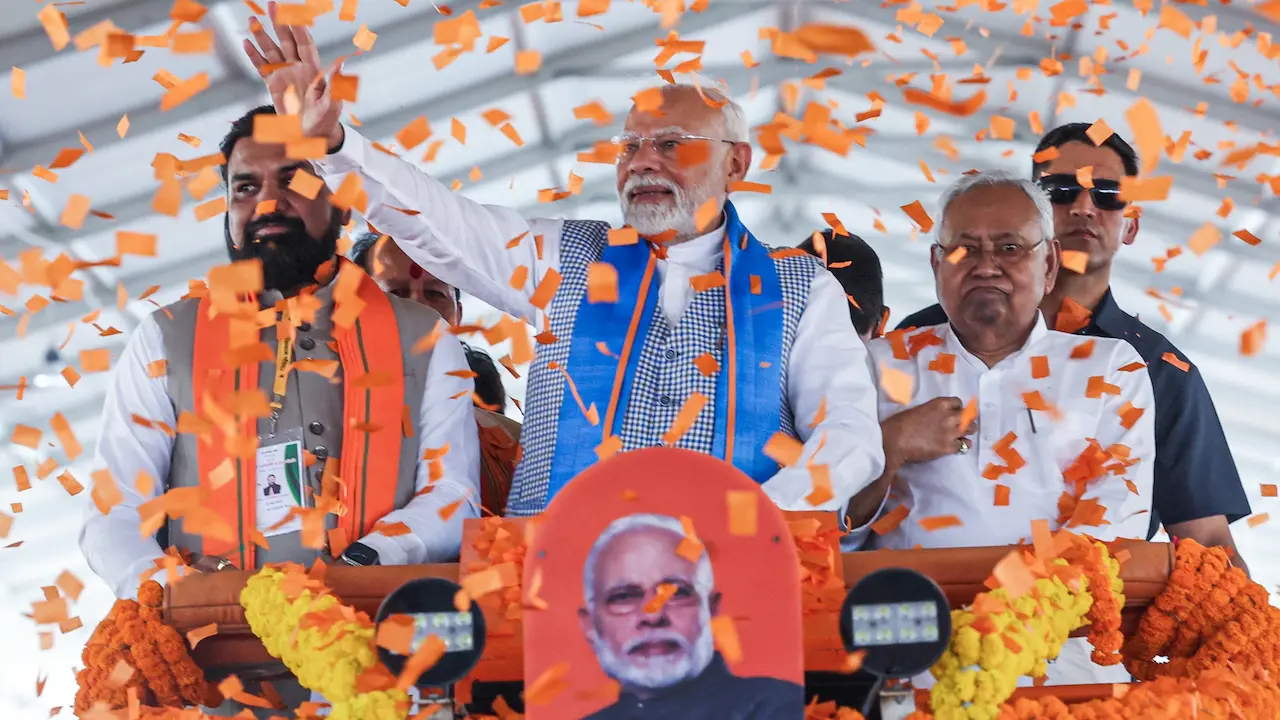
The NDA didn’t need to do much heavy lifting in such a setup, but they didn’t relax either. They went all out. Narendra Modi’s rallies were thunderous, Amit Shah’s speeches were strategic promises delivered with a salesman’s precision, and the local cadre worked with silent but ruthless consistency. Every rally looked like a blockbuster premiere. The opposition tried to counter this with emotion—but voters in Bihar have heard enough emotional speeches in the last 40 years. This time they wanted predictability, not passion.
And the voters responded in historic numbers. Bihar recorded a 66.91% turnout—the highest since the very first elections in 1951. When people stand in line in such massive numbers, it’s a sign they aren’t just voting; they’re voting with intention. They knew exactly what they wanted—and more importantly, what they didn’t.
One of the most talked-about outcomes was the rise of Maithili, the youngest MLA in Bihar now, symbolising a generational shift the state has been quietly preparing for. On the other side of the spectrum, seasoned names like Prashant Bhushan faced humiliating defeats—proof that Bihar’s voters don’t care about Delhi’s intellectual credentials. They vote for what touches their daily life. And Tejashwi? Bihar’s youth seemed increasingly unconvinced by his “new-age leader” packaging. They wanted stability, not experiments.
This election wasn’t just about campaigns—it was about memories. Bihar has a long political memory, much longer than politicians assume. The NDA invoked fears of the old Jungle Raj with a masterstroke. For younger voters who didn’t live through it, the stories alone were enough. For older voters who had lived through those chaotic years, no amount of new promises from the RJD could compete with the comfort of stability they had experienced under the Modi-Nitish tag team. NDA asked voters one simple question: “Do you really want to go back?” The answer was a loud, resounding no.
Nitish Kumar—despite his oscillating political journey—remained a decisive factor. Two decades in power have given him a reputation that’s hard to shake off. He might not be the most charismatic leader, but Bihar trusts him like one trusts an old scooter—maybe not glamorous, maybe not smooth, but deeply reliable. His alliance with the BJP ensured the “double-engine government” message landed perfectly. Voters believed this duo delivered progress, welfare schemes, better law and order, and a sense of continuity.
And when women came out in huge numbers, the NDA practically sealed the deal. Nitish Kumar’s welfare schemes for women, from self-help groups to education incentives, paid political dividends once again. Young voters too tilted heavily towards the NDA, attracted by Modi’s appeal, development rhetoric, and the promise of stability in jobs and governance.
The opposition tried to counter these forces, but their messaging felt disconnected. Congress appeared as a reluctant participant, the RJD seemed trapped between nostalgia and reinvention, and the smaller parties were running their own parallel ambitions. Unity existed on paper; on stage, it evaporated.
The NDA, on the other hand, offered a clean, jargon-free narrative: development, safety, stability, consistent leadership. Whether one agrees with their politics or not, they sold their story better—far better.
As the results poured in, the ruling alliance was projected to cross the 200-seat mark—an extraordinary feat in Bihar’s fractured political history. The BJP registered its best performance since 2010. This wasn’t merely a win; it was a referendum. A message from Bihar’s 74 million voters — “We know what works for us.” For a state that has historically been labelled as backward, volatile, or governed by caste equations, this election broke stereotypes. People voted not by caste alone but by aspiration, by memory, and by fear of returning to instability.
Bihar’s political veterans—Nitish Kumar and Lalu Prasad Yadav—both in their twilight years, watched this election unfold from a distance. Nitish held his ground, steering the ship steadily. Lalu, weakened by age and convictions, could only watch his legacy slowly dissolve. Tejashwi, despite his energy and earnestness, couldn’t overcome the baggage of the past. Bihar isn’t willing to hand over its future to nostalgia; it wants leaders who can work in the present.
This election was more than a victory for the NDA; it was a mirror held up to Bihar’s evolving political consciousness. Voters showed they want efficiency, not emotion. They want development, not dynastic sagas. They want leadership, not limelight seekers. In a state where millions still migrate for jobs, where poverty remains a haunting reality, and where political instability has historically stalled growth, the NDA’s pitch of reliability resonated strongly.
The opposition will analyse what went wrong. They should—but they’ll find the answer staring them in the face. Elections are not won by viral videos, melodramatic speeches, or celebrity candidates. They’re won by organisation, messaging, and ground work. The NDA had all three. The opposition had none.
When future historians study the 2025 Bihar elections, they’ll likely describe it as the moment Bihar voters matured past their political stereotypes. The election wasn’t an ideological battle; it was a choice between chaos and control. Bihar chose control.
And behind the grand narratives, the high-pitched rallies, and the election-day tension, Bihar delivered a simple, almost old-fashioned lesson: if you show up consistently, stay disciplined, and treat politics like serious business instead of a travelling circus, voters reward you.
In the end, the NDA didn’t win because the opposition failed. They won because they did everything a winning side is supposed to do—prepare early, campaign hard, send the right message, and keep the house in order. There was no twist in the story. No shock ending. No cliffhanger.
Just Bihar doing what Bihar does best: turning politics into a riveting show, and then voting with cold, clear logic.
And that’s why the NDA win wasn’t a surprise—it was the most predictable, most entertaining, and most telling chapter in Bihar’s never-ending political saga.
Akasa Air to Begin Flights from Navi Mumbai Airport on December 25 18
Flight operations at Navi Mumbai International Airport (NMIA) will officially begin on December 25, with Akasa Air becoming the first airline to launch commercial services from the new aviation hub.
The airline opened reservations on Friday evening for routes connecting Delhi, Goa (Mopa), Kochi, and Ahmedabad with Navi Mumbai, marking a major milestone for both the carrier and the city’s long-awaited second airport.
According to Akasa Air, flights to Delhi and Goa will operate daily, while services to Kochi will run five days a week and the Ahmedabad route will have one weekly flight.
The Navi Mumbai airport, inaugurated last month by Prime Minister Narendra Modi, will initially operate for 12 hours daily (8 am–8 pm), handling 8–10 flights per hour, before gradually ramping up to 20–30 movements per hour.
Akasa Air, which has positioned itself as one of the key early operators at NMIA, has encouraged passengers to book tickets through its website, mobile app, or travel agents as it prepares for a major network expansion from the new hub.
The inaugural flight schedule for December 25 includes two Delhi-bound flights. Flight QP 1831 will depart Delhi at 05:25 am and land in Navi Mumbai at 08:10 am, while the return flight QP 1832 will leave NMIA at 08:50 am and arrive in Delhi at 11:15 am. Regular daily services on the Delhi–Navi Mumbai route will begin from December 26.
Akasa will also operate daily flights to Goa’s Mopa Airport starting December 25. Flight QP 1928 will depart Goa at 15:40, reaching Navi Mumbai at 17:00, while QP 1927 will leave Navi Mumbai at 17:40 and land in Goa at 18:55, except on Wednesdays.
Kochi flights will commence from December 26, initially on Fridays and Saturdays, with flight QP 1914 departing Kochi at 10:50 am and landing in Navi Mumbai at 12:45 pm, and the return leg QP 1915 leaving at 13:30 pm, reaching Kochi at 15:30 pm. Additional rotations will be added on Tuesdays, Wednesdays, and Sundays starting December 28.
The Ahmedabad service is set to begin on December 31, with flight QP 1916 departing Navi Mumbai at 17:40 pm and landing in Ahmedabad at 18:50 pm, operating once weekly on Wednesdays.
With these launches, Akasa Air is set to make history as the first commercial carrier to take off from the new Navi Mumbai International Airport, signaling a new era in Mumbai’s aviation connectivity.
Nowgam Blast Kills 9, Injures 27; Explosion Linked to Faridabad Terror Module Cache 20
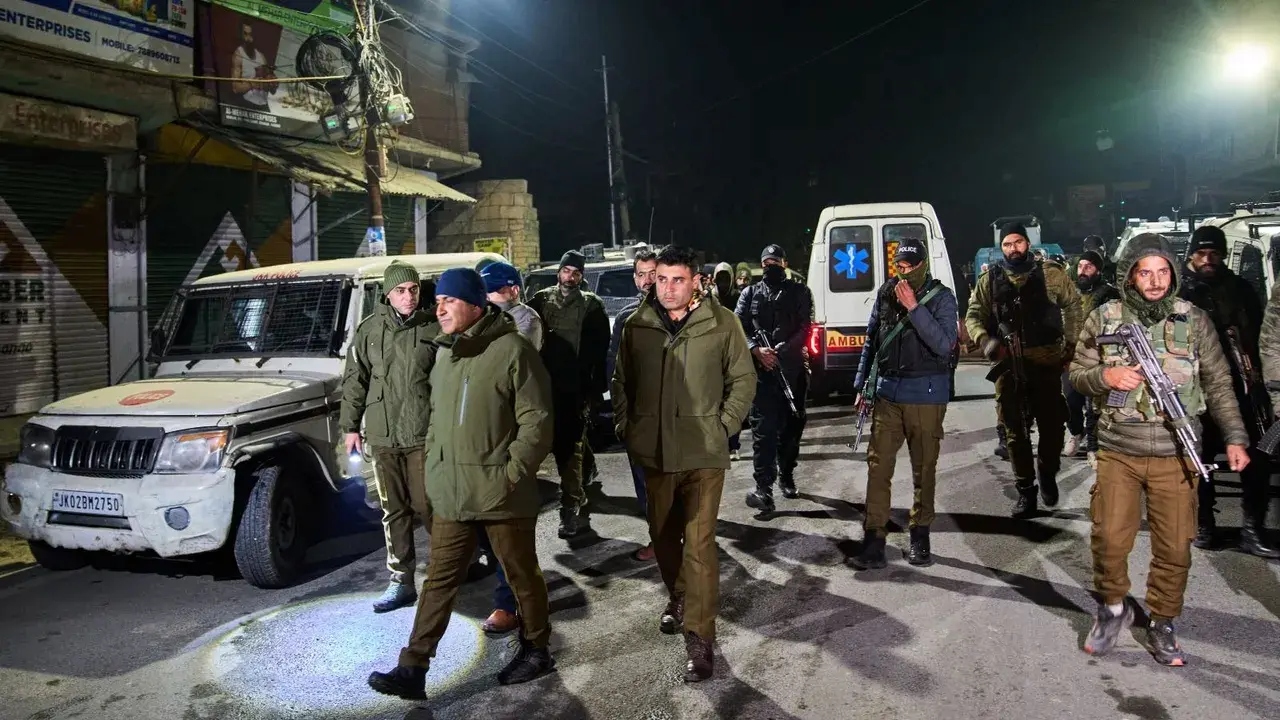
A powerful explosion at Nowgam Police Station in Srinagar killed nine people and injured 27 others late Friday night, after a cache of explosives confiscated from the recently busted ‘white-collar’ terror module detonated accidentally, officials confirmed on Saturday.
Among the dead were three forensic science experts, two Revenue Department officers including a Naib Tehsildar, two police photographers, one officer from the State Investigation Agency (SIA), and a tailor working at the site. The injured, including 24 police personnel and three civilians, were rushed to nearby hospitals for treatment.
Officials said the blast occurred while a team was extracting samples from explosive material brought from Faridabad, Haryana, where a massive cache linked to the terror module had been recovered earlier. Preliminary reports suggest the explosion was caused by the unstable nature of the chemicals, which included ammonium nitrate, potassium nitrate, and sulphur.
The explosives were part of 360 kilograms of material seized from the rented residence of Dr. Muzammil Ganaie, one of the accused arrested in connection with the terror plot. The impact of the blast severely damaged the police station building, while smaller successive explosions hampered rescue operations by the bomb disposal squad for several hours.
According to officials, part of the recovered explosives had been sent to a forensic lab, but a major portion remained stored at the Nowgam police station, where the main case against the module was registered.
The terror network came to light in mid-October after posters threatening police and security forces appeared in Bunpora, Nowgam. Acting on intelligence inputs, Srinagar Police launched an investigation on October 19, leading to the arrest of Arif Nisar Dar, Yasir-ul-Ashraf, and Maqsood Ahmad Dar, all with previous records of stone-pelting.
Their interrogation exposed a radicalisation network led by Maulvi Irfan Ahmad, a former paramedic turned preacher from Shopian, who allegedly influenced medical professionals to join the module. The probe then extended to Al Falah University in Faridabad, where Dr. Ganaie and Dr. Shaheen Sayeed were arrested, and the massive stockpile of explosives was discovered.
Investigators believe the terror module was orchestrated by a core group of doctors — Dr. Muzammil Ganaie, Dr. Umar Nabi (who died driving the car that exploded near Delhi’s Red Fort on November 10), and Dr. Muzzaffar Rather, who remains absconding.
The role of another accused, Dr. Adeel Rather, the brother of the absconding doctor from whom an AK-56 rifle was recovered, is still under investigation.
Authorities have launched a high-level inquiry into the Nowgam explosion to determine how the seized material was stored and handled, even as Kashmir mourns the deadliest blast in Srinagar in recent years.