A man and a minor girl were found dead inside a well in Rajasthan’s Ajmer district on Thursday, police said.
The bodies were found in Shergarh area under Masuda Police Station. SHO Dinesh Kumar said that the father of the girl had lodged a case against one Kartik, 22, on Wednesday accusing him of abducting his daughter.
The girl was missing from her home since Wednesday morning and the FIR was registered at night. Today, Kartik and the girl were found dead inside a well with their hands tied, Kumar said. Police said that the matter was being probed.
Amid global economic slowdown, startup funding in India hit a two-year low at USD 2.7 billion in the third quarter of 2022, as per a PwC India report.
Only two startups in India attained the unicorn status in the July-September period of 2022, mirroring a global trend in decline in the number of new unicorns this last quarter, said the report titled ‘Startup Deals Tracker – Q3 CY22’.
Globally, the quarter under review produced 20 unicorns and 45 per cent of them are from the SaaS segment. No new decacorns were added in this quarter.
“The global slowdown in funding continues with startup funding in India in Q3 CY22 hitting a two-year low at USD 2.7 billion across 205 deals,” the report said.
While a decline in funding is noted across all stages of investment — early, growth and late — it has been the least in early-stage deals which contributed around 21 per cent of the total funding by value in third quarter of calendar 2022.
It was approximately 12 per cent in the preceding quarter, showing that venture capital (VC) firms continue to back the Indian startup ecosystem. “It is tough to predict how long the slowdown in funding will last but clearly, both founders and investors are being more selective and cautious in deal-making,” said Amit Nawka, Partner – Deals & India Startups Leader, PwC India.
In general, early-stage startups will be able to raise capital more easily as they are typically more insulated than late-stage deals from fluctuations in the public markets, he said.
“However, investors have already raised a lot of capital which needs to be deployed and this will ultimately find its way to the Indian startup ecosystem,” he added. As per the report, growth and late-stage funding deals accounted for 79 per cent of the funding activity in the third quarter of 2022 (value terms).
Early-stage deals accounted for 70 per cent of total funding as compared to their 60 per cent share in the second quarter of 2022 (in volume terms).
Average ticket size per deal ranged from USD 4–5 million per deal, it said and added that in value terms, early-stage deals contributed around 21 per cent of the total funding in the third quarter.
“Thirty-eight M&A deals involving startups were executed in Q3 CY22 – 30 domestic, five inbound and three outbound deals. SaaS and EdTech witnessed the highest number of M&A transactions during Q3 CY22 – nine in SaaS and seven in EdTech,” the report said. Edtech company upGrad has been the top acquirer this quarter with four acquisitions – Wolves India, Harappa Education, Exampur and Centum Learning, it said.
Mumbai Airport customs seized 15 kgs of gold valued at Rs 7.87 crore in four cases and foreign currency worth Rs 22 lakh in two different cases on Tuesday and Wednesday and arrested seven people in total, the customs official said. In the first case, officers at Chhatrapati Shivaji Maharaj International Airport (CSMIA) developed intelligence inputs and caught one Indian national who arrived by Emirates flight EK 500 from Dubai with 9.895 kg of gold valued at Rs 5.20 crore.
The gold was kept in a specially designed chest belt with nine pockets which was found wrapped around the chest and shoulder. The Indian national revealed that the gold was handed over to him in Dubai by two Sudanese passengers. The Sudanese passenger was also intercepted and caught. All three passengers were arrested and remanded to judicial custody for 14 days.
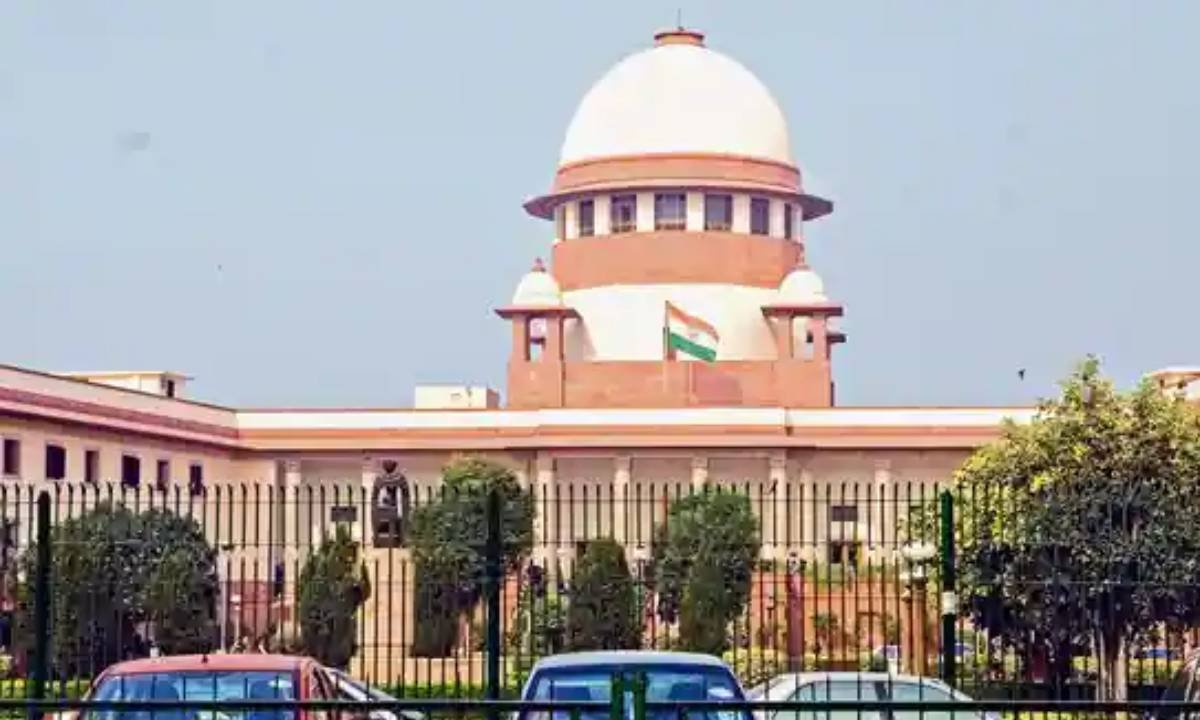
The Supreme Court on Thursday pronounced a split verdict in the Karnataka Hijab ban case. A bench of justices Hemant Gupta and Sudhanshu Dhulia pronounced the judgement today.
Justice Hemant Gupta dismissed the petitions against the hijab ban, while Justice Sudhanshu Dhulia allowed them. One of the lawyers representing the petitioner said that the matter will be placed before the Chief Justice of India and he will decide whether a new bench will hear the matter or the matter gets referred to a larger bench.
Justice Hemant Gupta dismissed appeals challenging the Karnataka High Court’s order which had upheld the state government’s order to ban wearing hijabs in educational institutions of the state Justice Gupta said, “There is a divergence of opinion. In my order, I have framed 11 questions. First is whether the appeal should be referred to the Constitution Bench.” Justice Sudhanshu Dhulia allowed the appeals and set aside the Karnataka High Court order.
“It’s a matter of choice, nothing more nothing less,” Justice Dhulia said while pronouncing the order. The apex court had earlier reserved its order on various petitions challenging Karnataka High Court upholding the ban on hijab in educational institutes.
The arguments in the matter went on for 10 days in which 21 lawyers from the petitioners’ side and Solicitor General Tushar Mehta, Additional Solicitor General KM Nataraj, Karnataka Advocate General Prabhuling Navadgi argued for the respondents.
The court was hearing various pleas against Karnataka HC’s judgement upholding the Karnataka Government’s decision to direct educational institutes to prescribe uniforms in educational institutes.
Addressing the court, Senior Advocate Dushyant Dave, in his rejoinder submission had said that the Karnataka Government Circular which enforced the dress code has no reference to the Popular Front of India (PFI).
Various petitioners have approached the apex court challenging the Karnataka HC order upholding the Karnataka government’s order which directs strict enforcement of schools and colleges’ uniform rules.
One of the appeals in the top court has alleged “step-motherly behaviour of government authorities which has prevented students from practising their faith and resulted in an unwanted law and order situation”. The appeal said the High Court in its impugned order “had vehemently failed to apply its mind and was unable to understand the gravity of the situation as well as the core aspect of the Essential Religious Practices enshrined under Article 25 of the Constitution of India”.
A bench of Karnataka High Court comprising Chief Justice Ritu Raj Awasthi, Justice Krishna S Dixit, and Justice JM Khazi had earlier held that the prescription of uniform is a reasonable restriction that students could not object to and dismissed various petitions challenging a ban on hijab in education institutions saying they are without merit.
The hijab row erupted in January this year when the Government PU College in Udupi allegedly barred six girls wearing the hijab from entering.
Following this, the girls sat in protest outside the college over being denied entry.
After this, boys of several colleges in Udupi started attending classes wearing saffron scarves.
This protest spread to other parts of the state as well leading to protests and agitations in several places in Karnataka.
As a result, the Karnataka government said that all students must adhere to the uniform and banned both hijab and saffron scarves till an expert committee decided on the issue.
On February 5, the pre-University education board released a circular stating that the students could only wear the uniform approved by the school administration and no other religious attire would be allowed in colleges.
Muslim,women, Allahabad High court | Image: Representative/PTI
This week Allahabad High Court passed an order which stated that a man cannot marry for the second time if he is not able to foster his first wife and their children.
A Muslim man should not marry two or three times even if he is allowed to do so. Many Muslim women said that “A man in the Muslim community can marry for the second time only if that woman is widowed or not being accepted by the society” but some men in today’s generation have altered those rules as they are marrying women and considering it as a fashion.”
On this issue, Sahera Khan leader of the Samajwadi Party told Afternoon Voice that “ If a man is not capable of fostering the first wife and children then he should not get married and second marriage is only possible if the first wife allows the husband to get married. Second marriage is allowed when the man will be marrying the woman who is widowed and financially ill or protector for that woman”.
Asma Basha Sheikh from the Samajwadi Party said that “In the Shariya an Islamic tradition it is said that men can get married only if it is allowed by the first wife has given the permission and if the man is financially strong. If the man is not financially supportive and just doing it for name sake then it is wrong and the man should not get married”.
Asif Ahmed Zakaria from Indian National Congress Party said “ If women are not given any equal rights then men should not marry for the second time”.
Hasina Khan working for an activist said that “It is a very contradicting statement as the court should not give a verdict by referring to any holy book it should pass the judgment which is fit as per the law and some men get married only for physical relationships. It is not right even if they are financially fit. Men can proof about the expenses which were done for the wife and children but it becomes difficult for women to prove any violence. Some men do not even get married for the second time but they are into a relationship with other women for their own needs”.
Commuters of air-conditioned locals in both Western Railway (WR) and Central Railway (CR) are upset with the repeated instances of cancellation in their services, especially since they have paid a premium amount to avail the services. On Wednesday, WR announced that it had cancelled 12 AC local services due to technical problem in the rake. WR runs a total of 79 AC services per day with 5 rakes; there was no standby rake available.
The Maharashtra government on Wednesday night transferred 20 IAS officers, including Medical Education Commissioner Virendra Singh, who has been posted as Managing Director of Maha IT Corporation in Mumbai.
Shushil Chavan, Collector of Aurangabad district, has been posted as Development Commissioner (Un-organised Labour) and transferred to Mumbai.
IAS officer S C Patil has been posted as joint secretary, deputy chief minister’s Office in Mantralaya (state secretariat) in Mumbai.
R D Nivatkar, Collector of Mumbai, will also function as Commissioner of Medical Education besides looking after his current assignment.
Senior bureaucrat R S Chavan has been posted as Joint Secretary, Revenue Stamps and Forest Department at Mantralaya.
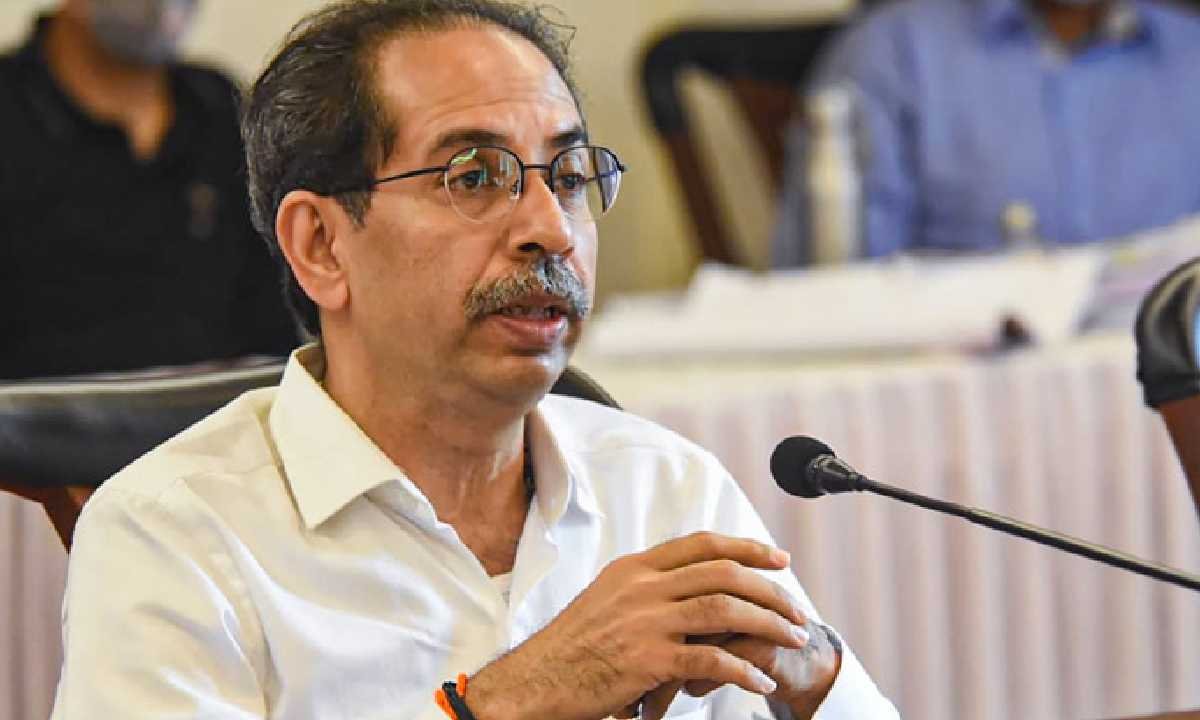
The Uddhav Thackeray faction of Shiv Sena alleged on Wednesday that civic chief Iqbal Chahal was deliberately sitting on the resignation of Rutuja Latke, a BMC clerk and the group’s nominee for the Andheri East assembly bypoll, under pressure from the Shinde-Fadnavis government.
Sena MLC and ex-minister Anil Parab claimed there was pressure on Rutuja from the Shinde faction to either pull out of the race or join their faction for her resignation to be accepted.The bypoll has been necessitated by the death of Sena MLA and Rutuja’s husband, Ramesh Latke
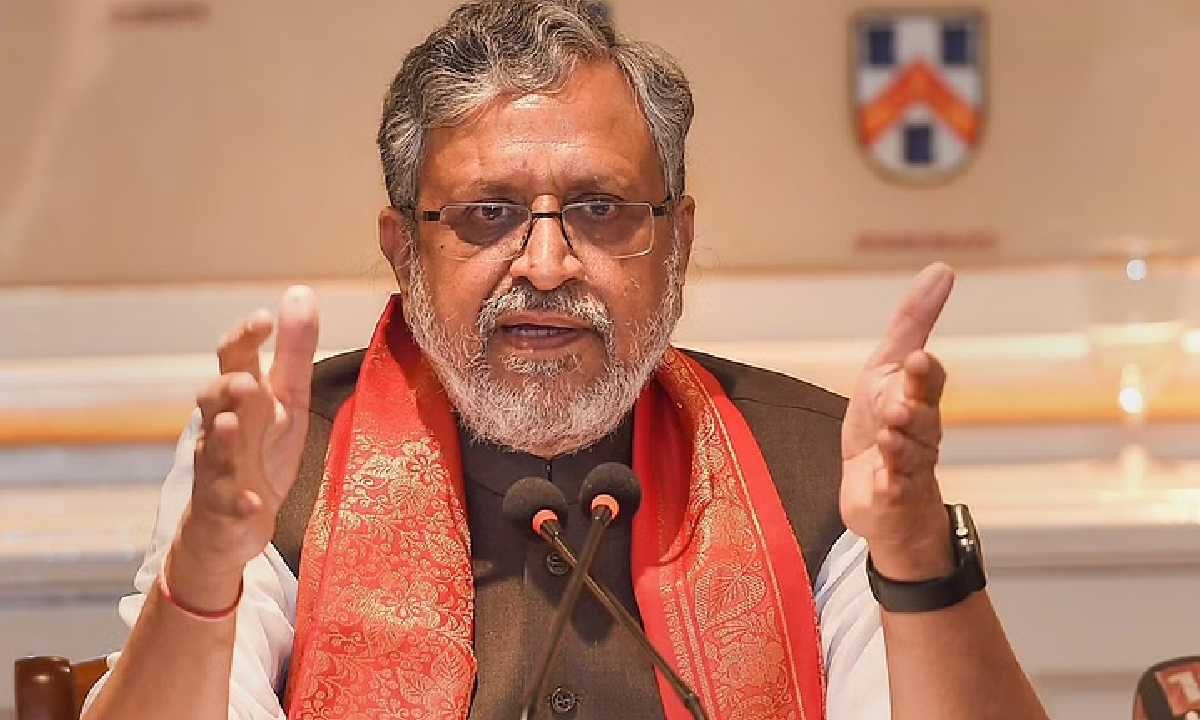
Bharatiya Janata Party leader Sushil Modi on Wednesday called the remarks by Aam Aadmi Party Gujarat chief Gopal Italia on women in a purported video a “reflection of the mindset” of the party, and said that the AAP is “anti-women and anti-Hindu”.
A video of Italia went viral in which he is purportedly heard asking the women not to visit the temples and ‘kathas’ (sermons by Hindu priests) as they are “hubs of exploitation”.
This comes days after he allegedly made a casteist remark against Prime Minister Narendra Modi in yet another viral video.
“The remarks of Gopal Italia show are the reflection of the Aam Aadmi Party’s mindset. They are anti-Hindu and they chant the name of Lord Ram only for the sake of it. They bluff when they say that they would facilitate the Ayodhya visit of the people of Gujarat,” Sushil Modi said.
“They only chant slogans to garner votes. Italia’s remarks show their anti-woman mindset. One of their ministers (Rajendra Pal Gautam) had to tender his resignation after taking part in an event in which religious conversions were taking place,” he added.
Stating that the AAP is not a strong force in Gujarat, Modi said that the BJP has a direct contest with the Congress in the upcoming Assembly polls slated to be held in the state later this year. “AAP is not strong in Gujarat.
They are getting three seats in all the surveys. We have a contest against the Congress in the state. AAP is not in the race. But AAP would lose even those seats on which they could probably win because the women are very active in Gujarat,” he said.
Modi said that anybody who “abuses” the Hindus will not get votes in Gujarat. “Gujarat is such a state where women’s participation and empowerment have taken place at a large scale. They will never tolerate an insult like this. Anybody who abuses a Hindu will not get any vote in the state,” he said.
Earlier this week, BJP leader Sambit Patra slammed Italia for making casteist remarks about PM Modi and said that disparaging the Prime Minister implies insulting the country. Patra’s reaction came on Italia’s remark on the Prime Minister. A video of Aam Aadmi Party’s Gujarat state unit president Gopal Italia became viral on social media. In the video, Italia can be seen berating PM Modi and making casteist remarks about the Prime Minister. “Calling the Prime Minister a lowly person is against the democratic rules of the country; it is an insult to the country. Be it any caste, or any religion, no person can be lowly,” Patra said at a press conference. “
An OBC Prime Minister who comes from a backward class, who comes from a poor and ordinary family, repeatedly calling him lowly, what is this abuse? Does the Aam Aadmi Party want to call the backward class people lowly? Anyone who rises from an ordinary poor family and becomes the Prime Minister is not lowly in the democratic process. No, it is against democratic values,” he added.
“The Aam Aadmi Party and Arvind Kejriwal are the people who said that they have come to change the character of India. If the democratically elected influential and hardworking Prime Minister is called lowly, and he is calling the PM lowly in that video, not once, but somewhere it shows the mentality of the Aam Aadmi Party,” he stated.
The Supreme Court will pronounce its verdict Thursday on various petitions challenging the Karnataka High Court order upholding the ban on hijab in educational institutions.
A bench of justices Hemant Gupta and Sudhanshu Dhulia will pronounce its judgement today.
The apex court had earlier reserved its order on various petitions challenging Karnataka High Court upholding the ban on hijab in educational institutes.
The arguments in the matter went on for 10 days in which 21 lawyers from the petitioners’ side and Solicitor General Tushar Mehta, Additional Solicitor General KM Nataraj, Karnataka Advocate General Prabhuling Navadgi argued for the respondents.
The court was hearing various pleas against Karnataka HC’s judgement upholding the Karnataka Government’s decision to direct educational institutes to prescribe uniforms in educational institutes.
Addressing the court, Senior Advocate Dushyant Dave, in his rejoinder submission had said that the Karnataka Government Circular which enforced the dress code has no reference to the Popular Front of India (PFI).
Senior Advocate Dave was representing the petitioner.
Various petitioners have approached the apex court challenging the Karnataka HC order upholding the Karnataka government’s order which directs strict enforcement of schools and colleges’ uniform rules.
One of the appeals in the top court has alleged “step-motherly behaviour of government authorities which has prevented students from practising their faith and resulted in an unwanted law and order situation”.
The appeal said the High Court in its impugned order “had vehemently failed to apply its mind and was unable to understand the gravity of the situation as well as the core aspect of the Essential Religious Practices enshrined under Article 25 of the Constitution of India”.
A bench of Karnataka High Court comprising Chief Justice Ritu Raj Awasthi, Justice Krishna S Dixit, and Justice JM Khazi had earlier held that the prescription of uniform is a reasonable restriction that students could not object to and dismissed various petitions challenging a ban on hijab in education institutions saying they are without merit.
The hijab row erupted in January this year when the Government PU College in Udupi allegedly barred six girls wearing the hijab from entering.
Following this, the girls sat in protest outside the college over being denied entry. After this, boys of several colleges in Udupi started attending classes wearing saffron scarves. This protest spread to other parts of the state as well leading to protests and agitations in several places in Karnataka.
As a result, the Karnataka government said that all students must adhere to the uniform and banned both hijab and saffron scarves till an expert committee decided on the issue.
On February 5, the pre-University education board released a circular stating that the students could only wear the uniform approved by the school administration and no other religious attire would be allowed in colleges.