Rampal Walks Free After 11 Years as HC Grants Bail in 2014 Violence Case 2
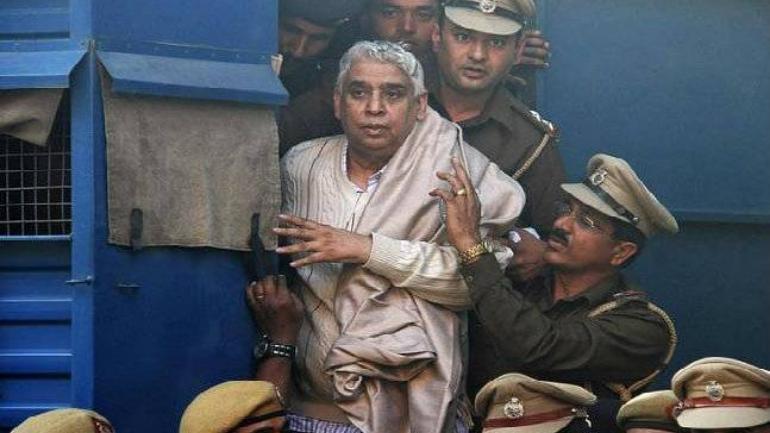
Controversial preacher Rampal walked out of a Haryana jail on Friday after more than 11 years in custody, following bail granted by the Punjab and Haryana High Court in connection with the 2014 Satlok Ashram violence case.
Rampal, 75, was received by his family members and legal team outside the prison, where heavy security arrangements were put in place as a large number of followers gathered.
On April 8, the High Court granted him bail while imposing strict conditions, including refraining from promoting “mob mentality” and avoiding participation in gatherings that could disturb law and order.
The bail order was issued by a division bench of Justices Gurvinder Singh Gill and Ramesh Kumari, allowing Rampal’s appeal against a Hisar court’s earlier decision rejecting his bail plea.
Rampal had been booked under multiple charges, including attempt to murder, waging war against the State, and provisions of the Unlawful Activities (Prevention) Act (UAPA). The case relates to the 2014 standoff at the Satlok Ashram in Hisar’s Barwala area, where he and his followers allegedly resisted arrest, leading to violent clashes.
According to the prosecution, hundreds of supporters had gathered at the ashram, some allegedly armed, and violence broke out during the police operation.
During the hearing, Rampal’s counsel highlighted his advanced age and prolonged incarceration since December 2014, noting that many co-accused had already been granted bail. The court also took into account that only a fraction of the 425 prosecution witnesses have been examined, and the trial is unlikely to conclude soon.
Observing that the accused had spent over a decade in custody and that the trial would take considerable time, the court deemed it appropriate to grant regular bail.
West Asia Crisis: Maharashtra Orders 24/7 Helplines, Pushes PNG Expansion Amid LPG Concerns 4
Amid disruptions in global energy supply due to the ongoing West Asia crisis, the Maharashtra government has directed city gas distribution (CGD) companies to activate 24/7 helplines and accelerate the expansion of piped natural gas (PNG) connections across the state.
In a Government Resolution issued by the Food and Civil Supplies Department on Friday, authorities highlighted concerns over constraints in LPG supply caused by global geopolitical tensions and stressed the need to expand PNG coverage as an immediate alternative.
The government has instructed CGD companies to operationalise round-the-clock helplines and enhance consumer support services to ensure a seamless application process for PNG connections. Companies have also been asked to increase the number of helpdesks and service centres in proportion to population and demand.
To further improve accessibility, the state has directed the expansion of ward-level centres for accepting applications and mandated the availability of both online and offline application systems, supported by widespread public awareness campaigns.
Housing societies and residents of both existing and upcoming buildings have been encouraged to submit individual or collective applications to facilitate faster rollout of PNG infrastructure.
Additionally, municipal corporations, district supply officers and CGD firms have been tasked with setting up dedicated information and assistance centres. Regular district-level reviews will be conducted to monitor progress.
For effective implementation, CGD companies are required to appoint district-level nodal officers and submit weekly progress reports on pipeline expansion and new connections. These reports will be reviewed at the state level on a weekly basis.
The government clarified that these measures will remain in place until the global energy situation stabilises.
Congress Withdraws Baramati Bypoll Candidate, Cites Political Decorum After Ajit Pawar's Demise 6
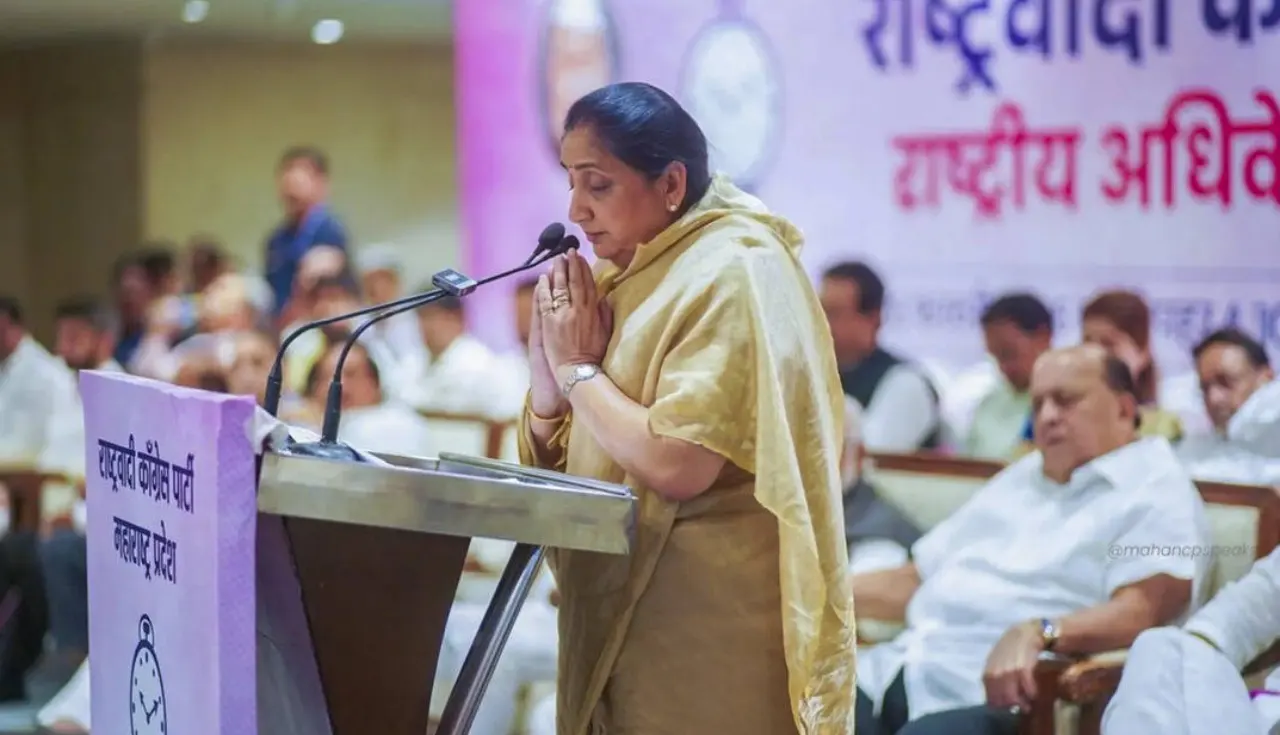
The Congress on Thursday withdrew its candidate from the Baramati Assembly bypoll in Pune district, where Deputy Chief Minister Sunetra Pawar is contesting, stating that the move was aimed at maintaining political decorum in Maharashtra.
Party nominee Akash More withdrew his nomination shortly before the deadline, confirming that the decision was taken following instructions from the party leadership.
State Congress president Harshwardhan Sapkal said the decision was influenced by the recent death of former Deputy Chief Minister Ajit Pawar, Sunetra Pawar’s husband, who died in a plane crash just over two months ago. He said the party chose to step back in keeping with the state’s political culture and traditions.
“We are taking two steps back as the bypoll is being held soon after the tragic demise of Ajit Pawar. This decision is to uphold political decorum and dialogue,” Sapkal said, adding that the Congress is not extending support to any candidate despite withdrawing from the contest.
He clarified that the move was not influenced by any request from Chief Minister Devendra Fadnavis for an unopposed election.
Despite the Congress’ withdrawal, the bypoll scheduled for April 23 will proceed, as more than 30 candidates remain in the fray. Counting of votes will take place on May 4.
Sapkal also revealed that Sunetra Pawar had reached out to him multiple times and had met Congress president Mallikarjun Kharge in Delhi, requesting the party to withdraw its candidate.
Looking ahead, he asserted that the Congress will contest the Baramati seat in the 2029 Assembly elections and aims to secure victory.
He further said that the same political courtesy should be extended in the Rahuri Assembly bypoll in Ahilyanagar district, which was necessitated by the death of BJP legislator Shivajirao Kardile. While the BJP has fielded his son Akshay Kardile, the NCP (SP) has nominated Govind Mokate.
Sakharam Binder – Sonali Kulkarni Stays With You Long After the Curtains Fall 8
Some stories don’t come looking for you—you stumble upon them. And sometimes, all it takes is a fleeting moment to pull you into something unforgettable.
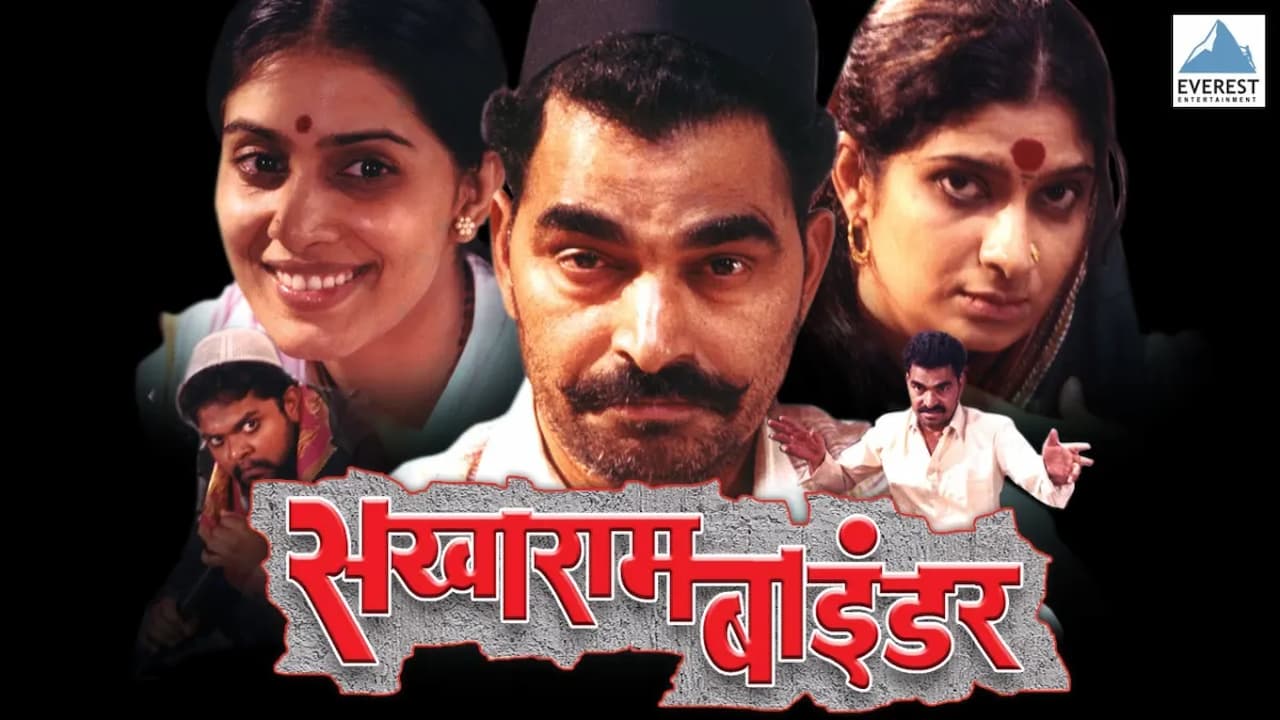
I was in the middle of my newsroom routine, mindlessly scrolling, when a reel from Sakharam Binder stopped me in my tracks. It was Sonali Kulkarni, gently speaking to an ant that had fallen into her cup of chai. A moment so delicate, so unassuming—yet it carried an emotional depth that felt almost spiritual. That one fleeting reel did what only powerful storytelling can—it compelled me to witness the entire play.
And what unfolded was not just theatre—it was an experience.
From the very first scene, the stage grips you with its rawness. Each actor walks in not merely as a performer, but as a lived reality of the world Vijay Tendulkar created decades ago. Sayaji Shinde as Sakharam is fierce, unapologetic, and disturbingly convincing. He embodies a man who believes he has cracked the system—living outside societal norms while justifying his actions in the name of blunt honesty.
Chinmayi Sumit, Vinod Lavekar, and Milind Shinde, along with the rest of the ensemble, bring remarkable depth and authenticity to the stage. Each character, no matter how brief their presence, leaves an imprint. There is no weak link here—every actor delivers their absolute best with sincerity, precision, and emotional commitment. It is this collective brilliance that elevates the play into a lived, breathing reality.
Yet, even amidst such powerful performances, Sonali Kulkarni rises as the emotional soul of the narrative.
Her Laxmi is not loud, not dramatic in the conventional sense—but quietly devastating. She carries within her a world of contradictions: kindness towards even the smallest creatures, unwavering faith in God, a fragile vulnerability shaped by exploitation—and yet, an inner strength that refuses to be erased. She speaks less, but every pause, every glance, every tremor in her voice speaks volumes.
What makes her performance extraordinary is the restraint. She doesn’t demand your attention—you find yourself drawn to her, almost involuntarily.
And then comes the climax.
A moment so unsettling that it shakes your moral ground. The same Laxmi, who endured humiliation and abuse, chooses to protect Sakharam—helping him conceal the body of a woman he kills in a fit of rage. It is not just a plot twist; it is a psychological jolt. You are left questioning everything—victimhood, morality, conditioning, and the complex nature of human attachment.
Set against the rustic backdrop of Konkan, Sakharam Binder lays bare the uncomfortable truths of a society that prides itself on values while quietly enabling exploitation. Sakharam’s world is not fictional—it is disturbingly real. Originally written by Vijay Tendulkar and first staged in 1974, Sakharam Binder remains as provocative as ever. It tells the story of a man who prides himself on being “honest” while openly exploiting vulnerable women cast out by society. Sakharam believes he has outsmarted morality—but what the play masterfully reveals is that truth without humanity is its own form of violence.
Under the nuanced and compelling direction of Sandesh Kulkarni, this revival reinvents a timeless classic for a new generation. Under the assured direction, this revival breathes new life into a timeless, controversial classic. It doesn’t try to modernize for the sake of it—it simply presents the truth, unfiltered, and trusts the audience to confront it.
Bengal at the Crossroads: Identity vs Capability in a Battle That Refuses Simplification 10
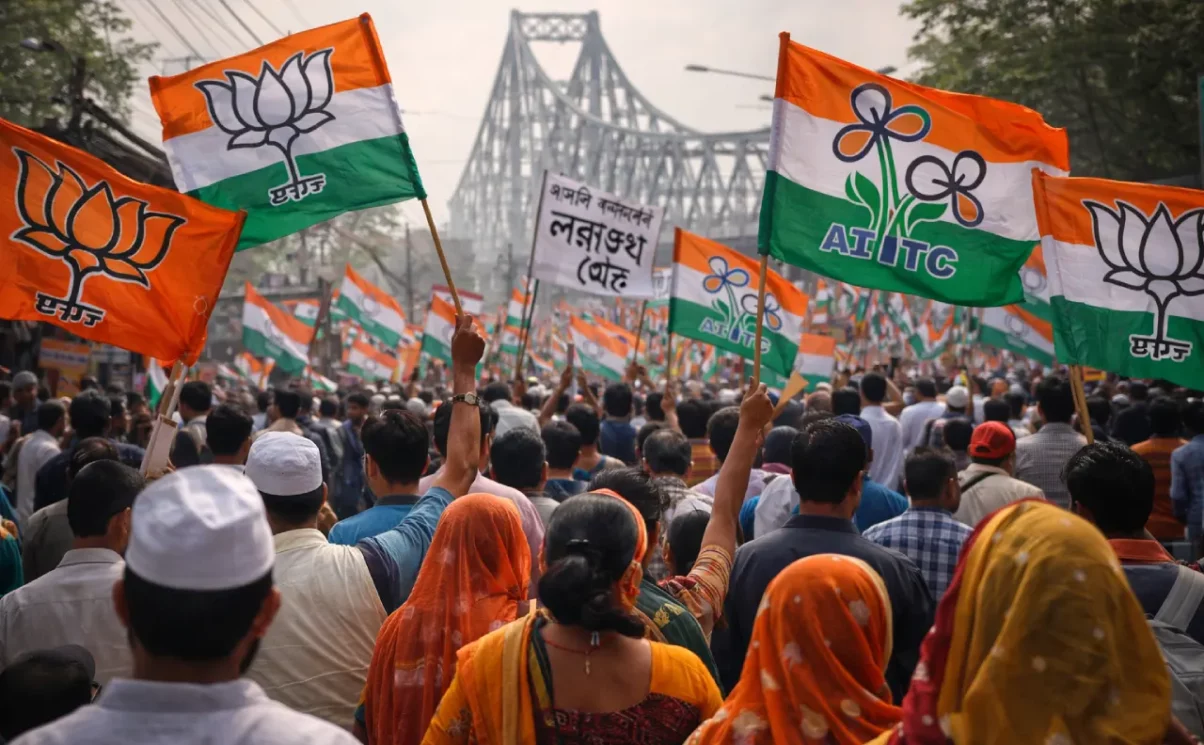
West Bengal has never been a state that votes in straight lines or predictable patterns. It listens, absorbs, debates, and then delivers a verdict that often surprises those who try to fit it into neat political frameworks. The 2026 electoral mood reflects this very character. What appears on the surface as a clash between the BJP’s aggressive religious mobilization and Mamata Banerjee’s governance-driven narrative is, in reality, a far more layered contest—one that is testing the limits of identity politics and the endurance of credibility.
The BJP entered Bengal with a clear and familiar strategy: consolidate the Hindu vote by invoking cultural identity, highlighting religious grievances, and projecting itself as the defender of a larger civilizational ethos. For a while, this approach yielded results. The surge in the 2019 Lok Sabha elections and the strong showing in 2021 were not accidental; they were built on a carefully crafted narrative that resonated with sections of voters who felt politically sidelined. But Bengal is not a political vacuum waiting to be filled. It carries a civilizational temperament shaped by thinkers like Swami Vivekananda and Rabindranath Tagore—a temperament that engages deeply with religion, yet resists its reduction into a blunt political instrument. The BJP’s challenge has not been in introducing the religious narrative, but in sustaining it without overplaying it. What was once a sharp and disruptive message has gradually become repetitive. Bengal’s voter, politically aware and culturally nuanced, quickly recognizes when a narrative is being stretched beyond its natural limit. When repetition replaces innovation, even the strongest messaging begins to lose its force.
There is also a deeper miscalculation embedded in the BJP’s approach—the assumption that religious identity, once activated, will override all other considerations. Bengal does not operate on such linear logic. Identity matters, but it competes with governance, welfare delivery, economic stability, and leadership credibility. It is a layered decision-making process, not a single-axis reaction. By leaning too heavily on religious polarization, the BJP risks appearing one-dimensional in a state that prides itself on intellectual and political complexity. Moreover, every attempt at polarization triggers an equal and opposite consolidation. Minority voters, sensing vulnerability, tend to rally more decisively behind the strongest opposing force, thereby creating a natural ceiling for the BJP’s expansion. What begins as a strategy to consolidate one side often ends up strengthening the other.
In contrast, Mamata Banerjee has executed a far more grounded and instinctive political maneuver. Her slogan “Mamata’r Kshamata” is not just a piece of campaign rhetoric—it is a carefully calibrated shift in the electoral conversation. It does not challenge identity; it bypasses it. It asks the voter not who they are, but what they have experienced. This distinction is crucial. Welfare schemes like Lakshmir Bhandar, Kanyashree, and Duare Sarkar are not abstract promises; they are tangible interventions that have entered households and shaped daily lives. For many voters, especially women, these schemes translate into financial support, accessibility, and a sense of state presence. This creates a relationship that is not ideological but experiential. And in politics, lived experience often outweighs theoretical alignment.
The brilliance of “Mamata’r Kshamata” lies in its simplicity and emotional resonance. It does not provoke; it reassures. It does not divide; it consolidates. It subtly reminds the voter that governance is not about grand narratives but about consistent delivery. In an environment saturated with high-pitched rhetoric, this calm assertion of capability stands out. It shifts the electoral battlefield from confrontation to comparison, from identity to performance. And in doing so, it places the BJP in a reactive position, forcing it to counter not just a slogan, but an accumulated record of governance.
To fully grasp the dynamics at play, one must understand Bengal’s electoral ambiance. This is a state where politics is woven into everyday life. Conversations around governance, ideology, and leadership are not confined to elite spaces; they unfold in tea stalls, local trains, college campuses, and neighborhood gatherings. The average voter here is not passive. They engage, question, and evaluate. There is also a strong undercurrent of regional pride, a subtle but powerful resistance to narratives perceived as externally imposed. The BJP, despite its organizational strength, often struggles with this perception. Its leadership and messaging can appear disconnected from Bengal’s socio-cultural rhythm. Mamata Banerjee, on the other hand, is deeply embedded in that rhythm. She is not just a political leader; she is seen as an extension of Bengal’s own identity—flawed, combative, but unmistakably local.
Another factor shaping the current mood is fatigue. Years of relentless campaigning, aggressive rhetoric, and continuous political confrontation have created a sense of saturation among voters. The dramatic no longer shocks; the loud no longer persuades. In such an environment, stability begins to carry weight. Familiarity becomes an asset. The voter starts to prioritize continuity over disruption, especially when that continuity is backed by visible delivery. This is where Mamata’s narrative gains strength. It does not demand attention—it earns acceptance through repetition of experience rather than repetition of slogans.
At the same time, Mamata Banerjee has demonstrated a keen understanding of balance. She has not entirely ceded the space of cultural identity to the BJP. Through selective engagement—be it participation in religious festivals or symbolic gestures—she has ensured that she remains culturally relevant without allowing religion to dominate her political identity. This dual approach enables her to occupy the center ground, a space that is often the most electorally advantageous. While the BJP attempts to pull the discourse toward polarization, Mamata anchors it in governance and emotional connect, preventing the narrative from drifting too far in either direction.
As the election approaches, the contest is no longer about who can mobilize louder crowds or craft sharper slogans. It is about which narrative resonates deeper with Bengal’s layered consciousness. The BJP offers a vision rooted in identity and disruption, seeking to redefine the state’s political trajectory. Mamata offers a narrative of continuity and capability, grounded in lived experience and administrative recall. The choice before the voter is not simplistic; it is a careful weighing of aspiration against assurance.
West Bengal, true to its nature, will not be hurried into a decision. It will deliberate, absorb competing narratives, and then respond in a manner that reflects its unique political temperament. The BJP’s religious card remains significant, but it is no longer decisive on its own. Mamata’s “Kshamata” narrative, while not without challenges, taps into a quieter but more enduring sentiment—the desire for stability, familiarity, and functional governance. In the end, Bengal will not choose between identity and governance in isolation. It will choose a balance that aligns with its own sense of self.
And that is the one constant in Bengal politics—it refuses to be reduced, refuses to be dictated to, and ultimately, refuses to behave like any other state.
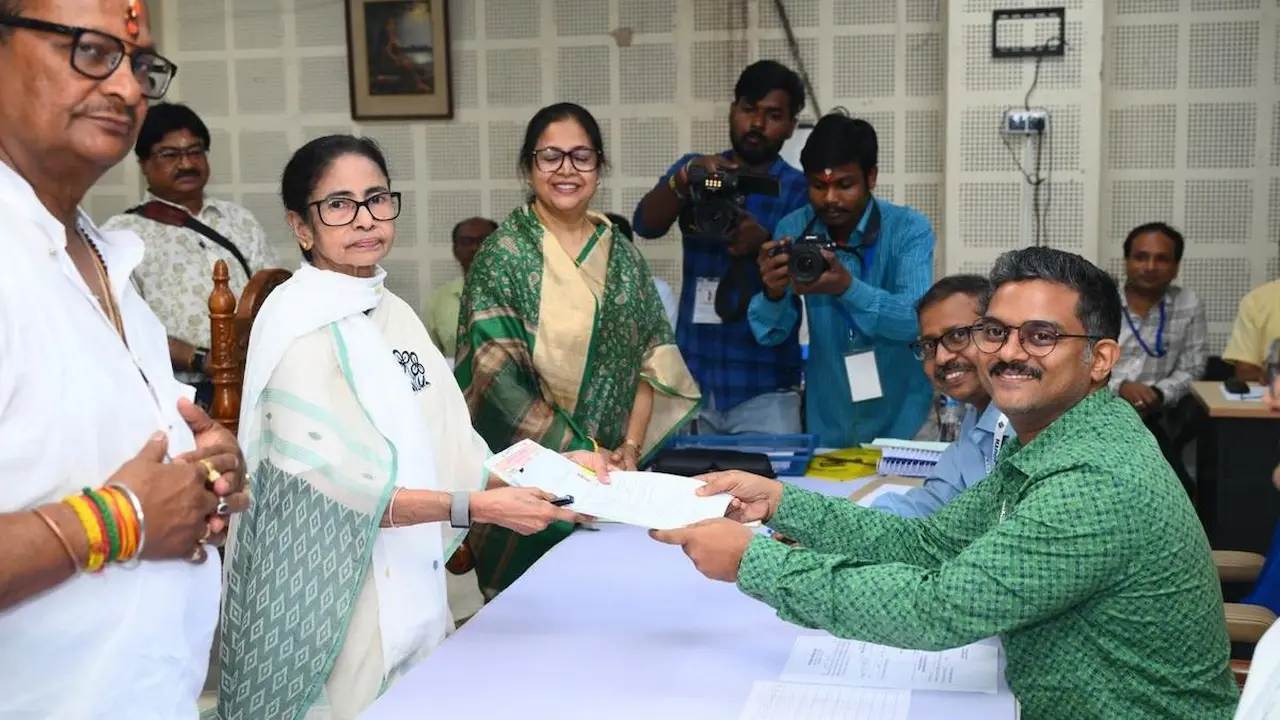
West Bengal Chief Minister Mamata Banerjee on Wednesday filed her nomination papers from the Bhabanipur Assembly constituency in South Kolkata, with her list of proposers reflecting the area’s diverse and cosmopolitan character.
The proposers named in her nomination include Ismat Hakim, wife of Kolkata Mayor Firhad Hakim, representing the Muslim community; Nishpal Singh Rane, husband of actor and Trinamool Congress MP Koel Mallick, representing the Punjabi community; local TMC leader Bablu Singh, representing Biharis; and Bhabanipur Education Society representative Miraj Shah, representing Gujaratis.
Banerjee began her day from her residence on Harish Chatterjee Street and led a roadshow to the Alipore Survey Building, where she submitted her nomination. She was accompanied by senior party leaders, including Firhad Hakim, her family members, and local representatives, as thousands of supporters gathered along the route.
Speaking to the media after filing her nomination, Banerjee expressed deep emotional ties with the constituency. “My entire life has revolved around Bhabanipur. I have lived here since childhood and will continue to stay here. I bow to the people of Bhabanipur,” she said.
Police deployed security measures and barricaded parts of the route to manage the large crowd during the procession.
The Bhabanipur contest is expected to be closely watched, with Banerjee facing Leader of Opposition Suvendu Adhikari, who is also contesting from his stronghold Nandigram in East Midnapore district.
In the 2021 Assembly elections, Adhikari had defeated Banerjee in Nandigram by a narrow margin of less than 2,000 votes. Banerjee later secured victory in a by-election from Bhabanipur, enabling her to continue as Chief Minister for a third consecutive term.
Belgian Court Backs Mehul Choksi's Extradition to India on 6 Charges 14
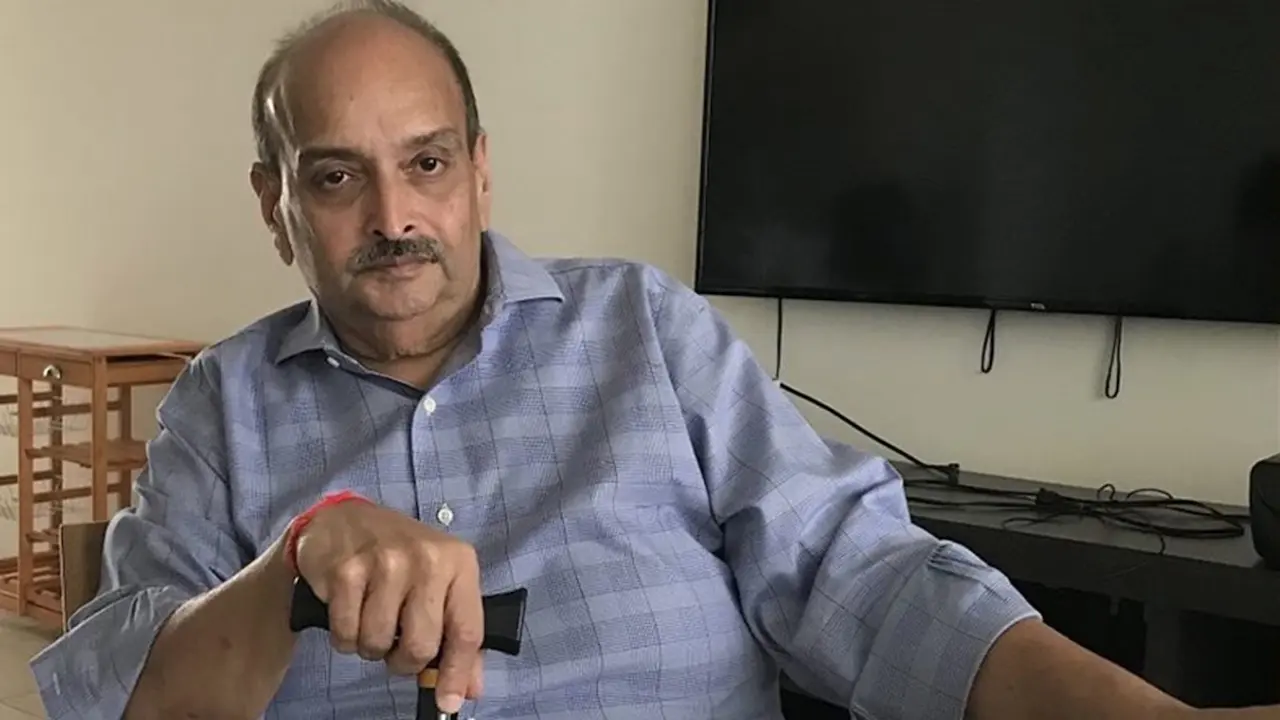
The Antwerp Court of Appeal has advised the Belgian government to approve the extradition of fugitive diamantaire Mehul Choksi to India on six of the seven charges against him, marking a significant development in the long-running Punjab National Bank fraud case.
In its April 3 recommendation, the court’s chamber of accusation stated that offences including criminal conspiracy, breach of trust, fraud, forgery of accounts, embezzlement, and criminal misconduct are punishable under Belgian law, thereby meeting the requirement of legal reciprocity for extradition.
However, the court declined to support extradition on the charge of “tampering or destroying evidence”, noting that the offence is not punishable under Belgian law.
As per Belgian procedure, the court’s confidential advice has been forwarded to the government, which will take the final decision on India’s extradition request.
The court also observed that there was no direct evidence linking the Indian government to Choksi’s alleged abduction from Antigua and Barbuda in 2021. It added that claims made by the defence regarding risks of torture, denial of justice, or inhumane treatment were not sufficiently substantiated.
The bench further noted that the charges against Choksi are neither political nor military in nature and are not barred by statutory limitations under either Indian or Belgian law. It also found no indication that he would face discrimination or unfair prosecution in India.
The ruling comes after Belgium’s Court of Cassation had earlier rejected Choksi’s appeal against extradition in connection with the ₹13,000 crore Punjab National Bank scam.
India had formally submitted its extradition request in August 2024, backed by arrest warrants issued by a Mumbai court. Belgian authorities had subsequently validated the enforceability of these warrants, except for the charge related to destruction of evidence.
The court reiterated that Choksi had failed to provide credible proof of a real risk of torture or denial of a fair trial if extradited, while also taking note of assurances given by India regarding his safety, prison conditions, and legal rights.
With the legal process largely cleared, the final decision now lies with the Belgian government, which will determine whether Choksi is extradited to face trial in India.
An Indore family court has granted divorce to the wife of jailed rape convict Narayan Sai, directing him to pay ₹2 crore as permanent alimony within three months, her lawyer said.
Narayan Sai, the son of self-styled godman Asaram, is currently serving a life sentence in a rape case and is lodged in a jail in Gujarat’s Surat district.
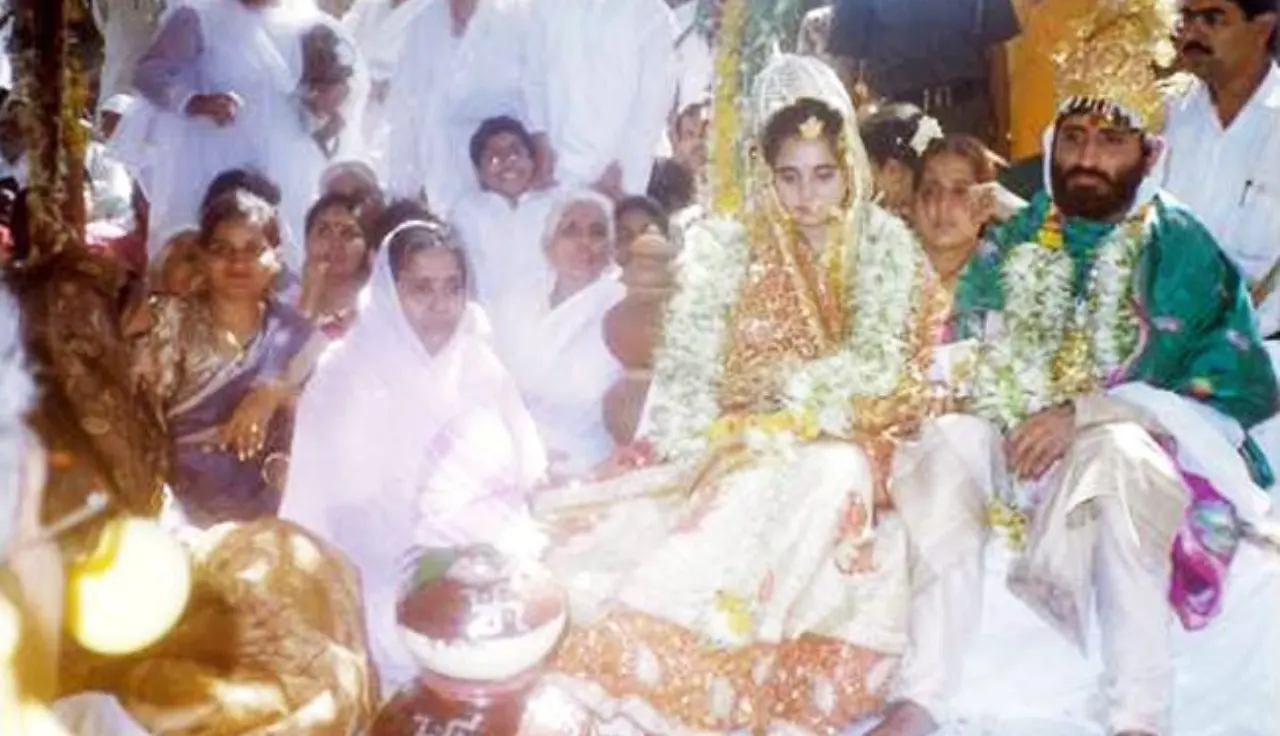
According to advocate Anuragchandra Goyal, the court’s order dated April 2 formally dissolved the couple’s 18-year marriage. His client, Janaki Harpalani, had filed for divorce in 2018, alleging mental cruelty and other grounds, and had sought ₹5 crore as maintenance.
Goyal said that despite Narayan Sai contesting the allegations, the petitioner presented substantial documentary evidence in support of her claims during the proceedings.
“After hearing both sides, the court accepted the petition and directed Narayan Sai to pay ₹2 crore as permanent maintenance to Janaki within three months,” the lawyer said.
The couple married in 2008 and have no children. During earlier hearings, Narayan Sai was produced before the family court under heavy security to record his statement.
The court had previously ordered him in 2018 to pay a monthly maintenance of ₹50,000. However, the petitioner’s lawyer stated that no payments were made over the past eight years.
The ruling brings closure to a long-pending legal dispute, while also enforcing a significant financial settlement in favour of the petitioner.
Dharmendra Pradhan Accuses TMC of Misusing Central Funds, Claims Bengal Education 'Ruined' 18
Union Education Minister Dharmendra Pradhan on Tuesday accused the Trinamool Congress (TMC) government in West Bengal of diverting central funds meant for education towards party activities, claiming that the state’s education system has been severely damaged.
Speaking to the media in Kolkata after offering prayers at Kalighat temple along with BJP candidate Swapan Dasgupta, Pradhan alleged that funds allocated for schemes such as mid-day meals, textbooks, and school uniforms were misused.
“The central government provided funds for mid-day meals, books and dresses, but the money was diverted towards party activities. Education in Bengal has been destroyed,” he said.
Pradhan further claimed that West Bengal’s rich academic legacy, shaped by icons like Swami Vivekananda and Rabindranath Tagore, has deteriorated due to decades of “misrule”, referring to both the Left Front’s long tenure and the current TMC government led by Chief Minister Mamata Banerjee.
The ruling TMC strongly rejected the allegations, calling them baseless, and countered by accusing the Centre of withholding nearly ₹2 lakh crore in dues meant for welfare schemes in the state.
The Union minister also raised concerns about the teacher recruitment process, alleging that it has either stalled or been affected by corruption.
Expressing confidence in the BJP’s prospects in the upcoming Assembly elections, Pradhan said his party’s campaign is focused on ensuring a “fear-free Bengal”, with emphasis on job creation and women’s safety.
On voter roll revisions, he questioned the inclusion of alleged infiltrators, asking whose votes should determine the state’s future.
West Bengal will go to the polls in two phases on April 23 and April 29, with counting scheduled for May 4.
SC’s 9-Judge Bench Begins Hearing on Women’s Entry in Religious Places, Sabarimala in Focus 20
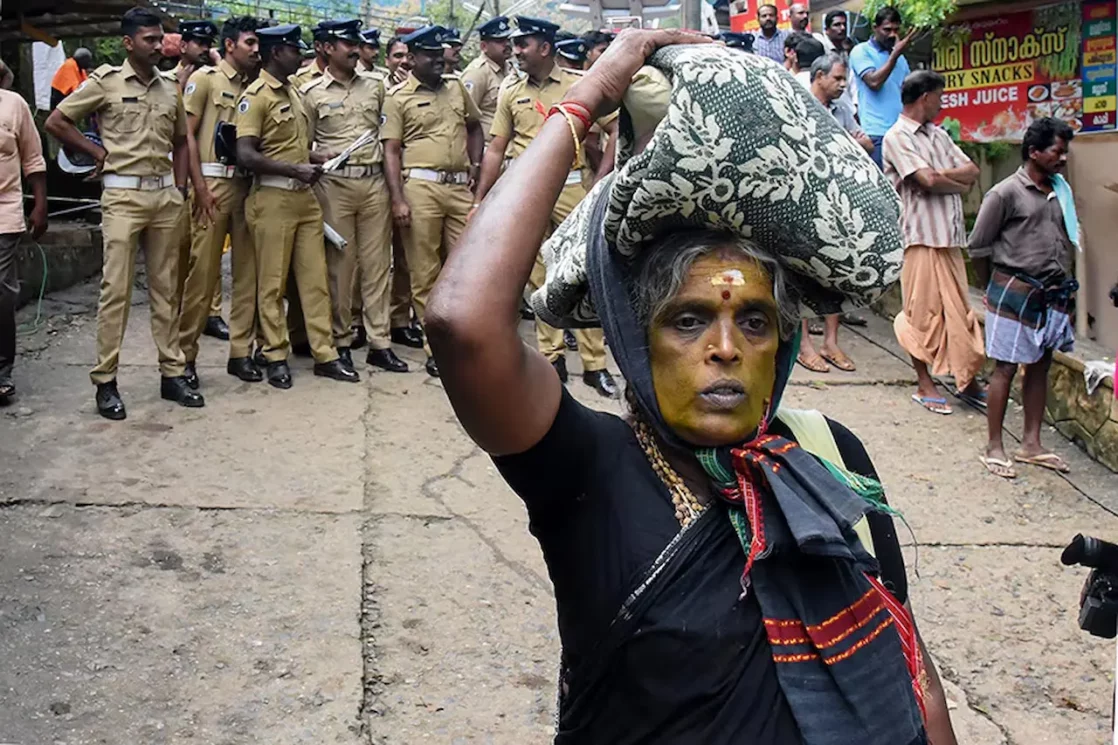
A nine-judge Constitution bench of the Supreme Court on Tuesday began hearing petitions related to alleged discrimination against women at religious places, including the Sabarimala temple, while also examining the broader scope of religious freedom under the Constitution.
The bench, headed by Chief Justice Surya Kant and comprising eight other judges, is dealing with key constitutional questions arising from the Sabarimala case and similar issues across religions.
Ahead of the hearing, the Centre submitted its written arguments, urging the court to uphold restrictions on the entry of women of menstruating age into the Sabarimala temple. It argued that the matter falls within the domain of religious faith and denominational autonomy, and is beyond the scope of judicial intervention.
The case traces back to the Supreme Court’s 2018 verdict, where a five-judge bench, by a 4:1 majority, had lifted the ban on the entry of women aged between 10 and 50 at the shrine, declaring the practice unconstitutional. However, in 2019, another Constitution bench referred the matter to a larger bench, noting that similar issues arise across multiple religions and require a comprehensive examination.
The present bench is also considering related questions, including the entry of Muslim women into mosques and dargahs, and the rights of Parsi women married to non-Parsi men to access religious places.
The court is expected to deliberate on several key constitutional issues, including the scope of the right to freedom of religion under Article 25, the relationship between individual rights and the rights of religious denominations under Article 26, and whether such rights are subject to other fundamental rights.
It will also examine the meaning of “morality” within constitutional provisions, the extent of judicial review in religious matters, and whether individuals outside a religious group can challenge its practices through public interest litigation.
The hearing, which began on April 7, is expected to continue until April 22. The outcome is likely to have far-reaching implications for balancing religious practices with gender equality and constitutional rights in India.