


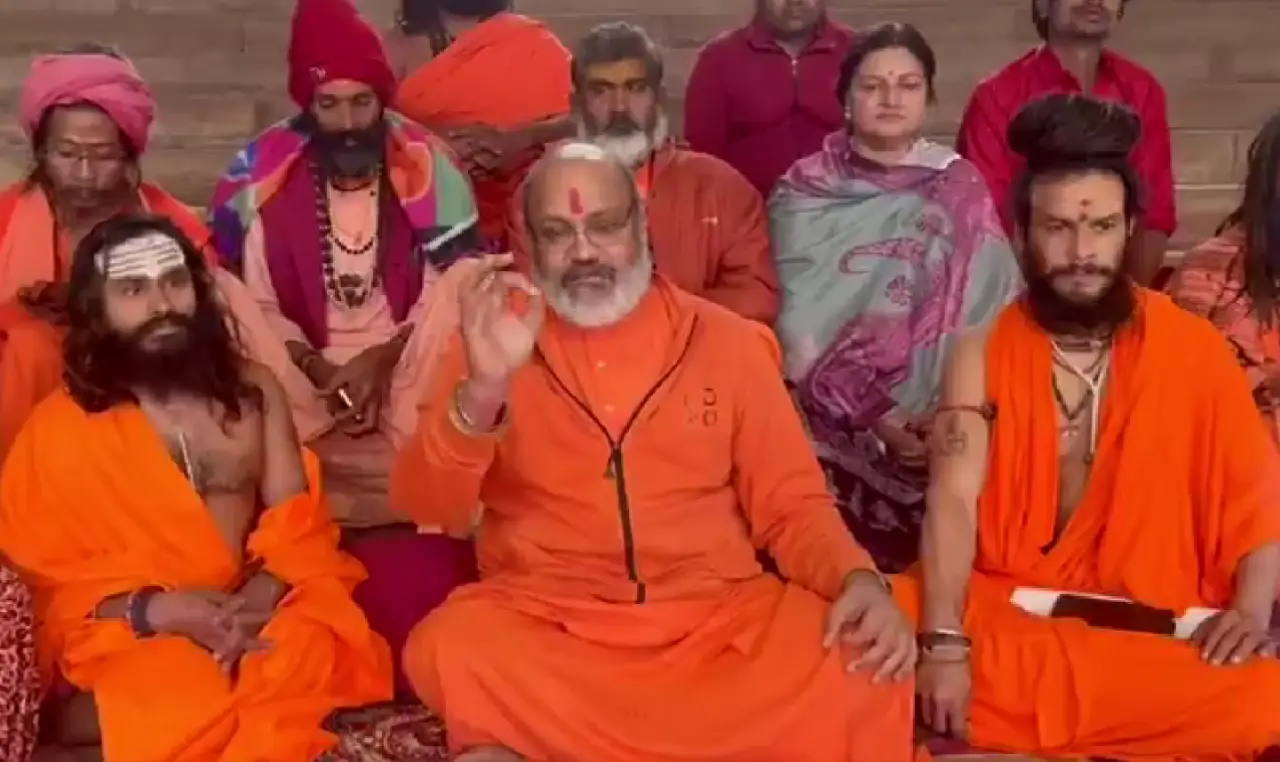
Yati Narsinghanand Giri, the polarizing head priest of Dasna Devi temple in Ghaziabad, Uttar Pradesh, has stirred fresh controversy by alleging a systematic genocide of Hindus in Bangladesh. In a fiery statement on Thursday, he urged Indian Hindus to take lessons from the plight of their counterparts in the neighboring country and act decisively to secure their future.
Narsinghanand announced a three-day “Dharma Sansad” to be held at the Anand Bhairav Mandir from December 19-21. Organized by the Juna Akhara, the event aims to spotlight the alleged atrocities against Hindus in Bangladesh. He called upon Hindus who wish to protect their future generations from “Islamic Jihadis” to participate in the congregation.
“Massacres in Bangladesh”
In a video released alongside Kothari Srimahant Mahakal Giri of the Juna Akhara and other saints, Narsinghanand accused the Muslim community in Bangladesh of orchestrating gruesome massacres of Hindus with the alleged backing of the country’s army and police. He specifically referenced the imprisonment of Chinmay Das Prabhu, a member of ISKCON, as evidence of what he claimed was the Bangladesh government’s disdain for Hindus.
“The arrest of Chinmay Das Prabhu demonstrates the position of Hindus globally. Had such an act been committed against Jews, Israel would have launched a counterstrike. If Hindus had a nation truly dedicated to them, such tragedies in Pakistan and Bangladesh would not occur,” Narsinghanand asserted, invoking the idea of a Sanatan Vedic Rashtra as a solution.
Criticism of Hindu Movements
The priest also criticized past Hindu movements, including the Ram Mandir campaign, for failing to address what he termed the “real problems.”
“If the Ram Mandir movement had focused on establishing a Sanatan Vedic Rashtra, issues like ‘love jihad,’ cow protection, Shri Krishna Janmabhoomi, Kashi Vishwanath, or Sambhal would not exist. We’ve never collectively raised our voice against these deeper issues,” he lamented.
Previous Controversies
Narsinghanand is no stranger to controversy, having faced charges for hate speech in the past. His provocative remarks have drawn widespread criticism for inflaming communal tensions, though his followers argue that he is a vocal advocate for Hindu causes.
The allegations and the planned “Dharma Sansad” are likely to reignite debates on the treatment of Hindus in Bangladesh and the broader communal discourse in South Asia.
