


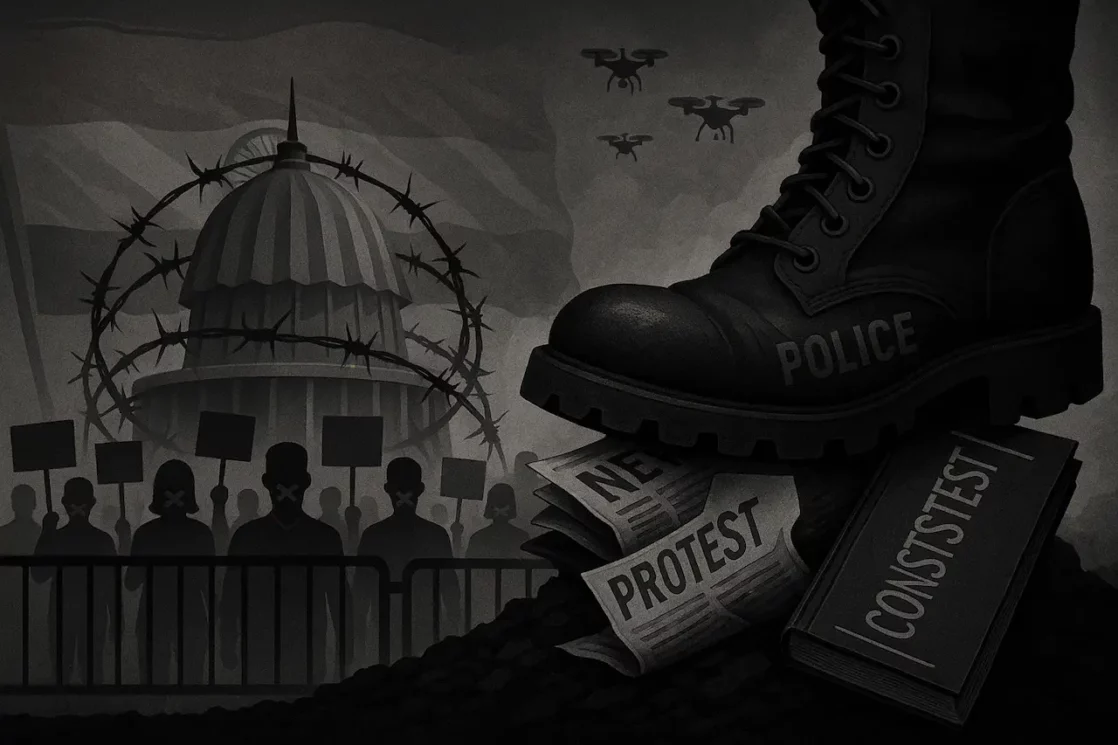
As the monsoon session of the Maharashtra Assembly begins, the state stands on the brink of a dangerous descent into authoritarianism. The Maharashtra Public Safety Bill, 2024, introduced under the pretext of protecting public safety, is a deeply flawed, repressive, and unconstitutional piece of legislation that seeks not to safeguard citizens but to suffocate democracy. The BJP-led government, which itself is mired in accusations of electoral manipulation and misuse of democratic institutions, now wants to codify fear, surveillance, and state control into law. This bill, already passed in the lower house and likely to pass in the upper house, grants unchecked and sweeping powers to the police and state authorities to label any organisation or individual as unlawful, seize properties, detain without bail, suppress media platforms, and criminalise dissent — all under elastic and vague terms like “urban Naxal” or “anti-constitutional activity.” These terms have not been defined and are instead left to the discretion of those in power, making the law a blunt weapon to crush critics, muzzle journalists, destroy independent voices, and delegitimise peaceful protests. It is a law not made for justice, but for vengeance.
Despite more than 13,000 submissions from concerned citizens and organisations, the final version of the bill reflects no meaningful change. The so-called joint committee that reviewed it functioned more as a facade of democratic process than a genuine attempt at inclusivity. Not a single major amendment was made to address the fundamental issues raised by civil society. The Maharashtra government has shown deliberate contempt for public participation, transparency, and accountability. This is not governance; it is executive arrogance wearing a constitutional mask.
If this bill is truly about public safety, then why has the government not acted against violent right-wing elements who openly abuse minorities, threaten journalists, strip and assault women, burn the Constitution, and glorify communal hatred? What about those who lynch in the name of religion, troll dissenters with state-sponsored impunity, or bulldoze homes of the marginalised under false pretexts? What about the hate mongers who defame Ambedkar, insult Mahatma Gandhi, brand every protest as sedition, and carry out orchestrated campaigns of misinformation and communal division? If these acts are not threats to public safety, then what is?
This law is not even pretending to be neutral. It is targeted, it is political, and it is vengeful. It sends a clear message — that to question the government is to risk your freedom, to protest is to risk your life, and to speak is to invite punishment. The idea of democracy is built on dissent. The right to oppose, to question, to resist, and to hold power accountable is the cornerstone of any functioning republic. By criminalising dissent, the Maharashtra government is not protecting citizens — it is protecting itself from them. And in doing so, it is betraying the very soul of the Constitution it claims to defend.
On June 30, when the Assembly reconvenes, thousands of citizens, activists, students, and rights defenders will gather at Mumbai’s Azad Maidan. This protest is not merely a march — it is a cry for sanity, a demand for justice, and a resistance against this assault on civil liberty. The Anti-Public Safety Bill Committee, which emerged from widespread grassroots anger, has been organising protests across 78 locations in 36 districts for over a year. Their message is clear: withdraw this bill, scrap this law, and stop dismantling democracy one act at a time.
India is not a police state. Maharashtra is not a laboratory for authoritarian experiments. Public safety cannot be achieved by suppressing the public. This bill is an insult to the Constitution, a mockery of democracy, and a dangerous precedent that must be opposed with every ounce of courage and conviction. Today it is activists and students; tomorrow it could be anyone. Once the state is allowed to criminalise thought, freedom itself becomes a crime. This is a moment for Maharashtra to choose — fear or freedom. The battle is not about a bill, it is about the future of our republic.
