INDIA Bloc Unveils Bihar Manifesto: Promises Govt Jobs for Every Family, Free Power, and Old Pension Scheme 2
The INDIA bloc on Tuesday unveiled its election manifesto for the upcoming Bihar Assembly polls, making a slew of populist promises including a government job for one member of every household, restoration of the old pension scheme, and 200 units of free electricity.
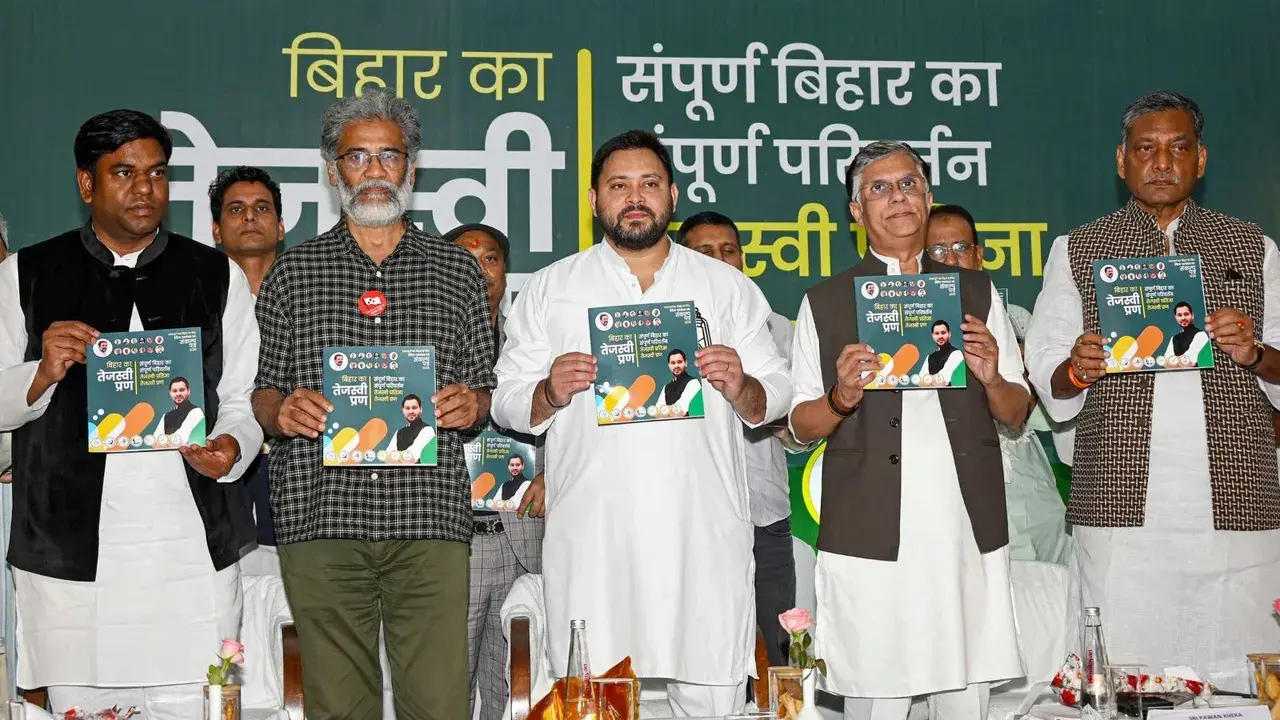
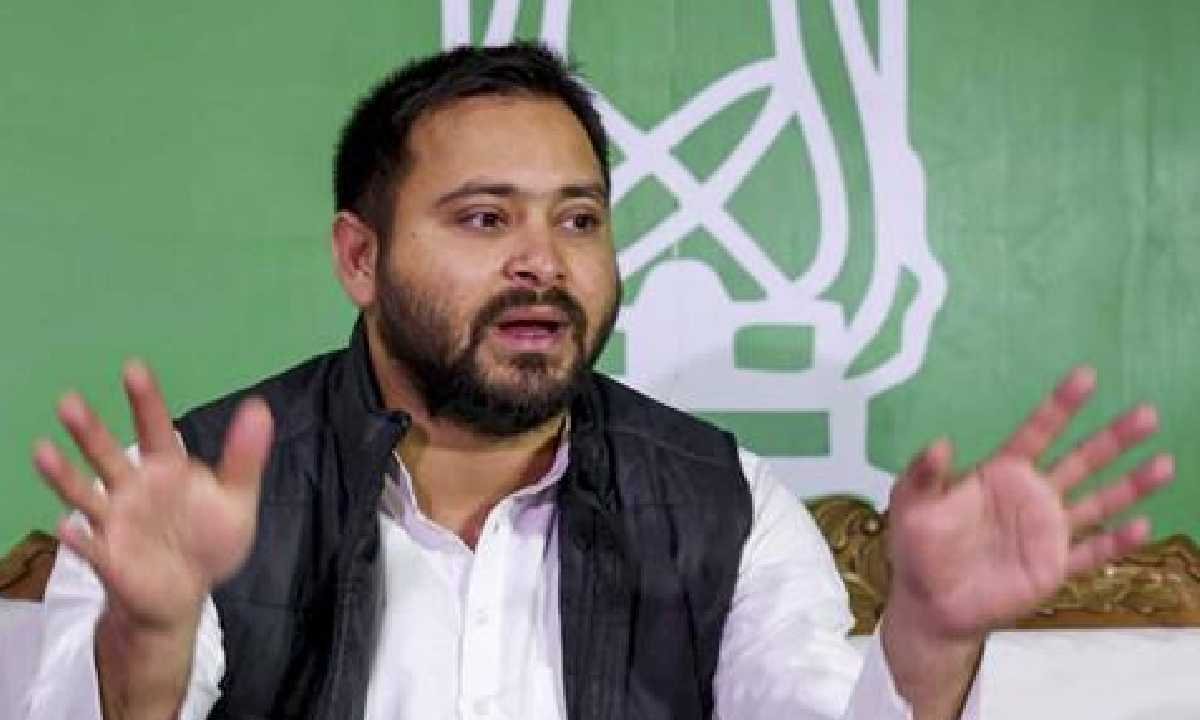
Titled ‘Bihar ka Tejashwi Pran’ (Tejashwi’s Resolve), the 32-page manifesto was released at a packed press conference in Patna. Rashtriya Janata Dal (RJD) leader Tejashwi Yadav, flanked by alliance partners, called it a blueprint for “Bihar’s development and dignity.”
“The manifesto has 25 key points that assure practical solutions for the people,” Yadav said, adding that a new employment guarantee law would be introduced within 20 days if the INDIA bloc forms the government. The alliance also pledged to roll out an employment guarantee scheme across Bihar within 20 months.
The manifesto promises to make all contractual government workers permanent, including ‘Jeevika Didis’, who will receive a monthly salary of ₹30,000. It further outlines plans for IT parks, SEZs, dairy and agro-based industries, an education city, and five new expressways across the state.
Yadav accused the ruling NDA of “failing Bihar” and said people now want a government focused on padhai (education), dawai (healthcare), kamai (employment), and sichai (irrigation). He alleged that the BJP had turned Chief Minister Nitish Kumar into a “puppet,” while Home Minister Amit Shah had already dismissed Kumar as the NDA’s CM face.
“The Bihar Prohibition and Excise Act has failed completely. If voted to power, the INDIA bloc will lift the ban on toddy (tari),” Yadav declared.
Calling the manifesto a roadmap for Bihar’s resurgence, Yadav said, “It’s a resolution to make Bihar number one.”
All prominent INDIA bloc leaders were present at the release event, including Congress leader Pawan Khera, CPI(ML) Liberation general secretary Dipankar Bhattacharya, and VIP party chief Mukesh Sahni.
Congress confirmed that Rahul Gandhi will join the INDIA bloc’s campaign trail in Bihar starting Wednesday.
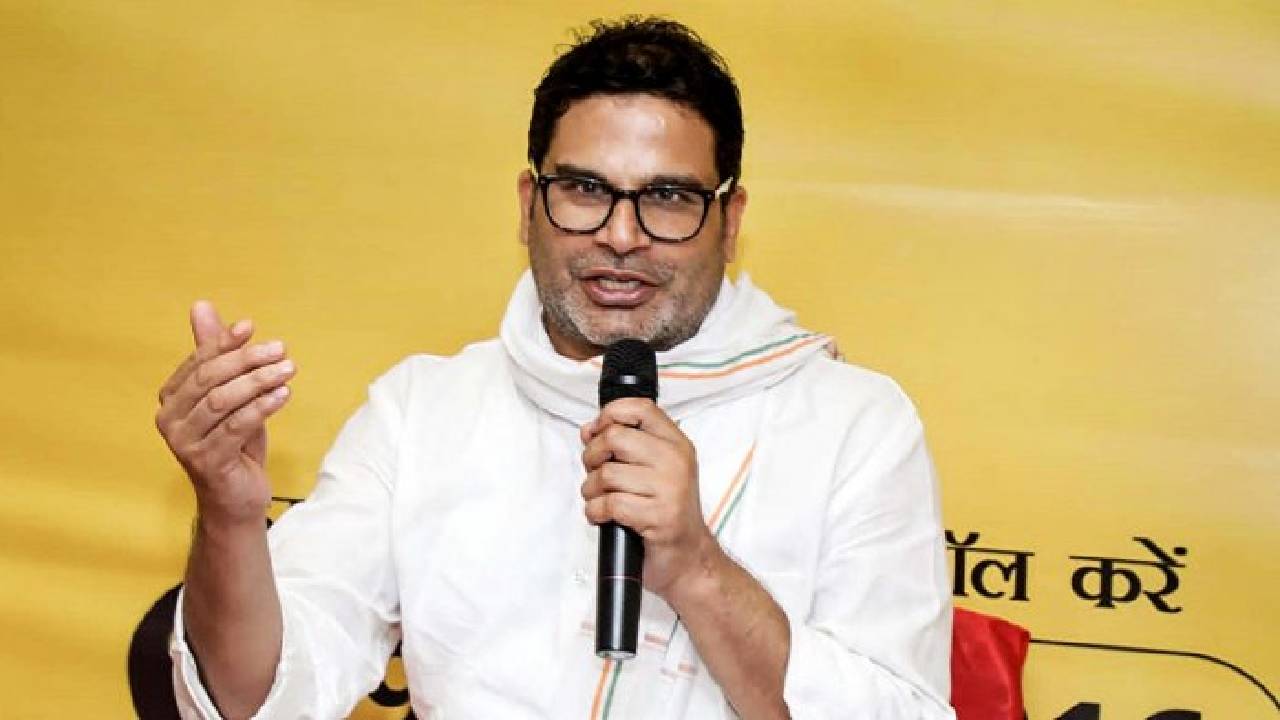
Jan Suraaj Party founder and political strategist Prashant Kishor found himself at the centre of a controversy on Tuesday after reports surfaced that he is registered as a voter in both Bihar and West Bengal.
According to official records, Kishor’s name appears on the electoral roll at 121, Kalighat Road in Kolkata’s Bhabanipur constituency — the address of the Trinamool Congress headquarters and Chief Minister Mamata Banerjee’s seat. His polling station is listed as St Helen School on B Ranishankari Lane. Kishor had earlier worked as a political consultant for the TMC during the 2021 West Bengal Assembly elections.
Simultaneously, Kishor is also enrolled as a voter at his native village in Kargahar Assembly segment under Sasaram constituency in Bihar’s Rohtas district, where his polling booth is Madhya Vidyalaya, Konar.
A senior poll official cited Section 17 of the Representation of the People Act, 1950, which prohibits registration as a voter in more than one constituency. He added that such duplication could occur only if the voter failed to file Form 8, required for transferring registration upon changing residence.
Reacting to the development, Jan Suraaj Party spokesperson Kumar Saurabh Singh said the Election Commission must take responsibility for the lapse. “The EC had launched the Special Intensive Revision (SIR) in Bihar with great fanfare, deleting many names. If such an error can occur in the case of a known personality like Prashant Kishor, one can imagine the diligence elsewhere,” he remarked.
While Singh maintained that Kishor is an educated man who understands his civic responsibilities, he did not clarify whether Kishor had applied to have his name removed from Bengal’s voter list. “If the EC believes there’s wrongdoing, our legal team will respond,” he added.
The revelation triggered sharp political reactions across party lines in Bihar. JD(U) leader Neeraj Kumar said it was “amusing” that Kishor, a Bihari by origin, was registered in West Bengal. “We suspect he sought a Rajya Sabha seat through Mamata Banerjee after the 2021 elections, for which he needed Bengal residency. When that didn’t materialize, he dramatically quit consulting,” he alleged.
BJP spokesperson Neeraj Kumar called it “a heinous crime, not a clerical mistake,” alleging Kishor was part of a “vile conspiracy with the TMC to manipulate Bihar elections.” He demanded a “rigorous investigation” by the Election Commission.
RJD’s Mrityunjay Tiwari said the episode exposed “the farce” of the Election Commission’s voter roll revision process and accused Kishor of secretly working for the BJP-led NDA.
The Election Commission, acknowledging that duplicate voter entries are a recurring issue, said the ongoing Special Intensive Revision exercise has already deleted over 68 lakh duplicate entries nationwide, including around seven lakh cases of voters registered in multiple constituencies.
The controversy adds another layer to Kishor’s political journey — from being one of India’s most sought-after poll strategists to leading his own political outfit in Bihar.
Wadwani Shuts Down in Protest, Residents Demand SIT Probe Into Doctor's Suicide Case 5
Residents of Wadwani in Maharashtra’s Beed district observed a complete bandh on Tuesday, demanding a Special Investigation Team (SIT) probe into the alleged suicide of a 28-year-old woman doctor from their region. The bandh, organised by local citizens and activists, remained peaceful and was confined to Wadwani town, police said.
The young doctor was found dead last week in a hotel in Phaltan taluka of Satara district. In a shocking revelation, she had written a suicide note on her palm, accusing police sub-inspector Gopal Badane of repeatedly raping her and software engineer Prashant Bankar of mentally harassing her. Both the accused have since been arrested.
On Tuesday, hundreds of Wadwani residents took out a march from Shivaji Maharaj Chowk to the tehsil office, where they submitted a memorandum to authorities demanding an SIT probe and a fast-track trial. Protesters alleged that other officials might also be involved in the case and urged the government to suspend and punish them.
Speaking to reporters, one of the activists said, “We want justice for our daughter. The case should not be handled casually. An independent SIT must investigate all angles and ensure the guilty are punished swiftly.”
Earlier on Monday, the doctor’s family had echoed similar demands, insisting that the trial be held in a fast-track court in Beed instead of Phaltan, where the incident took place.
The bandh reflected the growing public anger and demand for accountability in the case, as Wadwani residents stood united in their call for justice.
From Pen to Prompt: The Silent Death of Real Journalism 7
I lived through three generations of journalism, and there was a time when journalism was not a profession — it was a sacred pursuit. It demanded discipline, patience, and devotion. Words weren’t written to impress; they were chosen to express. Every sentence carried weight, every editorial was born from contemplation. Journalism was not about breaking news first — it was about telling it right.
When I began my journey, writing an editorial was a test of the mind and the heart. One had to think deeply, question constantly, and write with a sense of moral duty. A newsroom was not a factory of words; it was a temple of ideas. Each story went through several hands — reporters, sub-editors, proofreaders — all dedicated to one purpose: perfection.
I still remember my early years at ADC. There was a man named Suresh Baliga — a magician with words — who could craft headlines that made readers pause and think. Our editor, Late Mobin Pandit, would make us rewrite the same article ten times until it reached the standard he believed the readers deserved. There was no room for mediocrity; every word had to earn its place on the page.
Later, at FPJ and other publications, I witnessed the same rigor. Journalism, then, was not about visibility — it was about integrity. We wrote not for algorithms, but for conscience.
And then came a new age — an age of convenience.
I was fortunate enough to have computers when I started. Before me, senior journalists had typewriters; before them, printing was done by manually fixing metal letters, one by one. I have even seen, as a child, veterans like Khadilkar, Navakalkar, and Khebudkar writing by hand — long, passionate pieces flowing from their pens like poetry. The smell of ink, the shuffle of paper, the clack of the typewriter — these were the rhythms of real journalism.
But somewhere between the pen and the processor, something shifted.
Technology promised speed — and it delivered. Research became easier. Google came along, offering a universe of information at a keystroke. I remember secretly using it, then rewriting everything in my own words, worried that my curiosity might look like dependency. Editors, back then, could tell instantly whether your writing had “soul” or it was borrowed thought. They would circle paragraphs, question your logic, and ask — “Why did you write this? What do you really want to say?”
That questioning — that intellectual push — shaped us. It built journalists, not content creators.
Then, the digital tide came in. Blogs replaced columns. Clicks replaced credibility. The printing press bowed to the algorithm. And now, in what feels like the blink of an eye, we’ve arrived at the era of Artificial Intelligence.
Today, a writer no longer needs to struggle with words. A headline can be generated in seconds. An editorial can be written by a machine — emotionless, flawless, and disturbingly efficient. AI has become the hand that writes, but not the mind that thinks. It can produce content — but not conviction.
Journalism has always been a dialogue between truth and expression. But AI is a monologue — it tells you what you want to hear, faster and smoother than ever before. It doesn’t question power; it mimics it. It doesn’t understand irony, pain, or rebellion — the lifeblood of real journalism.
The young generation finds this exciting. They are fascinated by the ease, the instant gratification. And I do not blame them — they were born into this speed. But I often wonder — will they ever know the joy of reworking a story till dawn, the pride of finding the perfect word after hours of searching, the silence that follows the moment your editorial goes to print — knowing it might move minds, maybe even change something?
I started my own newspaper at a very young age — seventeen years ago. It was back-breaking work. Gathering content, editing, designing, proofreading, finalizing layouts — every task required heart and sweat. Giving a headline that both informed and inspired was an art that could not be learned by code. Each edition felt alive — like a child you raised and sent into the world. There was exhaustion, but also immense satisfaction. You earned your byline.
Today, you can “generate” one.
It’s not that technology is evil — it’s just indifferent. It doesn’t feel the heat of the printing press, the anxiety of a deadline, or the moral weight of a truth that might offend someone powerful. It only feels prompts and patterns.
And this is where journalism has begun to lose its essence.
We are no longer chroniclers of truth; we are curators of convenience. Words are optimized for engagement, not enlightenment. Facts are shaped for speed, not sincerity. Opinion is crafted for virality, not value.
There was a time when journalists were the conscience of the nation. Today, they are often the reflection of its noise. The editorial pages that once echoed thought-provoking ideas now compete for relevance against trending hashtags and viral videos.
In my early days, an editorial was an event. Readers waited for it, discussed it, and argued over it. It had the power to stir debate, to shift public opinion. Today, most editorials are just scrollable content. The era of “slow journalism” — when truth was earned, not extracted — is dying quietly, pixel by pixel.
And yet, there is something within me that refuses to give up hope.
Because journalism is not merely about medium — it’s about meaning. It’s not about how fast you write, but why you write. Machines may produce words, but they cannot produce wisdom. They may predict emotions, but they cannot feel them.
I have seen three generations of journalism. The first wrote with hands — slow but soulful. The second typed with passion — fast but thoughtful. The third commands machines — faster, smarter, but often empty.
Progress has its price. And perhaps this — the loss of human touch in storytelling — is journalism’s heaviest cost.
When we wrote editorials years ago, one question always lingered in our minds: “Am I saying something that matters to society?” Today, the question has changed: “Will this go viral?”
And that shift — from responsibility to reach — marks the slow death of the very spirit of journalism.
The pen that once spoke truth to power now seeks validation from algorithms. The editorial that once aimed to awaken conscience now aims to please audiences. The journalist who once chased authenticity now chases analytics.
So yes, technology has advanced. Tremendously. We have tools that our predecessors could never have imagined. But in gaining speed, we lost sincerity. In finding shortcuts, we lost substance.
And in this rush for relevance, somewhere along the way — journalism lost its soul.
Yet, I still believe — deep down — that there will come a moment when someone, somewhere, will stop and ask again: “What do I really want to say?” And maybe, just maybe, that question will bring journalism back home — to its heart, to its humanity, and to its purpose.
Because journalism, at its purest, was never about technology. It was — and will always be — about truth.
Justice Surya Kant Named 53rd Chief Justice of India, To Serve Till February 2027 9
Justice Surya Kant, a distinguished Supreme Court judge known for his progressive and reform-driven verdicts, has been named the 53rd Chief Justice of India (CJI). Chief Justice of India B. R. Gavai on Monday recommended his name to the Centre. Justice Kant, currently the senior-most judge of the apex court, will assume office on November 24 following CJI Gavai’s retirement and will serve until February 9, 2027.
Born on February 10, 1962, in Haryana’s Hisar district, Justice Kant’s journey from a small-town lawyer to the country’s top judicial post is marked by decades of service and landmark judgments. A first-class law graduate from Kurukshetra University, he began his judicial career at the Punjab and Haryana High Court, where he earned recognition for his sharp legal acumen and integrity. He later served as Chief Justice of the Himachal Pradesh High Court before being elevated to the Supreme Court in May 2019.
During his tenure at the top court, Justice Kant has been part of several historic rulings, including those related to the abrogation of Article 370, the Pegasus spyware probe, and the suspension of the colonial-era sedition law. He also played a key role in directing the Election Commission to reveal details of 65 lakh voters excluded from Bihar’s draft electoral roll and pushed for gender equity in the legal profession by mandating one-third representation for women in bar associations.
Justice Kant was also part of the bench that upheld the One Rank-One Pension scheme, balanced national security and environmental concerns in the Char Dham project case, and ordered a judicial probe into the security lapse during Prime Minister Narendra Modi’s Punjab visit in 2022.
His judgments often emphasize accountability and ethical governance. He has consistently warned against corruption, describing it as a “serious societal threat,” and has ordered CBI probes into fraudulent banking and real estate practices. In another notable decision, he granted bail to former Delhi CM Arvind Kejriwal in the excise policy case, asserting that investigative agencies must not function as “caged parrots.”
Justice Kant’s approach to free speech has been nuanced—protecting expression while cautioning against hate and insensitivity. He has reprimanded public figures, comedians, and ministers alike for offensive remarks, reminding that “freedom of speech is not a licence to flout societal norms.”
Having contributed to over 300 benches and a wide range of constitutional and criminal law cases, Justice Surya Kant now steps into the CJI’s chair with the formidable task of addressing nearly 90,000 pending cases in the Supreme Court. His appointment signals a continuation of a judiciary that values integrity, inclusiveness, and constitutional balance.
Cyclone Montha: Tiruvallur on High Alert, Schools Closed as Heavy Rains Lash Tamil Nadu 11
As Cyclone Montha edges closer to the Andhra Pradesh coast, Tamil Nadu is witnessing heavy rainfall, with Tiruvallur district among the worst affected areas. The Tiruvallur District Collector, M. Prathap, declared a holiday for all schools on Tuesday following intense overnight showers and forecasts of more heavy rain.
According to the Tiruvallur District Disaster Management Department, Ponneri and Avadi received 72 mm and 62 mm of rainfall respectively in the past 24 hours, up to 6 am Tuesday.
The Chennai-based Regional Meteorological Centre (RMC) has predicted moderate rain accompanied by light thunderstorms and lightning across several districts, including Chengalpattu, Chennai, Kanchipuram, Ranipet, Tiruvallur, Tiruvannamalai, Vellore, Tirupattur, Villupuram, Tenkasi, Tirunelveli, Thoothukudi, and Kanyakumari.
Fishermen have been strictly warned not to venture into the sea until October 29, as surface wind speeds over the Bay of Bengal are expected to reach 90–100 kmph, gusting up to 110 kmph. The name ‘Montha’ translates to a fragrant flower in Thai.
In anticipation of disruptions, Tamil Nadu Deputy Chief Minister Udhayanidhi Stalin made a surprise inspection at the Command and Control Centre in the Chennai Metropolitan Corporation office early Tuesday. He reviewed traffic management in key flood-prone areas of the city.
Chennai too declared a rain holiday for schools, as officials continue to monitor the evolving weather situation closely. With Cyclone Montha intensifying, residents are advised to stay indoors and avoid unnecessary travel.
Bollywood Mourns: Veteran Actor Satish Shah Passes Away at 74 Due to Kidney Failure 13
Veteran actor Satish Shah, renowned for his exceptional comic timing and beloved roles in Hindi cinema and television, passed away on Saturday at the age of 74 at his Bandra residence, reportedly due to kidney failure.
His long-time personal assistant of 30 years, Ramesh Kadatala, confirmed the news. Shah is survived by his wife, designer Madhu Shah.
Born into a Kutchi family from Mandvi, Gujarat, Shah graduated from the Film and Television Institute of India (FTII), Pune. He began his acting journey in 1978 with Arvind Desai Ki Ajeeb Dastaan, directed by Saeed Mirza.
After several brief roles, his major breakthrough came with Kundan Shah’s 1983 cult classic Jaane Bhi Do Yaaro, where he portrayed the unforgettable Municipal Commissioner Mr. D’Mello. The role earned him a Filmfare nomination for Best Actor in a Comic Role and established him as one of Bollywood’s most gifted comedians.
Shah became a household name with television sitcoms like Yeh Jo Hai Zindagi and Sarabhai vs Sarabhai. In Yeh Jo Hai Zindagi, he famously played 55 different characters in 55 episodes — a testament to his extraordinary versatility. His portrayal of Indravadan Sarabhai in Sarabhai vs Sarabhai, opposite Ratna Pathak Shah, remains one of the most iconic comic performances in Indian television history.
Across his illustrious career, Shah appeared in over 250 films, including memorable titles such as Main Hoon Na, Kal Ho Naa Ho, Fanaa, Om Shanti Om, Chupke Chupke, Kabhi Haan Kabhi Naa, Dilwale Dulhania Le Jayenge, and Hum Aapke Hain Koun. He also showcased his sharp wit as a co-judge on the popular comedy show Comedy Circus alongside Archana Puran Singh.
Tributes poured in from across the film fraternity following the news of his demise. Filmmaker Farah Khan shared, “Rest in peace dearest Satish. You were a joy to know and work with. Will miss you sending memes and jokes every day.”
Satish Shah’s passing marks the end of an era in Indian entertainment — one defined by laughter, warmth, and timeless performances that continue to bring smiles to audiences across generations.
INDIA bloc’s chief ministerial candidate Tejashwi Yadav on Saturday claimed that the BJP is “scared” after the Opposition alliance named an Extremely Backward Class (EBC) leader as its deputy chief ministerial candidate for the upcoming Bihar assembly elections.
Addressing reporters in Patna, Yadav said the BJP’s “hatred” towards the EBC community has become evident after the coalition announced Vikashsheel Insaan Party (VIP) founder Mukesh Sahani as its deputy CM face.
“The BJP is repeatedly questioning our decision to nominate Mukesh Sahani. Why is Amit Shah so frustrated by the nomination of an EBC leader as Bihar’s deputy CM candidate?” the Rashtriya Janata Dal (RJD) leader asked.
Taking a dig at the ruling party, Yadav said BJP leaders, who often label religious minorities as “infiltrators,” are now pretending to be concerned about their representation. “The same BJP that abuses minorities and threatens to send them to Pakistan is suddenly asking why we didn’t name a Muslim as deputy CM. We will soon address their concerns,” he remarked.
Reiterating his commitment to inclusivity, Yadav said, “This nation belongs to everyone. People of every caste and religion have contributed to building India.”
He also accused Prime Minister Narendra Modi of neglecting Bihar, saying, “PM Modi hasn’t done even one per cent for Bihar compared to what he did for Gujarat. The people of Bihar are not fools—they understand everything and are now demanding answers from the NDA government.”
Bollywood Actors Shreyas Talpade, Alok Nath Among 22 Booked in Crores Investment Fraud Case in UP 16
An FIR has been registered in Uttar Pradesh’s Baghpat against 22 people, including Bollywood actors Shreyas Talpade and Alok Nath, for allegedly promoting a fraudulent finance company that duped hundreds of investors with false promises of doubling their money within a year, officials said on Saturday.
According to Additional Superintendent of Police (ASP) Praveen Singh Chauhan, the accused company — Urban State Credit Cooperative Society Limited, based in Loni — ran dubious investment schemes across western Uttar Pradesh through local agents. The schemes were active in districts such as Baghpat, Meerut, and Ghaziabad.
Police said the company used popular film personalities to attract investors and lend credibility to its operations. “Shreyas Talpade was projected as the promoter, while Alok Nath was introduced as the brand ambassador to gain people’s trust,” Chauhan said.
Over 500 investors are believed to have deposited lakhs of rupees in the firm. However, when they tried to withdraw their money after a year, they discovered that the company’s offices were shut and its officials had gone missing.
A local resident, Babli, lodged a complaint alleging that the company even forged signatures on official documents to misappropriate funds.
Following multiple complaints, police booked the accused under sections related to cheating, forgery, and criminal conspiracy.
ASP Chauhan confirmed that an investigation is underway to track the company’s financial transactions, identify all those involved, and determine the extent of participation of the celebrities whose names and images were used for promotions.
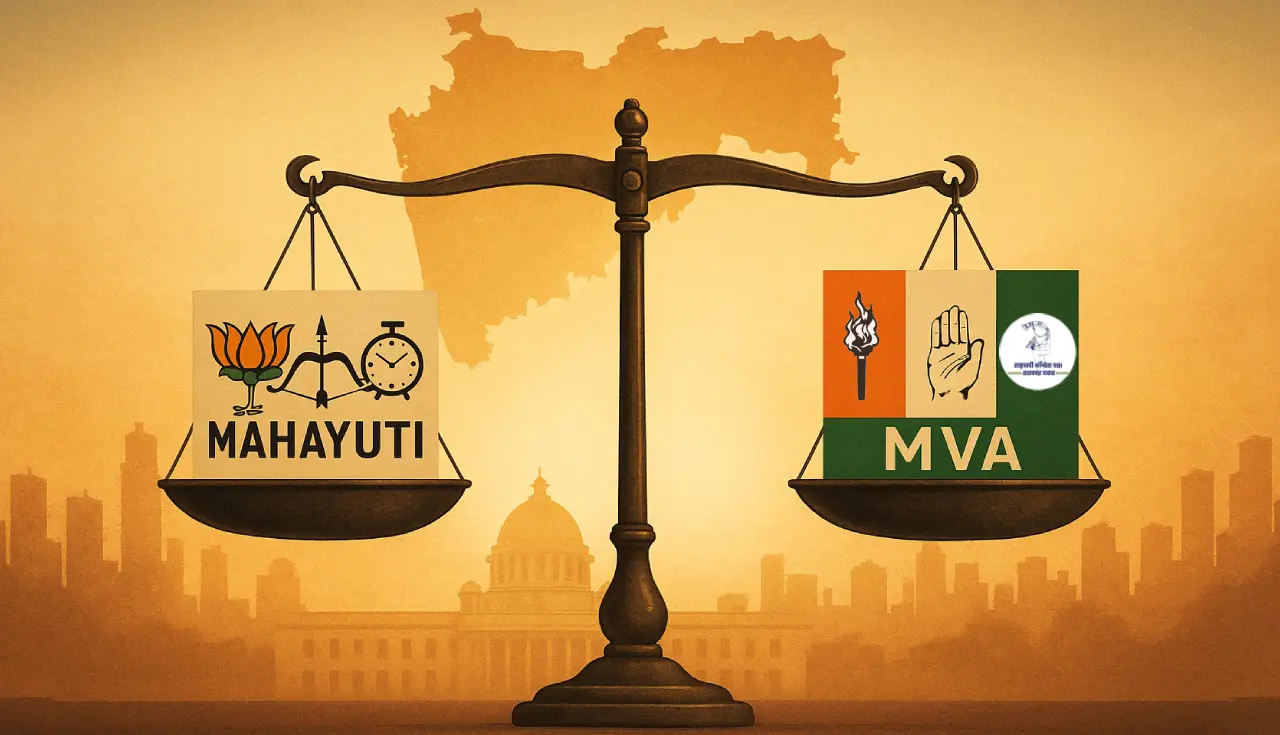
Why Maharashtra's Local Body Elections Could Redefine the State's Political Future 18
The upcoming local bodies elections in Maharashtra are no ordinary contests. They are the first major litmus test for the Mahayuti alliance — a coalition that came together out of strategy and necessity — and a proving ground for the Bharatiya Janata Party (BJP) as it prepares the battlefield for its ambitious “Shatpratishat BJP” (100% BJP) strategy aimed at the 2029 Assembly elections.
Behind the local battles for municipal corporations, zilla parishads, and panchayat samitis lies a much larger political war — one that will determine who controls Maharashtra’s political narrative for the next decade. For the BJP, these polls are not merely administrative contests; they are about deepening its grassroots presence, asserting its organizational supremacy, and reclaiming dominance in regions where local equations once tilted in favor of regional parties like Shiv Sena and the NCP.
The BJP’s approach to these elections is a calculated mix of ambition and caution. Unlike earlier years, when alliances dictated the structure of local campaigns, this time the party is putting its organizational growth above coalition comfort. By adopting a need-based alliance model, the BJP has sent a clear signal to its partners — particularly Eknath Shinde’s Shiv Sena and Ajit Pawar’s NCP — that coalition politics will no longer come at the cost of the BJP’s expansion.
Chief Minister Devendra Fadnavis, who remains the party’s chief strategist and the central pillar of Mahayuti’s stability, has made the approach explicit: “The BJP will contest as Mahayuti wherever possible, but where alliances are not feasible, we will go solo.” The statement may sound diplomatic, but it carries an unmistakable undertone — BJP will no longer play second fiddle in regions where it has grown strong.
The political message is straightforward: BJP wants to consolidate its own cadre, energize its booth-level workers, and prepare for long-term dominance rather than short-term alliance arithmetic.
Nowhere is this power balancing act more visible than in Mumbai and Thane — the twin nerve centers of Maharashtra politics. Mumbai, with its 227-seat Brihanmumbai Municipal Corporation (BMC), is the crown jewel. For decades, the Shiv Sena ruled it as its emotional and political fortress. But for BJP, dislodging the Sena (Uddhav Balasaheb Thackeray faction) from BMC is not just a political mission — it’s a symbolic conquest that would reassert its supremacy in Maharashtra’s urban heartland.
The challenge, however, lies in coalition management. While the BJP is ready for an alliance with Shiv Sena and NCP in Mumbai, it has deliberately left the Thane decision open-ended. Thane, after all, is the bastion of Deputy Chief Minister Eknath Shinde — his prestige seat and the epicenter of his faction’s strength. The local BJP unit in Thane has already sounded the war bugle with its aggressive slogan, “Ab ki board 70 paar,” setting a target of 70-plus seats out of 131 and hinting that it wants to capture the mayor’s post.
This bold positioning has not gone unnoticed. For Shinde, the Thane municipal election is non-negotiable. For BJP, it’s a test of how far it can push its organizational muscle without fracturing the alliance.
As insiders reveal, the Mumbai-Thane decisions are deeply interlinked — a delicate political barter that will likely be finalized by the BJP’s central leadership after consultations with all Mahayuti partners. “If BJP concedes Thane, Sena may ease up in Mumbai,” one senior minister admitted privately. “But both sides want to show strength, not dependence.”
This tug-of-war underscores the uneasy truce within Mahayuti — where each partner wants expansion but none can afford an open rift before 2029.
While Mahayuti grapples with internal coordination, the opposition — under the Maha Vikas Aghadi (MVA) banner — is attempting a grand counter-consolidation. The potential coming together of Uddhav Thackeray’s Shiv Sena (UBT), Raj Thackeray’s MNS, Sharad Pawar’s NCP (SP), and the Congress could dramatically alter the equation, especially in Mumbai.
The Uddhav–Raj Thackeray handshake, if it materializes into an electoral alliance, will be politically explosive. The combined Marathi vote bank, estimated at 30–35%, alongside the Muslim electorate, could form a formidable bloc. Both brothers share not only the Thackeray surname but also emotional resonance with Marathi pride — a sentiment deeply rooted in Mumbai’s political psyche.
For the MVA, this alignment is less about ideology and more about survival. The opposition senses that Mahayuti’s growing strength under the BJP’s umbrella can only be countered through an emotional Marathi consolidation — something only the Thackerays can engineer.
In Mumbai, where local issues often merge with cultural identity, the Shiv Sena (UBT) is expected to play the “betrayal” card — portraying Eknath Shinde as the turncoat and BJP as the usurper. With Congress and NCP (SP) focusing on minority and slum votes, the MVA could potentially make the contest in Mumbai intensely bipolar.
If that happens, BJP will have to depend heavily on Shinde’s Sena and Ajit Pawar’s NCP machinery to mobilize votes. A split within Mahayuti or even a hint of discord could hand the advantage to the opposition.
What makes these local elections especially complex is that the Mahayuti is not a natural coalition but a strategic compulsion. BJP, Shinde Sena, and Ajit Pawar’s NCP all have distinct voter bases, cadres, and ambitions. Each wants to use the local body polls to grow its own footprint.
BJP’s insistence on a flexible, district-wise approach reflects this reality. “One formula for all local bodies is not practical,” admitted a senior BJP functionary. “Every district has different political dynamics.”
In Western Maharashtra, especially Pune and Pimpri-Chinchwad — where the NCP (Ajit Pawar faction) has strong roots — BJP might avoid pre-poll alliances to test its independent strength. In Vidarbha and North Maharashtra, BJP is dominant and will contest solo to reinforce its control. Meanwhile, in Marathwada — battered by floods and agrarian distress — BJP will have to work doubly hard to retain voter confidence.
This decentralized, adaptive approach shows the party’s maturity. It’s no longer content with symbolic alliances; it wants measurable growth on the ground.
For the BJP, these elections are not about immediate power — they are about building the foundation for 2029. The local bodies serve as the first rung of the political ladder, nurturing future legislators, consolidating the cadre, and shaping narratives at the booth level. Winning these bodies means controlling local governance, welfare schemes, and influence networks — all of which translate into electoral capital later.
If BJP manages to perform well, it will not only strengthen its Mahayuti partners’ dependence on it but also cement its image as the pivot of Maharashtra politics. A strong showing will energize the cadre, demoralize the opposition, and establish the groundwork for Fadnavis’s long-term vision — a Maharashtra where BJP doesn’t just lead the coalition but becomes synonymous with governance itself.
However, the opposition sees an opening. The MVA, though ideologically incoherent, is trying to rebuild its credibility through emotional and cultural narratives. Uddhav Thackeray has recast himself as the custodian of “real Hindutva,” contrasting his father Balasaheb’s legacy with what he calls BJP’s “political appropriation.”
Raj Thackeray’s MNS, once sidelined, is finding renewed relevance as a Marathi voice — now willing to align if it means survival. Sharad Pawar’s NCP (SP) remains the intellectual and emotional glue of the opposition, while Congress is content playing a supplementary role by focusing on minorities and urban poor.
If they manage to project unity and avoid vote-splitting, the opposition could make the battle in urban centers fiercely competitive. But that’s a big if. Past experience shows that personal egos and turf wars often derail opposition cohesion at the local level.
At the macro level, these elections will reveal whether Maharashtra’s politics has decisively shifted from personality-driven regionalism to organizational nationalism. For decades, the state was ruled by strong regional satraps — from Balasaheb Thackeray to Sharad Pawar. Today, that dominance is challenged by a BJP that operates with national coordination, deep pockets, and a disciplined cadre.
Mahayuti represents the transitional phase — a bridge between regional charisma and national organization. Whether this alliance survives long enough to deliver electoral dividends depends on how skillfully Fadnavis and the BJP leadership manage the egos and ambitions of their partners.
If trends and ground reports are any indication, BJP and its allies are positioned advantageously in most regions — particularly in Vidarbha, North Maharashtra, and parts of Western Maharashtra. However, Mumbai and Thane will remain tough, emotional battlegrounds where local sentiments could outweigh macro narratives.
A strong BJP showing will reaffirm the Mahayuti’s stability and demoralize the opposition. A fractured verdict, however, will embolden Uddhav Thackeray and give MVA a psychological edge before the 2029 run-up.
The outcome, therefore, will not just determine who controls municipal boards — it will decide which ideological current dominates Maharashtra’s future: the disciplined nationalism of BJP or the emotional regionalism of the Thackerays.
In essence, Maharashtra’s local body elections are no longer local. They are a referendum on leadership, alliance stability, and political foresight. For BJP, this is the dress rehearsal for 2029 — an exercise in asserting command while managing coexistence. For the opposition, it’s perhaps the last window to prove relevance before being completely overshadowed by the saffron surge.
The stakes couldn’t be higher. The battles may unfold in municipal wards, but the war is for Maharashtra’s soul — and whoever wins here, writes the script for the decade to come.