Home Blog Page 3

The Nashik ‘Captain’ Scandal: When Power, Blind Faith, and Silence Collide

nashik, captainm scandal, nashik scandal, ashok karat, ashok kumar karat, captain
The Nashik 'Captain' Scandal: When Power, Blind Faith, and Silence Collide 2

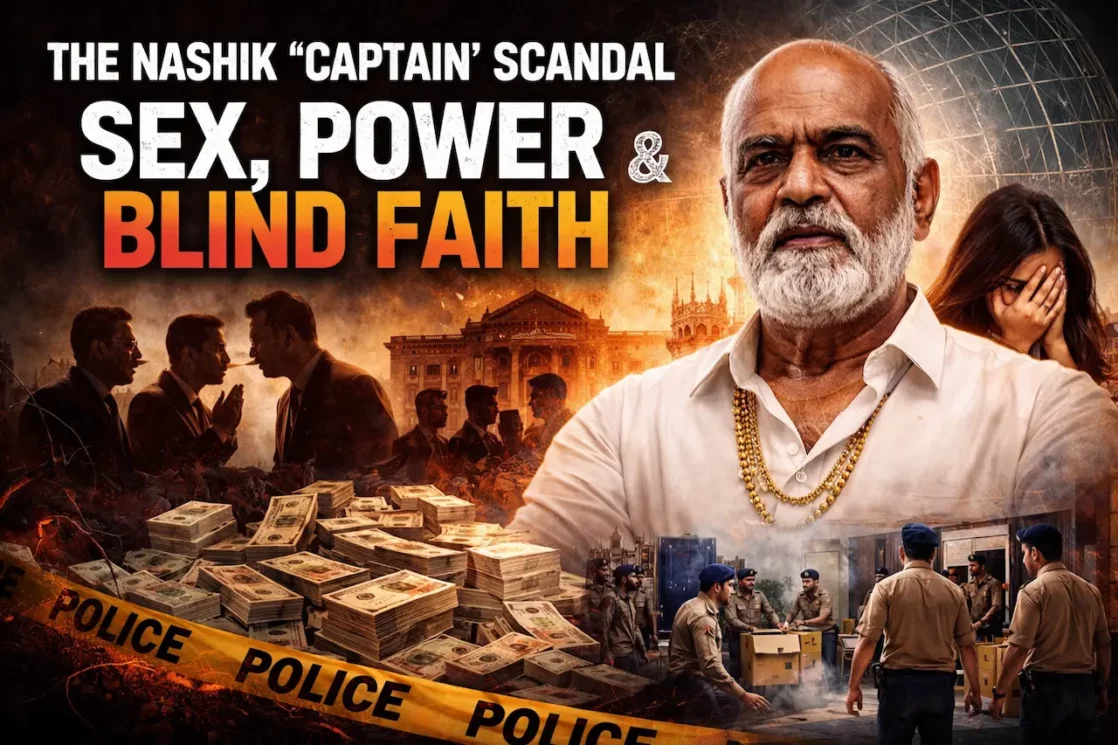
This is not just another criminal case. This is not merely about one man falling from grace. What has unfolded in Nashik is a brutal exposure of a system that thrives on blind faith, political convenience, and collective silence. At the center of this storm stands Ashok Kharat—a self-styled “Captain,” a so-called cosmology expert, a numerologist, a temple trust president, and a man who, until recently, enjoyed proximity to power, privilege, and unquestioned influence.

Today, he stands arrested on grave allegations, including rape. And suddenly, the carefully constructed image collapses. But the real question is—did it collapse overnight? Or did we all choose not to see what was always there?

Kharat’s rise is not accidental. It is engineered—by perception, by access, and most importantly, by endorsement. A retired merchant navy officer who claimed to have traveled across 154 countries, he built an aura of global wisdom and spiritual authority. He positioned himself as a rare blend of astrology, numerology, and ritual expertise—a “solution provider” for the powerful and the desperate alike.

And people bought it. Not just ordinary citizens, but politicians, businessmen, celebrities—those who publicly speak the language of rationality but privately surrender to superstition when stakes are high. Elections, business deals, personal crises—Kharat became a go-to man for “guidance.” Guidance that reportedly came with a price tag reaching ₹50 lakh per consultation.

Let that sink in.

Fifty lakh rupees for advice rooted in unverifiable claims, wrapped in religious undertones, and sold as certainty in uncertain times. This was not spirituality. This was a business model—calculated, exclusive, and immensely profitable.

The police now estimate his assets to be worth over ₹100 crore, spread across Nashik, Shirdi, and beyond. Land, properties, investments—an empire built not on industry or innovation, but on fear, belief, and influence. And yet, for years, no serious questions were asked. Why?

Because power protects what it uses.

Kharat’s real strength was not astrology. It was access. His proximity to influential figures gave him legitimacy. When powerful people publicly or privately associate with someone, they don’t just seek advice—they confer credibility. They create a halo effect that shields scrutiny and attracts more followers.

And this is where the story becomes deeply uncomfortable.

Because the same people who now distance themselves from him were once part of the ecosystem that elevated him. The same corridors of power that now express shock were once doors he walked through with ease.

So let’s ask the question directly—who enabled Ashok Kharat?

Who gave him platforms?
Who validated his claims?
Who turned a blind eye as his influence grew?

Because make no mistake—men like him do not rise alone. They are lifted.

The most disturbing aspect of this case, however, is not his wealth or his connections. It is the allegations of exploitation. A 35-year-old woman has accused him of repeated rape. Police raids have reportedly uncovered over 50 obscene videos from his phone. This is not just criminality—it is predation.

And it forces us to confront an ugly truth: when authority is cloaked in spirituality, abuse becomes easier, and victims become more vulnerable.

Because questioning a “godman” is seen as questioning faith itself.

And that silence is precisely what predators rely on.

The controversy deepens further with allegations linking Kharat to individuals in positions meant to protect society—particularly women. Questions are being raised about his proximity to those in leadership roles, including figures associated with women’s welfare.

Now, whether these links are proven or not is for the investigation to determine. But the perception itself is damaging enough. Because it raises a fundamental question—if those entrusted with safeguarding society are themselves influenced by such individuals, where does accountability begin?

This is not about targeting individuals. This is about examining a pattern.

A pattern where self-proclaimed spiritual figures gain access to power.
A pattern where influence replaces scrutiny.
A pattern where wealth accumulates without transparency.
A pattern where allegations surface only after damage is done.

And then, as always, the narrative shifts.

Some call it political vendetta. Others claim it is a conspiracy to target certain individuals or weaken specific power groups. There are whispers of factional politics, of rivalries, of strategic takedowns.

Maybe there is politics involved. Maybe there isn’t.

But here’s the uncomfortable reality—whether this is a political conspiracy or a genuine crackdown, the existence of someone like Kharat at the heart of power circles is itself the real scandal.

Because even if politics is at play, it only exposes what was already there.

You cannot weaponize something that does not exist.

So instead of getting lost in the noise of political narratives, we must focus on the core issue—how did a man accused of such serious crimes gain such immense influence in the first place?

The answer is simple, but inconvenient.

Because we allowed it.

As a society, we have normalized the idea of seeking shortcuts to success—whether through astrology, rituals, or “divine guidance.” We have blurred the line between faith and blind faith. We have elevated individuals without demanding accountability, simply because they speak the language of belief.

And when influential people endorse such figures, it sends a dangerous message—that power respects superstition more than reason.

This is not a new phenomenon. India has seen its share of self-styled godmen who rose to prominence, amassed wealth, and eventually faced serious allegations. The pattern repeats because the system that enables them remains unchanged.

Public fascination.
Political patronage.
Lack of scrutiny.
Delayed accountability.

It is a cycle—and Kharat is just the latest chapter.

The formation of a Special Investigation Team (SIT) suggests that authorities are taking this case seriously. Investigations are underway across multiple locations, and there is a strong possibility that more victims, more financial irregularities, and more connections will come to light.

But let’s be clear—legal action alone is not enough.

Because this is not just a law-and-order issue. It is a societal failure.

If tomorrow another “expert” emerges with a new label—cosmology, energy healing, divine science—will we question them? Or will we once again be impressed by titles, connections, and appearances?

Will politicians stop associating with such figures?
Will celebrities stop endorsing them?
Will the public stop following them blindly?

Or will we wait for the next scandal?

This editorial is not about outrage. Outrage is easy. It fades.

This is about accountability.

Accountability of those who create influence.
Accountability of those who validate it.
And accountability of a society that often chooses belief over truth.

Ashok Kharat is under investigation. The law will take its course. He may be guilty, he may defend himself, and the courts will decide his fate.

But beyond the courtroom, a larger judgment is pending.

A judgment on our collective conscience.

Because when fraud wears the mask of faith, and power chooses convenience over responsibility, the real victim is not just an individual—it is society itself.

And unless we confront that truth, this will not be the last “Captain” we salute before he sinks.
Adharma in the Name of the Divine: A Dark Stain on the Dignity of Sanatan

adharma, sanatan dharma, sanatan, sadhus, guru, babas
Adharma in the Name of the Divine: A Dark Stain on the Dignity of Sanatan 4

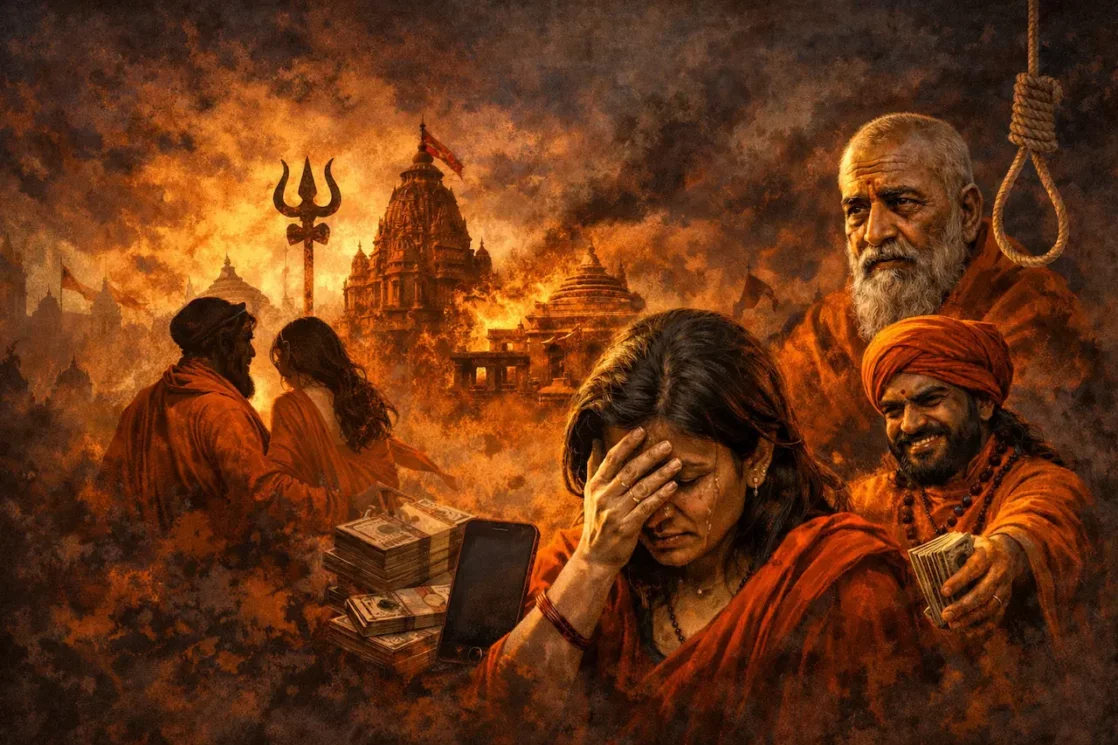
This is not merely an isolated incident; it is a stark reflection of a moral decay we have long chosen to ignore under the comforting label of “faith.” When wrongdoing thrives under the cover of religion and society chooses silence despite recognizing it, the problem ceases to belong to individuals—it becomes systemic. The case of Mamta Joshi, alias Mandakini, is not just disturbing; it is a brutal exposure of a rotting structure that has gone unquestioned for far too long.

There was a time when renunciation was not a title but a lifelong discipline. To be accepted into the fold of saints required years of surrender, rigorous training under a Guru, and a complete conquest over ego, desire, and greed. Today, that sacred pathway appears dangerously diluted. A woman who began by cooking at religious gatherings gradually entered the inner circles of ascetics through manipulation, false claims, and calculated proximity. Eventually, during the Ujjain Simhastha, she rose to the rank of Mahamandaleshwar—an elevation that once demanded spiritual merit, now seemingly granted without adequate scrutiny. This is not merely an individual’s cunning; it is a collapse of institutional vigilance.

But the real horror lies deeper. Allegations suggest that a woman was lured under the pretext of spiritual guidance, secretly filmed in compromising conditions, and then blackmailed using those recordings. She was allegedly coerced into falsely accusing a saint of rape. This is not just immorality—it is a calculated criminal enterprise masquerading as religion. Here, devotion has been replaced by intimidation, and spirituality by manipulation. Faith has become a currency, traded in fear, greed, and control.

And let us not pretend this is unprecedented. Over the past decade, numerous controversies have surfaced—cases of sexual exploitation within ashrams, financial fraud under the guise of donations, and power struggles disguised as spiritual hierarchy. The pattern is painfully consistent: build trust, exploit it, and when exposed, dismiss it all as a conspiracy against religion. But how long can this defense hold? Is every accusation a conspiracy? Is every victim lying? If so, where does truth reside?

The most tragic consequence of such scandals is borne by women. They are first drawn in through faith and trust, then exploited, and finally discarded—often with their dignity shattered beyond repair. When they dare to resist or speak out, society frequently turns against them, questioning their character rather than the actions of the accused. It is a double injustice—first the violation, then the vilification.

Is this the ethos Sanatan Dharma claims to uphold? A civilization that reveres women as embodiments of Shakti—how does it reconcile such repeated indignities within its own spiritual institutions? If a woman cannot feel safe within the very spaces that preach purity and protection, then what moral authority remains?

An even more uncomfortable question arises—does the saintly order still possess any mechanism of self-purification? Who ensures that those donning saffron truly embody renunciation and not ambition? When positions can allegedly be influenced by money, when ashrams become battlegrounds for control, and when words like blackmail and honeytrap find their way into religious discourse, we are no longer dealing with isolated lapses—we are witnessing systemic erosion.

So how can such individuals claim to safeguard the dignity of Sanatan Dharma? How can those who lack personal integrity guide a society seeking moral direction? If saffron robes become tools for power rather than symbols of sacrifice, then the very identity of spiritual leadership stands compromised.

Have we, as a society, paused to examine how easily our faith is being manipulated? Or have we chosen convenient silence out of fear that questioning might “damage religion”? But does suppressing truth preserve dignity—or does it accelerate decay? History is clear: institutions are not destroyed by criticism, but by unchecked corruption.

Consider this—when a doctor commits malpractice, we demand accountability from the entire medical system. When a police officer is corrupt, we question the integrity of law enforcement. But when a self-proclaimed saint is accused of grave misconduct, we hesitate even to ask questions. Why? Is religion so fragile that it cannot withstand scrutiny? Or have we become too complacent to defend it honestly?

Sanatan Dharma, by its very nature, is eternal and resilient. Its strength lies in its ability to evolve, to introspect, and to cleanse itself. But that process of self-correction requires courage—the courage to confront uncomfortable truths. If we abandon that courage, we risk allowing decay to masquerade as tradition.

What is needed today is not blind defense, but fearless introspection. The saintly community must take responsibility for cleansing its own ranks. Empty statements and claims of conspiracy will not suffice. Transparency, accountability, and strict adherence to ethical conduct are no longer optional—they are imperative.

Society, too, must awaken. Blind devotion is not faith; it is surrender of intellect. True faith is rooted in awareness, in the ability to question without losing reverence. If followers cannot question their spiritual leaders, then the relationship ceases to be spiritual—it becomes subservient.

Ultimately, this is not just about one scandal or one individual. It is about the direction in which a civilization is heading. Are we moving toward a society where religion becomes a façade behind which anything can be justified? Or will we uphold the core principles that have sustained Sanatan Dharma for millennia—truth, discipline, and righteousness?

Because the truth is simple and unyielding—Sanatan Dharma does not need protection from external forces; it needs protection from those who exploit it from within. And until we recognize this distinction, such scandals will not remain exceptions—they will become the norm.

So the final, uncomfortable question remains: how long will we continue to look away? And if not now, then when will we choose to stand up for the true dignity of Sanatan Dharma?

204 Veterans, Former Officials Demand Rahul Gandhi’s Apology Over ‘Unbecoming’ Parliament Protest

adani, gautam adani, rahul gandhi, gandhi, us indictment, bribery charges, pahalgam, kashmir, leader of opposition, monopoly, indigo
204 Veterans, Former Officials Demand Rahul Gandhi's Apology Over 'Unbecoming' Parliament Protest 6

A group of 204 retired armed forces personnel, former civil servants, diplomats and legal professionals on Tuesday demanded that Leader of Opposition in the Lok Sabha, Rahul Gandhi, apologise to the nation for his conduct during a protest within the Parliament premises, calling it a violation of decorum and institutional dignity.

In an open letter, the signatories alleged that Gandhi’s actions during a protest on March 12 inside the Parliament House complex amounted to a “deliberate defiance” of the Speaker’s directives and reflected a disregard for parliamentary authority.

“Despite explicit instructions from the Speaker prohibiting demonstrations within Parliament premises, the Opposition, led by Rahul Gandhi, chose to ignore these directions,” the letter stated.

The group said such conduct undermines established parliamentary norms and places “political theatrics” above the dignity of a constitutional institution. They urged Gandhi to apologise and introspect, stating that preserving the sanctity and authority of Parliament is essential.

The signatories also criticised the manner in which the protest was carried out, alleging that Gandhi and several MPs were seen sitting on the steps of Parliament and engaging in activities that were “wholly unbecoming” of elected representatives.

“Parliament is the temple of democracy, and its dignity must be maintained at all times—not only inside the chambers but across the entire premises, including corridors, staircases and lobbies,” the statement said.

The letter further claimed that repeated such actions risk lowering the quality of public discourse and eroding faith in democratic institutions.

“Such behaviour suggests a pattern driven more by personal political expression than respect for democratic processes,” the signatories added.

The initiative was coordinated by former Jammu and Kashmir Director General of Police S P Vaid and includes signatures from 116 retired armed forces officers and 84 former bureaucrats, among them four former ambassadors and four senior advocates.

Expressing concern over disruptions and the loss of valuable parliamentary time, the group said such protests weaken the functioning of the legislature and harm the country’s democratic image.

They also described the conduct as particularly concerning given the responsibility attached to the office of the Leader of Opposition, urging greater accountability from those holding constitutional positions.

Lok Sabha Revokes Suspension of 8 MPs; Speaker Om Birla Warns Against Protests Inside House

om birla, lok sabha, revokes, suspension, mps, member of parliament
Lok Sabha Revokes Suspension of 8 MPs; Speaker Om Birla Warns Against Protests Inside House 8

The Lok Sabha on Tuesday revoked, with immediate effect, the suspension of eight opposition MPs who were barred from the House on February 3 for “unruly” behaviour, even as Speaker Om Birla issued a stern warning against protests inside Parliament.

The decision came after Congress member K Suresh urged the House to reconsider the suspension, stating that the Opposition regretted the earlier disruptions and was committed to ensuring the smooth functioning of proceedings.

Responding to the request, Parliamentary Affairs Minister Kiren Rijiju said there was a need to draw a “Laxman Rekha” to maintain discipline in the House, a view that found support across both treasury and opposition benches.

Speaker Birla emphasised that no placards, posters, photographs or AI-generated images should be displayed either inside the House or within the Parliament complex. He underlined that maintaining decorum was essential for the functioning of the world’s largest democracy.

Following the discussion, Rijiju moved a motion to revoke the suspension of seven Congress MPs and one CPI(M) member, which was adopted by a voice vote.

The MPs whose suspension was lifted include Gurjeet Singh Aujla, Hibi Eden, C Kiran Kumar Reddy, Amarinder Singh Raja Warring, Manickam Tagore, Prashant Padole and Dean Kuriakose from the Congress, and S Venkatesan from the CPI(M).

The eight MPs had been suspended for the remainder of the Budget session, scheduled to conclude on April 2, after a resolution was passed citing unruly conduct during proceedings.

During the debate, Samajwadi Party MP Dharmendra Yadav supported the move to revoke the suspension, assuring the House that his party would uphold parliamentary dignity. However, he also urged members of the ruling alliance to maintain decorum, naming BJP MP Nishikant Dubey in his remarks.

Dubey rejected the allegation, stating that in his 17-year parliamentary career, he had never acted in a manner that undermined the dignity of the House, and demanded an apology.

NCP leader Supriya Sule also called for mutual respect between the ruling and opposition benches, stressing that both sides must adhere to a “Laxman Rekha” to ensure smooth functioning.

Union minister Rajiv Ranjan Singh echoed similar sentiments, urging cooperation from all members.

Rijiju reiterated that the ruling alliance has always respected parliamentary rules and called for collective responsibility in maintaining order.

Suresh, in his concluding remarks, said the Opposition had already refrained from displaying placards since Monday and reaffirmed its commitment to ensuring the House functions without disruption.

Opposition Moves to Remove CEC Gyanesh Kumar: Here’s the Constitutional Process

gyanesh kumar, cec, election commissioner, chief of election commission
Opposition Moves to Remove CEC Gyanesh Kumar: Here's the Constitutional Process 10

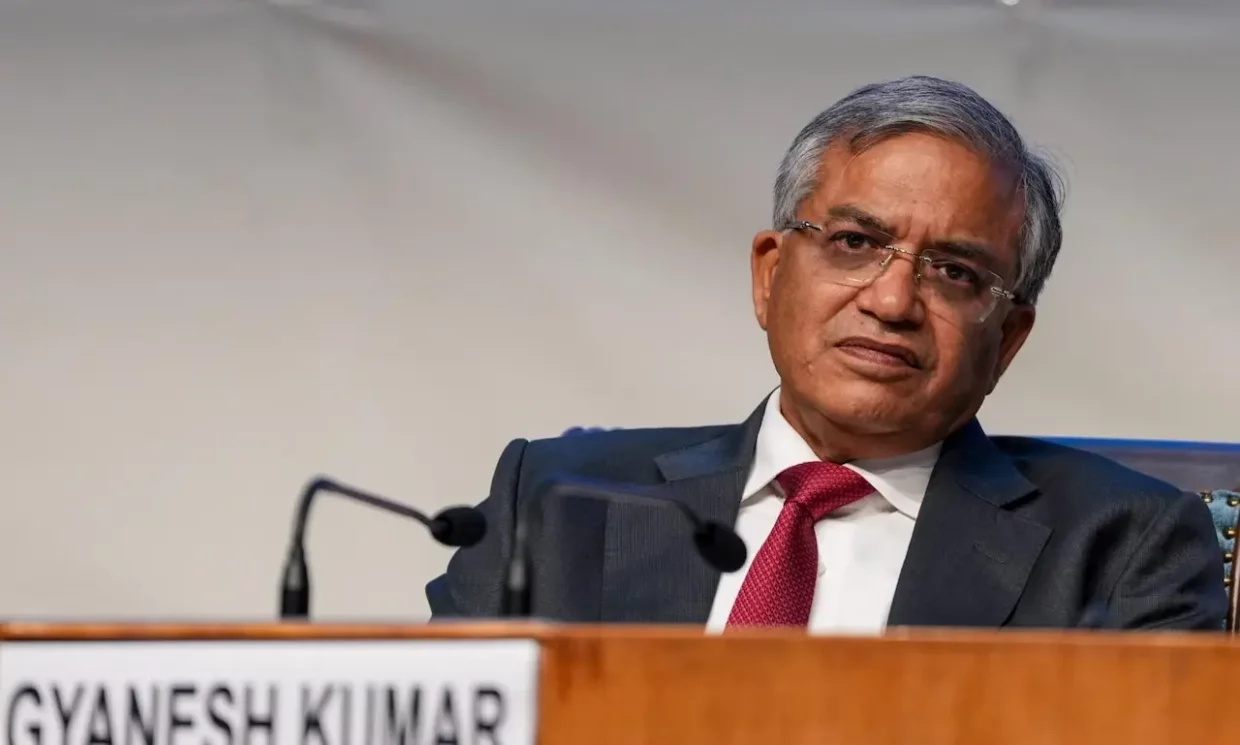
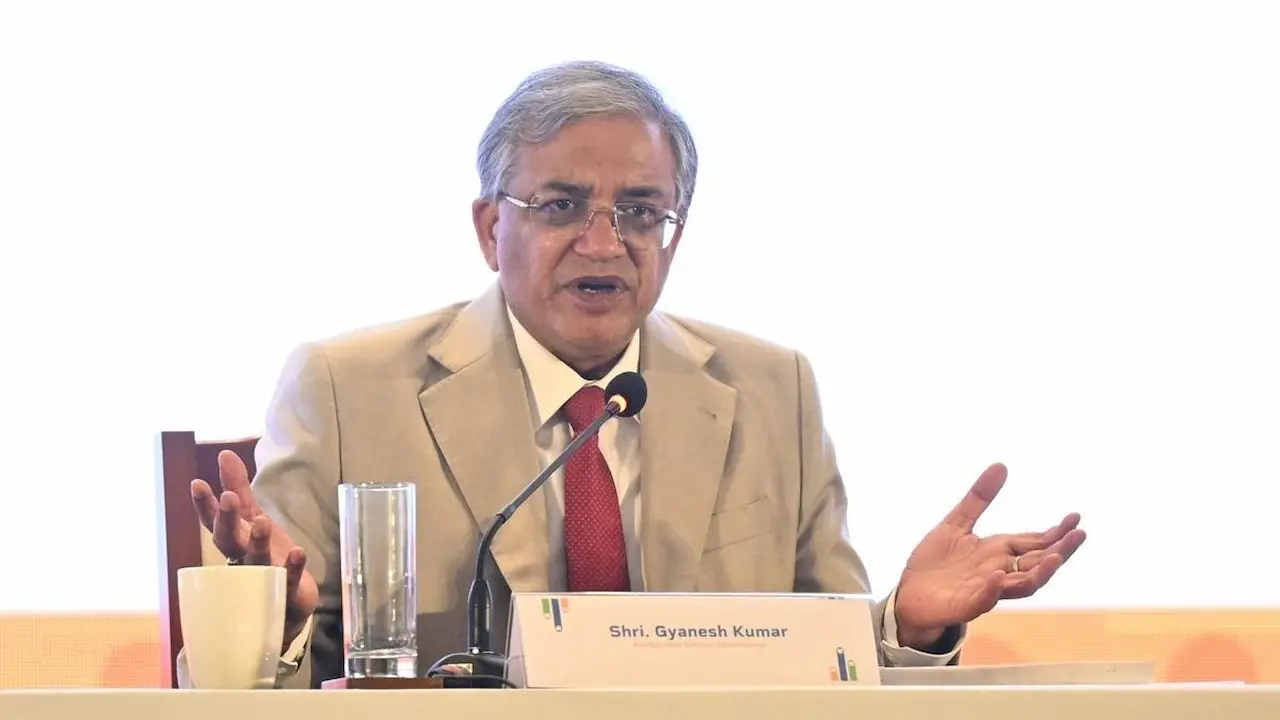
Opposition Members of Parliament have submitted notices in both Houses of Parliament seeking a motion for the removal of Chief Election Commissioner (CEC) Gyanesh Kumar, sources said on Friday.

According to sources, the notice has been signed by 130 MPs in the Lok Sabha and 63 MPs in the Rajya Sabha. The signatories include members from parties associated with the INDIA bloc as well as the Aam Aadmi Party (AAP), which, though no longer formally part of the alliance, has backed the initiative. Some Independent MPs have also supported the move, while several others have reportedly shown interest in joining it.

This marks the first time in India’s parliamentary history that a notice has been submitted seeking the removal of a Chief Election Commissioner.

Sources said the notice lists seven allegations against Kumar, including claims of “partisan and discriminatory conduct in office”, “deliberate obstruction of investigation into electoral fraud”, and “mass disenfranchisement”. Opposition parties have accused the CEC of favouring the ruling Bharatiya Janata Party (BJP), particularly in relation to the ongoing Special Intensive Revision (SIR) of electoral rolls, which they claim could benefit the party at the Centre.

Under the Constitution, the process for removing the Chief Election Commissioner is similar to that for removing a judge of the Supreme Court or a High Court. The removal can only take place on grounds of “proven misbehaviour or incapacity”.

In a blog post, Trinamool Congress Rajya Sabha MP Derek O’Brien said the term “proven misbehaviour” has been interpreted to include deliberate abuse of authority, partisan exercise of constitutional duties in favour of a particular political formation, and actions that erode public confidence in the independence and impartiality of the Election Commission.

O’Brien noted that India has had 25 Chief Election Commissioners in the past 75 years and that Parliament has never before initiated a removal motion against a CEC.

Describing the move as a “strong message”, he said opposition parties were using “every constitutional tool available to protect the sanctity of India’s democratic institutions”. He added that if the notice is not taken up by the government, questions may arise about a possible understanding between the executive and the CEC.

Article 324(5) of the Constitution states that the CEC cannot be removed except in the same manner and on the same grounds as a judge of the Supreme Court. The motion can be introduced in either House of Parliament and must be passed by a special majority — a majority of the total membership of the House and at least two-thirds of members present and voting.

According to the Judges (Inquiry) Act, 1968, if such notices are submitted in both Houses on the same day, a committee will be constituted only after the motion is admitted in both Houses. The committee is jointly formed by the Lok Sabha Speaker and the Rajya Sabha Chairman.

The inquiry panel consists of the Chief Justice of India or a Supreme Court judge, the Chief Justice of one of the High Courts, and a distinguished jurist. The committee conducts proceedings similar to a court trial, including examination and cross-examination of witnesses.

The Chief Election Commissioner is also given an opportunity to present his defence before the panel. Once the committee submits its findings, the report is tabled in Parliament and debated before a final vote on the motion in both Houses.

193 Opposition MPs Move Motion to Remove CEC Gyanesh Kumar, Alleging Electoral Bias

Gyanesh Kumar, cec Gyanesh Kumar, cec, motion, opposition mps
193 Opposition MPs Move Motion to Remove CEC Gyanesh Kumar, Alleging Electoral Bias 12

A total of 193 Opposition Members of Parliament have submitted notices in both Houses of Parliament seeking a motion for the removal of Chief Election Commissioner (CEC) Gyanesh Kumar, sources said on Friday.

According to sources, the notice has been signed by 130 MPs in the Lok Sabha and 63 MPs in the Rajya Sabha.

The signatories include representatives from parties that are part of the INDIA bloc, as well as members of the Aam Aadmi Party, which has supported the initiative despite no longer being formally part of the opposition alliance. Some independent MPs have also backed the move, while several others have reportedly expressed interest in joining the effort.

If taken up, this would mark the first time a motion has been introduced in Parliament seeking the removal of a Chief Election Commissioner.

Sources said the notice outlines seven charges against Kumar, including allegations of “partisan and discriminatory conduct in office”, “deliberate obstruction of investigation into electoral fraud”, and “mass disenfranchisement”.

Opposition parties have accused the CEC of favouring the ruling Bharatiya Janata Party (BJP) in several instances, particularly in connection with the ongoing Special Intensive Revision (SIR) of electoral rolls.

The Opposition has alleged that the revision exercise could result in the removal of legitimate voters and may influence electoral outcomes in favour of the ruling party at the Centre.

The development marks a significant escalation in the ongoing confrontation between the Opposition and the Election Commission ahead of upcoming electoral battles.

After Major Blaze, Thane Factories Ordered to Submit Fire Safety Audit Reports Within a Week

thane factories, fire safety audit, thane, safety audit
After Major Blaze, Thane Factories Ordered to Submit Fire Safety Audit Reports Within a Week 14

Factories operating in the Ambernath industrial belt of Maharashtra’s Thane district have been directed to submit fire and safety audit reports within eight days following a major fire at a chemical unit earlier this week, officials said on Friday.

The directive was issued by Maharashtra Industries Minister Uday Samant after a massive blaze broke out at Shree Ganesh Chemical Company located in the Anandnagar Maharashtra Industrial Development Corporation (MIDC) area on Monday.

Samant visited the accident site on Wednesday and reviewed the safety measures in place at industrial units in the region. During the inspection, he instructed officials to ensure that factories under their jurisdiction strictly comply with fire and safety norms.

“The officials must have comprehensive information about the companies operating in their jurisdiction, particularly regarding their safety systems and fire prevention measures. This information should also be available to public representatives,” Samant said while addressing officials.

The minister also warned of strict action if investigations reveal that any industrial unit deliberately triggered a fire to claim insurance benefits.

“It is our primary responsibility to protect the human settlements located near industrial estates. The safety of citizens cannot be compromised under any circumstances,” he added.

Officials said the MIDC administration has been instructed to ensure that all factories in the Ambernath industrial area submit their fire and safety audit reports within the stipulated time.

The move is aimed at strengthening industrial safety compliance and preventing future fire incidents in one of the region’s major manufacturing hubs.

A Rare Verdict of Mercy: The Harish Rana Case and India’s Difficult Conversation with Dignity in Death

aruna shanbaug, harish rana, case, supreme court, mercy petition
A Rare Verdict of Mercy: The Harish Rana Case and India's Difficult Conversation with Dignity in Death 16

Courts are built on the fundamental principle of protecting life. In India, this principle is deeply rooted in Article 21 of the Constitution, which guarantees every citizen the right to life and personal liberty. Traditionally, courts lean toward preserving life under all circumstances, often interpreting the law in ways that prevent its premature termination. But occasionally, the judiciary is confronted with a case so complex and emotionally wrenching that it must reconsider the meaning of life itself. The recent Supreme Court decision allowing passive euthanasia for Ghaziabad resident Harish Rana, who has remained in a vegetative state for nearly thirteen years, is one such rare moment in Indian legal history.

This verdict is extraordinary not merely because it concerns euthanasia, but because it forces society to confront a deeply uncomfortable question: when life continues only as a biological function, without consciousness, awareness, or the possibility of recovery, does the law still serve justice by insisting that it must continue?

Harish Rana’s story is one of prolonged tragedy. For over a decade, he has remained confined to a bed in a condition medically described as a persistent vegetative state. In such a condition, the body continues to perform basic functions—breathing, circulation, reflexive responses—but the brain loses the capacity for conscious awareness. The person no longer interacts with the world in any meaningful way. There is no recognition, no communication, and no possibility of returning to the life that once existed.

For thirteen long years, his parents cared for him. They did what countless families in India do when confronted with devastating illness—they held on to hope. Medical consultations, treatments, and prayers continued as the years passed. But hope gradually collided with the harsh limits of medical science. Doctors eventually confirmed that Harish’s condition was irreversible, leaving no possibility that he would regain consciousness or recover.

The decisive medical opinion came from experts at the All India Institute of Medical Sciences (AIIMS). Their assessment was unequivocal: there was no clinical possibility of recovery. Harish’s body was functioning only because of sustained medical care and life-support systems.

Faced with this grim reality, Harish’s parents made an agonizing decision that no parent ever imagines making. They approached the Supreme Court of India, requesting permission for passive euthanasia—the withdrawal of life-sustaining treatment so that their son could be allowed to die naturally and with dignity.

The request itself highlights why the case is so rare.

In India, euthanasia remains a legally sensitive subject. Active euthanasia, where a person is deliberately given a drug or injection to end life, is illegal and treated as a criminal act. Passive euthanasia, however, occupies a narrow legal space under strict judicial guidelines. It involves the withdrawal or withholding of medical treatment that artificially prolongs life.

The roots of this legal framework lie in one of the most emotional cases ever heard by the Indian judiciary—the Aruna Shanbaug case.

Aruna Shanbaug was a young nurse working at Mumbai’s King Edward Memorial Hospital in 1973 when she was brutally assaulted by a hospital ward boy. The attack left her with severe brain damage, pushing her into a vegetative state from which she never recovered. For 42 years, she remained confined to a hospital bed, unable to speak, move, or respond to the world around her.

Her case reached the Supreme Court in 2011 when journalist Pinki Virani filed a petition seeking permission for euthanasia. The court faced an unprecedented moral and legal dilemma. On one hand was the sanctity of life, a principle deeply embedded in Indian law. On the other was the question of whether keeping a person alive indefinitely in a vegetative state could truly be called life.

In its landmark 2011 judgment, the Supreme Court rejected active euthanasia but allowed passive euthanasia under strict conditions, laying down detailed guidelines for such cases. The court ruled that in exceptional circumstances, life-support treatment could be withdrawn if a medical board confirmed that the patient had no chance of recovery and if the decision was approved by the High Court.

Although Aruna Shanbaug herself continued to live until 2015 under hospital care, her case transformed India’s legal approach to end-of-life decisions.

The legal framework evolved further in 2018, when the Supreme Court recognized the concept of a “living will.” This allowed individuals to declare in advance that if they were ever placed in an irreversible medical condition, they did not wish to be kept alive artificially. The court also reaffirmed that the right to life includes the right to die with dignity, though within carefully regulated limits.

Yet despite these guidelines, cases like Harish Rana’s remain extremely rare.

Unlike many situations where hospitals themselves initiate the process through medical boards, the Rana case reached the Supreme Court directly through a family plea. The court therefore approached the matter with exceptional caution. Judges did not rely solely on medical documents; they even interacted with Harish’s parents during the hearings to understand their emotional and financial circumstances.

The court wanted to ensure that the request was not driven by fatigue, economic hardship, or external pressure. In matters involving life and death, such safeguards are essential.

After reviewing the medical reports and hearing the family’s plea, the Supreme Court arrived at a carefully considered decision. The court granted permission for passive euthanasia but ordered that the process must take place under strict medical supervision at AIIMS’ palliative care unit.

The ruling emphasized that life-support treatment would be gradually withdrawn while ensuring that the patient experiences no suffering or indignity during the process. The objective was not to hasten death but to allow a natural end once artificial medical intervention was removed.

This insistence on dignity reflects the broader philosophy of Indian constitutional law. Over the years, the Supreme Court has repeatedly interpreted Article 21 as more than just a right to exist. It is a right to live with human dignity, autonomy, and self-respect.

The Harish Rana case pushes that interpretation into one of the most sensitive areas of human existence. It forces society to confront a difficult truth: modern medicine can keep the body alive far beyond the point where consciousness and personhood have vanished.

Technology can prolong biological life, but it cannot restore the human experience that gives life its meaning.

The Supreme Court’s verdict therefore walks a delicate line. It does not undermine the sanctity of life, nor does it open the door to widespread euthanasia. Instead, it acknowledges that in certain extreme and irreversible situations, compassion and dignity must guide the law.

For Harish Rana’s parents, the ruling brings an end to thirteen years of suspended grief. For the legal system, it marks another step in India’s evolving conversation about the ethics of life, suffering, and dignity.

And for society at large, the case revives a profound and unsettling question—one that neither law nor medicine can fully answer.

When life becomes only a mechanical continuation of breath and heartbeat, is the true duty of compassion to prolong it indefinitely, or to allow it to end with dignity?

The Supreme Court, in this rare and courageous verdict, has chosen dignity.

Kejriwal Questions PM Modi on Strait of Hormuz: Has Iran Assured Safe Passage for Indian Ships?

arvind kejriwal, kejriwal, pm modi, modi, strait of hormuz, iran
Kejriwal Questions PM Modi on Strait of Hormuz: Has Iran Assured Safe Passage for Indian Ships? 18

Aam Aadmi Party (AAP) convenor and former Delhi chief minister Arvind Kejriwal on Friday asked Prime Minister Narendra Modi whether Iran had assured India that its ships would be allowed to pass safely through the Strait of Hormuz amid escalating tensions in West Asia.

Kejriwal’s remarks came a day after Prime Minister Modi spoke with Iranian President Masoud Pezeshkian over the phone to discuss the “serious situation” in the region.

During the conversation, Modi emphasised that the safety and security of Indian nationals, along with the uninterrupted transit of goods and energy supplies, remain India’s top priorities.

Reacting to the development, Kejriwal took to social media platform X to question whether India had received any assurance from Tehran regarding the safe passage of Indian vessels through the strategic waterway.

“Prime Minister, has the President of Iran assured you that they will allow our ships to pass through Hormuz? Will the country soon get relief from this serious crisis?” Kejriwal wrote in Hindi.

His statement comes amid growing concerns over disruptions to global energy supplies after Iran reportedly closed the Strait of Hormuz, one of the world’s most critical shipping routes through which a significant portion of India’s crude oil imports pass.

Tensions have further intensified after a bulk oil carrier bound for India was reportedly fired upon by Iranian forces while attempting to cross the Strait of Hormuz three days ago.

The developments have raised questions about the impact of the West Asia crisis on India’s energy security and maritime trade routes.

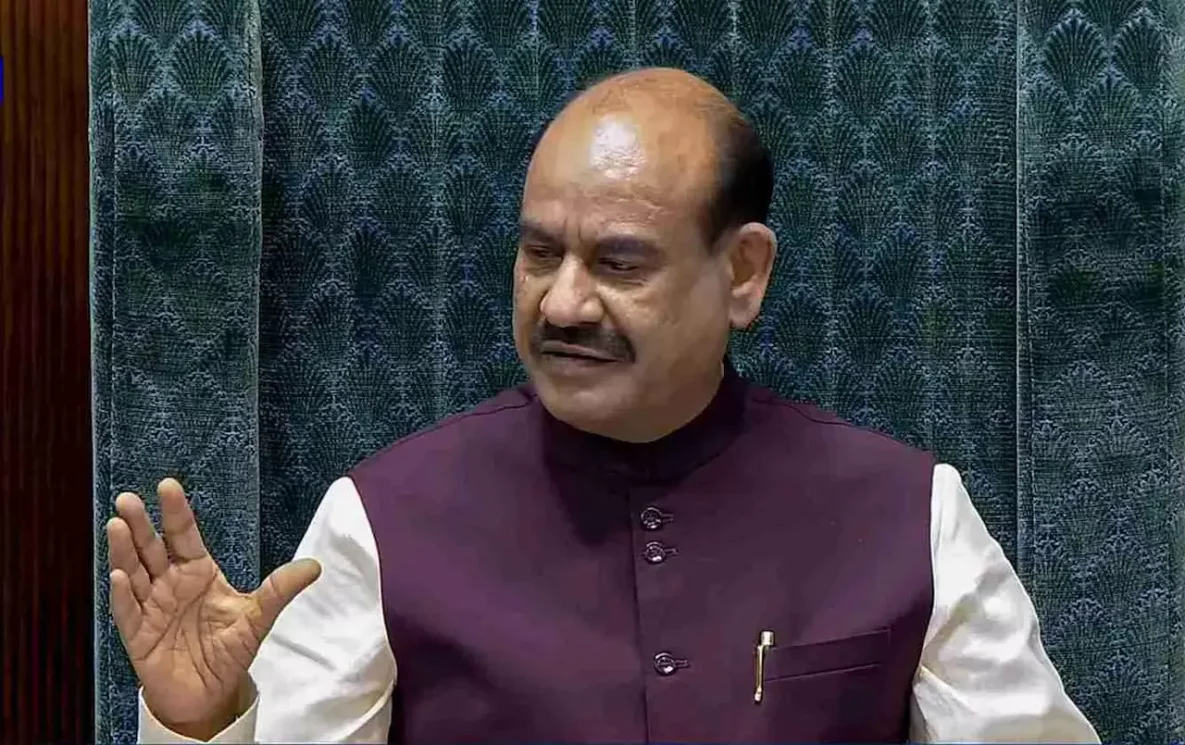
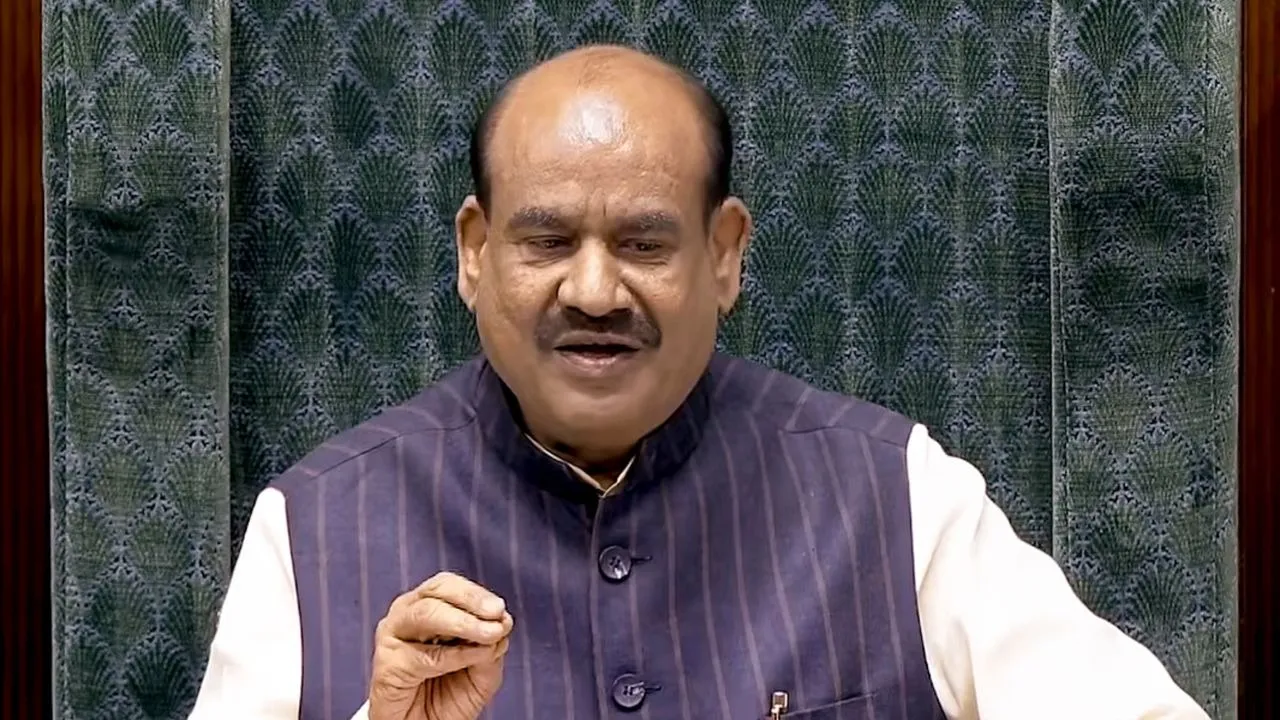
Lok Sabha Runs by Rules, No MP Can Speak Without Chair’s Permission: Speaker Om Birla

om birla, lok sabha, lok sabha speaker, speaker
Lok Sabha Runs by Rules, No MP Can Speak Without Chair's Permission: Speaker Om Birla 20

Lok Sabha Speaker Om Birla on Thursday asserted that the House functions strictly according to established rules and procedures, and no member has the privilege to speak at any time or on any subject outside the framework laid down by parliamentary norms.

His remarks came a day after a resolution seeking his removal from office was defeated in the Lok Sabha.

Addressing the House, Birla said the Speaker’s chair represents the dignity and prestige of Parliament and does not belong to any individual. He emphasised that proceedings would continue to be conducted strictly according to the rules, regardless of whether they are acceptable to members.

“The House runs according to rules and regulations and will continue to function in the same manner. I will discharge my duties with sincerity and impartiality,” Birla said, amid desk-thumping by members of the ruling benches.

The Speaker expressed gratitude to members who participated in the debate on the resolution and thanked those who spoke both in support of him and against him.

Thursday marked Birla’s first appearance in the chair since the opposition submitted a notice seeking his removal on February 10 during the first phase of the Budget session, which concluded on February 13. The second phase of the session began on March 9.

Referring to concerns raised during the debate, Birla said some members had argued that Leader of Opposition Rahul Gandhi was not given enough opportunities to speak and should be allowed to speak whenever he wished.

“Every member has the right to speak in the House, but it must be within the framework of rules. No member—not even the prime minister or a minister—can speak without the permission of the Chair,” Birla said.

He reiterated that while MPs enjoy freedom of speech in Parliament, they must adhere to procedural norms.

Responding to allegations that microphones are switched off when certain members attempt to speak, Birla clarified that the Speaker does not control the microphone switch. “The microphone is activated only when the Chair grants permission to a member to speak,” he said.

Birla also addressed criticism regarding the refusal to allow Rahul Gandhi to table a magazine article based on the unpublished memoir of former Army chief M M Naravane on the 2020 India-China conflict. Citing precedents set by previous Speakers, he said such decisions were consistent with parliamentary practice.

Following his remarks, the Speaker adjourned the House till 2 pm.