'Fadnavis Had No Role, No Right to Comment': Sharad Pawar on NCP Merger Talks 2
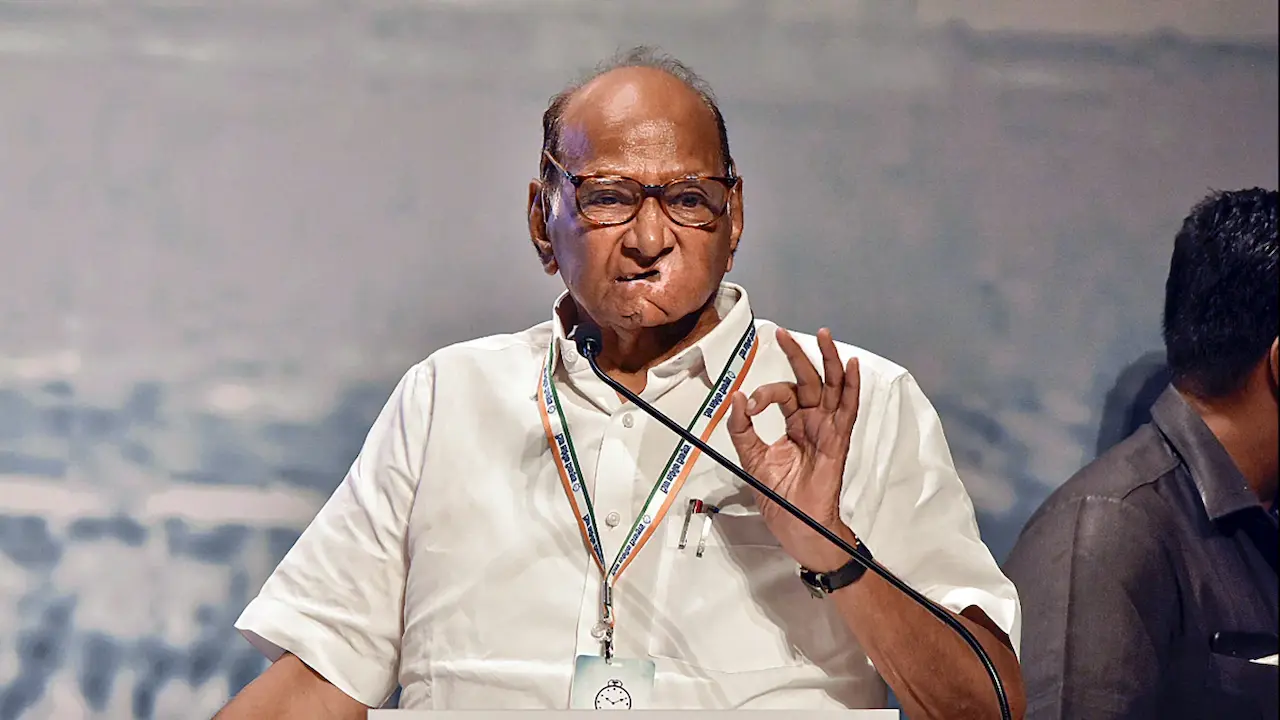
Nationalist Congress Party (SP) chief Sharad Pawar on Wednesday said Maharashtra Chief Minister Devendra Fadnavis was never part of the discussions on the merger of the two NCP factions and therefore had no right to comment on the issue.
Speaking to reporters in Baramati, Pawar said the merger talks were being led by NCP (SP) leader Jayant Patil and his nephew, NCP chief Ajit Pawar, who died in a plane crash in Pune district on January 28.
Following Ajit Pawar’s death, leaders of the Sharad Pawar-led party had claimed that reunification talks between the rival factions were at an advanced stage and that Ajit Pawar had finalised February 12 as the date to announce the merger. However, Chief Minister Fadnavis later said that if such talks were indeed underway, Ajit Pawar would have shared the details with him.
Reacting sharply to these remarks, Sharad Pawar said, “I do not understand what right he has to mention my name. As he was nowhere in the merger talks, he has no right to comment on it.” He reiterated that the discussions were handled exclusively by Jayant Patil and Ajit Pawar.
Asked whether the merger would still go ahead, Pawar said the immediate priority was to support each other in the aftermath of the tragedy, adding that no political discussions were currently being held. “As far as political talks are concerned, we are not speaking to anyone at the moment,” he said.
On the appointment of Ajit Pawar’s wife Sunetra Pawar as deputy chief minister after his demise, Sharad Pawar said it was a matter of happiness and satisfaction that she had received the opportunity to serve in the post.
He also said he was unaware of any plan to build a memorial for Ajit Pawar at the Vidya Pratishthan campus in Baramati. “I read about it in newspapers. There has been no discussion yet. We will sit together and decide,” he said, even as Ajit Pawar’s close aide Kiran Gujar recently claimed that a memorial was being planned at the site where his last rites were performed.
'PM Surrendered to Appease Trump': Congress Demands Parliament Debate on US, EU Trade Deals 4
The Congress on Tuesday stepped up its attack on the Modi government over the India–US trade deal, alleging that Prime Minister Narendra Modi has “completely surrendered” to appease US President Donald Trump at the cost of India’s farmers. The party demanded that the Centre place the full details of both the US and EU trade agreements before Parliament of India for discussion.
Congress general secretary (communications) Jairam Ramesh said India’s position had been weakened by the manner in which the trade deal was announced. He claimed that statements made by President Trump made it “abundantly clear” that the prime minister had given in under pressure, adding that “India stands diminished by this unfortunate sequence of events”.
Ramesh recalled that Prime Minister Modi had visited the White House nearly a year ago after Trump’s re-election, when negotiations for a trade deal began amid what he described as “huglomacy”. He alleged that matters worsened after Trump announced a halt to Operation Sindoor on May 10, 2025, and later publicly embraced Pakistan and its army chief, Field Marshal Asim Munir, which he said exposed the hollowness of India’s diplomatic outreach.
Pointing out that Parliament is currently in session, Ramesh said the texts of both the EU and US trade deals must be tabled and debated, especially in light of claims by US Agriculture Secretary Brooke Rollins that India has liberalised agricultural imports from the US.
The controversy spilled into Parliament, with members of several Opposition parties staging a walkout from the Rajya Sabha and later protesting in the Parliament complex. Opposition MPs, including Digvijaya Singh, Randeep Surjewala, AAP’s Sanjay Singh and RJD’s Manoj Jha, alleged that the government had compromised farmers’ interests.
Congress MP Shashi Tharoor said there was an urgent need for clarity as no official details had been shared beyond Trump’s social media posts and press statements. He questioned claims that India would purchase USD 500 billion worth of US goods and open its agricultural market, saying such assertions carry serious political implications for Indian farmers.
Former commerce minister Anand Sharma said while India and the US share a strategic partnership, any trade deal must be between sovereign equals and safeguard national interests in sensitive sectors such as agriculture, dairy and pharmaceuticals.
In response, Prime Minister Modi said he was pleased that tariffs on “Made in India” products would be reduced to 18 per cent. Trump earlier announced that India and the US had agreed to a trade deal. The debate comes days after India and the European Union sealed a landmark free trade agreement in January, billed as the “mother of all deals”.
Minor at Wheel: Speeding Mercedes Crashes Inside Mumbai Coastal Road Tunnel, Three Injured 6
Three members of a family were injured after a speeding Mercedes, allegedly driven by a 17-year-old boy, crashed into vehicles inside the Coastal Road tunnel in South Mumbai, police said on Monday.
The accident occurred in the early hours of Sunday when the luxury car, heading towards South Mumbai, rammed into a vehicle from behind inside the tunnel. The impact pushed the first car into another vehicle ahead, triggering a chain collision, an official said.
Police said the injured include a senior citizen woman from the affected family. All three were rushed for medical treatment and are reported to be stable.
Following an investigation, the D B Marg police registered a case against the owner of the Mercedes, a businessman from Agripada, his 18-year-old granddaughter, and her 17-year-old male friend who was allegedly driving the car at the time of the crash.
During preliminary inquiries, it emerged that the minor driver lost control of the vehicle inside the tunnel, leading to the accident. Further investigation is underway to determine liability and possible violations, police added.
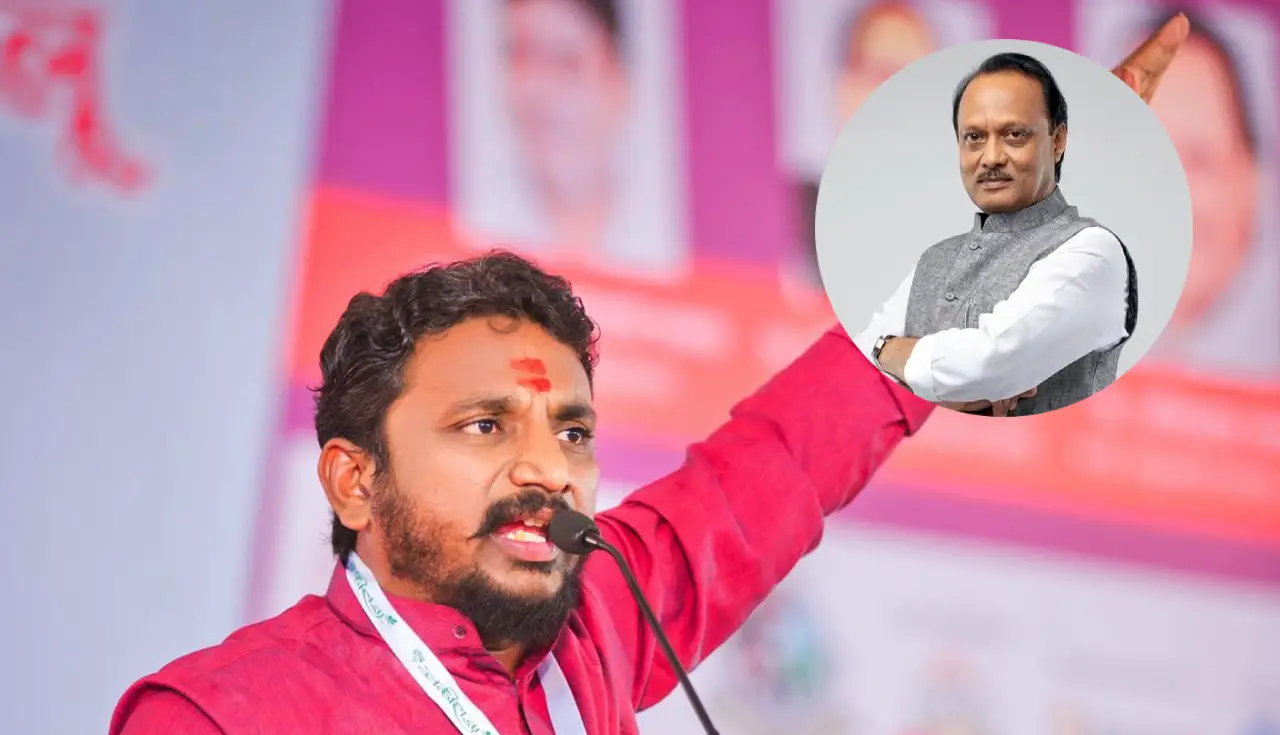
Nationalist Congress Party (NCP) legislator Amol Mitkari on Tuesday urged the Maharashtra government to rename its flagship Mukhyamantri Ladki Bahin Yojana after late Deputy Chief Minister Ajit Pawar, calling it a fitting tribute to a leader deeply loved by women across the state.
Speaking to reporters, Mitkari said Ajit Pawar, fondly known as Ajitdada, shared a special bond with women, recalling how his wrists would be “full of rakhis” during his tours across Maharashtra. Renaming the scheme as Ajitdadanchi Ladki Bahin Yojana would be a true honour to his legacy, he said.
Ajit Pawar and four others were killed in a plane crash in Baramati, Pune district, on January 28, triggering an outpouring of grief across the political spectrum.
The Ladki Bahin scheme, announced by Pawar during his tenure as finance minister and launched in July 2024, provides monthly financial assistance of Rs 1,500 to eligible women aged between 21 and 65 through direct bank transfers. The initiative is widely seen as a key factor behind the BJP-led Mahayuti’s victory in the 2024 Assembly elections.
On Monday, Deputy Chief Minister Eknath Shinde reiterated that the government would continue the scheme, saying it has significantly benefited women. He also said the monthly assistance would be increased from Rs 1,500 to Rs 2,100 at an appropriate time.
India–US Trade Deal a Major Win for Strategic Partnership: Envoy Vinay Mohan Kwatra 10
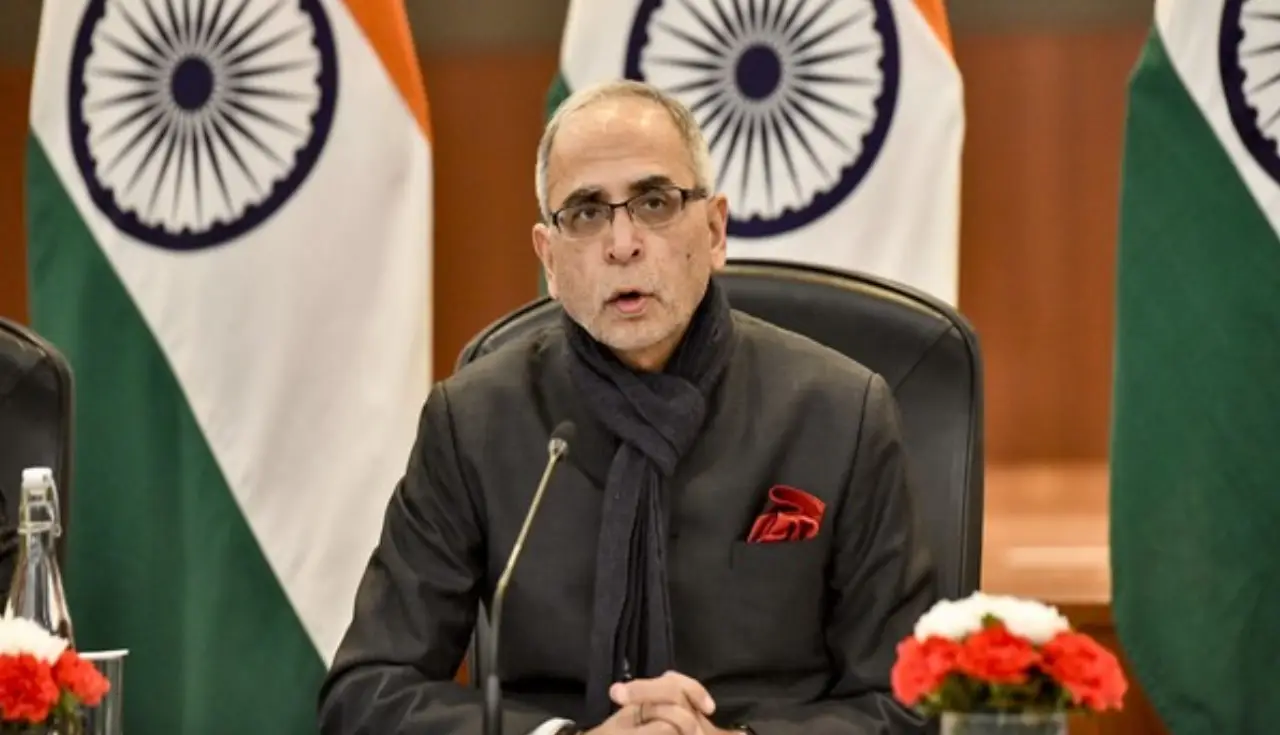
Indian Ambassador to the United States Vinay Mohan Kwatra on Monday described the India–US trade deal as a major victory for a consequential bilateral partnership under the leadership of Prime Minister Narendra Modi and US President Donald Trump.
In a post on social media, Kwatra said the agreement would unlock vast new opportunities for both economies and bring tangible benefits to the people of India and the United States. He noted that the deal marks a significant step forward in strengthening economic cooperation and mutual trust between the two nations.
Calling the development a milestone, the ambassador said the announcement heralds an exciting new phase in the India–US partnership, reinforcing the growing strategic and economic alignment between New Delhi and Washington.
Grief Is Personal, Power Is Political, Maharashtra Must Learn to Separate the Two 12
Maharashtra has not merely lost a politician; it has lost a voice that shaped the rhythm of its politics for decades. Ajit Pawar was many things—controversial to some, commanding to others—but he was never inconsequential. His speeches carried the authority of experience, his humour disarmed hostile rooms, and his media interactions reflected a man deeply aware of power and its mechanics.
As a journalist, I watched Ajit Pawar closely for years. His grasp of administration, his instinct for negotiation, and his understanding of Maharashtra’s political anatomy were not inherited gifts. They were earned, slowly and painfully, through electoral battles, internal party conflicts, criticism, and survival. His death has caused genuine pain. Maharashtra will miss him—and rightly so.
But grief cannot be allowed to paralyse judgment.
Respect for the dead does not mean suspension of scrutiny for the living. And this is precisely where Maharashtra faces an uncomfortable moment—one that demands honesty over emotion.
Within days of Ajit Pawar’s passing, succession plans began circulating with unsettling speed. Reports suggested that his wife, Sunetra Pawar, would step into the vacant Deputy Chief Minister’s position. Simultaneously, news emerged that his son was being positioned for a Rajya Sabha seat. What should have remained a period of personal mourning was rapidly transformed into a phase of political redistribution.
This shift deserves pause—not outrage, not drama—but scrutiny.
The wife is yet to fully emerge from sorrow. The children are still mourning their father. The loss is raw and recent. And yet, power has already been reorganised. This haste is not continuity. It is convenience.
There is something morally troubling about converting death into political acceleration. Even in politics, which is rarely gentle, there exist unwritten codes of restraint. When authority is claimed before mourning finds its breath, the act ceases to resemble public service. It begins to resemble entitlement.
Ajit Pawar’s political stature is not transferable property. His experience cannot be inherited. His instincts were not genetic traits. Governance is not an heirloom passed within a family.
This brings us to the fundamental issue—not legality, but legitimacy.
What political experience qualifies Sunetra Pawar to occupy one of the most powerful offices in the state? What administrative crises has she independently handled? What electoral verdict has she faced? Which governance challenges has she navigated in her own right?
The Deputy Chief Minister’s position is not symbolic. It is not ceremonial. It demands authority, competence, and the ability to manage crisis. These attributes are built through exposure and accountability—not proximity to power.
The son’s elevation raises equally serious concerns. He contested the 2019 Lok Sabha election and lost. Loss is part of politics. But defeat traditionally calls for rebuilding trust, reconnecting with voters, and earning credibility. It does not automatically justify a parliamentary berth through backroom arrangements.
To label this as political responsibility is dishonest.
What message does this send to thousands of party workers who dedicate decades to grassroots politics? What does it say to voters who believe elections matter? And what lesson does it teach young citizens—that surnames matter more than struggle?
The defence offered against such criticism is predictable: that questioning succession is insensitive during a period of mourning.
That argument is flawed.
The politics is not being done by journalists. It is being done by those who rushed to occupy power. Silence is demanded in the name of sensitivity, while authority is claimed in the name of sympathy.
This is how dynastic politics survives—by emotionally disarming accountability.
India has seen this pattern repeatedly. Political families across parties treat leadership as hereditary. Internal democracy is quietly replaced by bloodline consensus. Merit is celebrated in speeches and discarded in practice.
Ironically, Ajit Pawar himself did not rise through entitlement alone. He survived internal rebellions, public scrutiny, and electoral judgment. To equate his journey with immediate family succession is to weaken his legacy, not honour it.
Legacy is not about occupying the same chair. Legacy is about matching competence.
If this transition is about stability, Maharashtra deserves an explanation for why experienced leaders were bypassed. If it is about public demand, that demand must be demonstrated, not assumed. And if it is about sympathy, then sympathy has replaced scrutiny.
And that is dangerous.
Democracies do not collapse suddenly. They erode quietly—through convenience, compromise, and silence.
I can feel sorrow for Ajit Pawar’s death and still feel disturbed by the political opportunism that followed it. These emotions are not contradictory. They are honest.
Grief deserves dignity. Politics demands accountability. Maharashtra deserves better than inherited power disguised as service.
Sunetra Pawar Unanimously Chosen NCP Legislature Party Leader, Set to Be Maharashtra’s First Woman Deputy CM 14
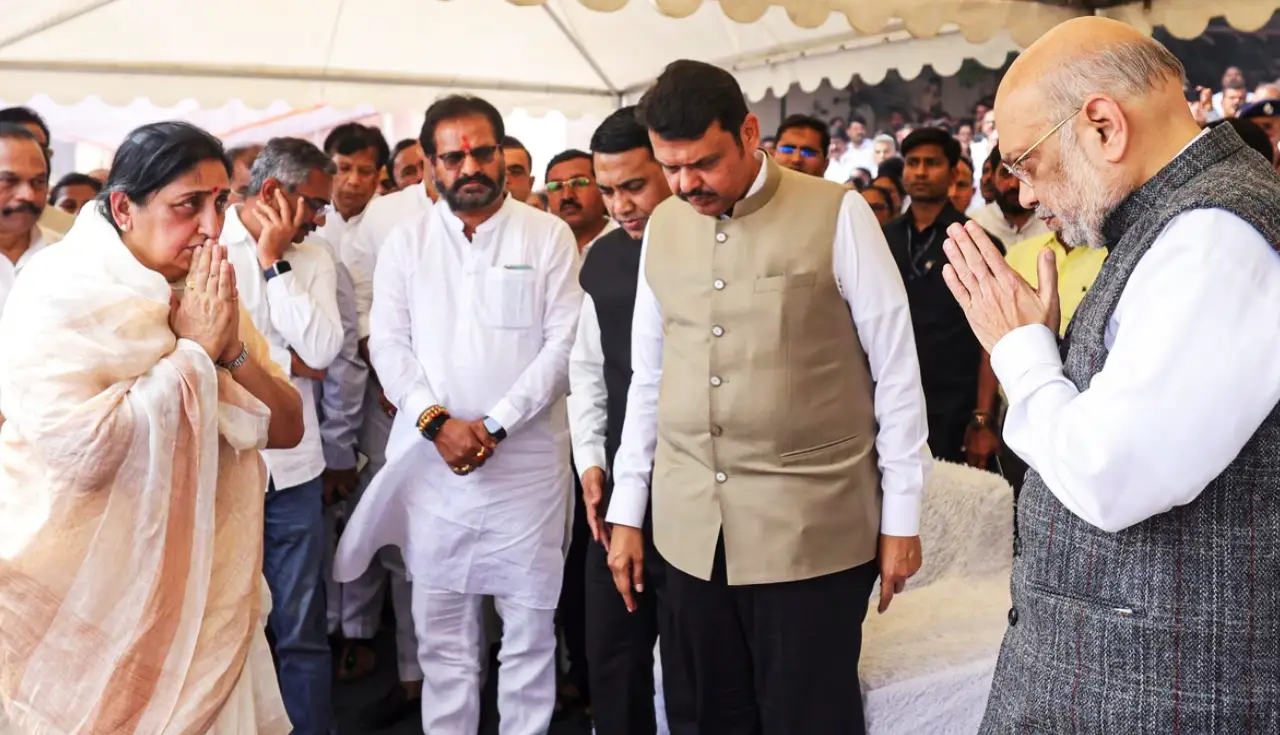
Rajya Sabha member Sunetra Pawar was unanimously elected leader of the Nationalist Congress Party’s legislature party in Maharashtra on Saturday, just three days after the death of her husband and Deputy Chief Minister Ajit Pawar.
She is set to take oath later in the day as Maharashtra’s first woman Deputy Chief Minister, marking a significant political moment for the state.
Sunetra Pawar’s name was proposed by senior NCP leader Dilip Walse Patil and seconded by Food and Civil Supplies Minister Chhagan Bhujbal. Her election took place at a meeting of the party’s legislature wing held at Ajit Pawar’s office on the ground floor of the Vidhan Bhavan complex in south Mumbai.
Ajit Pawar, who served as Deputy Chief Minister and Finance Minister in the Mahayuti government led by Devendra Fadnavis, was killed in a plane crash in Baramati along with four others on January 28.
During the meeting, Sunetra Pawar paid floral tributes to a portrait of her late husband, with their younger son Jay present. Several ministers and legislators were visibly emotional as they arrived at the Vidhan Bhavan complex.
The Lok Bhavan confirmed that Sunetra Pawar’s swearing-in ceremony as Deputy Chief Minister will be held at 5 pm in Mumbai.
Until the 2024 Lok Sabha elections, Sunetra Pawar had largely maintained a low public profile. She contested the Baramati seat that year as the NCP candidate but lost to her sister-in-law and NCP (SP) MP Supriya Sule in a high-stakes political contest. She was later elected to the Rajya Sabha.
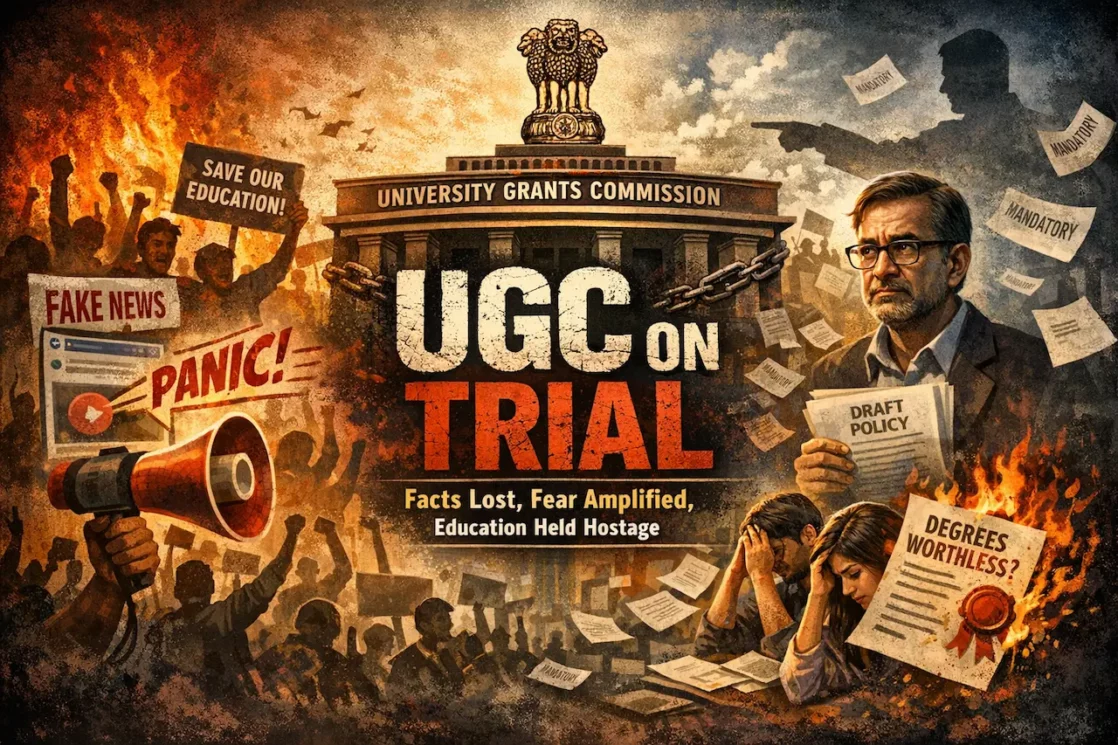
UGC on Trial: Facts Lost, Fear Amplified, and Education Held Hostage 16
The University Grants Commission did not suddenly wake up one morning and decide to become India’s most controversial institution. It became the “big talk” because India’s higher education system is finally being dragged—kicking, screaming, and protesting—from comfortable stagnation into uneasy change. And whenever a system that has enjoyed decades of inertia is nudged toward reform, the reflex is not introspection but outrage. What we are witnessing today is not merely criticism of UGC; it is the systematic, often reckless, spreading of fear, half-truths, and deliberate misrepresentation, packaged as concern for students and sold aggressively to the public.
UGC has long been an invisible power—issuing grants, setting norms, regulating universities, operating in dusty files and dry notifications. Nobody held placards against it when salaries were secure, promotions were automatic, syllabi remained untouched for decades, and accountability was optional. The anger began the moment UGC started executing structural changes linked to the National Education Policy—changes that challenged entitlement, comfort zones, and academic complacency. Suddenly, reform was branded as destruction, regulation as dictatorship, and standardisation as ideological warfare. This narrative did not emerge organically; it was manufactured, amplified, and irresponsibly circulated.
What is striking is how swiftly misinformation replaced reading. Draft guidelines were projected as final orders. Optional frameworks were sold as mandatory diktats. Transitional chaos was painted as irreversible collapse. Social media, which thrives on immediacy and outrage, became the new campus corridor—only louder, dumber, and far less informed. A single UGC circular, stripped of context, could now spark nationwide panic within minutes. No one waited for clarification. No one bothered to read footnotes. Nuance was declared irrelevant, and complexity was treated as suspicious. In this atmosphere, truth did not stand a chance.
Students became the softest targets in this disinformation war. They were told their degrees would be worthless, their careers uncertain, their futures sabotaged. Anxiety was not just spread—it was weaponized. Instead of calm academic counselling, students received alarmist slogans. Instead of structured explanations, they were fed ideological interpretations. The tragedy is that many of the reforms being protested either allow flexibility, offer choice, or are still evolving through consultation. But fear, once planted, does not wait for facts. It metastasises.
Faculty resistance, too, deserves scrutiny beyond its moral posturing. Yes, there are genuine concerns about implementation gaps, regional disparities, and infrastructural readiness. But to pretend that all opposition is noble is dishonest. A significant part of the backlash stems from disrupted comfort—performance metrics replacing seniority rituals, digital accountability intruding into opaque systems, research output being measured instead of assumed. When scrutiny enters spaces long protected by insulation, outrage is the first defence mechanism. Tradition is invoked selectively—not to preserve pedagogical depth but to shield stagnation.
The most dangerous distortion, however, has been the politicisation of UGC. Education policy is now framed almost exclusively through ideological suspicion. Every syllabus change is portrayed as indoctrination. Every institutional reform is branded authoritarian. Every regulation is presumed to be politically motivated. This is not critical thinking; it is intellectual laziness disguised as vigilance. Universities cannot become permanent theatres of ideological anxiety, nor can regulators function while being tried daily in the court of social media hysteria. Genuine critique is drowned out by performative outrage, and serious issues are reduced to hashtags.
This is not to absolve UGC of responsibility. Its failures are real and consequential. Communication has been abysmal. Rollouts have often ignored on-ground capacity. State universities are routinely treated as afterthoughts. Uniform frameworks fail to account for India’s extraordinary institutional diversity. These are not minor lapses—they demand correction, accountability, and reform within the regulator itself. But incompetence is not conspiracy, and clumsy execution is not tyranny. To collapse every flaw into malicious intent is either intellectually dishonest or wilfully deceptive.
The real investigative question is this: who benefits from turning UGC into a public villain? It is certainly not students who need stability. Not universities, which need cooperation. Not faculty, who need structured autonomy. The beneficiaries are those who profit from chaos—attention-seekers, ideological entrepreneurs, and institutional actors unwilling to adapt. Fear is easier to sell than reform; outrage moves faster than understanding.
India aspires to global academic relevance, but it wants that future without discomfort, without transition pain, and without accountability. That is fantasy. No education system modernises without friction. No reform emerges without confusion. And no regulator survives change without being unpopular. The mature response is not to spread panic but to demand better execution, clearer timelines, transparent dialogue, and genuine consultation.
UGC has become the big talk not because it has destroyed education, but because it has disturbed entrenched habits. The problem is not debate; the problem is distortion. In a civilisation that once treated learning as sacred and teachers as guides, we have reduced educational reform to viral outrage and policy discussion to political theatre.
If India is serious about its intellectual future, it must stop mistaking noise for resistance and confusion for collapse. UGC must be held accountable, not crucified. Critiqued, not caricatured. Reformed, not relentlessly demonised. Because when education policy is reduced to propaganda—of any ideology—the ultimate casualty is not an institution, but an entire generation of students trained to react before they think.
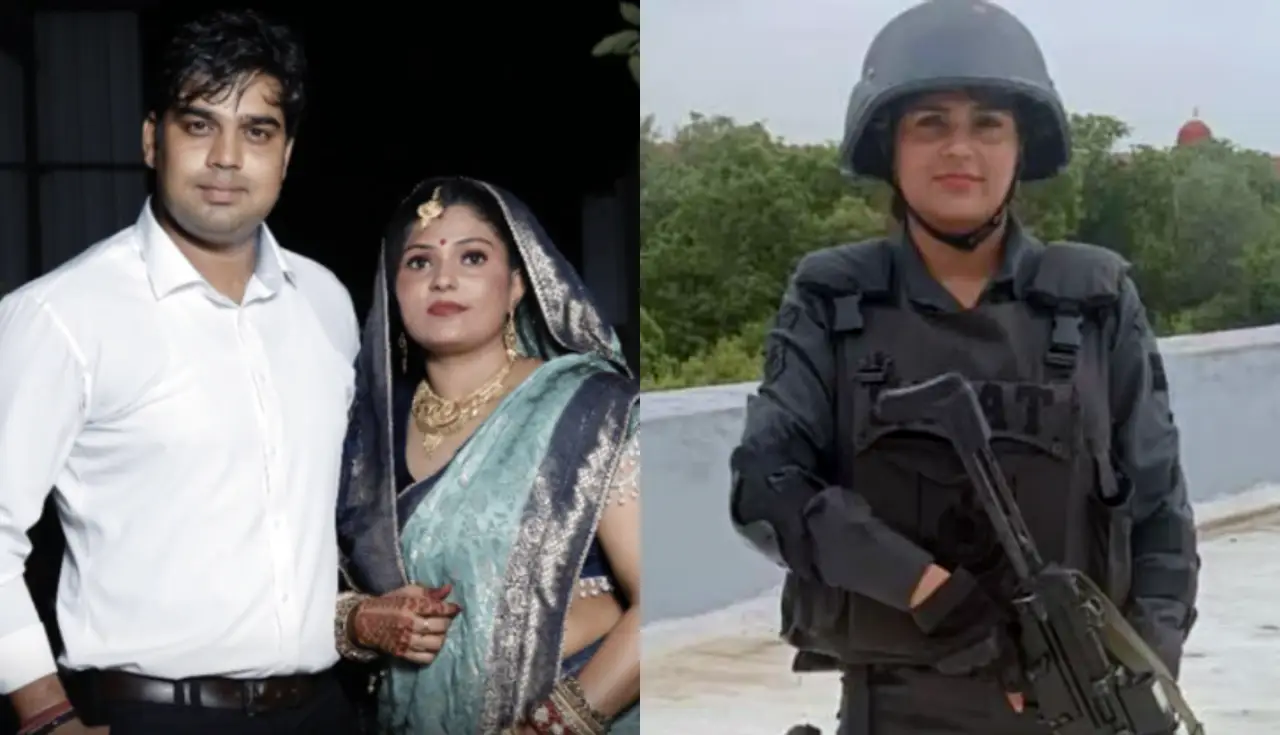
Pregnant Delhi Police Commando Dies After Brutal Assault by Husband, Brother Recalls Disturbing Last Call 18
A 27-year-old Delhi Police Special Cell commando, four months pregnant, died after being brutally assaulted by her husband at their West Delhi home, a case that has sent shockwaves across the national capital.
Kajal Chaudhary was attacked at her residence in Mohan Garden on January 22. Her husband, Ankur, a clerk with the Ministry of Defence posted in Delhi Cantonment, was arrested hours later. After battling for life for five days, Kajal succumbed to her injuries at a hospital in Ghaziabad on January 27.
Recounting the chilling final moments, Kajal’s brother Nikhil, a constable posted at Parliament Street Police Station, said he received a phone call from Ankur shortly before the assault. “He asked me to keep the call on recording and said it could be used as police evidence. Then he said he was killing my sister,” Nikhil told PTI. “After that, I heard her screams. The call disconnected.”
Nikhil said Ankur called again minutes later, claiming Kajal was dead and asking the family to reach the hospital. “When I saw my sister, it was horrifying. Not even an enemy would kill someone like this,” he said, alleging severe head injuries and multiple wounds.
According to police, Kajal was first slammed against a door frame and then allegedly attacked with a dumbbell. Ankur was initially booked for attempt to murder, and the charges will now be converted to murder following her death.
The family has accused Ankur and his relatives of prolonged domestic violence and dowry harassment. Kajal’s father, Rakesh, alleged that despite giving cash, gold jewellery and a Bullet motorcycle at the wedding, additional demands continued. “They said their son would have got a car had he married someone else,” he said.
Kajal’s mother said the family spent nearly Rs 20 lakh on the marriage and took loans to meet the demands. “She suffered immensely. I want justice for my daughter,” she said.
A case has been registered at Mohan Garden police station based on the brother’s complaint, and further investigation is underway.
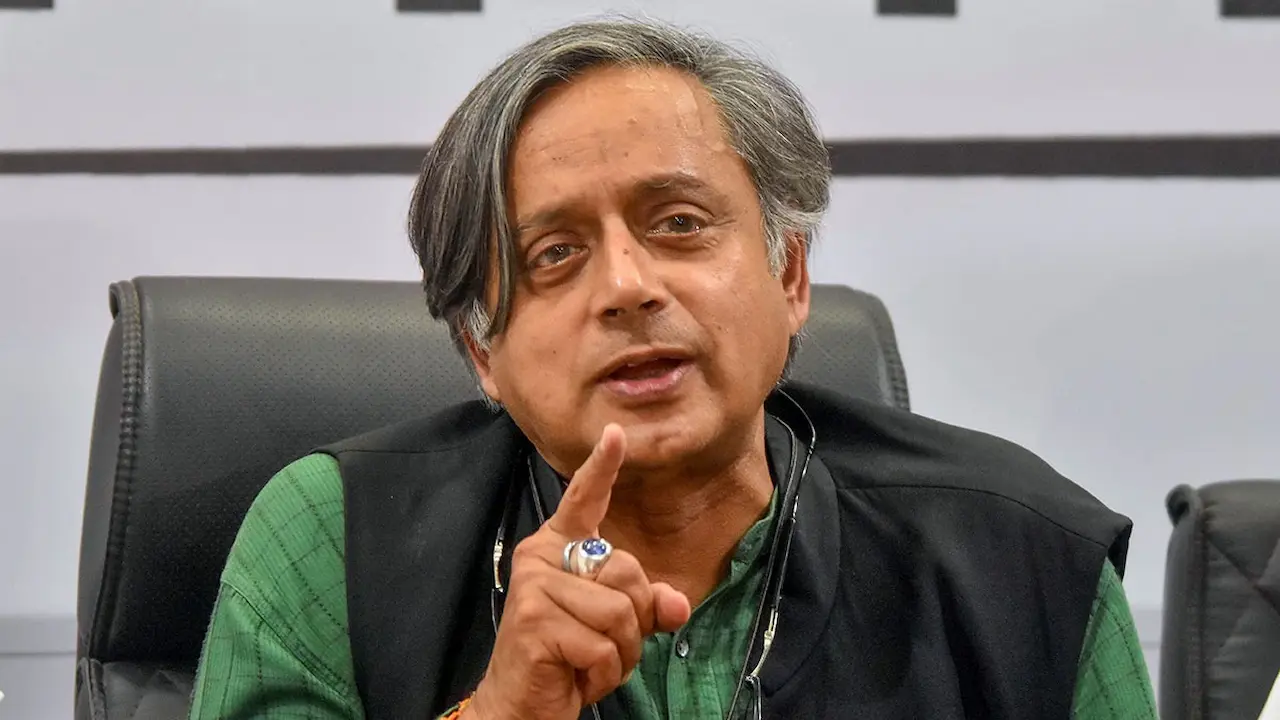
Shashi Tharoor Says His Positions Are 'Pro-India, Not Pro-BJP', Reaffirms Loyalty to Congress 20
Senior Congress leader Shashi Tharoor on Friday said his stand on certain issues may have been portrayed as pro-BJP by sections of the media, but he considers his views to be pro-government or pro-India, not partisan.
Tharoor said he has consistently maintained that on some international and national security matters, he prefers to speak for the country rather than indulge in political positioning. “This is not new. I have always said so,” the Congress MP from Thiruvananthapuram told reporters.
A controversy had erupted last year over Tharoor’s remarks on the India-Pakistan situation and India’s diplomatic outreach following the Pahalgam attack, with his views differing from the official Congress line. Several party leaders had questioned his intentions at the time.
Addressing the issue, Tharoor acknowledged that party members are expected to adhere to the party’s stance but underlined that he has never gone against the Congress in Parliament. “I have always stood with the party in Parliament, so there is no cause for concern,” he said.
Responding to speculation about his future in the party, Tharoor firmly ruled out any exit. “I am going to be in the Congress. I am not going anywhere. I will be part of the poll campaign in Kerala and will work for the victory of the United Democratic Front,” he said, while questioning why such clarifications were repeatedly being sought.
On Thursday, Tharoor met Congress president Mallikarjun Kharge and senior leader Rahul Gandhi to discuss his concerns, after which he said that “all is good” and that everyone was “on the same page”.
The meeting came amid reports of Tharoor being unhappy over his treatment at a recent event in Kochi and alleged attempts by some leaders to sideline him in Kerala. The developments assume significance as the Congress gears up for the Kerala Assembly elections, which are seen as crucial for the party’s bid to reclaim power in the state after a decade in opposition.