Bihar Polls 2025: BJP, JD(U) to Contest 101 Seats Each as NDA Finalises Seat-Sharing Deal 2
After days of intense negotiations in Delhi, the ruling National Democratic Alliance (NDA) on Sunday finalised its seat-sharing formula for the Bihar assembly elections, with the BJP and Chief Minister Nitish Kumar’s JD(U) set to contest 101 constituencies each out of the total 243 seats. The remaining seats have been distributed among smaller allies.
This marks the first time that the two major NDA partners in Bihar will fight an equal number of seats. The announcement comes less than a week before the filing of nominations for the first phase of the elections.
Under the deal, Union Minister Chirag Paswan’s Lok Janshakti Party (Ram Vilas) will field candidates in 29 constituencies, while the Hindustani Awam Morcha (Secular) led by Jitan Ram Manjhi and the Rashtriya Lok Morcha headed by Upendra Kushwaha will contest six seats each.
Though Manjhi had earlier demanded at least 15 seats, he refrained from rebelling against the alliance. “We have accepted the high command’s decision, but giving us just six seats underestimates our strength. It may cost the NDA in the elections,” he said after arriving in Patna.
Meanwhile, seat-sharing talks within the opposition INDIA bloc remain unresolved. RJD chief Lalu Prasad, along with his family, left for Delhi amid reports of internal friction over seat distribution. Sources said the RJD is insisting on contesting no fewer than 120 seats, while allies like the Congress and Left parties continue to push for more.
The Congress, buoyed by Rahul Gandhi’s recent ‘Voter Adhikar Yatra’ covering 25 districts, is reportedly holding firm in negotiations. However, party leader Akhilesh Prasad Singh dismissed speculation about tensions, saying an announcement would be made soon.
Bihar will vote in two phases on November 6 and 11, with counting scheduled for November 14. As the state heads into one of its most competitive elections in years, the NDA’s new power equation—with BJP and JD(U) on equal footing—sets the stage for a closely watched political battle.
Trump Declares 'The War Is Over', Heads to Egypt for Landmark Gaza Peace Summit 4
Declaring “The war is over,” US President Donald Trump announced the end of the two-year Gaza conflict as he headed to Egypt for a landmark peace summit with world leaders. The summit, to be held in Sharm El-Sheikh on Monday, will mark the first major diplomatic breakthrough of Trump’s second term, following his successful mediation between Israel and Hamas over a 20-point peace plan.
Before arriving in Egypt, Trump will stop in Israel to meet Prime Minister Benjamin Netanyahu and address the Knesset. The ceasefire, which halted fighting in Gaza on Friday, includes a commitment from Hamas to release the remaining Israeli hostages on Monday via the Red Cross. The war, which began on October 7, 2023, after Hamas militants stormed Israel killing 1,200 people and taking 251 hostages, has left around 67,000 Palestinians dead, according to Gaza officials.
The peace deal was brokered with help from Egypt, Qatar, and Turkiye, along with Trump’s son-in-law Jared Kushner. The upcoming summit will be attended by UN Secretary-General Antonio Guterres, Palestine Authority President Mahmoud Abbas, Egyptian President Abdel Fattah el-Sisi, French President Emmanuel Macron, UK Prime Minister Keir Starmer, and leaders from Qatar and the UAE.
Prime Minister Narendra Modi was invited by Trump and el-Sisi but will not attend; Minister of State Kirti Vardhan Singh will represent India. It remains unclear whether Israel will participate in the summit or at what level.
Trump expressed optimism about the peace deal, citing celebrations across Israel and the Arab world. “Everyone was cheering at one time — that’s never happened before,” he said before boarding Air Force One. Egyptian Foreign Minister Badr Abdelatty also voiced confidence, revealing that Egypt and Jordan are planning to train and deploy a 5,000-member Palestinian force to maintain security in Gaza.
Under Trump’s plan, Hamas will be excluded from governance in Gaza, which will instead be managed by “qualified Palestinians and international experts.” Former British Prime Minister Tony Blair will head the Board of Peace overseeing Gaza’s reconstruction.
Trump said humanitarian aid had already begun flowing into Gaza as Israel lifted restrictions on relief supplies. “You have to get people taken care of first — and it’s going to start immediately,” he said, marking what could be the dawn of a new chapter in Middle East peace.
The Taliban Didn’t Insult India — Our Hypocrisy Did 6
The recent episode where Afghanistan’s Taliban government held a press conference in its embassy and excluded Indian women journalists is not just another diplomatic blunder; it is a mirror reflecting the moral confusion of our times. A regime that treats women as invisible beings, unworthy of education or participation, was allowed to stage its worldview right here on Indian soil — and our political class responded not with firm clarity, but with noise, blame, and selective outrage. The Taliban, whose governance is a monument to medieval misogyny, barred women from a public event, and instead of addressing the insult as a national affront to every Indian woman, we watched politicians bark at each other — some accusing the government of surrendering to terrorists, others busy explaining protocol loopholes, as if dignity were a clerical error.
The irony is that the same Taliban minister who oversaw the exclusion of women journalists was recently welcomed with garlands in Deoband, Uttar Pradesh — the very place he described as the “root of our education.” Flowers rained on him, and his words of gratitude echoed across a land where women still fight for the basic right to sit, speak, and pray alongside men. If the Taliban is what they are today — rigid, regressive, anti-women, and violent — then one must at least have the honesty to examine the ideological nursery they revere. But that, of course, is where all our roaring leaders fall silent. None of the loudmouths who spend hours on television debating the Taliban’s insult to India dared to utter a word about Deoband. Because calling out foreign terrorists is easy; confronting domestic dogmas is political suicide.
Let’s speak plainly. If the Taliban are terrorists, and their interpretation of religion fuels brutality and gender apartheid, then what do we call the soil that nurtured their ideas? If those teachings still thrive, celebrated under the name of faith, then outrage against the Taliban alone is an empty gesture. How can we demand that Afghanistan treat women with respect when our own political and religious establishments cannot ensure equality inside our mosques, temples, or streets? The same mindset that keeps women out of the Taliban’s press room is what keeps them behind curtains, behind walls, and behind silence here. The difference is only in degrees — not in kind.
What makes this entire drama even more grotesque is the hypocrisy of our public reaction. The opposition screams that India has “bowed before terrorists,” as though diplomacy were a prizefight. The government insists that “it was not our event,” as though moral responsibility can be outsourced. Everyone is busy scoring points; no one is taking a stand. The women journalists, who were simply doing their jobs, were reduced to collateral in a contest of egos. And the rest of us — citizens, thinkers, media — watched it unfold with the same weary mix of outrage and resignation that accompanies every moral failure dressed as a news cycle.Let’s not fool ourselves. The Taliban didn’t humiliate India; we humiliated ourselves. Because when misogyny walks into your house and you offer it tea in the name of diplomacy, you are not being hospitable — you are being complicit. And when you allow a man who bans women from schools to be welcomed with garlands in a place that claims to be the seat of enlightenment, you are not practicing tolerance — you are nurturing hypocrisy. Every society has its monsters, but only a decaying one gives them flowers.
There’s a dark comedy in watching politicians, who never utter a word against their domestic vote banks, suddenly become defenders of women’s rights when a foreign name is attached. Where is their thunder when young girls in this country are denied education because of social taboos? Where is their courage when clerics preach that women must not share the same prayer space as men? The same leaders who condemn the Taliban for excluding women from a press conference never question the Indian institutions that do the same thing every Friday, every week, every generation. Perhaps the Taliban doesn’t have to cross borders — their ideas already live comfortably among us.
It’s time we stopped pretending. You cannot stand against terror abroad while tolerating its ideological cousins at home. You cannot condemn the Taliban for suppressing women while justifying gender discrimination in the name of faith within your own borders. And you cannot talk of national pride when your outrage is selective, your morality is borrowed, and your silence is for sale. True strength is not in the thunder of condemnation; it is in the courage to clean your own house.India prides itself on being the land of Durga, Saraswati, and Lakshmi — the goddesses who symbolize strength, wisdom, and prosperity. Yet here we are, defending the right of a foreign regime to disrespect our women on our soil, while worshiping idols of the same virtues in our homes. This is not spirituality; it is schizophrenia. Our politics has turned morality into a costume — worn when convenient, discarded when costly.
This incident should have sparked a national reckoning. It should have forced our leaders to declare that gender equality is non-negotiable, whether in Kabul or Kanpur. It should have made religious institutions introspect whether their teachings empower or imprison. But instead, it became another evening of prime-time theatre. The government offered clarifications, the opposition offered condemnations, and the truth — that deep, uncomfortable truth about our own complicity in preserving medieval mindsets — was buried under noise.
The most dangerous thing about hypocrisy is that it doesn’t just hide the truth; it breeds apathy. When people see their leaders shout about morality one day and compromise it the next, they stop believing in the very idea of principles. That is how societies decay — not through invasion or war, but through moral corrosion disguised as diplomacy, tolerance, or culture.If we are truly to call ourselves a modern, sovereign nation, then we must have the courage to look within. Deoband may be a religious institution, but no institution — however sacred — should be immune to scrutiny when it becomes a breeding ground for ideas that justify oppression. The same applies to every other religious or political body that preaches inequality and calls it tradition. The fight against the Taliban is not about borders or diplomacy; it is about the ideas that make the Taliban possible. And some of those ideas, unfortunately, live closer to us than we dare admit.
So yes, let the politicians shout, let the embassies issue denials, let the TV debates run their course. But when the noise dies down, the question that will remain is simple: how long will India continue to preach equality abroad while practising submission at home? The Taliban’s insult will fade from the headlines, but the deeper insult — the one we inflict upon ourselves by accepting double standards — will remain etched in silence.
This is not just about a press conference. It is about a national conscience that confuses convenience for wisdom, and diplomacy for dignity. A society that tolerates hypocrisy in the name of peace will one day lose both. The day we stop calling out the poison within, we surrender the right to complain about the poison without. And that day, we won’t need the Taliban to remind us how far we’ve fallen — our own silence will do the job perfectly.
Afghan FM Amir Khan Muttaqi Visits Darul Uloom Deoband, Expresses Hope for Stronger Ties with India 8
Afghan Foreign Minister Amir Khan Muttaqi, during his visit to Darul Uloom Deoband in Uttar Pradesh’s Saharanpur on Saturday, expressed optimism about strengthening ties between India and Afghanistan. Thanking the people for the warm welcome, Muttaqi said he was hopeful the relationship between the two nations would continue to grow.
“We will be sending new diplomats, and I hope you people will visit Kabul as well. From the way I was received in Delhi, I have hopes for stronger ties in the future. Such visits may become more frequent,” Muttaqi said while addressing reporters.
The Afghan minister, who travelled by road from Delhi to Deoband along with his delegation, was received by the Mohtamim (vice-chancellor) of Darul Uloom Deoband, Abul Qasim Nomani, Jamiat Ulama-e-Hind president Maulana Arshad Madani, and other senior officials. Hundreds of students and locals gathered at the campus to greet him amid tight security arrangements, though security personnel restricted public access to the minister.
Muttaqi, who arrived in New Delhi on Thursday for a six-day official visit, is the first senior Taliban minister to visit India since the group took power in Afghanistan four years ago. While India has not yet officially recognised the Taliban government, Muttaqi stated that Kabul will soon send diplomats to India as part of “step-by-step” efforts to improve bilateral relations.
The Afghan minister also emphasized cooperation on the development of Iran’s Chabahar Port, suggesting joint efforts between India and Afghanistan to overcome challenges posed by international sanctions.
His visit is being seen as a significant diplomatic gesture, especially as both India and Afghanistan continue to face strained relations with Pakistan over issues including cross-border terrorism.
Maharashtra Govt Announces Major Relief Package for Rain-Hit Farmers in 34 Districts 10
The Maharashtra government has announced a major relief package for farmers across 34 districts who suffered extensive losses due to heavy rains and floods between June and September. The state’s decision includes rationalisation of cooperative loans, suspension of loan recovery for a year, and waivers of examination fees for students of Classes 10 and 12 in the affected regions.
According to a government resolution (GR) issued on Friday, 347 tehsils across the state recorded large-scale damage to crops, farmland, and houses, along with the loss of livestock and other property. The GR also confirmed that electricity bills for three months will be waived in the impacted tehsils.
Preliminary assessments by the state agriculture department revealed that crops spread over 65 lakh hectares were damaged by the unseasonal rainfall. The Marathwada region and adjoining areas were among the worst hit, facing widespread flooding and soil erosion.
Earlier this week, the state government announced a comprehensive compensation package of ₹31,628 crore to support affected farmers and residents. The package covers compensation for crop and property losses, soil damage, medical expenses, and direct financial assistance to farmers, along with concessions typically provided during drought conditions.
Sonia Gandhi Condoles IPS Y Puran Kumar's Death, Slams 'Prejudice in Bureaucracy' 12
Congress leader Sonia Gandhi has written to Amneet P Kumar, the wife of senior IPS officer Y Puran Kumar, who allegedly died by suicide in Chandigarh, calling his death a grim reminder of the prejudice and bias that continue to plague India’s bureaucracy.
In her condolence letter, the Congress Parliamentary Party chairperson said, “The news of the tragic death of your husband and senior IPS officer, Mr Y Puran Kumar, is both shocking and deeply saddening. My heartfelt condolences to you and your entire family in this time of immense difficulty.”
Gandhi added, “The passing of Mr Y Puran Kumar is a reminder to us that even today, the prejudiced and biased attitude of those in power deprives even the most senior officials of social justice. I and millions of people of the country stand with you on this path to justice.”
She wished Amneet P Kumar “strength and courage” to face the difficult time ahead.
Y Puran Kumar, 52, a 2001-batch IPS officer, allegedly shot himself at his residence in Chandigarh’s Sector 11 on Tuesday. His wife, a senior IAS officer, serves as Commissioner and Secretary in the Haryana government.
A six-member Special Investigation Team (SIT) has been formed by Chandigarh Police to probe the case. However, Kumar’s family has not yet consented to the post-mortem, citing “incomplete information” in the FIR.
Kumar, who was posted as Inspector General at the Police Training Centre in Rohtak’s Sunaria, reportedly left behind an eight-page note naming eight senior IPS officers, including Haryana DGP Shatrujeet Kapur and Rohtak SP Narendra Bijarniya, alleging “mental harassment” and humiliation.
Following the controversy, the Haryana government transferred SP Bijarniya on Saturday.
The Samajwadi Party (SP) has claimed that the official Facebook account of its president and former Uttar Pradesh chief minister Akhilesh Yadav has been suspended, accusing the BJP-led government of attempting to silence opposition voices.
According to party sources, Yadav’s verified Facebook account, which had over 8 million followers, was suspended around 6 pm on Friday. The page was frequently used by the SP chief to share his opinions, highlight government shortcomings, and interact with supporters.
Condemning the move, SP spokesperson Fakhrul Hasan Chaand wrote on X, “Suspending the Facebook account of respected Akhilesh Yadav ji, the national president of the country’s third-largest party, is an attack on democracy. The BJP government has imposed an undeclared emergency, where every opposing voice is being suppressed. But the Samajwadi Party will continue to fight against the BJP’s anti-people policies.”
Facebook has not yet issued an official statement regarding the suspension.
ED Arrests Reliance Group CFO Ashok Pal in Money Laundering Case Linked to Anil Ambani Firms 16
The Enforcement Directorate (ED) has arrested Ashok Pal, the Chief Financial Officer (CFO) of Reliance Power, a company under Anil Ambani’s Reliance Group, on charges of money laundering, official sources said on Saturday.
Pal was taken into custody on Friday under provisions of the Prevention of Money Laundering Act (PMLA), following a detailed investigation into financial irregularities linked to the group.
According to sources, the ED is probing multiple Anil Ambani-led Reliance Group companies in connection with alleged multi-crore bank fraud cases. The investigation focuses on suspected fund diversions and potential violations of banking and financial regulations.
The arrest marks a major development in the agency’s ongoing crackdown on corporate money laundering and financial misconduct cases involving major business groups.
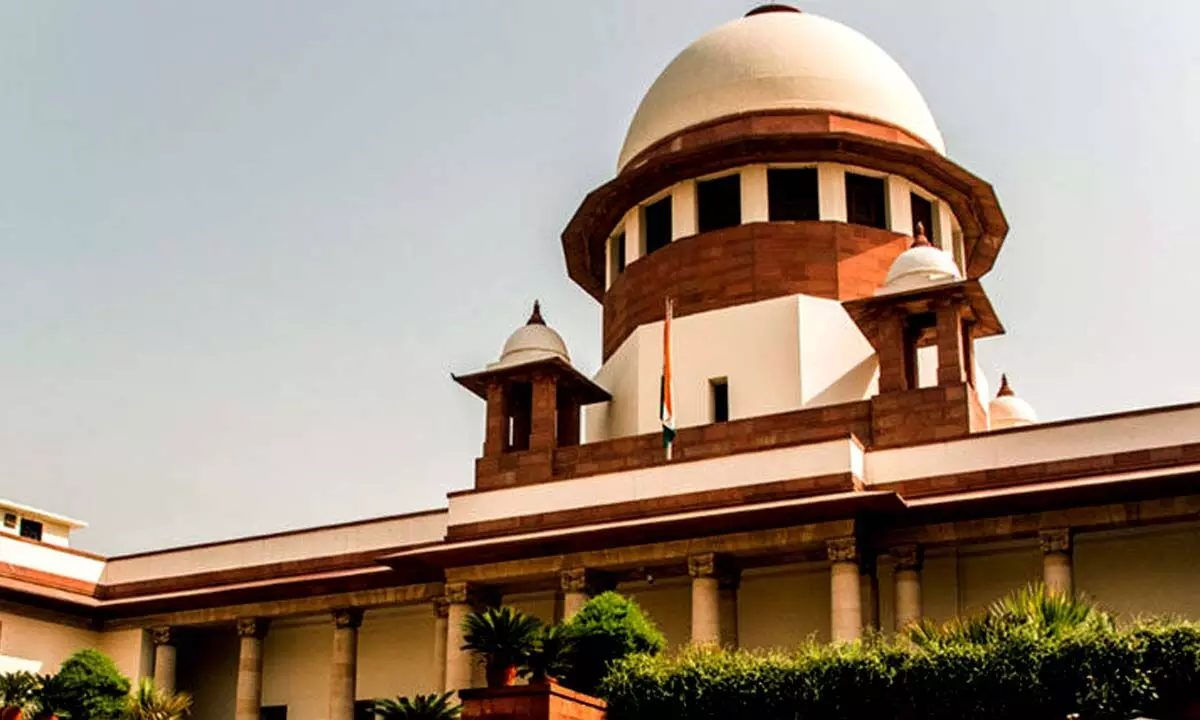
SC Gives Centre Four Weeks to Clarify Stand on Jammu & Kashmir Statehood Restoration 18
The Supreme Court on Friday granted the Centre four weeks to file its response to multiple petitions seeking the restoration of statehood to the Union Territory of Jammu and Kashmir.
A bench comprising Chief Justice B.R. Gavai and Justice K. Vinod Chandran heard the petitions filed by academician Zahoor Ahmad Bhat and socio-political activist Ahmad Malik, who urged the implementation of the Centre’s assurance to restore J&K’s statehood “at the earliest.” The assurance was earlier made during the hearings on the abrogation of Article 370.
Solicitor General Tushar Mehta, representing the Centre, told the bench that while peaceful elections were conducted in the region last year, the government required additional time to assess the situation in light of continuing security challenges, including the recent Pahalgam terror attack.
“Elections were held peacefully and an elected government is in place. Over the last six years, substantial progress has been made in Jammu and Kashmir. However, certain recent incidents such as the Pahalgam attack must be factored in before a final decision,” Mehta said, adding that consultations with the J&K administration were ongoing.
Calling the matter sui generis (unique), Mehta emphasized that while the government acknowledged its earlier assurance, “several factors need to be considered before restoring statehood.” He also alleged that certain groups were spreading a grim and misleading picture of the Union Territory.
Chief Justice Gavai noted that security remained a serious concern in the region, citing the Pahalgam incident. When senior advocate Gopal Sankaranarayanan, representing Zahoor Bhat, said “Pahalgam happened under their watch,” Mehta objected sharply, saying, “It is under our government. I object to this.”
Sankaranarayanan argued that the Centre had previously assured the court of restoring statehood in 2023, adding, “Much water has flowed since then.” To this, Mehta retorted, “And blood too. This is a citizen before the Supreme Court who treats the Government of India as your government and not my government.”
Sankaranarayanan also urged that the matter be placed before a five-judge Constitution Bench since the Article 370 verdict was delivered by one. He clarified that the petitioners were not reopening the abrogation issue but merely seeking enforcement of the Union’s commitment “within a reasonable timeframe.”
Senior advocate Menaka Guruswamy, appearing for MLA Irfan Hafiz Lone, contended that the prolonged delay in restoring statehood was eroding the federal structure of the Constitution. “If a state can be converted into a Union Territory like this, what does it mean for federalism?” she asked. She added that the J&K Assembly had already passed a resolution demanding statehood a year ago and warned that continuing as a UT “sets a dangerous precedent.”
She cited Articles 1, 2, and 3 of the Constitution, saying they did not permit converting a state into a Union Territory. “If this is allowed, any state could be downgraded for political convenience—tomorrow it could be Uttar Pradesh or Tamil Nadu,” another counsel added.
The CJI intervened when the Solicitor General objected to the remarks, saying, “Why are you getting agitated? Let him complete the submissions,” drawing mild laughter in the courtroom.
Counsel representing Jammu-based lawyers argued that the delay in statehood had led to unemployment and stagnation in development. “There is hardly any developmental work in the Jammu region. Despite incidents like Pahalgam, peace has largely prevailed and tourism is flourishing. Security cannot be a perpetual excuse,” they said.
Responding, Mehta said Jammu and Kashmir had witnessed significant progress. “Everyone is happy; 99.9% of people consider the Government of India as their own. These arguments belong elsewhere, not in this court,” he asserted.
The petitioners’ plea warned that further delay in restoring statehood would “erode democratic representation” and amount to a “grave violation of federalism, a basic structure of the Constitution.” It added that both the Assembly and Lok Sabha elections were conducted peacefully in J&K without major security concerns, and therefore, “there is no impediment preventing the restoration of statehood as assured by the Union of India.”
'Absolute Ban Not Practical': Supreme Court Hints at Easing Firecracker Curbs Ahead of Diwali 20
Just days before Diwali, the Supreme Court on Friday said that a complete ban on bursting firecrackers in Delhi-NCR is “neither practical nor ideal,” noting that such restrictions are frequently violated and a balance must be struck between environmental protection and public celebration.
The observation came from a bench comprising Chief Justice B.R. Gavai and Justice K. Vinod Chandran, which reserved its order on pleas seeking permission to manufacture and sell green firecrackers in Delhi and the National Capital Region.
Solicitor General Tushar Mehta, appearing for the Centre and NCR states, argued for lifting the blanket ban imposed since 2018. He said children should be allowed to celebrate Diwali and other festivals without time restrictions. “Let the children celebrate for two days. It’s only for festivals like Diwali, Gurpurab, and Christmas,” Mehta urged, adding humorously that “the child inside me is persuading the child in your Lordships.”
The Chief Justice questioned whether the ban had yielded any tangible improvement in air quality. “Has the air quality index improved or worsened since 2018? Was pollution much less then compared to now?” he asked. Mehta responded that data from the Commission for Air Quality Management (CAQM) showed pollution levels remained “more or less the same,” except during the COVID-19 lockdown when industrial and vehicular activity halted.
Emphasizing the need for a realistic approach, CJI Gavai said, “Despite a complete ban, firecrackers continue to be used. Extreme orders create problems.” The court hinted at allowing only certified green crackers approved by the National Environmental Engineering Research Institute (NEERI) and Petroleum and Explosives Safety Organisation (PESO) under strict monitoring.
Mehta suggested that the sale of firecrackers be limited to licensed traders and that no online platforms be allowed to sell them. He also recommended regular inspections of manufacturing units, with violators facing immediate closure.
Senior advocate K. Parameshwar, representing green cracker manufacturers, argued that the ban was imposed “without consultation” and contradicted the Supreme Court’s 2017 and 2018 rulings that permitted eco-friendly firecrackers. He noted that manufacturers had invested heavily in NEERI-approved facilities and were being unfairly penalized despite compliance.
Some counsels also pointed out that Delhi’s air pollution was largely caused by stubble burning and industrial emissions rather than festive fireworks.
The bench reserved its order after hearing extensive arguments from the Centre, Delhi government, NCR states, environmentalists, and industry representatives. The verdict is expected soon, setting the tone for how Delhi-NCR will celebrate Diwali this year.